The Best Yamaha Receiver
Yamaha publishes a rated power figure for every model here — but not at the same distortion limit, which is the first thing to know before you compare them. The gaps that decide this range are elsewhere.

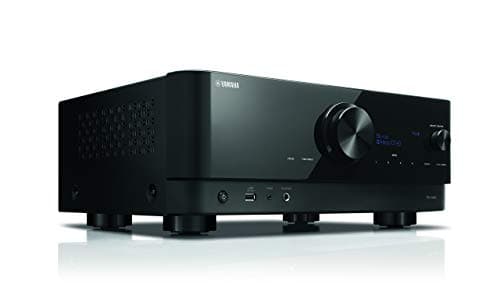
Top pick: Yamaha RX-V6A
Best for music as well as film. #ad Affiliate link — we earn a commission at no extra cost to you.
The short answer
The best Yamaha receiver is the RX-V6A — seven amplifier channels, YPAO with multipoint measurement, Dolby Atmos and DTS:X, and the only phono input anywhere in Yamaha’s AV range as we cover it. It is also the only one of the three that can run a 5.1.2 Atmos layout, because height effects need amplifier channels to come out of and five channels cannot produce them. The budget pick is the RX300A— genuinely the cheapest Yamaha here, and the surprise of this page: it decodes Dolby Atmos, passes 8K/60 and 4K/120, and publishes VRR, ALLM and QMS explicitly in its specification table, which the dearer RX-V6A does not. What it gives up is stated plainly below: no network streaming of any kind, no phono input, no DTS:X, a room-correction system Yamaha declines to name, and a rated power figure measured at a looser distortion limit than its siblings.
If the box is mostly going to play records, the honest answer in this range is not an AV receiver at all. The A-S501 is a two-channel integrated amplifier — no HDMI, no tuner, no surround decoding — and it is the only Yamaha here that publishes a phono signal-to-noise ratio, a damping factor, and a distortion limit an order of magnitude below the AV receivers’. It is third on this page for that reason, and it would be first on a page about music.
Disclosure: we earn a commission if you buy through the links on this page, at no extra cost to you. It does not influence what we pick — our criteria are published and reproducible, so you can check our work. How we pick · Full disclosure
These picks are spec-and-price analyses, not listening tests. We have not heard this gear and we do not pretend to have: every figure below is sourced to the manufacturer and linked, and every price is live or not shown at all. Here are the rules we followed.
Quick picks
Ranked on the published criteria in How We Pick. Prices are live as of November 16, 2026. Tap any row for the full write-up.
- 8.2
- 7.6
- 8.6
- 7.0
| # | Product | Best for | Score | Price |
|---|---|---|---|---|
| 1 | Yamaha RX-V6A The most powerful receiver here on paper — 100 watts a channel rated across the full band — with a phono input and seven HDMI inputs. | Best for music as well as film | 8.2 | |
| 2 | 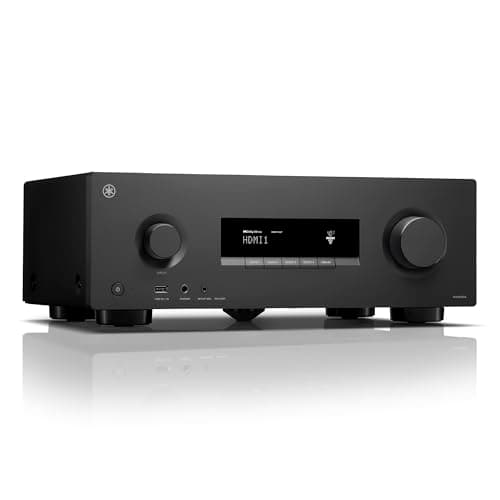 Yamaha RX300A The first receiver in this bracket to put Dolby Atmos and a full-band, two-channels-driven power rating on the same specification table — and it still prints a 145-watt burst figure one line away from the real one. | Cheapest Atmos with a full-band power rating | 7.6 | |
| 3 | 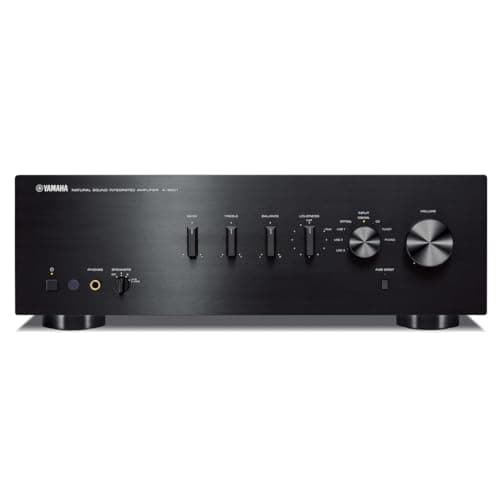 Yamaha A-S501 85 watts per channel into 8 ohms with a damping factor of 240 and an MM phono input fitted — the most amplifier here for the money, provided your speakers are an 8-ohm load. | Best overall under $1,000 | 8.6 | |
| 4 | 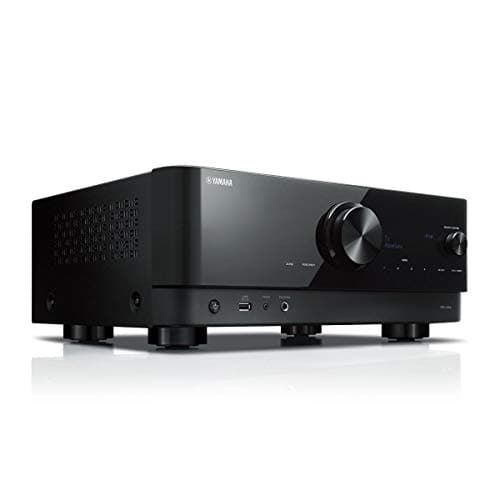 Yamaha RX-V4A Five channels with 8K passthrough and MusicCast, at the point where the price stops being the main objection. | Best budget AV receiver | 7.0 |
The first thing to know about Yamaha’s receiver range is that its three power figures were not measured on the same test. The RX-V6A and the RX-V4A are rated into 8 Ω from 20 Hz to 20 kHz at 0.06% THD with two channels driven. The RX300A is rated into 8 Ω from 20 Hz to 20 kHz at 0.09% THD. Same load, same bandwidth, same number of channels — a different distortion ceiling. So 70, 80 and 100 W look like a ladder and are not quite one.
That is not a scandal. A 0.09% limit is still a real, honestly stated, full-band rating, and it is vastly more informative than the single-tone burst figures most of this market quotes. It is simply a thing you need to know before you let the watts decide, because the gaps that actually separate these four boxes are elsewhere: how many channels there are, whether the thing streams, whether there is a phono input, and — the one almost nobody checks — which model publishes the HDMI 2.1 gaming features.
The picks compared, spec by spec
Read the first column as two numbers, not one. The watts are only comparable where the distortion limit beside them is the same, which is true of the RX-V6A and RX-V4A and not true of the other two. The A-S501 row is the odd one out in every column because it is a different kind of product — a stereo integrated amplifier — and it earns its place on a Yamaha page rather than on an AV page. Pre-outs are not tabulated because only one model has any worth having — the RX-V6A publishes front left/right, two subwoofer outputs and Zone 2, while the RX300A and RX-V4A publish subwoofer outputs only. Every row carries its own live price and buy link.
Every figure below is the manufacturer’s own published value and links to the document we read it from. “Not published” means the manufacturer does not publish that figure; an em dash means we have no published figure for that model. Prices are live as of November 16, 2026.
Best for music as well as film
- Rated power, and at what distortion
- 100 W/ch · 0.06% THD · 2 ch
- Channels
- 7.2
- Atmos / DTS:X
- Atmos (+ Height Virtualization) / DTS:X
- Phono input
- MM, 3.5 mV / 47 kΩ
Cheapest Atmos with a full-band power rating
- Rated power, and at what distortion
- 70 W · 0.09% THD · 2 ch
- Channels
- 5.2 (5 amp channels)
- Atmos / DTS:X
- Atmos yes / DTS:X no
- Phono input
- None in the connection list
Best overall under $1,000
- Rated power, and at what distortion
- 85 W + 85 W · 0.019% THD
- Channels
- —
- Atmos / DTS:X
- —
- Phono input
- MM, 3.0 mV / 47 kΩ
Best budget AV receiver
- Rated power, and at what distortion
- 80 W/ch · 0.06% THD · 2 ch
- Channels
- 5.2
- Atmos / DTS:X
- Both listed N/A
- Phono input
- Listed N/A
| Pick | Rated power, and at what distortion | Channels | Atmos / DTS:X | Phono input | Price |
|---|---|---|---|---|---|
| 1.Yamaha RX-V6ABest for music as well as film | 100 W/ch · 0.06% THD · 2 ch | 7.2 | Atmos (+ Height Virtualization) / DTS:X | MM, 3.5 mV / 47 kΩ | |
| 2.Yamaha RX300ACheapest Atmos with a full-band power rating | 70 W · 0.09% THD · 2 ch | 5.2 (5 amp channels) | Atmos yes / DTS:X no | None in the connection list | |
| 3.Yamaha A-S501Best overall under $1,000 | 85 W + 85 W · 0.019% THD | — | — | MM, 3.0 mV / 47 kΩ | |
| 4.Yamaha RX-V4ABest budget AV receiver | 80 W/ch · 0.06% THD · 2 ch | 5.2 | Both listed N/A | Listed N/A |
Prices as of November 16, 2026; every “Check Price” link goes to Amazon and earns us a commission at no extra cost to you. #ad
The power ladder is worth about 1.5 dB, and even that is not clean
Yamaha publishes 70 W for the RX300A, 80 W per channel for the RX-V4A and 100 W per channel for the RX-V6A. Three honest, full-band, two-channel-driven figures. Here is what the whole range is worth in the only unit that matters, which is how much louder it goes.
dB = 10 × log10(P1 ÷ P2)
Inputs
- Yamaha RX-V6A: 100 W/ch (8 Ω, 20 Hz – 20 kHz, 0.06% THD, 2 ch driven) (Yamaha owner's manual, specifications)
- Yamaha RX300A: 70 W (8 Ω, 20 Hz – 20 kHz, 0.09% THD, 2 ch driven) (Yamaha spec page)
Result
The RX300A’s specification page carries a second power number on the same line as the first, and it is the one that ends up in retailer listings: 145 W into 6 Ω at 1 kHz with 10% total harmonic distortion, one channel driven. Ten percent distortion, one tone, one channel. That is a burst figure describing how hard the power supply can be hit for an instant, not a rating you listen at. Yamaha prints both honestly and one line apart; most retellings keep only the big one. Our guide to reading an amplifier power rating takes that trap apart in detail, because Yamaha is far from the only maker who prints it.
The cheapest Yamaha here publishes the gaming features the dearest one does not
This is the finding that reordered this page. If you buy a receiver for a console, four HDMI 2.1 features decide whether it gets in the way: variable refresh rate, auto low latency mode, quick media switching and quick frame transport.
Yamaha’s specification table for the RX300A names VRR, ALLM and QMS explicitly, along with HDMI 2.1, eARC and HDCP 2.3. The RX-V6A’s specification table names none of the four. Its HDMI feature list runs “8K, 4K Ultra HD (include 8K/60, 50 Hz, 4K/120, 100 Hz 10-bit), 3D Video, ARC, eARC, HDMI Control (CEC), Auto Lip Sync, Deep Color, x.v.Color, HDR10+, Dolby Vision, Hybrid Log-Gamma, DSC FRL, FRL” — and VRR, ALLM, QMS and QFT appear nowhere in it, nor on the manual’s 4K/8K mode page.
The honest reading is not “the RX-V6A lacks them”. Yamaha added ALLM and VRR to that model by firmware and documents the change outside the specification table, which is exactly the kind of thing that is true and unverifiable from the spec sheet at the same time. We record it as an absence in the published specification rather than as a “no”, because that is what it is. But if those features are the reason you are buying, the model that states them in its own table is the RX300A, and that is a real argument for the cheapest box in the range. Our gaming receiver roundup ranks the whole field on input counts and published feature tables rather than on logos.
Dolby Atmos: the mid-priced model is the one that cannot do it
Yamaha’s own specification tables are unambiguous here, and the result is not the order you would guess from the prices. The RX-V6A does Atmos with Height Virtualization and DTS:X. The RX300A does Dolby Atmos but not DTS:X — its decoder list is Atmos, TrueHD, Digital Plus, Digital and DTS, with DTS:X appearing only in the RX500A column beside it. The RX-V4A lists both Dolby Atmos and DTS:X as N/A.
So the model between the two in Yamaha’s own numbering is the one with no object-based audio at all. That is the single clearest reason the RX-V4A is ranked last here. There is one more catch worth knowing on the RX300A: Yamaha separately claims “DTS Virtual:X” on its overview page for that model, which does not appear in the specification table. We lean on the table.
And there is a physical limit behind the labels. The RX300A has five amplifier channels, and height information needs channels to come out of — a five-channel box can decode Atmos and still have nowhere to put the overhead layer unless you give up the surrounds. The RX-V6A’s seven channels are what make a 5.1.2 layout real rather than theoretical. Where those two height speakers actually go matters more than which box decodes the format, and the 5.1 against 7.1 question decides whether you need the extra pair at all.
Room correction: three tiers, and one Yamaha will not name
YPAO is Yamaha’s auto-calibration system and the range runs it at three different levels. The RX-V6A gets YPAO with multipoint measurement, which takes readings from several seats rather than one. The RX-V4A gets YPAO without multipoint. The RX300A’s table says only “Room Correction”, with a setup microphone and stand in the box — Yamaha does not name YPAO for that model anywhere on its product or specification page, while the cheaper RX-V385 one bracket down is explicitly named as YPAO. We publish that as the gap it is rather than assuming the same system under a different label.
In a normal room with a sofa against a wall, correction is the feature most likely to change what you hear, because room modes and boundary reinforcement do more damage to a frequency response than any amplifier at this price does. Our guide to AV receiver room correction explains what each tier measures, and treating the room is the better fix for the same problem, if a less convenient one.
Only one Yamaha AV receiver has a phono input
If a turntable is in the plan, this narrows fast. The RX-V6A publishes a moving-magnet phono input at 3.5 mV into 47 kΩ at 1 kHz. The RX-V4A lists phono as N/A. The RX300A’s connection list is two analog RCA inputs, one optical, one coaxial and one USB, with no phono row at all.
The A-S501 publishes a moving-magnet input at 3.0 mV into 47 kΩ, and it is the only Yamaha here that tells you how quiet that input is: 82 dB or more on MM phono, against 99 dB on its line inputs with the input shorted. A sensitivity figure only tells you a phono stage exists. A signal-to-noise figure tells you something about how good it is, and almost nothing in this market publishes one.
If you want a turntable on an RX300A or an RX-V4A, you need an outboard stage between them, and that is a modest add-on rather than a reason to change receivers — our phono preamp bracket under $200 has picks that publish better noise figures than any receiver phono input in our registry, and the do-I-need-one question covers the case where your deck already has one built in.
The A-S501 is ten decibels quieter on paper, and that is a real number
Here is the clearest measurable difference between a Yamaha AV receiver and a Yamaha stereo amplifier, in Yamaha’s own published limits.
dB = 20 × log10(THD as a fraction)
Inputs
- Yamaha A-S501: 0.019% THD (50 W into 8 Ω, 20 Hz – 20 kHz) (Yamaha spec page)
- Yamaha RX-V6A: 0.06% THD (rated power, 8 Ω, 20 Hz – 20 kHz, 2 ch driven) (Yamaha owner's manual, specifications)
Result
The A-S501 has one trap of its own, and it is the most-quoted number about it. Yamaha publishes no continuous 4 Ω power rating for this amplifier at all. What it publishes is High Dynamic Power per channel of 130, 150, 185 and 220 W into 8, 6, 4 and 2 Ω — a short-burst IHF measurement. The “185 W into 4 Ω” figure that circulates for this amp is that dynamic number, and treating it as a continuous rating overstates the amplifier by roughly two-fold. Its honest continuous figure is 85 W + 85 W into 8 Ω. Our integrated amplifier bracket ranks it against Marantz, Denon and Cambridge Audio on exactly that basis.
Streaming, and the one place the cheap model is simply worse
The RX-V6A runs MusicCast, AirPlay 2, Spotify Connect and Bluetooth with SBC and AAC. The RX300A publishes a dash against Wi-Fi, Ethernet and every streaming service: Bluetooth 5.3 with Multipoint is its only wireless input, and there is no network audio at all. For a television-centered system that may not matter, since the TV does the streaming and eARC carries it back. For a listening system it matters a lot, and it is the clearest reason the RX300A is a budget pick rather than a value pick.
If network playback is the point and the box does not have it, a separate streamer is a better answer than a dearer receiver, because streaming hardware ages faster than amplifiers do.
What Yamaha does not publish for any of these
Two gaps worth stating. There is no all-channels-driven power figure for any receiver here, so the two-channel numbers are the only comparable power data that exists, and nothing can be said about what happens when seven channels work at once. And none of the three publishes a nominal minimum impedance for its speaker outputs in the specification table, which is the figure you would want before hanging a 4 Ω speaker off one.
A practical note on sourcing, since this page is built entirely on Yamaha’s documents: usa.yamaha.com returns HTTP 403 to our tooling on some models, so several figures here are read from Yamaha’s manual host (manual.yamaha.com) instead. Both are Yamaha’s own publications, and each figure above links to the exact document it was read from.
So which Yamaha, by what you are actually doing
Films, and you want height channels: the RX-V6A. Seven amplifier channels, Atmos and DTS:X, YPAO multipoint, seven HDMI inputs with 8K on the first three, and the only AV phono input in the range. Accept that its specification table does not name the HDMI 2.1 gaming features.
A television system on the smallest sensible budget: the RX300A. Atmos decoding, 8K/60 and 4K/120, VRR, ALLM and QMS in the table, eARC, Bluetooth 5.3. No network streaming, no phono, no DTS:X, correction Yamaha will not name, and a 70 W rating measured at 0.09%. For a five-speaker setup fed by a modern TV, that list of omissions is mostly things the TV already does.
Music first, with a turntable: the A-S501, which is an integrated amplifier rather than a receiver. 85 W + 85 W at 0.019%, MM phono at 3.0 mV with 82 dB or better signal-to-noise, optical and coaxial digital inputs, a damping factor of 240, a subwoofer output. No HDMI, so a television needs its own path, and no Bluetooth row appears in its specification table.
The RX-V4A:hard to recommend at its current position in the range. It is rated 80 W per channel at the same 0.06% as the RX-V6A and has YPAO, but no Atmos, no DTS:X, no phono input and subwoofer-only pre-outs — and the cheaper RX300A decodes Atmos. It makes sense if you want five channels, YPAO, and nothing else, and the RX300A’s missing network features bother you more than its missing watts.
One closing note on brand loyalty, since that is what brings most people to a page like this. Yamaha’s documentation is detailed and mostly honest — the full-band ratings, the explicit N/A rows, the burst figure printed beside the real one rather than instead of it. It is also inconsistent in a way Denon’s is not: two distortion limits across one range, a correction system named on some models and not others, gaming features in the cheap model’s table and not the expensive one’s. For the cross-brand view, the under-$1,000 roundup and the RX-V6A against Denon’s AVR-X1800H are the two pages to read next, and the Denon range pageis this page’s mirror image if you have not settled on a brand. Whichever box wins, the speakers decide most of what you hear — a 70 to 100 W receiver is happiest with a sensitive one.
Every pick in detail
Every specification below links to the manufacturer document we read it from. Where a manufacturer does not publish a figure, we say so rather than estimating it.
Yamaha RX-V6A
Best for music as well as filmPrice as of November 16, 2026. #ad
The most powerful receiver here on paper — 100 watts a channel rated across the full band — with a phono input and seven HDMI inputs.
- channels
- 9/10
- room correction
- 7/10
- connectivity
- 9/10
- value for money
- 8/10
- future proofing
- 8/10
| Specification | Published value | Source |
|---|---|---|
| Channels | 7.2 | Yamaha spec page |
| Power output | 100 W/ch (8 Ω, 20 Hz – 20 kHz, 0.06% THD, 2 ch driven). Maximum effective output 150 W/ch (1 kHz, 10% THD, 8 Ω) | Yamaha owner's manual |
| Room correction | YPAO with multipoint measurement | Yamaha spec page |
| Dolby Atmos / DTS:X | Yes (with Height Virtualization) / Yes | Yamaha spec page |
| Phono input | Yes — MM, 3.5 mV / 47 kΩ at 1 kHz | Yamaha owner's manual |
| HDMI in / out | 7 in / 1 out (eARC). 8K on inputs 1–3 only | Yamaha spec page |
| HDMI 2.1 gaming features | Not published in the specification table. Yamaha's HDMI feature list for this model reads “8K, 4K Ultra HD (include 8K/60, 50 Hz, 4K/120, 100 Hz 10-bit), 3D Video, ARC, eARC, HDMI Control (CEC), Auto Lip Sync, Deep Color, x.v.Color, HDR10+, Dolby Vision, Hybrid Log-Gamma, DSC FRL, FRL” and HDCP 1.4/2.3 — VRR, ALLM, QMS and QFT are named nowhere in it, and nowhere on the 4K/8K MODE page either. Yamaha adds ALLM and VRR to this model by firmware and documents that separately from the specification. | Yamaha owner's manual, specifications |
| Pre-outs | Front L/R + 2 subwoofer, plus Zone 2 L/R — not a full 7.2 pre-out | Yamaha owner's manual |
| Streaming | MusicCast, AirPlay 2, Bluetooth (SBC/AAC), Spotify Connect | Yamaha spec page |
Pros
- 100 W/ch (8 Ω, 20 Hz – 20 kHz, 0.06% THD) — the highest full-band rating in this group
- Seven HDMI inputs, the most here
- MM phono input, 3.5 mV / 47 kΩ
- YPAO with multipoint measurement, plus MusicCast multiroom
Cons
- YPAO is less sophisticated than Audyssey MultEQ XT on the Denon
- 8K is limited to HDMI inputs 1–3
- Pre-outs are front L/R plus subwoofers only — not a full 7.2
Skip it if room correction quality is your priority — Audyssey MultEQ XT on the Denon goes further.
Yamaha RX300A
Cheapest Atmos with a full-band power ratingPrice as of November 16, 2026. #ad
The first receiver in this bracket to put Dolby Atmos and a full-band, two-channels-driven power rating on the same specification table — and it still prints a 145-watt burst figure one line away from the real one.
- published data
- 8/10
- power
- 7/10
- features
- 8/10
- connectivity
- 7/10
- value for money
- 8/10
| Specification | Published value | Source |
|---|---|---|
| Channels | 5.2 — five amplifier channels, 5.1 decodable | Yamaha spec page |
| Rated output power | 70 W (8 Ω, 20 Hz – 20 kHz, 0.09% THD, 2 ch driven) | Yamaha spec page |
| Second published power figure | 145 W (6 Ω, 1 kHz, 10% THD, 1 ch driven) — printed on the same line as the 70 W. Ten percent distortion, one channel, one frequency: it is a burst figure, not a listening rating. | Yamaha spec page |
| Dolby Atmos / DTS:X | Atmos yes / DTS:X no. Yamaha's decoder list for this model is Dolby Atmos, Dolby TrueHD, Dolby Digital Plus, Dolby Digital and DTS — DTS:X appears only in the RX500A column. The overview page separately claims “DTS Virtual:X”, which is not in the specification table. | Yamaha spec page |
| Room correction | Listed only as “Room Correction”, with a setup microphone and stand in the box. Yamaha does not name YPAO for this model anywhere on its product or specification page — the RX-V385 one bracket down is named YPAO. | Yamaha spec page |
| HDMI in / out | 4 in / 1 out — HDMI 2.1, eARC/ARC, VRR, ALLM, QMS, HDCP 2.3 | Yamaha spec page |
| Video passthrough | 8K/60 and 4K/120; Dolby Vision, HDR10+ and Hybrid Log-Gamma | Yamaha spec page |
| Pre-outs | Two subwoofer pre-outs. No main-channel pre-outs. | Yamaha spec page |
| Phono input | None — Yamaha's connection list is two analog RCA inputs, one optical, one coaxial and one USB, with no phono row | Yamaha spec page |
| Network streaming | None — Yamaha publishes a dash against Wi-Fi, Ethernet and every streaming service for this model. Bluetooth 5.3 with Multipoint is the only wireless input. | Yamaha spec page |
| Tuner | FM yes, AM no | Yamaha spec page |
| Dimensions / weight | 434 × 157 × 319 mm (17-1/8 × 6-1/8 × 12-1/2 in); 7.6 kg / 16.8 lb | Yamaha spec page |
| Power consumption | 260 W in use, ≤ 0.3 W standby | Yamaha spec page |
Pros
- 70 W rated 20 Hz – 20 kHz at 0.09% THD with two channels driven — the comparable condition, published
- Dolby Atmos with in-ceiling, up-firing or virtual height layouts, which nothing else under $500 here offers
- HDMI 2.1 throughout: 8K/60, 4K/120, VRR, ALLM and eARC on four inputs
- Two subwoofer pre-outs and bi-amp capability at the bottom of Yamaha's range
Cons
- No DTS:X — Yamaha's decoder list for this model stops at DTS, and DTS:X is the RX500A's
- Yamaha's overview page claims DTS Virtual:X, which does not appear in its own specification table
- The calibration system is listed only as “Room Correction”; Yamaha does not name YPAO for this model
- No Wi-Fi, no Ethernet and no streaming services — Bluetooth is the only wireless input
- No phono input, so a turntable needs its own phono stage
Skip it if you want DTS:X, network streaming, or seven channels. All three start at the RX500A, one model up.
Yamaha A-S501
Best overall under $1,000Price as of November 16, 2026. #ad
85 watts per channel into 8 ohms with a damping factor of 240 and an MM phono input fitted — the most amplifier here for the money, provided your speakers are an 8-ohm load.
- power
- 9/10
- phono stage
- 8/10
- value for money
- 9/10
- build quality
- 9/10
- connectivity
- 6/10
| Specification | Published value | Source |
|---|---|---|
| Power output (8 Ω) | 85 W + 85 W (8 Ω, 20 Hz – 20 kHz, 0.019% THD) — minimum RMS | Yamaha spec page |
| Power output (4 Ω) | Not published as a continuous rating. Yamaha publishes only “High Dynamic Power/Channel (8/6/4/2 Ω): 130 / 150 / 185 / 220 W” — a short-burst IHF measurement, NOT an RMS rating. The “185 W into 4 Ω” figure circulating for this amp is that dynamic number, and treating it as continuous overstates the amplifier by roughly two-fold. | Yamaha spec page |
| Phono input | Yes — MM, 3.0 mV / 47 kΩ | Yamaha owner's manual (PDF) |
| THD | 0.019% (50 W into 8 Ω, 20 Hz – 20 kHz) | Yamaha spec page |
| Signal-to-noise | 99 dB (CD, input shorted); phono MM 82 dB or more | Yamaha spec page |
| Damping factor | 240 | Yamaha spec page |
| Digital inputs | Yes — optical and coaxial (Yamaha does not publish the DAC part number) | Yamaha spec page |
| Bluetooth | Not published — no Bluetooth row appears in Yamaha's specification table | Yamaha spec page |
| Subwoofer out | Yes | Yamaha spec page |
Pros
- 85 W + 85 W into 8 Ω rated across the full 20 Hz – 20 kHz band at 0.019% THD — a real rating, not a 1 kHz-only one
- Damping factor 240, the highest published here
- MM phono input and optical/coaxial digital inputs included
Cons
- Yamaha publishes NO continuous 4 Ω rating — only a “High Dynamic Power” burst figure, so its behavior into a 4 Ω speaker is genuinely unknown from the spec sheet
- No Bluetooth or network streaming
- Large and heavy
Skip it if your speakers dip to 4 Ω and you want to know what you are getting. Marantz and Denon both publish real 4 Ω ratings; Yamaha does not.
Yamaha RX-V4A
Best budget AV receiverPrice as of November 16, 2026. #ad
Five channels with 8K passthrough and MusicCast, at the point where the price stops being the main objection.
- channels
- 6/10
- room correction
- 6/10
- connectivity
- 8/10
- value for money
- 9/10
- future proofing
- 6/10
| Specification | Published value | Source |
|---|---|---|
| Channels | 5.2 | Yamaha spec page |
| Power output | 80 W/ch (8 Ω, 20 Hz – 20 kHz, 0.06% THD, 2 ch driven, US/Canada model) | Yamaha owner's manual |
| Dolby Atmos / DTS:X | No / No — Yamaha's spec table lists both as N/A | Yamaha spec page |
| Room correction | YPAO (no multipoint measurement on this model) | Yamaha spec page |
| Phono input | No — listed as N/A | Yamaha spec page |
| Video passthrough | 8K/60 Hz, 4K/120 Hz | Yamaha owner's manual |
| Pre-outs | 2 subwoofer only — no main-channel pre-outs | Yamaha spec page |
Pros
- Cheapest 8K-capable receiver here
- MusicCast
- Compact for an AVR
Cons
- 5.2 only
- Basic YPAO implementation
- No phono input
Skip it if you want Atmos height channels — this cannot do them.
Frequently asked questions
Which Yamaha receiver is best for music?
Does the Yamaha RX-V4A have Dolby Atmos?
Is the RX-V6A worth it over the RX300A?
Does any Yamaha receiver here have a phono input for a turntable?
What is the 145 W figure on the Yamaha RX300A?
Can I add a power amplifier to a Yamaha receiver later?
Read next
The Best AV Receivers Under $1,000
Five receivers under $1,000, compared on FTC-rated power and the pre-out spec almost nobody mentions.
The Best AV Receivers Under $500
Three receivers under $500, compared on the condition attached to each power figure — and all three come out at the same seventy watts.
The Best Denon Receiver
Four Denon models compared on Denon's own published figures — three AV receivers rated at an identical condition, plus the stereo integrated amplifier that is the real answer for a turntable.
Denon AVR-X1800H vs Yamaha RX-V6A
Yamaha: 100 W at 0.06% THD and seven HDMI inputs. Denon: Audyssey MultEQ XT, four published phono specs, and the only explicit per-feature HDMI 2.1 table of the two.
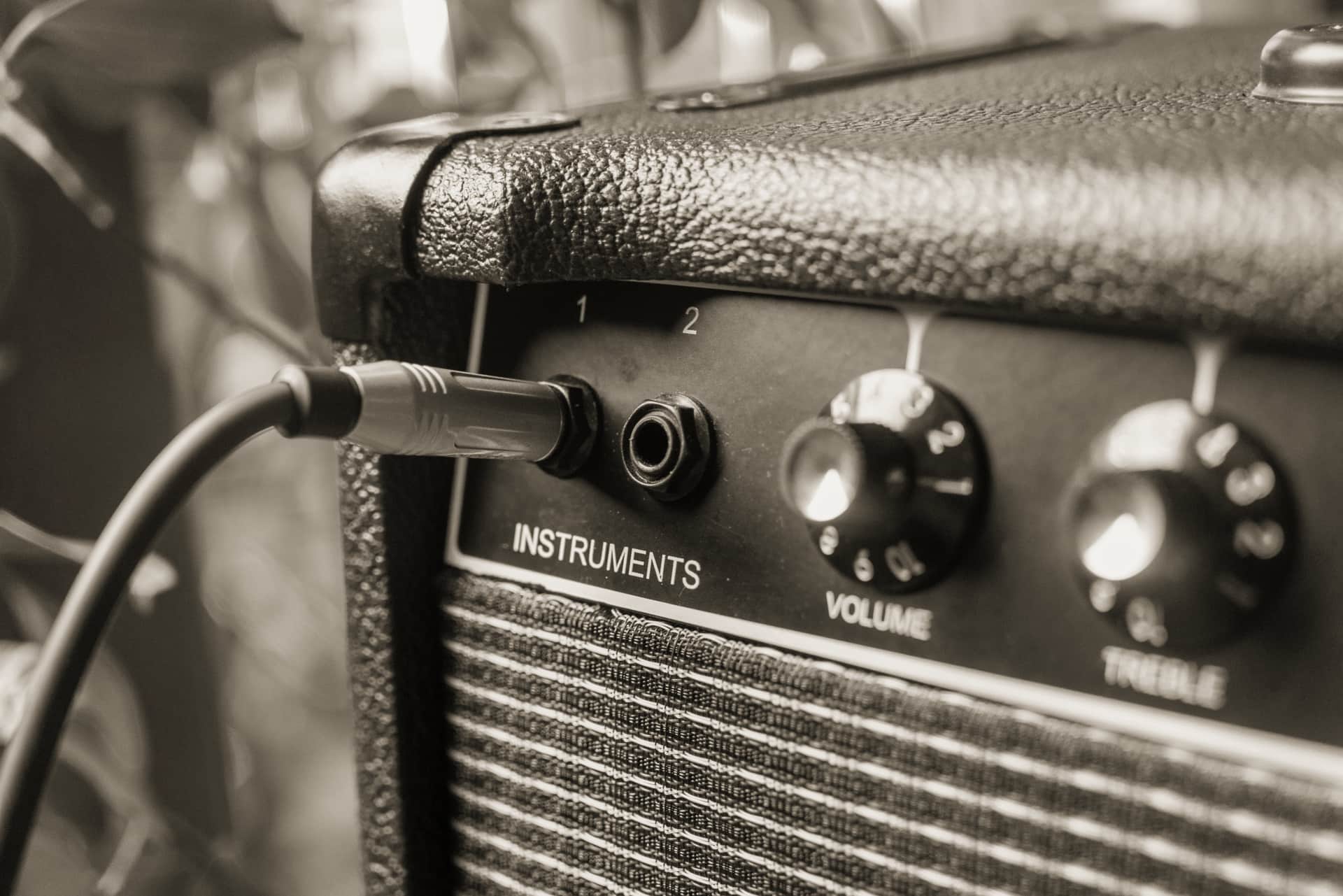
The Best Integrated Amplifiers Under $1,000
Six amps under $1,000, and the dynamic-power trap that overstates the popular pick by roughly 2x.
The Best AV Receivers for Gaming
Ranked on published 4K/120 input count and whether VRR is in the maker's spec table, not its ad copy. The receiver with the most HDMI inputs is not on the list, and the reason is the whole page.
Sources
Every specification on this page was read from one of these documents. If one of them has changed, or we have made an error, tell us — corrections are logged and dated per our editorial policy.