Best bookshelf for vinyl
The Best Bookshelf Speakers for Vinyl
Bookshelf speakers for a turntable, ranked on published sensitivity and impedance — with the amp arithmetic shown.
Bookshelf, powered and floorstanding — and the sensitivity numbers that decide what can drive them.
Speakers are the component where the differences are largest, the measurements are least complete, and the marketing is least useful. They are also where your money makes the most audible difference — which is an awkward combination, and the reason this hub is organized around the two numbers that are actually published.
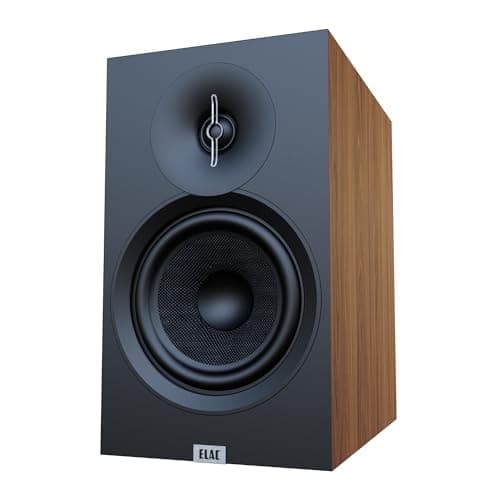
Sensitivity tells you how loud a speaker plays for a given input. The ELAC Debut 3.0 DB63 publishes 87 dB at 2.83 V/1 m; the Klipsch R-51M publishes 93 dB. Six decibels looks modest and is not — every 3 dB is a doubling of amplifier power, so 6 dB is a factor of four.
But that comparison hides a trap, and almost nobody explains it. Those figures are quoted at 2.83 volts, not at 1 watt, and those are the same thing only into 8 ohms. The ELAC is a 6-ohm speaker, so 2.83 V delivers 1.33 W — meaning its 87 dB figure is worth about 85.8 dB at a true 1 watt. The real gap to the Klipsch is 7.2 dB, which is 5.2× the power rather than 4×.
Correct for that before you compare anything. Our matching guide does the conversion and then computes how loud each pairing actually plays at your listening distance. It takes two minutes and it is the whole decision.
Sensitivity says nothing about the current an amplifier must supply. That is impedance — and specifically minimum impedance, the dip where an amplifier actually struggles.
Q Acoustics publishes it: the 3030i is nominally 6 ohms with a 4-ohm minimum, plus a recommended amplifier range of 25–75 W. KEF publishes a 3.2-ohm minimum for the Q3 Meta. Nobody else we cover publishes a minimum impedance at all.ELAC, Klipsch and Polk all decline. Klipsch describes its speakers as “8 ohms compatible”, which is a marketing phrase rather than a measurement. Polk publishes no nominal impedance whatsoever, only “compatible with 4- and 8-ohm outputs”.
And here is the gap that ought to bother people more than it does: a speaker may publish a 4-ohm dip while the obvious amplifier for it — Yamaha’s A-S501 — publishes no continuous 4-ohm rating at all. Nobody is lying. You simply cannot complete the calculation, and anyone who tells you the pairing is fine is filling in that blank themselves.
Passive speakers need an amplifier. Every component is separately upgradable, and sensitivity and impedance matter because you are choosing the amplifier yourself.
Powered speakers have the amplifier inside. Fewer boxes, lower total price, and the amplifier is fixed forever — when you outgrow the speakers you replace it too, whether it deserved it or not. Sensitivity and impedance are not published for powered speakers and that is correct: the matching was done at the factory, so the numbers have no buyer-facing meaning.
Two powered-versus-passive questions have their own pages. If the pair has to serve a television, our powered-speakers-for-a-TV roundup ranks on the connection each actually has — HDMI eARC with CEC, optical or analog. And if what you are really comparing is a hi-fi pair against active studio monitors, that comparison sets out what each category publishes.
One caution there: Edifier publishes an “input sensitivity” in millivolts. That is a line-level input spec and has nothing to do with loudspeaker sensitivity in dB. They share a word and nothing else.
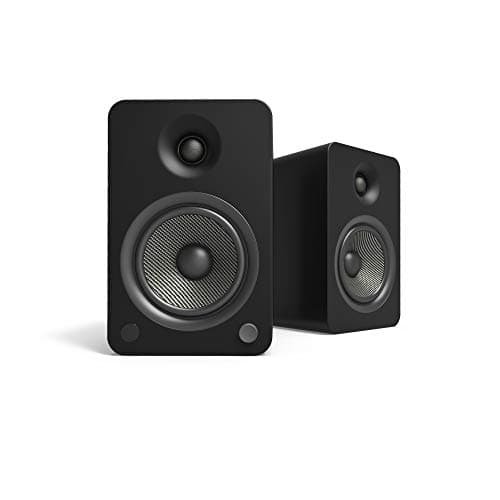
If a turntable is your source, the powered route has one genuinely compelling option — the Kanto YU6 has a phono stage built in, so it collapses amp, phono stage and speakers into one purchase. That comparison is here.
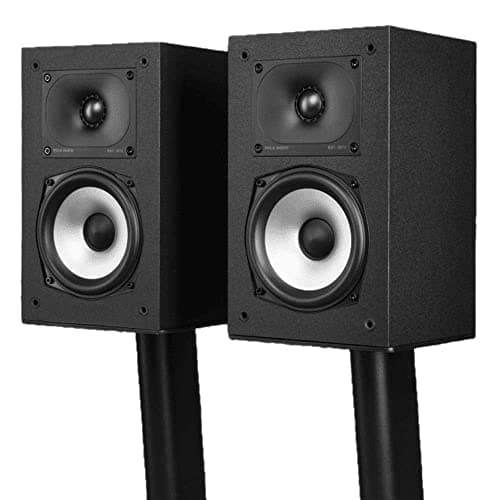
Under $300 gets you a genuinely good small pair — the Polk Monitor XT15 and the Klipsch R-41M live here, and that bracket is decided by a ten-decibel sensitivity spread rather than by cabinet work. $300 to $500buys cabinet quality and better documentation: the ELAC Debut 3.0 DB63 is the one ELAC that publishes a dB level with its bass figure and a recommended amplifier range to go with it, and the Q Acoustics 3030i’s inert cabinet is its whole design argument — the one thing you cannot retrofit. Above $500buys extension and drivers — the KEF Q3 Meta’s coaxial Uni-Q is a real engineering difference rather than a finish upgrade.
Floorstanders are ranked three ways here. The two price brackets are the obvious ones. The floorstanders-for-vinyl page re-ranks the same towers for a turntable system — sensitivity for a small phono integrated, a published impedance, and where the port fires — and the small-room page ranks them on footprint and the shallowest bass figure, which is nearly the reverse of the bracket order.
Buying on frequency response numbers without tolerances. ELAC publishes “44 to 35,000 Hz” with no ±dB figure at all, which means the endpoints could be anywhere. Klipsch publishes 62 Hz–21 kHz ±3 dB, and Q Acoustics 46 Hz–30 kHz +3/−6 dB. Those are specifications; a bare range is not.
We would also skip confusing power handling with recommended power. ELAC’s “120 W maximum power input” and Klipsch’s “85 W continuous/340 W peak” tell you what will damage the speaker, not what will drive it well. A speaker rated to handle 120 W does not need a 120 W amplifier.
Finally: every specification below links to the manufacturer document we read it from, and we have not heard any of these speakers. You will find no sentence about how they sound anywhere on this hub, because we have not earned one.
Speakers are a good present and a compatibility minefield in equal measure: impedance and sensitivity are demands on an amplifier you may not be able to inspect. Powered pairs avoid the problem entirely, which is why they lead our under-$250 gift guide; if budget is not the constraint, the no-budget guide is explicit about what each pick asks of the system it joins. Our Black Friday page covers speaker discounting specifically.
Each card shows that roundup’s top pick and its live price, as of October 15, 2026.
Best bookshelf for vinyl
Bookshelf speakers for a turntable, ranked on published sensitivity and impedance — with the amp arithmetic shown.
Best bookshelf under $500
Six pairs under $500 — and only one publishes a minimum impedance and a recommended amp range.
Best speakers for a turntable
Which speakers need an amplifier, which need a phono stage, and the one that needs neither.
Best bookshelf under $300
Five passive pairs at the $300 mark, and a ten-decibel sensitivity spread that decides which amplifier each one needs.
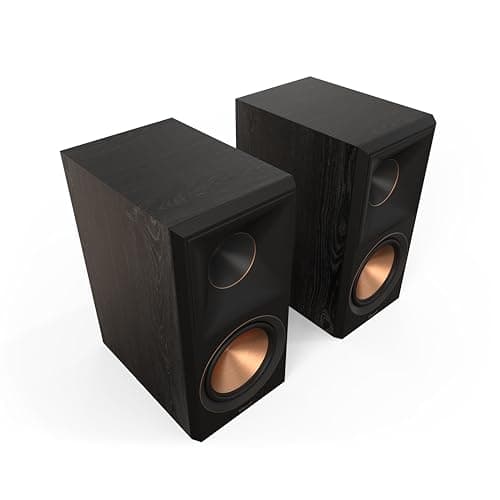
Best bookshelf under $1,000
Five pairs under $1,000, and the measurement footnote that makes the headline sensitivity figures non-comparable.
Best bookshelf under $200
Four bookshelf pairs at the $200 mark, and a seven-decibel sensitivity gap that is worth five times the amplifier power.
Best high-sensitivity bookshelf
The speakers that make a small amplifier sound big, ranked on published sensitivity and the condition each figure was measured under.
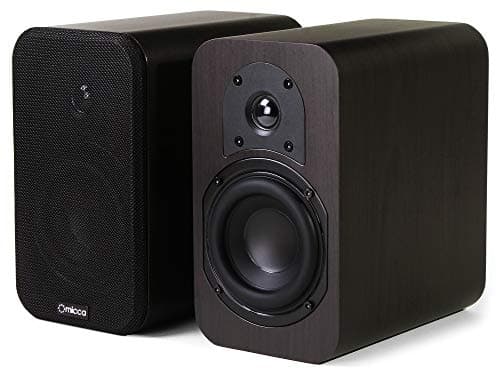
Best for a small room
Four speakers for rooms where the wall is close, chosen on port position, cabinet size and the extension figure each maker publishes.
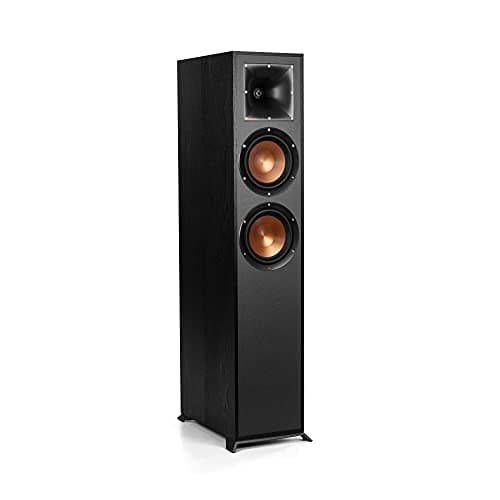
Best floorstanders under $1,000
Six towers that make a stereo pair under $1,000, ranked on sensitivity with its stated condition, bass figures with a tolerance, and where the port fires.
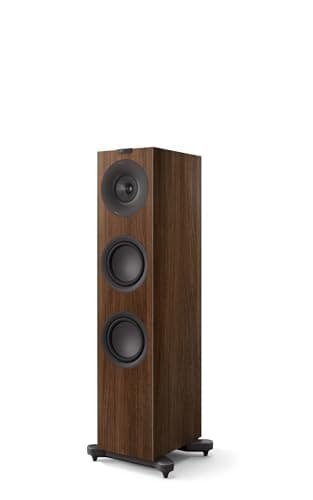
Best floorstanders under $2,000
Five towers that make a stereo pair under $2,000, ranked after putting every published bass figure on a common tolerance — which reorders them.
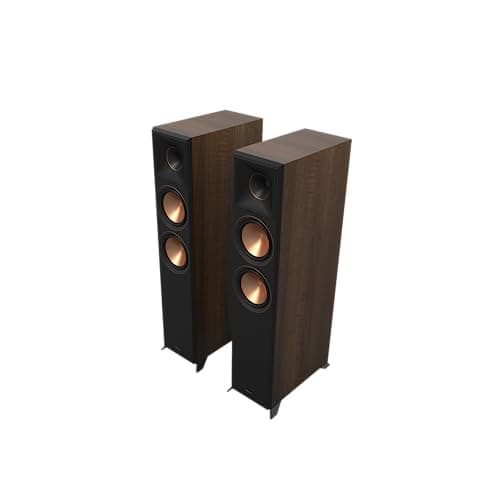
Best floorstanders for vinyl
Five towers ranked for what a turntable system actually asks of a speaker: sensitivity, a published impedance, and a port that is not aimed at the rack.
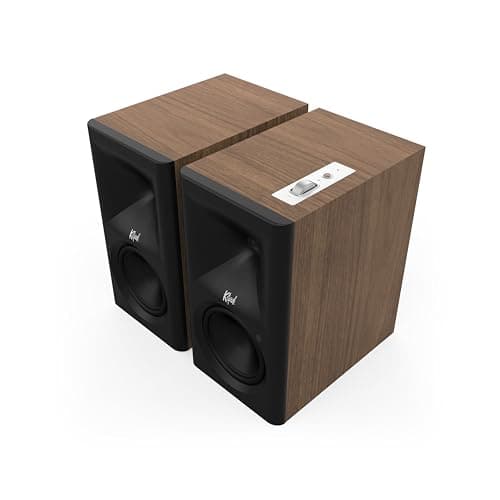
Best powered speakers for a TV
Four ways to put stereo speakers on a television, ranked by connection: HDMI eARC with CEC, two optical inputs, one optical input, or HDMI ARC into an amplifier for passive speakers.
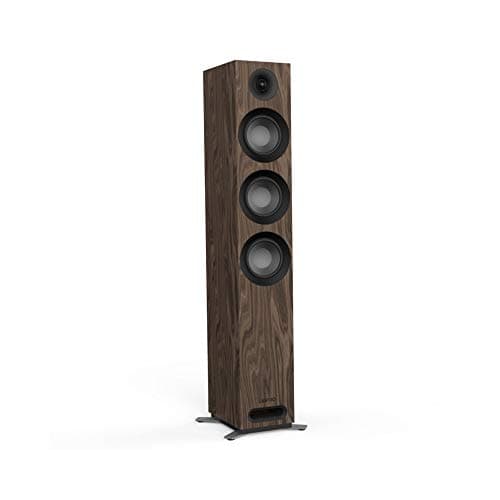
Best floorstanders for a small room
Four towers for a small room, ranked on published footprint, port direction and the shallowest bass figure — the opposite of what a price bracket rewards.
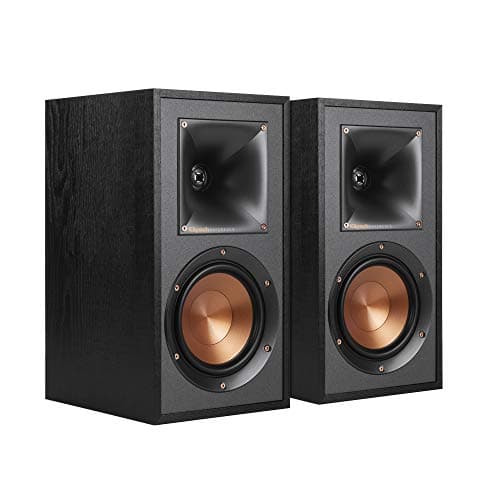
Best bookshelf pair for an AV receiver
Ranked on AV receiver duty rather than hi-fi criteria: the measurement condition on each sensitivity figure, published minimum impedance, and whether a timbre-matched center channel exists.
Total cost, upgrade path, and why powered speakers correctly refuse to publish a sensitivity figure.
Nominal versus minimum impedance, why 2.83 V is not 1 watt, and how to check your amplifier can cope.
2.83 V/1 m versus 1 W/1 m, what the conversion is worth in decibels, and the twelve-decibel spread that means sixteen times the power.
Cabinet volume buys extension; a subwoofer buys extension you can place independently. The trade, with each maker's own numbers.
What a port buys in efficiency and extension, what it costs in placement and roll-off, and how the sealed and ported subwoofers we cover actually compare.
Dolby's 22-30 degree window turned into a listening-distance rule, plus height, toe-in, boundaries and the port clearance most people miss.
Four genuine differences, three imagined ones, and the question that actually decides which category you want.
Published copper resistance, your speaker's impedance and the length of the run — three numbers that settle the gauge question without opinion.
The impedance arithmetic for two speakers on one channel, what each wiring costs in level, and how to check your amplifier will tolerate it.
Klipsch for a low-powered amplifier or a 5.1 system; Polk if the budget is the constraint. The tie-breaker is which specification each maker chose to publish.
Decided by your speakers' own published figure, not by taste. Includes the overlap arithmetic and the connection trap that stops two of the six subwoofers we cover working with a stereo amplifier.
Every pick here is a spec-and-price analysis, not a listening test. We compile what the manufacturer publishes, link each figure to the document we read it from, show the arithmetic where it applies, and price everything live. We have not heard this gear and we do not pretend to have. The full method is here.