The Best Bookshelf Speakers
Three brands here publish sensitivity three different ways, which is why the numbers in most roundups cannot be compared. We convert them all to one condition first, then rank.
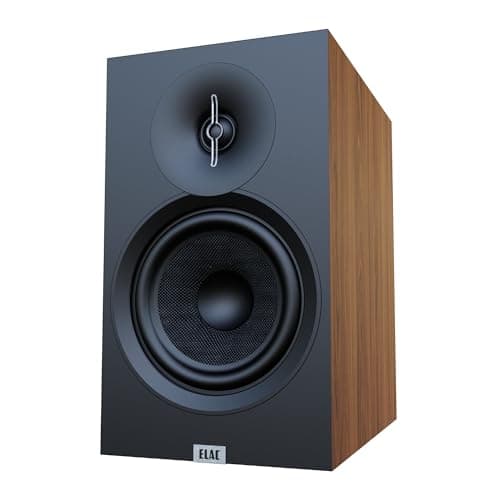
Top pick: ELAC Debut 3.0 DB63
Best overall under $500. #ad Affiliate link — we earn a commission at no extra cost to you.
The short answer
The best bookshelf speaker for most people is the ELAC Debut 3.0 DB63 — because it is the only speaker here that publishes everything you need to match it: 87 dB sensitivity with its measurement condition attached, a 6 Ω impedance that its product page and its owner’s manual agree on, a recommended amplifier range of 20 to 140 W, and a −3 dB bass figure of 50 Hz rather than a flattering −6 dB one. It is also a 6.5-inch two-way in a 13-inch cabinet, which is the shape that makes bookshelf speakers worth owning. The budget pick is the Polk Monitor XT15 — the entry rung here, and the one speaker at this end of the field with a published recommended amplifier range (30 to 150 W) rather than a power-handling limit. What it gives up is stated plainly below: Polk publishes its 86 dB sensitivity with no measurement condition at all and no nominal impedance, so the one figure you would use to match an amplifier to it cannot be compared with anyone else’s.
If you only read one section, read the arithmetic block. Klipsch quotes sensitivity at 2.83 V / 1 m, Micca quotes it at 1 W / 1 m, and Polk quotes it at neither. Those are not the same test, and the gap between the conventions is larger than the gap between most of these speakers. Converted to one condition, the field spans about 10 dB — a factor of ten in the amplifier power you need — and two speakers that look four decibels apart turn out to be within one.
Disclosure: we earn a commission if you buy through the links on this page, at no extra cost to you. It does not influence what we pick — our criteria are published and reproducible, so you can check our work. How we pick · Full disclosure
These picks are spec-and-price analyses, not listening tests. We have not heard this gear and we do not pretend to have: every figure below is sourced to the manufacturer and linked, and every price is live or not shown at all. Here are the rules we followed.
Quick picks
Ranked on the published criteria in How We Pick. Prices are live as of November 16, 2026. Tap any row for the full write-up.
- 8.5
- 8.6
- 8.0
- 7.4
- 7.2
- 8.4
- 8.7$999.99View on Amazon
$1,399.9929% off
- 7.8
| # | Product | Best for | Score | Price |
|---|---|---|---|---|
| 1 | ELAC Debut 3.0 DB63 The Debut 3.0 generation of the same 6.5-inch design, and the first ELAC bookshelf we cover that publishes both a response tolerance and a recommended amplifier range — so the match can be finished rather than estimated. | Best overall under $500 | 8.5 | |
| 2 | 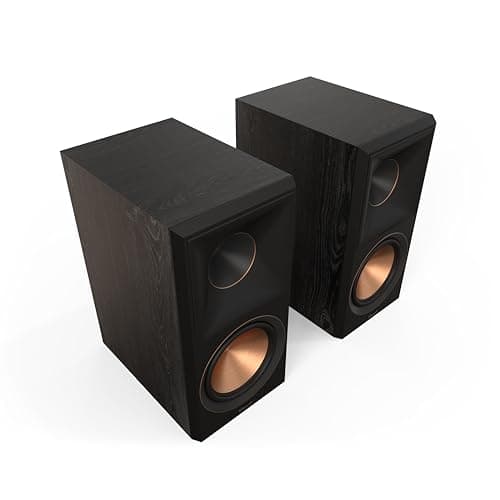 Klipsch RP-600M II Higher sensitivity and a bigger cabinet than the R-51M, which buys headroom rather than a different kind of speaker. | Best step up | 8.6 | |
| 3 | 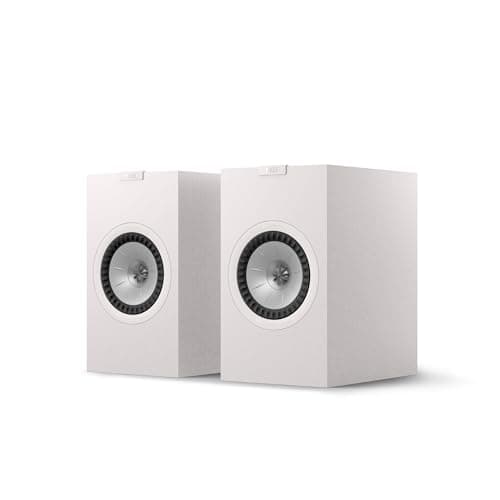 KEF Q3 Meta KEF's coaxial Uni-Q driver puts the tweeter at the woofer's acoustic center, and the Meta generation adds a metamaterial absorber behind it — both are engineering changes rather than finish upgrades. | Best imaging design | 8.0 | |
| 4 | 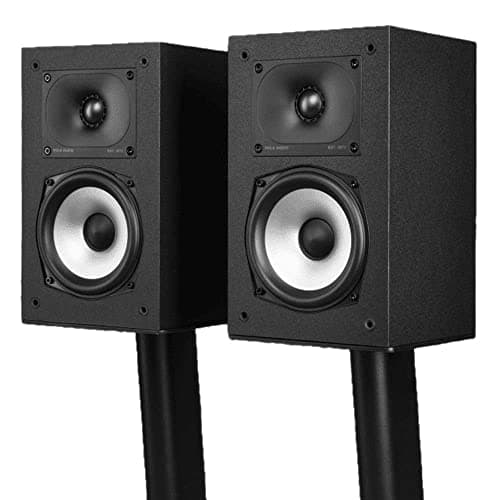 Polk Monitor XT15 48 Hz of published extension and a stated 30–150 W amplifier range, from a maker who tells you what to drive it with but not how they measured its sensitivity. | Best all-rounder under $200 | 7.4 | |
| 5 | 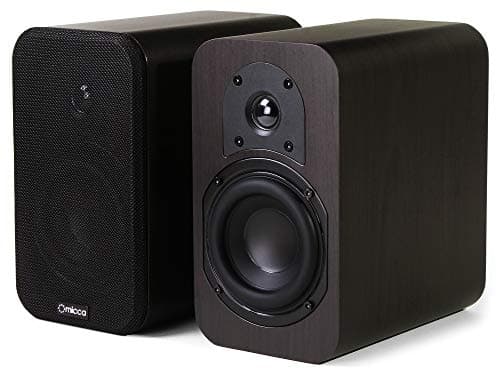 Micca RB42 A 4-inch speaker that publishes 50 Hz of extension and an honest 83 dB at 1 W — the two facts are the same fact, and Micca is unusual in showing you both. | Most bass from the smallest box | 7.2 | |
| 6 | 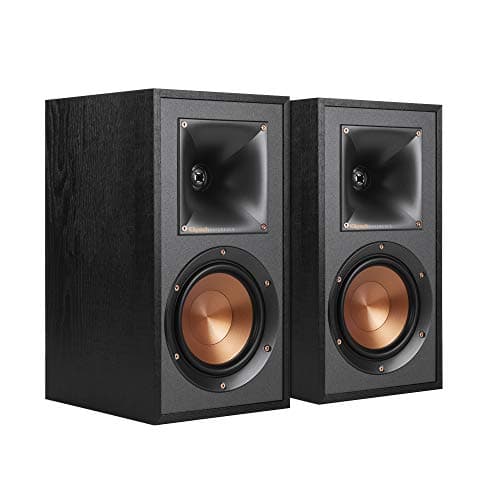 Klipsch R-51M High sensitivity means a modest amplifier drives these to a real volume — the practical answer when the amp is fixed and small. | Best for low-power amplifiers | 8.4 | |
| 7 | 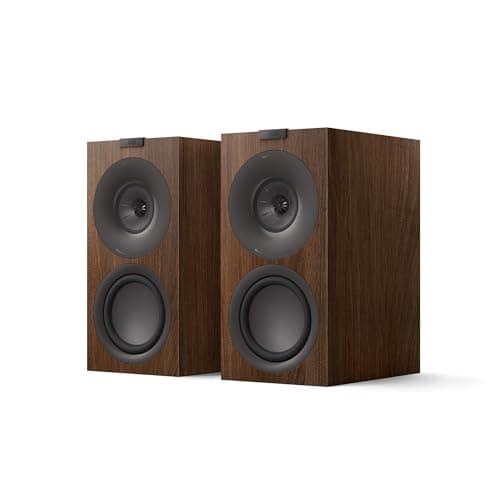 KEF Q Concerto Meta A three-way standmount that publishes a deeper bass corner and a higher maximum output than KEF's own LS50 Meta, for less money — and publishes its distortion with the measurement condition attached, which almost nobody at any price does. | Best overall on published data | 8.7 | $999.99View on Amazon $1,399.9929% off |
| 8 | 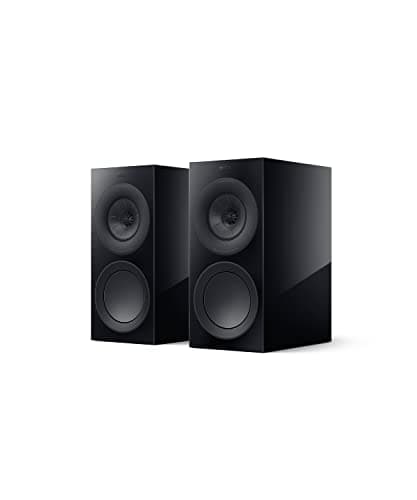 KEF R3 Meta A three-way standmount with a 25 mm Uni-Q dome, a 420 Hz lower crossover and the deepest published in-room bass on the page — and, oddly for the most expensive speaker here, KEF publishes neither a distortion figure nor a maximum output for it. | Best if the budget genuinely goes further | 7.8 |
A bookshelf speaker roundup is only as good as its sensitivity column, and almost every sensitivity column on the internet is wrong. Not because the numbers are fabricated — they are usually copied correctly from the manufacturer — but because three makers in this one roundup publish that figure three different ways, and tabulating them side by side as if they were the same measurement is the single most common error in the category.
So this page ranks on four things, in this order. First, whether the maker publishes sensitivity withthe condition it was measured at, because without that the number is decoration. Second, whether impedance is published as a real nominal value and a minimum, because that is what tells you whether your amplifier is comfortable. Third, bass extension with a stated tolerance, because a −6 dB figure and a −3 dB figure are not interchangeable and makers lead with whichever flatters them. Fourth, whether there is a recommended amplifier power range at all — a surprising number of these publish a power handling limit instead, which answers a different question.
Everything else — cabinet material, driver material, crossover frequency — is interesting and is in each pick’s spec table below, but none of it decides whether a speaker will work in your room with the amplifier you own.
The picks compared, spec by spec
Read the first two columns together and the third as the question almost nobody asks. KEF is the only brand in this field that publishes a minimum impedance, which is why three of its models appear here and why the dashes in that column are not an oversight on our part — they are an absence in the manufacturers’ own documents. The recommended amplifier ranges are in each pick’s spec table below rather than in a fifth column, and they split the field in a way worth knowing: ELAC, KEF, Polk and Micca all publish a recommended range, while both Klipsch sheets publish a power handling limit instead, which answers a different question. Every row carries its own live price and buy link.
Every figure below is the manufacturer’s own published value and links to the document we read it from. “Not published” means the manufacturer does not publish that figure; an em dash means we have no published figure for that model. Prices are live as of November 16, 2026.
Best overall under $500
- Sensitivity (as published)
- 87 dB · 2.83 V / 1 m
- Impedance
- 6 Ω (page and manual agree)
- Minimum impedance
- Not published
- Bass, with its tolerance
- 50 Hz at −3 dB (manual)
Best step up
- Sensitivity (as published)
- 94.5 dB · 2.83 V / 1 m · half-space
- Impedance
- 8 Ω “compatible”
- Minimum impedance
- Not published
- Bass, with its tolerance
- 44 Hz ± 3 dB
Best imaging design
- Sensitivity (as published)
- 87 dB · 2.83 V / 1 m
- Impedance
- 4 Ω nominal
- Minimum impedance
- 3.2 Ω
- Bass, with its tolerance
- 49 Hz ± 3 dB
Best all-rounder under $200
- Sensitivity (as published)
- 86 dB · no condition published
- Impedance
- No nominal value published
- Minimum impedance
- Not published
- Bass, with its tolerance
- 48 Hz, no tolerance
Most bass from the smallest box
- Sensitivity (as published)
- 83 dB · 1 W / 1 m
- Impedance
- 4–8 Ω range
- Minimum impedance
- Not published
- Bass, with its tolerance
- 50 Hz “typical in-room”
Best for low-power amplifiers
- Sensitivity (as published)
- 93 dB · 2.83 V / 1 m
- Impedance
- 8 Ω “compatible”
- Minimum impedance
- Not published
- Bass, with its tolerance
- 62 Hz ± 3 dB
Best overall on published data
- Sensitivity (as published)
- 85 dB · 2.83 V / 1 m
- Impedance
- 4 Ω nominal
- Minimum impedance
- 3.2 Ω
- Bass, with its tolerance
- 48 Hz ± 3 dB
Best if the budget genuinely goes further
- Sensitivity (as published)
- 87 dB · 2.83 V / 1 m
- Impedance
- 4 Ω nominal
- Minimum impedance
- 3.2 Ω
- Bass, with its tolerance
- 58 Hz ± 3 dB
| Pick | Sensitivity (as published) | Impedance | Minimum impedance | Bass, with its tolerance | Price |
|---|---|---|---|---|---|
| 1.ELAC Debut 3.0 DB63Best overall under $500 | 87 dB · 2.83 V / 1 m | 6 Ω (page and manual agree) | Not published | 50 Hz at −3 dB (manual) | |
| 2.Klipsch RP-600M IIBest step up | 94.5 dB · 2.83 V / 1 m · half-space | 8 Ω “compatible” | Not published | 44 Hz ± 3 dB | |
| 3.KEF Q3 MetaBest imaging design | 87 dB · 2.83 V / 1 m | 4 Ω nominal | 3.2 Ω | 49 Hz ± 3 dB | |
| 4.Polk Monitor XT15Best all-rounder under $200 | 86 dB · no condition published | No nominal value published | Not published | 48 Hz, no tolerance | |
| 5.Micca RB42Most bass from the smallest box | 83 dB · 1 W / 1 m | 4–8 Ω range | Not published | 50 Hz “typical in-room” | |
| 6.Klipsch R-51MBest for low-power amplifiers | 93 dB · 2.83 V / 1 m | 8 Ω “compatible” | Not published | 62 Hz ± 3 dB | |
| 7.KEF Q Concerto MetaBest overall on published data | 85 dB · 2.83 V / 1 m | 4 Ω nominal | 3.2 Ω | 48 Hz ± 3 dB | |
| 8.KEF R3 MetaBest if the budget genuinely goes further | 87 dB · 2.83 V / 1 m | 4 Ω nominal | 3.2 Ω | 58 Hz ± 3 dB |
Prices as of November 16, 2026; every “Check Price” link goes to Amazon and earns us a commission at no extra cost to you. #ad
The arithmetic that makes this field comparable
Sensitivity is quoted two legitimate ways. “2.83 V / 1 m” means a 2.83-volt signal was applied and the level measured a meter away. “1 W / 1 m” means one watt was applied. Those coincide only into an 8-ohm load, because 2.83 volts into 8 ohms is exactly 1 watt. Into a 4-ohm speaker, the same 2.83 volts delivers 2 watts — so a 4-ohm speaker quoted at 2.83 V is flattered by about 3 dB relative to the same speaker quoted at 1 W.
P = V² ÷ R, then dB = 10 × log10(P ÷ 1 W)
Inputs
- KEF Q3 Meta sensitivity: 87 dB (2.83 V / 1 m), nominal impedance 4 Ω (KEF spec page)
- Micca RB42 sensitivity: 83 dB (1 W / 1 m) (Micca spec page)
Result
Run the same conversion across the field and the ELAC DB63’s 87 dB at 2.83 V into its published 6 Ω works out at about 85.8 dB at 1 watt, and Klipsch’s 8-ohm-“compatible” models need no conversion at all if you take that wording at face value. The result is a ladder that runs from roughly 83 dB to 93 dB in the same units, and that span has a very concrete meaning.
Power ratio = 10^(ΔdB ÷ 10)
Inputs
- Klipsch R-51M: 93 dB (2.83 V / 1 m), 8 Ω “compatible” (Klipsch spec sheet (PDF))
- Micca RB42: 83 dB (1 W / 1 m) (Micca spec page)
Result
Why the ELAC DB63 wins
It is not the most sensitive, the cheapest, or the one with the deepest bass. It wins because it is the most completely specified speaker in the field, and because what it specifies is good.
ELAC publishes 87 dB at 2.83 V / 1 m, a 6 Ω impedance that appears identically on the product page and in the owner’s manual, a recommended amplifier range of 20 to 140 W, a 2,000 Hz crossover, a 6.5-inch aramid-fiber woofer, a 1-inch aluminum dome tweeter, a dual flared front port, and 16 mm CARB2-rated MDF with five-way binding posts. The bass figure is published twice and honestly: 42 Hz at −6 dB on the product page, and 50 Hz at −3 dB in the manual. We rank on the 50 Hz figure, because −3 dB is the convention that means something.
Two caveats, both ELAC’s own. The product page claims 120 W peak power handling while the owner’s manual says 60 W nominal and 80 W peak — two ELAC documents, two answers, and the sane plan is the lower pair. And ELAC publishes no minimum impedance, so a 6 Ω nominal is all you get for amplifier matching. The front port is the quiet practical advantage: it is the one speaker here you can put close to a wall without the port loading up, which matters more in real rooms than any of the numbers above. Our under-$500 bracket ranks it against the rest of that price band in detail.
The Klipsch RP-600M II, and the footnote that changes its headline
Klipsch publishes 94.5 dB for the RP-600M II, which is the highest number on this page by a wide margin — and the spec sheet attaches a footnote most retellings drop: the measurement is half-space anechoic. That is a measurement taken as if the speaker were mounted in an infinite wall, and it is not the same claim as a free-standing figure. Our own Klipsch range pagegoes through the inconsistency in detail: the Reference Premiere sheets carry that footnote and the cheaper Reference sheets, including the R-51M’s 93 dB, do not. So the 1.5 dB gap between those two models is not a clean comparison either.
What is not in dispute is that both are high-sensitivity designs with a horn-loaded tweeter, and that they are the two speakers here a low-power amplifier can drive to a satisfying level. The RP-600M II publishes 44 Hz to 25 kHz ± 3 dB, a Cerametallic 6.5-inch woofer with Faraday rings, a 1,500 Hz crossover and 18.1 lb per cabinet. Its genuine limitation is the one shared across the brand: Klipsch publishes “8 Ω compatible” and no minimum impedance anywhere, so you cannot tell how hard it gets at the crossover. It also publishes a power handlinglimit (100 W continuous, 400 W peak) rather than a recommended range, which answers the question “what will survive” and not “what should I buy”.
The KEF Q3 Meta publishes a distortion figure, and nearly nobody does
This is why the Q3 Meta is third and not sixth. KEF publishes harmonic distortion with its measurement condition attached: under 2% at 110 Hz and above, and under 1% from 135 Hz to 20 kHz, measured at 90 dB at 1 m. Hardly any loudspeaker maker at any price publishes a distortion figure at all, let alone one you can reproduce. KEF also publishes a 4 Ω nominal impedance with a 3.2 Ω minimum, an amplifier requirement of 15 to 150 W, a 109 dB maximum output, a 2.0 kHz crossover and a 49 Hz ± 3 dB bass figure.
The Uni-Q array — a 25 mm vented aluminum dome sitting at the acoustic center of a 165 mm aluminum cone, with MAT behind it — is also the one design decision on this page with a direct consequence for placement: a coaxial driver keeps its vertical dispersion tidy, which is what you want from a speaker going on a bookshelf rather than on stands at ear height.
The cost is in the impedance. 4 Ω nominal and 3.2 Ω minimum is a harder load than anything else here, it is the reason the 87 dB headline converts to about 84 dB on a 1-watt basis, and it is a real constraint if your amplifier is a small Class D box or a vintage receiver. What impedance actually does to an amplifier is the page to read before buying a 4 Ω speaker, and our amplifier roundup for bookshelf speakers ranks on published continuous 4 Ω power for exactly this reason.
The budget end: Polk Monitor XT15 and Micca RB42
The XT15 is the entry point on this page and the easiest to recommend without qualification for a first system. Polk publishes a 5.25-inch bi-laminate paper woofer, a 1-inch Terylene dome, a 2,200 Hz crossover, 48 Hz to 40 kHz (no tolerance), 9 lb per cabinet, and — unusually for this price — a recommended amplification range of 30 to 150 W per channel.
Its weakness is disclosure. Polk publishes 86 dB sensitivity with no measurement condition at all: no 2.83 V, no 1 W. And rather than a nominal impedance, Polk says only “compatible with 4- and 8-ohm outputs”, which is a statement about your amplifier’s tolerance and not about the speaker’s load. So the two figures you would use to match it cannot be compared with anyone else’s here, and the 30 W lower bound on that amplifier range is the most useful number Polk gives you.
The Micca RB42 is the opposite personality: the smallest box here at 8.7 by 4.9 by 7.9 inches, a 4-inch woofer, a 0.75-inch silk dome, and a published 50 Hz low end that is the most extension-per-liter on this page by a distance. It is also the most honestly specified budget speaker here — 83 dB at 1 W / 1 m is the hard condition, not the flattering one — and the honesty is what makes it look bad in a table.
The trade is spelled out in Micca’s own numbers. The 50 Hz figure is stated as “typical in-room”, which is not an anechoic measurement and carries no tolerance. The impedance is a 4–8 Ω range rather than a value. The crossover slope is published (18 dB/octave) but the crossover frequency is not. And 83 dB with a 15 W lower power bound means this is the one speaker on the page that genuinely needs an amplifier with something in reserve. The under-$200 bracket is where both of these are ranked against each other directly.
The Klipsch R-51M is the one to buy if your amplifier is small
At 93 dB at 2.83 V / 1 m with no half-space footnote on its sheet, the R-51M is the most sensitive speaker here on the most straightforwardly published figure. Paired with a 10-watt tube amplifier or a tiny Class D box, it is the pick that plays loudly enough to be enjoyable, and that is a real functional advantage rather than an audiophile abstraction.
It is ranked sixth because of what it gives up to get there: 62 Hz ± 3 dB is the shallowest bass figure on the page, the cabinet is 11 lb against the DB63’s 17.3 lb, and the 5.25-inch spun-copper woofer is doing less work in a smaller box. It also shares the brand’s impedance disclosure problem. Reasonable people rank it higher than we do if their amplifier is the constraint — and our high-sensitivity roundup does exactly that, because on that page sensitivity is the ranking criterion rather than one of four.
Above $900: the two KEFs, and the one that publishes less
The Q Concerto Meta is the best-documented speaker in our entire registry. Three ways, with a 19 mm vented aluminum dome and MAT plus a 100 mm aluminum midrange in a Uni-Q array and a separate 165 mm hybrid aluminum bass cone. 48 Hz ± 3 dB, 40 Hz at −6 dB, 36 Hz typical in-room. Crossovers at 430 Hz and 2.9 kHz. A 108 dB maximum output. Distortion under 2% from 37 Hz and under 1% from 91 Hz to 20 kHz at 90 dB / 1 m. 4 Ω nominal, 3.2 Ω minimum, 15 to 180 W. Its 85 dB sensitivity is the lowest headline figure on the page and converts to about 82 dB at 1 watt, so it is unambiguously an amplifier-hungry speaker, and at 20.9 lb in a 16.3-inch cabinet it is a bookshelf speaker in name only.
The R3 Meta is the most expensive speaker here and publishes lessthan both cheaper KEFs: no harmonic distortion figure and no maximum output figure appear on its page, where the Q-series models publish both. We report that rather than explain it. What it does publish is a bigger three-way — a 25 mm dome and a 125 mm midrange in the Uni-Q array, plus a 165 mm bass cone — with 58 Hz ± 3 dB, 38 Hz to 50 kHz at −6 dB, 30 Hz typical in-room, crossovers at 420 Hz and 2.3 kHz, and 27.3 lb per cabinet. Note that its ± 3 dB figure is higherthan the Q Concerto’s while its in-room figure is lower: same house, two different ways of being impressive.
Both sit at the top of this page rather than the middle of it because at this money the honest comparison is not with the speakers above but with a floorstanding speaker at the same price, which will almost always give you more bass for the money. Our high-end bookshelf roundup is the page that ranks this tier properly, including the KEF LS50 Meta and the Dynaudio Emit 20 that are deliberately not repeated here.
Three things that will do more for the sound than changing the pick
Get them off the shelf.Almost every speaker on this page is specified free-standing, and putting one in a bookcase loads the port and smears the first reflection. Stands at roughly ear height are the cheapest real upgrade in the category — our speaker stand roundup covers the heights that match these cabinets.
Decide about a subwoofer early.The deepest ± 3 dB figure on this page is 44 Hz. Nothing here does the bottom octave, and whether you need a subwoofer with bookshelf speakers is a question worth answering before you choose the speakers rather than after.
Match the amplifier to the sensitivity, not to the price.The field here spans about 10 dB converted to one condition, which is a factor of ten in power. A 70 to 100 W receiver — say any of Yamaha’s current range — is comfortable with the Klipsch pair and working hard with the KEFs. If the source is a turntable, our vinyl-specific bookshelf ranking weights things differently again, and the Audio-Technica deck ladder is the cheapest honest front end to put in front of any of them.
Every pick in detail
Every specification below links to the manufacturer document we read it from. Where a manufacturer does not publish a figure, we say so rather than estimating it.
ELAC Debut 3.0 DB63
Best overall under $500Price as of November 16, 2026. #ad
The Debut 3.0 generation of the same 6.5-inch design, and the first ELAC bookshelf we cover that publishes both a response tolerance and a recommended amplifier range — so the match can be finished rather than estimated.
- published data
- 9/10
- sensitivity
- 6/10
- bass extension
- 8/10
- amp friendliness
- 6/10
- value for money
- 8/10
| Specification | Published value | Source |
|---|---|---|
| Design | 2-way, bass reflex, dual flared front port | ELAC spec page |
| Sensitivity | 87 dB (2.83 V / 1 m) | ELAC spec page |
| Impedance | 6 Ω (product page and owner's manual agree, which they do not for the DF-series towers) | ELAC owner's manual (PDF) |
| Minimum impedance | Not published | — |
| Frequency response (−3 dB) | 50 Hz – 34 kHz — published in the owner's manual only, 8 Hz above the headline figure | ELAC owner's manual (PDF) |
| Frequency response (−6 dB) | 42 Hz – 38 kHz (the figure ELAC's product page leads with) | ELAC spec page |
| Recommended amplifier power | 20 – 140 W | ELAC spec page |
| Power handling | Product page: 120 W peak. Owner's manual: 60 W nominal / 80 W peak. Two ELAC documents, two answers — plan to the lower pair. | ELAC owner's manual (PDF) |
| Woofer | 6.5 in aramid-fiber cone | ELAC spec page |
| Tweeter | 1 in aluminum dome (the B6.2's was cloth) | ELAC spec page |
| Crossover | 2,000 Hz | ELAC spec page |
| Enclosure | CARB2-rated 16 mm MDF, 5-way metal binding posts | ELAC spec page |
| Dimensions (H × W × D) | 13.3 × 7.7 × 11.7 in (339 × 195 × 298 mm) | ELAC spec page |
| Weight (each) | 17.3 lb / 7.85 kg | ELAC spec page |
Pros
- ELAC publishes a tolerance for this generation: 50 Hz – 34 kHz at −3 dB in the owner's manual, beside the 42 Hz – 38 kHz the product page leads with at −6 dB
- A published recommended amplifier range, 20 – 140 W — the Debut 2.0 generation published only a handling limit, which is a different spec
- Same 87 dB at 2.83 V / 1 m and same 6 Ω as the B6.2, and both ELAC documents agree on the impedance, so every power calculation on this site carries over unchanged
- Front-firing dual flared port, so it tolerates being near a wall better than a rear-ported box
Cons
- The 42 Hz headline is a −6 dB figure. At −3 dB ELAC's own manual says 50 Hz, and only the manual says it
- Still no minimum impedance published, so you cannot see where the load actually dips
- ELAC's two documents disagree on power handling: 120 W peak on the product page, 60 W nominal / 80 W peak in the manual
- Bigger and heavier than the B6.2 it follows — 17.3 lb and 13.3 in tall, which is a lot of 'bookshelf'
Skip it if your amplifier is a low-power desktop unit. At 87 dB into 6 Ω this asks for the same real current the B6.2 did — run the power arithmetic on our amp-matching guide first.
Klipsch RP-600M II
Best step upPrice as of November 16, 2026. #ad
Higher sensitivity and a bigger cabinet than the R-51M, which buys headroom rather than a different kind of speaker.
- sensitivity
- 10/10
- bass extension
- 8/10
- amp friendliness
- 10/10
- value for money
- 7/10
- build quality
- 9/10
| Specification | Published value | Source |
|---|---|---|
| Sensitivity | 94.5 dB (2.83 V / 1 m, half-space anechoic — Klipsch's published footnote) | Klipsch spec sheet (PDF) |
| Impedance | 8 Ω “compatible” (Klipsch's wording) | Klipsch spec sheet (PDF) |
| Minimum impedance | Not published | — |
| Frequency response | 44 Hz – 25 kHz ± 3 dB | Klipsch spec sheet (PDF) |
| Power handling | 100 W continuous / 400 W peak | Klipsch spec sheet (PDF) |
| Woofer | 6.5 in Cerametallic with Faraday rings | Klipsch spec sheet (PDF) |
| Crossover | 1,500 Hz | Klipsch spec sheet (PDF) |
| Weight (each) | 18.1 lb / 8.2 kg | Klipsch spec sheet (PDF) |
Pros
- Very high sensitivity
- Larger cabinet and more extension than the R-51M
- Real wood-veneer finishes
Cons
- Well above the $500 bracket
- Large
- Rear port placement constraints remain
Skip it if you are shopping under $500 — this is a bracket up.
KEF Q3 Meta
Best imaging designPrice as of November 16, 2026. #ad
KEF's coaxial Uni-Q driver puts the tweeter at the woofer's acoustic center, and the Meta generation adds a metamaterial absorber behind it — both are engineering changes rather than finish upgrades.
- sensitivity
- 7/10
- bass extension
- 9/10
- amp friendliness
- 5/10
- value for money
- 7/10
- build quality
- 9/10
| Specification | Published value | Source |
|---|---|---|
| Sensitivity | 87 dB (2.83 V / 1 m) | KEF spec page |
| Impedance (nominal) | 4 Ω | KEF spec page |
| Minimum impedance | 3.2 Ω | KEF spec page |
| Frequency response | 49 Hz – 20 kHz (± 3 dB); 42 Hz – 20 kHz at −6 dB | KEF spec page |
| Amplifier requirements | 15–150 W | KEF spec page |
| Driver | Uni-Q array: 165 mm (6.5 in) aluminum cone with a 25 mm (1 in) vented aluminum dome and MAT at its acoustic center | KEF spec page |
| Crossover | 2.0 kHz | KEF spec page |
| Harmonic distortion | < 2% at 110 Hz and above; < 1% from 135 Hz – 20 kHz (measured at 90 dB, 1 m) | KEF spec page |
| Maximum output | 109 dB | KEF spec page |
| Dimensions (H × W × D) | 357 × 210 × 305 mm (14.1 × 8.3 × 12.0 in) | KEF spec page |
| Weight (each) | 8.2 kg / 18.1 lb | KEF spec page |
Pros
- Uni-Q coaxial driver — a real design difference, not a trim level
- Publishes both a nominal (4 Ω) and a minimum (3.2 Ω) impedance, plus a harmonic-distortion figure with its measurement condition — almost nobody publishes the last one
- 165 mm driver and a 42 Hz −6 dB figure, the deepest published extension of any bookshelf pair here
Cons
- Well above the $500 bracket at its current price
- 4 Ω nominal dipping to 3.2 Ω — this is a genuinely demanding load, not a nominal-8 Ω speaker that occasionally dips
- 18.1 lb and 12 in deep per speaker, which is a stand rather than a shelf
Skip it if your amplifier does not state a 4 Ω rating. The Q3 Meta is nominally 4 Ω before it dips, which is the hardest load in this registry.
Polk Monitor XT15
Best all-rounder under $200Price as of November 16, 2026. #ad
48 Hz of published extension and a stated 30–150 W amplifier range, from a maker who tells you what to drive it with but not how they measured its sensitivity.
- specs
- 7/10
- sensitivity
- 6/10
- published data
- 6/10
- value for money
- 9/10
- bass extension
- 8/10
| Specification | Published value | Source |
|---|---|---|
| Sensitivity | 86 dB — Polk publishes NO measurement condition (no 2.83 V/1 m or 1 W/1 m qualifier) | Polk info sheet (PDF) |
| Impedance | “Compatible with 4- and 8-ohm outputs” — Polk publishes no nominal impedance value | Polk info sheet (PDF) |
| Minimum impedance | Not published | — |
| Frequency response | 48 Hz – 40 kHz (no tolerance published) | Polk info sheet (PDF) |
| Recommended amplification | 30–150 W per channel | Polk info sheet (PDF) |
| Woofer | 5.25 in bi-laminate paper | Polk info sheet (PDF) |
| Tweeter | 1 in Terylene dome | Polk info sheet (PDF) |
| Crossover | 2,200 Hz | Polk info sheet (PDF) |
| Weight (each) | 9 lb / 4.08 kg | Polk info sheet (PDF) |
Pros
- 48 Hz – 40 kHz published extension, the deepest bass figure in this bracket
- Polk publishes a recommended amplification range (30–150 W), which Klipsch and ELAC do not
- 1 in Terylene dome tweeter, the same driver family as the more expensive Signature Elite ES15
- Explicitly rated for Dolby Atmos height duty as well as stereo, so it does double service
Cons
- The 86 dB sensitivity is published with NO measurement condition, so it cannot honestly be compared to Klipsch's 2.83 V figures
- “Compatible with 4- and 8-ohm outputs” is not a nominal impedance, and no minimum is published
- 48 Hz – 40 kHz is quoted with no tolerance, which makes the endpoints unverifiable
- The 30 W lower bound rules out several of the smallest amplifiers we recommend
Skip it if your amplifier delivers under 30 W. Polk's own recommendation excludes it, and that is Polk's number, not ours.
Micca RB42
Most bass from the smallest boxPrice as of November 16, 2026. #ad
A 4-inch speaker that publishes 50 Hz of extension and an honest 83 dB at 1 W — the two facts are the same fact, and Micca is unusual in showing you both.
- specs
- 7/10
- sensitivity
- 3/10
- published data
- 7/10
- value for money
- 8/10
- bass extension
- 8/10
| Specification | Published value | Source |
|---|---|---|
| Sensitivity | 83 dB (1 W / 1 m) — note the condition: this is the TRUE 1 W figure, not the flattering 2.83 V one most brands quote | Micca spec page |
| Impedance | 4–8 Ω (Micca publishes a range rather than a nominal value) | Micca spec page |
| Minimum impedance | Not published | — |
| Frequency response | 50 Hz – 20 kHz, stated as “typical in-room” — an in-room figure is not an anechoic one and carries no tolerance | Micca spec page |
| Power handling | 15–100 W each — Micca's lower bound doubles as a de facto minimum amplifier recommendation | Micca spec page |
| Woofer | 4 in coated paper cone, rubber surround | Micca spec page |
| Tweeter | 0.75 in silk dome | Micca spec page |
| Crossover | 18 dB/octave slope — Micca publishes the SLOPE but not the crossover FREQUENCY | Micca spec page |
| Dimensions | 8.7 in H × 4.9 in W × 7.9 in D | Micca spec page |
| Weight | Not published | — |
Pros
- Micca quotes sensitivity at 1 W/1 m, the harder and more honest condition — most brands quote 2.83 V, which flatters a low-impedance speaker
- 50 Hz from a 4-inch driver in an 8.7-inch cabinet is genuinely unusual
- A 10-element crossover with film capacitors and air-core coils, described in detail on Micca's own page
- Micca publishes a 15 W lower power bound, which functions as a minimum amplifier recommendation
Cons
- 83 dB is the lowest sensitivity on this site — it needs roughly five times the power of the Klipsch R-41M for the same level
- The 50 Hz figure is qualified “typical in-room”, which is not an anechoic measurement and carries no tolerance
- Micca publishes the crossover SLOPE (18 dB/octave) but not the crossover FREQUENCY
- “4–8 ohms” is a range, not a nominal impedance, and no minimum is published
Skip it if your amplifier is small. A 20 W amp that drives the Klipsch R-41M to a satisfying level will not do the same job here — the arithmetic is on our amp-matching page and it is not close.
Klipsch R-51M
Best for low-power amplifiersPrice as of November 16, 2026. #ad
High sensitivity means a modest amplifier drives these to a real volume — the practical answer when the amp is fixed and small.
- sensitivity
- 10/10
- bass extension
- 6/10
- amp friendliness
- 10/10
- value for money
- 9/10
- build quality
- 7/10
| Specification | Published value | Source |
|---|---|---|
| Sensitivity | 93 dB (2.83 V / 1 m) | Klipsch spec sheet (PDF) |
| Impedance | 8 Ω “compatible” (Klipsch's wording — not a measured nominal figure) | Klipsch spec sheet (PDF) |
| Minimum impedance | Not published | — |
| Frequency response | 62 Hz – 21 kHz ± 3 dB | Klipsch spec sheet (PDF) |
| Power handling | 85 W continuous / 340 W peak (a handling limit, not a recommended amplifier range) | Klipsch spec sheet (PDF) |
| Woofer | 5.25 in spun-copper IMG | Klipsch spec sheet (PDF) |
| Tweeter | 1 in aluminum LTS on a 90° × 90° Tractrix horn | Klipsch spec sheet (PDF) |
| Crossover | 1,660 Hz | Klipsch spec sheet (PDF) |
| Weight (each) | 11 lb / 5 kg | Klipsch spec sheet (PDF) |
Pros
- High sensitivity — plays loud on very little power
- The right answer for a low-wattage or tube amplifier
- Horn tweeter gives strong dispersion control
Cons
- Horn presentation is divisive and we cannot tell you how it sounds — we have not heard them
- Rear port needs breathing room from the wall
- Less low-end than the ELAC B6.2
- Previous generation — Klipsch's own page for it now points buyers to the newer Reference R-50M
Skip it if your amp already has power to spare — you are paying for sensitivity you do not need.
KEF Q Concerto Meta
Best overall on published dataA three-way standmount that publishes a deeper bass corner and a higher maximum output than KEF's own LS50 Meta, for less money — and publishes its distortion with the measurement condition attached, which almost nobody at any price does.
- published data
- 10/10
- bass extension
- 9/10
- amp friendliness
- 5/10
- max output
- 9/10
- value for money
- 8/10
| Specification | Published value | Source |
|---|---|---|
| Design | Three-way bass reflex | KEF spec page |
| Driver | Uni-Q driver array with a 19 mm (0.75 in) vented aluminium dome and MAT plus a 100 mm (4 in) aluminium cone midrange, and a separate 165 mm (6.5 in) hybrid aluminium bass cone | KEF spec page |
| Frequency response | 48 Hz – 20 kHz (± 3 dB) | KEF spec page |
| Frequency range | 40 Hz – 20 kHz (−6 dB) | KEF spec page |
| Typical in-room bass response | 36 Hz (−6 dB) | KEF spec page |
| Crossover | 430 Hz, 2.9 kHz | KEF spec page |
| Maximum output | 108 dB (measured at 1 m) — the highest published figure here | KEF spec page |
| Amplifier requirements | 15–180 W | KEF spec page |
| Sensitivity | 85 dB (2.83 V / 1 m) | KEF spec page |
| Impedance (nominal) | 4 Ω | KEF spec page |
| Minimum impedance | 3.2 Ω | KEF spec page |
| Harmonic distortion | < 2% from 37 Hz and above; < 1% from 91 Hz – 20 kHz (measured at 90 dB, 1 m) | KEF spec page |
| Dimensions (H × W × D) | 415 × 210 × 315 mm (16.3 × 8.3 × 12.4 in), measured with terminal, per unit | KEF spec page |
| Weight (each) | 9.5 kg / 20.9 lb | KEF spec page |
Pros
- Three-way: a dedicated 100 mm midrange inside the Uni-Q plus a separate 165 mm bass cone, so the midrange driver is not also moving the bass
- 48 Hz at ± 3 dB — the deepest anechoic low corner published by any speaker on this page, and 31 Hz deeper than the LS50 Meta's
- 108 dB published maximum output, the highest here, with a 15-180 W amplifier window that most integrated amplifiers can satisfy
- Publishes harmonic distortion WITH its 90 dB / 1 m measurement condition, and a minimum impedance as well as a nominal one
Cons
- 4 Ω nominal dipping to 3.2 Ω — a genuinely demanding load that wants an amplifier with a published 4 Ω rating
- 85 dB sensitivity, tied for the lowest on this page, so it needs watts as well as current
- < 2% distortion at 37 Hz and above against the LS50 Meta's < 0.4% from 175 Hz — five times higher where the two windows overlap, on KEF's own figures
- 20.9 lb and 16.3 in tall per speaker: this is a floor stand or a very solid piece of furniture, not a shelf
- The 19 mm tweeter dome is smaller than the 25 mm used in both the LS50 Meta and the R3 Meta, and KEF does not explain the change
Skip it if your amplifier does not publish a 4 Ω rating, or the speakers have to sit on a bookshelf. At 16.3 in tall and 20.9 lb each this is a standmount in the literal sense.
KEF R3 Meta
Best if the budget genuinely goes furtherPrice as of November 16, 2026. #ad
A three-way standmount with a 25 mm Uni-Q dome, a 420 Hz lower crossover and the deepest published in-room bass on the page — and, oddly for the most expensive speaker here, KEF publishes neither a distortion figure nor a maximum output for it.
- published data
- 7/10
- bass extension
- 8/10
- amp friendliness
- 5/10
- max output
- 5/10
- value for money
- 5/10
| Specification | Published value | Source |
|---|---|---|
| Design | Three-way bass reflex | KEF spec page |
| Driver | Uni-Q driver array with a 25 mm (1 in) vented aluminium dome and MAT plus a 125 mm (5 in) aluminium cone midrange, and a separate 165 mm (6.5 in) hybrid aluminium bass cone | KEF spec page |
| Frequency response | 58 Hz – 28 kHz (± 3 dB) | KEF spec page |
| Frequency range | 38 Hz – 50 kHz (−6 dB) | KEF spec page |
| Typical in-room bass response | 30 Hz (−6 dB) | KEF spec page |
| Crossover | 420 Hz, 2.3 kHz | KEF spec page |
| Amplifier requirements | 15–180 W | KEF spec page |
| Sensitivity | 87 dB (2.83 V / 1 m) | KEF spec page |
| Impedance (nominal) | 4 Ω | KEF spec page |
| Minimum impedance | 3.2 Ω | KEF spec page |
| Dimensions (H × W × D) | 422 × 200 × 336 mm (16.6 × 7.9 × 13.2 in), measured with terminal, per unit | KEF spec page |
| Weight (each) | 12.4 kg / 27.3 lb | KEF spec page |
| Harmonic distortion | Not published | — |
| Maximum output | Not published | — |
Pros
- 420 Hz lower crossover, the lowest on this page by 10 Hz, which hands the entire midrange to one driver from 420 Hz to 2.3 kHz
- 25 mm Uni-Q tweeter dome rather than the Q Concerto Meta's 19 mm, with the same MAT absorber behind it
- 30 Hz typical in-room bass response at -6 dB, the deepest in-room figure published here
- 87 dB sensitivity, the highest of the three KEFs, with the same 15-180 W amplifier window
- 27.3 lb of cabinet, the heaviest here by 4.6 lb
Cons
- KEF publishes NO harmonic distortion and NO maximum output for this model, while publishing both for the two cheaper KEFs beside it. We report that; we cannot explain it
- 58 Hz at ± 3 dB is 10 Hz SHALLOWER than the Q Concerto Meta's 48 Hz, for roughly $1,100 more a pair
- 4 Ω nominal, 3.2 Ω minimum — the same demanding load as the Q Concerto Meta with none of its price advantage
- 27.3 lb each needs a stand rated for it, and most published stand capacities are 30-40 lb per stand
- The largest cabinet on the page at 16.6 x 7.9 x 13.2 in, which is deeper than several published stand top plates
Skip it if you are comparing on the spec sheet. The cheaper Q Concerto Meta publishes a deeper ± 3 dB corner, a higher maximum output and a distortion figure this model does not have.
Frequently asked questions
What are the best bookshelf speakers overall?
Why do bookshelf speaker sensitivity numbers not match between brands?
How much amplifier power do bookshelf speakers need?
Do I need a subwoofer with bookshelf speakers?
Are more expensive bookshelf speakers better documented?
Read next
The Best Bookshelf Speakers Under $500
Six pairs under $500 — and only one publishes a minimum impedance and a recommended amp range.
The Best Bookshelf Speakers Under $200
Four bookshelf pairs at the $200 mark, and a seven-decibel sensitivity gap that is worth five times the amplifier power.
The Best Bookshelf Speakers Under $1,000
Five pairs under $1,000, and the measurement footnote that makes the headline sensitivity figures non-comparable.
The Best High-End Bookshelf Speakers
Five standmounts over $1,000 a pair, ranked on published data: distortion with a measurement condition, a minimum impedance as well as a nominal one, and a bass corner you can actually compare. The cheaper KEF beats the famous one on three of them.
Speaker Sensitivity Explained
2.83 V/1 m versus 1 W/1 m, what the conversion is worth in decibels, and the twelve-decibel spread that means sixteen times the power.
Bookshelf vs Floorstanding Speakers
Cabinet volume buys extension; a subwoofer buys extension you can place independently. The trade, with each maker's own numbers.
The Best Speaker Stands for Bookshelf Speakers
Ranked on published top plate depth against published cabinet depth, then on height. The heaviest bookshelf speaker we cover is 18.1 lb against a 30 lb rating — capacity is the spec that does not matter, and plate size is the one that does.
Sources
Every specification on this page was read from one of these documents. If one of them has changed, or we have made an error, tell us — corrections are logged and dated per our editorial policy.