Integrated Amplifier vs Receiver
A receiver does more things. An integrated amplifier does fewer things with more of the power supply pointed at each of them — and the published ratings show exactly where that trade sits.
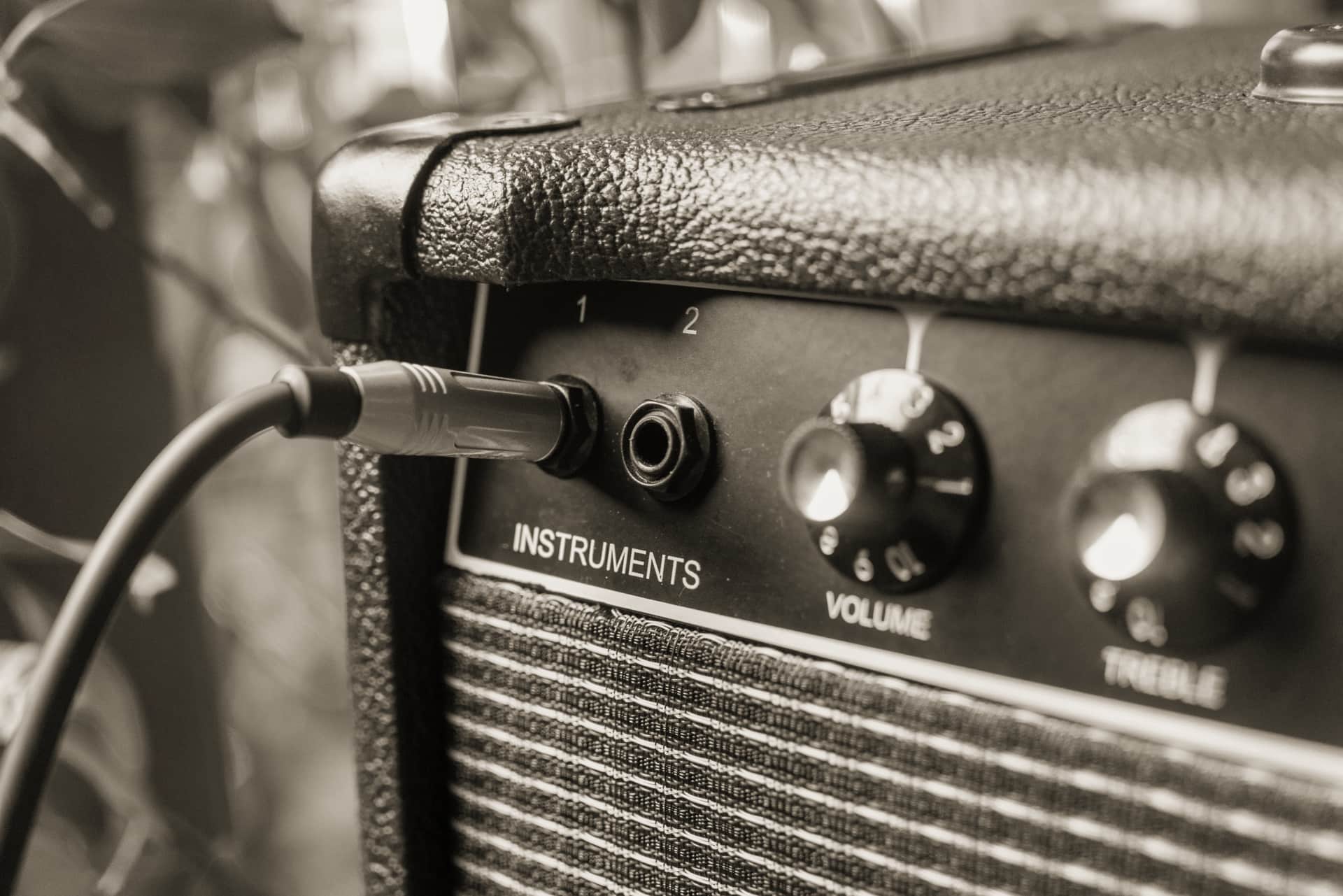
An integrated amplifier is a preamplifier and a power amplifier in one box, with two channels. An AV receiver is the same idea with five to eleven channels, a radio tuner, HDMI switching, surround decoding and room correction.
The receiver does more. That is not in dispute. The interesting question is what those extra functions cost the two channels you actually use for music, and the published specifications answer it more clearly than the marketing does.
The two-channels-driven convention
Read any AV receiver’s power rating closely and you will find a condition attached: two channels driven.
- Denon AVR-X1800H— 80 W + 80 W (8 Ω, 20 Hz–20 kHz, 0.08% THD, 2 ch driven), on a receiver with seven power amplifiers.
- Yamaha RX-V6A— 100 W/ch (8 Ω, 20 Hz–20 kHz, 0.06% THD, 2 ch driven), also seven channels.
- Onkyo TX-NR6100— 100 W/ch (8 Ω, 20 Hz–20 kHz, 0.08% THD, 2 ch driven, FTC). The “210 W per channel” figure all over search results is a dynamic-power marketing number, not the FTC rating.
- Marantz Cinema 70s — 50 W + 50 W under the same 2-channel condition, on a slim chassis with seven powered channels.
Nobody publishes an all-channels-driven figure, because the shared power supply cannot deliver the rated output to seven channels at once. That is not a scandal — it is a reasonable engineering decision, since film soundtracks rarely demand full output from every channel simultaneously. But it means a receiver’s per-channel number is a best-case figure under a stated condition, and an integrated amplifier’s is not.
For comparison: the Marantz PM6007 publishes 45 W × 2 into 8 Ω with both channels driven — which for a two-channel amplifier means all channels driven. Same condition on the label, very different guarantee behind it.
What an integrated does with the money instead
No HDMI board, no video processing, no surround decoders, no radio tuner, no room-correction DSP. The chassis, the transformer and the price all go into two channels.
You can see it in the specifications that receivers do not publish at all:
- Damping factor.Yamaha publishes 240 for the A-S501; Marantz publishes 100 across 40 Hz–20 kHz for the PM6007; Cambridge publishes above 50 for the AXA35. No receiver we cover publishes one at all — not the ones in our home theater hub, and not the Onkyo TX-8470 either, which is otherwise the best-specified machine under $500.
- A real 4-ohm rating.The Marantz PM6007 publishes 60 W × 2 into 4 Ω across the full band with both channels driven. Receiver manuals typically state a minimum speaker impedance rather than a 4-ohm power figure.
- Line-stage signal-to-noise in the 100 dB region. Denon publishes 105 dB for the PMA-600NE, Marantz 102 dB for the PM6007, Yamaha 99 dB for the A-S501.
Where the receiver wins outright
Room correction. This is the big one, and it is not close. Audyssey MultEQ XT on the Denon AVR-X1800H, YPAO with multipoint measurement on the Yamaha RX-V6A, AccuEQ on the Onkyo. No integrated amplifier at any price in our coverage includes room correction of any kind. The room is usually the largest measurable problem in a listening setup, and a receiver ships with a tool for it.
HDMI and television. If a screen is involved, a receiver is the answer. The Denon AVR-X1800H publishes six HDMI inputs with 8K/60 and 4K/120 passthrough; no integrated amplifier has HDMI at all.
Surround.Obviously. And note that most stereo streaming boxes explicitly refuse Dolby Digital and DTS — this is a receiver’s job.
A phono input, often.Receivers have not abandoned vinyl: the Denon AVR-X1800H publishes MM at 2.5 mV, the Yamaha RX-V6A 3.5 mV/47 kΩ, the Onkyo TX-NR6100 3.5 mV rms/47 kΩ, and the Marantz Cinema 70s 2.5 mV with a published RIAA deviation of ±1 dB — better documented than any integrated amplifier we cover. Be careful though: the Yamaha RX-V4A lists its phono input as N/A.
The pre-out question, if you want both
The usual compromise is a receiver for film and a separate power amplifier for the front two channels, or an integrated amplifier in a home-theater-bypass arrangement. Both need pre-outs, and here the tiers diverge sharply.
The Denon AVR-X1800H publishes only 2.2 pre-outs — front left and right plus two subwoofers, not a full 7.2. The Yamaha RX-V6A is similar: front L/R, two subwoofers and Zone 2. The Denon AVR-S670H has subwoofer pre-outs only. The Marantz Cinema 70s publishes a full 7.2 pre-out, which is genuinely unusual at its tier and is the reason to consider it over higher-powered rivals.
If you plan to add external amplification later, that single spec matters more than the wattage on the front panel.
Which should you buy?
Integrated if the system is for music, there is no television involved, you have two speakers, and you want the published damping factor and the honest both-channels-driven rating. Our integrated roundup covers the field.
Receiver if a television is involved at all, if you want more than two speakers, or if room correction appeals — and it should. Our receiver roundup covers that field.
And if you want both without compromise, the honest answer is that you want a receiver with full pre-outs and a stereo power amplifier — which is two boxes, not one, and a different budget conversation entirely.
Frequently asked questions
Is an integrated amplifier better than a receiver for music?
For two-channel music, generally yes, and the published specs show why: an integrated amplifier's rating is with both channels driven, which for a two-channel amplifier is all channels, whereas every AV receiver rates power with only two of its five to eleven channels driven. Integrateds also publish damping factor and, in the Marantz PM6007's case, a full-band 4-ohm rating — figures no receiver we cover publishes.
Why do AV receivers rate power with only two channels driven?
Because a shared power supply cannot deliver the rated output to seven channels at once. The Denon AVR-X1800H publishes 80 W with two channels driven across seven amplifier channels; Yamaha and Onkyo use the same convention. It is a reasonable engineering decision, since film soundtracks rarely demand full output everywhere simultaneously — but it means the number is a best case under a stated condition.
Can an AV receiver drive a turntable?
Many can. The Denon AVR-X1800H publishes an MM phono input at 2.5 mV, the Yamaha RX-V6A 3.5 mV/47 kΩ, the Onkyo TX-NR6100 3.5 mV rms/47 kΩ, and the Marantz Cinema 70s 2.5 mV with a published RIAA deviation of ±1 dB — better documented than any integrated amplifier we cover. Check the specific model: Yamaha lists the RX-V4A's phono input as N/A.
What are pre-outs and do I need them?
Pre-outs are line-level outputs that let you add an external power amplifier. They matter if you plan to upgrade the front channels later. The tiers vary a lot: the Denon AVR-X1800H publishes only 2.2 pre-outs, the Denon AVR-S670H has subwoofer pre-outs only, and the Marantz Cinema 70s publishes a full 7.2 — unusual at its price and the main reason to consider it over higher-powered rivals.
Read next
The Best Integrated Amplifiers Under $1,000
Six amps under $1,000, and the dynamic-power trap that overstates the popular pick by roughly 2x.

The Best AV Receivers Under $1,000
Five receivers under $1,000, compared on FTC-rated power and the pre-out spec almost nobody mentions.
The Best Integrated Amplifiers for a Turntable
Amplifiers with a phono stage inside, ranked on published MM sensitivity and phono signal-to-noise — not watts.
Soundbar vs Speakers
What a soundbar can and cannot physically do, and the honest case for each format.
Preamp vs Power Amp
Voltage versus current, what damping factor tells you in ohms, and the pre-out spec that decides whether you can ever split them later.
Yamaha A-S501 Review
85 W into 8 Ω, damping factor 240, an MM phono input — and the 4-ohm rating Yamaha does not publish.
Sources
Every specification on this page was read from one of these documents. If one of them has changed, or we have made an error, tell us — corrections are logged and dated per our editorial policy.
- Denon AVR-X1800H info sheet — 80 W, 2 ch driven, 2.2 pre-outs (PDF)
- Yamaha RX-V6A owner's manual — power rating conditions
- Onkyo TX-NR6100 — FTC power rating versus dynamic-power marketing
- Marantz PM6007 owner's manual — both channels driven, damping factor
- Marantz Cinema 70s — full 7.2 pre-outs, RIAA deviation