The Best Integrated Amplifiers Under $1,000
Six amplifiers, and one specification trap that makes the most popular one look twice as powerful as its own manufacturer will actually commit to.
Disclosure: we earn a commission if you buy through the links on this page, at no extra cost to you. It does not influence what we pick — our criteria are published and reproducible, so you can check our work. How we pick · Full disclosure
These picks are spec-and-price analyses, not listening tests. We have not heard this gear and we do not pretend to have: every figure below is sourced to the manufacturer and linked, and every price is live or not shown at all. Here are the rules we followed.
Quick picks
Ranked on the published criteria in How We Pick. Prices are live as of October 15, 2026. Tap any row for the full write-up.
- 8.6
- 7.8
- 7.8
- 8.8
- 7.2
- 6.0
| # | Product | Best for | Score | Price |
|---|---|---|---|---|
| 1 | 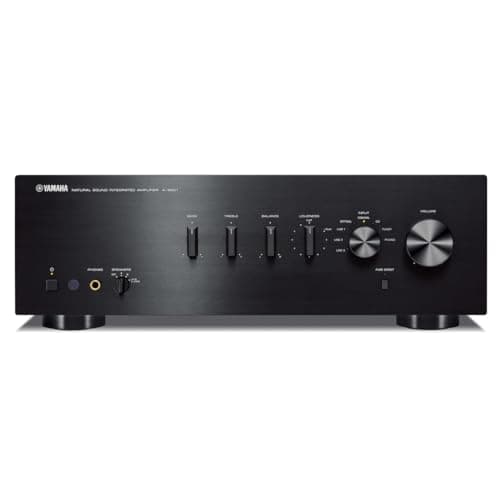 Yamaha A-S501 85 watts per channel into 8 ohms with a damping factor of 240 and an MM phono input fitted — the most amplifier here for the money, provided your speakers are an 8-ohm load. | Best overall under $1,000 | 8.6 | |
| 2 | 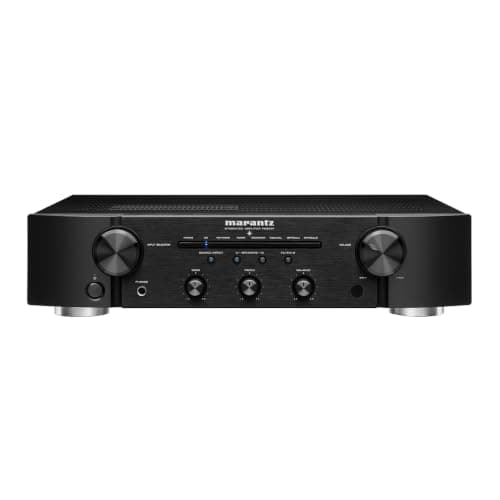 Marantz PM6007 A phono stage plus a proper DAC section in a well-made chassis, at the top of what this bracket will bear. | Best built-in DAC | 7.8 | |
| 3 | 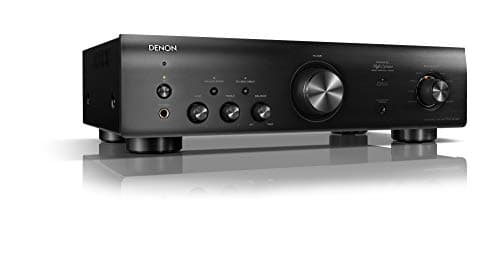 Denon PMA-600NE An integrated with a phono stage, a DAC and Bluetooth in one chassis — the fewest boxes for a mixed vinyl-and-streaming system. | Best with Bluetooth | 7.8 | |
| 4 | 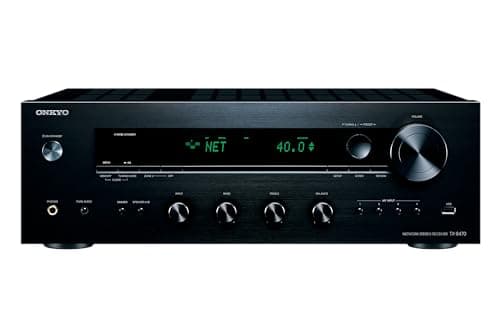 Onkyo TX-8470 The only amplifier we can verify under $500 with a moving-coil phono position as well as a moving-magnet one, and the only one whose maker states its power the FTC way. | Best phono stage under $500 | 8.8 | |
| 5 | 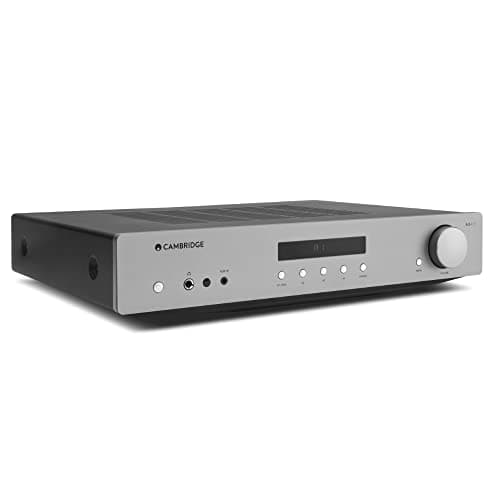 Cambridge Audio AXA35 A deliberately plain integrated with a phono stage and a headphone output, aimed at a turntable and nothing more complicated. | Best simple amplifier for a turntable | 7.2 | |
| 6 | 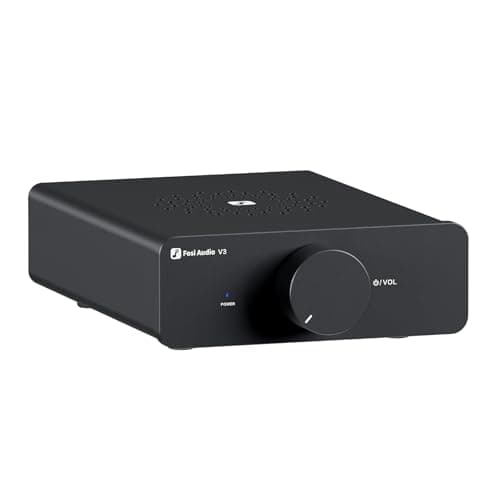 Fosi Audio V3 A class-D power amplifier the size of a paperback whose headline wattage depends entirely on the power supply you feed it. | Best tiny amplifier | 6.0 |
Every amplifier here has a phono input except one, so for a vinyl system they are all candidates. The interesting differences are in what the power figures actually mean, and in one case, whether the headline figure exists at all.
The trap: dynamic power is not RMS power
Search for the Yamaha A-S501’s 4-ohm power and you will find “185 W” repeated everywhere. It is in reviews, in forum posts, in retailer copy.
Yamaha does not rate this amplifier at 185 W into 4 ohms. What they publish is “High Dynamic Power/Channel (8/6/4/2 Ω): 130 / 150 / 185 / 220 W”. Dynamic power is a short-burst measurement — how much the amplifier can deliver for an instant before its power supply sags. It is not a continuous rating and it is not comparable to an RMS figure.
Yamaha’s actual rated output is 85 W + 85 W into 8 Ω, measured across the full 20 Hz–20 kHz band at 0.019% THD. That is a real, honest, hard-to-achieve rating. Into 4 ohms, Yamaha publishes no continuous figure at all.
So if you are pairing an A-S501 with a Q Acoustics 3030i, whose published minimum impedance is 4 Ω, the honest answer is: nobody can tell you what happens, because the speaker publishes its dip and the amplifier does not publish its response to one.
Who does publish a real 4-ohm rating
Two of them, and it is the strongest argument on this page.
- Marantz PM6007: 45 W × 2 into 8 Ω and 60 W × 2 into 4 Ω, both rated 20 Hz–20 kHz with both channels driven. Same conditions on both figures. That is a complete answer.
- Denon PMA-600NE: 45 W + 45 W into 8 Ω at 0.07% THD across the band — and 70 W + 70 W into 4 Ω, but at 1 kHz and 0.7% THD. Note the softer condition: a single frequency at ten times the distortion is a much easier test than the full band. Denon is not hiding it; it is printed right there. But the two numbers are not measured the same way and should not be read as a straight comparison.
This is why the Marantz ranks second despite being the most expensive and publishing less power than the Yamaha. It is the only amplifier here that tells you what it does into a difficult load, under conditions you can compare.
The Fosi V3 and the fine print
The Fosi V3 advertises 300 W × 2. It costs about $110. Both of those things are true and they belong in the same sentence as this one: the 300 W figure is into 4 ohms, has no THD condition attached, and depends on the power supply you feed it — Fosi publishes an input range of DC 24–48 V and lists 32 V/5 A and 48 V/5 A supplies.
Fosi publishes no 8-ohm rating at all, while stating a terminating impedance of 2–8 Ω. So an 8-ohm speaker will see meaningfully less than the number on the box, and Fosi does not say how much less. It also has no phono input, so a turntable needs its own stage in front of it.
It is not a bad product — it is a genuinely useful little class-D amplifier. It is an object lesson in why a wattage number without its conditions is not a specification.
How to choose
Do the arithmetic before you look at the price. Our amp and speaker matching guide walks the formula: sensitivity, distance, and target volume give you the watts you actually need, and the answer is usually far less than people expect. Then buy the amplifier that publishes a rating into the impedance your speakers actually present.
For most people with 8-ohm-ish speakers, the Yamaha A-S501’s 85 W and damping factor of 240 is the most amplifier for the money here, and its phono input means a turntable plugs straight in. If your speakers dip to 4 ohms and you want to know what you are getting, buy the Marantz.
Our full review of the Yamaha A-S501 goes through its sheet line by line, including the 4-ohm rating it does not have. If the system is built around a turntable, we rank these same amplifiers on their phono stages instead of their watts. And if a television is involved at all, an AV receiver is probably the right box.
Every pick in detail
Every specification below links to the manufacturer document we read it from. Where a manufacturer does not publish a figure, we say so rather than estimating it.
Yamaha A-S501
Best overall under $1,000Price as of October 15, 2026. #ad
85 watts per channel into 8 ohms with a damping factor of 240 and an MM phono input fitted — the most amplifier here for the money, provided your speakers are an 8-ohm load.
- power
- 9/10
- phono stage
- 8/10
- value for money
- 9/10
- build quality
- 9/10
- connectivity
- 6/10
| Specification | Published value | Source |
|---|---|---|
| Power output (8 Ω) | 85 W + 85 W (8 Ω, 20 Hz – 20 kHz, 0.019% THD) — minimum RMS | Yamaha spec page |
| Power output (4 Ω) | Not published as a continuous rating. Yamaha publishes only “High Dynamic Power/Channel (8/6/4/2 Ω): 130 / 150 / 185 / 220 W” — a short-burst IHF measurement, NOT an RMS rating. The “185 W into 4 Ω” figure circulating for this amp is that dynamic number, and treating it as continuous overstates the amplifier by roughly two-fold. | Yamaha spec page |
| Phono input | Yes — MM, 3.0 mV / 47 kΩ | Yamaha owner's manual (PDF) |
| THD | 0.019% (50 W into 8 Ω, 20 Hz – 20 kHz) | Yamaha spec page |
| Signal-to-noise | 99 dB (CD, input shorted); phono MM 82 dB or more | Yamaha spec page |
| Damping factor | 240 | Yamaha spec page |
| Digital inputs | Yes — optical and coaxial (Yamaha does not publish the DAC part number) | Yamaha spec page |
| Bluetooth | Not published — no Bluetooth row appears in Yamaha's specification table | Yamaha spec page |
| Subwoofer out | Yes | Yamaha spec page |
Pros
- 85 W + 85 W into 8 Ω rated across the full 20 Hz – 20 kHz band at 0.019% THD — a real rating, not a 1 kHz-only one
- Damping factor 240, the highest published here
- MM phono input and optical/coaxial digital inputs included
Cons
- Yamaha publishes NO continuous 4 Ω rating — only a “High Dynamic Power” burst figure, so its behavior into a 4 Ω speaker is genuinely unknown from the spec sheet
- No Bluetooth or network streaming
- Large and heavy
Skip it if your speakers dip to 4 Ω and you want to know what you are getting. Marantz and Denon both publish real 4 Ω ratings; Yamaha does not.
Marantz PM6007
Best built-in DACPrice as of October 15, 2026. #ad
A phono stage plus a proper DAC section in a well-made chassis, at the top of what this bracket will bear.
- power
- 7/10
- phono stage
- 8/10
- value for money
- 7/10
- build quality
- 9/10
- connectivity
- 8/10
| Specification | Published value | Source |
|---|---|---|
| Power output (8 Ω) | 45 W × 2 (8 Ω, 20 Hz – 20 kHz, both channels driven, 0.08% THD) | Marantz owner's manual |
| Power output (4 Ω) | 60 W × 2 (4 Ω, 20 Hz – 20 kHz, both channels driven) — rated across the full band, unlike most rivals' 1 kHz-only 4 Ω figures | Marantz owner's manual |
| Phono input | Yes — MM only, 2.2 mV / 47 kΩ | Marantz owner's manual |
| Signal-to-noise | 102 dB (line); 83 dB (phono MM) | Marantz owner's manual |
| Damping factor | 100 (8 Ω, 40 Hz – 20 kHz) | Marantz owner's manual |
| Digital inputs | Coaxial and optical | Marantz owner's manual |
| Subwoofer out | Yes — 2.8 V (200 mV input, volume max) | Marantz owner's manual |
Pros
- Good DAC section with optical and coaxial in
- MM phono stage
- Solid build and finish
Cons
- Most expensive here
- No Bluetooth
- Power output is mid-pack for the money
Skip it if you already own a DAC — you are buying a second one.
Denon PMA-600NE
Best with BluetoothPrice as of October 15, 2026. #ad
An integrated with a phono stage, a DAC and Bluetooth in one chassis — the fewest boxes for a mixed vinyl-and-streaming system.
- power
- 7/10
- phono stage
- 8/10
- value for money
- 8/10
- build quality
- 7/10
- connectivity
- 9/10
| Specification | Published value | Source |
|---|---|---|
| Power output (8 Ω) | 45 W + 45 W (8 Ω, 20 Hz – 20 kHz, 0.07% THD) | Denon owner's manual |
| Power output (4 Ω) | 70 W + 70 W (4 Ω, 1 kHz, 0.7% THD) — note the softer condition: 1 kHz at 0.7% THD is a much easier test than the 8 Ω figure's 20 Hz – 20 kHz at 0.07% | Denon owner's manual |
| Phono input | Yes — MM only, 2.5 mV / 47 kΩ | Denon owner's manual |
| Signal-to-noise | 105 dB (line, input shorted); phono MM 84 dB | Denon owner's manual |
| Bluetooth | Yes — version 5.1; SBC and AAC codecs | Denon owner's manual |
| Digital inputs | Coaxial and optical, linear PCM | Denon owner's manual |
| Subwoofer out | Yes — pre-out, 1 V / 100 Hz | Denon owner's manual |
| Damping factor | Not published | — |
Pros
- Phono stage, DAC and Bluetooth all included
- Optical and coaxial inputs
- Analog Mode shuts down digital circuits
Cons
- Less power than the Yamaha A-S501
- Bluetooth is receive-only, SBC-class
- Plainer build than its price implies
Skip it if you need maximum power for hard-to-drive speakers.
Onkyo TX-8470
Best phono stage under $500Price as of October 15, 2026. #ad
The only amplifier we can verify under $500 with a moving-coil phono position as well as a moving-magnet one, and the only one whose maker states its power the FTC way.
- power
- 9/10
- phono stage
- 9/10
- value for money
- 8/10
- build quality
- 8/10
- connectivity
- 10/10
| Specification | Published value | Source |
|---|---|---|
| Power output (8 Ω) | 110 W + 110 W — “With 8 ohm loads, both channels driven, from 20 Hz – 20 kHz; rated 110 watts per channel minimum RMS power, with no more than 0.08% total harmonic distortion from 250 milliwatts to rated output” (FTC form, North American models) | Onkyo owner's manual (PDF) |
| Power output (4 Ω) | Not published as a continuous rating for the North American model. The only other North American figure on Onkyo's table is 210 W at 6 Ω, 1 kHz, 2 ch driven at 10% THD — a maximum-output burst measurement, not an RMS rating. | Onkyo owner's manual (PDF) |
| Phono input | Yes — MM or MC on a rear-panel switch, on a dedicated isolated phono board. Maximum input 70 mV (MM, 1 kHz, 0.5%) and 7 mV (MC, 1 kHz, 0.5%). | Onkyo owner's manual (PDF) |
| Phono signal-to-noise | 76 dB (IHF-A, MM 5 mV in, speaker out) · 60 dB (IHF-A, MC 0.5 mV in, speaker out) | Onkyo owner's manual (PDF) |
| THD | 0.08% (20 Hz – 20,000 Hz, at rated output power) | Onkyo owner's manual (PDF) |
| Damping factor | Not published | — |
| DAC | AKM AK4452, 32-bit / 768 kHz stereo; Class G amplifier stage | Onkyo product page |
| Digital inputs | 3 — one coaxial and two optical — plus 4 HDMI in / 1 HDMI out with ARC and 8K passthrough | Onkyo spec sheet (PDF) |
| Subwoofer out | Yes — one subwoofer pre-out, plus a main pre-out L/R and a Zone 2 pre/line out | Onkyo owner's manual (PDF) |
| Signal-to-noise (line) | 106 dB (IHF-A, line in, speaker out) | Onkyo owner's manual (PDF) |
| Dimensions and weight | 435 × 149.5 × 329 mm; 9 kg (19.8 lb) | Onkyo owner's manual (PDF) |
Pros
- 110 W per channel rated the strict way — 8 Ω, 20 Hz to 20 kHz, both channels driven, 0.08% THD — which nothing else in this bracket publishes
- MM and MC phono on a rear-panel switch, with a published signal-to-noise for each: 76 dB on MM and 60 dB on MC
- Four HDMI inputs with ARC, one coaxial and two optical digital inputs, and an AKM AK4452 32-bit/768 kHz DAC
- Subwoofer pre-out, main pre-out and a Zone 2 pre/line out all published
Cons
- Onkyo publishes no damping factor for it anywhere we can find
- The second figure on Onkyo's own North American table — 210 W at 6 Ω, 1 kHz, 10% THD — is a burst measurement at a distortion level nobody listens at
- It is a receiver: an AM/FM tuner and a second zone are part of what you are paying for whether you use them or not
- 9 kg and 435 mm wide, so it needs a rack shelf rather than a desk
Skip it if you want the shortest signal path your money will buy. This is a networked receiver with a tuner, HDMI switching and two zones, and a plain integrated puts more of the budget into the amplifier.
Cambridge Audio AXA35
Best simple amplifier for a turntablePrice as of October 15, 2026. #ad
A deliberately plain integrated with a phono stage and a headphone output, aimed at a turntable and nothing more complicated.
- power
- 6/10
- phono stage
- 8/10
- value for money
- 8/10
- build quality
- 7/10
- connectivity
- 6/10
| Specification | Published value | Source |
|---|---|---|
| Power output (8 Ω) | 35 W into 8 Ω | Cambridge Audio spec page |
| Power output (4 Ω) | Not published | — |
| Phono input | Yes — built-in moving magnet phono stage | Cambridge Audio spec page |
| THD | < 0.01% at 1 kHz (80% of rated power); < 0.15% 20 Hz – 20 kHz | Cambridge Audio spec page |
| Signal-to-noise | > 82 dB (unweighted, ref 1 W) | Cambridge Audio spec page |
| Damping factor | > 50 | Cambridge Audio spec page |
| Inputs | 4 × RCA, 1 × phono, 1 × 3.5 mm front aux | Cambridge Audio spec page |
| Digital inputs / DAC | None published | Cambridge Audio spec page |
Pros
- Built-in phono stage
- Headphone output
- Simple, uncluttered front panel
Cons
- Modest power output
- No digital inputs
- No remote on the base model
Skip it if your speakers are power-hungry — check the arithmetic first.
Fosi Audio V3
Best tiny amplifierPrice as of October 15, 2026. #ad
A class-D power amplifier the size of a paperback whose headline wattage depends entirely on the power supply you feed it.
- power
- 6/10
- phono stage
- 0/10
- value for money
- 10/10
- build quality
- 6/10
- connectivity
- 4/10
| Specification | Published value | Source |
|---|---|---|
| Power output (4 Ω) | 300 W × 2 at 4 Ω (Fosi's headline “600 W total”). No THD condition is attached to this figure, and it depends on the supply: published power input range is DC 24–48 V, with 32 V/5 A and 48 V/5 A supplies listed. | Fosi Audio spec page |
| Power output (8 Ω) | Not published. Fosi publishes a 4 Ω figure only, though it states a terminating impedance of 2–8 Ω — so an 8 Ω speaker will see meaningfully less than the headline number, and Fosi does not say how much less. | Fosi Audio spec page |
| Amplifier chip | TPA3255; TI NE5532 × 2 op-amps | Fosi Audio spec page |
| THD | ≤ 0.003% (measurement condition not published) | Fosi Audio spec page |
| Signal-to-noise | ≥ 110 dB (SINAD ≥ 88 dB) | Fosi Audio spec page |
| Inputs | RCA line level only | Fosi Audio spec page |
| Phono input | None — a turntable needs its own phono stage before this amplifier | Fosi Audio spec page |
Pros
- Very cheap and very small
- Class D efficiency — runs cool
- Genuinely useful power for the size
Cons
- The advertised power figure requires a power supply that may be sold separately — read the fine print
- No phono stage
- Power amp with a volume knob, not a full integrated
Skip it if you need a phono input. This has none, so a turntable needs its own stage before it.
Frequently asked questions
How many watts do I need in an amplifier?
Usually far fewer than you think. An 87 dB/1 W/1 m speaker at 3 meters reaches around 92 dB on 35 W — louder than most people listen. The full working is in our matching guide. The real reason to buy more power is headroom for peaks, not average volume.
Is the Yamaha A-S501 really 185W into 4 ohms?
No. That figure is Yamaha’s published “High Dynamic Power” — a short-burst IHF measurement, not a continuous rating. Yamaha’s actual rated output is 85 W + 85 W into 8 Ω (20 Hz–20 kHz, 0.019% THD), and they publish no continuous 4-ohm rating at all. Treating the dynamic figure as continuous overstates the amplifier by roughly two-fold.
Do I need an amplifier with a phono input?
Only if your turntable does not have a phono stage built in. Every amplifier here has an MM phono input except the Fosi V3. If your deck has its own switchable stage — most of the ones we recommend do — then any line input works and this feature is optional. See do I need a phono preamp.
What is damping factor and does it matter?
It describes the amplifier’s output impedance relative to the speaker load — loosely, how tightly it controls woofer movement. The published figures here range from “greater than 50” (Cambridge AXA35) to 240 (Yamaha A-S501), and the Onkyo TX-8470 publishes none at all despite publishing everything else. Whether the difference is audible we cannot tell you; we have not heard them. Most engineers consider anything above about 20 sufficient for typical speaker cables, so treat a very high number as evidence of a stiff power supply rather than a guaranteed audible benefit.
Is a receiver the same as an integrated amplifier?
A receiver is an integrated amplifier with a radio tuner added. The Onkyo TX-8470 here and the Sony STR-DH190 elsewhere on the site are stereo receivers; the Yamaha, Marantz, Denon and Cambridge units are integrated amplifiers. If you will never use the tuner, it is weight and cost doing nothing — which is a reasonable argument against it and not much more than that. In the Onkyo’s case the tuner arrives alongside HDMI switching, a network section and a second zone, so it is part of a larger trade rather than a lone piece of dead weight.
Read next
Will This Amplifier Drive My Speakers?
Two published numbers, one formula, and the answer is almost always less power than you expected.
The Best Bookshelf Speakers Under $500
Six pairs under $500 — and only one publishes a minimum impedance and a recommended amp range.
Tube vs Solid State Amplifiers
What actually differs in measurable terms, what is preference, and where we have to stop.
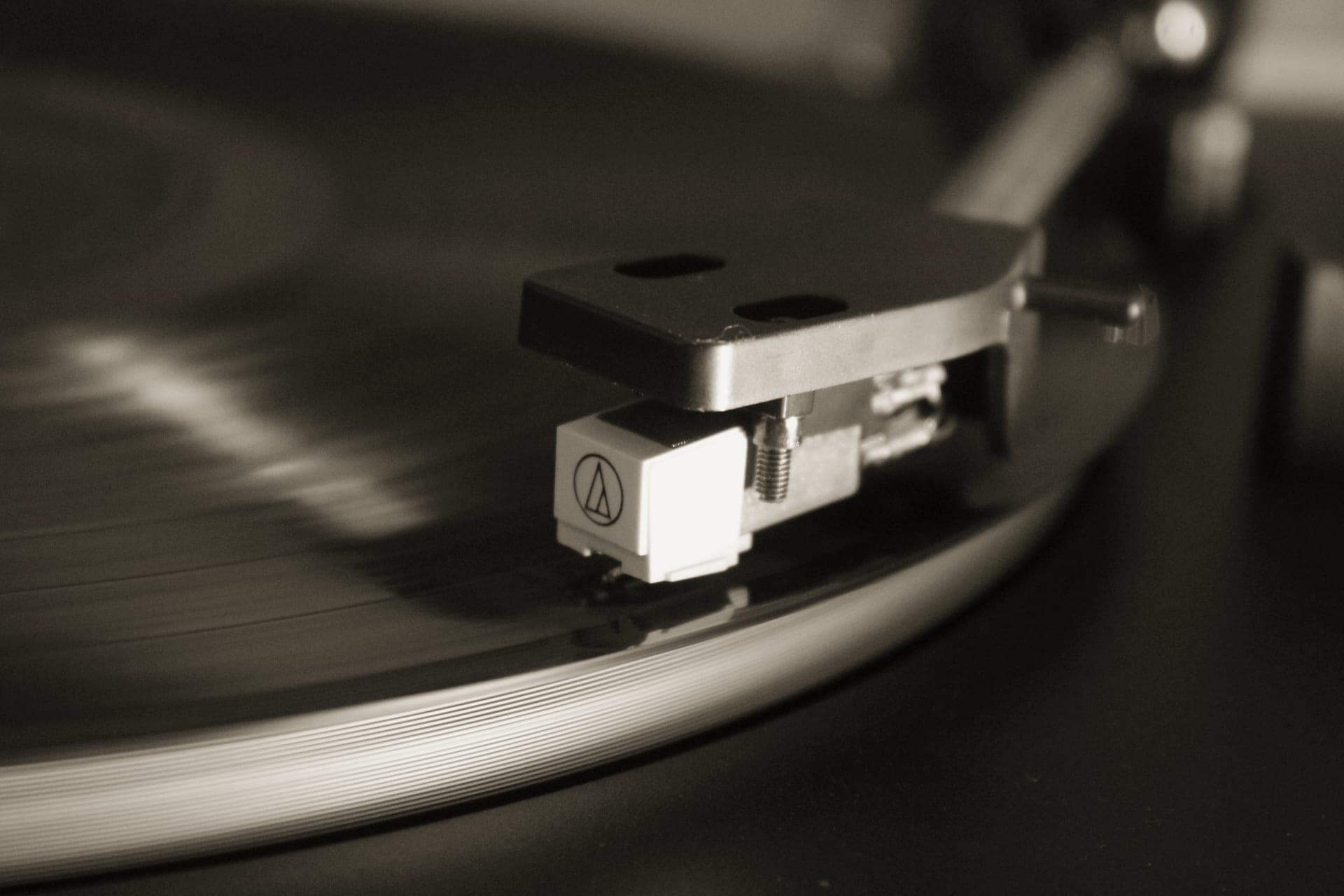
Do I Need a Phono Preamp?
Yes, unless you already have one — and it might be hiding in your turntable, amplifier or speakers. Check in 30 seconds.
Yamaha A-S501 Review
85 W into 8 Ω, damping factor 240, an MM phono input — and the 4-ohm rating Yamaha does not publish.
The Best Integrated Amplifiers for a Turntable
Amplifiers with a phono stage inside, ranked on published MM sensitivity and phono signal-to-noise — not watts.
How to Read an Amplifier Power Rating
Impedance, bandwidth, distortion, channels driven — the four conditions that turn a watts number into a spec, and which manufacturers publish all four.
Sources
Every specification on this page was read from one of these documents. If one of them has changed, or we have made an error, tell us — corrections are logged and dated per our editorial policy.