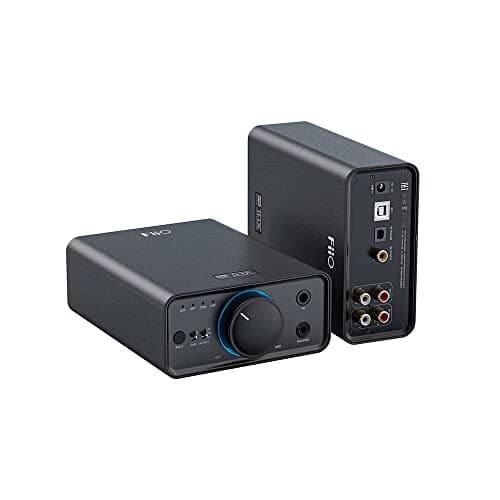
Best DAC under $500
The Best DACs Under $500
Seven DACs under $500. They all measure superbly — so the decision is inputs, outputs and whether you want a headphone amp.
Digital converters, streamers, and an honest account of what a DAC does and does not change.
This is the hub where we are going to spend most of our time telling you that you probably do not need what it sells. That is not modesty — it is what the published measurements say, and pretending otherwise would make us worse than useless.
A digital-to-analog converter turns a list of numbers into a voltage. A CD stores 44,100 numbers per second per channel, each describing where a speaker cone should be at that instant. A speaker cannot read numbers; it responds to voltage. The DAC bridges that. The full explanation is here.
You already own several. There is one in your phone, your laptop, your TV, and — if it has optical or coaxial inputs — your amplifier. Buying a separate DAC replaces the one you have rather than adding a capability.
Here is what the DACs we recommend publish, from their own spec sheets:
For scale: a 16-bit CD has about 96 dB of theoretical dynamic range. A quiet domestic room has a noise floor around 30 dB SPL. These converters are, on their own published measurements, more transparent than anything you will play through them and more transparent than the room you will play it in.
So the honest position is that if you already have a working DAC, a better one will probably not change what you hear. We cannot state that as certainty — we have not run listening tests and we do not publish verdicts we have not earned. But the measurements do not predict a difference, and we would rather say so before you spend $200 than after.
Four cases, and notice that none of them is “it will sound better”:
You have no real DAC in the chain — a laptop headphone jack feeding an amplifier, say. Then you are using whatever was cheapest to fit, sharing a chassis with a lot of electrical noise.
You need an input you do not have.Your amplifier has optical, your source is USB. This is a plumbing problem and a DAC is a plumbing fix. Watch the details: the iFi ZEN DAC 3 is USB only, so it cannot take a TV’s optical output at all.
You want a headphone amplifier too. The FiiO K7 publishes ≥ 2,000 mW into 32 ohms from its balanced output using THX AAA modules. Your laptop publishes nothing and delivers less. If the desk is the constraint, our compact desktop combos are ranked by how much of it they take — from 9.6 to 31.3 square inches.
You want to feed a power amp or powered speakers directly. A DAC with a variable output can act as a preamp and remove a box. The Topping E30 II, FiiO K7 and K11 and iFi ZEN DAC 3 all have this; the Schiit Modi 5 and SMSL SU-1 are fixed-output and need a volume control after them. Which stages should live in which chassis is its own question, and DAC versus preamp versus integrated amplifier answers it.
Sockets and features, not measurements. Do you need a headphone amp? Do you need optical as well as USB? Do you need a volume control? Those are decisions you can get wrong, and they are what our roundup is actually organized around.
If you are trying to work out whether your problem is a DAC problem or an amplifier problem — they are consecutive steps in the chain, not alternatives — that comparison is here. The short version: if your speakers make no sound at all, you need an amplifier.
Two socket questions get their own pages. If the amplifier has XLR inputs, our balanced-output roundup separates the DACs with a real balanced line output from the ones where “balanced” means the headphone jack. And if the box is a streamer rather than a DAC, our network-streamer explainer covers what it does between the router and the amplifier.
Search “what is a DAC” and you will get dachshunds and US immigration policy. Add “audio”. This is not a joke at your expense — it is genuinely why our explainer is titled the way it is.
Buying a DAC you already own. Check the back of your amplifier first: if it has an optical or coaxial input, it contains a converter, and an external one does not stack — you are choosing one over the other. It is a ten-second check that saves a $200 purchase surprisingly often, and no page selling DACs is going to suggest it to you.
We would also skip paying for DSD support you will never use, and paying for a headphone amplifier if you do not own headphones. Both are common, and both are just money.
A DAC or a headphone amplifier is one of the easier hi-fi gifts, because a desk is a metre wide and the source is already a computer — but only if you know whether they listen on speakers or on headphones, because that decides the box. Our gifts for desk and headphone listeners page works through both, and our Black Friday page explains why this is the corner of the category where waiting for November tends to buy you the least — one maker here publishes a standing policy of no discounts at all.
Each card shows that roundup’s top pick and its live price, as of October 15, 2026.
Best DAC under $500
Seven DACs under $500. They all measure superbly — so the decision is inputs, outputs and whether you want a headphone amp.
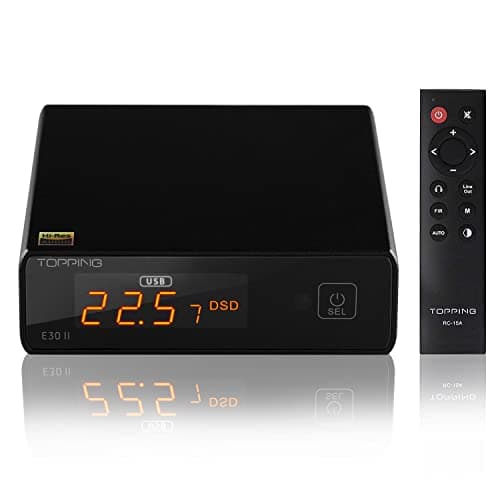
Best DAC under $200
Five DACs under $200, all measuring beyond audibility — so the ranking is about inputs, outputs and output level.
Best DAC and amp combo
Four DAC and headphone amp combos, ranked on published power into 32 Ω and 300 Ω rather than on chip names.
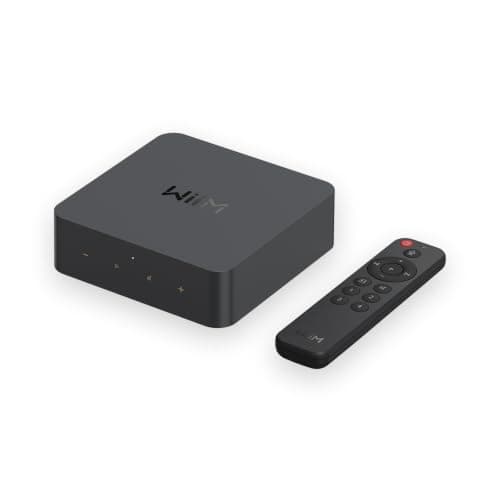
Best music streamer with DAC
Four streamers with built-in DACs, ranked on published output performance, inputs and protocol support.
Best USB DAC for a PC
Six USB DACs ranked for desktop use, on USB interface, power arrangement and the published output level each one actually delivers.
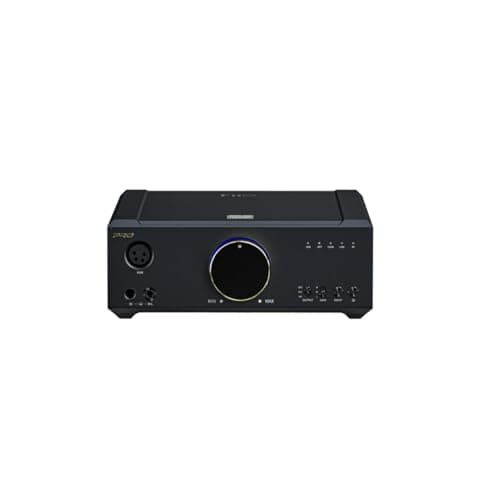
Best all-in-one DAC/preamp
Six boxes that do all three jobs, ranked on inputs, variable output and published output voltage rather than on DAC chip names.
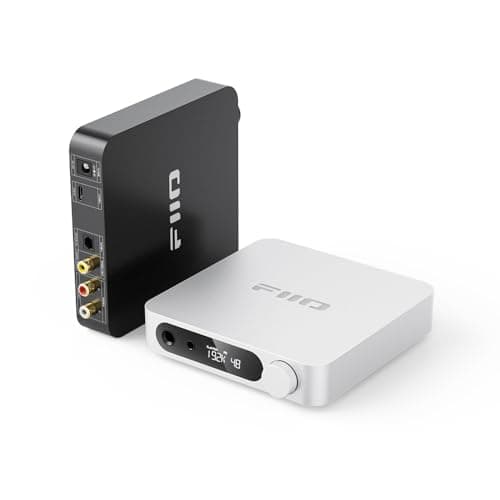
Best compact DAC/amp
Five desktop DAC and headphone amp combos ranked on published dimensions, power source and the specs the smallest boxes leave blank.
Best DAC with balanced output
Ranked on which balanced connector carries a line-level signal. Two XLR line outputs, one 4.4 mm balanced line out, and two where balanced means the headphone jack.
A DAC turns digital audio into analog voltage. You already own several — here is when another one helps.
Not alternatives — consecutive steps. If your system is silent, you need the amp.
What a preamp adds beyond a volume control, and the two real costs of going DAC-direct.
24-bit implies 146 dB of dynamic range; the best published DAC figure here is 126 dB, or about 20.6 bits. The arithmetic, and what it means.
Per-input sample rate limits for every DAC we cover, the ground-loop problem only optical solves, and the surround-format trap on TV optical outputs.
LDAC's published 990 kbps against a 1,411 kbps CD stream — and the codec-matching trap that means your phone's best codec may never be used.
The four jobs inside a streamer, why the phone is a remote rather than a source, and which of the four you can skip.
Why published headphone power collapses at high impedance, what output impedance does to the sound, and how to check a pairing before you buy.
The whole signal chain in one page: which of the three boxes does which job, and the gain arithmetic that decides which combination works.
Every pick here is a spec-and-price analysis, not a listening test. We compile what the manufacturer publishes, link each figure to the document we read it from, show the arithmetic where it applies, and price everything live. We have not heard this gear and we do not pretend to have. The full method is here.