Do I Need a Phono Preamp?
Yes — unless you already have one. The catch is that it might be hiding in your turntable, in your amplifier, or in your speakers.
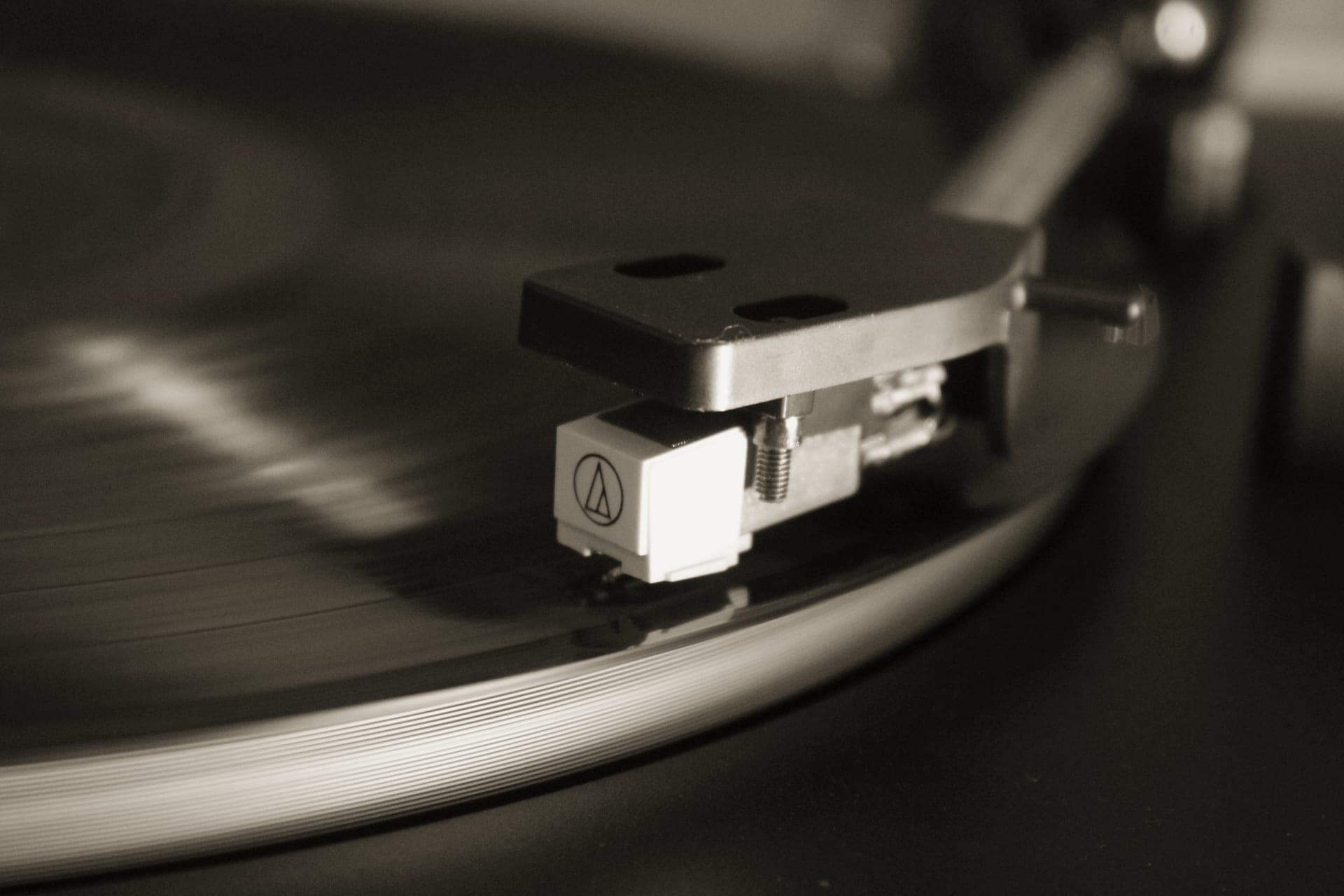
Yes, every turntable needs a phono preamp — but you may already own one. It can be built into the turntable, the amplifier, or powered speakers. You only need to buy a separate one if none of those three has it. Check all three before spending anything.
How to check in 30 seconds
- Look at your turntable. Is there a switch on the back marked PHONO / LINE, or a spec that mentions a built-in preamp? If yes, you have one. Every Audio-Technica and Sony deck we recommend has this, as does the Fluance RT81 and the Music Hall mmf-1.5 — a stage in the box is the entry requirement for our beginner roundup, so every deck on that page qualifies.
- Look at your amplifier or receiver. Is there an input labeled PHONO — usually with a small screw terminal marked GND next to it? If yes, you have one. The Yamaha A-S501, Cambridge AXA35, Denon PMA-600NE and Marantz PM6007 all have MM phono inputs, and so do the Denon, Yamaha and Onkyo AV receivers we recommend.
- Look at your powered speakers.A few have one inside — the Kanto YU6 publishes an “RCA with phono switch” input, and Klipsch The Fives II has a dedicated phono input. Most do not: Audioengine states outright that “all turntables require a phono preamp stage before connecting to Audioengine speakers.”
If all three say no, you need to buy one. Here are the ones we would buy under $200.
What happens if you skip it
You get sound — very quiet, very thin sound, with almost no bass. Every year a large number of people conclude their new turntable is faulty when it is simply plugged into a line input. Nothing is broken. The signal is just raw.
Why a raw phono signal is unusable
Two things are wrong with the signal coming off a cartridge, and a phono stage fixes both.
It is far too quiet. Ortofon publishes 5.5 mV of output for the 2M Red. Line level is roughly 500 mV. That is a gap of about 40 dB — nearly a hundredfold in voltage. Plug a cartridge into an AUX input and you are asking a line stage to amplify something a hundred times smaller than it expects.
Its bass has been deliberately removed. This is the part most explanations skip, and it is the more interesting half. When a record is cut, bass frequencies are reduced and treble is boosted, following a standard curve called RIAA equalization. There is a good physical reason: bass makes the widest groove excursions, so cutting it flat would mean fewer minutes per side and grooves that could jump into each other. Cutting bass low and boosting treble buys playing time and lowers surface noise.
A phono stage applies the exact inverse of that curve on playback. So it is not an amplifier with a fancy name — it is an amplifier plus a specific, standardized tone correction. That is why running a turntable through a regular line input sounds thin even after you turn it up: the volume knob fixes the gain, but nothing puts the bass back.
If you have two, use one
Do not run a turntable’s built-in stage into your amplifier’s PHONO input. You will apply about 40 dB of gain and the RIAA curve twice, and the result is loud, distorted and wrong. Pick one: either set the turntable to LINE and use the amplifier’s phono input, or set the turntable to PHONO and plug it into any line input.
Which is better? Usually the external one, but not always, and we are not going to pretend to know without hearing your system. If you have both, try both — this is one of the few questions on this site you can answer better than we can, because you have the gear in front of you.
What about moving coil?
If you have a moving-coil cartridge, you need a stage that supports it. MC cartridges output far less than the ~5 mV of a moving magnet, so a 40 dB MM-only box will not lift them to line level. The Schiit Mani 2 offers up to 60 dB and the iFi ZEN Phono 3 up to 72 dB for exactly this reason.
If you do not know which you have: it is a moving magnet. Every turntable we recommend ships with one, and moving coils are almost always a deliberate later purchase you would remember making.
If the answer is that you would rather the stage came with the deck, our built-in-preamp roundup ranks the six turntables we cover that include one, on what each maker publishes about the stage and whether it can be bypassed later. And if the other end of the cable is a receiver, the receiver connection guide covers which input and which switch position. Getting that switch wrong is also the fourth item on our hum diagnosis page, which works through grounding, gain and double amplification in the order worth trying them.
Frequently asked questions
Do I need a phono preamp if my turntable has one built in?
No. A built-in stage does the whole job — plug the turntable into any line input (AUX, CD, TAPE) and it will work. You might later choose to buy a better external one, but you do not need to, and if your deck cost under $300 it is unlikely to be the weakest link in your system.
Can I plug a turntable straight into powered speakers?
Only if one of the two has a phono stage. The Kanto YU6 has one built in, so a turntable connects directly. Audioengine explicitly does not — they state that all turntables need a phono preamp stage first. If your turntable has a built-in stage, it works with any powered speaker; if neither does, you need a separate box.
What happens if I use two phono preamps at once?
You apply roughly 40 dB of gain and the RIAA curve twice. It will be loud, distorted and tonally wrong. Switch one off — most turntables with a built-in stage have a PHONO/LINE switch on the back for exactly this reason.
Does a phono preamp improve sound quality?
It makes the sound correct — without one you get no meaningful bass and almost no volume. Whether a better one improves things beyond that, we cannot tell you: we have not heard these units. What we can show you is that published noise and distortion figures vary enormously in this category, from 70 dB signal-to-noise at the bottom to over 108 dB at the top.
Is a phono preamp the same as a phono stage?
Yes. “Phono preamp”, “phono stage” and “phono equalizer” all mean the same component. Audio-Technica calls it a “phono equalizer” in their manuals; most people say phono preamp.
Read next
The Best Phono Preamps Under $500
Six phono stages from $249 to $499, ranked on published RIAA accuracy and whether the loading can be matched to your cartridge.
The Best Phono Preamps Under $200
Phono stages under $200 ranked on published gain, loading flexibility and noise — including one we would actively skip.
How to Set Up a Turntable
Nine steps, and the two everyone gets wrong. Both have a published number you can set them to.
The Best Speakers for a Turntable
Which speakers need an amplifier, which need a phono stage, and the one that needs neither.
The Best Turntables Under $500
Five decks under $500, ranked on published specs and total cost — including the phono stage two of them make you buy separately.
How to Connect a Turntable to Speakers
Four working routes from turntable to speakers, the two that do not work, and how to fix the hum.
The Best Integrated Amplifiers for a Turntable
Amplifiers with a phono stage inside, ranked on published MM sensitivity and phono signal-to-noise — not watts.
Moving Magnet vs Moving Coil Cartridges
The whole MM/MC argument reduces to output voltage — and Schiit's own published noise figures show exactly what the extra gain costs.
The Best Turntables With a Built-In Preamp
Six decks with a phono stage inside, ranked on the stage: bypassable or not, published gain and noise, and whether the cartridge it feeds can ever be upgraded.
How to Connect a Turntable to a Receiver
Which receiver input, which switch position, why the ground screw matters, and what to do when the receiver has no PHONO input at all.
Sources
Every specification on this page was read from one of these documents. If one of them has changed, or we have made an error, tell us — corrections are logged and dated per our editorial policy.