Room Treatment for Home Theater
A stereo listening room has one seat and two speakers. A home theater has a row of seats, five or more speakers, a wall with a screen on it and a subwoofer in a corner. Each of those changes where the treatment goes and what it has to do.

Disclosure: we earn a commission if you buy through the links on this page, at no extra cost to you. It does not influence what we pick — our criteria are published and reproducible, so you can check our work. How we pick · Full disclosure
These picks are spec-and-price analyses, not listening tests. We have not heard this gear and we do not pretend to have: every figure below is sourced to the manufacturer and linked, and every price is live or not shown at all. Here are the rules we followed.
Quick picks
Ranked on the published criteria in How We Pick. Prices are live as of September 17, 2026. Tap any row for the full write-up.
- 8.4
- 7.2
- 8.0
| # | Product | Best for | Score | Price |
|---|---|---|---|---|
| 1 | 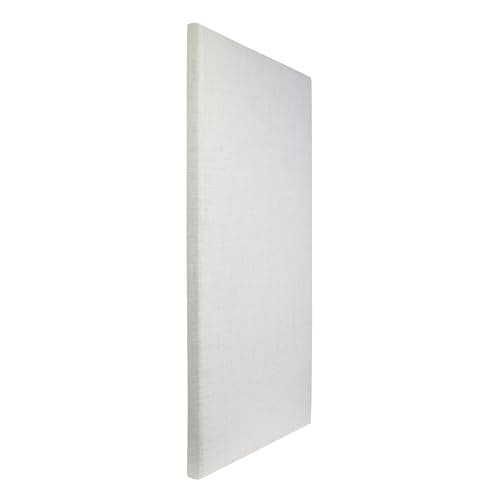 ATS Acoustics Sound Absorbing Panel (24x48) A mineral wool panel with the full absorption curve published — including the 125 Hz figure of 0.12 that its own NRC of 1.00 completely hides. | Best overall panel | 8.4 | |
| 2 | 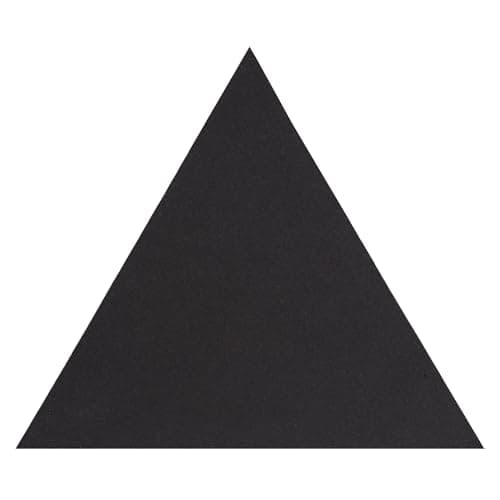 ATS Acoustics Tri-Corner Bass Trap A rigid fiberglass corner section at 6 lb per cubic foot, chosen on material and geometry because ATS publishes no per-frequency data for it at all. | Best bass trap | 7.2 | |
| 3 | 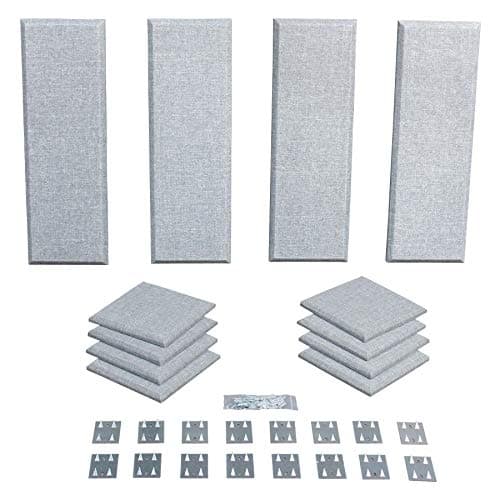 Primacoustic London 8 A planned kit of panels and corner traps with a mounting system included, which removes the hardest part of treating a room: deciding what goes where. | Best complete kit | 8.0 |
Treating a home theater is the same physics as treating a listening room, applied to more seats, more speakers and more surfaces. Our hi-fi room guide handles the two-speaker, one-seat case. This page is the version for a room where the reflection points move with every seat, the surround speakers face the treatment you put behind you, the front wall is covered by a screen, and the subwoofer has already picked its corner.
What is different about a theater room
Four things. Several seats, so there is not one pair of first-reflection points on each side wall but a spread of them, and the side-wall treatment has to be a band rather than a spot. Surround speakers, which sit beside or behind the seats and fire toward the opposite wall — the wall behind the listeners, which in a stereo room is an afterthought, is a first-reflection surface here. A screen wall, which puts a large flat surface directly behind the front three speakers; an acoustically transparent screen lets you treat behind it, a television or solid screen does not. A subwoofer, usually in a front corner, exciting the room’s lowest modes harder than a pair of bookshelf speakers ever would — which makes the corners the most important cubic feet in the room.
Side walls: a band, not a spot
In a stereo room the mirror trickfinds one point per side wall for one seat. Repeat it for the seat at each end of the row and the two points are typically two to three feet apart; the treatment has to cover the span between them. Two 24 by 48 in panels side by side per wall does it for a three-seat row, and the ATS panel’s published coefficients — 1.17 at 500 Hz, 1.12 at 1 kHz, 1.08 at 2 and 4 kHz — are the range where a reflection smears dialogue. Its 125 Hz figure is 0.12, which is to say it does nothing there, and that is fine: side walls are not where bass is treated.
The wall behind the seats
Surround and rear speakers fire across the room; the wall they face is usually the one the seats are against, and a reflection from it arrives at the listener a few milliseconds after the direct sound from the speaker beside them. Absorb the band at ear height across the width of the row. The same 2 in panel does this job. If the row is hard against the wall, the panel goes above head height and angled down; a panel a listener leans on is a panel doing nothing. This is the surface a stereo room guide skips, and it is the second surface a theater should treat.
The screen wall
The front wall reflects the center channel — the dialogue speaker — back at the room, and it is the wall you can least easily treat. With an acoustically transparent projection screen, absorption behind the screen and around the three front speakers is the ideal, and it is invisible. With a television or a solid screen, treat the wall area beside and above it, and accept that the surface behind the set stays reflective. Do not put a bass trap here expecting it to fix dialogue; the 125 Hz and below band is not the problem on this wall.
Corners: where the subwoofer’s problem lives
A subwoofer in a corner drives every axial mode of the room, and the corners are where the pressure of those modes is highest, which is why a trap works there and nowhere else. The ATS Tri-Corner trap is a 2 in rigid-fiberglass section mitered for a corner, with an ASTM E84 Class A fire rating; ATS publishes only a single NRC figure for it, 0.95, and NRC by definition excludes 125 Hz, so its low-frequency performance is undocumented. The Auralex LENRD is the one trap we cover with a published 125 Hz coefficient (1.30, ASTM C-423), and our bass-trap roundup ranks it first for that reason; it is not a pick here because its live price is often absent from our price layer. Start with the two front corners, floor to ceiling if the budget allows, before adding anything else at low frequencies. Our traps-versus-panels comparison explains why a 2 in panel cannot do this job.
Ceiling: last, and with a conflict
The ceiling reflection point between each front speaker and each seat is real, and a multi-seat row makes it a strip rather than a point. It is last on this list for two reasons. Overhead mounting raises the fire-rating question — ATS states its panel is not fire rated; Primacoustic’s London 8 carries an ASTM E84 Class A/1 rating on the fabric wrap — and an Atmos system with up-firing modules needs that ceiling reflective, not absorbent. Our ceiling guide works through both.
kits = floor area ÷ rated coverage per kit
Inputs
- Primacoustic London 8 rated room size: up to 100 sq ft (9.3 m²); 20 sq ft of panel per kit (Primacoustic engineering data sheet (PDF))
- ATS 24 × 48 in panel area: 8 sq ft per panel (24 × 48 × 2 in) (ATS Acoustics product page)
Result
The three products, and why these three
The ATS 24 by 48 in panel first, because it publishes a full set of per-band coefficients, it is 8 sq ft of absorption per panel, and a theater needs area more than it needs any single feature. Its con for a theater is that ATS states it is not fire rated, which matters if panels go overhead in a room full of people. The ATS Tri-Corner trap second, for the corners, with a Class A rating and the caveat that its 125 Hz performance is unpublished. The Primacoustic London 8 third, as the kit route: twelve panels with impalers, a Class A/1 rating that covers the ceiling case, and a published room-size rating that lets you count kits rather than guess — with the caveat that its main panels’ coefficients are calculated rather than lab-measured. Our home-theater panel roundup ranks the full six-product field.
What treatment will not fix in a theater
Sound leaving the room. Absorption changes what the listeners hear inside; it does almost nothing for the household on the other side of the wall, and our soundproofing comparison explains why those are different jobs with different materials. Nor will it fix a layout problem: speakers at the wrong angles or a subwoofer in the wrong corner are settled by the setup guide and the level calibration before the first panel goes up. Treatment is the step after those, not instead of them.
Every pick in detail
Every specification below links to the manufacturer document we read it from. Where a manufacturer does not publish a figure, we say so rather than estimating it.
ATS Acoustics Sound Absorbing Panel (24x48)
Best overall panelPrice as of September 17, 2026. #ad
A mineral wool panel with the full absorption curve published — including the 125 Hz figure of 0.12 that its own NRC of 1.00 completely hides.
- low frequency absorption
- 8/10
- published data
- 10/10
- build quality
- 9/10
- value for money
- 7/10
- appearance
- 8/10
| Specification | Published value | Source |
|---|---|---|
| NRC | 1.00 | ATS Acoustics product page |
| Absorption coefficients | 125 Hz: 0.12 · 250 Hz: 0.67 · 500 Hz: 1.17 · 1 kHz: 1.12 · 2 kHz: 1.08 · 4 kHz: 1.08 | ATS Acoustics product page |
| Material | ROCKWOOL AFB mineral wool core, solid wood frame, 1/4 in wood back panel | ATS Acoustics product page |
| Thickness | 2 in | ATS Acoustics product page |
| Dimensions / weight | 24 × 48 × 2 in; ~12 lb per panel | ATS Acoustics product page |
| Fire rating | None — ATS states “This item is not fire rated.” | ATS Acoustics product page |
| ASTM test mounting | Not published | — |
| Density | Not published | — |
Pros
- Publishes the full per-frequency curve, not just an NRC — so you can see what it actually does
- Mineral wool core absorbs 0.67 at 250 Hz, where 1.9 in foam manages 0.13
- Fabric-wrapped and presentable in a living room
Cons
- NRC 1.00 is a real figure and still misleading: at 125 Hz this panel absorbs 0.12. NRC averages 250 Hz–2 kHz only, so it structurally cannot show you the bass performance.
- Not fire rated — ATS states this plainly, and it may matter for your install
- Heavy at ~12 lb, and far more expensive than foam per panel
Skip it if your problem is bass. No 2-inch panel solves that — including this one — and you want corner traps instead.
ATS Acoustics Tri-Corner Bass Trap
Best bass trapPrice as of September 17, 2026. #ad
A rigid fiberglass corner section at 6 lb per cubic foot, chosen on material and geometry because ATS publishes no per-frequency data for it at all.
- low frequency absorption
- 10/10
- published data
- 4/10
- build quality
- 9/10
- value for money
- 6/10
- appearance
- 7/10
| Specification | Published value | Source |
|---|---|---|
| NRC | 0.95 (published for the 2 in fiberglass core) | ATS Acoustics product page |
| Absorption coefficients | Not published. ATS gives only a single NRC figure, and NRC by definition excludes 125 Hz — the band a bass trap exists to address. | ATS Acoustics product page |
| Material | Rigid fiberglass core, frameless | ATS Acoustics product page |
| Density | 6 lb per cubic foot | ATS Acoustics product page |
| Thickness | 2 in, with 35° mitered edges for corner mounting | ATS Acoustics product page |
| Sizes | 12, 18 and 24 in sections — the price here is the 24 in | ATS Acoustics product page |
| Fire rating | ASTM E84 Class A | ATS Acoustics product page |
Pros
- Corner placement targets pressure maxima where bass builds up
- 6 lb/ft³ rigid fiberglass rather than foam, and ATS publishes the density
- ASTM E84 Class A fire rating, published — which the ATS flat panel does not have
Cons
- Expensive per unit
- ATS publishes only an NRC, and NRC by definition excludes 125 Hz — the band a bass trap exists for
- Takes up real corner volume
- You need several to make a measurable difference
Skip it if your room has no accessible corners — the placement is the product.
Primacoustic London 8
Best complete kitPrice as of September 17, 2026. #ad
A planned kit of panels and corner traps with a mounting system included, which removes the hardest part of treating a room: deciding what goes where.
- low frequency absorption
- 8/10
- published data
- 8/10
- build quality
- 9/10
- value for money
- 7/10
- appearance
- 8/10
| Specification | Published value | Source |
|---|---|---|
| Absorption — 1 in Scatter Blocks (LAB MEASURED) | 125 Hz: 0.17 · 250 Hz: 0.28 · 500 Hz: 0.81 · 1 kHz: 1.00 · 2 kHz: 1.02 · 4 kHz: 0.95 — tested by Riverbank Acoustical Laboratories (ASTM C423-02a, E795-05) | Primacoustic engineering data sheet (PDF) |
| Absorption — 1.5 in Control Columns (CALCULATED, NOT MEASURED) | 125 Hz: 0.31 · 250 Hz: 0.56 · 500 Hz: 1.01 · 1 kHz: 1.00 · 2 kHz: 1.01 · 4 kHz: 1.00 — Primacoustic marks this row “typical performance based on quarter wavelength calculations”. These are the kit's main panels, so the kit's headline low-frequency numbers are theoretical, not lab data. | Primacoustic engineering data sheet (PDF) |
| NRC | Not published | — |
| Material | High-density 6 lb/ft³ glass wool, acoustically transparent polyester fabric | Primacoustic engineering data sheet (PDF) |
| Kit contents | 12 panels — 4 × Control Columns (12 × 36 × 1.5 in), 8 × Scatter Blocks (12 × 12 × 1 in); 16 Surface Impalers | Primacoustic engineering data sheet (PDF) |
| Coverage | 20 sq ft (1.85 m²) — rated for rooms up to 100 sq ft (9.3 m²) | Primacoustic engineering data sheet (PDF) |
| Fire rating | ASTM E84-09 Class A/1 (fabric wrap) | Primacoustic engineering data sheet (PDF) |
Pros
- A planned set rather than a pile of panels
- Includes corner traps, not just flat absorbers
- Impaling clip mounting system included
Cons
- Expensive as a single purchase
- Sized for a specific room area — check yours first
- Limited finishes
Skip it if your room is much larger or smaller than the kit assumes — buy panels individually instead.
Frequently asked questions
Where should acoustic panels go in a home theater?
How is treating a home theater different from treating a stereo room?
Do I need bass traps in a home theater?
Should I put acoustic panels behind the screen?
Are acoustic panels fire rated?
How many acoustic panels does a home theater need?
Have you tested these panels in a home theater?
Read next
The Best Acoustic Panels for a Home Theater
Panels ranked on published per-frequency absorption — and why an NRC of 1.00 can still absorb 12% at 125 Hz.
Room Treatment for a Hi-Fi Listening Room
What changes when a room has one seat instead of a console: the four surfaces that matter, in the order that returns the most per panel.
Acoustic Ceiling Panels and Clouds
Finding the ceiling reflection point, sizing the cloud, and the mounting problem that is the real reason it goes untreated.
Find Your First Reflection Points
The mirror trick, in five minutes and for free — plus why those two points matter more than six panels elsewhere.
How Much Room Treatment Do I Need?
The Sabine equation, applied to a real room with real published coefficients — and what the answer costs.
Home Theater Setup: The Complete Guide
The complete setup, built on Dolby's published layout angles rather than on vibes — plus what to do when your room disagrees.
Sources
Every specification on this page was read from one of these documents. If one of them has changed, or we have made an error, tell us — corrections are logged and dated per our editorial policy.