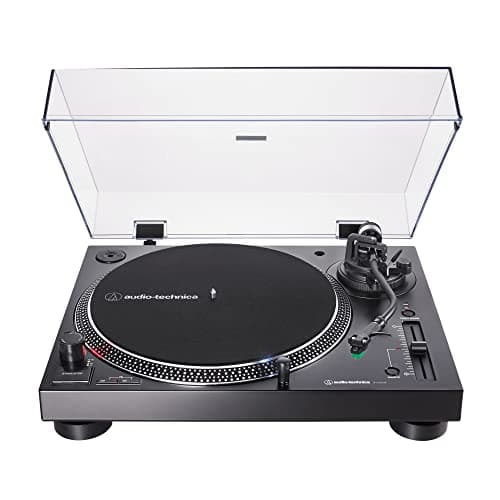
Best under $500
The Best Turntables Under $500
Five decks under $500, ranked on published specs and total cost — including the phono stage two of them make you buy separately.
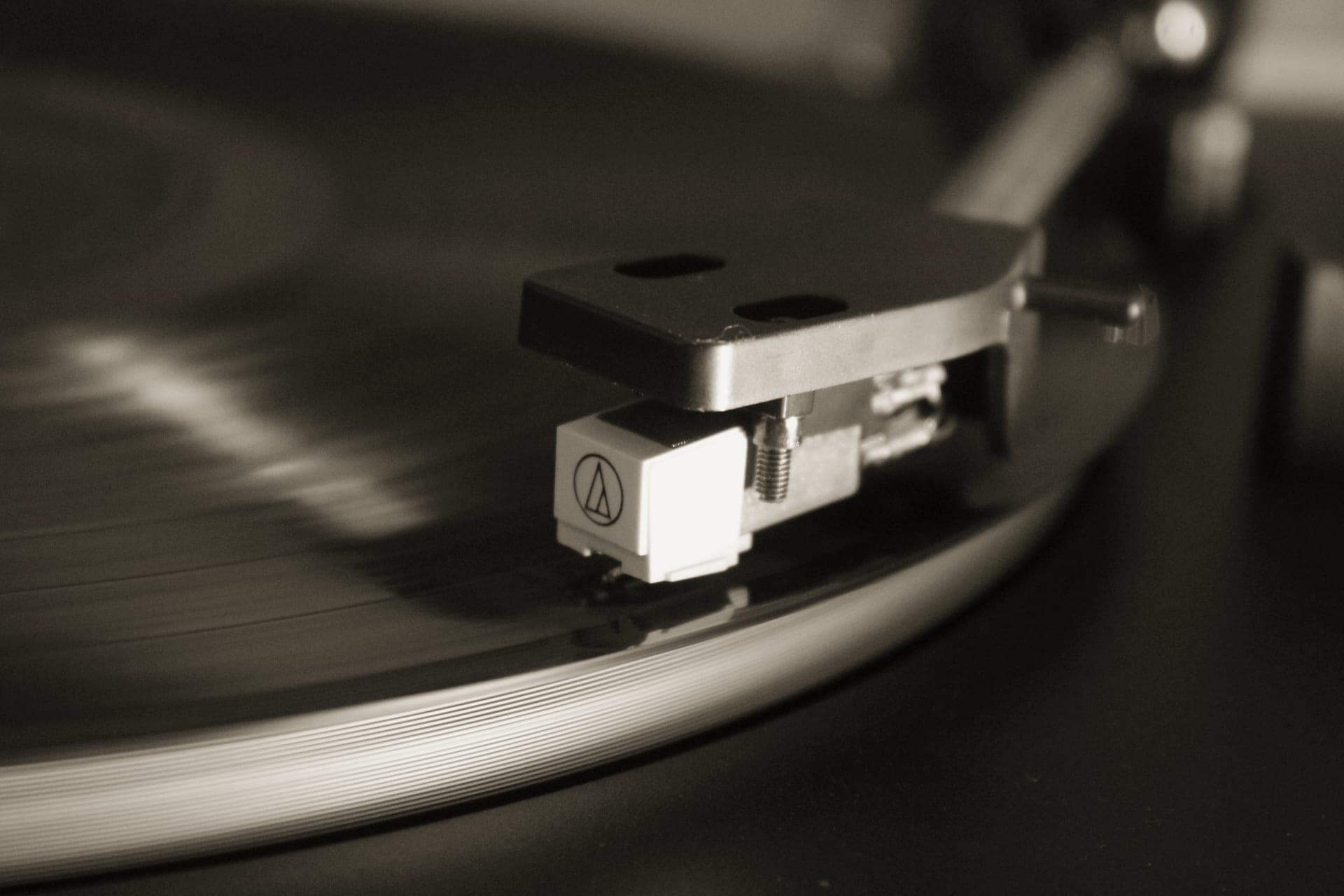
The namesake. Decks, cartridges, phono stages, and the arithmetic that decides what fits what.
A turntable is the only source component that is still a mechanical instrument. Every other box in a hi-fi system moves electrons around; this one drags a diamond through a groove at a controlled angle and a controlled force, and converts the wobble into a voltage measured in thousandths of a volt. Almost everything that makes turntables confusing follows from that fact.
Four things, and they are not equally important. There is the plinth and platter, whose entire job is to stay still and turn at a constant speed. There is the motor and drive, belt or direct. There is the tonearm, which must hold the cartridge at the right angle with the right force while adding as little of its own character as possible. And there is the cartridge, which does the actual reading.
At the entry end, most of your money goes into the first two. By about $500 it starts shifting to the arm and cartridge, and above that it is almost all arm and cartridge. That is the correct progression, because the cartridge is the transducer and the transducer is where the information enters the system.
Which is also where the spec sheets start contradicting the price list. Ortofon publishes identicalelectrical figures for its 2M Bronze and 2M Black — same output, separation, balance, response tolerance, compliance and weight — and the only difference it will put in writing is the stylus geometry. Audio-Technica publishes exactly one difference between its VM740ML and VM750SH: 2 dB of channel separation. Our under-$1,000 cartridge roundup prints both sheets side by side and ranks eight cartridges on the output voltage and load your phono stage has to live with first, then on whether the step up in price buys a difference the maker actually publishes. The bracket below it is on the under-$200 page, and the two share no picks at all.
Under $300 buys a competent, usually automatic deck with a built-in phono stage and a cartridge chosen to hit a price. It will play records properly at a controlled tracking force, which is the thing that separates a turntable from a toy.
$300 to $500 is where you get a choice: a better cartridge, or more convenience. The Fluance RT82 spends its budget on an Ortofon OM 10 and omits the phono stage entirely; the Audio-Technica AT-LP120XUSB spends its on direct drive, a removable headshell, USB output and 78 rpm. Neither is wrong — they are answers to different questions. Our under-$500 roundup works through both.
$500 to $1,000 is mostly cartridge. The Fluance RT85 ships with an Ortofon 2M Blue, and that cartridge is a substantial share of the price. This is also where manufacturers stop including a phono stage, on the assumption that you will bring a better one — which means the sticker price is missing $75 to $190 you still have to spend. The under-$1,000 roundup covers what each deck actually prioritizes.
Above $1,000 we do not currently cover, because the decks that matter at that price — Rega, Technics — are sold through specialist dealers rather than the retailer we link to. We would rather leave a gap than write a recommendation with a buy button that cannot exist.
Do you need a phono preamp?Yes — but you may already own one, hiding in the turntable, the amplifier, or the speakers. A turntable’s output is roughly a hundred times quieter than line level and has had its bass deliberately removed at the cutting stage. A phono stage fixes both. Get this wrong and you will conclude your new turntable is broken when it is simply plugged into the wrong socket. The 30-second check is here.
Will that cartridge fit this arm? This is answerable with one equation and two published numbers — arm effective mass and cartridge compliance — targeting a resonance between 8 and 12 Hz. The catch is that most manufacturers do not publish the arm figure at all. Pro-Ject does. Audio-Technica does not. Fluance publishes something under that heading whose value suggests it may be measuring something else. We show the arithmetic and the gaps.
Suitcase all-in-one players. Not because we have tested them — we have not — but because of what they decline to publish. Every deck we recommend states a tracking force, and most let you adjust it. Suitcase players generally publish no tracking force at all. A stylus pressed into a groove at an unspecified, unadjustable force is a risk you cannot quantify, and that absence is itself the answer.
We would also skip paying for a built-in phono stage twice. If your amplifier has a PHONO input, buying a deck whose price includes a stage you will switch off is money that could have gone into the cartridge instead. If your amplifier does not have one, our built-in-preamp roundup ranks the six decks that include a stage on what each maker publishes about it and whether it can be bypassed later, and the receiver connection guide covers which input and which switch position when the other end is a receiver. If the other end is a computer, our USB phono preamp roundup ranks the stages that put the converter in the same box — on what each maker publishes about the stage, because every converter there is the same 16-bit ceiling.
Every specification we publish is linked to the manufacturer document we read it from. Where a manufacturer does not publish a figure — wow and flutter as a limit rather than a measurement, tonearm effective mass at all — we say so rather than estimating. We have not heard any of this gear, so you will not find a sentence about how it sounds anywhere on this hub. What you will find is the arithmetic, the sources, and the prices as of today. That standard is also how our turntable brands page is ranked: one deck per maker, ordered on the quality of what each publishes.
A record player is the one component people genuinely want upgraded, and also the one where half the obvious presents physically do not fit half the decks — a headshell-mounted cartridge needs a removable headshell, and a great many turntables do not have one. Our gifts for vinyl lovers page is built around that single question, and our Black Friday and Cyber Monday page covers whether waiting until late November is worth it for a deck or a cartridge. It is not the same answer for both.
Each card shows that roundup’s top pick and its live price, as of October 15, 2026.
Best under $500
Five decks under $500, ranked on published specs and total cost — including the phono stage two of them make you buy separately.
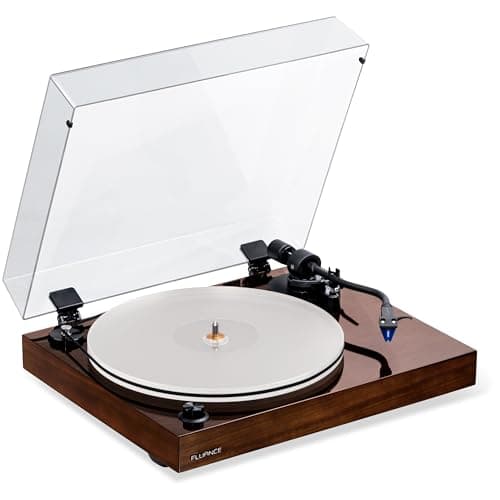
Best under $1,000
Four decks under $1,000, judged on where the money went — and only one publishes a tonearm effective mass you can actually use.
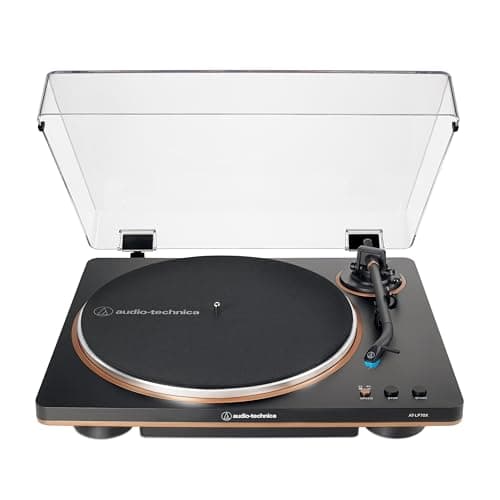
Best for beginners
Beginner decks ranked on the two things that matter at the start — automatic operation and a phono stage in the box.
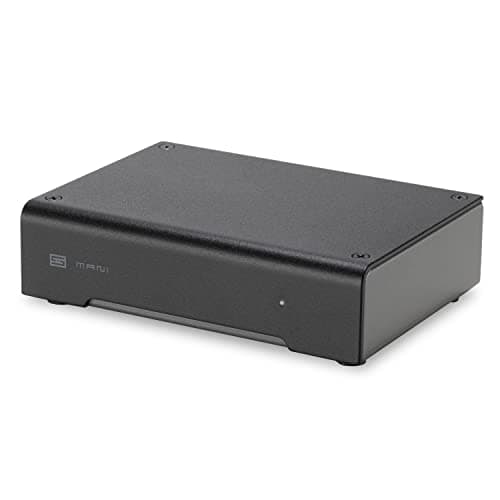
Best phono preamp under $200
Phono stages under $200 ranked on published gain, loading flexibility and noise — including one we would actively skip.
Best turntable under $300
Three verified decks under $300, ranked on published wow and flutter, drive type and whether the cartridge can ever be changed.
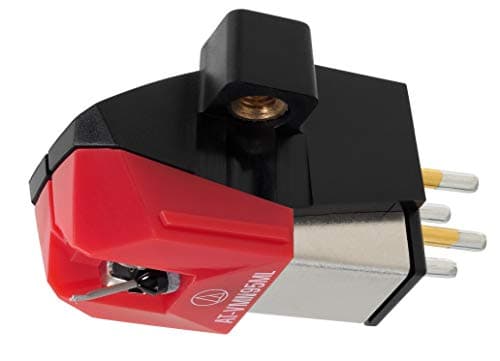
Best cartridge under $200
Six cartridges under $200, ranked on stylus profile, published compliance and output — with the unit-conversion trap explained.
Brands, ranked on disclosure
Five brands, one verified deck each, ranked on the completeness and honesty of what they publish.
Best turntable with a built-in preamp
Six decks with a phono stage inside, ranked on the stage: bypassable or not, published gain and noise, and whether the cartridge it feeds can ever be upgraded.
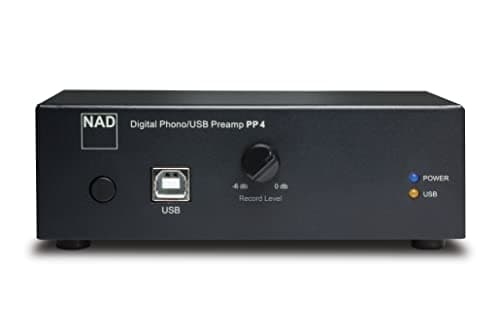
Best USB phono preamp
Four USB phono stages and the one deck that skips the box, ranked on what each maker publishes about the stage that feeds the converter — because every converter here is the same 16-bit, 48 kHz ceiling.
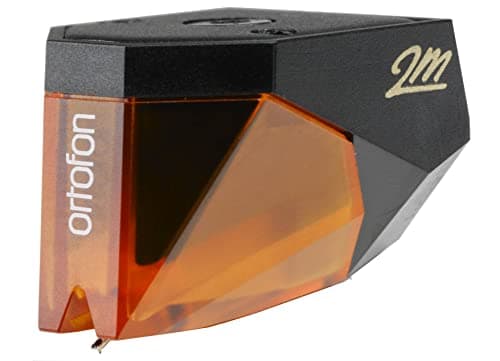
Best cartridge under $1,000
Eight cartridges from $200 to $1,000, gated on output voltage and load, then ranked on whether the price step buys a difference the maker publishes. Two of them do not.
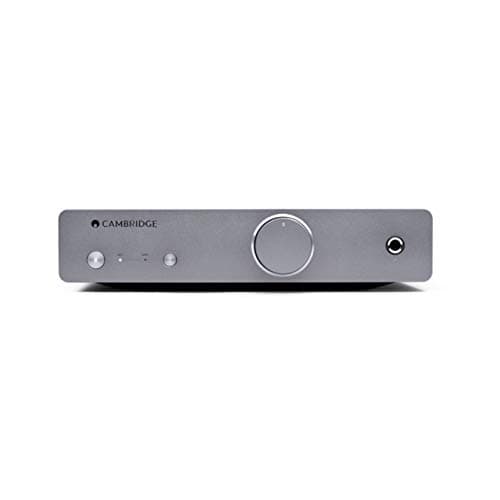
Best phono preamp under $500
Six phono stages from $249 to $499, ranked on published RIAA accuracy and whether the loading can be matched to your cartridge.
Yes, unless you already have one — and it might be hiding in your turntable, amplifier or speakers. Check in 30 seconds.
One equation, two published numbers, and the compliance caveat that changes the answer. Worked through with real specs.
Nine steps, and the two everyone gets wrong. Both have a published number you can set them to.
Four working routes from turntable to speakers, the two that do not work, and how to fix the hum.
Direct drive, a switchable 36 dB phono stage, USB and 78 rpm — reviewed against Audio-Technica's own manual.
Acrylic platter, measured 0.07% wow and flutter, an Ortofon 2M Blue — and a phono stage you have to supply.
Debut Carbon EVO against AT-LP120XUSB: arm versus features, and the one published spec that settles it.
Seven decks, two drive types, and published wow-and-flutter figures that refuse to line up the way the internet says they should.
The whole MM/MC argument reduces to output voltage — and Schiit's own published noise figures show exactly what the extra gain costs.
The words mean the same thing. What separates a real deck from a novelty is the list of specifications the maker refuses to publish.
The brush-before-every-play habit, the wet method, and the three techniques that damage records — with no product recommendation, deliberately.
USB deck, external ADC, or streamer — and why the USB route tops out at 16-bit/44.1 kHz per Audio-Technica's own manual.
Three compatibility checks — mount, mass and loading — and the decks where the answer is simply no.
The five cartridge adjustments in order, the one figure that is always published, and why we will not print a null-point distance.
Which receiver input, which switch position, why the ground screw matters, and what to do when the receiver has no PHONO input at all.
Direct drive with a built-in phono stage and USB against belt drive with the better published figures. The deciding number is the total once the Fluance has the phono stage it requires.
Diagnose by frequency first: mains-frequency hum is grounding or induction, twice-mains is a power supply, and a constant rush is the phono stage's published noise floor at the wrong gain setting.
Diagnose by where it skips. Includes the one specification that actually measures groove-holding ability — Ortofon's tracking ability in micrometres — and which cartridges publish it.
Every pick here is a spec-and-price analysis, not a listening test. We compile what the manufacturer publishes, link each figure to the document we read it from, show the arithmetic where it applies, and price everything live. We have not heard this gear and we do not pretend to have. The full method is here.