The Best Audio-Technica Turntable
Audio-Technica is the one brand where the cartridge decides more than the deck does — and where the upgrade is a stylus, not a turntable. Here is which deck, then which stylus.
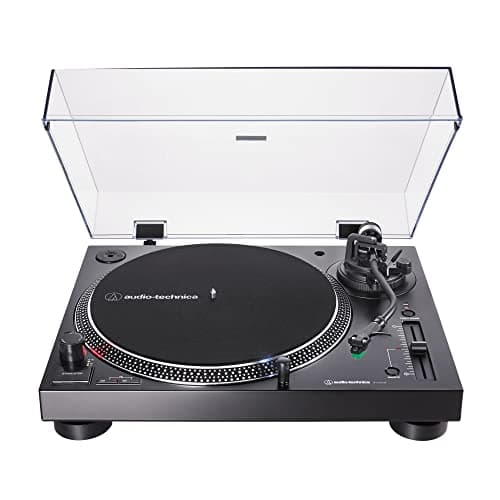
Top pick: Audio-Technica AT-LP120XUSB
$449.0022% off
Best overall under $500. #ad Affiliate link — we earn a commission at no extra cost to you.
The short answer
The best Audio-Technica turntable is the AT-LP120XUSB — direct drive with a 0–4 g adjustable tonearm, a removable AT-HS6 headshell, a switchable 36 dB phono stage, 78 rpm, and a USB output. The removable headshell is the reason it wins rather than the drive type: it is the only Audio-Technica deck here where you can change the entire cartridge rather than only the stylus, which is what makes it the one worth keeping. The budget pick is the AT-LP70X — fully automatic, so the arm lifts and returns on its own, and it publishes a better signal-to-noise figure than the dearer LP120X does (over 55 dB against over 50 dB). Its AT-VM95C cartridge body does not come off, but every stylus in the VM95 range drops into it, so the upgrade path is intact.
Then the part most Audio-Technica pages skip. Six of the nine picks here are cartridges, because on this brand the stylus is the upgrade: the VM95 family shares one body across seven stylus profiles, and the published channel separation runs from 20 dB on the cheapest to 30 dB on the dearest VM. The one deck to avoid if you ever want to upgrade is the AT-LP60XBT — its AT3600L cartridge takes the ATN3600L stylus and nothing else, which is a dead end rather than a ladder. And Audio-Technica’s own moving-coil cartridges will not work with any of these decks’ built-in phono stages, for a reason the arithmetic below makes exact.
Disclosure: we earn a commission if you buy through the links on this page, at no extra cost to you. It does not influence what we pick — our criteria are published and reproducible, so you can check our work. How we pick · Full disclosure
These picks are spec-and-price analyses, not listening tests. We have not heard this gear and we do not pretend to have: every figure below is sourced to the manufacturer and linked, and every price is live or not shown at all. Here are the rules we followed.
Quick picks
Ranked on the published criteria in How We Pick. Prices are live as of November 16, 2026. Tap any row for the full write-up.
- 8.6$349.00View on Amazon
$449.0022% off
- 8.0
- 6.4
- 8.8
- 8.4$62.00View on Amazon
$74.0016% off
- 7.8
- 8.0
- 8.8
- 8.3
| # | Product | Best for | Score | Price |
|---|---|---|---|---|
| 1 | Audio-Technica AT-LP120XUSB A direct-drive deck with a switchable phono stage and USB out, which means it works with any amplifier you already own and needs nothing else on day one. | Best overall under $500 | 8.6 | $349.00View on Amazon $449.0022% off |
| 2 | 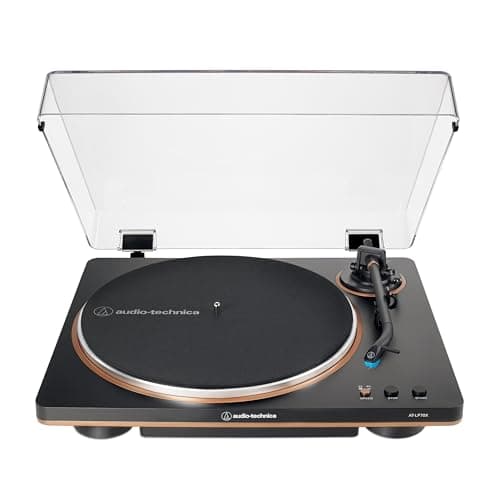 Audio-Technica AT-LP70X Fully automatic, so the arm lifts and returns on its own — the single feature that most reduces the chance of a new owner damaging a stylus or a record. | Best for beginners | 8.0 | |
| 3 | 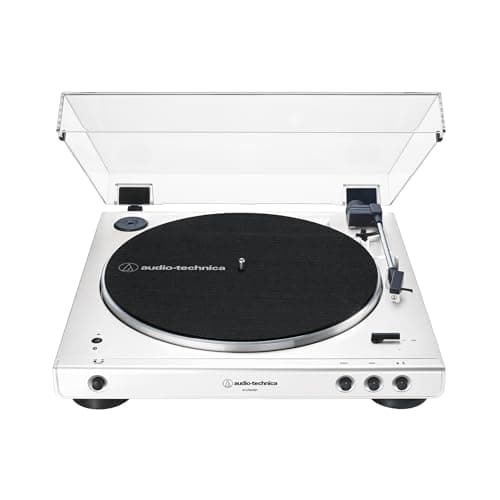 Audio-Technica AT-LP60XBT Fully automatic with Bluetooth out, which trades away the upgrade path entirely in exchange for working with a wireless speaker and nothing else. | Simplest possible start | 6.4 | |
| 4 | 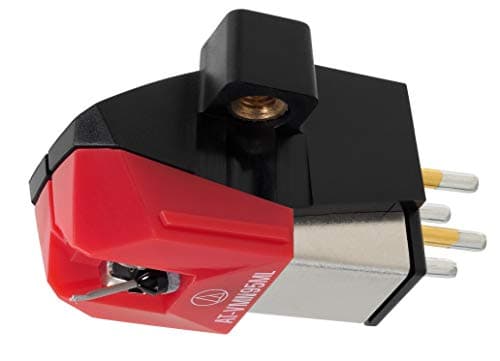 Audio-Technica AT-VM95ML A MicroLinear diamond on the same body as the $65 VM95E, with the highest published compliance and the tightest channel balance of any cartridge here. | Best stylus profile under $200 | 8.8 | |
| 5 | 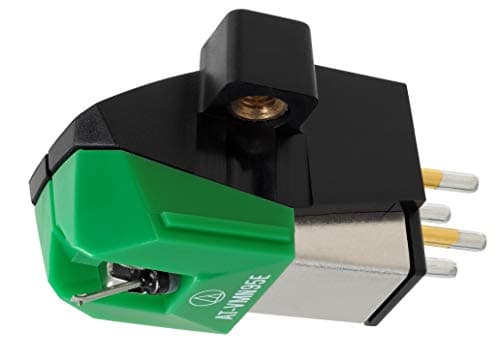 Audio-Technica AT-VM95E The cheapest way into a cartridge body that accepts seven different styli, so every later upgrade costs a stylus rather than a cartridge. | Best first upgrade | 8.4 | $62.00View on Amazon $74.0016% off |
| 6 | 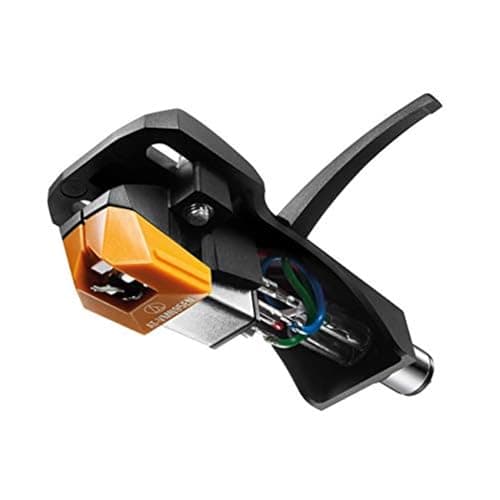 Audio-Technica AT-VM95EN/H The nude-stylus VM95 supplied already mounted and aligned on an AT-HS6 headshell, which removes the single most error-prone step in fitting a cartridge. | Best for a removable headshell | 7.8 | |
| 7 | 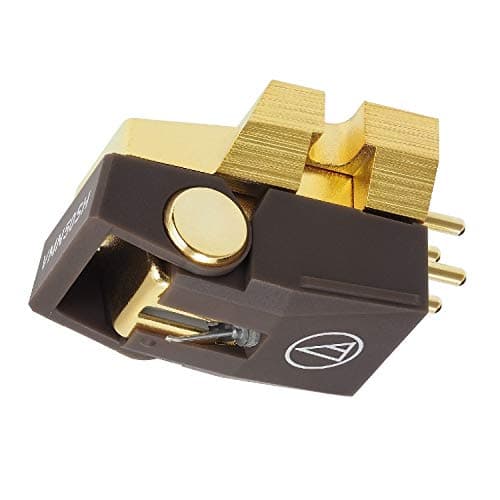 Audio-Technica VM750SH Thirty decibels of channel separation, the highest published figure on this site — bought with a Shibata stylus and, on Audio-Technica's own sheet, nothing else over the VM740ML. | Highest published separation | 8.0 | |
| 8 | 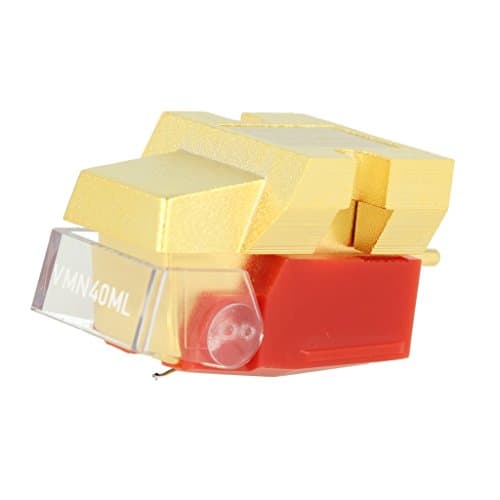 Audio-Technica VM740ML The only cartridge here whose maker publishes coil impedance, inductance, DC resistance, a load capacitance range and both static and dynamic compliance — and names the frequency the dynamic figure was measured at. | Most completely documented | 8.8 | |
| 9 | 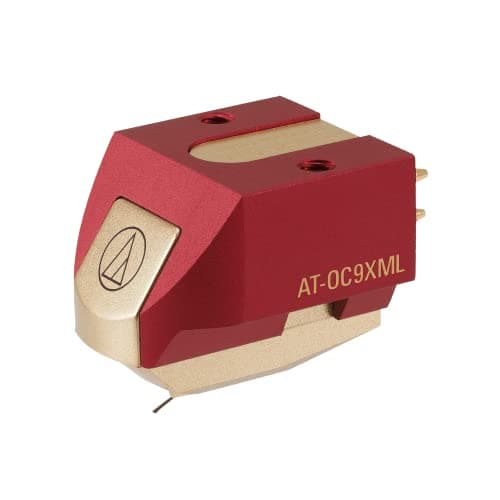 Audio-Technica AT-OC9XML The widest published bandwidth on this page and the only nude boron cantilever — on a moving coil that needs a phono stage built for 100 Ω, not the 47 kΩ input most people own. | Best if you own an MC phono stage | 8.3 |
Audio-Technica is the only brand in vinyl where the right question is not “which turntable” but “which turntable, and then which stylus”. Every deck it sells arrives with an Audio-Technica cartridge already fitted, and on most of them that cartridge’s stylus is a user-replaceable part from a range that climbs from a bonded elliptical to a nude MicroLinear. That makes the brand unusually easy to buy into and unusually easy to buy wrong, because one of the three decks here has no upgrade path at all.
This page ranks on four published figures and one structural fact. The figures are drive type, wow and flutter, signal-to-noise and the phono stage specification. The structural fact is what happens when you want more later: a removable headshell, a replaceable stylus, or nothing.
A note on scope first, because the brand’s catalog is larger than this page. Audio-Technica currently sells several decks we do not rank — the LP60X without Bluetooth, the LP70XBT, the LP140XP and others. The three ranked below are the three we hold sourced manufacturer specifications and a verified live listing for. We would rather rank three decks completely than nine of them from retailer copy.
The picks compared, spec by spec
The second column is the one to read carefully: those two wow-and-flutter figures are not measured the same way, and the fourth column is the one that decides what the deck is worth in three years. The phono stage is not a column because it does not vary — all three publish the same switchable PHONO/LINE stage at 36 dB nominal gain, which matters later on this page. Every row carries its own live price and buy link.
Every figure below is the manufacturer’s own published value and links to the document we read it from. “Not published” means the manufacturer does not publish that figure; an em dash means we have no published figure for that model. Prices are live as of November 16, 2026.
Best overall under $500
- Drive type
- Direct drive (DC servo)
- Wow and flutter (note the weighting)
- < 0.2% WRMS
- Signal-to-noise
- > 50 dB
- Cartridge, and whether it comes off
- AT-VM95E on a removable AT-HS6
Best for beginners
- Drive type
- Belt, fully automatic
- Wow and flutter (note the weighting)
- < 0.25% WTD
- Signal-to-noise
- > 55 dB
- Cartridge, and whether it comes off
- AT-VM95C, body NOT removable
Simplest possible start
- Drive type
- Belt, fully automatic
- Wow and flutter (note the weighting)
- < 0.25% WTD
- Signal-to-noise
- > 50 dB (DIN-B)
- Cartridge, and whether it comes off
- AT3600L — ATN3600L stylus only
| Pick | Drive type | Wow and flutter (note the weighting) | Signal-to-noise | Cartridge, and whether it comes off | Price |
|---|---|---|---|---|---|
| 1.Audio-Technica AT-LP120XUSBBest overall under $500 | Direct drive (DC servo) | < 0.2% WRMS | > 50 dB | AT-VM95E on a removable AT-HS6 | |
| 2.Audio-Technica AT-LP70XBest for beginners | Belt, fully automatic | < 0.25% WTD | > 55 dB | AT-VM95C, body NOT removable | |
| 3.Audio-Technica AT-LP60XBTSimplest possible start | Belt, fully automatic | < 0.25% WTD | > 50 dB (DIN-B) | AT3600L — ATN3600L stylus only |
Prices as of November 16, 2026; every “Check Price” link goes to Amazon and earns us a commission at no extra cost to you. #ad
The two wow-and-flutter figures are not the same measurement
The LP120XUSB publishes less than 0.2% WRMS at 33 rpm, measured at 3 kHz. The LP70X and LP60XBT publish less than 0.25% WTD. WRMS and WTD are different weightings of the same underlying phenomenon, and a number in one unit cannot be compared with a number in the other without a conversion Audio-Technica does not supply. So “0.2 beats 0.25” is not a conclusion you can draw from those two lines, and we are not going to pretend otherwise.
What you can say is that direct drive removes a wear item. There is no belt to stretch, and the platter speed is servo-controlled rather than set by a rubber loop and a motor pulley. Our belt against direct drive comparison goes through what that does and does not buy you, including the part where a good belt drive isolates motor noise better than a cheap direct drive does.
The signal-to-noise column holds the page’s first real surprise. The cheapest-but-one deck publishes the best figure: over 55 dB on the LP70X against over 50 dB on the LP120XUSB, with the LP60XBT’s over 50 dB qualified “DIN-B” where neither of the others carries a stated weighting at all. That does not make the LP70X a better turntable — it has no removable headshell, no adjustable tracking force, no anti-skate and no 78 rpm — but it does mean the dearest deck here is not dearest because it is quieter.
Why the AT-LP120XUSB is first
Four things, and only one of them is the drive.
The removable AT-HS6 headshell means every cartridge in Audio-Technica’s half-inch range fits, and so does everyone else’s. That is the difference between a deck you upgrade and a deck you replace. The arm adjusts tracking force from 0 to 4 g with anti-skate, which the automatic decks do not publish at all — the LP70X’s tracking-force range is not in its manual. It plays 78s, which matters if you own shellac and is useless if you do not. And the USB output records at 16-bit, 44.1 or 48 kHz over USB 1.1, which is enough to archive a record and not enough to improve on it.
Its honest limitations: the 16-bit, USB 1.1 interface is dated against a modern outboard converter, the deck is heavier and larger than the automatics, and the bundled AT-VM95E is a competent cartridge rather than an endgame one — which is exactly why the cartridge half of this page exists. Our full review of the LP120X covers the setup in detail, and our guide to digitizing records explains when the USB output is the right tool and when it is not.
The automatics, and the one with no future
The AT-LP70X is belt-driven and fully automatic: press start and the arm lifts, cues, plays and returns by itself. That single feature prevents more stylus and record damage than any specification on this page, which is why it heads our beginner turntable ranking. Its cartridge body is fixed — the AT-VM95C does not come off — but Audio-Technica’s own manual states the stylus upgrades across the VM95 range, so a $60 stylus swap buys a genuinely better profile without touching the deck. That is a rare thing at this price and it is the reason this deck ranks second rather than third.
The AT-LP60XBT is the one to think twice about. It is also belt-driven, also fully automatic, and it adds Bluetooth output, which is the whole reason to buy it: it will drive a pair of wireless speakers with nothing in between. But its cartridge is the AT3600L, whose replacement stylus is the ATN3600L and whose upgrade path ends there. Audio-Technica publishes no tracking-force range for it, and no VM95-series stylus fits. If the plan is a turntable that grows, this is not it. If the plan is a record player that works with the speakers already in the room, it is the cheapest honest way to get one.
All three decks share the same built-in phono stage specification: switchable PHONO/LINE with a 36 dB nominal gain, RIAA equalized. That means any of them plugs into any line input, and the do-I-need-a-phono-preamp question answers itself for all three — until you want a moving coil, which is where this page turns.
The brand’s real ladder: one body, seven styli
The VM95 series is the most sensible thing in budget vinyl. One cartridge body, and a range of styli that drop into it, so you buy the body once and climb. The registry holds three rungs with sourced figures, and the ladder is visible in the published channel separation.
The picks compared, spec by spec
Six cartridges, and the separation column is the ladder. Note the second surprise on this page: the dearest moving magnet publishes higher channel separation than the moving coil above it, and the moving coil is the only one here whose stylus you cannot replace yourself. Load is not a column because five of the six are identical — 47 kΩ with 100–200 pF — and the sixth, the moving coil, specifies a minimum of 100 Ω with a head amplifier, which is the whole problem the next section works through. Every row carries its own live price and buy link.
Every figure below is the manufacturer’s own published value and links to the document we read it from. “Not published” means the manufacturer does not publish that figure; an em dash means we have no published figure for that model. Prices are live as of November 16, 2026.
Best stylus profile under $200
- Stylus profile
- 2.2 × 0.12 mil MicroLinear, nude
- Channel separation
- 23 dB
- Output
- 3.5 mV
- Stylus replaceable?
- AT-VMN95ML
Best first upgrade
- Stylus profile
- 0.3 × 0.7 mil elliptical, BONDED
- Channel separation
- 20 dB
- Output
- 4.0 mV
- Stylus replaceable?
- AT-VMN95E — whole range fits
Best for a removable headshell
- Stylus profile
- 0.3 × 0.7 mil elliptical, NUDE
- Channel separation
- 22 dB
- Output
- 3.5 mV
- Stylus replaceable?
- AT-VMN95EN
Highest published separation
- Stylus profile
- 2.7 × 0.26 mil Shibata, nude
- Channel separation
- 30 dB
- Output
- 4.0 mV
- Stylus replaceable?
- VMN50SH, user-replaceable
Most completely documented
- Stylus profile
- 2.2 × 0.12 mil MicroLine, nude
- Channel separation
- 28 dB
- Output
- 4.0 mV
- Stylus replaceable?
- VMN40ML, user-replaceable
Best if you own an MC phono stage
- Stylus profile
- Microlinear, nude, boron cantilever
- Channel separation
- 27 dB
- Stylus replaceable?
- NOT field-replaceable
| Pick | Stylus profile | Channel separation | Output | Stylus replaceable? | Price |
|---|---|---|---|---|---|
| 4.Audio-Technica AT-VM95MLBest stylus profile under $200 | 2.2 × 0.12 mil MicroLinear, nude | 23 dB | 3.5 mV | AT-VMN95ML | |
| 5.Audio-Technica AT-VM95EBest first upgrade | 0.3 × 0.7 mil elliptical, BONDED | 20 dB | 4.0 mV | AT-VMN95E — whole range fits | |
| 6.Audio-Technica AT-VM95EN/HBest for a removable headshell | 0.3 × 0.7 mil elliptical, NUDE | 22 dB | 3.5 mV | AT-VMN95EN | |
| 7.Audio-Technica VM750SHHighest published separation | 2.7 × 0.26 mil Shibata, nude | 30 dB | 4.0 mV | VMN50SH, user-replaceable | |
| 8.Audio-Technica VM740MLMost completely documented | 2.2 × 0.12 mil MicroLine, nude | 28 dB | 4.0 mV | VMN40ML, user-replaceable | |
| 9.Audio-Technica AT-OC9XMLBest if you own an MC phono stage | Microlinear, nude, boron cantilever | 27 dB | 0.4 mV — needs an MC stage | NOT field-replaceable |
Prices as of November 16, 2026; every “Check Price” link goes to Amazon and earns us a commission at no extra cost to you. #ad
The separation figures are worth converting, because decibels of crosstalk are abstract and the ratio is not.
Voltage ratio = 10^(−dB ÷ 20)
Inputs
- AT-VM95E channel separation: 20 dB (1 kHz) (Audio-Technica spec page)
- AT-VM750SH channel separation: 30 dB (1 kHz) (Audio-Technica spec page)
Result
One more thing about the VM95 range that nobody puts in a spec table: the VM95ML publishes a 1.5 dB output channel balance, the tightest of any VM95, where the VM95E publishes 2.0 dB. And the dynamic compliance climbs from 7 to 10 × 10⁻⁶ cm/dyne as you move up the range, which changes how the cartridge behaves in a given tonearm — see the gap section below for why that cannot be turned into a recommendation here.
Audio-Technica’s moving coils will not work with Audio-Technica’s decks
This is the single most useful fact on the page and it follows from two numbers A-T publishes a catalog apart. The AT-OC9XML outputs 0.4 mV and asks for a minimum 100 Ω load “when head amplifier is connected” — A-T’s own wording, and not a 47 kΩ moving-magnet input. All three decks on this page have a built-in phono stage with 36 dB of nominal gain, designed for a moving magnet.
Output = input × 10^(gain dB ÷ 20)
Inputs
- AT-OC9XML output: 0.4 mV (1 kHz, 5 cm/sec) (Audio-Technica spec page)
- AT-VM95E output: 4.0 mV (1 kHz, 5 cm/sec) (Audio-Technica spec page)
- Built-in stage gain, all three decks: 36 dB nominal, switchable PHONO/LINE (Audio-Technica manual (PDF))
Result
There is a second AT moving coil in our registry, the AT-OC9XEN, at 0.35 mV — the lowest output of any cartridge on this site, so everything above applies to it more sharply. It publishes 25 dB separation and an elliptical nude stylus on an aluminum cantilever rather than the XML’s boron, and it is the cheapest documented moving coil we rank. Our cartridge roundup under $1,000 ranks both against Ortofon and Denon.
What Audio-Technica does not publish, and why it matters here
Two gaps, and together they block the one calculation an enthusiast most wants to do. Not one of the three decks publishes its tonearm effective mass. And every A-T cartridge publishes dynamic compliance at 100 Hz, where the tonearm resonance formula wants the figure at 10 Hz. So the standard check — does this cartridge resonate with this arm somewhere between 8 and 12 Hz — cannot be completed for any Audio-Technica deck using only Audio-Technica’s numbers.
We publish that as a gap rather than estimating around it. Figures for A-T arm masses circulate; none of them is Audio-Technica’s. Our cartridge and tonearm matching guide shows the arithmetic and which makers do publish both halves of it. The practical consequence is small inside the brand — every VM95 and VM700-series cartridge tracks at the same 1.8–2.2 g with 2.0 g standard, and all of them are designed for arms in the same class — and it matters if you are putting an A-T cartridge on somebody else’s deck.
One more absence worth stating: Audio-Technica publishes frequency response for every cartridge here with no tolerance attached. “20–25,000 Hz” on the VM95ML and “20–27,000 Hz” on the VM740ML and VM750SH are not comparable with Ortofon’s ±dB figures, because a response range without a tolerance does not say how flat it is.
So which Audio-Technica, by what you are actually doing
One deck you will keep for a decade: the AT-LP120XUSB with the bundled VM95E, and a VMN95ML stylus when you are ready. Removable headshell, adjustable tracking force, 78 rpm, direct drive, USB.
Hands off, and you want to stop worrying about the arm: the AT-LP70X. Fully automatic, the best published signal-to-noise of the three, and a VM95 stylus path despite the fixed body.
Wireless speakers and no amplifier at all: the AT-LP60XBT, with the AT3600L’s dead-end stylus understood as the price of the Bluetooth.
You already own an A-T deck and want it to sound better: buy a stylus, not a turntable. The VMN95ML drops into any VM95 body including the LP70X’s, and takes published separation from 20 dB to 23 dB with a MicroLinear profile. Our cartridge bracket under $200 is the page for that decision, and how often a stylus needs replacing tells you whether yours is due anyway.
The best cartridge A-T makes for most decks: the VM750SH, on published numbers — 30 dB separation, 1.0 dB channel balance, a nude Shibata on a tapered aluminum cantilever, and a user-replaceable stylus. It needs an arm that can set tracking force properly, which rules out both automatics.
A closing word on where Audio-Technica sits. Its documentation is thorough at the cartridge end and thin at the deck end — full electrical specifications on every stylus, and no effective mass on any arm. Against the brand people compare it with, Pro-Ject against Audio-Technica is the head-to-head, and the under-$500 turntable bracket ranks the LP120X against Fluance and Sony on price rather than on brand. Whichever deck you land on, the amplifier is the next decision — only one Yamaha receiver in the current range has a phono input, which is the kind of thing worth knowing before the box arrives, and the bookshelf speakers at the end of the chain will decide more of what you hear than the stylus does.
Every pick in detail
Every specification below links to the manufacturer document we read it from. Where a manufacturer does not publish a figure, we say so rather than estimating it.
Audio-Technica AT-LP120XUSB
Best overall under $500A direct-drive deck with a switchable phono stage and USB out, which means it works with any amplifier you already own and needs nothing else on day one.
- specs
- 8/10
- upgrade path
- 9/10
- value for money
- 9/10
- ease of setup
- 7/10
- connectivity
- 10/10
| Specification | Published value | Source |
|---|---|---|
| Drive type | Direct drive (DC servo motor) | Audio-Technica manual (PDF) |
| Wow and flutter | < 0.2% WRMS (33 rpm) at 3 kHz | Audio-Technica manual (PDF) |
| Signal-to-noise | > 50 dB | Audio-Technica manual (PDF) |
| Speeds | 33⅓, 45, 78 rpm | Audio-Technica manual (PDF) |
| Cartridge included | AT-VM95E (VM type) on an AT-HS6 headshell | Audio-Technica manual (PDF) |
| Tonearm effective mass | Not published | — |
| Built-in phono stage | Yes — switchable PHONO/LINE, 36 dB nominal gain, RIAA equalized | Audio-Technica manual (PDF) |
| USB output | Yes — 16-bit, 44.1 or 48 kHz selectable, USB 1.1 | Audio-Technica manual (PDF) |
| Tracking force | Arm adjusts 0–4 g; the included AT-VM95E tracks 1.8–2.2 g (2.0 g standard) | Audio-Technica manual (PDF) |
Pros
- Switchable built-in phono stage — works with an amp that has no phono input
- Direct drive, so speed is locked without a belt to stretch or replace
- USB output for digitizing records without a separate interface
- Adjustable tracking force, anti-skate and a removable headshell
Cons
- Heavier and larger than the belt-drive decks in this bracket
- The bundled AT-VM95E is a competent cartridge, not an endgame one
- Removable headshell adds a mechanical joint some purists avoid
Skip it if you want the smallest possible footprint, or you already own a good phono stage and would rather put the money into the cartridge.
Audio-Technica AT-LP70X
Best for beginnersPrice as of November 16, 2026. #ad
Fully automatic, so the arm lifts and returns on its own — the single feature that most reduces the chance of a new owner damaging a stylus or a record.
- specs
- 7/10
- upgrade path
- 7/10
- value for money
- 9/10
- ease of setup
- 10/10
- connectivity
- 7/10
| Specification | Published value | Source |
|---|---|---|
| Drive type | Belt drive (DC motor), fully automatic | Audio-Technica manual (PDF) |
| Wow and flutter | < 0.25% (WTD) | Audio-Technica manual (PDF) |
| Signal-to-noise | > 55 dB | Audio-Technica manual (PDF) |
| Speeds | 33⅓, 45 rpm | Audio-Technica manual (PDF) |
| Cartridge included | AT-VM95C dual moving magnet — NON-REMOVABLE. The stylus upgrades across the VM95 range; the cartridge body does not come off. | Audio-Technica manual (PDF) |
| Tonearm effective mass | Not published | — |
| Built-in phono stage | Yes — switchable PHONO/LINE, 36 dB nominal gain | Audio-Technica manual (PDF) |
| USB output | No | Audio-Technica manual (PDF) |
| Tracking force range | Not published | — |
Pros
- Fully automatic start and return — no manual cueing to get wrong
- Built-in switchable phono stage, so it works with any line input
- The stylus upgrades across the AT-VM95 range without touching the cartridge
- Published wow and flutter under 0.25%, and Audio-Technica states the figure
Cons
- The cartridge body is non-removable — only the stylus swaps, so the upgrade path ends at the VM95 range
- Belt drive, not direct drive: the belt is a consumable
- No USB output
Skip it if you want to digitize your collection — this one has no USB out.
Audio-Technica AT-LP60XBT
Simplest possible startPrice as of November 16, 2026. #ad
Fully automatic with Bluetooth out, which trades away the upgrade path entirely in exchange for working with a wireless speaker and nothing else.
- specs
- 5/10
- upgrade path
- 3/10
- value for money
- 7/10
- ease of setup
- 10/10
- connectivity
- 8/10
| Specification | Published value | Source |
|---|---|---|
| Drive type | Belt drive, fully automatic (DC servo-controlled motor) | Audio-Technica manual (PDF) |
| Wow and flutter | < 0.25% (WTD) at 3 kHz | Audio-Technica manual (PDF) |
| Signal-to-noise | > 50 dB (DIN-B) | Audio-Technica manual (PDF) |
| Cartridge included | AT3600L (VM type); replacement stylus ATN3600L | Audio-Technica manual (PDF) |
| Tonearm effective mass | Not published | — |
| Built-in phono stage | Yes — switchable PHONO/LINE, 36 dB nominal gain | Audio-Technica manual (PDF) |
| USB output | No | Audio-Technica manual (PDF) |
Pros
- Fully automatic and genuinely hard to misuse
- Bluetooth output pairs with a wireless speaker with no amplifier at all
- The cheapest route into a real, tracking-force-controlled turntable
Cons
- Integrated headshell — the cartridge is not user-replaceable the way a standard mount is
- Bluetooth is lossy; the analog output is the better path if you have one
- Lightest plinth here, so it is the most sensitive to a resonant surface
Skip it if you expect to upgrade the cartridge later. The integrated headshell is the ceiling, and it arrives early.
Audio-Technica AT-VM95ML
Best stylus profile under $200No live price right now. #ad
A MicroLinear diamond on the same body as the $65 VM95E, with the highest published compliance and the tightest channel balance of any cartridge here.
- specs
- 9/10
- upgrade path
- 10/10
- value for money
- 7/10
- tracking ability
- 9/10
- published data
- 9/10
| Specification | Published value | Source |
|---|---|---|
| Type | VM stereo dual magnet (moving magnet) | Audio-Technica spec page |
| Frequency response | 20–25,000 Hz (no tolerance published) | Audio-Technica spec page |
| Channel separation | 23 dB (1 kHz) | Audio-Technica spec page |
| Output voltage | 3.5 mV (1 kHz, 5 cm/sec) | Audio-Technica spec page |
| Output channel balance | 1.5 dB (1 kHz) — the tightest of any VM95 | Audio-Technica spec page |
| Stylus | 2.2 × 0.12 mil MicroLinear, nude square shank | Audio-Technica spec page |
| Cantilever | Aluminum pipe | Audio-Technica spec page |
| Dynamic compliance | 10 × 10⁻⁶ cm/dyne (100 Hz) | Audio-Technica spec page |
| Static compliance | 20 × 10⁻⁶ cm/dyne | Audio-Technica spec page |
| Tracking force | 1.8–2.2 g (2.0 g standard) | Audio-Technica spec page |
| Recommended load | 47,000 Ω, 100–200 pF | Audio-Technica spec page |
| Mount / weight | Half-inch mount, 6.1 g | Audio-Technica spec page |
| Replacement stylus | AT-VMN95ML | Audio-Technica spec page |
Pros
- 2.2 × 0.12 mil MicroLinear — a line-contact profile that sits deeper in the groove than any elliptical here
- 10 × 10⁻⁶ cm/dyne dynamic compliance, the highest published figure in this group
- 1.5 dB channel balance and 23 dB separation, both the best Audio-Technica figures here
- It is a stylus, not a cartridge — if you own any VM95 body it drops in with no alignment at all
Cons
- The most expensive cartridge here, and it shares its body with a $65 one
- A line-contact tip is less forgiving of alignment error than an elliptical
- 3.5 mV output, lower than the VM95E's 4.0 mV
- Higher compliance narrows the range of arms it suits — high compliance plus a heavy arm is the classic mismatch
Skip it if your tonearm's effective mass is unpublished and heavy-looking. High compliance on a heavy arm drops the resonance below the safe window, and most makers will not tell you the arm figure.
Audio-Technica AT-VM95E
Best first upgradeThe cheapest way into a cartridge body that accepts seven different styli, so every later upgrade costs a stylus rather than a cartridge.
- specs
- 7/10
- upgrade path
- 10/10
- value for money
- 10/10
- tracking ability
- 6/10
- published data
- 9/10
| Specification | Published value | Source |
|---|---|---|
| Type | VM stereo dual magnet (moving magnet) | Audio-Technica spec page |
| Frequency response | 20–22,000 Hz (no tolerance published) | Audio-Technica spec page |
| Channel separation | 20 dB (1 kHz) | Audio-Technica spec page |
| Output voltage | 4.0 mV (1 kHz, 5 cm/sec) | Audio-Technica spec page |
| Output channel balance | 2.0 dB (1 kHz) | Audio-Technica spec page |
| Stylus | 0.3 × 0.7 mil elliptical, bonded round shank | Audio-Technica spec page |
| Cantilever | Aluminum pipe | Audio-Technica spec page |
| Dynamic compliance | 7 × 10⁻⁶ cm/dyne (100 Hz) | Audio-Technica spec page |
| Static compliance | 17 × 10⁻⁶ cm/dyne | Audio-Technica spec page |
| Tracking force | 1.8–2.2 g (2.0 g standard) | Audio-Technica spec page |
| Recommended load | 47,000 Ω, 100–200 pF | Audio-Technica spec page |
| Mount / weight | Half-inch mount, 6.1 g | Audio-Technica spec page |
| Replacement stylus | AT-VMN95E — the whole VM95 stylus range drops into this same body | Audio-Technica spec page |
Pros
- The VM95 body takes the entire VM95 stylus range — conical through Shibata — so the upgrade path costs a stylus, not a cartridge
- 4.0 mV output is the highest of any Audio-Technica cartridge here, so it suits low-gain phono stages
- Audio-Technica publishes both static and dynamic compliance, which is what arm matching needs
- Already fitted to several decks we recommend, so you may own one without knowing
Cons
- A bonded round-shank stylus — the diamond is glued to a metal carrier rather than being solid, which adds tip mass
- 20 dB channel separation is the lowest figure in this group
- 2.0 dB channel balance is the loosest here; the ML is 1.5 dB
- Audio-Technica publishes no tolerance on the 20–22,000 Hz response
Skip it if your deck already ships with a VM95E — several do, and buying a second one changes nothing. Buy a better stylus for the body you own instead.
Audio-Technica AT-VM95EN/H
Best for a removable headshellPrice as of November 16, 2026. #ad
The nude-stylus VM95 supplied already mounted and aligned on an AT-HS6 headshell, which removes the single most error-prone step in fitting a cartridge.
- specs
- 8/10
- upgrade path
- 9/10
- value for money
- 7/10
- tracking ability
- 7/10
- published data
- 8/10
| Specification | Published value | Source |
|---|---|---|
| Type | VM stereo dual magnet (moving magnet), supplied pre-mounted on an AT-HS6 headshell | Audio-Technica spec page |
| Frequency response | 20–23,000 Hz (no tolerance published) | Audio-Technica spec page |
| Channel separation | 22 dB (1 kHz) | Audio-Technica spec page |
| Output voltage | 3.5 mV (1 kHz, 5 cm/sec) | Audio-Technica spec page |
| Stylus | 0.3 × 0.7 mil elliptical, NUDE round shank (the VM95E's is bonded) | Audio-Technica spec page |
| Cantilever | Aluminum pipe | Audio-Technica spec page |
| Dynamic compliance | 7 × 10⁻⁶ cm/dyne (100 Hz) | Audio-Technica spec page |
| Static compliance | 20 × 10⁻⁶ cm/dyne | Audio-Technica spec page |
| Tracking force | 1.8–2.2 g (2.0 g standard) | Audio-Technica spec page |
| Recommended load | 47,000 Ω, 100–200 pF | Audio-Technica spec page |
| Mount / cartridge weight | Half-inch mount, 6.1 g (cartridge alone) | Audio-Technica spec page |
| Combined cartridge + AT-HS6 headshell mass | Not published | — |
| Replacement stylus | AT-VMN95EN | Audio-Technica spec page |
Pros
- Arrives mounted and aligned on an AT-HS6 headshell — no protractor, no overhang setting, no shaky hands
- A NUDE round-shank diamond, where the VM95E's is bonded: less tip mass for the groove to move
- 22 dB separation and 20 × 10⁻⁶ cm/dyne static compliance, both better than the VM95E
- Drops straight onto any deck with a standard removable headshell, including the AT-LP120XUSB
Cons
- Useless on a fixed-headshell deck — you are paying for a part you cannot fit
- Audio-Technica does not publish the combined cartridge-plus-headshell mass, which is exactly the number arm-resonance arithmetic needs
- 3.5 mV output rather than the VM95E's 4.0 mV
- You pay for a headshell you may already own
Skip it if your turntable has an integrated headshell. On an AT-LP70X or AT-LP60XBT this cannot be fitted at all.
Audio-Technica VM750SH
Highest published separationPrice as of November 16, 2026. #ad
Thirty decibels of channel separation, the highest published figure on this site — bought with a Shibata stylus and, on Audio-Technica's own sheet, nothing else over the VM740ML.
- specs
- 8/10
- upgrade path
- 10/10
- value for money
- 6/10
- tracking ability
- 6/10
- published data
- 9/10
| Specification | Published value | Source |
|---|---|---|
| Type | VM Type — dual moving magnet | Audio-Technica spec page |
| Frequency response | 20–27,000 Hz — Audio-Technica publishes NO tolerance, so this is not comparable to Ortofon's ±dB figures | Audio-Technica spec page |
| Channel separation | 30 dB (1 kHz) — the highest published channel separation of any cartridge on this site | Audio-Technica spec page |
| Channel balance | 1.0 dB (1 kHz) | Audio-Technica spec page |
| Output voltage | 4.0 mV (1 kHz, 5 cm/sec) | Audio-Technica spec page |
| Stylus | 2.7 × 0.26 mil Shibata, NUDE square shank, aluminum tapered pipe cantilever | Audio-Technica spec page |
| Compliance | Static 40 × 10⁻⁶ cm/dyne; dynamic 10 × 10⁻⁶ cm/dyne stated AT 100 Hz — the resonance formula wants the 10 Hz value, which Audio-Technica does not publish | Audio-Technica spec page |
| Tracking force | 1.8–2.2 g (2.0 g standard) | Audio-Technica spec page |
| Vertical tracking angle | 23° | Audio-Technica spec page |
| Coil impedance / inductance / DC resistance | 2,700 Ω at 1 kHz · 460 mH at 1 kHz · 800 Ω | Audio-Technica spec page |
| Recommended load | 47,000 Ω, 100–200 pF | Audio-Technica spec page |
| Mount / weight | Half-inch, 8.0 g | Audio-Technica spec page |
| Replacement stylus | VMN50SH — user-replaceable | Audio-Technica spec page |
| Tracking ability | Not published | — |
Pros
- 30 dB separation at 1 kHz, the highest published figure of any cartridge on this site
- A 2.7 × 0.26 mil Shibata on a nude square shank, with the same user-replaceable stylus arrangement as the rest of the VM range
- Identical documentation depth to the VM740ML: coil impedance, inductance, DC resistance, static and dynamic compliance, load capacitance
- 4.0 mV into 47,000 Ω, so it works with any moving-magnet phono input
Cons
- Against the VM740ML, Audio-Technica publishes exactly one electrical difference: 2 dB more separation. Output, compliance, response, impedance, inductance, tracking force and weight are all identical
- It costs meaningfully more than the VM740ML for that 2 dB and a different tip geometry
- No tolerance on the 20–27,000 Hz response and no tracking-ability figure, same as the VM740ML
- The 0.26 mil side radius is wider than the MicroLine's 0.12 mil, so “better stylus” is the wrong description — it is a different trade
Skip it if the VM740ML is in stock. On Audio-Technica's own numbers the step up buys 2 dB of channel separation, and channel separation is not what limits a record.
Audio-Technica VM740ML
Most completely documentedPrice as of November 16, 2026. #ad
The only cartridge here whose maker publishes coil impedance, inductance, DC resistance, a load capacitance range and both static and dynamic compliance — and names the frequency the dynamic figure was measured at.
- specs
- 9/10
- upgrade path
- 10/10
- value for money
- 9/10
- tracking ability
- 6/10
- published data
- 9/10
| Specification | Published value | Source |
|---|---|---|
| Type | VM Type — dual moving magnet | Audio-Technica spec page |
| Frequency response | 20–27,000 Hz — Audio-Technica publishes NO tolerance, so this is not comparable to Ortofon's ±dB figures | Audio-Technica spec page |
| Channel separation | 28 dB (1 kHz) | Audio-Technica spec page |
| Channel balance | 1.0 dB (1 kHz) | Audio-Technica spec page |
| Output voltage | 4.0 mV (1 kHz, 5 cm/sec) | Audio-Technica spec page |
| Stylus | 2.2 × 0.12 mil MicroLine, NUDE square shank, aluminum tapered pipe cantilever | Audio-Technica spec page |
| Compliance | Static 40 × 10⁻⁶ cm/dyne; dynamic 10 × 10⁻⁶ cm/dyne stated AT 100 Hz — the resonance formula wants the 10 Hz value, which Audio-Technica does not publish | Audio-Technica spec page |
| Tracking force | 1.8–2.2 g (2.0 g standard) | Audio-Technica spec page |
| Vertical tracking angle | 23° | Audio-Technica spec page |
| Coil impedance / inductance / DC resistance | 2,700 Ω at 1 kHz · 460 mH at 1 kHz · 800 Ω | Audio-Technica spec page |
| Recommended load | 47,000 Ω, 100–200 pF | Audio-Technica spec page |
| Mount / weight | Half-inch, 8.0 g | Audio-Technica spec page |
| Replacement stylus | VMN40ML — user-replaceable, so a later profile change costs a stylus rather than a cartridge | Audio-Technica spec page |
| Tracking ability | Not published | — |
Pros
- Audio-Technica states the measurement frequency for its compliance figure (100 Hz); Ortofon, Grado and Denon state none
- A 2.2 × 0.12 mil MicroLine on a nude square shank — a line-contact profile with a contact radius around a fifth of a typical elliptical's
- The VMN40ML stylus is user-replaceable, so a worn tip or a later profile change costs a stylus rather than a cartridge
- Publishes coil impedance, inductance, DC resistance and a 100–200 pF load capacitance range — the figures that decide whether a long cable dulls the top end
Cons
- No tolerance on the 20–27,000 Hz response, so the headline bandwidth cannot be compared with Ortofon's ±dB figures
- No tracking-ability figure at all — the spec that says how far the stylus can swing before it mistracks
- The dynamic compliance is quoted at 100 Hz and the resonance formula wants the 10 Hz value, which Audio-Technica does not publish; taken at face value the arithmetic puts the resonance above the 8–12 Hz window
- 8.0 g is the heaviest moving-magnet cartridge on this page
Skip it if your arm is low-mass and its effective mass is unpublished. Line contact plus an unknown arm figure is the combination where a misjudged match does real damage.
Audio-Technica AT-OC9XML
Best if you own an MC phono stagePrice as of November 16, 2026. #ad
The widest published bandwidth on this page and the only nude boron cantilever — on a moving coil that needs a phono stage built for 100 Ω, not the 47 kΩ input most people own.
- specs
- 9/10
- upgrade path
- 4/10
- value for money
- 7/10
- tracking ability
- 8/10
- published data
- 9/10
| Specification | Published value | Source |
|---|---|---|
| Type | Dual Moving Coil, PCOCC coil wire | Audio-Technica spec page |
| Frequency response | 20–47,000 Hz — Audio-Technica publishes no tolerance | Audio-Technica spec page |
| Channel separation | 27 dB (1 kHz) | Audio-Technica spec page |
| Channel balance | 1.0 dB (1 kHz) | Audio-Technica spec page |
| Output voltage | 0.4 mV (1 kHz, 5 cm/sec) | Audio-Technica spec page |
| Stylus | Microlinear, NUDE square shank, curvature radius 2.2 × 0.12 mil | Audio-Technica spec page |
| Cantilever | 0.28 mm diameter nude BORON | Audio-Technica spec page |
| Compliance | Static 20 × 10⁻⁶ cm/dyne; dynamic 16 × 10⁻⁶ cm/dyne stated AT 100 Hz | Audio-Technica spec page |
| Tracking force | 1.8–2.2 g (2.0 g standard) | Audio-Technica spec page |
| Vertical tracking angle | 20° | Audio-Technica spec page |
| Coil impedance / inductance / DC resistance | 12 Ω at 1 kHz · 25 mH at 1 kHz · 12 Ω | Audio-Technica spec page |
| Recommended load | Min. 100 Ω “when head amplifier is connected” — Audio-Technica's own wording. This is NOT a 47 kΩ moving-magnet input. | Audio-Technica spec page |
| Recommended load capacitance | Not published | — |
| Mount / weight | Half-inch, pre-threaded body (two screws, no nuts), 7.6 g | Audio-Technica spec page |
| Stylus replacement | NOT field-replaceable. Audio-Technica states it offers a fee-based Moving Coil Exchange Program instead. | Audio-Technica spec page |
Pros
- 20–47,000 Hz is the widest published response of any cartridge on this page
- A 0.28 mm nude boron cantilever with a Microlinear tip at 2.2 × 0.12 mil
- 16 × 10⁻⁶ cm/dyne dynamic compliance, the highest published figure here, and Audio-Technica states it was measured at 100 Hz
- Audio-Technica publishes a real difference over the cheaper OC9XEN — bandwidth, compliance, separation, balance and cantilever material all differ, which is more than Ortofon does between its Bronze and Black
Cons
- 0.4 mV needs roughly 23 dB more gain than a 5.5 mV moving magnet; a standard MM phono input cannot use it
- Audio-Technica's recommended load is “Min. 100 Ω when head amplifier is connected”, not the 47 kΩ an MM input presents
- The stylus is NOT field-replaceable — a worn tip means Audio-Technica's fee-based exchange program, not a stylus you fit yourself
- No load capacitance published and no tracking-ability figure
Skip it if your phono stage has no MC setting. On a 47 kΩ moving-magnet input it will be far too quiet and loaded wrong, and turning the volume up does not fix the loading.
Frequently asked questions
Which Audio-Technica turntable is best?
Can I upgrade the cartridge on an AT-LP70X?
Can I use an Audio-Technica moving coil cartridge on an Audio-Technica turntable?
Is the AT-LP120XUSB quieter than the cheaper Audio-Technica decks?
Which Audio-Technica stylus is the best upgrade?
Why can I not calculate tonearm resonance for an Audio-Technica turntable?
Read next
Audio-Technica AT-LP120XUSB Review
Direct drive, a switchable 36 dB phono stage, USB and 78 rpm — reviewed against Audio-Technica's own manual.
The Best Turntables for Beginners
Beginner decks ranked on the two things that matter at the start — automatic operation and a phono stage in the box.
The Best Turntables Under $500
Five decks under $500, ranked on published specs and total cost — including the phono stage two of them make you buy separately.
The Best Moving Magnet Cartridges
Moving-magnet cartridges from entry to endgame, ranked on published separation and stylus geometry — including the two Ortofons with identical specs.
The Best Turntable Cartridges Under $200
Six cartridges under $200, ranked on stylus profile, published compliance and output — with the unit-conversion trap explained.
Pro-Ject vs Audio-Technica
Debut Carbon EVO against AT-LP120XUSB: arm versus features, and the one published spec that settles it.
How Often Should You Replace a Turntable Stylus?
No cartridge on this site publishes a life figure, so every hour count you read is an estimate. What is published: profile dimensions, the tracking-force window, and replaceability — including two cartridges you cannot re-stylus at all.
Sources
Every specification on this page was read from one of these documents. If one of them has changed, or we have made an error, tell us — corrections are logged and dated per our editorial policy.
- Audio-Technica AT-LP120XUSB manual (PDF)
- Audio-Technica AT-LP70X manual (PDF)
- Audio-Technica AT-LP60XBT manual (PDF)
- Audio-Technica AT-VM95E specifications
- Audio-Technica AT-VM95EN specifications
- Audio-Technica AT-VM95ML specifications
- Audio-Technica VM740ML specifications
- Audio-Technica VM750SH specifications
- Audio-Technica AT-OC9XML specifications
- Audio-Technica AT-OC9XEN specifications