The Best Moving Magnet Cartridges
Every cartridge here works with every normal phono input, which is the point of the type. What separates them is published channel separation, the shape of the diamond, and whether the stylus comes off.
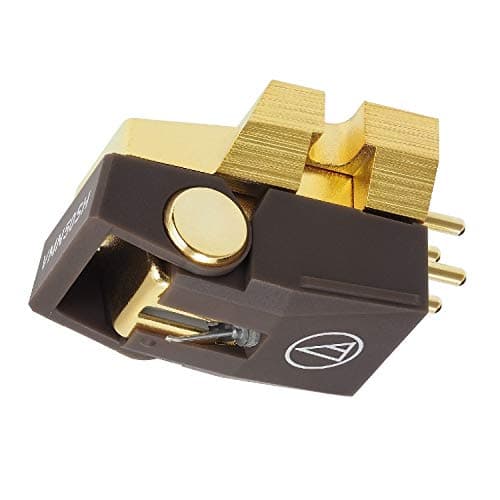
Top pick: Audio-Technica VM750SH
Highest published separation. #ad Affiliate link — we earn a commission at no extra cost to you.
The short answer
The best moving magnet cartridge is the Audio-Technica VM750SH — because it publishes 30 dB of channel separation at 1 kHz, the highest figure of any cartridge in our registry, on a nude Shibata diamond with a user-replaceable stylus. Separation is the specification that decides how much of a stereo image survives the cartridge, and 30 dB against the 20 dB at the bottom of this page is a factor of ten in crosstalk energy. It is the pick for someone with a properly adjustable tonearm and a phono stage they are happy with, who wants the last worthwhile step inside the MM type. The budget pick is the Audio-Technica AT-VM95E — the cheapest cartridge we rank, and the one with the best reason to be cheap: the whole VM95 stylus range drops into the same body, so the elliptical stylus it ships with is a starting point rather than a ceiling.
Everything on this page plugs into any 47 kΩ moving-magnet input, which is the type’s whole advantage over moving coil— no step-up transformer, no 60 dB phono stage, no loading gymnastics. Before you buy any of them, check two numbers on your own deck: the tonearm’s tracking-force range and its effective mass, both covered in our matching guide. A cartridge the arm cannot balance is a cartridge you cannot use.
Disclosure: we earn a commission if you buy through the links on this page, at no extra cost to you. It does not influence what we pick — our criteria are published and reproducible, so you can check our work. How we pick · Full disclosure
These picks are spec-and-price analyses, not listening tests. We have not heard this gear and we do not pretend to have: every figure below is sourced to the manufacturer and linked, and every price is live or not shown at all. Here are the rules we followed.
Quick picks
Ranked on the published criteria in How We Pick. Prices are live as of November 12, 2026. Tap any row for the full write-up.
- 8.0
- 9.0
- 8.8
- 8.8
- 8.6
- 6.8
- 8.4$62.85View on Amazon
$74.0015% off
| # | Product | Best for | Score | Price |
|---|---|---|---|---|
| 1 | Audio-Technica VM750SH Thirty decibels of channel separation, the highest published figure on this site — bought with a Shibata stylus and, on Audio-Technica's own sheet, nothing else over the VM740ML. | Highest published separation | 8.0 | |
| 2 | 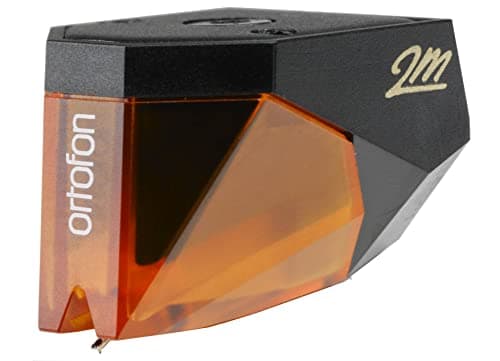 Ortofon 2M Bronze Every electrical figure Ortofon publishes for the far dearer 2M Black, on a cartridge in the middle of this bracket — and the tightest published response tolerance of any cartridge on this site. | Best overall | 9.0 | |
| 3 | 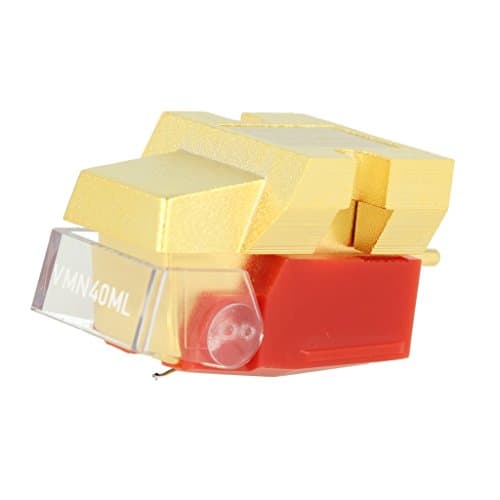 Audio-Technica VM740ML The only cartridge here whose maker publishes coil impedance, inductance, DC resistance, a load capacitance range and both static and dynamic compliance — and names the frequency the dynamic figure was measured at. | Most completely documented | 8.8 | |
| 4 | 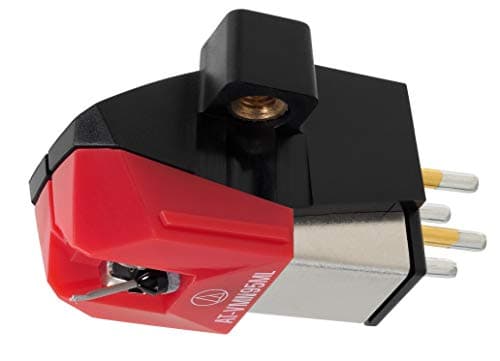 Audio-Technica AT-VM95ML A MicroLinear diamond on the same body as the $65 VM95E, with the highest published compliance and the tightest channel balance of any cartridge here. | Best stylus profile under $200 | 8.8 | |
| 5 | 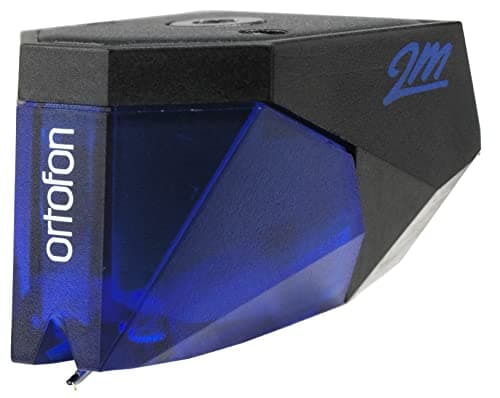 Ortofon 2M Blue The highest published output in this bracket, into the 47 kΩ input every moving-magnet phono stage already has — with a published response tolerance to go with it. | Best for a basic MM phono input | 8.6 | |
| 6 | 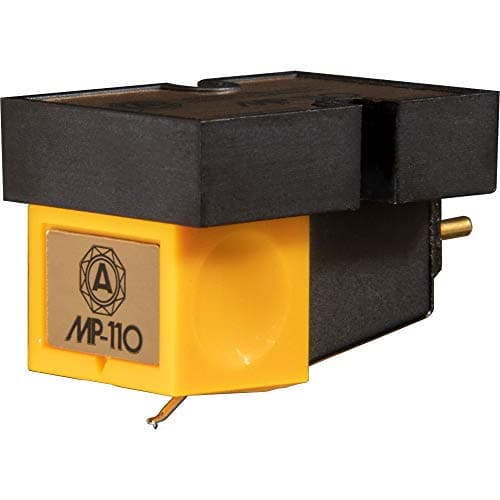 Nagaoka MP-110 A moving-permalloy cartridge with a published 5 mV output and a tracking force range that starts lower than anything else here — and no published compliance at all. | Best for a heavy tonearm | 6.8 | |
| 7 | 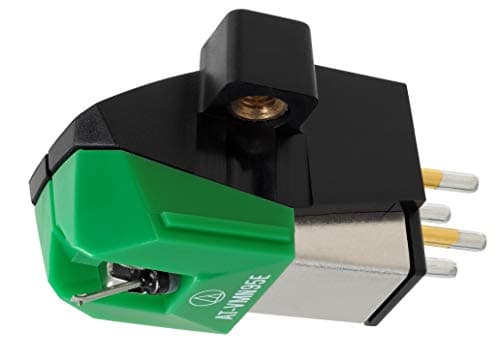 Audio-Technica AT-VM95E The cheapest way into a cartridge body that accepts seven different styli, so every later upgrade costs a stylus rather than a cartridge. | Best first upgrade | 8.4 | $62.85View on Amazon $74.0015% off |
A moving magnet cartridge moves a tiny magnet between fixed coils, which is why it makes about ten times the voltage of a moving coil and why the stylus can usually be replaced without replacing the cartridge. Those two properties — high output and a serviceable stylus — are the reason almost every turntable sold ships with one.
We rank the type on its own here rather than by price bracket, because the decision a reader actually faces is a type decision first: if your phono stage is MM-only, as every stage in the under-$100 bracket is, then this is the complete list of what you can fit. The price-bracket pages are under $200 and under $1,000, and both of them mix in designs that are not moving magnet at all.
The picks compared, spec by spec
Four columns, and the last one is the one almost nobody checks. Audio-Technica asks for 100–200 pF and Ortofon asks for 150–300 pF — so the same phono stage is not equally right for both, and most cheap stages publish no capacitance figure at all. Every row carries its own live price and buy link.
Every figure below is the manufacturer’s own published value and links to the document we read it from. “Not published” means the manufacturer does not publish that figure; an em dash means we have no published figure for that model. Prices are live as of November 12, 2026.
Highest published separation
- Channel separation (1 kHz)
- 30 dB
- Stylus profile
- Nude Shibata, 2.7 × 0.26 mil
- Tracking force
- 1.8–2.2 g (2.0 g)
- Recommended load
- 47 kΩ · 100–200 pF
Best overall
- Channel separation (1 kHz)
- 26 dB
- Stylus profile
- Nude Fine Line, r/R 8/40 µm
- Tracking force
- 1.4–1.7 g (1.5 g)
- Recommended load
- 47 kΩ · 150–300 pF
Most completely documented
- Channel separation (1 kHz)
- 28 dB
- Stylus profile
- Nude MicroLine, 2.2 × 0.12 mil
- Tracking force
- 1.8–2.2 g (2.0 g)
- Recommended load
- 47 kΩ · 100–200 pF
Best stylus profile under $200
- Channel separation (1 kHz)
- 23 dB
- Stylus profile
- Nude MicroLinear, 2.2 × 0.12 mil
- Tracking force
- 1.8–2.2 g (2.0 g)
- Recommended load
- 47 kΩ · 100–200 pF
Best for a basic MM phono input
- Channel separation (1 kHz)
- 25 dB
- Stylus profile
- Nude elliptical, r/R 8/18 µm
- Tracking force
- 1.6–2.0 g (1.8 g)
- Recommended load
- 47 kΩ · 150–300 pF
Best for a heavy tonearm
- Channel separation (1 kHz)
- 23 dB
- Stylus profile
- Bonded elliptical, 0.4 × 0.7 mil
- Tracking force
- 1.5–2.0 g
- Recommended load
- 47 kΩ · 100 pF
Best first upgrade
- Channel separation (1 kHz)
- 20 dB
- Stylus profile
- Bonded elliptical, 0.3 × 0.7 mil
- Tracking force
- 1.8–2.2 g (2.0 g)
- Recommended load
- 47 kΩ · 100–200 pF
| Pick | Channel separation (1 kHz) | Stylus profile | Tracking force | Recommended load | Price |
|---|---|---|---|---|---|
| 1.Audio-Technica VM750SHHighest published separation | 30 dB | Nude Shibata, 2.7 × 0.26 mil | 1.8–2.2 g (2.0 g) | 47 kΩ · 100–200 pF | |
| 2.Ortofon 2M BronzeBest overall | 26 dB | Nude Fine Line, r/R 8/40 µm | 1.4–1.7 g (1.5 g) | 47 kΩ · 150–300 pF | |
| 3.Audio-Technica VM740MLMost completely documented | 28 dB | Nude MicroLine, 2.2 × 0.12 mil | 1.8–2.2 g (2.0 g) | 47 kΩ · 100–200 pF | |
| 4.Audio-Technica AT-VM95MLBest stylus profile under $200 | 23 dB | Nude MicroLinear, 2.2 × 0.12 mil | 1.8–2.2 g (2.0 g) | 47 kΩ · 100–200 pF | |
| 5.Ortofon 2M BlueBest for a basic MM phono input | 25 dB | Nude elliptical, r/R 8/18 µm | 1.6–2.0 g (1.8 g) | 47 kΩ · 150–300 pF | |
| 6.Nagaoka MP-110Best for a heavy tonearm | 23 dB | Bonded elliptical, 0.4 × 0.7 mil | 1.5–2.0 g | 47 kΩ · 100 pF | |
| 7.Audio-Technica AT-VM95EBest first upgrade | 20 dB | Bonded elliptical, 0.3 × 0.7 mil | 1.8–2.2 g (2.0 g) | 47 kΩ · 100–200 pF |
Prices as of November 12, 2026; every “Check Price” link goes to Amazon and earns us a commission at no extra cost to you. #ad
Channel separation, and why it is the ranking spec
Separation is how much of the left channel leaks into the right. It is published in dB at 1 kHz by every maker here, which makes it the one figure on this page that is genuinely comparable across brands — unlike frequency response, where Audio-Technica publishes 20–27,000 Hz with no tolerance at all and Ortofon publishes 20 Hz–20 kHz at +2 / −0 dB. A range with no tolerance cannot be set beside a range with one.
energy ratio = 10^(ΔdB ÷ 10)
Inputs
- AT-VM750SH separation: 30 dB (1 kHz) (Audio-Technica spec page)
- AT-VM95E separation: 20 dB (1 kHz) (Audio-Technica spec page)
Result
Note what the separation column does to the obvious price ordering. The VM740ML publishes 28 dB and the 2M Bronze publishes 26 dB, so on this figure Audio-Technica’s cheaper cartridge is ahead of Ortofon’s. The Bronze stays second because of its tolerance discipline: +2 / −0 dB across the band and 1 dB channel balance are figures Audio-Technica does not publish in any comparable form.
The stylus profile is the other half, and it is about contact area
A groove is cut by a chisel-shaped stylus and played back by a round-ish one, and the mismatch is what profile geometry exists to reduce. The ranking of shapes here, cheapest to most expensive, is bonded elliptical, nude elliptical, Fine Line, MicroLine and Shibata. The published tip radii tell you why: the 2M Blue’s elliptical diamond is r/R 8/18 µm, the Bronze’s Fine Line is r/R 8/40 µm — same minor radius, more than twice the major one, which spreads the same force over a longer contact patch along the groove wall.
Two practical consequences. A longer contact patch reads more of the high-frequency information cut into the groove wall, and it concentrates less pressure per unit area, which is the mechanism behind the claim that better profiles are gentler on records. And “nude” versus “bonded” is a real distinction: a nude diamond is a whole diamond mounted directly, a bonded one is a diamond tip glued to a metal shank, and the bonded assembly weighs more at the end of the cantilever. Both cartridges at the bottom of this page are bonded; everything from rank four up is nude.
The 2M Bronze and the 2M Black publish identical specifications
This is the single most useful thing on this page and it is Ortofon’s own data. The 2M Bronze and the 2M Black publish the same coil system, the same frequency response (20 Hz–20 kHz, +2 / −0 dB), the same 26 dB separation, the same 1 dB channel balance, the same 5 mV output, the same 80 µm tracking ability, the same 22 µm/mN compliance, the same 1.2 kΩ and 630 mH coil figures, the same 1.4–1.7 g tracking force and the same 7.2 g weight.
The only published difference is the diamond: nude Fine Line at r/R 8/40 µm on the Bronze, nude Shibata at r/R 6/50 µm on the Black. That is a real difference and it is the difference you are paying for — but it is the only one Ortofon states, and the Black is roughly twice the Bronze. We rank the Bronze second and leave the Black off this page entirely, because the under-$1,000 bracket already ranks it with the same arithmetic. If you want the Shibata geometry for less, the VM750SH on top of this page has it, publishes more separation, and takes a replacement stylus.
Replaceable styli change the maths completely
Every Audio-Technica VM cartridge on this page publishes a replacement stylus part number — AT-VMN95E, AT-VMN95ML, VMN40ML, VMN50SH — and within the VM95 range the whole stylus family fits one body. That means a later upgrade from elliptical to MicroLinear costs a stylus, not a cartridge, and it means a worn stylus is a consumable rather than a write-off.
The Ortofon 2M series is also stylus-replaceable up the range, and the Nagaoka MP-110 is the one here where the upgrade path is least clear from Nagaoka’s own page. Its virtues are elsewhere: 5 mV output at a modest 6.5 g weight, a published 1.5 dB channel balance, and a 1.5–2.0 g tracking range that suits a heavier arm. How long a stylus lasts is the other side of this: the replacement interval is the real running cost of a turntable, and it is the reason a replaceable stylus is worth more than a spec sheet suggests.
What we are not ranking here, and why
Three cartridges in our registry are left off this page on type grounds, not quality grounds. The Grado Prestige Green4 is a moving-iron design and the AT-OC9XEN, AT-OC9XML and Denon DL-103 are moving coil — they need a phono stage with an MC input and, in the DL-103’s case, a lot of gain. The AT-VM95EN/H is a VM95 supplied pre-mounted on an AT-HS6 headshell, which makes it a fitting convenience rather than a separate design; it is ranked in the under-$200 bracket.
If your deck has a removable headshell and you would rather not align anything, that pre-mounted option is the easier buy and it is the same cartridge body. Whether a cartridge fits your arm at all is the question to settle before any of this.
Every pick in detail
Every specification below links to the manufacturer document we read it from. Where a manufacturer does not publish a figure, we say so rather than estimating it.
Audio-Technica VM750SH
Highest published separationPrice as of November 12, 2026. #ad
Thirty decibels of channel separation, the highest published figure on this site — bought with a Shibata stylus and, on Audio-Technica's own sheet, nothing else over the VM740ML.
- specs
- 8/10
- upgrade path
- 10/10
- value for money
- 6/10
- tracking ability
- 6/10
- published data
- 9/10
| Specification | Published value | Source |
|---|---|---|
| Type | VM Type — dual moving magnet | Audio-Technica spec page |
| Frequency response | 20–27,000 Hz — Audio-Technica publishes NO tolerance, so this is not comparable to Ortofon's ±dB figures | Audio-Technica spec page |
| Channel separation | 30 dB (1 kHz) — the highest published channel separation of any cartridge on this site | Audio-Technica spec page |
| Channel balance | 1.0 dB (1 kHz) | Audio-Technica spec page |
| Output voltage | 4.0 mV (1 kHz, 5 cm/sec) | Audio-Technica spec page |
| Stylus | 2.7 × 0.26 mil Shibata, NUDE square shank, aluminum tapered pipe cantilever | Audio-Technica spec page |
| Compliance | Static 40 × 10⁻⁶ cm/dyne; dynamic 10 × 10⁻⁶ cm/dyne stated AT 100 Hz — the resonance formula wants the 10 Hz value, which Audio-Technica does not publish | Audio-Technica spec page |
| Tracking force | 1.8–2.2 g (2.0 g standard) | Audio-Technica spec page |
| Vertical tracking angle | 23° | Audio-Technica spec page |
| Coil impedance / inductance / DC resistance | 2,700 Ω at 1 kHz · 460 mH at 1 kHz · 800 Ω | Audio-Technica spec page |
| Recommended load | 47,000 Ω, 100–200 pF | Audio-Technica spec page |
| Mount / weight | Half-inch, 8.0 g | Audio-Technica spec page |
| Replacement stylus | VMN50SH — user-replaceable | Audio-Technica spec page |
| Tracking ability | Not published | — |
Pros
- 30 dB separation at 1 kHz, the highest published figure of any cartridge on this site
- A 2.7 × 0.26 mil Shibata on a nude square shank, with the same user-replaceable stylus arrangement as the rest of the VM range
- Identical documentation depth to the VM740ML: coil impedance, inductance, DC resistance, static and dynamic compliance, load capacitance
- 4.0 mV into 47,000 Ω, so it works with any moving-magnet phono input
Cons
- Against the VM740ML, Audio-Technica publishes exactly one electrical difference: 2 dB more separation. Output, compliance, response, impedance, inductance, tracking force and weight are all identical
- It costs meaningfully more than the VM740ML for that 2 dB and a different tip geometry
- No tolerance on the 20–27,000 Hz response and no tracking-ability figure, same as the VM740ML
- The 0.26 mil side radius is wider than the MicroLine's 0.12 mil, so “better stylus” is the wrong description — it is a different trade
Skip it if the VM740ML is in stock. On Audio-Technica's own numbers the step up buys 2 dB of channel separation, and channel separation is not what limits a record.
Ortofon 2M Bronze
Best overallPrice as of November 12, 2026. #ad
Every electrical figure Ortofon publishes for the far dearer 2M Black, on a cartridge in the middle of this bracket — and the tightest published response tolerance of any cartridge on this site.
- specs
- 9/10
- upgrade path
- 9/10
- value for money
- 10/10
- tracking ability
- 9/10
- published data
- 10/10
| Specification | Published value | Source |
|---|---|---|
| Type | Moving magnet, quad-coils with split pole pins and silver-plated OFC coil wire | Ortofon spec page |
| Frequency response | 20 Hz – 20 kHz, +2 / −0 dB — a TIGHTER tolerance than the 2M Blue's +2 / −1 dB | Ortofon spec page |
| Channel separation | 26 dB (1 kHz) | Ortofon spec page |
| Channel balance | 1 dB (1 kHz) | Ortofon spec page |
| Output voltage | 5 mV (1 kHz, 5 cm/sec) | Ortofon spec page |
| Tracking ability at 315 Hz | 80 µm | Ortofon spec page |
| Stylus | NUDE Fine Line diamond, tip radius r/R 8/40 µm, aluminum cantilever | Ortofon spec page |
| Compliance (dynamic, lateral) | 22 µm/mN — Ortofon publishes no measurement frequency, so it cannot be put on the same footing as Audio-Technica's 100 Hz figures | Ortofon spec page |
| Tracking force | 1.4–1.7 g (14–17 mN); 1.5 g recommended | Ortofon spec page |
| Tracking angle | 20° | Ortofon spec page |
| Internal impedance / inductance | 1.2 kΩ DC resistance, 630 mH | Ortofon spec page |
| Recommended load | 47 kΩ, 150–300 pF | Ortofon spec page |
| Weight | 7.2 g (16.7 g premounted) | Ortofon spec page |
Pros
- 20 Hz – 20 kHz at +2 / −0 dB, the tightest published response tolerance of any cartridge on this site
- Ortofon's published rows for the Bronze and the Black are identical except the stylus — same 5 mV output, 26 dB separation, 1 dB balance, 22 µm/mN compliance, 1.2 kΩ and 630 mH
- 5 mV into 47 kΩ works with any moving-magnet phono input, including the ones built into turntables and receivers
- 80 µm tracking ability at 315 Hz published, on a nude Fine Line tip at r/R 8/40 µm — Audio-Technica and Denon publish no tracking-ability figure at all
Cons
- Ortofon publishes no measurement frequency for its 22 µm/mN compliance, so the arm-resonance arithmetic cannot be closed from this side
- The 2M Black's Shibata really is a finer geometry — r/R 6/50 µm against 8/40 µm — and that is a difference the rest of the sheet does not show
- 7.2 g is among the heavier cartridges in this bracket, and the arm has to carry it
- 1.4–1.7 g is a narrow tracking-force window, so a deck without fine downforce adjustment is a problem
Skip it if your phono stage has only a moving-coil input, or you need the compliance convention spelled out before you commit. For the first, the Audio-Technica OC9X pair below is the answer.
Audio-Technica VM740ML
Most completely documentedPrice as of November 12, 2026. #ad
The only cartridge here whose maker publishes coil impedance, inductance, DC resistance, a load capacitance range and both static and dynamic compliance — and names the frequency the dynamic figure was measured at.
- specs
- 9/10
- upgrade path
- 10/10
- value for money
- 9/10
- tracking ability
- 6/10
- published data
- 9/10
| Specification | Published value | Source |
|---|---|---|
| Type | VM Type — dual moving magnet | Audio-Technica spec page |
| Frequency response | 20–27,000 Hz — Audio-Technica publishes NO tolerance, so this is not comparable to Ortofon's ±dB figures | Audio-Technica spec page |
| Channel separation | 28 dB (1 kHz) | Audio-Technica spec page |
| Channel balance | 1.0 dB (1 kHz) | Audio-Technica spec page |
| Output voltage | 4.0 mV (1 kHz, 5 cm/sec) | Audio-Technica spec page |
| Stylus | 2.2 × 0.12 mil MicroLine, NUDE square shank, aluminum tapered pipe cantilever | Audio-Technica spec page |
| Compliance | Static 40 × 10⁻⁶ cm/dyne; dynamic 10 × 10⁻⁶ cm/dyne stated AT 100 Hz — the resonance formula wants the 10 Hz value, which Audio-Technica does not publish | Audio-Technica spec page |
| Tracking force | 1.8–2.2 g (2.0 g standard) | Audio-Technica spec page |
| Vertical tracking angle | 23° | Audio-Technica spec page |
| Coil impedance / inductance / DC resistance | 2,700 Ω at 1 kHz · 460 mH at 1 kHz · 800 Ω | Audio-Technica spec page |
| Recommended load | 47,000 Ω, 100–200 pF | Audio-Technica spec page |
| Mount / weight | Half-inch, 8.0 g | Audio-Technica spec page |
| Replacement stylus | VMN40ML — user-replaceable, so a later profile change costs a stylus rather than a cartridge | Audio-Technica spec page |
| Tracking ability | Not published | — |
Pros
- Audio-Technica states the measurement frequency for its compliance figure (100 Hz); Ortofon, Grado and Denon state none
- A 2.2 × 0.12 mil MicroLine on a nude square shank — a line-contact profile with a contact radius around a fifth of a typical elliptical's
- The VMN40ML stylus is user-replaceable, so a worn tip or a later profile change costs a stylus rather than a cartridge
- Publishes coil impedance, inductance, DC resistance and a 100–200 pF load capacitance range — the figures that decide whether a long cable dulls the top end
Cons
- No tolerance on the 20–27,000 Hz response, so the headline bandwidth cannot be compared with Ortofon's ±dB figures
- No tracking-ability figure at all — the spec that says how far the stylus can swing before it mistracks
- The dynamic compliance is quoted at 100 Hz and the resonance formula wants the 10 Hz value, which Audio-Technica does not publish; taken at face value the arithmetic puts the resonance above the 8–12 Hz window
- 8.0 g is the heaviest moving-magnet cartridge on this page
Skip it if your arm is low-mass and its effective mass is unpublished. Line contact plus an unknown arm figure is the combination where a misjudged match does real damage.
Audio-Technica AT-VM95ML
Best stylus profile under $200Price as of November 12, 2026. #ad
A MicroLinear diamond on the same body as the $65 VM95E, with the highest published compliance and the tightest channel balance of any cartridge here.
- specs
- 9/10
- upgrade path
- 10/10
- value for money
- 7/10
- tracking ability
- 9/10
- published data
- 9/10
| Specification | Published value | Source |
|---|---|---|
| Type | VM stereo dual magnet (moving magnet) | Audio-Technica spec page |
| Frequency response | 20–25,000 Hz (no tolerance published) | Audio-Technica spec page |
| Channel separation | 23 dB (1 kHz) | Audio-Technica spec page |
| Output voltage | 3.5 mV (1 kHz, 5 cm/sec) | Audio-Technica spec page |
| Output channel balance | 1.5 dB (1 kHz) — the tightest of any VM95 | Audio-Technica spec page |
| Stylus | 2.2 × 0.12 mil MicroLinear, nude square shank | Audio-Technica spec page |
| Cantilever | Aluminum pipe | Audio-Technica spec page |
| Dynamic compliance | 10 × 10⁻⁶ cm/dyne (100 Hz) | Audio-Technica spec page |
| Static compliance | 20 × 10⁻⁶ cm/dyne | Audio-Technica spec page |
| Tracking force | 1.8–2.2 g (2.0 g standard) | Audio-Technica spec page |
| Recommended load | 47,000 Ω, 100–200 pF | Audio-Technica spec page |
| Mount / weight | Half-inch mount, 6.1 g | Audio-Technica spec page |
| Replacement stylus | AT-VMN95ML | Audio-Technica spec page |
Pros
- 2.2 × 0.12 mil MicroLinear — a line-contact profile that sits deeper in the groove than any elliptical here
- 10 × 10⁻⁶ cm/dyne dynamic compliance, the highest published figure in this group
- 1.5 dB channel balance and 23 dB separation, both the best Audio-Technica figures here
- It is a stylus, not a cartridge — if you own any VM95 body it drops in with no alignment at all
Cons
- The most expensive cartridge here, and it shares its body with a $65 one
- A line-contact tip is less forgiving of alignment error than an elliptical
- 3.5 mV output, lower than the VM95E's 4.0 mV
- Higher compliance narrows the range of arms it suits — high compliance plus a heavy arm is the classic mismatch
Skip it if your tonearm's effective mass is unpublished and heavy-looking. High compliance on a heavy arm drops the resonance below the safe window, and most makers will not tell you the arm figure.
Ortofon 2M Blue
Best for a basic MM phono inputPrice as of November 12, 2026. #ad
The highest published output in this bracket, into the 47 kΩ input every moving-magnet phono stage already has — with a published response tolerance to go with it.
- specs
- 8/10
- upgrade path
- 9/10
- value for money
- 9/10
- tracking ability
- 8/10
- published data
- 10/10
| Specification | Published value | Source |
|---|---|---|
| Type | Moving magnet, quad-coils with split pole pins and OFC coil wire | Ortofon spec page |
| Frequency response | 20–20,000 Hz, +2 / −1 dB | Ortofon spec page |
| Channel separation | 25 dB (1 kHz) | Ortofon spec page |
| Channel balance | 1.5 dB (1 kHz) | Ortofon spec page |
| Output voltage | 5.5 mV (1 kHz, 5 cm/sec) | Ortofon spec page |
| Tracking ability at 315 Hz | 80 µm | Ortofon spec page |
| Stylus | NUDE elliptical, tip radius r/R 8/18 µm, aluminum cantilever | Ortofon spec page |
| Compliance (dynamic, lateral) | 20 µm/mN | Ortofon spec page |
| Tracking force | 1.6–2.0 g (16–20 mN); 1.8 g recommended | Ortofon spec page |
| Internal impedance / inductance | 1.3 kΩ DC resistance, 700 mH | Ortofon spec page |
| Recommended load | 47 kΩ, 150–300 pF | Ortofon spec page |
| Weight | 7.2 g | Ortofon spec page |
Pros
- 5.5 mV is the highest published output on this page, so even a low-gain built-in phono stage has an easy job
- 20–20,000 Hz at +2 / −1 dB — a real tolerance, which neither Audio-Technica nor Denon publishes at any price here
- 80 µm tracking ability at 315 Hz published
- Shares the 2M body, so the Bronze and Black styli drop straight in later — the upgrade is a stylus, not a cartridge
Cons
- 25 dB separation and 1.5 dB channel balance are the loosest Ortofon figures in this bracket; the Bronze publishes 26 dB and 1 dB
- A nude elliptical at r/R 8/18 µm, the coarsest tip radius of the three Ortofons here
- Its +2 / −1 dB tolerance is wider than the Bronze's +2 / −0 dB
- 7.2 g on a light arm still needs checking, and Ortofon publishes no measurement frequency for its compliance figure
Skip it if you already own a 2M Red. The Blue is the same body with a better stylus, so buy the Blue stylus and keep the body you have.
Nagaoka MP-110
Best for a heavy tonearmPrice as of November 12, 2026. #ad
A moving-permalloy cartridge with a published 5 mV output and a tracking force range that starts lower than anything else here — and no published compliance at all.
- specs
- 7/10
- upgrade path
- 6/10
- value for money
- 7/10
- tracking ability
- 7/10
- published data
- 4/10
| Specification | Published value | Source |
|---|---|---|
| Type | MP (moving permalloy) stereo cartridge | Nagaoka spec page |
| Frequency response | 20 Hz – 20,000 Hz (no tolerance published) | Nagaoka spec page |
| Channel separation | 23 dB (1 kHz) | Nagaoka spec page |
| Channel balance | 1.5 dB or less | Nagaoka spec page |
| Output voltage | 5 mV (5 cm/sec) | Nagaoka spec page |
| Stylus | 0.4 × 0.7 mil bonded elliptical diamond, aluminum-alloy cantilever | Nagaoka spec page |
| Dynamic compliance | Not published | — |
| Tracking force | 1.5–2.0 g | Nagaoka spec page |
| Recommended load | 47 kΩ, 100 pF | Nagaoka spec page |
| Weight | 6.5 g (16.5 g mounted on Nagaoka's headshell) | Nagaoka spec page |
Pros
- 1.5 g minimum tracking force is the lightest published figure in this group
- 5 mV output, effectively tied with the Ortofons for the easiest load on a phono stage
- 23 dB separation beats both Audio-Technica ellipticals here
- The MP-110 body accepts the MP-100 and MP-110 stylus assemblies
Cons
- Nagaoka publishes NO compliance figure — so you cannot compute the arm/cartridge resonance, which is the whole point of the spec
- 0.4 × 0.7 mil bonded elliptical is a coarser tip than the AT-VM95ML's MicroLinear
- No tolerance published on the 20–20,000 Hz response
- Nagaoka's own documentation is Japanese-language only
Skip it if you are trying to do the resonance arithmetic properly. Without a compliance figure the calculation cannot be completed, and no amount of searching fixes that.
Audio-Technica AT-VM95E
Best first upgradeThe cheapest way into a cartridge body that accepts seven different styli, so every later upgrade costs a stylus rather than a cartridge.
- specs
- 7/10
- upgrade path
- 10/10
- value for money
- 10/10
- tracking ability
- 6/10
- published data
- 9/10
| Specification | Published value | Source |
|---|---|---|
| Type | VM stereo dual magnet (moving magnet) | Audio-Technica spec page |
| Frequency response | 20–22,000 Hz (no tolerance published) | Audio-Technica spec page |
| Channel separation | 20 dB (1 kHz) | Audio-Technica spec page |
| Output voltage | 4.0 mV (1 kHz, 5 cm/sec) | Audio-Technica spec page |
| Output channel balance | 2.0 dB (1 kHz) | Audio-Technica spec page |
| Stylus | 0.3 × 0.7 mil elliptical, bonded round shank | Audio-Technica spec page |
| Cantilever | Aluminum pipe | Audio-Technica spec page |
| Dynamic compliance | 7 × 10⁻⁶ cm/dyne (100 Hz) | Audio-Technica spec page |
| Static compliance | 17 × 10⁻⁶ cm/dyne | Audio-Technica spec page |
| Tracking force | 1.8–2.2 g (2.0 g standard) | Audio-Technica spec page |
| Recommended load | 47,000 Ω, 100–200 pF | Audio-Technica spec page |
| Mount / weight | Half-inch mount, 6.1 g | Audio-Technica spec page |
| Replacement stylus | AT-VMN95E — the whole VM95 stylus range drops into this same body | Audio-Technica spec page |
Pros
- The VM95 body takes the entire VM95 stylus range — conical through Shibata — so the upgrade path costs a stylus, not a cartridge
- 4.0 mV output is the highest of any Audio-Technica cartridge here, so it suits low-gain phono stages
- Audio-Technica publishes both static and dynamic compliance, which is what arm matching needs
- Already fitted to several decks we recommend, so you may own one without knowing
Cons
- A bonded round-shank stylus — the diamond is glued to a metal carrier rather than being solid, which adds tip mass
- 20 dB channel separation is the lowest figure in this group
- 2.0 dB channel balance is the loosest here; the ML is 1.5 dB
- Audio-Technica publishes no tolerance on the 20–22,000 Hz response
Skip it if your deck already ships with a VM95E — several do, and buying a second one changes nothing. Buy a better stylus for the body you own instead.
Frequently asked questions
Is a moving magnet cartridge worse than a moving coil?
Will any of these fit my turntable?
What does channel separation actually do?
Is the Ortofon 2M Black worth twice the 2M Bronze?
Read next
The Best Turntable Cartridges Under $200
Six cartridges under $200, ranked on stylus profile, published compliance and output — with the unit-conversion trap explained.
The Best Turntable Cartridges Under $1,000
Eight cartridges from $200 to $1,000, gated on output voltage and load, then ranked on whether the price step buys a difference the maker publishes. Two of them do not.
Moving Magnet vs Moving Coil Cartridges
The whole MM/MC argument reduces to output voltage — and Schiit's own published noise figures show exactly what the extra gain costs.
Cartridge and Tonearm Matching: Do the Arithmetic
One equation, two published numbers, and the compliance caveat that changes the answer. Worked through with real specs.
The Best Phono Preamps Under $100
Eight phono stages under $100, ranked on what their makers actually publish — gain, loading, noise — rather than on the box they come in.
Are Turntable Cartridges Interchangeable?
Three compatibility checks — mount, mass and loading — and the decks where the answer is simply no.
Sources
Every specification on this page was read from one of these documents. If one of them has changed, or we have made an error, tell us — corrections are logged and dated per our editorial policy.
- Audio-Technica VM750SH specifications
- Audio-Technica VM740ML specifications
- Audio-Technica AT-VM95ML specifications
- Audio-Technica AT-VM95E specifications
- Ortofon 2M Bronze specifications
- Ortofon 2M Black specifications
- Ortofon 2M Blue specifications
- Nagaoka MP-110 specifications
- Grado Prestige Green4 specifications