The Best Phono Preamps Under $500
Above $250 the gain stops being the problem and two other published figures start deciding things: how flat the playback curve is, and whether you can load your cartridge properly.
The short answer
The best phono preamp under $500 is the Cambridge Audio Alva Duo — because it publishes the tightest RIAA tolerance in the bracket at ± 0.3 dB, it has a real 60 dB moving-coil stage at 100 Ω, and every noise and distortion figure on its spec sheet arrives with the conditions it was measured under. In a bracket where four of the six stages publish no RIAA figure at all, that combination is the whole case.
Two caveats. Its loading is fixed — 47 kΩ for moving magnet, 100 Ω for moving coil — so if your cartridge’s maker recommends something else you cannot give it to them; the Pro-Ject Phono Box S2 Ultra can, across four impedances, and costs less. And Cambridge publishes MC distortion as < 0.20% against < 0.0025% for moving magnet, so the moving-coil side is much the noisier half of the box by its own measurement. If you want valves, the Pro-Ject Tube Box S2 is the only one here — read section six before you buy it, because Pro-Ject publishes what the valves cost you.
Disclosure: we earn a commission if you buy through the links on this page, at no extra cost to you. It does not influence what we pick — our criteria are published and reproducible, so you can check our work. How we pick · Full disclosure
These picks are spec-and-price analyses, not listening tests. We have not heard this gear and we do not pretend to have: every figure below is sourced to the manufacturer and linked, and every price is live or not shown at all. Here are the rules we followed.
Quick picks
Ranked on the published criteria in How We Pick. Prices are live as of October 10, 2026. Tap any row for the full write-up.
- 8.5
- 8.3
- 7.4
- 8.4
- 7.1
- 7.0
| # | Product | Best for | Score | Price |
|---|---|---|---|---|
| 1 | 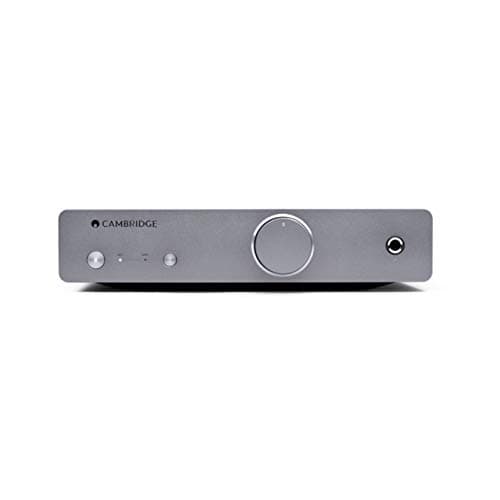 Cambridge Audio Alva Duo The tightest RIAA tolerance in the bracket at ± 0.3 dB, a real 60 dB moving-coil stage, and a spec sheet that states the reference conditions for every noise and distortion figure on it. | Best overall under $500 | 8.5 | |
| 2 | 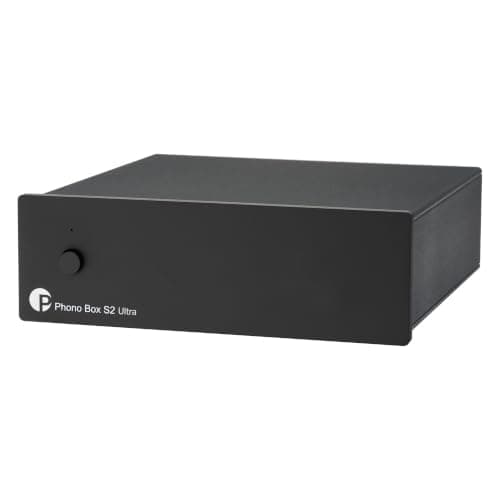 Pro-Ject Phono Box S2 Ultra Four loading impedances, two capacitance settings and four gain steps, which makes it the only stage in the bracket that can actually be set to what a cartridge maker recommends. | Best for matching a specific cartridge | 8.3 | |
| 3 | 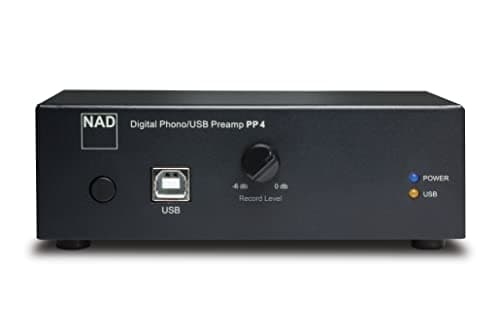 NAD PP 4 The only USB phono stage here with a moving-coil position, a published RIAA tolerance and a noise figure that says what it is referenced to — and the one whose spec table has a distortion row with nothing printed beside it. | Most published about the stage | 7.4 | |
| 4 | 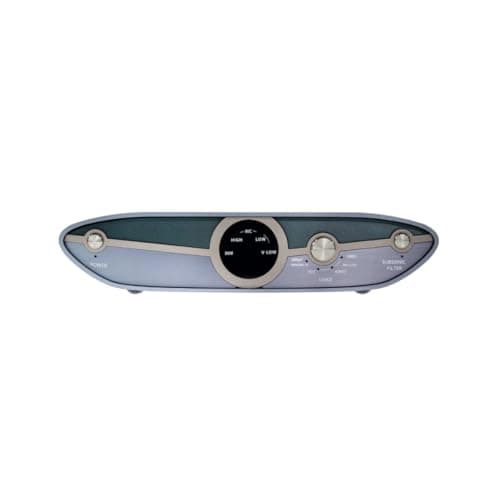 iFi ZEN Phono 3 72 dB of gain at its highest setting — the only box here that will lift a genuinely low-output moving-coil cartridge without a step-up transformer. | Best for very low-output cartridges | 8.4 | |
| 5 | 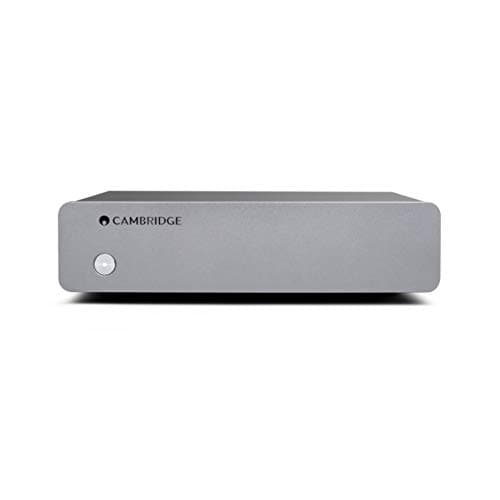 Cambridge Audio Alva Solo Specified identically to the dearer Alva Duo on ten rows and separated from it on exactly three: no moving-coil stage, no headphone output, and an RIAA tolerance more than twice as wide. | Cheapest way into the bracket | 7.1 | |
| 6 | 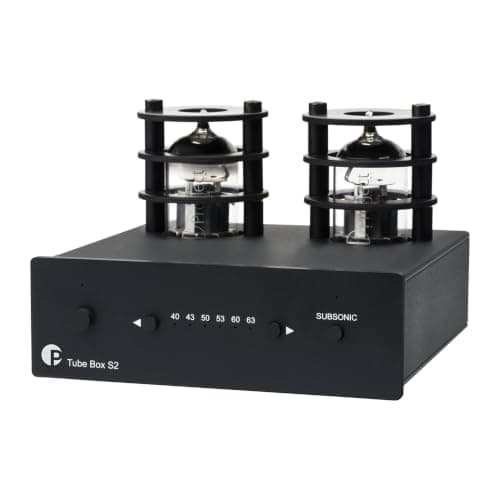 Pro-Ject Tube Box S2 A genuine two-valve phono stage with six capacitance settings and the only subsonic filter here with a published slope — and, on Pro-Ject's own figures, roughly 38 times the distortion of its solid-state sibling. | The valve option, with the trade stated | 7.0 |
Below $200 a phono stage is judged on whether it has enough gain and how much noise it adds. Our under $200 roundup ranks six boxes on exactly that. Spend more and those two questions are mostly settled — every stage on this page has adequate gain and a noise floor you will not hear — so the ranking has to move to the figures that still differ.
Three criteria, in this order:
- Published RIAA accuracy. A record is cut with its bass reduced and its treble boosted; the phono stage reverses that curve. How accurately it reverses it is the one specification that describes whether the music comes out the shape it went in. Four of the six stages here do not publish it.
- Loading you can actually set. Cartridge makers publish a recommended load impedance and capacitance. A stage with fixed loading either matches your cartridge or does not, and you have no recourse.
- Whether the spec sheet states its conditions. A signal-to-noise figure without a reference level and a weighting is not comparable with anything. This criterion has teeth here: it is why the box with the lowest published distortion is second and not first.
The picks compared, spec by spec
Three columns, because these are the three that reorder the page. The RIAA column is the important one and it is also the one with two blanks in it — those are not our omissions, they are the makers’.
Every figure below is the manufacturer’s own published value and links to the document we read it from. “Not published” means the manufacturer does not publish that figure; an em dash means we have no published figure for that model. Prices are live as of October 10, 2026.
Best overall under $500
- Published RIAA accuracy
- ± 0.3 dB (30 Hz–20 kHz)
- Loading
- Fixed 47 kΩ / 100 Ω
- Cartridge support
- MM + MC (60 dB)
Best for matching a specific cartridge
- Published RIAA accuracy
- < 0.4 dB (20 Hz–20 kHz)
- Loading
- 4 impedances, 2 capacitances
- Cartridge support
- MM + MC (to 63 dB)
Most published about the stage
- Published RIAA accuracy
- ± 0.3 dB
- Loading
- Fixed, not adjustable
- Cartridge support
- MM + MC (58 dB)
Best for very low-output cartridges
- Published RIAA accuracy
- —
- Loading
- 100 / 200 pF only
- Cartridge support
- MM + MC (to 72 dB)
Cheapest way into the bracket
- Published RIAA accuracy
- ± 0.65 dB (30 Hz–20 kHz)
- Loading
- Fixed 47 kΩ / 100 pF
- Cartridge support
- MM only
The valve option, with the trade stated
- Published RIAA accuracy
- ± 0.4 dB (20 Hz–20 kHz)
- Loading
- 4 impedances, 6 capacitances
- Cartridge support
- MM + high-output MC
| Pick | Published RIAA accuracy | Loading | Cartridge support | Price |
|---|---|---|---|---|
| 1.Cambridge Audio Alva DuoBest overall under $500 | ± 0.3 dB (30 Hz–20 kHz) | Fixed 47 kΩ / 100 Ω | MM + MC (60 dB) | |
| 2.Pro-Ject Phono Box S2 UltraBest for matching a specific cartridge | < 0.4 dB (20 Hz–20 kHz) | 4 impedances, 2 capacitances | MM + MC (to 63 dB) | |
| 3.NAD PP 4Most published about the stage | ± 0.3 dB | Fixed, not adjustable | MM + MC (58 dB) | |
| 4.iFi ZEN Phono 3Best for very low-output cartridges | — | 100 / 200 pF only | MM + MC (to 72 dB) | |
| 5.Cambridge Audio Alva SoloCheapest way into the bracket | ± 0.65 dB (30 Hz–20 kHz) | Fixed 47 kΩ / 100 pF | MM only | |
| 6.Pro-Ject Tube Box S2The valve option, with the trade stated | ± 0.4 dB (20 Hz–20 kHz) | 4 impedances, 6 capacitances | MM + high-output MC |
Prices as of October 10, 2026; every “Check Price” link goes to Amazon and earns us a commission at no extra cost to you. #ad
1. Cambridge sells the same box twice, and tells you the difference
This is the finding that organizes the page, and it is entirely Cambridge Audio’s own disclosure. Put the Alva Solo and Alva Duo spec sheets side by side and ten rows are identical: gain 39 dB, input sensitivity 3.35 mV, nominal output 300 mV, equivalent input noise about 0.09 µV A-weighted, signal-to-noise above 90 dB, THD+N below 0.0025%, input impedance 47 kΩ, input capacitance 100 pF, overload margin above 30 dB, crosstalk above 85 dB.
Three things differ, and Cambridge publishes all three:
- The Duo has a moving-coil stage at 60 dB and 100 Ω. The Solo has none.
- The Duo has a 6.35 mm headphone output. The Solo has none.
- RIAA accuracy is ± 0.3 dB on the Duo and ± 0.65 dB on the Solo.
That third one is the interesting one. Same manufacturer, same measurement, same 30 Hz – 20 kHz window, and more than twice the deviation on the cheaper box. It is the only performance figure on which the two differ at all, and it is the figure that matters most, because an error in the RIAA curve is not noise you can ignore — it is a tilt applied to everything you play.
worst-case channel error = 2 × published tolerance
Inputs
- Cambridge Alva Solo published RIAA accuracy: ± 0.65 dB (30 Hz – 20 kHz) (Cambridge Audio Alva Solo page)
- Cambridge Alva Duo published RIAA accuracy: ± 0.3 dB (30 Hz – 20 kHz) (Cambridge Audio Alva Duo page)
Result
2. Loading is the thing the dearest boxes get wrong
Every cartridge maker publishes a recommended load. Audio-Technica’s moving magnets want 47 kΩ and a stated capacitance range; the low-output moving coils we rank on our under $1,000 cartridge page specify a minimum of 100 Ω. A stage that cannot be set to those figures is a stage you have to choose a cartridge around.
Here, the two best-documented boxes are the two least adjustable. Cambridge fixes both Alvas at 47 kΩ (and 100 Ω for the Duo’s MC input) with 100 pF of capacitance and no switches. NAD fixes the PP 4 at 47 kΩ + 200 pF for MM and 100 Ω + 180 pF for MC, and says in as many words that neither is adjustable. The iFi ZEN Phono 3 offers a choice of 100 or 200 pF and nothing else.
Pro-Ject is the exception, on both its boxes. The Phono Box S2 Ultra switches among 10 Ω, 100 Ω, 1 kΩ and 47 kΩ with 100 or 220 pF of capacitance; the Tube Box S2 offers four MM impedances and six capacitance settings from 47 pF to 587 pF. If you already own a cartridge with a specific published recommendation — or you intend to buy one — that flexibility is worth more than a 0.1 dB difference in a curve tolerance, which is why the S2 Ultra is second rather than fourth.
If none of this is familiar yet, how cartridge and tonearm figures fit together is the prerequisite, and whether you need a separate phono stage at all is the question before that one.
3. The lowest distortion figure on the page is not the best spec sheet
Pro-Ject publishes 0.00052%THD for the Phono Box S2 Ultra. That is two orders of magnitude below Cambridge’s < 0.0025%, and it is the lowest number anywhere in this bracket.
It is also published with no test conditions at all. No frequency, no level, no bandwidth. Cambridge’s figure is qualified — 1 kHz, 20 Hz – 20 kHz bandwidth — which makes it a number you can argue with. Pro-Ject’s is a number you can only accept. The same applies to its signal-to-noise figure of 89 dB V, which carries no reference level and no weighting and therefore cannot honestly be set beside Cambridge’s “> 90 dB, grounded inputs, ref. 1 V output, 20 Hz – 20 kHz”.
We are not calling Pro-Ject’s figures wrong. We are saying an unconditioned specification cannot be compared, and a page that ranked on raw numbers without reading their conditions would put the S2 Ultra first on a distortion figure that might have been measured anywhere.
4. What NAD publishes, and the one row it leaves blank
The NAD PP 4 is the only stage on this page that publishes input overload at three frequencies — 10, 100 and 900 mV for MM at 20 Hz, 1 kHz and 20 kHz, and 0.65, 6.5 and 60 mV for MC. That is genuinely more information than anyone else here gives, and overload is what clips on a loud pressing. It publishes RIAA accuracy at ± 0.3 dB, tying the Alva Duo, and it states its signal-to-noise figures with their weighting and with a cartridge connected, which is the honest way to quote them.
Then there is the row that says Rated Distortion (THD 20Hz – 20kHz)on NAD’s own specification table with no value beside it. For both MM and MC. We flagged that when this box was ranked first on our USB phono stage roundup, and it is the reason the PP 4 is third here rather than first: it is the one stage in the bracket whose maker prints a distortion row and then declines to fill it in.
The PP 4 is the single pick this page shares with that USB roundup, and the two pages rank it differently on purpose. There, the question is the converter and the recording path, and the NAD wins it. Here, the question is the playback curve and the loading, and a blank distortion row plus fixed loading puts it third.
5. The stage with the most gain publishes the least about the curve
The iFi ZEN Phono 3 has the widest gain range here by a long way: 36 dB for MM, then 48, 60 and 72 dBacross three moving-coil settings. That 72 dB “V-Low” position is the most gain available in this bracket and it exists for the very low-output moving coils — the 0.3 mV cartridges that an ordinary input cannot drive. Its published MM signal-to-noise of 91 dB(A) is the best MM noise figure on the page, and it publishes per-setting distortion, which is unusually careful.
What it does not publish is any RIAA tolerance. Not a loose one — none. For a page whose first criterion is the playback curve, that is disqualifying from the top half, however good the rest of the sheet is. It also offers almost no loading choice: 100 or 200 pF of capacitance and no impedance options at all.
It is still the right box for one specific person: someone running a very low-output moving coil who needs 72 dB and cannot get it elsewhere under $500. If that is not you, the gain is not a reason to buy it. Our moving magnet versus moving coil explainer covers which cartridges actually need that much.
6. The valve box, and what Pro-Ject says it costs
This site is called Valve & Vinyl, so we want to be especially careful here. The Pro-Ject Tube Box S2 is the only genuine valve phono stage in the bracket — two ECC83 / 12AX7A tubes in the signal path, swappable, which is the entire point of the category. It has the most loading granularity on the page, and the only subsonic filter here with a published slope: 20 Hz at 18 dB/octave.
It is also the most expensive box here and the worst-measuring one, on Pro-Ject’s own figures.
ratio = THD(Tube Box S2) ÷ THD(Phono Box S2 Ultra)
Inputs
- Pro-Ject Tube Box S2 published THD: < 0.02% at 40 dB input gain (Pro-Ject Tube Box S2 page)
- Pro-Ject Phono Box S2 Ultra published THD: 0.00052% (Pro-Ject Phono Box S2 Ultra page)
Result
Buy it because you want valves in the signal path and you want to roll tubes. That is a real reason and we are not going to sneer at it. Do not buy it expecting better numbers than the cheaper solid-state box from the same company, because its maker publishes that you will not get them. Our tube versus solid state comparison goes through why that trade exists and when it is worth taking.
7. What we would actually buy
For most people with a moving-magnet cartridge and no plans to change it: the Cambridge Audio Alva Duo, for the ± 0.3 dB curve and the headphone output, and the moving-coil stage is there if you ever want it. If you already own a cartridge with a specific published load, or you intend to buy one of the low-output moving coils: the Pro-Ject Phono Box S2 Ultra, because it is the one box here you can actually set correctly, and it costs less.
If you also want to get records onto a computer, the NAD PP 4 does both jobs and wins that page outright. If your cartridge outputs 0.3 mV, the iFi ZEN Phono 3 and its 72 dB setting. And if $249 is the ceiling and you have a moving magnet, the Alva Solo is a genuinely good box — just know you are buying the looser curve, because Cambridge tells you so.
Every pick in detail
Every specification below links to the manufacturer document we read it from. Where a manufacturer does not publish a figure, we say so rather than estimating it.
Cambridge Audio Alva Duo
Best overall under $500Price as of October 10, 2026. #ad
The tightest RIAA tolerance in the bracket at ± 0.3 dB, a real 60 dB moving-coil stage, and a spec sheet that states the reference conditions for every noise and distortion figure on it.
- published data
- 9/10
- riaa accuracy
- 10/10
- cartridge support
- 8/10
- adjustability
- 4/10
- value for money
- 8/10
| Specification | Published value | Source |
|---|---|---|
| Gain (1 kHz) | 39 dB (MM), 60 dB (MC) | Cambridge Audio product page |
| Cartridge support | MM and MC | Cambridge Audio product page |
| Loading | MM: 47 kΩ. MC: 100 Ω. Input capacitance 100 pF. Neither impedance is adjustable. | Cambridge Audio product page |
| RIAA accuracy | ± 0.3 dB (30 Hz – 20 kHz) — the tightest published figure in this bracket, tied with the NAD PP 4 | Cambridge Audio product page |
| Input sensitivity (ref. nominal output) | 3.35 mV (MM), 305 µV (MC) | Cambridge Audio product page |
| Nominal output | 300 mV | Cambridge Audio product page |
| Signal-to-noise | MM: > 90 dB; MC: > 70 dB (grounded inputs, ref. 1 V output, 20 Hz – 20 kHz bandwidth) | Cambridge Audio product page |
| THD+N (1 kHz) | MM: < 0.0025%; MC: < 0.20% (20 Hz – 20 kHz bandwidth) | Cambridge Audio product page |
| Equivalent input noise (A-weighted) | ~0.09 µV (MM), ~0.08 µV (MC) | Cambridge Audio product page |
| Overload margin | > 30 dB | Cambridge Audio product page |
| Crosstalk (10 kHz) | MM: > 85 dB; MC: 75 dB | Cambridge Audio product page |
| Headphone output | Yes — 6.35 mm. Cambridge publishes no output power, no impedance range and no level for it. | Cambridge Audio product page |
| Subsonic filter | Yes, switchable. No corner frequency and no slope are published, so its effect at any given frequency cannot be calculated. | Cambridge Audio product page |
| Power | Switch-mode supply; 10 W maximum consumption, under 0.5 W standby, auto power-down after 20 minutes | Cambridge Audio product page |
| Frequency response as a standalone figure with tolerance | Not published | — |
| Maximum output level | Not published | — |
| Output impedance | Not published | — |
Pros
- RIAA accuracy ± 0.3 dB (30 Hz – 20 kHz) — tied with the NAD PP 4 for the tightest published figure here
- 60 dB of MC gain with 100 Ω loading, enough for most low-output moving coils
- Every noise and distortion figure carries its measurement conditions and bandwidth
- Headphone output on the front, so it doubles as a desk source without a second box
Cons
- MC distortion is published as < 0.20% against < 0.0025% for MM — the moving-coil stage is far noisier by Cambridge's own figures
- Loading is fixed (47 kΩ MM, 100 Ω MC); nothing is adjustable to a cartridge's recommendation
- The subsonic filter has no published corner frequency or slope, so its effect cannot be calculated
- Nothing is published about the headphone output — no power, no impedance range, no level
Skip it if your cartridge's maker specifies a load this box cannot provide, or you want the lowest distortion figure on the page — the Pro-Ject Phono Box S2 Ultra publishes four loading impedances and a THD figure two orders of magnitude lower.
Pro-Ject Phono Box S2 Ultra
Best for matching a specific cartridgePrice as of October 10, 2026. #ad
Four loading impedances, two capacitance settings and four gain steps, which makes it the only stage in the bracket that can actually be set to what a cartridge maker recommends.
- published data
- 7/10
- riaa accuracy
- 8/10
- cartridge support
- 9/10
- adjustability
- 10/10
- value for money
- 9/10
| Specification | Published value | Source |
|---|---|---|
| Gain | 40 / 43 / 60 / 63 dB (four settings). Pro-Ject does not state which settings it intends for MM and which for MC. | Pro-Ject product page |
| Cartridge support | MM and MC | Pro-Ject product page |
| Loading | Impedance 10 Ω / 100 Ω / 1 kΩ / 47 kΩ; capacitance 100 pF / 220 pF — the only adjustable loading in this bracket apart from the Tube Box S2 | Pro-Ject product page |
| THD | 0.00052% — the lowest published distortion figure in this bracket by a wide margin. Pro-Ject states no test conditions for it. | Pro-Ject product page |
| Signal-to-noise | 89 dB V (MM). No MC figure and no reference conditions are published. | Pro-Ject product page |
| RIAA accuracy | < 0.4 dB (20 Hz – 20 kHz) — quoted across the full band, where Cambridge's figures start at 30 Hz | Pro-Ject product page |
| Subsonic filter | Switchable, −18 dB at 20 Hz. The per-octave slope is not published. | Pro-Ject product page |
| Power | Outboard supply, 18 V DC / 500 mA; consumption 18 V / 80 mA | Pro-Ject product page |
| Output voltage or maximum output level | Not published | — |
| Input sensitivity | Not published | — |
| Overload margin | Not published | — |
| Channel separation | Not published | — |
Pros
- Loading switchable across 10 Ω / 100 Ω / 1 kΩ / 47 kΩ and 100 / 220 pF — the adjustability the fixed-load boxes cannot offer
- Published THD of 0.00052%, the lowest figure on this page by a wide margin
- RIAA accuracy quoted as < 0.4 dB across the full 20 Hz – 20 kHz band, where Cambridge's figures begin at 30 Hz
- Four gain settings from 40 dB to 63 dB cover high-output MM through low-output MC
Cons
- Pro-Ject does not say which gain settings it intends for MM and which for MC, so the pairing is left to you
- The 89 dB V signal-to-noise figure is published with no reference conditions, and there is no MC noise figure at all
- No test conditions are stated for the 0.00052% THD figure either, which makes it hard to compare with Cambridge's bandwidth-qualified numbers
- No input sensitivity, no output level and no overload margin are published
Skip it if you want the flattest published playback curve or a spec sheet whose every figure carries its conditions — the Cambridge Alva Duo is tighter on RIAA and far more careful about stating how it measured things.
NAD PP 4
Most published about the stagePrice as of October 10, 2026. #ad
The only USB phono stage here with a moving-coil position, a published RIAA tolerance and a noise figure that says what it is referenced to — and the one whose spec table has a distortion row with nothing printed beside it.
- flexibility
- 8/10
- noise
- 8/10
- value for money
- 5/10
- build quality
- 8/10
- connectivity
- 7/10
| Specification | Published value | Source |
|---|---|---|
| Gain (1 kHz) | 35 dB (MM), 58 dB (MC) | NAD spec page |
| Cartridge support | MM and MC — the only box on this page with a moving-coil position | NAD spec page |
| Loading | MM: 47 kΩ + 200 pF. MC: 100 Ω + 180 pF. Neither is adjustable. | NAD spec page |
| Input sensitivity (ref. 200 mV output) | 5 mV (MM), 0.38 mV (MC) | NAD spec page |
| Signal-to-noise | 76 dB (MM), 78 dB (MC) — A-weighted, with cartridge connected. The only noise figure on this page that states its reference and its weighting. | NAD spec page |
| Input overload (20 Hz / 1 kHz / 20 kHz) | MM: 10 / 100 / 900 mV. MC: 0.65 / 6.5 / 60 mV. | NAD spec page |
| THD | The row “Rated Distortion (THD 20Hz – 20kHz)” is printed on NAD's own spec table with no value beside it, for both MM and MC. | NAD spec page |
| RIAA accuracy | ± 0.3 dB — the only RIAA tolerance published on this page | NAD spec page |
| Subsonic filter | Infrasonic filter, −14 dB at 5 Hz. No slope and no −3 dB corner are published, so its effect at 20 Hz cannot be calculated. | NAD spec page |
| USB output | 16-bit linear PCM at 48 kHz. 44.1 kHz is not listed — a CD-rate file means resampling on the computer. | NAD spec page |
| Dynamic range | 89 dB (MM), 86 dB (MC) | NAD spec page |
| Record level control | 0 dB to −6 dB | NAD spec page |
| Line input | 47 kΩ + 180 pF, 5.3 V maximum — for cassette decks and other line sources | NAD spec page |
| Line output | 100 Ω, 5.3 V maximum — RCA, usable as a stand-alone phono stage | NAD spec page |
| Headphone / monitor output | Not published | — |
| Power | External supply — NAD describes an energy-efficient “green” supply with auto power-down; no voltage or current figure is in the spec table | NAD product page |
| Dimensions (W × H × D) | 135 × 49 × 72 mm (5 5⁄16 × 1 15⁄16 × 2 7⁄8 in), excluding the power supply | NAD spec page |
| Weight | Not published | — |
Pros
- MM and MC on one box — 35 dB and 58 dB — where every other unit here is moving-magnet only or does not say
- Publishes RIAA accuracy (± 0.3 dB), input overload at three frequencies, sensitivity and a signal-to-noise figure that names its weighting and its reference
- A separate line input with its own published loading, so cassette transfers do not go through the phono stage
- A stand-alone RCA line output with a published 100 Ω source impedance
Cons
- Four to eight times the price of the other boxes for the same 16-bit converter
- USB runs at 48 kHz only — no 44.1 kHz — so a CD-rate file means resampling on the computer
- The “Rated Distortion (THD 20Hz – 20kHz)” row on NAD's own spec table is printed with no value
- The infrasonic filter is published as −14 dB at 5 Hz with no slope, so what it does at 20 Hz cannot be worked out
- No headphone or monitor output, and no weight published
- Two left in stock at the time of writing
Skip it if you own a moving-magnet cartridge and want files at 44.1 kHz. You would be paying for an MC position you will not use and resampling every file you make.
iFi ZEN Phono 3
Best for very low-output cartridgesPrice as of October 10, 2026. #ad
72 dB of gain at its highest setting — the only box here that will lift a genuinely low-output moving-coil cartridge without a step-up transformer.
- flexibility
- 9/10
- noise
- 9/10
- value for money
- 7/10
- build quality
- 8/10
- connectivity
- 9/10
| Specification | Published value | Source |
|---|---|---|
| Gain | 36 dB (MM), 48 dB (MC High), 60 dB (MC Low), 72 dB (MC V-Low) | iFi spec page |
| Cartridge support | MM and MC (MI not listed) | iFi spec page |
| Loading | 100/200 pF (MM and MC High) | iFi spec page |
| Signal-to-noise | MM: 91 dB(A); MC High: 81 dB(A); MC Low: 89.6 dB(A); MC V-Low: 78.6 dB(A) | iFi spec page |
| THD | MM: < 0.0027%; MC High: < 0.0095%; MC Low: < 0.031% | iFi spec page |
| Subsonic filter | Yes — “Intelligent Subsonic Filter” | iFi spec page |
| Power | External DC 5 V / 0.5 A (center positive) | iFi spec page |
Pros
- 72 dB gain on its MC V-Low setting — 12 dB more than the Mani 2's maximum, which is the difference between working and not with a very low-output cartridge
- Four gain settings covering MM through low-output MC, plus a subsonic filter
- Balanced output on a phono stage at this price is unusual
Cons
- Above the $200 bracket at its current live price
- Only 100/200 pF loading — the Mani 2 offers four capacitance and four resistance options
- Curved case does not stack with anything
Skip it if your cartridge is a moving magnet. You would be paying for 36 dB of gain you will never switch on — and the Mani 2 loads more flexibly for less.
Cambridge Audio Alva Solo
Cheapest way into the bracketPrice as of October 10, 2026. #ad
Specified identically to the dearer Alva Duo on ten rows and separated from it on exactly three: no moving-coil stage, no headphone output, and an RIAA tolerance more than twice as wide.
- published data
- 8/10
- riaa accuracy
- 5/10
- cartridge support
- 4/10
- adjustability
- 3/10
- value for money
- 8/10
| Specification | Published value | Source |
|---|---|---|
| Gain (1 kHz) | 39 dB | Cambridge Audio product page |
| Cartridge support | Moving magnet only — there is no MC position | Cambridge Audio product page |
| Loading | 47 kΩ, 100 pF input capacitance. Not adjustable. | Cambridge Audio product page |
| RIAA accuracy | ± 0.65 dB (30 Hz – 20 kHz) — more than twice the deviation Cambridge publishes for the Alva Duo, which is otherwise specified identically | Cambridge Audio product page |
| Input sensitivity (ref. nominal output) | 3.35 mV | Cambridge Audio product page |
| Nominal output | 300 mV | Cambridge Audio product page |
| Signal-to-noise | > 90 dB (grounded inputs, ref. 1 V output, 20 Hz – 20 kHz bandwidth) | Cambridge Audio product page |
| THD+N (1 kHz) | < 0.0025% (20 Hz – 20 kHz bandwidth) | Cambridge Audio product page |
| Equivalent input noise (A-weighted) | ~0.09 µV | Cambridge Audio product page |
| Overload margin | > 30 dB | Cambridge Audio product page |
| Crosstalk (10 kHz) | > 85 dB | Cambridge Audio product page |
| Power | Switch-mode supply; 10 W maximum consumption, under 0.5 W standby, auto power-down after 20 minutes | Cambridge Audio product page |
| Frequency response as a standalone figure with tolerance | Not published | — |
| Subsonic filter corner frequency or slope | Not published | — |
| Maximum output level | Not published | — |
| Headphone output | Not published | — |
Pros
- THD+N below 0.0025% and signal-to-noise above 90 dB, both with their reference conditions stated
- Equivalent input noise published as a figure (~0.09 µV A-weighted), which most makers in this bracket omit
- Cambridge publishes an RIAA tolerance at all — four of the six stages on this page do not
- Overload margin above 30 dB and crosstalk above 85 dB, so a hot pressing will not clip it
Cons
- RIAA accuracy is ± 0.65 dB against the Alva Duo's ± 0.3 dB — the same maker, the same lab, twice the deviation
- Moving magnet only; there is no MC position at any gain
- Loading is fixed at 47 kΩ / 100 pF, so a cartridge with a different published recommendation cannot be matched
- No standalone frequency response, no maximum output level and no subsonic-filter corner are published
Skip it if you own or might buy a moving-coil cartridge, or you want the flattest playback curve Cambridge sells — in both cases the Alva Duo is the box and the gap is only about $150.
Pro-Ject Tube Box S2
The valve option, with the trade statedPrice as of October 10, 2026. #ad
A genuine two-valve phono stage with six capacitance settings and the only subsonic filter here with a published slope — and, on Pro-Ject's own figures, roughly 38 times the distortion of its solid-state sibling.
- published data
- 6/10
- riaa accuracy
- 8/10
- cartridge support
- 7/10
- adjustability
- 9/10
- value for money
- 5/10
| Specification | Published value | Source |
|---|---|---|
| Tubes | 2 × ECC83 (12AX7A) | Pro-Ject product page |
| Gain | 40, 43 / 50, 60 and 63 dB. Pro-Ject prints the MM and MC groupings ambiguously and references only the 40, 50 and 63 dB settings in its noise and distortion figures. | Pro-Ject product page |
| Cartridge support | MM, plus high-output MC at a fixed 47 kΩ | Pro-Ject product page |
| Loading | MM impedance 10 Ω / 100 Ω / 1 kΩ / 2 kΩ — Pro-Ject's page says five variable settings and then lists four. MC fixed at 47 kΩ. Capacitance 47 / 147 / 267 / 367 / 487 / 587 pF, the last asterisked without explanation. | Pro-Ject product page |
| THD | < 0.02% at 40 dB gain; < 0.05% at 50 and 63 dB — roughly 38 times the 0.00052% Pro-Ject publishes for its own Phono Box S2 Ultra | Pro-Ject product page |
| Noise floor | 80 dB (A-weighted) at 40 dB gain; 75 dB (A-weighted) at 50 and 63 dB. This is a noise floor, NOT a signal-to-noise ratio — it cannot be set beside the Phono Box S2 Ultra's 89 dB V figure. | Pro-Ject product page |
| RIAA accuracy | ± 0.4 dB (20 Hz – 20 kHz) — identical to the solid-state Phono Box S2 Ultra | Pro-Ject product page |
| Subsonic filter | 20 Hz at 18 dB/octave — the only subsonic filter in this bracket with a published slope | Pro-Ject product page |
| Power | External 18 V / 1,000 mA DC; consumption 470 mA DC, under 1 W standby | Pro-Ject product page |
| Dimensions / weight | 103 × 73 × 131 mm; 410 g without the power supply | Pro-Ject product page |
| True signal-to-noise ratio | Not published | — |
| Output voltage or maximum output level | Not published | — |
| Overload margin | Not published | — |
Pros
- Two ECC83 / 12AX7A valves in the signal path, swappable, which is the entire reason this category exists
- Six input capacitance settings (47 pF to 587 pF) — more loading granularity than anything else on this page
- Subsonic filter published as 20 Hz at 18 dB/octave, the only one here with a stated slope
- RIAA accuracy ± 0.4 dB, identical to Pro-Ject's solid-state Phono Box S2 Ultra
Cons
- Published THD of < 0.02% at 40 dB gain against 0.00052% for the Phono Box S2 Ultra — about 38 times higher, by the same maker's own measurement
- Pro-Ject publishes a noise FLOOR (80 dB A-weighted) rather than a signal-to-noise ratio, so it cannot be compared with any other stage on this page
- The page claims five MM loading settings and lists four, and asterisks the 587 pF figure without explaining the asterisk
- The most expensive stage in the bracket and the worst-measuring one; valves also drift and eventually need replacing
Skip it if you want the best measured performance for the money, which is most people — the Phono Box S2 Ultra is cheaper, adjustable in the same way and far lower in distortion. Buy this one because you want valves, not because you expect better numbers.
Frequently asked questions
Is a $400 phono preamp better than a $150 one?
What is the difference between the Cambridge Audio Alva Solo and Alva Duo?
Does a tube phono preamp sound better?
Which phono preamp under $500 works with a low-output moving coil cartridge?
What is RIAA accuracy and why does it matter more than distortion here?
Read next
The Best Phono Preamps Under $200
Phono stages under $200 ranked on published gain, loading flexibility and noise — including one we would actively skip.
The Best Phono Preamps With a USB Output
Four USB phono stages and the one deck that skips the box, ranked on what each maker publishes about the stage that feeds the converter — because every converter here is the same 16-bit, 48 kHz ceiling.
Do I Need a Phono Preamp?
Yes, unless you already have one — and it might be hiding in your turntable, amplifier or speakers. Check in 30 seconds.
The Best Turntable Cartridges Under $1,000
Eight cartridges from $200 to $1,000, gated on output voltage and load, then ranked on whether the price step buys a difference the maker publishes. Two of them do not.
Moving Magnet vs Moving Coil Cartridges
The whole MM/MC argument reduces to output voltage — and Schiit's own published noise figures show exactly what the extra gain costs.
Cartridge and Tonearm Matching: Do the Arithmetic
One equation, two published numbers, and the compliance caveat that changes the answer. Worked through with real specs.
How to Connect a Turntable to a Receiver
Which receiver input, which switch position, why the ground screw matters, and what to do when the receiver has no PHONO input at all.
Do I Need an Amplifier for My Turntable?
The two amplification stages a turntable needs, which components already contain which, and the three routes that let you skip a box.
Sources
Every specification on this page was read from one of these documents. If one of them has changed, or we have made an error, tell us — corrections are logged and dated per our editorial policy.
- Cambridge Audio Alva Duo — full specification table
- Cambridge Audio Alva Solo — full specification table
- Pro-Ject Phono Box S2 Ultra — gain, loading, THD and RIAA figures
- Pro-Ject Tube Box S2 — tube types, loading, THD and noise floor
- NAD PP 4 — specification table, including the blank distortion row
- iFi audio ZEN Phono 3 — gain settings and per-setting noise figures