Belt Drive vs Direct Drive Turntables
The argument is usually settled with adjectives. It can be settled with the manufacturers' own numbers instead — and those numbers say something nobody expects.
Disclosure: we earn a commission if you buy through the links on this page, at no extra cost to you. It does not influence what we pick — our criteria are published and reproducible, so you can check our work. How we pick · Full disclosure
These picks are spec-and-price analyses, not listening tests. We have not heard this gear and we do not pretend to have: every figure below is sourced to the manufacturer and linked, and every price is live or not shown at all. Here are the rules we followed.
Quick picks
Ranked on the published criteria in How We Pick. Prices are live as of October 15, 2026. Tap any row for the full write-up.
- 8.4
- 8.6$349.00View on Amazon
$449.0022% off
- 8.0
- 7.6
| # | Product | Best for | Score | Price |
|---|---|---|---|---|
| 1 | 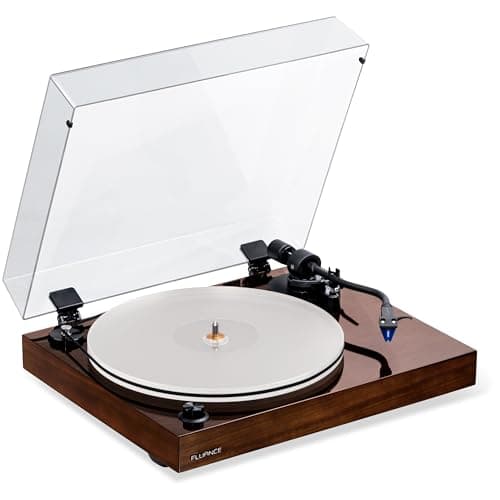 Fluance RT85 An acrylic platter and an Ortofon 2M Blue — the cartridge alone accounts for a large share of the price, which is the right place for the money to go. | Best overall under $1,000 | 8.4 | |
| 2 | 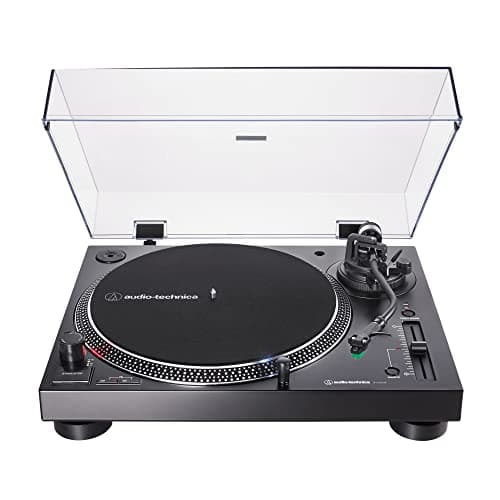 Audio-Technica AT-LP120XUSB A direct-drive deck with a switchable phono stage and USB out, which means it works with any amplifier you already own and needs nothing else on day one. | Best overall under $500 | 8.6 | $349.00View on Amazon $449.0022% off |
| 3 | 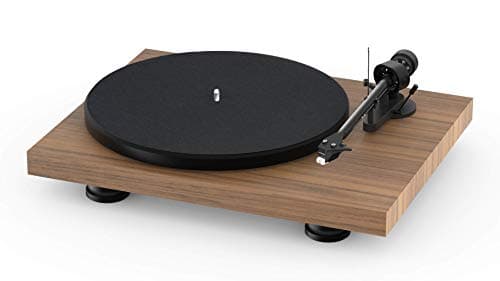 Pro-Ject Debut Carbon EVO A one-piece carbon-fiber tonearm and electronic speed change, on a deck whose whole design argument is the arm rather than the platter. | Best tonearm under $1,000 | 8.0 | |
| 4 | 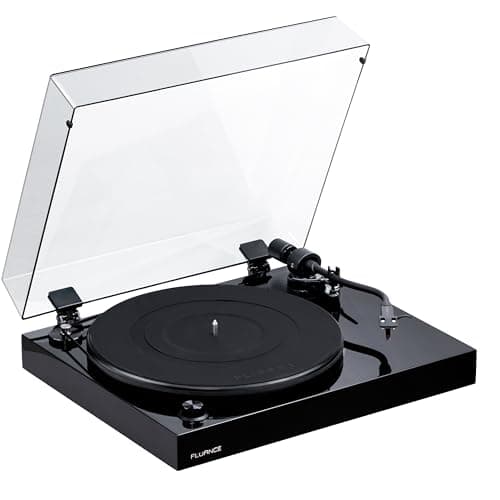 Fluance RT82 A belt-drive deck with an Ortofon OM10 and no built-in phono stage — a deliberate omission that assumes you will bring your own, and prices accordingly. | Best belt-drive under $500 | 7.6 |
Belt drive isolates the motor from the platter with a rubber band. Direct drive bolts the platter onto the motor. That is the entire mechanical difference, and it is the last part of this argument anyone agrees on.
The usual claim is that belt drive is quieter because the belt absorbs motor vibration, and that direct drive holds speed better because the platter is coupled to a servo-controlled motor. Both stories are mechanically reasonable. Neither survives contact with the published specifications of the decks people actually buy.
What the two mechanisms actually do
Belt driveputs an elastic component between the motor and the record. Motor vibration has to cross that elastic path to reach the stylus, and elastic paths are poor at transmitting high-frequency vibration. The cost is that the same elasticity sits between the motor’s speed regulation and the platter, so speed corrections arrive softened and delayed.
Direct drive removes the belt. The platter is the rotor, so a servo can measure and correct speed continuously with nothing in between. The cost is that there is also nothing in between for vibration. It also means instant start-up and reliable reverse and pitch control, which is why the format survived in DJ booths after it left most living rooms.
Both mechanisms have a real weakness. The question is whether either weakness shows up in the numbers the manufacturers publish, and it turns out that it does not.
The published figures, side by side
Every number below comes from the manufacturer’s own manual or spec page, linked in the sources at the foot of this page. One deck here is direct drive. Six are belt.
| Deck | Drive | Wow & flutter (published) | Signal-to-noise (published) |
|---|---|---|---|
| Fluance RT85 | Belt | 0.07% | 69 dB (weighted) |
| Fluance RT82 | Belt | 0.07% | 68.5 dB (weighted) |
| Music Hall mmf-1.5 | Belt | < 0.1% WTD at 3 kHz RMS | > 65 dB (DIN-B) |
| Pro-Ject Debut Carbon EVO | Belt + electronic speed control | ± 0.17% at 33 rpm | 68 dB |
| Audio-Technica AT-LP120XUSB | Direct | < 0.2% WRMS at 3 kHz | > 50 dB |
| Fluance RT81 | Belt | 0.2% | > 67 dB (A-weighted) |
| Audio-Technica AT-LP70X | Belt | < 0.25% (WTD) | > 55 dB |
The one direct-drive deck in this group publishes a worse wow-and-flutter figure than four of the six belt decks, and the two best figures on the table belong to belt decks. If drive type determined speed stability, this table would sort itself. It does not sort at all.
Why the table does not settle it either
Before anyone concludes that belt drive wins, look at the units. Fluance publishes “0.07%” with no weighting convention stated. Audio-Technica publishes “WRMS at 3 kHz”. Music Hall publishes “WTD”. Pro-Ject publishes a ± figure with no convention at all.
Those are not the same measurement. A weighted RMS figure and an unweighted peak figure for the same platter can differ by a factor of two or more, and no manufacturer here states enough of its method for a reader to convert one into the other. So the honest conclusion is not “belt drive is better”. It is the published numbers in this category are not mutually comparable, and the drive type does not predict them.
This is the same problem that runs through speaker sensitivity and amplifier power ratings: the figure is real, the condition it was measured under is missing, and the missing part is the part you needed.
cents = 1200 × log₂(1 + W) · W = published wow & flutter as a fraction
Inputs
- Fluance RT85 published wow and flutter: 0.07% → W = 0.0007 (Fluance spec page)
- Audio-Technica AT-LP120XUSB published wow and flutter: < 0.2% WRMS → W = 0.002 (Audio-Technica manual (PDF))
- Audio-Technica AT-LP70X published wow and flutter: < 0.25% (WTD) → W = 0.0025 (Audio-Technica manual (PDF))
Result
RT85: 1200 × log₂(1.0007) = 1.21 cents
AT-LP120XUSB: 1200 × log₂(1.002) = 3.46 cents
AT-LP70X: 1200 × log₂(1.0025) = 4.32 cents
A semitone is 100 cents. So the entire published spread across every deck on this page is about three cents — roughly three hundredths of a semitone. That is the size of the thing being argued about.
This converts the published figure into pitch units. It does not tell you whether you would hear it, and we are not going to tell you that either — we have not listened to these decks and audibility depends on the rate of the variation as much as its magnitude, which nobody here publishes.
The differences that are real and published
Drive type does predict some things, and these are the ones worth deciding on.
78 rpm
The AT-LP120XUSB publishes 33⅓, 45 and 78 rpm. The Fluance RT82 publishes 33⅓ and 45 with no 78 at all. The Pro-Ject Debut Carbon EVO reaches 78 only by fitting a different belt supplied in the box. If you own shellac, this is a hard filter and it is stated plainly on every spec sheet.
Speed adjustment and pitch control
A servo-driven platter can be nudged. The AT-LP120XUSB has pitch control; the belt decks here do not. Pro-Ject’s answer is electronic speed selection, which changes speeds at the press of a button but is not the same as continuously variable pitch.
Belts are a consumable
A belt stretches and eventually needs replacing. A direct-drive motor does not have that part. This is the most concrete practical difference on the page and the one least often mentioned in the arguments.
Start-up
Direct drive reaches speed almost immediately. A belt deck takes a second or two. It matters in a DJ booth and nowhere else.
What actually decides how a deck sounds
Look at what the money buys on the decks above. The RT85 ships with an Ortofon 2M Blue. The RT82 ships with an Ortofon OM 10. The Debut Carbon EVO ships with an Ortofon 2M Red. The AT-LP120XUSB ships with an AT-VM95E.
Those cartridges differ from each other by far more than 3 cents of speed variation. The 2M Blue publishes 25 dB of channel separation and 80 µm of tracking ability at 315 Hz; the 2M Red publishes 22 dB and 70 µm. Those are the manufacturer’s own figures for the parts that actually touch the groove, and they are the specification that changes between these decks in a way you can trace.
Which is why our advice is the same regardless of drive type: buy the deck for its cartridge, its tonearm and whether it publishes an effective mass figureyou can do arithmetic with. Only one deck on this page publishes an unambiguous effective mass, and it is a belt deck — but that is a fact about Pro-Ject’s documentation, not about belts.
The honest summary
Buy direct drive if you need 78 rpm, pitch control, instant start, or you never want to replace a belt. Buy belt drive if none of those matter, because it is where most of the cartridge and plinth money goes at this price.
Do not buy either one because of wow and flutter. Across every deck on this page the published spread is about three cents of pitch, measured by four different conventions that nobody documents well enough to reconcile.
Every pick in detail
Every specification below links to the manufacturer document we read it from. Where a manufacturer does not publish a figure, we say so rather than estimating it.
Fluance RT85
Best overall under $1,000Price as of October 15, 2026. #ad
An acrylic platter and an Ortofon 2M Blue — the cartridge alone accounts for a large share of the price, which is the right place for the money to go.
- specs
- 9/10
- upgrade path
- 9/10
- value for money
- 8/10
- ease of setup
- 6/10
- connectivity
- 5/10
| Specification | Published value | Source |
|---|---|---|
| Drive type | Belt drive | Fluance spec page |
| Wow and flutter | 0.07% | Fluance spec page |
| Signal-to-noise | 69 dB (weighted) | Fluance spec page |
| Cartridge included | Ortofon 2M Blue, pre-installed | Fluance spec page |
| Tonearm effective mass | 0.97 oz (27.5 g) as published — same caution as the RT82 and RT81. | Fluance spec page |
| Built-in phono stage | No — Fluance states “Separate Phono Preamp Required” | Fluance spec page |
Pros
- Ortofon 2M Blue included — a genuinely good cartridge, not a starter one
- Acrylic platter needs no separate mat and damps better than steel
- Isolated motor and a machined aluminum tonearm
Cons
- No built-in phono stage — a separate one is mandatory
- No USB
- The 2M Blue's stylus is the expensive consumable here
Skip it if you need a phono stage and speakers too. At this price the total system cost is what bites, not the deck.
Audio-Technica AT-LP120XUSB
Best overall under $500A direct-drive deck with a switchable phono stage and USB out, which means it works with any amplifier you already own and needs nothing else on day one.
- specs
- 8/10
- upgrade path
- 9/10
- value for money
- 9/10
- ease of setup
- 7/10
- connectivity
- 10/10
| Specification | Published value | Source |
|---|---|---|
| Drive type | Direct drive (DC servo motor) | Audio-Technica manual (PDF) |
| Wow and flutter | < 0.2% WRMS (33 rpm) at 3 kHz | Audio-Technica manual (PDF) |
| Signal-to-noise | > 50 dB | Audio-Technica manual (PDF) |
| Speeds | 33⅓, 45, 78 rpm | Audio-Technica manual (PDF) |
| Cartridge included | AT-VM95E (VM type) on an AT-HS6 headshell | Audio-Technica manual (PDF) |
| Tonearm effective mass | Not published | — |
| Built-in phono stage | Yes — switchable PHONO/LINE, 36 dB nominal gain, RIAA equalized | Audio-Technica manual (PDF) |
| USB output | Yes — 16-bit, 44.1 or 48 kHz selectable, USB 1.1 | Audio-Technica manual (PDF) |
| Tracking force | Arm adjusts 0–4 g; the included AT-VM95E tracks 1.8–2.2 g (2.0 g standard) | Audio-Technica manual (PDF) |
Pros
- Switchable built-in phono stage — works with an amp that has no phono input
- Direct drive, so speed is locked without a belt to stretch or replace
- USB output for digitizing records without a separate interface
- Adjustable tracking force, anti-skate and a removable headshell
Cons
- Heavier and larger than the belt-drive decks in this bracket
- The bundled AT-VM95E is a competent cartridge, not an endgame one
- Removable headshell adds a mechanical joint some purists avoid
Skip it if you want the smallest possible footprint, or you already own a good phono stage and would rather put the money into the cartridge.
Pro-Ject Debut Carbon EVO
Best tonearm under $1,000Price as of October 15, 2026. #ad
A one-piece carbon-fiber tonearm and electronic speed change, on a deck whose whole design argument is the arm rather than the platter.
- specs
- 9/10
- upgrade path
- 8/10
- value for money
- 7/10
- ease of setup
- 6/10
- connectivity
- 5/10
| Specification | Published value | Source |
|---|---|---|
| Drive type | Belt drive with electronic speed control | Pro-Ject datasheet (PDF) |
| Wow and flutter | 33 rpm: ±0.17%; 45 rpm: ±0.15% | Pro-Ject datasheet (PDF) |
| Signal-to-noise | 68 dB | Pro-Ject datasheet (PDF) |
| Speeds | 33, 45 electronically; 78 via the included round belt | Pro-Ject datasheet (PDF) |
| Cartridge included | Ortofon 2M Red, pre-adjusted | Pro-Ject datasheet (PDF) |
| Tonearm effective mass | 6.0 g (published as “Effective arm length/mass: 218.5 mm / 6.0 g”) | Pro-Ject datasheet (PDF) |
| Built-in phono stage | No — Pro-Ject's datasheet says “it is always better to opt for a separate phono stage” | Pro-Ject datasheet (PDF) |
Pros
- One-piece carbon tonearm — stiffer than the alloy arms at this price
- Electronic speed change; no belt to move by hand between 33 and 45
- Height-adjustable feet and a heavier steel platter
Cons
- No built-in phono stage
- Carbon arm has no removable headshell, so cartridge swaps are fiddlier
- Costs more than the RT85 while including a lesser cartridge
- Discontinued — Pro-Ject has removed its product page, and the maker's current turntable range lists the Debut EVO 2 rather than this deck, so what is on sale is remaining stock
Skip it if you swap cartridges often — the fixed headshell makes that a bench job rather than a two-minute one.
Fluance RT82
Best belt-drive under $500Price as of October 15, 2026. #ad
A belt-drive deck with an Ortofon OM10 and no built-in phono stage — a deliberate omission that assumes you will bring your own, and prices accordingly.
- specs
- 8/10
- upgrade path
- 8/10
- value for money
- 8/10
- ease of setup
- 6/10
- connectivity
- 5/10
| Specification | Published value | Source |
|---|---|---|
| Drive type | Belt drive | Fluance spec page |
| Wow and flutter | 0.07% | Fluance spec page |
| Signal-to-noise | 68.5 dB (weighted) | Fluance spec page |
| Speeds | 33⅓, 45 rpm (no 78) | Fluance spec page |
| Cartridge included | Ortofon OM 10 | Fluance spec page |
| Tonearm effective mass | 0.77 oz (21.78 g) as published by Fluance under that heading. Treat with caution: a genuine effective-mass figure normally falls between about 8 and 14 g, so this may be total arm mass. We have not computed a resonance figure from it — see our cartridge and tonearm matching guide for why that distinction matters. | Fluance spec page |
| Built-in phono stage | No — Fluance states “Separate Phono Preamp Required” | Fluance spec page |
Pros
- Ortofon OM10 cartridge included — a genuine step up from a bundled generic
- Belt drive isolates motor vibration from the platter
- Solid wood plinth rather than molded plastic
Cons
- NO built-in phono stage — budget for one if your amp lacks a phono input
- Manual operation; you cue and return the arm yourself
- Belt is a consumable and will need replacing
Skip it if your amplifier has no phono input and you have not budgeted for a separate phono stage. That is a real extra cost, not a footnote.
Frequently asked questions
Is belt drive or direct drive better for sound quality?
The published specifications do not support either answer. In our own comparison table the single direct-drive deck publishes worse wow and flutter than four of six belt decks, while the two best figures belong to belt decks — and all seven use different measurement conventions, so they are not strictly comparable to begin with. Choose on features instead: 78 rpm, pitch control and belt replacement are real, published differences.
Do belt-drive turntables need the belt replaced?
Yes, eventually — a rubber belt stretches with use and age. It is an inexpensive part and usually a two-minute job, but it is a consumable a direct-drive deck simply does not have. If never touching a maintenance item matters to you, that is a legitimate reason to pick direct drive.
Can belt-drive turntables play 78s?
Some can and some cannot, and the spec sheet says which. The Fluance RT82 publishes 33⅓ and 45 rpm only. The Pro-Ject Debut Carbon EVO reaches 78 by fitting a second belt included in the box. The direct-drive Audio-Technica AT-LP120XUSB publishes all three speeds without changing anything.
What is a good wow and flutter figure for a turntable?
Lower is better, but the number is less useful than it looks because manufacturers do not state comparable measurement conditions. Across the decks we cover, published figures run from 0.07% to 0.25% — a range equivalent to roughly 1.2 to 4.3 cents of pitch variation, where a semitone is 100 cents.
Read next
The Best Turntables Under $500
Five decks under $500, ranked on published specs and total cost — including the phono stage two of them make you buy separately.
Pro-Ject vs Audio-Technica
Debut Carbon EVO against AT-LP120XUSB: arm versus features, and the one published spec that settles it.
The Best Turntables Under $1,000
Four decks under $1,000, judged on where the money went — and only one publishes a tonearm effective mass you can actually use.
Audio-Technica AT-LP120XUSB Review
Direct drive, a switchable 36 dB phono stage, USB and 78 rpm — reviewed against Audio-Technica's own manual.
Fluance RT85 Review
Acrylic platter, measured 0.07% wow and flutter, an Ortofon 2M Blue — and a phono stage you have to supply.
Record Player vs Turntable
The words mean the same thing. What separates a real deck from a novelty is the list of specifications the maker refuses to publish.
Sources
Every specification on this page was read from one of these documents. If one of them has changed, or we have made an error, tell us — corrections are logged and dated per our editorial policy.
- Audio-Technica AT-LP120XUSB — owner's manual (PDF)
- Audio-Technica AT-LP70X — owner's manual (PDF)
- Fluance RT85 — specifications
- Fluance RT82 — specifications
- Fluance RT81 — specifications
- Pro-Ject Debut Carbon EVO — datasheet (PDF)
- Music Hall mmf-1.5 — specifications
- Ortofon 2M Blue — specifications
- Ortofon 2M Red — specifications