How Often Should You Replace a Turntable Stylus?
Every answer you will find is a number of hours, and not one cartridge maker on this site publishes one. So this page answers it from what is actually published: the contact geometry, the tracking force you control, and whether replacing the stylus means buying a stylus or buying a cartridge.
The short answer
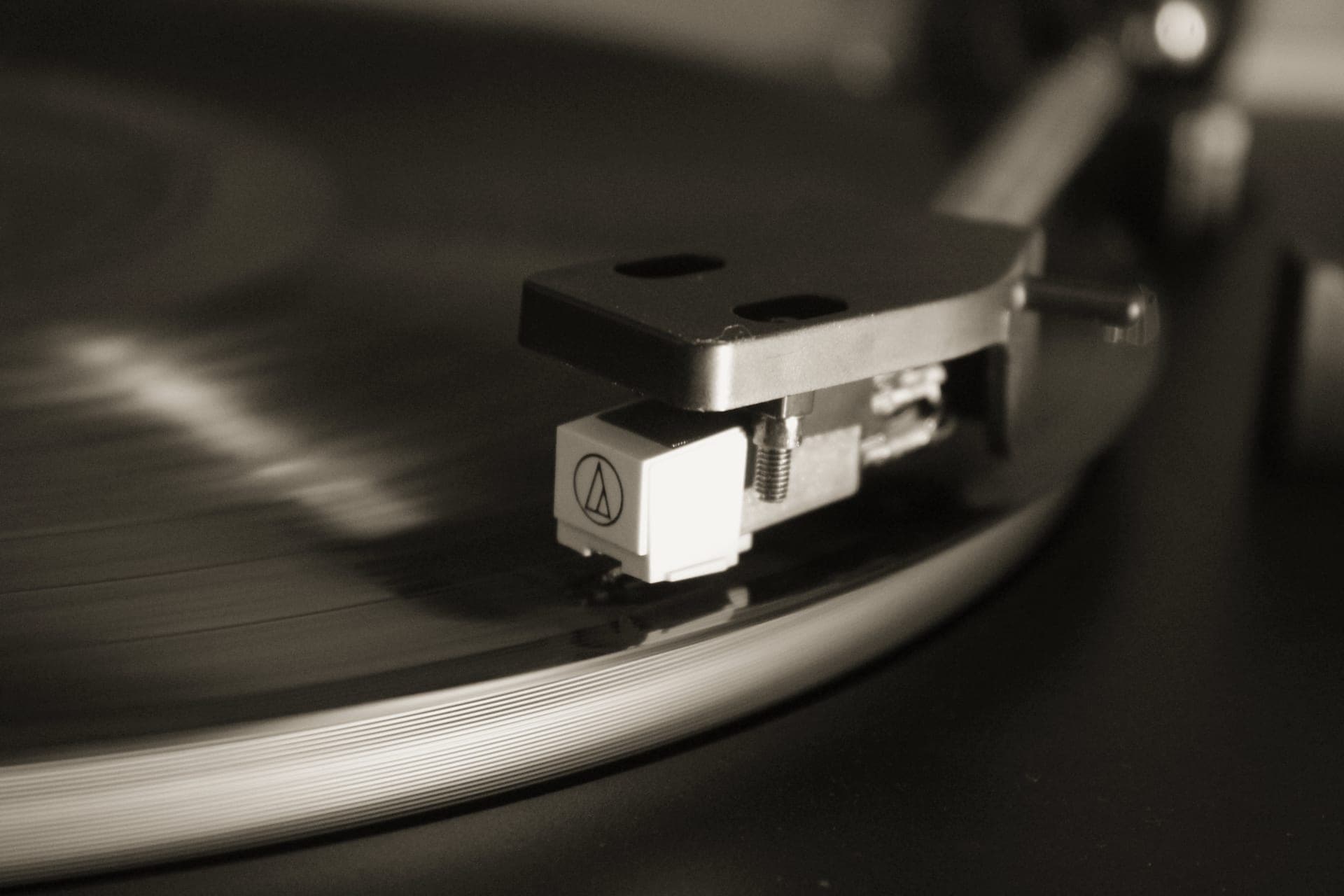
There is no published answer, and the honest version is: inspect rather than count, and budget for a replacement stylus as a consumable rather than a repair. We checked all fourteen cartridges in our registry and not one publishes a stylus life in hours— so the 500, 1,000 or 2,000 hour figures that circulate are estimates, not specifications. What is published is more useful: the Audio-Technica AT-VM95Eis the pick because its entire stylus range drops into the same body, so a replacement is also an upgrade path — and if you want the profile with the longest published contact, the AT-VM95ML’s MicroLinear stylus spreads the same 2.0 g over about 3.1 times the contact length of an elliptical. Two cartridges we cover cannot be re-tipped at all.
Disclosure: we earn a commission if you buy through the links on this page, at no extra cost to you. It does not influence what we pick — our criteria are published and reproducible, so you can check our work. How we pick · Full disclosure
These picks are spec-and-price analyses, not listening tests. We have not heard this gear and we do not pretend to have: every figure below is sourced to the manufacturer and linked, and every price is live or not shown at all. Here are the rules we followed.
Quick picks
Ranked on the published criteria in How We Pick. Prices are live as of October 16, 2026. Tap any row for the full write-up.
- 8.4$63.25View on Amazon
$74.0015% off
- 8.8
- 8.2$99.00View on Amazon
$109.9910% off
- 6.8
| # | Product | Best for | Score | Price |
|---|---|---|---|---|
| 1 | 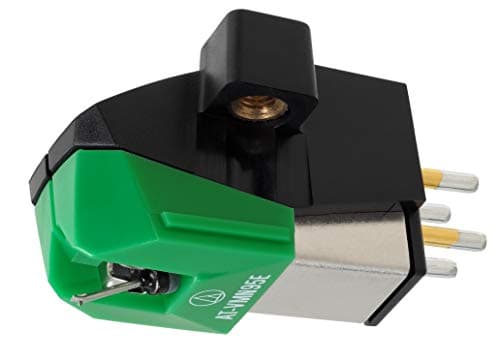 Audio-Technica AT-VM95E The cheapest way into a cartridge body that accepts seven different styli, so every later upgrade costs a stylus rather than a cartridge. | Best first upgrade | 8.4 | $63.25View on Amazon $74.0015% off |
| 2 | 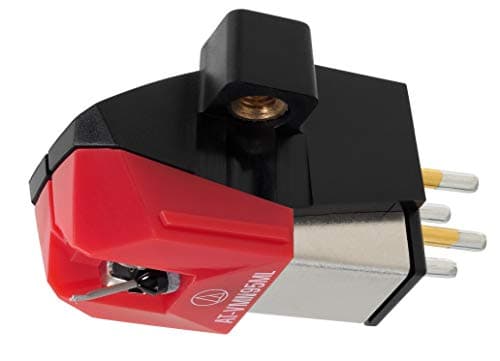 Audio-Technica AT-VM95ML A MicroLinear diamond on the same body as the $65 VM95E, with the highest published compliance and the tightest channel balance of any cartridge here. | Best stylus profile under $200 | 8.8 | |
| 3 | 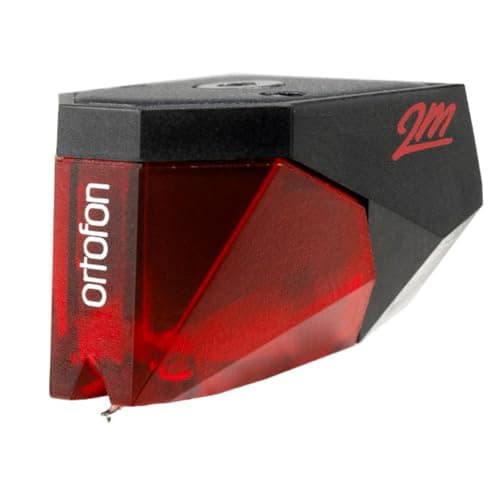 Ortofon 2M Red The only cartridge here whose maker publishes a frequency response with a tolerance and a tracking-ability figure, which makes it the one you can actually verify a claim against. | Best published data | 8.2 | $99.00View on Amazon $109.9910% off |
| 4 | 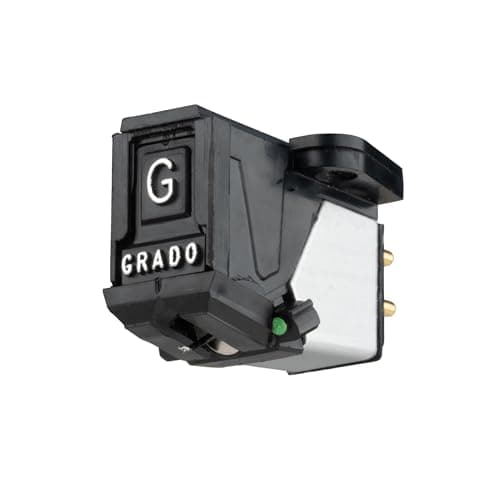 Grado Prestige Green4 A moving-iron design rather than a moving magnet, made in Brooklyn, with a published compliance high enough to matter on a light arm. | The different design | 6.8 |
A stylus is a diamond tip dragged through a vinyl groove under a couple of grams of downforce, thousands of times, and it wears. Everyone agrees on that. What nobody appears willing to put in writing is how long it takes, and we went looking: there is no stylus life row on any of the fourteen cartridge specification sheets in our registry — not Audio-Technica’s, not Ortofon’s, not Nagaoka’s, not Grado’s, not Denon’s. So rather than invent a fifteenth estimate, here is what the published data does support.
What is published, and what it implies
| Cartridge | Stylus profile and mounting | Tracking force | Replacement stylus |
|---|---|---|---|
| Audio-Technica AT-VM95E | 0.3 × 0.7 mil elliptical, bonded round shank | 1.8–2.2 g (2.0 standard) | AT-VMN95E — whole VM95 range fits this body |
| Audio-Technica AT-VM95ML | 2.2 × 0.12 mil MicroLinear, nude square shank | 1.8–2.2 g (2.0 standard) | AT-VMN95ML |
| Audio-Technica VM740ML | 2.2 × 0.12 mil MicroLine, NUDE square shank | 1.8–2.2 g (2.0 standard) | VMN40ML — user-replaceable |
| Ortofon 2M Red | Elliptical, tip radius r/R 8/18 µm, aluminium cantilever | 1.6–2.0 g (1.8 recommended) | No part number published |
| Ortofon 2M Blue | NUDE elliptical, tip radius r/R 8/18 µm | 1.6–2.0 g (1.8 recommended) | No part number published |
| Nagaoka MP-110 | 0.4 × 0.7 mil bonded elliptical | 1.5–2.0 g — no recommended value | No part number published |
| Grado Prestige Green4 | Elliptical diamond; moving iron | 1.6–1.9 g | “User-replaceable stylus assembly” |
| Audio-Technica AT-OC9XML / OC9XEN | Moving coil | — | NOT field-replaceable— fee-based exchange programme |
| Denon DL-103 | Not published | Not published | Not published |
Read the last two rows first, because they change what “replace the stylus” costs. Audio-Technica states plainly that the AT-OC9XML and AT-OC9XEN are not field replaceable and that it offers a fee-based Moving Coil Exchange Programme instead — so on those two the wear question is a whole-cartridge question. And the Denon DL-103, the most famous cartridge in the table, publishes no stylus profile, no tracking force and no replacement information at all. It is the least documented product in our registry and we say so on our cartridge roundup too.
The geometry that bears on wear rate
A stylus does not wear because of time; it wears because of contact pressure over distance. Pressure is force divided by contact area, and while nobody publishes a contact area, two makers publish the tip dimensions — which is enough for a comparison if you are explicit about the simplification.
force per µm = tracking force ÷ contact length · 1 mil = 25.4 µm
Inputs
- Audio-Technica AT-VM95E stylus and tracking force: 0.3 × 0.7 mil elliptical, bonded round shank; 1.8–2.2 g (2.0 g standard) (Audio-Technica spec page)
- Audio-Technica AT-VM95ML stylus and tracking force: 2.2 × 0.12 mil MicroLinear, nude square shank; 1.8–2.2 g (2.0 g standard) (Audio-Technica spec page)
- Nagaoka MP-110 stylus and tracking force: 0.4 × 0.7 mil bonded elliptical diamond; 1.5–2.0 g, no recommended value (Nagaoka spec page)
- Ortofon 2M Red / 2M Blue tip radius and tracking force: Elliptical, tip radius r/R 8/18 µm; 1.6–2.0 g (1.8 g recommended) (Ortofon spec page)
Result
AT-VM95E: 0.7 mil = 17.8 µm → 2.0 g ÷ 17.8 = 0.112 g/µm
AT-VM95ML: 2.2 mil = 55.9 µm → 2.0 g ÷ 55.9 = 0.036 g/µm
Ratio: 3.1× less force per micrometre of contact on the MicroLinear
Setting 2.2 g instead of 1.8 g, both in spec: 22% more force
Nagaoka at 2.0 g vs 1.5 g, both in spec: 33% more force
Two things fall out. First, the extended-contact profile really does spread the same downforce over a much longer footprint — which is the published, non-mystical basis for the claim that a MicroLine stylus lasts longer than an elliptical one, and the reason the profile costs more. Second, and more usefully: the tracking force you set is a 22–33% variable entirely within the manufacturer’s own window, and it is the only thing on this page you control. Set it at the recommended value, not at the top of the range.
Nude versus bonded, and what it is not about
The AT-VM95E’s stylus is a bonded round shank; the AT-VM95ML’s is a nude square shank. The Ortofon 2M Red is elliptical with an aluminium cantilever and the 2M Blue is NUDE elliptical — and here is the detail worth having: Ortofon publishes the identical tip radius for both, r/R 8/18 µm, and the identical 20 µm/mN compliance and 1.6–2.0 g tracking force. The published difference between them is the mounting and the separation figure (22 dB on the Red against 25 dB on the Blue), not the contact geometry.
So “nude” is about mass — a bonded stylus carries the diamond on a metal shank, a nude one is the diamond itself, and less mass at the tip means less inertia for the cantilever to control. That is a tracking argument, not a wear argument, and anyone telling you a nude stylus lasts longer than a bonded one with the same tip radius is going beyond what either maker has published.
How to tell a stylus is worn, without a microscope
The honest list, in order of reliability. Sibilance that was not there before — “s” sounds becoming grainy or splashy, usually worst on inner grooves where the linear groove velocity is lowest. Mistracking on loud passages, especially a channel collapsing. Visible deposits on the tip, which is usually dirt rather than wear and is worth cleaning before concluding anything. And a cartridge that has started to skip, which has several causes and is worth working through properly rather than treating as a verdict.
A loupe at 10× or more will show a flattened or chipped tip if the wear is advanced, and will not reliably show earlier wear. The thing it willshow, usefully, is whether the cantilever is bent — which is damage rather than wear, happens in one moment rather than over a year, and is not fixable.
The counsel of despair that is nonetheless true: a worn stylus damages records, and record damage is permanent while a stylus is a consumable. That asymmetry is the whole argument for replacing early rather than late, and it is a better reason than any hour count.
The four things that actually change how long yours lasts
Tracking force.The arithmetic above: a 22–33% swing inside the published window. Set it with a scale at the recommended figure, which the Nagaoka MP-110 does not give you — it publishes a 1.5–2.0 g range and no recommended value, so the middle is your best inference. Our alignment guide has the procedure.
Record cleanliness. A diamond tip dragging grit through vinyl abrades both. This is the lever most people ignore and it costs nothing but habit; our cleaning guide covers it.
Anti-skate and alignment. A misaligned cartridge loads one groove wall harder than the other, which wears the stylus asymmetrically and wears your records too.
Profile. An extended-contact profile spreads the force, per the arithmetic. It is the one factor you choose at purchase rather than maintain.
Why the picks are ordered this way
The AT-VM95E first, because Audio-Technica publishes the one fact that makes replacement painless: the whole VM95 stylus range drops into this same body. That means a worn elliptical can be replaced by a MicroLinear for the price of a stylus, so the wear event becomes an upgrade opportunity rather than a repurchase. No other cartridge family on this site publishes that.
The AT-VM95ML second, as the destination of that upgrade path and the longest published contact length in the registry at 2.2 mil, with the same 2.0 g standard tracking force. The Ortofon 2M Redthird, because it is the best-documented cartridge here on everything except replacement — a ±3/−1 dB frequency response, 70 µm tracking ability at 315 Hz, a published internal impedance and inductance — and because its tip radius is published where most are not, even though the replacement part number is not. The Grado Green4fourth, because “user-replaceable stylus assembly” is in its specification as a stated design property, on a moving-iron design that works differently from everything else here.
And whichever you own: replace it when it sounds wrong or when the loupe shows something, not when a number on the internet says a year is up. The number does not exist.
Every pick in detail
Every specification below links to the manufacturer document we read it from. Where a manufacturer does not publish a figure, we say so rather than estimating it.
Audio-Technica AT-VM95E
Best first upgradeThe cheapest way into a cartridge body that accepts seven different styli, so every later upgrade costs a stylus rather than a cartridge.
- specs
- 7/10
- upgrade path
- 10/10
- value for money
- 10/10
- tracking ability
- 6/10
- published data
- 9/10
| Specification | Published value | Source |
|---|---|---|
| Type | VM stereo dual magnet (moving magnet) | Audio-Technica spec page |
| Frequency response | 20–22,000 Hz (no tolerance published) | Audio-Technica spec page |
| Channel separation | 20 dB (1 kHz) | Audio-Technica spec page |
| Output voltage | 4.0 mV (1 kHz, 5 cm/sec) | Audio-Technica spec page |
| Output channel balance | 2.0 dB (1 kHz) | Audio-Technica spec page |
| Stylus | 0.3 × 0.7 mil elliptical, bonded round shank | Audio-Technica spec page |
| Cantilever | Aluminum pipe | Audio-Technica spec page |
| Dynamic compliance | 7 × 10⁻⁶ cm/dyne (100 Hz) | Audio-Technica spec page |
| Static compliance | 17 × 10⁻⁶ cm/dyne | Audio-Technica spec page |
| Tracking force | 1.8–2.2 g (2.0 g standard) | Audio-Technica spec page |
| Recommended load | 47,000 Ω, 100–200 pF | Audio-Technica spec page |
| Mount / weight | Half-inch mount, 6.1 g | Audio-Technica spec page |
| Replacement stylus | AT-VMN95E — the whole VM95 stylus range drops into this same body | Audio-Technica spec page |
Pros
- The VM95 body takes the entire VM95 stylus range — conical through Shibata — so the upgrade path costs a stylus, not a cartridge
- 4.0 mV output is the highest of any Audio-Technica cartridge here, so it suits low-gain phono stages
- Audio-Technica publishes both static and dynamic compliance, which is what arm matching needs
- Already fitted to several decks we recommend, so you may own one without knowing
Cons
- A bonded round-shank stylus — the diamond is glued to a metal carrier rather than being solid, which adds tip mass
- 20 dB channel separation is the lowest figure in this group
- 2.0 dB channel balance is the loosest here; the ML is 1.5 dB
- Audio-Technica publishes no tolerance on the 20–22,000 Hz response
Skip it if your deck already ships with a VM95E — several do, and buying a second one changes nothing. Buy a better stylus for the body you own instead.
Audio-Technica AT-VM95ML
Best stylus profile under $200Price as of October 16, 2026. #ad
A MicroLinear diamond on the same body as the $65 VM95E, with the highest published compliance and the tightest channel balance of any cartridge here.
- specs
- 9/10
- upgrade path
- 10/10
- value for money
- 7/10
- tracking ability
- 9/10
- published data
- 9/10
| Specification | Published value | Source |
|---|---|---|
| Type | VM stereo dual magnet (moving magnet) | Audio-Technica spec page |
| Frequency response | 20–25,000 Hz (no tolerance published) | Audio-Technica spec page |
| Channel separation | 23 dB (1 kHz) | Audio-Technica spec page |
| Output voltage | 3.5 mV (1 kHz, 5 cm/sec) | Audio-Technica spec page |
| Output channel balance | 1.5 dB (1 kHz) — the tightest of any VM95 | Audio-Technica spec page |
| Stylus | 2.2 × 0.12 mil MicroLinear, nude square shank | Audio-Technica spec page |
| Cantilever | Aluminum pipe | Audio-Technica spec page |
| Dynamic compliance | 10 × 10⁻⁶ cm/dyne (100 Hz) | Audio-Technica spec page |
| Static compliance | 20 × 10⁻⁶ cm/dyne | Audio-Technica spec page |
| Tracking force | 1.8–2.2 g (2.0 g standard) | Audio-Technica spec page |
| Recommended load | 47,000 Ω, 100–200 pF | Audio-Technica spec page |
| Mount / weight | Half-inch mount, 6.1 g | Audio-Technica spec page |
| Replacement stylus | AT-VMN95ML | Audio-Technica spec page |
Pros
- 2.2 × 0.12 mil MicroLinear — a line-contact profile that sits deeper in the groove than any elliptical here
- 10 × 10⁻⁶ cm/dyne dynamic compliance, the highest published figure in this group
- 1.5 dB channel balance and 23 dB separation, both the best Audio-Technica figures here
- It is a stylus, not a cartridge — if you own any VM95 body it drops in with no alignment at all
Cons
- The most expensive cartridge here, and it shares its body with a $65 one
- A line-contact tip is less forgiving of alignment error than an elliptical
- 3.5 mV output, lower than the VM95E's 4.0 mV
- Higher compliance narrows the range of arms it suits — high compliance plus a heavy arm is the classic mismatch
Skip it if your tonearm's effective mass is unpublished and heavy-looking. High compliance on a heavy arm drops the resonance below the safe window, and most makers will not tell you the arm figure.
Ortofon 2M Red
Best published dataThe only cartridge here whose maker publishes a frequency response with a tolerance and a tracking-ability figure, which makes it the one you can actually verify a claim against.
- specs
- 8/10
- upgrade path
- 8/10
- value for money
- 8/10
- tracking ability
- 7/10
- published data
- 10/10
| Specification | Published value | Source |
|---|---|---|
| Type | Moving magnet, quad-coils with split pole pins and OFC coil wire | Ortofon spec page |
| Frequency response | 20 Hz – 20 kHz, +3 / −1 dB | Ortofon spec page |
| Channel separation | 22 dB (1 kHz) | Ortofon spec page |
| Channel balance | 1.5 dB (1 kHz) | Ortofon spec page |
| Output voltage | 5.5 mV (1 kHz, 5 cm/sec) | Ortofon spec page |
| Tracking ability at 315 Hz | 70 µm | Ortofon spec page |
| Stylus | Elliptical, tip radius r/R 8/18 µm, aluminum cantilever | Ortofon spec page |
| Compliance (dynamic, lateral) | 20 µm/mN | Ortofon spec page |
| Tracking force | 1.6–2.0 g (16–20 mN); 1.8 g recommended | Ortofon spec page |
| Tracking angle | 20° | Ortofon spec page |
| Internal impedance / inductance | 1.3 kΩ DC resistance, 700 mH | Ortofon spec page |
| Recommended load | 47 kΩ, 150–300 pF | Ortofon spec page |
| Weight | 7.2 g | Ortofon spec page |
Pros
- 20 Hz – 20 kHz at +3/−1 dB — a real tolerance, which neither Audio-Technica nor Nagaoka publish
- 70 µm tracking ability at 315 Hz published, a spec almost nobody else quotes
- 5.5 mV output, the highest here, so quiet phono stages have an easier job
- The 2M Blue stylus drops straight into this body, so the upgrade is a stylus swap
Cons
- 22 dB separation is mid-pack, and the Blue's 25 dB shows what the same body can do
- A bonded elliptical stylus at this price, where the Blue's is nude
- 7.2 g is the heaviest cartridge in this group — it matters on a light arm
- Ortofon quotes compliance at the 10 Hz convention while Audio-Technica quotes 100 Hz; the two numbers are not directly comparable
Skip it if you plan to buy the 2M Blue within a year. The Blue is the same body with a better stylus, so buying Red first and upgrading costs more in total than starting at Blue.
Grado Prestige Green4
The different designPrice as of October 16, 2026. #ad
A moving-iron design rather than a moving magnet, made in Brooklyn, with a published compliance high enough to matter on a light arm.
- specs
- 6/10
- upgrade path
- 7/10
- value for money
- 7/10
- tracking ability
- 7/10
- published data
- 5/10
| Specification | Published value | Source |
|---|---|---|
| Type | Moving iron, user-replaceable stylus assembly | Grado spec page |
| Frequency response | 10–55,000 Hz — Grado publishes no tolerance, so this figure is not comparable to Ortofon's ±dB-qualified numbers | Grado spec page |
| Channel separation | Average 25 dB, 10–30,000 Hz | Grado spec page |
| Output voltage | 4 mV at 5 cm/sec (45°) | Grado spec page |
| Stylus | Elliptical diamond | Grado spec page |
| Compliance | 20 µm/mN | Grado spec page |
| Tracking force | 1.6–1.9 g | Grado spec page |
| Input load / inductance / DC resistance | 10 k–47 kΩ · 50 mH · 660 Ω | Grado spec page |
| Mount / weight | P-mount or ½-inch screw mount, 6 g | Grado spec page |
| Recommended load capacitance | Not published | — |
Pros
- Moving iron rather than moving magnet — a genuinely different transducer topology at this price
- 20 µm/mN compliance published, matching the Ortofons and suiting low-mass arms
- Available in both P-mount and half-inch screw mount, which no other cartridge here offers
- 6 g is the lightest body in this group
Cons
- The 10–55,000 Hz response is published with no tolerance at all, so it cannot be compared to Ortofon's ±dB figure
- Grado publishes no recommended load capacitance, which is the spec that decides whether a long cable dulls the top end
- Elliptical, but Grado does not state whether the diamond is nude or bonded
- Grado cartridges are known to be sensitive to motor hum on some direct-drive decks — a design characteristic, not a defect
Skip it if you own a direct-drive turntable with an unshielded motor. Grado's moving-iron generator is the one on this page most likely to pick up hum from it.
Frequently asked questions
How often should you replace a turntable stylus?
How long does a turntable stylus last?
How can I tell if my stylus is worn?
Does a MicroLine stylus last longer than an elliptical one?
Can I replace just the stylus, or do I need a new cartridge?
What tracking force should I use to make a stylus last?
Is a nude stylus more durable than a bonded one?
Why does the Denon DL-103 publish nothing about its stylus?
Read next
How to Set Up a Turntable Cartridge
The five cartridge adjustments in order, the one figure that is always published, and why we will not print a null-point distance.
Are Turntable Cartridges Interchangeable?
Three compatibility checks — mount, mass and loading — and the decks where the answer is simply no.
The Best Turntable Cartridges Under $200
Six cartridges under $200, ranked on stylus profile, published compliance and output — with the unit-conversion trap explained.
Cartridge and Tonearm Matching: Do the Arithmetic
One equation, two published numbers, and the compliance caveat that changes the answer. Worked through with real specs.
How to Clean Vinyl Records
The brush-before-every-play habit, the wet method, and the three techniques that damage records — with no product recommendation, deliberately.
Why Does My Record Player Skip?
Diagnose by where it skips. Includes the one specification that actually measures groove-holding ability — Ortofon's tracking ability in micrometres — and which cartridges publish it.
Sources
Every specification on this page was read from one of these documents. If one of them has changed, or we have made an error, tell us — corrections are logged and dated per our editorial policy.
- Audio-Technica AT-VM95E — specifications (0.3 × 0.7 mil elliptical, VM95 range interchangeability)
- Audio-Technica AT-VM95ML — specifications (2.2 × 0.12 mil MicroLinear, nude square shank)
- Audio-Technica VM740ML — specifications (VMN40ML user-replaceable)
- Audio-Technica AT-OC9XML — specifications (not field-replaceable; MC Exchange Program)
- Ortofon 2M Red — specifications (8/18 µm tip radius, 1.8 g recommended)
- Ortofon 2M Blue — specifications (NUDE elliptical, identical 8/18 µm tip radius)
- Nagaoka MP-110 — specifications (0.4 × 0.7 mil bonded elliptical; no recommended tracking force)
- Grado Prestige Green4 — specifications (moving iron, user-replaceable stylus assembly)
- Denon DL-103 — specifications (no stylus profile, no tracking force published)