Moving Magnet vs Moving Coil Cartridges
One design puts out roughly forty times the voltage of the other. Every practical difference between them — gain, loading, noise, stylus replacement — follows from that single number.
Disclosure: we earn a commission if you buy through the links on this page, at no extra cost to you. It does not influence what we pick — our criteria are published and reproducible, so you can check our work. How we pick · Full disclosure
These picks are spec-and-price analyses, not listening tests. We have not heard this gear and we do not pretend to have: every figure below is sourced to the manufacturer and linked, and every price is live or not shown at all. Here are the rules we followed.
Quick picks
Ranked on the published criteria in How We Pick. Prices are live as of October 15, 2026. Tap any row for the full write-up.
- 8.4$63.25View on Amazon
$74.0015% off
- 8.2$99.00View on Amazon
$109.9910% off
- 8.6
- 8.4
| # | Product | Best for | Score | Price |
|---|---|---|---|---|
| 1 | 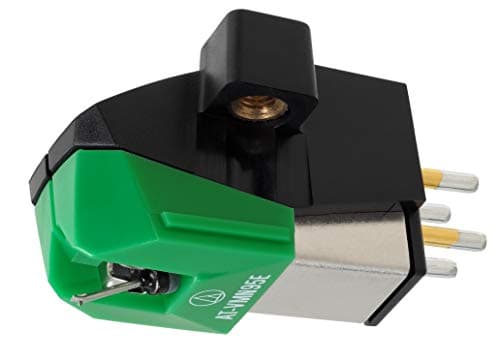 Audio-Technica AT-VM95E The cheapest way into a cartridge body that accepts seven different styli, so every later upgrade costs a stylus rather than a cartridge. | Best first upgrade | 8.4 | $63.25View on Amazon $74.0015% off |
| 2 | 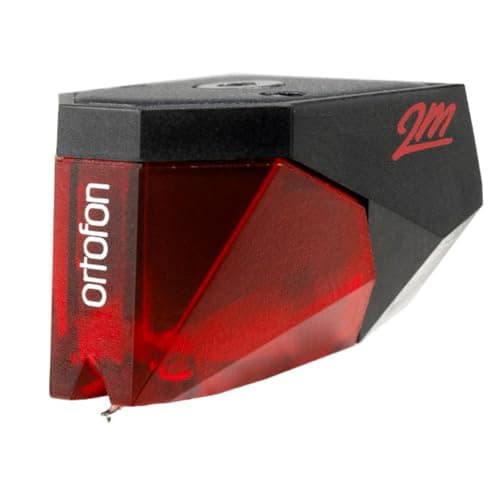 Ortofon 2M Red The only cartridge here whose maker publishes a frequency response with a tolerance and a tracking-ability figure, which makes it the one you can actually verify a claim against. | Best published data | 8.2 | $99.00View on Amazon $109.9910% off |
| 3 | 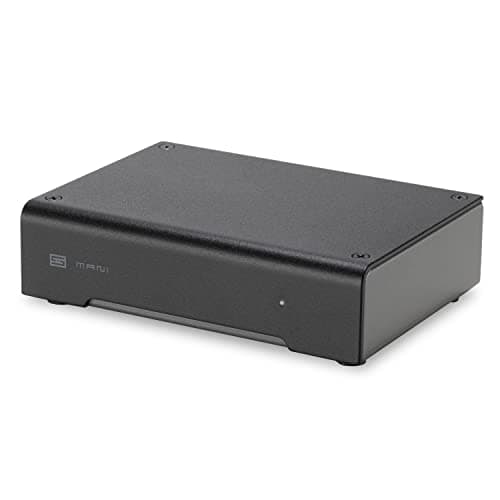 Schiit Mani 2 Four gain settings covering MM, MC and MI cartridges, which means it is the one box here that will still fit whatever cartridge you buy next. | Best overall under $200 | 8.6 | |
| 4 | 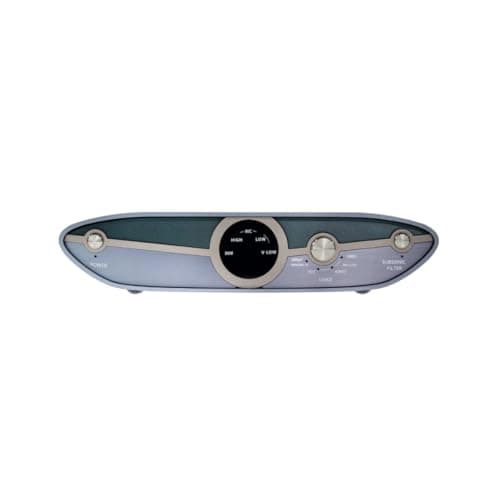 iFi ZEN Phono 3 72 dB of gain at its highest setting — the only box here that will lift a genuinely low-output moving-coil cartridge without a step-up transformer. | Best for very low-output cartridges | 8.4 |
In a moving magnet cartridge the magnet moves and the coils are fixed. In a moving coil cartridge the coils move and the magnet is fixed. Everything else on this page is a consequence of that swap.
Coils are heavier than magnets, so a moving coil design uses far fewer turns of wire to keep the moving mass low. Fewer turns means less voltage out. That is the entire trade, and it propagates into your phono stage, your noise floor, your loading options and whether you can change a worn stylus at your kitchen table.
Start with the number that causes everything else
Here is what the makers of the cartridges we cover actually publish for output voltage, measured at 1 kHz and 5 cm/sec:
| Cartridge | Type | Published output | Recommended load |
|---|---|---|---|
| Ortofon 2M Red | Moving magnet | 5.5 mV | 47 kΩ, 150–300 pF |
| Nagaoka MP-110 | Moving permalloy | 5 mV | 47 kΩ, 100 pF |
| Audio-Technica AT-VM95E | Moving magnet (VM) | 4.0 mV | 47 kΩ, 100–200 pF |
| Grado Prestige Green4 | Moving iron | 4 mV | 10 k–47 kΩ |
| Audio-Technica AT-VM95ML | Moving magnet (VM) | 3.5 mV | 47 kΩ, 100–200 pF |
Every cartridge we can currently source and verify is a magnet-moves design of one kind or another, and every one of them sits between 3.5 and 5.5 mV. Notice the second column: two of these are not strictly “moving magnet” at all. Nagaoka’s is moving permalloy and Grado’s is moving iron. Both behave like an MM as far as your phono stage is concerned, because both put out millivolts and both want a 47 kΩ load.
Where moving coil sits, according to the phono stages
We do not currently list a moving coil cartridge — see the note at the end of this page for why. But we do list three phono stages that support one, and their published gain settings tell you exactly what output range their designers expect to receive.
| Phono stage | Published gain settings | Published loading |
|---|---|---|
| Schiit Mani 2 | 33 / 42 / 48 / 60 dB | 47 kΩ · 200 Ω · 47 Ω · 38 Ω; 47–200 pF |
| iFi ZEN Phono 3 | 36 (MM) / 48 / 60 / 72 dB | 100–200 pF (MM and MC High) |
| Pro-Ject Phono Box DC | 40 dB (MM) / 60 dB (MC) | 47 kΩ / 120 pF (MM) · 100 Ω / 120 pF (MC) |
| Fluance PA10 | 38 dB (MM only) | 100 pF |
iFi labels its 72 dB setting “MC V-Low”. A 72 dB gain stage exists because cartridges exist that need it, and the arithmetic below shows what output that implies.
V_out = V_cartridge × 10^(gain_dB / 20)
Inputs
- Pro-Ject Phono Box DC gain (MM position): 40 dB → ×100 (Pro-Ject spec page)
- Ortofon 2M Red output: 5.5 mV at 1 kHz, 5 cm/sec (Ortofon spec page)
- iFi ZEN Phono 3 MC V-Low gain: 72 dB → ×3,981 (iFi spec page)
Result
2M Red through 40 dB: 5.5 mV × 100 = 550 mV
To reach that same 550 mV through iFi’s 72 dB setting:
550 mV ÷ 3,981 = 0.138 mV
So iFi’s top gain setting is built for a cartridge putting out roughly a seventh of a millivolt — about forty times lessthan the Ortofon. That factor of forty is the moving-coil design, expressed as a number, and it is derived entirely from the two manufacturers’ own published figures.
550 mV is not a target anyone specifies; we used it only as a common reference point so the two gain settings could be compared. For context on what a line-level source delivers, Topping publishes 2.1 V RMS for the E30 II and SMSL publishes 2.0 V for the SU-1 — so even a healthy MM through a 40 dB stage arrives at your amplifier roughly 11 dB quieter than a DAC does.
What that gain costs you: Schiit publishes the answer
Gain is not free. Every amplifier stage adds its own noise, and the more gain you ask for, the more of that noise ends up in the signal. Most manufacturers publish a single signal-to-noise figure and leave it there. Schiit publishes one per gain setting, which makes the cost visible:
| Schiit Mani 2 gain setting | Published signal-to-noise | Published THD |
|---|---|---|
| 33 dB | > 108 dB | < 0.0003% |
| 42 dB (factory default) | > 98 dB | — |
| 48 dB | > 96 dB | — |
| 60 dB | > 87 dB | < 0.0015% |
Twenty-one decibels of signal-to-noise, given up to get the gain a moving coil needs. Distortion rises fivefold over the same range. Both figures are Schiit’s own, on the same page, for the same box.
iFi’s numbers tell a similar story from a different angle: 91 dB(A) on MM, 89.6 dB(A) on MC Low, and 78.6 dB(A) on MC V-Low. The quieter the cartridge, the noisier the stage that has to amplify it.
This is the part of the MM-versus-MC argument that almost never appears, and it is published in plain sight by both manufacturers.
Loading: two different problems
A moving magnet cares about capacitance. Its coil has real inductance — Ortofon publishes 700 mH and 1.3 kΩ DC resistance for the 2M Red — and that inductance forms a resonant circuit with the capacitance of your tonearm cable and phono input. Get the capacitance wrong and you move a peak around in the treble.
This is why every MM maker publishes a capacitance recommendation and they do not agree: Audio-Technica asks for 100–200 pF, Ortofon for 150–300 pF, Nagaoka for 100 pF. It is also why the Fluance PA10’s fixed 100 pF and the Pro-Ject Phono Box DC’s fixed 120 pF are a real constraint, while the Mani 2’s selectable 47/100/150/200 pF is a real feature.
A moving coil cares about resistance. Its coil is tiny, its inductance is low, and capacitance stops mattering much. What matters is the resistive load, which is why the Mani 2 offers 200 Ω, 47 Ω and 38 Ω alongside the standard 47 kΩ. Those three low values exist for moving coils and for nothing else.
The stylus replacement difference
On a moving magnet, the stylus, cantilever and magnet are one removable assembly. Audio-Technica publishes a replacement stylus part number for every VM95: the AT-VMN95E, AT-VMN95EN, AT-VMN95ML. You pull the old one off and push the new one on, with no alignment required — which is also why the AT-VM95ML upgrade path is so cheap: you are buying a stylus, not a cartridge.
Grado describes the Green4 as having a “user-replaceable stylus assembly” too. Nagaoka publishes that the MP-110 body accepts the MP-100 and MP-110 stylus assemblies.
On most moving coils the coils are attached to the cantilever, so replacing the stylus means replacing the moving system — which typically means sending the cartridge back to its maker for a rebuild or retip. We are not going to quote a price or a turnaround for that, because it varies by manufacturer and we have no published figure to cite. But it is a structural difference in ownership cost, not a detail.
Which should you buy?
Buy moving magnetif your phono stage is built into your turntable, your amplifier or your speakers. Every one of those built-in stages we have specifications for is MM-only: Audio-Technica’s decks publish 36 dB, the Yamaha A-S501 publishes an MM input at 3.0 mV, the Marantz PM6007 publishes MM at 2.2 mV, and the Denon AVR-X1800H publishes MM at 2.5 mV. None of them mention moving coil at all. Plugging a 0.14 mV cartridge into a 36 dB stage produces something almost inaudible.
Consider moving coilonly once you own a stage that publishes a gain setting above about 60 dB and a resistive loading option — and go in knowing that the manufacturer’s own noise figures fall by roughly 20 dB at that setting, and that the stylus is not a part you swap yourself.
Which moving coil cartridges we can actually source
Our methodrequires a currently purchasable product with manufacturer-published specifications we can link, and for a long time no moving coil in the price band this site covers cleared both bars. Three now do, and all three are in the $200 to $1,000 bracket rather than this page’s: the Audio-Technica AT-OC9XML (0.4 mV, load specified as a minimum of 100 Ω), the AT-OC9XEN (0.35 mV, same loading) and the Denon DL-103 (0.3 mV, a published 40 Ω output impedance and no recommended load at all). All three are ranked on our under-$1,000 cartridge page, alongside the moving magnets they compete with, with the gain arithmetic worked through for each.
That page also records the two high-output moving coils we could notsource — a Hana EH MK II at 2 mV with a suggested load above 47 kΩ, which would run on an ordinary moving-magnet input, and the Sumiko Blue Point No. 3 — because in one case there was no verifiable listing and in the other the maker’s site was unreachable. The two phono stages above will accept any of them. Everything on this page about gain, loading and noise applies unchanged.
Every pick in detail
Every specification below links to the manufacturer document we read it from. Where a manufacturer does not publish a figure, we say so rather than estimating it.
Audio-Technica AT-VM95E
Best first upgradeThe cheapest way into a cartridge body that accepts seven different styli, so every later upgrade costs a stylus rather than a cartridge.
- specs
- 7/10
- upgrade path
- 10/10
- value for money
- 10/10
- tracking ability
- 6/10
- published data
- 9/10
| Specification | Published value | Source |
|---|---|---|
| Type | VM stereo dual magnet (moving magnet) | Audio-Technica spec page |
| Frequency response | 20–22,000 Hz (no tolerance published) | Audio-Technica spec page |
| Channel separation | 20 dB (1 kHz) | Audio-Technica spec page |
| Output voltage | 4.0 mV (1 kHz, 5 cm/sec) | Audio-Technica spec page |
| Output channel balance | 2.0 dB (1 kHz) | Audio-Technica spec page |
| Stylus | 0.3 × 0.7 mil elliptical, bonded round shank | Audio-Technica spec page |
| Cantilever | Aluminum pipe | Audio-Technica spec page |
| Dynamic compliance | 7 × 10⁻⁶ cm/dyne (100 Hz) | Audio-Technica spec page |
| Static compliance | 17 × 10⁻⁶ cm/dyne | Audio-Technica spec page |
| Tracking force | 1.8–2.2 g (2.0 g standard) | Audio-Technica spec page |
| Recommended load | 47,000 Ω, 100–200 pF | Audio-Technica spec page |
| Mount / weight | Half-inch mount, 6.1 g | Audio-Technica spec page |
| Replacement stylus | AT-VMN95E — the whole VM95 stylus range drops into this same body | Audio-Technica spec page |
Pros
- The VM95 body takes the entire VM95 stylus range — conical through Shibata — so the upgrade path costs a stylus, not a cartridge
- 4.0 mV output is the highest of any Audio-Technica cartridge here, so it suits low-gain phono stages
- Audio-Technica publishes both static and dynamic compliance, which is what arm matching needs
- Already fitted to several decks we recommend, so you may own one without knowing
Cons
- A bonded round-shank stylus — the diamond is glued to a metal carrier rather than being solid, which adds tip mass
- 20 dB channel separation is the lowest figure in this group
- 2.0 dB channel balance is the loosest here; the ML is 1.5 dB
- Audio-Technica publishes no tolerance on the 20–22,000 Hz response
Skip it if your deck already ships with a VM95E — several do, and buying a second one changes nothing. Buy a better stylus for the body you own instead.
Ortofon 2M Red
Best published dataThe only cartridge here whose maker publishes a frequency response with a tolerance and a tracking-ability figure, which makes it the one you can actually verify a claim against.
- specs
- 8/10
- upgrade path
- 8/10
- value for money
- 8/10
- tracking ability
- 7/10
- published data
- 10/10
| Specification | Published value | Source |
|---|---|---|
| Type | Moving magnet, quad-coils with split pole pins and OFC coil wire | Ortofon spec page |
| Frequency response | 20 Hz – 20 kHz, +3 / −1 dB | Ortofon spec page |
| Channel separation | 22 dB (1 kHz) | Ortofon spec page |
| Channel balance | 1.5 dB (1 kHz) | Ortofon spec page |
| Output voltage | 5.5 mV (1 kHz, 5 cm/sec) | Ortofon spec page |
| Tracking ability at 315 Hz | 70 µm | Ortofon spec page |
| Stylus | Elliptical, tip radius r/R 8/18 µm, aluminum cantilever | Ortofon spec page |
| Compliance (dynamic, lateral) | 20 µm/mN | Ortofon spec page |
| Tracking force | 1.6–2.0 g (16–20 mN); 1.8 g recommended | Ortofon spec page |
| Tracking angle | 20° | Ortofon spec page |
| Internal impedance / inductance | 1.3 kΩ DC resistance, 700 mH | Ortofon spec page |
| Recommended load | 47 kΩ, 150–300 pF | Ortofon spec page |
| Weight | 7.2 g | Ortofon spec page |
Pros
- 20 Hz – 20 kHz at +3/−1 dB — a real tolerance, which neither Audio-Technica nor Nagaoka publish
- 70 µm tracking ability at 315 Hz published, a spec almost nobody else quotes
- 5.5 mV output, the highest here, so quiet phono stages have an easier job
- The 2M Blue stylus drops straight into this body, so the upgrade is a stylus swap
Cons
- 22 dB separation is mid-pack, and the Blue's 25 dB shows what the same body can do
- A bonded elliptical stylus at this price, where the Blue's is nude
- 7.2 g is the heaviest cartridge in this group — it matters on a light arm
- Ortofon quotes compliance at the 10 Hz convention while Audio-Technica quotes 100 Hz; the two numbers are not directly comparable
Skip it if you plan to buy the 2M Blue within a year. The Blue is the same body with a better stylus, so buying Red first and upgrading costs more in total than starting at Blue.
Schiit Mani 2
Best overall under $200No live price right now. #ad
Four gain settings covering MM, MC and MI cartridges, which means it is the one box here that will still fit whatever cartridge you buy next.
- flexibility
- 10/10
- noise
- 9/10
- value for money
- 8/10
- build quality
- 8/10
- connectivity
- 7/10
| Specification | Published value | Source |
|---|---|---|
| Gain | 33, 42, 48 or 60 dB (factory default 42 dB) | Schiit spec page |
| Cartridge support | MM, MC or MI | Schiit spec page |
| Loading | Capacitance 47, 100, 150 or 200 pF (default 47 pF); resistive 47 kΩ, 200 Ω, 47 Ω, 38 Ω | Schiit spec page |
| Signal-to-noise | > 108 dB at 33 dB gain; > 98 dB at 42 dB; > 96 dB at 48 dB; > 87 dB at 60 dB (A-weighted, ref 2 V RMS) | Schiit spec page |
| THD | < 0.0003% at 33 dB gain; < 0.0015% at 60 dB | Schiit spec page |
| Subsonic filter | Yes — selectable 6 or 12 dB/octave at 15 Hz, fully passive | Schiit spec page |
| Power | External 16 VAC transformer; dual-filtered regulated ±16 V rails | Schiit manual (PDF) |
Pros
- Four gain settings (33/42/48/60 dB) covering MM, MC and MI
- Four capacitance and four resistance loading options — the most adjustable box here by a distance
- A selectable, fully passive subsonic filter at 15 Hz
- Publishes a full spec sheet including THD and signal-to-noise at every gain setting
Cons
- Gain and loading are set by switches on the underside, so changing them means picking the unit up
- External wall-wart transformer
- Costs roughly double the entry options here
Skip it if you own one moving-magnet cartridge and will never change it — the extra gain settings are the thing you are paying for.
iFi ZEN Phono 3
Best for very low-output cartridgesPrice as of October 15, 2026. #ad
72 dB of gain at its highest setting — the only box here that will lift a genuinely low-output moving-coil cartridge without a step-up transformer.
- flexibility
- 9/10
- noise
- 9/10
- value for money
- 7/10
- build quality
- 8/10
- connectivity
- 9/10
| Specification | Published value | Source |
|---|---|---|
| Gain | 36 dB (MM), 48 dB (MC High), 60 dB (MC Low), 72 dB (MC V-Low) | iFi spec page |
| Cartridge support | MM and MC (MI not listed) | iFi spec page |
| Loading | 100/200 pF (MM and MC High) | iFi spec page |
| Signal-to-noise | MM: 91 dB(A); MC High: 81 dB(A); MC Low: 89.6 dB(A); MC V-Low: 78.6 dB(A) | iFi spec page |
| THD | MM: < 0.0027%; MC High: < 0.0095%; MC Low: < 0.031% | iFi spec page |
| Subsonic filter | Yes — “Intelligent Subsonic Filter” | iFi spec page |
| Power | External DC 5 V / 0.5 A (center positive) | iFi spec page |
Pros
- 72 dB gain on its MC V-Low setting — 12 dB more than the Mani 2's maximum, which is the difference between working and not with a very low-output cartridge
- Four gain settings covering MM through low-output MC, plus a subsonic filter
- Balanced output on a phono stage at this price is unusual
Cons
- Above the $200 bracket at its current live price
- Only 100/200 pF loading — the Mani 2 offers four capacitance and four resistance options
- Curved case does not stack with anything
Skip it if your cartridge is a moving magnet. You would be paying for 36 dB of gain you will never switch on — and the Mani 2 loads more flexibly for less.
Frequently asked questions
What is the difference between moving magnet and moving coil cartridges?
In a moving magnet the magnet is attached to the cantilever and the coils are fixed; in a moving coil it is the reverse. Because coils are heavier, a moving coil uses far fewer turns of wire, so it produces far less voltage. Every practical difference — the gain your phono stage needs, its noise floor, the loading that matters, and whether you can replace the stylus yourself — follows from that one fact.
Do I need a special phono preamp for a moving coil cartridge?
Almost certainly yes. Every built-in phono stage we have specifications for is moving magnet only — Audio-Technica publishes 36 dB, Yamaha 3.0 mV MM, Marantz 2.2 mV MM, Denon 2.5 mV MM, with no MC mode mentioned. A moving coil generally needs 60 dB or more of gain plus a low resistive load; the Schiit Mani 2 and iFi ZEN Phono 3 publish both.
Is moving coil better than moving magnet?
It is different, and it comes with a published cost. Schiit’s own figures for the Mani 2 show signal-to-noise falling from over 108 dB at 33 dB gain to over 87 dB at the 60 dB setting a moving coil requires — 21 dB of noise performance surrendered to get the gain. Whether the cartridge recovers more than that in the groove is a listening judgment, and we do not make listening judgments.
Can you replace the stylus on a moving coil cartridge?
Usually not yourself. On a moving magnet the stylus assembly unplugs — Audio-Technica publishes a replacement part number for each VM95 stylus, and Nagaoka states the MP-110 body accepts MP-100 and MP-110 assemblies. On most moving coils the coils are on the cantilever, so a worn stylus means a factory retip or rebuild.
Read next
The Best Phono Preamps Under $500
Six phono stages from $249 to $499, ranked on published RIAA accuracy and whether the loading can be matched to your cartridge.
The Best Turntable Cartridges Under $200
Six cartridges under $200, ranked on stylus profile, published compliance and output — with the unit-conversion trap explained.
The Best Turntable Cartridges Under $1,000
Eight cartridges from $200 to $1,000, gated on output voltage and load, then ranked on whether the price step buys a difference the maker publishes. Two of them do not.
The Best Phono Preamps Under $200
Phono stages under $200 ranked on published gain, loading flexibility and noise — including one we would actively skip.
Do I Need a Phono Preamp?
Yes, unless you already have one — and it might be hiding in your turntable, amplifier or speakers. Check in 30 seconds.
Cartridge and Tonearm Matching: Do the Arithmetic
One equation, two published numbers, and the compliance caveat that changes the answer. Worked through with real specs.
How to Set Up a Turntable
Nine steps, and the two everyone gets wrong. Both have a published number you can set them to.
Belt Drive vs Direct Drive Turntables
Seven decks, two drive types, and published wow-and-flutter figures that refuse to line up the way the internet says they should.
Sources
Every specification on this page was read from one of these documents. If one of them has changed, or we have made an error, tell us — corrections are logged and dated per our editorial policy.
- Audio-Technica AT-VM95E — specifications
- Audio-Technica AT-VM95ML — specifications
- Ortofon 2M Red — specifications
- Nagaoka MP-110 — specifications
- Grado Prestige Green4 — specifications
- Schiit Mani 2 — specifications and gain/noise table
- iFi ZEN Phono 3 — specifications
- Pro-Ject Phono Box DC — specifications
- Fluance PA10 — specifications
- Topping E30 II — output level