The Best Turntables for Beginners
Your first turntable should be hard to misuse and complete in the box. Those two things matter more right now than any specification.
The short answer
The best turntable for a beginner is the Audio-Technica AT-LP70X — because it is fully automatic, so the arm lifts and returns by itself at the end of a side, and it has a switchable phono stage built in, so it works with any line input you already own. Those two features remove the two most common ways a first year with records goes badly: a stylus left tracking the run-out groove, and a deck that sounds broken because it is plugged into the wrong kind of input. It is the pick for someone who wants to play records rather than maintain a turntable.
What it costs you is the upgrade path: Audio-Technica’s manual confirms the cartridge body is non-removable, so you can change the stylus across the VM95 range and nothing more. If that bothers you, the AT-LP120XUSB is ranked third here, takes a removable headshell, adds USB and 78 rpm, and wins our under $500 roundup outright — it is simply a deck you have to operate yourself. Whichever you pick, budget for something to plug it into: powered speakers are the fewest boxes. And if the words on the box are the confusing part, record player versus turntable settles what the two terms actually mean and which one you are shopping for.
Disclosure: we earn a commission if you buy through the links on this page, at no extra cost to you. It does not influence what we pick — our criteria are published and reproducible, so you can check our work. How we pick · Full disclosure
These picks are spec-and-price analyses, not listening tests. We have not heard this gear and we do not pretend to have: every figure below is sourced to the manufacturer and linked, and every price is live or not shown at all. Here are the rules we followed.
Quick picks
Ranked on the published criteria in How We Pick. Prices are live as of October 15, 2026. Tap any row for the full write-up.
- 8.0
- 7.8
- 8.6$349.00View on Amazon
$449.0022% off
- 6.4
- 6.6
| # | Product | Best for | Score | Price |
|---|---|---|---|---|
| 1 | 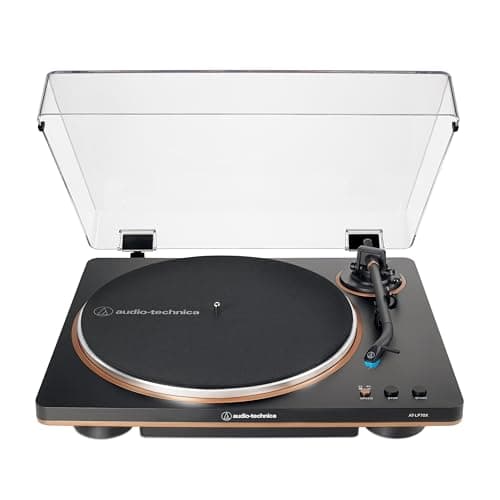 Audio-Technica AT-LP70X Fully automatic, so the arm lifts and returns on its own — the single feature that most reduces the chance of a new owner damaging a stylus or a record. | Best for beginners | 8.0 | |
| 2 | 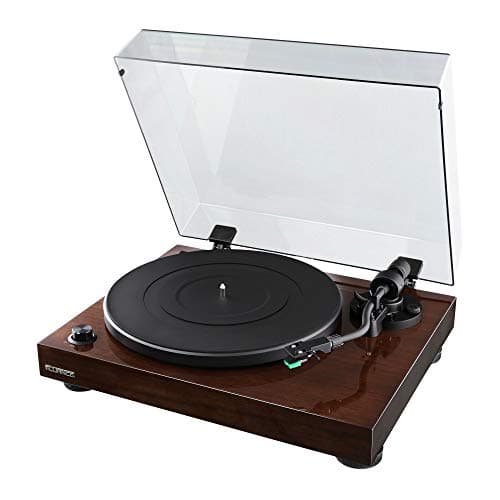 Fluance RT81 The RT82's cheaper sibling: an AT-95E-class cartridge and a built-in phono preamp, which makes it the lower total cost of the two once you count what you still have to buy. | Best value with a phono stage built in | 7.8 | |
| 3 | 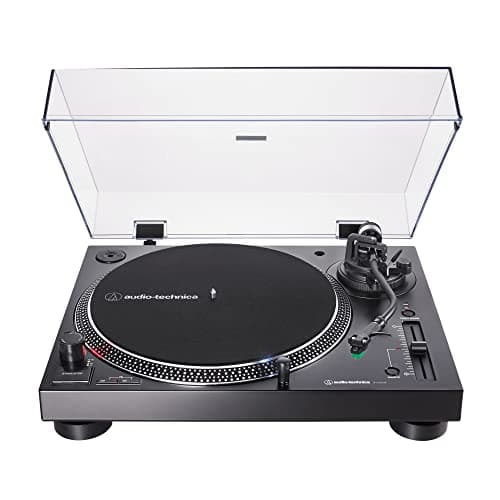 Audio-Technica AT-LP120XUSB A direct-drive deck with a switchable phono stage and USB out, which means it works with any amplifier you already own and needs nothing else on day one. | Best overall under $500 | 8.6 | $349.00View on Amazon $449.0022% off |
| 4 | 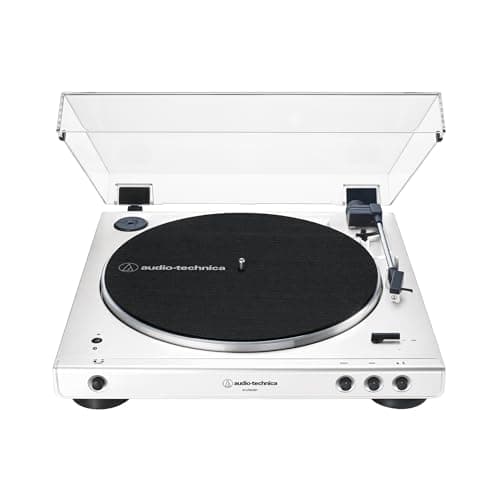 Audio-Technica AT-LP60XBT Fully automatic with Bluetooth out, which trades away the upgrade path entirely in exchange for working with a wireless speaker and nothing else. | Simplest possible start | 6.4 | |
| 5 | 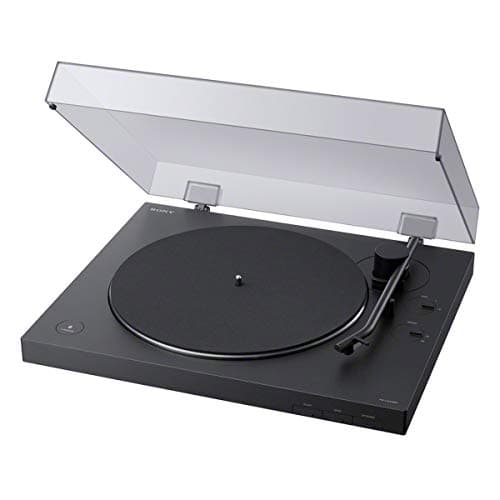 Sony PS-LX310BT Fully automatic, Bluetooth, a built-in phono stage and USB out — the most connection options in the bracket, on the lightest build in it. | Fully automatic with Bluetooth | 6.6 |
Most beginner turntable advice ranks decks on sound quality figures its writers cannot hear and its readers cannot use. We are going to rank them on two boring things instead, because at the start these two decide whether you enjoy the thing or resent it.
The picks compared, spec by spec
Three columns, because these are the three that decide a first year. The em dash on the Sony row is not an oversight — Sony publishes nothing about this deck that we can read, and we explain that below.
Every figure below is the manufacturer’s own published value and links to the document we read it from. “Not published” means the manufacturer does not publish that figure; an em dash means we have no published figure for that model. Prices are live as of October 15, 2026.
Best for beginners
- Drive / operation
- Belt, fully automatic
- Phono stage in the box
- Yes — switchable, 36 dB
- Cartridge included
- AT-VM95C — body non-removable
Best value with a phono stage built in
- Drive / operation
- Belt drive
- Phono stage in the box
- Yes — switchable, true bypass
- Cartridge included
- Audio-Technica AT95E
Best overall under $500
- Drive / operation
- Direct drive
- Phono stage in the box
- Yes — switchable, 36 dB
- Cartridge included
- AT-VM95E on an AT-HS6 headshell
Simplest possible start
- Drive / operation
- Belt, fully automatic
- Phono stage in the box
- Yes — switchable, 36 dB
- Cartridge included
- AT3600L (VM type)
Fully automatic with Bluetooth
- Drive / operation
- —
- Phono stage in the box
- —
- Cartridge included
- —
| Pick | Drive / operation | Phono stage in the box | Cartridge included | Price |
|---|---|---|---|---|
| 1.Audio-Technica AT-LP70XBest for beginners | Belt, fully automatic | Yes — switchable, 36 dB | AT-VM95C — body non-removable | |
| 2.Fluance RT81Best value with a phono stage built in | Belt drive | Yes — switchable, true bypass | Audio-Technica AT95E | |
| 3.Audio-Technica AT-LP120XUSBBest overall under $500 | Direct drive | Yes — switchable, 36 dB | AT-VM95E on an AT-HS6 headshell | |
| 4.Audio-Technica AT-LP60XBTSimplest possible start | Belt, fully automatic | Yes — switchable, 36 dB | AT3600L (VM type) | |
| 5.Sony PS-LX310BTFully automatic with Bluetooth | — | — | — |
Prices as of October 15, 2026; every “Check Price” link goes to Amazon and earns us a commission at no extra cost to you. #ad
1. Does the arm come back by itself?
A fully automatic turntable lifts the tonearm at the end of a side and returns it to its rest. A manual one does not — it keeps tracking the run-out groove until you get up.
This is the single feature that most reduces the chance of a new owner damaging a stylus or a record, and it is why the AT-LP70X wins this page despite the AT-LP120XUSB being a better deck on almost every other axis. Automatic operation costs you something real: Audio-Technica’s manual confirms the LP70X’s cartridge body is non-removable, so your upgrade path ends at the VM95 stylus range. For a first deck, we think that is the right trade. If you disagree, the LP120XUSB is ranked third here and wins our under $500 roundup outright.
There is a middle step worth knowing about, and we only found it on re-reading Fluance’s own specification page in October 2026: the RT81 publishes a defeatable Auto-Stop, and lists no automatic arm lift or return. Those are not the same feature. Auto-stop cuts the motor at the end of a side, so the platter stops turning — but the stylus is still sitting in the run-out groove until you lift it. It is better than nothing and it is not what the AT-LP70X and AT-LP60XBT do, both of which Audio-Technica describes as fully automatic.
2. Is the phono stage already inside?
A turntable’s output is roughly a thousand times quieter than a CD player’s and has had its bass deliberately removed. A phono stage undoes both. Without one, you get a thin, almost inaudible sound — and every year a large number of people conclude their new turntable is broken when it is simply plugged into the wrong kind of input.
Every deck on this page has a built-in, switchable phono stage. That is not a coincidence; it is the entry requirement for this list. It means all of them will work with any amplifier or powered speaker with a line input, and can be switched off later if you buy something better. The full explanation is in do I need a phono preamp.
What we would not worry about yet
Wow and flutter, signal-to-noise, drive type, platter material. These matter, and we publish every figure the manufacturers give us in the tables below. But none of them will be the reason you enjoy or abandon this hobby in your first year. A deck that is annoying to use gets used less, and a deck that is used less sounds worse than any specification predicts.
The honest case against Bluetooth
The AT-LP60XBT and the Sony PS-LX310BT both stream to a wireless speaker, which is genuinely useful if you have no amplifier and no wish to buy one. Both are ranked low here anyway, for the same reason: they are finished appliances rather than platforms. The LP60XBT’s cartridge is an integrated headshell design, and the Sony’s is not a standard replaceable mount. You will not upgrade either. If that is what you want — and it is a legitimate thing to want — buy one and enjoy it. Just buy it knowing.
What you still need to buy
A turntable makes no sound on its own. You need something to plug it into. The cheapest complete route is a pair of powered speakers, which contain their own amplifier — some, like the Kanto YU6, even contain a phono stage, which makes the built-in one on these decks redundant. Then read how to set up a turntable before the box arrives.
What we re-read for this update, and the one deck we cannot read at all
On 2 October 2026 we re-opened Fluance’s RT81 specification page and re-read every figure this page takes from it. All of them were unchanged — belt drive, 0.2% wow and flutter, 67 dB A-weighted signal-to-noise, the AT95E cartridge, the switchable stage with its true bypass — and the read turned up the Auto-Stop distinction above, which is new to this page. Audio-Technica’s manuals are PDFs our tooling could not extract text from on this pass, so the AT-LP70X, AT-LP120XUSB and AT-LP60XBT figures are unchanged from our reading of 17 July 2026.
The Sony PS-LX310BT is a harder case and the em dashes in its row are deliberate. Every Sony-hosted source for this deck — sony.com, its regional sites and the official operating-instructions PDF — returned HTTP 403 when we tried to read them, and retailer listings are not a source we will use for specifications. So we publish no specs for it rather than numbers we could not verify. It stays on the page because it is a real, purchasable deck that answers a real question — what if I have no amplifier and no wish to buy one. It is ranked last because none of its specifications can be checked, and because its cartridge is not a standard replaceable mount, so it is somewhere you arrive rather than somewhere you start from.
Five of these decks also appear on our built-in-preamp roundup, which ranks them on a different question — what each maker publishes about the phono stage inside, and whether it can be switched out of the signal path when you upgrade — and comes out in a different order.
Every pick in detail
Every specification below links to the manufacturer document we read it from. Where a manufacturer does not publish a figure, we say so rather than estimating it.
Audio-Technica AT-LP70X
Best for beginnersPrice as of October 15, 2026. #ad
Fully automatic, so the arm lifts and returns on its own — the single feature that most reduces the chance of a new owner damaging a stylus or a record.
- specs
- 7/10
- upgrade path
- 7/10
- value for money
- 9/10
- ease of setup
- 10/10
- connectivity
- 7/10
| Specification | Published value | Source |
|---|---|---|
| Drive type | Belt drive (DC motor), fully automatic | Audio-Technica manual (PDF) |
| Wow and flutter | < 0.25% (WTD) | Audio-Technica manual (PDF) |
| Signal-to-noise | > 55 dB | Audio-Technica manual (PDF) |
| Speeds | 33⅓, 45 rpm | Audio-Technica manual (PDF) |
| Cartridge included | AT-VM95C dual moving magnet — NON-REMOVABLE. The stylus upgrades across the VM95 range; the cartridge body does not come off. | Audio-Technica manual (PDF) |
| Tonearm effective mass | Not published | — |
| Built-in phono stage | Yes — switchable PHONO/LINE, 36 dB nominal gain | Audio-Technica manual (PDF) |
| USB output | No | Audio-Technica manual (PDF) |
| Tracking force range | Not published | — |
Pros
- Fully automatic start and return — no manual cueing to get wrong
- Built-in switchable phono stage, so it works with any line input
- The stylus upgrades across the AT-VM95 range without touching the cartridge
- Published wow and flutter under 0.25%, and Audio-Technica states the figure
Cons
- The cartridge body is non-removable — only the stylus swaps, so the upgrade path ends at the VM95 range
- Belt drive, not direct drive: the belt is a consumable
- No USB output
Skip it if you want to digitize your collection — this one has no USB out.
Fluance RT81
Best value with a phono stage built inPrice as of October 15, 2026. #ad
The RT82's cheaper sibling: an AT-95E-class cartridge and a built-in phono preamp, which makes it the lower total cost of the two once you count what you still have to buy.
- specs
- 7/10
- upgrade path
- 8/10
- value for money
- 9/10
- ease of setup
- 7/10
- connectivity
- 8/10
| Specification | Published value | Source |
|---|---|---|
| Drive type | Belt drive | Fluance spec page |
| Wow and flutter | 0.2% | Fluance spec page |
| Signal-to-noise | 67 dB or higher (A-weighted, 20 kHz LPF); 60 dB or higher unweighted | Fluance spec page |
| Cartridge included | Audio-Technica AT95E | Fluance spec page |
| Tonearm effective mass | 0.99 oz (28.2 g) as published — same caution as the RT82: this is high for an effective-mass figure and may be total arm mass. | Fluance spec page |
| Built-in phono stage | Yes — PHONO/LINE switchable, with a true bypass that takes the electronics out of circuit when you use an external stage | Fluance spec page |
Pros
- Built-in phono preamp — no extra box required
- Wood plinth and a metal platter at a lower price than the RT82
- Auto-stop at the end of a side
Cons
- Cartridge is a step below the RT82's Ortofon OM10
- Manual cueing
- Built-in preamp is fixed-quality; you pay for it whether you use it or not
Skip it if you already own a phono stage — the RT82 puts that money into a better cartridge instead.
Audio-Technica AT-LP120XUSB
Best overall under $500A direct-drive deck with a switchable phono stage and USB out, which means it works with any amplifier you already own and needs nothing else on day one.
- specs
- 8/10
- upgrade path
- 9/10
- value for money
- 9/10
- ease of setup
- 7/10
- connectivity
- 10/10
| Specification | Published value | Source |
|---|---|---|
| Drive type | Direct drive (DC servo motor) | Audio-Technica manual (PDF) |
| Wow and flutter | < 0.2% WRMS (33 rpm) at 3 kHz | Audio-Technica manual (PDF) |
| Signal-to-noise | > 50 dB | Audio-Technica manual (PDF) |
| Speeds | 33⅓, 45, 78 rpm | Audio-Technica manual (PDF) |
| Cartridge included | AT-VM95E (VM type) on an AT-HS6 headshell | Audio-Technica manual (PDF) |
| Tonearm effective mass | Not published | — |
| Built-in phono stage | Yes — switchable PHONO/LINE, 36 dB nominal gain, RIAA equalized | Audio-Technica manual (PDF) |
| USB output | Yes — 16-bit, 44.1 or 48 kHz selectable, USB 1.1 | Audio-Technica manual (PDF) |
| Tracking force | Arm adjusts 0–4 g; the included AT-VM95E tracks 1.8–2.2 g (2.0 g standard) | Audio-Technica manual (PDF) |
Pros
- Switchable built-in phono stage — works with an amp that has no phono input
- Direct drive, so speed is locked without a belt to stretch or replace
- USB output for digitizing records without a separate interface
- Adjustable tracking force, anti-skate and a removable headshell
Cons
- Heavier and larger than the belt-drive decks in this bracket
- The bundled AT-VM95E is a competent cartridge, not an endgame one
- Removable headshell adds a mechanical joint some purists avoid
Skip it if you want the smallest possible footprint, or you already own a good phono stage and would rather put the money into the cartridge.
Audio-Technica AT-LP60XBT
Simplest possible startPrice as of October 15, 2026. #ad
Fully automatic with Bluetooth out, which trades away the upgrade path entirely in exchange for working with a wireless speaker and nothing else.
- specs
- 5/10
- upgrade path
- 3/10
- value for money
- 7/10
- ease of setup
- 10/10
- connectivity
- 8/10
| Specification | Published value | Source |
|---|---|---|
| Drive type | Belt drive, fully automatic (DC servo-controlled motor) | Audio-Technica manual (PDF) |
| Wow and flutter | < 0.25% (WTD) at 3 kHz | Audio-Technica manual (PDF) |
| Signal-to-noise | > 50 dB (DIN-B) | Audio-Technica manual (PDF) |
| Cartridge included | AT3600L (VM type); replacement stylus ATN3600L | Audio-Technica manual (PDF) |
| Tonearm effective mass | Not published | — |
| Built-in phono stage | Yes — switchable PHONO/LINE, 36 dB nominal gain | Audio-Technica manual (PDF) |
| USB output | No | Audio-Technica manual (PDF) |
Pros
- Fully automatic and genuinely hard to misuse
- Bluetooth output pairs with a wireless speaker with no amplifier at all
- The cheapest route into a real, tracking-force-controlled turntable
Cons
- Integrated headshell — the cartridge is not user-replaceable the way a standard mount is
- Bluetooth is lossy; the analog output is the better path if you have one
- Lightest plinth here, so it is the most sensitive to a resonant surface
Skip it if you expect to upgrade the cartridge later. The integrated headshell is the ceiling, and it arrives early.
Sony PS-LX310BT
Fully automatic with BluetoothPrice as of October 15, 2026. #ad
Fully automatic, Bluetooth, a built-in phono stage and USB out — the most connection options in the bracket, on the lightest build in it.
- specs
- 6/10
- upgrade path
- 3/10
- value for money
- 5/10
- ease of setup
- 10/10
- connectivity
- 10/10
| Specification | Published value | Source |
|---|---|---|
| Published specifications | Unavailable. Every Sony-hosted source for this deck — sony.com, its regional sites, and the official operating-instructions PDF — returned HTTP 403 when we tried to read them on 17 July 2026. Retailer listings carry figures, but retailer spec fields are unreliable and we do not use them as a source for specifications. We would rather show you nothing than show you something we could not verify. | Sony product page (returned 403) |
Pros
- Automatic operation plus Bluetooth plus USB plus a built-in phono stage
- Genuinely one-box: works with a wireless speaker or an amp with no phono input
- Low, compact footprint
Cons
- Cartridge is not a standard user-replaceable mount
- Plastic-heavy construction relative to the Fluance decks
- Live price has been sitting well above its typical street price — check it before buying
Skip it if you want to upgrade anything later. This is a finished appliance, not a platform.
Frequently asked questions
What is the best first turntable?
On our criteria, the Audio-Technica AT-LP70X: it is fully automatic, so the arm lifts and returns by itself, and it has a switchable phono stage built in, so it works with any line input. Those two features remove the two most common ways a beginner has a bad first year. It costs you cartridge upgradability — the body is non-removable — which is a real trade and one we think is worth making at the start.
Do I need to buy anything else with a beginner turntable?
Yes — something to make sound. Every deck on this page has a phono stage built in, so you do not need a separate one, but you still need either powered speakers (which contain an amplifier) or an amplifier plus passive speakers. Powered speakers are the fewest boxes; see the best speakers for a turntable.
Are cheap all-in-one suitcase record players bad for records?
We have not tested any and will not claim to have. What we can point at is the mechanism: the decks on this page publish adjustable or specified tracking forces — Audio-Technica states a 0–4 g adjustment range on the AT-LP120XUSB and a 1.8–2.2 g tracking range for its included cartridge. Suitcase players generally publish no tracking force at all. A stylus pressed into a groove at an unknown force, with no published figure and no adjustment, is a risk you cannot quantify — which is itself the answer.
Should I buy used instead?
Possibly — but we cannot link you a used deck with a live price and a verified spec sheet, so this site is not where that decision gets made. If you do, budget for a new stylus: it is a wear part, and its condition on a used deck is unknown unless the seller can tell you its hours.
Which beginner turntables are fully automatic?
Two of these five on the manufacturer’s own word: the AT-LP70X and the AT-LP60XBT, which Audio-Technica’s manuals describe as fully automatic — the arm lifts at the end of a side and returns to its rest without you. The Fluance RT81 publishes a defeatable Auto-Stop, which cuts the motor but leaves the stylus sitting in the run-out groove; that is a different and lesser thing. The AT-LP120XUSB is a manual deck. The Sony PS-LX310BT is sold as an automatic deck and we have no reason to doubt it, but every Sony-hosted specification source returned HTTP 403 when we tried to read it, so we cannot source that to Sony — which is why its row in the table above is blank.
AT-LP70X or Fluance RT81 for a first turntable?
The AT-LP70X if you want the deck to look after itself, the RT81 if you want a better platform to build on. The Audio-Technica is fully automatic and the Fluance is not — Fluance publishes only a defeatable Auto-Stop — and on a first deck that is the difference that shows up every evening. Against that, the RT81 publishes slightly better numbers (0.2% wow and flutter against < 0.25%, 67 dB A-weighted signal-to-noise against > 55 dB), ships an Audio-Technica AT95E on a conventional mount, and its phono stage has a true bypass that takes the electronics out of the circuit when you add an external one. The AT-LP70X’s cartridge body does not come off at all.
Can I upgrade a beginner turntable later?
It depends entirely on how the cartridge is mounted, and this is the spec to check before you buy rather than after. The AT-LP120XUSB takes a removable AT-HS6 headshell, so the whole cartridge comes off and anything compatible goes on. The Fluance RT81 ships a conventional AT95E and its phono stage can be bypassed outright when you add a better one. The AT-LP70X’s cartridge body is non-removable — you can replace the stylus across the VM95 range and stop there. The AT-LP60XBT and the Sony PS-LX310BT are finished appliances rather than platforms. For the next step up, cartridge and tonearm matching is where that money actually goes.
Read next
How to Set Up a Turntable
Nine steps, and the two everyone gets wrong. Both have a published number you can set them to.
Do I Need a Phono Preamp?
Yes, unless you already have one — and it might be hiding in your turntable, amplifier or speakers. Check in 30 seconds.
The Best Turntables Under $500
Five decks under $500, ranked on published specs and total cost — including the phono stage two of them make you buy separately.
The Best Speakers for a Turntable
Which speakers need an amplifier, which need a phono stage, and the one that needs neither.
The Best Turntables Under $300
Three verified decks under $300, ranked on published wow and flutter, drive type and whether the cartridge can ever be changed.
How to Connect a Turntable to Speakers
Four working routes from turntable to speakers, the two that do not work, and how to fix the hum.
Record Player vs Turntable
The words mean the same thing. What separates a real deck from a novelty is the list of specifications the maker refuses to publish.
The Best Turntables With a Built-In Preamp
Six decks with a phono stage inside, ranked on the stage: bypassable or not, published gain and noise, and whether the cartridge it feeds can ever be upgraded.
Sources
Every specification on this page was read from one of these documents. If one of them has changed, or we have made an error, tell us — corrections are logged and dated per our editorial policy.