The Best Turntable Cartridges Under $1,000
Two cartridges on this page have identical specification sheets and very different prices. One publishes five figures and no tracking force. And the highest and lowest outputs here are 25 dB apart, which decides whether the phono stage you already own can use them at all.
The short answer
The best turntable cartridge under $1,000 here is the Ortofon 2M Bronze — because every electrical figure Ortofon publishes for it is the same figure it publishes for the much more expensive 2M Black. Same 5 mV output, same 26 dB separation, same 1 dB channel balance, same 20 Hz – 20 kHz at +2 / −0 dB, same 80 µm tracking ability, same 22 µm/mN compliance, same 1.2 kΩ and 630 mH, same 7.2 g. The only published difference between the two is the stylus: a nude Fine Line at r/R 8/40 µm against a nude Shibata at r/R 6/50 µm. That is a real difference and it is the only one on the sheet.
Before any of that matters, one number decides whether a cartridge is even usable with your system. The outputs on this page run from 5.5 mV down to 0.3 mV — 25 dB of spread — and the three moving coils here want a 100 Ω or lower load rather than the 47 kΩ a moving-magnet input presents. If your phono stage has no MC setting, four of these eight cartridges are not candidates at any price, and the one to read is the 2M Bronze or, at the bottom of the bracket, the 2M Blue. We have not heard any of these. Everything below is read off the manufacturers’ own pages, linked on every figure.
Disclosure: we earn a commission if you buy through the links on this page, at no extra cost to you. It does not influence what we pick — our criteria are published and reproducible, so you can check our work. How we pick · Full disclosure
These picks are spec-and-price analyses, not listening tests. We have not heard this gear and we do not pretend to have: every figure below is sourced to the manufacturer and linked, and every price is live or not shown at all. Here are the rules we followed.
Quick picks
Ranked on the published criteria in How We Pick. Prices are live as of October 3, 2026. Tap any row for the full write-up.
- 9.0
- 8.8
- 8.6
- 8.4
- 8.3
- 8.0
- 7.6
- 6.4
| # | Product | Best for | Score | Price |
|---|---|---|---|---|
| 1 | 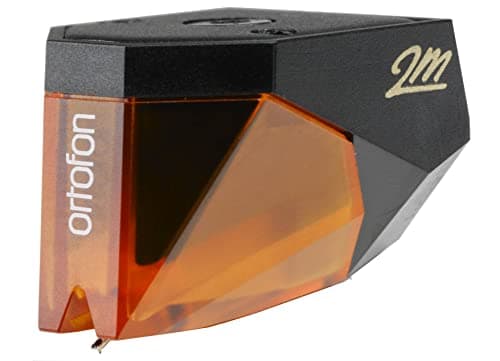 Ortofon 2M Bronze Every electrical figure Ortofon publishes for the far dearer 2M Black, on a cartridge in the middle of this bracket — and the tightest published response tolerance of any cartridge on this site. | Best overall | 9.0 | |
| 2 | 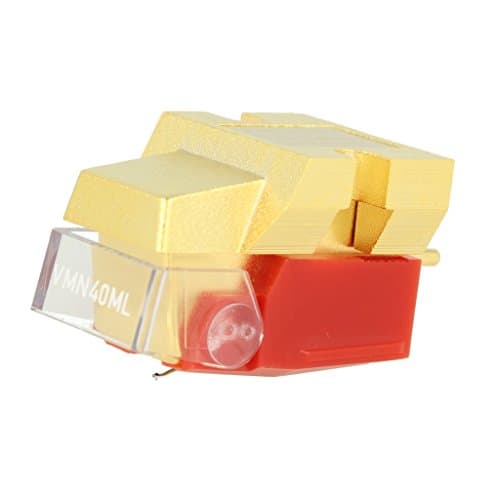 Audio-Technica VM740ML The only cartridge here whose maker publishes coil impedance, inductance, DC resistance, a load capacitance range and both static and dynamic compliance — and names the frequency the dynamic figure was measured at. | Most completely documented | 8.8 | |
| 3 | 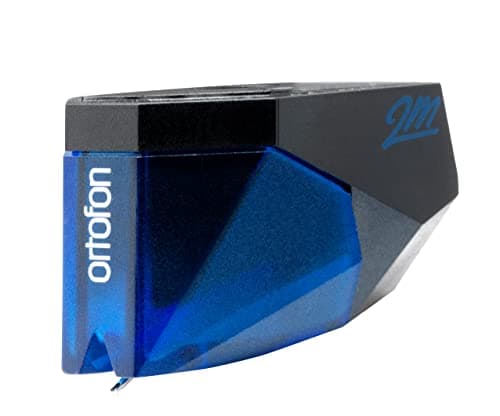 Ortofon 2M Blue The highest published output in this bracket, into the 47 kΩ input every moving-magnet phono stage already has — with a published response tolerance to go with it. | Best for a basic MM phono input | 8.6 | |
| 4 | 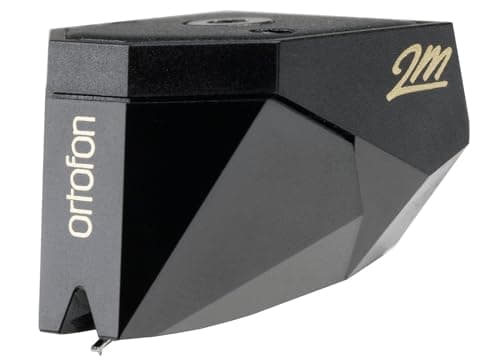 Ortofon 2M Black The finest tip geometry of any moving magnet here — a nude Shibata at r/R 6/50 µm — on a body whose every other published figure matches the 2M Bronze's exactly. | Best stylus geometry | 8.4 | |
| 5 | 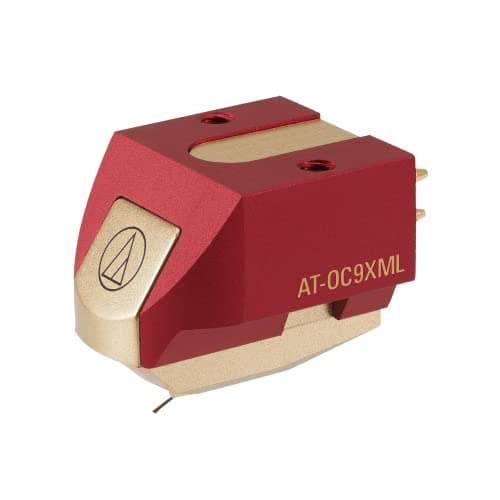 Audio-Technica AT-OC9XML The widest published bandwidth on this page and the only nude boron cantilever — on a moving coil that needs a phono stage built for 100 Ω, not the 47 kΩ input most people own. | Best if you own an MC phono stage | 8.3 | |
| 6 | 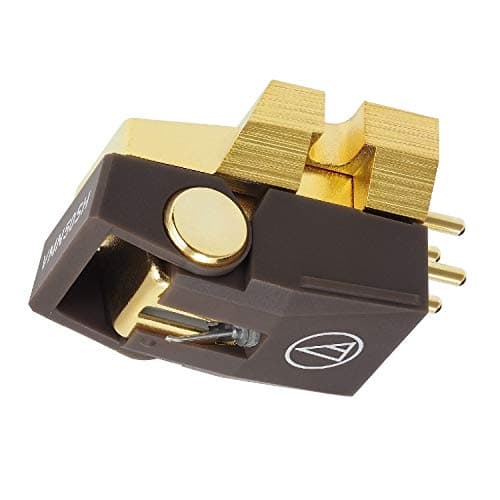 Audio-Technica VM750SH Thirty decibels of channel separation, the highest published figure on this site — bought with a Shibata stylus and, on Audio-Technica's own sheet, nothing else over the VM740ML. | Highest published separation | 8.0 | |
| 7 | 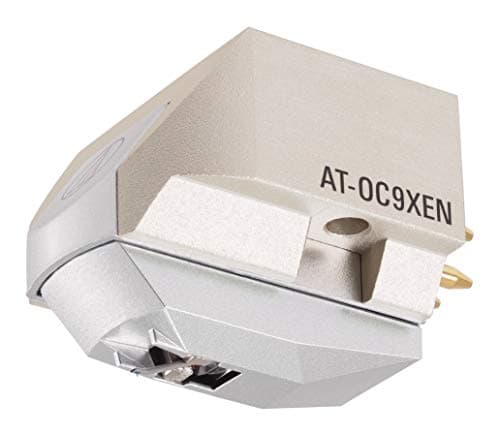 Audio-Technica AT-OC9XEN The least expensive route into a moving coil whose maker publishes a full specification — and the lowest output on this site, which makes the phono stage the real purchase. | Cheapest documented moving coil | 7.6 | |
| 8 | 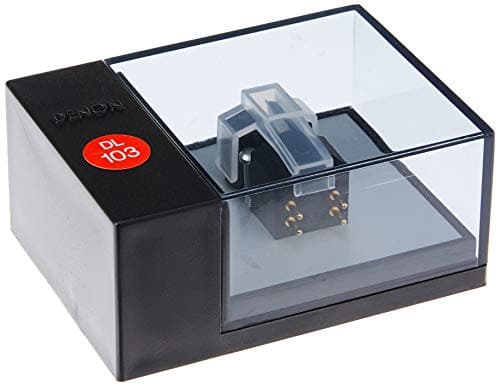 Denon DL-103 In continuous production since the 1960s and the most-recommended moving coil in this bracket — and Denon publishes five figures about it, none of which is the tracking force. | The famous one, and the least documented | 6.4 |
This is the bracket where a cartridge stops being a part of a turntable purchase and becomes a purchase of its own — and where the two decisions that actually matter are both answerable from published numbers before you spend anything. The first is whether your phono stage can use it. The second is whether the next model up the range buys you anything its maker is willing to write down. On this page the answer to the second question is twice “no”, and that is what orders the list.
Our under-$200 cartridge roundup covers the bracket below this one, where everything is high-output moving magnet and any phono input will do. Nothing on that page appears on this one. Above $200 the product set changes shape: the moving coils arrive, the stylus profiles get finer, and the specification sheets start to disagree with each other in interesting ways.
The picks compared, spec by spec
Read the first two columns together before anything else: output voltage and recommended load are the compatibility gate, and four of these eight cartridges fail it on an ordinary moving-magnet phono input. An output around 5 mV into 47 kΩ is a moving magnet; a few tenths of a millivolt into 100 Ω is a moving coil. The Denon row is mostly empty, and that is the finding rather than a formatting problem.
Every figure below is the manufacturer’s own published value and links to the document we read it from. “Not published” means the manufacturer does not publish that figure; an em dash means we have no published figure for that model. Prices are live as of October 3, 2026.
Best overall
- Output
- 5 mV
- Recommended load
- 47 kΩ, 150–300 pF
- Response + tolerance
- 20 Hz–20 kHz, +2/−0 dB
- Compliance
- 22 µm/mN, no frequency stated
Most completely documented
- Output
- 4.0 mV
- Recommended load
- 47,000 Ω, 100–200 pF
- Response + tolerance
- 20–27,000 Hz, no tolerance
- Compliance
- 10 at 100 Hz
Best for a basic MM phono input
- Output
- 5.5 mV
- Recommended load
- 47 kΩ, 150–300 pF
- Response + tolerance
- 20–20,000 Hz, +2/−1 dB
- Compliance
- 20 µm/mN, no frequency stated
Best stylus geometry
- Output
- 5 mV
- Recommended load
- 47 kΩ, 150–300 pF
- Response + tolerance
- 20 Hz–20 kHz, +2/−0 dB
- Compliance
- 22 µm/mN, no frequency stated
Best if you own an MC phono stage
- Output
- 0.4 mV
- Recommended load
- Min. 100 Ω (MC stage)
- Response + tolerance
- 20–47,000 Hz, no tolerance
- Compliance
- 16 at 100 Hz
Highest published separation
- Output
- 4.0 mV
- Recommended load
- 47,000 Ω, 100–200 pF
- Response + tolerance
- 20–27,000 Hz, no tolerance
- Compliance
- 10 at 100 Hz
Cheapest documented moving coil
- Output
- 0.35 mV
- Recommended load
- Min. 100 Ω (MC stage)
- Response + tolerance
- 20–30,000 Hz, no tolerance
- Compliance
- 9 at 100 Hz
The famous one, and the least documented
- Output
- 0.3 mV
- Recommended load
- Not published
- Response + tolerance
- 20 Hz–45 kHz, no tolerance
- Compliance
- Not published
| Pick | Output | Recommended load | Response + tolerance | Compliance | Price |
|---|---|---|---|---|---|
| 1.Ortofon 2M BronzeBest overall | 5 mV | 47 kΩ, 150–300 pF | 20 Hz–20 kHz, +2/−0 dB | 22 µm/mN, no frequency stated | |
| 2.Audio-Technica VM740MLMost completely documented | 4.0 mV | 47,000 Ω, 100–200 pF | 20–27,000 Hz, no tolerance | 10 at 100 Hz | |
| 3.Ortofon 2M BlueBest for a basic MM phono input | 5.5 mV | 47 kΩ, 150–300 pF | 20–20,000 Hz, +2/−1 dB | 20 µm/mN, no frequency stated | |
| 4.Ortofon 2M BlackBest stylus geometry | 5 mV | 47 kΩ, 150–300 pF | 20 Hz–20 kHz, +2/−0 dB | 22 µm/mN, no frequency stated | |
| 5.Audio-Technica AT-OC9XMLBest if you own an MC phono stage | 0.4 mV | Min. 100 Ω (MC stage) | 20–47,000 Hz, no tolerance | 16 at 100 Hz | |
| 6.Audio-Technica VM750SHHighest published separation | 4.0 mV | 47,000 Ω, 100–200 pF | 20–27,000 Hz, no tolerance | 10 at 100 Hz | |
| 7.Audio-Technica AT-OC9XENCheapest documented moving coil | 0.35 mV | Min. 100 Ω (MC stage) | 20–30,000 Hz, no tolerance | 9 at 100 Hz | |
| 8.Denon DL-103The famous one, and the least documented | 0.3 mV | Not published | 20 Hz–45 kHz, no tolerance | Not published |
Prices as of October 3, 2026; every “Check Price” link goes to Amazon and earns us a commission at no extra cost to you. #ad
The four criteria, before any picks
1. Output voltage and recommended load — a gate, not a tiebreak. A moving-magnet cartridge delivers several millivolts into 47 kΩ, which is what every MM phono input on earth presents. A low-output moving coil delivers a few tenths of a millivolt and wants a load one or two orders of magnitude lower. Those are not two points on a scale; they are two different inputs. Get this wrong and the cartridge is quiet, thin and loaded incorrectly, and no volume setting fixes the loading.
2. A frequency response with a tolerance. “20–47,000 Hz” is not a specification until somebody says at what tolerance. Ortofon publishes one on every cartridge here. Audio-Technica publishes none on any of them, and Denon publishes none either — which means the widest-looking bandwidth figures on this page are also the least checkable.
3. Compliance, and whether the arm arithmetic can be completed. The cartridge and the tonearm form a mass on a spring with a resonant frequency, and the target is 8–12 Hz. We work the whole calculation through on our matching page. It needs two numbers: the arm’s effective mass and the cartridge’s compliance. Seven of the eight cartridges here publish a compliance figure. One publishes none at all.
4. Does the step up in price buy a published difference? This is the criterion that reorders the page, and it is the reason the most expensive moving magnet here is fourth rather than first. Where two cartridges from the same maker have the same specification sheet, we say so and rank the cheaper one higher. Price moves nothing on its own.
What is not a criterion: how any of these sound. There is no listening room here, we have not heard a single one of these cartridges, and we say so on every page. What we can do is read eight specification sheets carefully and tell you which numbers survive the reading.
1. The 25 dB gate
The single most consequential number on this page is the output voltage, and it is the one buyers skip. Four of these cartridges are high-output moving magnets between 4.0 and 5.5 mV. The other four are moving coils between 0.3 and 0.4 mV. The gap is not a nuance.
extra gain (dB) = 20 × log10(V_high ÷ V_low)
Inputs
- Ortofon 2M Blue output, the highest here: 5.5 mV (1 kHz, 5 cm/sec) (Ortofon)
- Denon DL-103 output, the lowest here: 0.3 mV (Denon)
- Audio-Technica AT-OC9XEN output: 0.35 mV (1 kHz, 5 cm/sec) (Audio-Technica)
- Audio-Technica AT-OC9XML output: 0.4 mV (1 kHz, 5 cm/sec) (Audio-Technica)
Result
20 × log10(5.5 ÷ 0.3) = 25.3 dB
20 × log10(5.5 ÷ 0.35) = 23.9 dB
20 × log10(5.5 ÷ 0.4) = 22.8 dB
A typical moving-magnet phono stage provides around 40 dB of gain. Add 23 to 25 dB and you are asking for something in the low sixties — which is exactly why MC inputs and step-up transformers exist as separate things rather than as a switch position on every box.
Gain is only half of it. The load matters independently: Audio-Technica specifies “Min. 100 Ω when head amplifier is connected” for both OC9X cartridges, against the 47 kΩ it specifies for the VM pair. Denon publishes a 40 Ω output impedance and no recommended load at all, so the usual transformer rule of thumb cannot be checked against a Denon figure. And the 5 cm/sec reference velocity these outputs are quoted at is a test-record condition, not a loud passage — every one of these cartridges delivers more than its rated voltage on a peak. Our phono preamp roundup lists which stages publish an MC setting and what gain they claim for it.
2. Two cartridges, one specification sheet
Here is the Ortofon 2M Bronze and the Ortofon 2M Black, as published by Ortofon on its own product pages, read on 3 October 2026. We have not abbreviated anything.
| Specification | 2M Bronze | 2M Black |
|---|---|---|
| Output voltage (1 kHz, 5 cm/sec) | 5 mV | 5 mV |
| Channel separation (1 kHz) | 26 dB | 26 dB |
| Channel balance (1 kHz) | 1 dB | 1 dB |
| Frequency response | 20 Hz – 20 kHz, +2 / −0 dB | 20 Hz – 20 kHz, +2 / −0 dB |
| Tracking ability at 315 Hz | 80 µm | 80 µm |
| Compliance, dynamic, lateral | 22 µm/mN | 22 µm/mN |
| Tracking force | 1.4–1.7 g, 1.5 g recommended | 1.4–1.7 g, 1.5 g recommended |
| Tracking angle | 20° | 20° |
| Internal impedance / inductance | 1.2 kΩ / 630 mH | 1.2 kΩ / 630 mH |
| Coil system | Quad-coils, split pole pins, silver-plated OFC | Quad-coils, split pole pins, silver-plated OFC |
| Cantilever | Aluminium | Aluminium |
| Recommended load | 47 kΩ, 150–300 pF | 47 kΩ, 150–300 pF |
| Weight | 7.2 g (16.7 g premounted) | 7.2 g (16.7 g premounted) |
| Stylus | Nude Fine Line, r/R 8/40 µm | Nude Shibata, r/R 6/50 µm |
Thirteen rows identical, one row different, plus the cartridge color. This is not us failing to find the difference — it is Ortofon declining to claim one. The company that publishes more about its cartridges than anyone else on this page, including a tracking-ability figure almost nobody else quotes, publishes nothing to distinguish these two except the diamond.
That is a legitimate thing for a maker to do, because stylus geometry genuinely matters, and the Shibata’s 6 µm contact radius really is finer than the Fine Line’s 8 µm. But it means a buyer paying the difference is paying for one spec row, and should know that is what they are doing. The Bronze is first on this page for exactly that reason, and the Black is fourth rather than eighth because the row in question is the one that touches the record.
3. Audio-Technica does the same thing twice, and then does not
The VM740ML and the VM750SH are the same story in a different font. Both publish 4.0 mV output, 20–27,000 Hz with no tolerance, 1.0 dB channel balance, 2,700 Ω coil impedance, 460 mH inductance, 800 Ω DC resistance, static compliance of 40 and dynamic compliance of 10 at 100 Hz, 1.8–2.2 g tracking force, a 23° vertical tracking angle, a 47,000 Ω / 100–200 pF load and 8.0 g of mass. Two figures differ: channel separation, 28 dB against 30 dB, and the stylus, a 2.2 × 0.12 mil MicroLine against a 2.7 × 0.26 mil Shibata.
Then look at what the same company publishes for its two moving coils. The AT-OC9XML and AT-OC9XEN share a body, a coil impedance of 12 Ω, 25 mH, a 20° tracking angle and 7.6 g — and differ on bandwidth (20–47,000 Hz against 20–30,000 Hz), dynamic compliance (16 against 9), separation (27 dB against 25 dB), channel balance (1.0 dB against 1.5 dB), output (0.4 mV against 0.35 mV) and cantilever material (nude boron against aluminum pipe). Six published differences, not two.
So the same maker will document a real difference when there is one. That is what makes the thin VM740ML-to-VM750SH gap and the non-existent Bronze-to-Black gap informative rather than an artifact of lazy spec sheets. It is also why the VM750SH, despite holding the highest published channel separation figure on this entire site, sits sixth: 2 dB of separation is the smallest return of any price step on the page.
4. The stylus numbers, in one unit
The two makers here quote tip geometry in different units, which quietly prevents the comparison most buyers want to make. Ortofon publishes a contact radius and a side radius in micrometers; Audio-Technica publishes them in mils, thousandths of an inch. A mil is exactly 25.4 µm — a definition, not an approximation — so this is one multiplication away from being comparable.
radius in µm = radius in mil × 25.4 (1 mil = 25.4 µm, by definition)
Inputs
- Audio-Technica VM740ML and AT-OC9XML stylus: 2.2 × 0.12 mil MicroLine (Audio-Technica)
- Audio-Technica VM750SH stylus: 2.7 × 0.26 mil Shibata (Audio-Technica)
- Audio-Technica AT-OC9XEN stylus: 0.3 × 0.7 mil nude elliptical (Audio-Technica)
- Ortofon 2M Black stylus: Nude Shibata, r/R 6/50 µm (Ortofon)
- Ortofon 2M Bronze stylus: Nude Fine Line, r/R 8/40 µm (Ortofon)
- Ortofon 2M Blue stylus: Nude elliptical, r/R 8/18 µm (Ortofon)
Result
MicroLine (VM740ML, OC9XML): 0.12 × 25.4 = 3.0 µm contact, 2.2 × 25.4 = 55.9 µm side
Shibata (VM750SH): 0.26 × 25.4 = 6.6 µmcontact, 2.7 × 25.4 = 68.6 µm side
Nude elliptical (OC9XEN): 0.3 × 25.4 = 7.6 µmcontact, 0.7 × 25.4 = 17.8 µm side
Ortofon, as published: Shibata 6 / 50 µm, Fine Line 8 / 40 µm, elliptical 8 / 18 µm
Two things fall out of this. Audio-Technica’s MicroLine has the smallest contact radius on the page at about 3 µm — roughly half the 6 µm of the Shibata on the most expensive cartridge here. And the AT-OC9XEN’s nude elliptical at 7.6 / 17.8 µm is, to within a rounding error, the same geometry as the 2M Blue’s 8 / 18 µm — on a cartridge costing several times as much, where the money has gone into the generator rather than the diamond.
A contact radius is not a quality score. A smaller radius sits deeper in the groove and reads detail a broader tip rides over, but it is also less forgiving of alignment error and of a worn record, and the side radius changes how the contact patch is distributed along the groove wall. Neither maker publishes a stylus-wear figure or a distortion measurement, so this converts the geometry and stops there. Our alignment guide covers why a line-contact profile makes a protractor non-optional.
5. The compliance convention nobody here closes
Compliance is the number the arm-matching calculation needs, and it is published in two conventions on this page. Audio-Technica quotes a dynamic figure in cm/dyne × 10⁻⁶ and states the measurement frequency: 100 Hz. Ortofon quotes a µm/mN figure and states no measurement frequency at all. The units are numerically identical — 1 cm/dyne × 10⁻⁶ is 1 µm/mN — but the frequency is not a detail, because a cartridge measures substantially more compliant at 10 Hz than at 100 Hz and the resonance formula wants the 10 Hz value.
F = 1000 / (2π × √(M_total × C)) · M_total = arm effective mass + cartridge mass + fixings (g), C = compliance (µm/mN), target 8–12 Hz
Inputs
- Tonearm effective mass (Pro-Ject Debut Carbon EVO, a published figure): 6.0 g (Pro-Ject datasheet)
- Fixings: ≈ 0.5 g (our assumption, stated)
- Ortofon 2M Bronze / Black — mass and compliance: 7.2 g, 22 µm/mN (no frequency stated) (Ortofon)
- Audio-Technica VM740ML / VM750SH — mass and compliance: 8.0 g, 10 × 10⁻⁶ cm/dyne at 100 Hz (Audio-Technica)
- Audio-Technica AT-OC9XML — mass and compliance: 7.6 g, 16 × 10⁻⁶ cm/dyne at 100 Hz (Audio-Technica)
- Audio-Technica AT-OC9XEN — mass and compliance: 7.6 g, 9 × 10⁻⁶ cm/dyne at 100 Hz (Audio-Technica)
- Denon DL-103 — mass and compliance: 8.5 g, compliance not published (Denon)
Result
2M Bronze / Black: M = 13.7 g, C = 22 → 9.2 Hz
2M Blue: M = 13.7 g, C = 20 → 9.6 Hz
VM740ML / VM750SH at face value: M = 14.5 g, C = 10 → 13.2 Hz
AT-OC9XML at face value: M = 14.1 g, C = 16 → 10.6 Hz
AT-OC9XEN at face value: M = 14.1 g, C = 9 → 14.1 Hz
DL-103: cannot be calculated
Taken at face value, two of the four Audio-Technicas land above the 8–12 Hz window and the Ortofons land inside it. Apply the commonly used 1.7× factor to the Audio-Technica 100 Hz figures and all four come inside: the VM pair at 10.1 Hz, the OC9XML at 8.1 Hz, the OC9XEN at 10.8 Hz. Apply the same factor to Ortofon’s 22 — which you would have to, if its figure turned out to be a 100 Hz figure too — and the Bronze drops from 9.2 Hz to 7.0 Hz, below the window.
The 1.7× factor is a widely used estimate, not a published measurement, and neither Ortofon nor Denon publishes the convention that would let you choose. So the honest statement is this: every cartridge on this page can be put inside the window or outside it depending on an assumption none of these makers resolves. The figures above are arithmetic on published inputs, not a verdict on fit. If your arm is a different effective mass — and most makers do not publish theirs at all — redo it with your own number on the matching page.
6. Which maker publishes what
- Ortofon publishes the most complete sheet here: a frequency response with a real tolerance, a tracking-ability figure at 315 Hz that nobody else on this page quotes, compliance, internal impedance and inductance, tracking angle, a load capacitance range, and both bare and premounted weights. Its one gap is the compliance measurement frequency.
- Audio-Technica publishes both static and dynamic compliance with the dynamic frequency stated, coil impedance, inductance and DC resistance, channel balance, a load range, and the replacement stylus part number for its moving magnets. It publishes no tolerance on any frequency response and no tracking-ability figure for any cartridge.
- Denonpublishes five figures for the DL-103: type, output voltage, frequency range, output impedance and weight. No tracking force, no compliance, no separation, no stylus profile, no recommended load. We fetched Denon’s own instruction-manual PDF for it on 3 October 2026 and our tooling could not extract text from the file, so we could not recover the missing rows from the maker’s own document either. We are not filling them in from a retailer listing.
7. The famous one with five rows
The Denon DL-103 is the most-recommended moving coil in this bracket and has been in production for decades, which is exactly why it is on this page and exactly why it is last. A cartridge whose maker does not publish a tracking force is a cartridge you cannot set up correctly from the documentation, and a cartridge with no published compliance is one whose arm match cannot be checked at all — the calculation in section five simply stops.
None of that makes it a bad cartridge, and we are not in a position to say whether it is; we have not heard it. It makes it the one pick here that cannot be evaluated on the criteria this site uses, and the ranking reflects the documentation rather than a guess about the sound. If you want the DL-103, want it knowing that the 0.3 mV output needs the most gain on the page and that Denon publishes a 40 Ω source impedance and no recommended load to match it against.
8. Four we could not include
Hana EL and EH.On published data the EH MK II would have been one of the most useful picks on this page: a moving coil at 2 mV with a suggested load above 47 kΩ, which is to say a moving coil that works on an ordinary moving-magnet input. Hana’s current catalog is the MK II series, and no MK II resolved to an Amazon listing at all on 3 October 2026. The earlier non-MK-II EL does have a live listing, but Hana no longer publishes a page for it, so its specifications have no manufacturer source — and a spec with no source does not render on this site.
Nagaoka MP-200 and MP-500. The MP-200 resolved to an ASIN that returned no price, which means no buy box. Every MP-500 hit was a replacement stylus assembly rather than the cartridge. Nagaoka also publishes no compliance figure for any of its cartridges, which is the same reason the MP-110 sits fifth on our under-$200 page.
Sumiko Blue Point No. 3.A high-output moving coil, live at Amazon with a price on the day we looked, and it would have answered the same question the Hana EH does. Sumiko’s own site returned HTTP 503 on every attempt on 3 October 2026, so there was no manufacturer document to read a single figure from. We would rather ship seven picks and a gap than one pick sourced from a retailer’s spec field.
Ortofon Quintet Red and Blue.Both resolved cleanly with live prices. They are not here because the page already carries three low-output moving coils and adding a fourth and fifth would not have changed any of the four criteria — the gate, the tolerance, the compliance convention or the price-for-published-difference test. If you own an MC stage and want a wider shortlist, they are real products and they are on Ortofon’s site with full specification tables.
What we would buy
If your phono stage is a normal moving-magnet input — which covers almost everyone — the Ortofon 2M Bronze. It publishes everything, including the tightest frequency-response tolerance on this site, it drops into any 47 kΩ input, and it carries every electrical figure the 2M Black does. At the bottom of the bracket the 2M Blue does the same job with 0.5 mV more output and a coarser tip, and it is the natural next step for anyone who already read our under-$200 roundupand owns a 2M Red body — in which case buy the stylus, not the cartridge, because the 2M styli are interchangeable across the range.
If what you want is the finest stylus geometry per dollar, the Audio-Technica VM740ML. Its MicroLine has the smallest contact radius on the page by a factor of two, its stylus is user-replaceable, and Audio-Technica publishes more electrical detail about it than anyone here publishes about anything — including, uniquely, the frequency its compliance figure was measured at. You give up the response tolerance and the tracking-ability figure, and you need to check your arm mass.
Only buy a moving coil if you already own the stage for it. The AT-OC9XML is the best-documented moving coil here and the only nude boron cantilever, but it needs roughly 23 dB more gain than a moving magnet and a load near 100 Ω, and its stylus is not field-replaceable. If you do not have an MC input, the cartridge is not the purchase — the phono stage is, and our MM versus MC explainer works through what that actually costs. And whichever of these you fit, the tracking force and alignment matter more than the choice between any two of them: set the downforce to the maker’s figure with a scale, use a protractor, and do not pay for a line-contact diamond you then install by eye.
Every pick in detail
Every specification below links to the manufacturer document we read it from. Where a manufacturer does not publish a figure, we say so rather than estimating it.
Ortofon 2M Bronze
Best overallPrice as of October 3, 2026. #ad
Every electrical figure Ortofon publishes for the far dearer 2M Black, on a cartridge in the middle of this bracket — and the tightest published response tolerance of any cartridge on this site.
- specs
- 9/10
- upgrade path
- 9/10
- value for money
- 10/10
- tracking ability
- 9/10
- published data
- 10/10
| Specification | Published value | Source |
|---|---|---|
| Type | Moving magnet, quad-coils with split pole pins and silver-plated OFC coil wire | Ortofon spec page |
| Frequency response | 20 Hz – 20 kHz, +2 / −0 dB — a TIGHTER tolerance than the 2M Blue's +2 / −1 dB | Ortofon spec page |
| Channel separation | 26 dB (1 kHz) | Ortofon spec page |
| Channel balance | 1 dB (1 kHz) | Ortofon spec page |
| Output voltage | 5 mV (1 kHz, 5 cm/sec) | Ortofon spec page |
| Tracking ability at 315 Hz | 80 µm | Ortofon spec page |
| Stylus | NUDE Fine Line diamond, tip radius r/R 8/40 µm, aluminum cantilever | Ortofon spec page |
| Compliance (dynamic, lateral) | 22 µm/mN — Ortofon publishes no measurement frequency, so it cannot be put on the same footing as Audio-Technica's 100 Hz figures | Ortofon spec page |
| Tracking force | 1.4–1.7 g (14–17 mN); 1.5 g recommended | Ortofon spec page |
| Tracking angle | 20° | Ortofon spec page |
| Internal impedance / inductance | 1.2 kΩ DC resistance, 630 mH | Ortofon spec page |
| Recommended load | 47 kΩ, 150–300 pF | Ortofon spec page |
| Weight | 7.2 g (16.7 g premounted) | Ortofon spec page |
Pros
- 20 Hz – 20 kHz at +2 / −0 dB, the tightest published response tolerance of any cartridge on this site
- Ortofon's published rows for the Bronze and the Black are identical except the stylus — same 5 mV output, 26 dB separation, 1 dB balance, 22 µm/mN compliance, 1.2 kΩ and 630 mH
- 5 mV into 47 kΩ works with any moving-magnet phono input, including the ones built into turntables and receivers
- 80 µm tracking ability at 315 Hz published, on a nude Fine Line tip at r/R 8/40 µm — Audio-Technica and Denon publish no tracking-ability figure at all
Cons
- Ortofon publishes no measurement frequency for its 22 µm/mN compliance, so the arm-resonance arithmetic cannot be closed from this side
- The 2M Black's Shibata really is a finer geometry — r/R 6/50 µm against 8/40 µm — and that is a difference the rest of the sheet does not show
- 7.2 g is among the heavier cartridges in this bracket, and the arm has to carry it
- 1.4–1.7 g is a narrow tracking-force window, so a deck without fine downforce adjustment is a problem
Skip it if your phono stage has only a moving-coil input, or you need the compliance convention spelled out before you commit. For the first, the Audio-Technica OC9X pair below is the answer.
Audio-Technica VM740ML
Most completely documentedPrice as of October 3, 2026. #ad
The only cartridge here whose maker publishes coil impedance, inductance, DC resistance, a load capacitance range and both static and dynamic compliance — and names the frequency the dynamic figure was measured at.
- specs
- 9/10
- upgrade path
- 10/10
- value for money
- 9/10
- tracking ability
- 6/10
- published data
- 9/10
| Specification | Published value | Source |
|---|---|---|
| Type | VM Type — dual moving magnet | Audio-Technica spec page |
| Frequency response | 20–27,000 Hz — Audio-Technica publishes NO tolerance, so this is not comparable to Ortofon's ±dB figures | Audio-Technica spec page |
| Channel separation | 28 dB (1 kHz) | Audio-Technica spec page |
| Channel balance | 1.0 dB (1 kHz) | Audio-Technica spec page |
| Output voltage | 4.0 mV (1 kHz, 5 cm/sec) | Audio-Technica spec page |
| Stylus | 2.2 × 0.12 mil MicroLine, NUDE square shank, aluminum tapered pipe cantilever | Audio-Technica spec page |
| Compliance | Static 40 × 10⁻⁶ cm/dyne; dynamic 10 × 10⁻⁶ cm/dyne stated AT 100 Hz — the resonance formula wants the 10 Hz value, which Audio-Technica does not publish | Audio-Technica spec page |
| Tracking force | 1.8–2.2 g (2.0 g standard) | Audio-Technica spec page |
| Vertical tracking angle | 23° | Audio-Technica spec page |
| Coil impedance / inductance / DC resistance | 2,700 Ω at 1 kHz · 460 mH at 1 kHz · 800 Ω | Audio-Technica spec page |
| Recommended load | 47,000 Ω, 100–200 pF | Audio-Technica spec page |
| Mount / weight | Half-inch, 8.0 g | Audio-Technica spec page |
| Replacement stylus | VMN40ML — user-replaceable, so a later profile change costs a stylus rather than a cartridge | Audio-Technica spec page |
| Tracking ability | Not published | — |
Pros
- Audio-Technica states the measurement frequency for its compliance figure (100 Hz); Ortofon, Grado and Denon state none
- A 2.2 × 0.12 mil MicroLine on a nude square shank — a line-contact profile with a contact radius around a fifth of a typical elliptical's
- The VMN40ML stylus is user-replaceable, so a worn tip or a later profile change costs a stylus rather than a cartridge
- Publishes coil impedance, inductance, DC resistance and a 100–200 pF load capacitance range — the figures that decide whether a long cable dulls the top end
Cons
- No tolerance on the 20–27,000 Hz response, so the headline bandwidth cannot be compared with Ortofon's ±dB figures
- No tracking-ability figure at all — the spec that says how far the stylus can swing before it mistracks
- The dynamic compliance is quoted at 100 Hz and the resonance formula wants the 10 Hz value, which Audio-Technica does not publish; taken at face value the arithmetic puts the resonance above the 8–12 Hz window
- 8.0 g is the heaviest moving-magnet cartridge on this page
Skip it if your arm is low-mass and its effective mass is unpublished. Line contact plus an unknown arm figure is the combination where a misjudged match does real damage.
Ortofon 2M Blue
Best for a basic MM phono inputPrice as of October 3, 2026. #ad
The highest published output in this bracket, into the 47 kΩ input every moving-magnet phono stage already has — with a published response tolerance to go with it.
- specs
- 8/10
- upgrade path
- 9/10
- value for money
- 9/10
- tracking ability
- 8/10
- published data
- 10/10
| Specification | Published value | Source |
|---|---|---|
| Type | Moving magnet, quad-coils with split pole pins and OFC coil wire | Ortofon spec page |
| Frequency response | 20–20,000 Hz, +2 / −1 dB | Ortofon spec page |
| Channel separation | 25 dB (1 kHz) | Ortofon spec page |
| Channel balance | 1.5 dB (1 kHz) | Ortofon spec page |
| Output voltage | 5.5 mV (1 kHz, 5 cm/sec) | Ortofon spec page |
| Tracking ability at 315 Hz | 80 µm | Ortofon spec page |
| Stylus | NUDE elliptical, tip radius r/R 8/18 µm, aluminum cantilever | Ortofon spec page |
| Compliance (dynamic, lateral) | 20 µm/mN | Ortofon spec page |
| Tracking force | 1.6–2.0 g (16–20 mN); 1.8 g recommended | Ortofon spec page |
| Internal impedance / inductance | 1.3 kΩ DC resistance, 700 mH | Ortofon spec page |
| Recommended load | 47 kΩ, 150–300 pF | Ortofon spec page |
| Weight | 7.2 g | Ortofon spec page |
Pros
- 5.5 mV is the highest published output on this page, so even a low-gain built-in phono stage has an easy job
- 20–20,000 Hz at +2 / −1 dB — a real tolerance, which neither Audio-Technica nor Denon publishes at any price here
- 80 µm tracking ability at 315 Hz published
- Shares the 2M body, so the Bronze and Black styli drop straight in later — the upgrade is a stylus, not a cartridge
Cons
- 25 dB separation and 1.5 dB channel balance are the loosest Ortofon figures in this bracket; the Bronze publishes 26 dB and 1 dB
- A nude elliptical at r/R 8/18 µm, the coarsest tip radius of the three Ortofons here
- Its +2 / −1 dB tolerance is wider than the Bronze's +2 / −0 dB
- 7.2 g on a light arm still needs checking, and Ortofon publishes no measurement frequency for its compliance figure
Skip it if you already own a 2M Red. The Blue is the same body with a better stylus, so buy the Blue stylus and keep the body you have.
Ortofon 2M Black
Best stylus geometryPrice as of October 3, 2026. #ad
The finest tip geometry of any moving magnet here — a nude Shibata at r/R 6/50 µm — on a body whose every other published figure matches the 2M Bronze's exactly.
- specs
- 9/10
- upgrade path
- 9/10
- value for money
- 6/10
- tracking ability
- 9/10
- published data
- 10/10
| Specification | Published value | Source |
|---|---|---|
| Type | Moving magnet, quad-coils with split pole pins and silver-plated OFC coil wire — the SAME coil system Ortofon publishes for the 2M Bronze | Ortofon spec page |
| Frequency response | 20 Hz – 20 kHz, +2 / −0 dB — identical to the 2M Bronze | Ortofon spec page |
| Channel separation | 26 dB (1 kHz) — identical to the 2M Bronze | Ortofon spec page |
| Channel balance | 1 dB (1 kHz) — identical to the 2M Bronze | Ortofon spec page |
| Output voltage | 5 mV (1 kHz, 5 cm/sec) — identical to the 2M Bronze | Ortofon spec page |
| Tracking ability at 315 Hz | 80 µm — identical to the 2M Bronze | Ortofon spec page |
| Stylus | NUDE Shibata diamond, tip radius r/R 6/50 µm, aluminum cantilever — the ONLY published difference from the 2M Bronze | Ortofon spec page |
| Compliance (dynamic, lateral) | 22 µm/mN — identical to the 2M Bronze; no measurement frequency published | Ortofon spec page |
| Tracking force | 1.4–1.7 g (14–17 mN); 1.5 g recommended — identical to the 2M Bronze | Ortofon spec page |
| Tracking angle | 20° | Ortofon spec page |
| Internal impedance / inductance | 1.2 kΩ DC resistance, 630 mH — identical to the 2M Bronze | Ortofon spec page |
| Recommended load | 47 kΩ, 150–300 pF | Ortofon spec page |
| Weight | 7.2 g (16.7 g premounted) | Ortofon spec page |
Pros
- Nude Shibata at r/R 6/50 µm: the smallest contact radius and the longest side radius of any stylus on this page
- Inherits the 2M series' +2 / −0 dB response tolerance, 26 dB separation and 1 dB balance
- 5 mV into 47 kΩ, so the dearest cartridge here still works with the cheapest MM phono input
- The Bronze and Black styli fit the same body, so this is an upgrade path rather than a replacement
Cons
- Ortofon publishes no electrical advantage over the 2M Bronze at all — same output, separation, balance, response, tolerance, tracking ability, compliance, tracking force, impedance, inductance and weight
- It is the most expensive cartridge on this page, and what the extra money buys on the published sheet is stylus geometry and a color
- A Shibata is the least forgiving profile here on alignment error; a protractor is not optional
- Same unstated compliance convention as every other Ortofon, so the arm arithmetic is no more closeable than the Bronze's
Skip it if you have not yet aligned a cartridge with a protractor. The geometry you are paying for only exists if the alignment is right, and the Bronze costs far less to get wrong.
Audio-Technica AT-OC9XML
Best if you own an MC phono stagePrice as of October 3, 2026. #ad
The widest published bandwidth on this page and the only nude boron cantilever — on a moving coil that needs a phono stage built for 100 Ω, not the 47 kΩ input most people own.
- specs
- 9/10
- upgrade path
- 4/10
- value for money
- 7/10
- tracking ability
- 8/10
- published data
- 9/10
| Specification | Published value | Source |
|---|---|---|
| Type | Dual Moving Coil, PCOCC coil wire | Audio-Technica spec page |
| Frequency response | 20–47,000 Hz — Audio-Technica publishes no tolerance | Audio-Technica spec page |
| Channel separation | 27 dB (1 kHz) | Audio-Technica spec page |
| Channel balance | 1.0 dB (1 kHz) | Audio-Technica spec page |
| Output voltage | 0.4 mV (1 kHz, 5 cm/sec) | Audio-Technica spec page |
| Stylus | Microlinear, NUDE square shank, curvature radius 2.2 × 0.12 mil | Audio-Technica spec page |
| Cantilever | 0.28 mm diameter nude BORON | Audio-Technica spec page |
| Compliance | Static 20 × 10⁻⁶ cm/dyne; dynamic 16 × 10⁻⁶ cm/dyne stated AT 100 Hz | Audio-Technica spec page |
| Tracking force | 1.8–2.2 g (2.0 g standard) | Audio-Technica spec page |
| Vertical tracking angle | 20° | Audio-Technica spec page |
| Coil impedance / inductance / DC resistance | 12 Ω at 1 kHz · 25 mH at 1 kHz · 12 Ω | Audio-Technica spec page |
| Recommended load | Min. 100 Ω “when head amplifier is connected” — Audio-Technica's own wording. This is NOT a 47 kΩ moving-magnet input. | Audio-Technica spec page |
| Recommended load capacitance | Not published | — |
| Mount / weight | Half-inch, pre-threaded body (two screws, no nuts), 7.6 g | Audio-Technica spec page |
| Stylus replacement | NOT field-replaceable. Audio-Technica states it offers a fee-based Moving Coil Exchange Program instead. | Audio-Technica spec page |
Pros
- 20–47,000 Hz is the widest published response of any cartridge on this page
- A 0.28 mm nude boron cantilever with a Microlinear tip at 2.2 × 0.12 mil
- 16 × 10⁻⁶ cm/dyne dynamic compliance, the highest published figure here, and Audio-Technica states it was measured at 100 Hz
- Audio-Technica publishes a real difference over the cheaper OC9XEN — bandwidth, compliance, separation, balance and cantilever material all differ, which is more than Ortofon does between its Bronze and Black
Cons
- 0.4 mV needs roughly 23 dB more gain than a 5.5 mV moving magnet; a standard MM phono input cannot use it
- Audio-Technica's recommended load is “Min. 100 Ω when head amplifier is connected”, not the 47 kΩ an MM input presents
- The stylus is NOT field-replaceable — a worn tip means Audio-Technica's fee-based exchange program, not a stylus you fit yourself
- No load capacitance published and no tracking-ability figure
Skip it if your phono stage has no MC setting. On a 47 kΩ moving-magnet input it will be far too quiet and loaded wrong, and turning the volume up does not fix the loading.
Audio-Technica VM750SH
Highest published separationPrice as of October 3, 2026. #ad
Thirty decibels of channel separation, the highest published figure on this site — bought with a Shibata stylus and, on Audio-Technica's own sheet, nothing else over the VM740ML.
- specs
- 8/10
- upgrade path
- 10/10
- value for money
- 6/10
- tracking ability
- 6/10
- published data
- 9/10
| Specification | Published value | Source |
|---|---|---|
| Type | VM Type — dual moving magnet | Audio-Technica spec page |
| Frequency response | 20–27,000 Hz — Audio-Technica publishes NO tolerance, so this is not comparable to Ortofon's ±dB figures | Audio-Technica spec page |
| Channel separation | 30 dB (1 kHz) — the highest published channel separation of any cartridge on this site | Audio-Technica spec page |
| Channel balance | 1.0 dB (1 kHz) | Audio-Technica spec page |
| Output voltage | 4.0 mV (1 kHz, 5 cm/sec) | Audio-Technica spec page |
| Stylus | 2.7 × 0.26 mil Shibata, NUDE square shank, aluminum tapered pipe cantilever | Audio-Technica spec page |
| Compliance | Static 40 × 10⁻⁶ cm/dyne; dynamic 10 × 10⁻⁶ cm/dyne stated AT 100 Hz — the resonance formula wants the 10 Hz value, which Audio-Technica does not publish | Audio-Technica spec page |
| Tracking force | 1.8–2.2 g (2.0 g standard) | Audio-Technica spec page |
| Vertical tracking angle | 23° | Audio-Technica spec page |
| Coil impedance / inductance / DC resistance | 2,700 Ω at 1 kHz · 460 mH at 1 kHz · 800 Ω | Audio-Technica spec page |
| Recommended load | 47,000 Ω, 100–200 pF | Audio-Technica spec page |
| Mount / weight | Half-inch, 8.0 g | Audio-Technica spec page |
| Replacement stylus | VMN50SH — user-replaceable | Audio-Technica spec page |
| Tracking ability | Not published | — |
Pros
- 30 dB separation at 1 kHz, the highest published figure of any cartridge on this site
- A 2.7 × 0.26 mil Shibata on a nude square shank, with the same user-replaceable stylus arrangement as the rest of the VM range
- Identical documentation depth to the VM740ML: coil impedance, inductance, DC resistance, static and dynamic compliance, load capacitance
- 4.0 mV into 47,000 Ω, so it works with any moving-magnet phono input
Cons
- Against the VM740ML, Audio-Technica publishes exactly one electrical difference: 2 dB more separation. Output, compliance, response, impedance, inductance, tracking force and weight are all identical
- It costs meaningfully more than the VM740ML for that 2 dB and a different tip geometry
- No tolerance on the 20–27,000 Hz response and no tracking-ability figure, same as the VM740ML
- The 0.26 mil side radius is wider than the MicroLine's 0.12 mil, so “better stylus” is the wrong description — it is a different trade
Skip it if the VM740ML is in stock. On Audio-Technica's own numbers the step up buys 2 dB of channel separation, and channel separation is not what limits a record.
Audio-Technica AT-OC9XEN
Cheapest documented moving coilPrice as of October 3, 2026. #ad
The least expensive route into a moving coil whose maker publishes a full specification — and the lowest output on this site, which makes the phono stage the real purchase.
- specs
- 7/10
- upgrade path
- 4/10
- value for money
- 7/10
- tracking ability
- 6/10
- published data
- 8/10
| Specification | Published value | Source |
|---|---|---|
| Type | Dual Moving Coil, PCOCC coil wire | Audio-Technica spec page |
| Frequency response | 20–30,000 Hz — Audio-Technica publishes no tolerance | Audio-Technica spec page |
| Channel separation | 25 dB (1 kHz) | Audio-Technica spec page |
| Channel balance | 1.5 dB (1 kHz) | Audio-Technica spec page |
| Output voltage | 0.35 mV (1 kHz, 5 cm/sec) — the lowest output of any cartridge on this site | Audio-Technica spec page |
| Stylus | Elliptical nude, curvature radius 0.3 × 0.7 mil | Audio-Technica spec page |
| Cantilever | Aluminum pipe | Audio-Technica spec page |
| Compliance | Static 20 × 10⁻⁶ cm/dyne; dynamic 9 × 10⁻⁶ cm/dyne stated AT 100 Hz | Audio-Technica spec page |
| Tracking force | 1.8–2.2 g (2.0 g standard) | Audio-Technica spec page |
| Vertical tracking angle | 20° | Audio-Technica spec page |
| Coil impedance / inductance / DC resistance | 12 Ω at 1 kHz · 25 mH at 1 kHz · 12 Ω | Audio-Technica spec page |
| Recommended load | Min. 100 Ω “when head amplifier is connected” — Audio-Technica's own wording. This is NOT a 47 kΩ moving-magnet input. | Audio-Technica spec page |
| Recommended load capacitance | Not published | — |
| Mount / weight | Half-inch, pre-threaded body (two screws, no nuts), 7.6 g | Audio-Technica spec page |
| Stylus replacement | NOT field-replaceable. Audio-Technica states it offers a fee-based Moving Coil Exchange Program instead. | Audio-Technica spec page |
Pros
- The cheapest cartridge here whose maker publishes compliance, coil impedance, inductance, DC resistance and a recommended load
- Nude elliptical at 0.3 × 0.7 mil on an aluminum pipe cantilever
- A pre-threaded aluminum body mounts with two screws and no nuts, which removes the fiddliest part of fitting a cartridge
- 7.6 g is the lightest cartridge on this page
Cons
- 0.35 mV is the lowest published output on this site — close to 24 dB below a 5.5 mV moving magnet
- 9 × 10⁻⁶ cm/dyne is the lowest published compliance here, and quoted at 100 Hz; taken at face value the resonance arithmetic lands above the 8–12 Hz window on a typical arm
- 1.5 dB channel balance and 25 dB separation are both the loosest figures of the four Audio-Technicas on this page
- Stylus not field-replaceable, and no load capacitance published
Skip it if you do not already own a phono stage with an MC input and a 100 Ω setting. Buying one to go with this cartridge roughly doubles the real cost of the upgrade.
Denon DL-103
The famous one, and the least documentedPrice as of October 3, 2026. #ad
In continuous production since the 1960s and the most-recommended moving coil in this bracket — and Denon publishes five figures about it, none of which is the tracking force.
- specs
- 5/10
- upgrade path
- 5/10
- value for money
- 7/10
- tracking ability
- 4/10
- published data
- 2/10
| Specification | Published value | Source |
|---|---|---|
| Type | MC — moving coil | Denon spec page |
| Output voltage | 0.3 mV | Denon spec page |
| Frequency range | 20 Hz – 45 kHz — Denon publishes no tolerance and no measurement condition | Denon spec page |
| Output impedance | 40 ohms | Denon spec page |
| Weight | 8.5 g | Denon spec page |
| Channel separation | Not published | — |
| Channel balance | Not published | — |
| Stylus profile | Not published | — |
| Cantilever material | Not published | — |
| Dynamic compliance | Not published | — |
| Tracking force | Not published | — |
| Recommended load impedance | Not published | — |
Pros
- Denon publishes a 20 Hz – 45 kHz range and a 0.3 mV output, and has kept the model in production for decades
- 40 Ω output impedance is published, which is the figure a step-up transformer is chosen against
- What is published is published plainly — five rows, no marketing qualifiers and none of the peak-versus-continuous games we see elsewhere on this site
- The only pick here from neither Ortofon nor Audio-Technica, and a genuinely different design generation
Cons
- Denon publishes NO tracking force. Every other cartridge on this page states one, and most state a range as well
- No compliance figure at all, so the arm-resonance arithmetic cannot be completed — the calculation simply stops
- No channel separation, no channel balance, no stylus profile and no recommended load impedance published
- Its instruction-manual PDF defeated our tooling on 2026-10-03, so we could not recover the missing rows from Denon's own document either
Skip it if you need to verify the arm match before you commit. With no published compliance and no published tracking force, nothing about the fit can be checked against Denon's own documentation, and on a light arm that is a real risk rather than a theoretical one.
Frequently asked questions
What is the best turntable cartridge under $1,000?
What is the difference between the Ortofon 2M Bronze and the 2M Black?
Can I use a moving-coil cartridge with my existing phono preamp?
Is a more expensive cartridge always better?
Which cartridge here has the finest stylus?
Will these cartridges match my tonearm?
Why is the Denon DL-103 ranked last?
Why is there no Hana or Sumiko cartridge on this page?
Have you listened to any of these cartridges?
Read next
The Best Turntable Cartridges Under $200
Six cartridges under $200, ranked on stylus profile, published compliance and output — with the unit-conversion trap explained.
Cartridge and Tonearm Matching: Do the Arithmetic
One equation, two published numbers, and the compliance caveat that changes the answer. Worked through with real specs.
Moving Magnet vs Moving Coil Cartridges
The whole MM/MC argument reduces to output voltage — and Schiit's own published noise figures show exactly what the extra gain costs.
The Best Phono Preamps Under $200
Phono stages under $200 ranked on published gain, loading flexibility and noise — including one we would actively skip.
Are Turntable Cartridges Interchangeable?
Three compatibility checks — mount, mass and loading — and the decks where the answer is simply no.
How to Set Up a Turntable Cartridge
The five cartridge adjustments in order, the one figure that is always published, and why we will not print a null-point distance.
The Best Turntables Under $1,000
Four decks under $1,000, judged on where the money went — and only one publishes a tonearm effective mass you can actually use.
Sources
Every specification on this page was read from one of these documents. If one of them has changed, or we have made an error, tell us — corrections are logged and dated per our editorial policy.
- Ortofon 2M Bronze — specifications
- Ortofon 2M Black — specifications
- Ortofon 2M Blue — specifications
- Audio-Technica VM740ML — specifications
- Audio-Technica VM750SH — specifications
- Audio-Technica AT-OC9XML — specifications
- Audio-Technica AT-OC9XEN — specifications
- Denon DL-103 — product page and specification table (five rows)
- Denon DL-103 — instruction manual (PDF). Fetched 2026-10-03; our tooling could not extract text from it, so no figure on this page comes from it.
- Pro-Ject Debut Carbon EVO — datasheet, for the 6.0 g published tonearm effective mass
- Hana EL MK II — specifications (not included: no verifiable Amazon listing)
- Hana EH MK II — specifications (not included: no verifiable Amazon listing)