The Best Bookshelf Speakers Under $500
Six passive pairs under $500, sorted by what their makers publish — and by which of them publish enough for you to check the match yourself.
Disclosure: we earn a commission if you buy through the links on this page, at no extra cost to you. It does not influence what we pick — our criteria are published and reproducible, so you can check our work. How we pick · Full disclosure
These picks are spec-and-price analyses, not listening tests. We have not heard this gear and we do not pretend to have: every figure below is sourced to the manufacturer and linked, and every price is live or not shown at all. Here are the rules we followed.
Quick picks
Ranked on the published criteria in How We Pick. Prices are live as of October 15, 2026. Tap any row for the full write-up.
- 8.5$399.00View on Amazon
$499.0020% off
- 8.2
- 8.4
- 7.0
- 8.2$329.00View on Amazon
$479.0031% off
- 7.0$269.00View on Amazon
$379.0029% off
| # | Product | Best for | Score | Price |
|---|---|---|---|---|
| 1 | 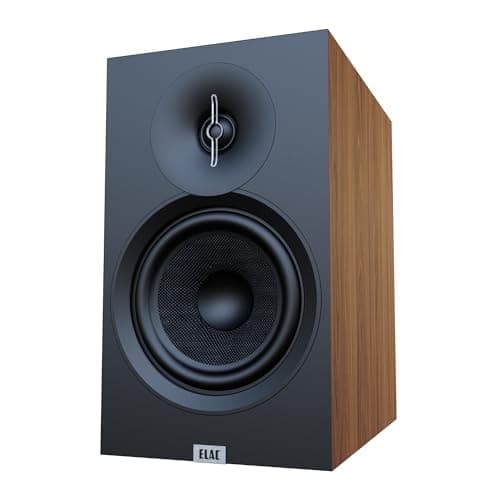 ELAC Debut 3.0 DB63 The Debut 3.0 generation of the same 6.5-inch design, and the first ELAC bookshelf we cover that publishes both a response tolerance and a recommended amplifier range — so the match can be finished rather than estimated. | Best overall under $500 | 8.5 | $399.00View on Amazon $499.0020% off |
| 2 | 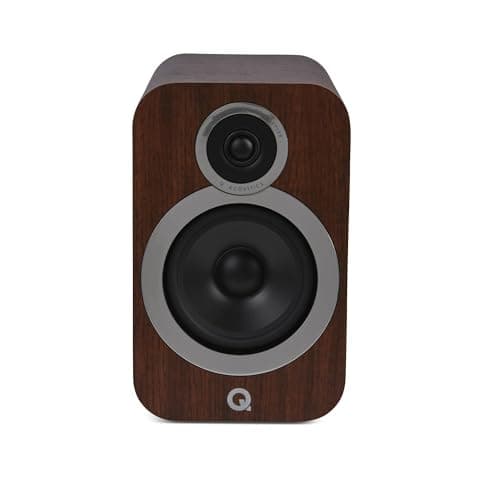 Q Acoustics 3030i The only speaker in this bracket that publishes both a minimum impedance and a recommended amplifier range, on top of a cabinet that is its whole design argument. | Best cabinet | 8.2 | |
| 3 | 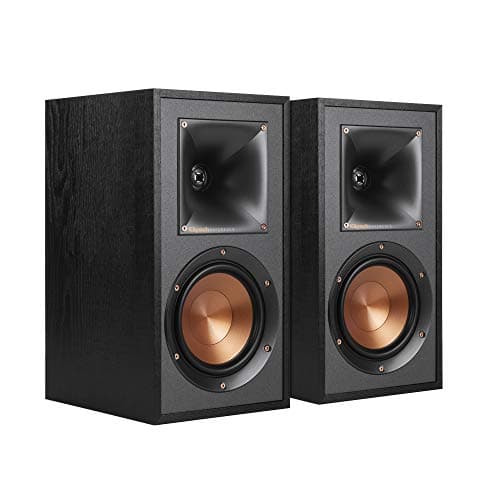 Klipsch R-51M High sensitivity means a modest amplifier drives these to a real volume — the practical answer when the amp is fixed and small. | Best for low-power amplifiers | 8.4 | |
| 4 | 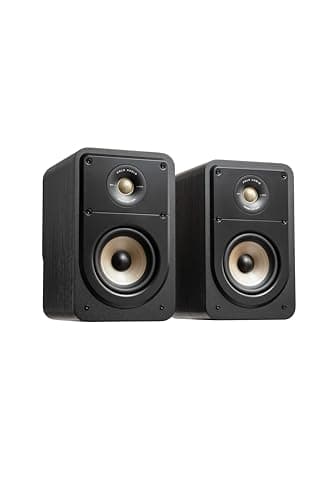 Polk Signature Elite ES15 Voiced and certified to sit in a surround system as easily as a stereo pair, which matters if this room has to do both jobs. | Best for double duty with home theater | 7.0 | |
| 5 | 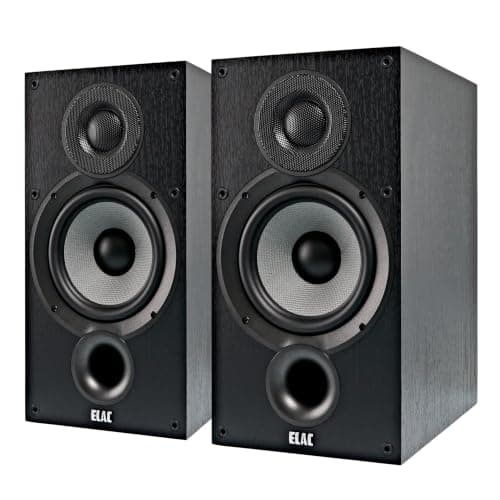 ELAC Debut 2.0 B6.2 A 6.5-inch woofer in a ported cabinet that reaches genuinely low for its size, at the cost of needing an amplifier with real current behind it — and now the outgoing Debut generation rather than the current one. | The outgoing generation, still sold | 8.2 | $329.00View on Amazon $479.0031% off |
| 6 | 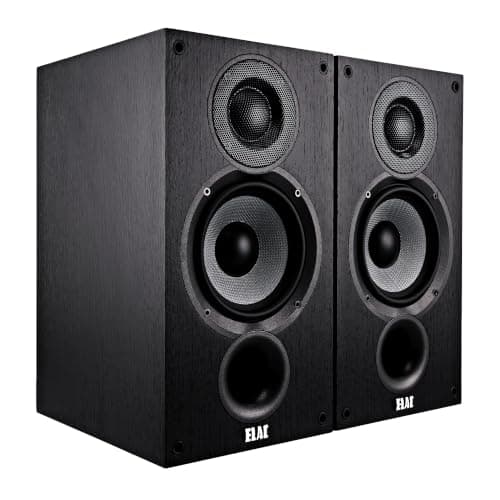 ELAC Debut 2.0 B5.2 The B6.2's smaller sibling — less bass extension in exchange for a cabinet that actually fits on a real bookshelf. | Best for small rooms | 7.0 | $269.00View on Amazon $379.0029% off |
This is the bracket where speakers get genuinely good and the specifications get genuinely inconsistent. Every pair here is a competent design. What separates them, for our purposes, is how much of the truth their maker is willing to print.
What each maker will and will not tell you
We went to every manufacturer’s own page for these. Here is what came back:
- Q Acoustics publishes sensitivity with its condition (88 dB at 2.83 V / 1 m), nominal impedance (6 Ω), minimum impedance (4 Ω), frequency response with a real tolerance (46 Hz–30 kHz, +3/−6 dB), and a recommended amplifier range (25–75 W). That is everything you need.
- ELAC, on the Debut 2.0 generation (the B6.2 and B5.2) publishes sensitivity with its condition and impedance, but no minimum impedance, and a frequency response with no tolerance at all— “44 to 35,000 Hz”. A frequency response without a tolerance is not a specification; it is a range of frequencies at which the speaker does something unspecified.
- ELAC, on the Debut 3.0 generation (the DB63) fixes exactly that. It publishes 50 Hz–34 kHz at −3 dB and 42 Hz–38 kHz at −6 dB, and a recommended amplifier range of 20–140 W. Still no minimum impedance. But those are the two specs the previous generation was missing, and they are why the DB63 is first here.
- Klipschpublishes a real tolerance (62 Hz–21 kHz ±3 dB) but describes impedance only as “8 ohms compatible”, and — like ELAC — publishes power handling (85 W/340 W) rather than a recommended amplifier range. Those are different specs, and handling limits tell you what will break it, not what will drive it.
- Polkpublishes a bare “88dB” with no measurement condition, and no nominal impedance at all. They do publish a recommended amplification range (20–100 W), which is more than ELAC or Klipsch manage.
None of this is dishonest. It is just uneven, and the unevenness is invisible until you try to compare them — which is the entire reason this site exists.
Why the Q Acoustics 3030i ranks so high here
It is not because we heard it. It is because it is the only speaker in the bracket whose spec sheet lets you finish the calculation. A 4 Ω minimum and a 25–75 W recommendation tell you precisely which amplifiers will and will not work. Every other speaker here leaves you estimating.
That 4 Ω minimum is also a warning, and Q Acoustics deserves credit for printing it: despite a friendly 88 dB sensitivity, this speaker asks real current of an amplifier. The ones that do not publish a minimum may well dip just as low — you simply have no way to know.
Why the first pick changed generation
The ELAC Debut 2.0 B6.2 held this slot from the day the page went up. ELAC has since shipped the Debut 3.0 DB63 as the 6.5-inch bookshelf in the same line, and the B6.2 is still sold alongside it. Both are ELAC’s own current catalogue; neither page carries a discontinued notice. So the question is not which one is newer, it is which one you can check a match against.
On that test it is not close. The two speakers publish the same 87 dB at 2.83 V / 1 m and the same 6 ohms nominal — so every power calculation on this site applies to either one unchanged — and then the DB63 publishes a dB tolerance and a recommended amplifier range where the B6.2 publishes neither. That is the whole upgrade, as far as this page is concerned. The drivers changed too (an aluminum dome in place of the cloth one, the crossover moved from 2,200 Hz to 2,000 Hz), and we have not heard either, so we are not going to tell you what that did.
The tolerance also costs ELAC something, and it is worth seeing. The B6.2’s bare “44 Hz” looks lower than the DB63’s “50 Hz” — until you notice that the 50 Hz is a −3 dB figure from ELAC’s owner’s manual and the 44 Hz is at no stated level at all. The DB63’s own headline is 42 Hz, which is its −6 dB point. One speaker gives you two honest numbers and tells you which is which; the other gives you one number and tells you nothing.
The B5.2 pricing oddity
When we first published this page, the smaller ELAC B5.2 cost more than the larger B6.2. By 15 September 2026 that had reversed. Neither was an error on our part: it is live pricing, and it is exactly why every price on this site comes from an API rather than a copywriter’s memory. The B6.2 reaches 44 Hz against the B5.2’s 46 Hz and is a decibel more sensitive. Unless you physically cannot fit the larger cabinet, check both live prices before choosing — the order can flip again.
How to choose
Start from your amplifier, not the speaker. Work out what it publishes into the impedance you are about to hand it, then use the power arithmetic to see how loud the pairing actually goes at your listening distance. If the answer is comfortably above the level you listen at, buy the speaker with the best bass extension you can fit — that is an ELAC, and between the two generations take the DB63, because it is the one whose figure comes with a tolerance attached. If it is marginal, buy sensitivity — that is the Klipsch.
If this bracket is above your budget, the under-$300 roundup covers five passive pairs and the ten-decibel sensitivity spread between them. If it is below, the under-$1,000 roundupexplains what the extra money buys — and the measurement footnote that makes one maker’s headline sensitivity figure non-comparable. And if any of the impedance discussion above was unfamiliar, start here.
Every pick in detail
Every specification below links to the manufacturer document we read it from. Where a manufacturer does not publish a figure, we say so rather than estimating it.
ELAC Debut 3.0 DB63
Best overall under $500The Debut 3.0 generation of the same 6.5-inch design, and the first ELAC bookshelf we cover that publishes both a response tolerance and a recommended amplifier range — so the match can be finished rather than estimated.
- published data
- 9/10
- sensitivity
- 6/10
- bass extension
- 8/10
- amp friendliness
- 6/10
- value for money
- 8/10
| Specification | Published value | Source |
|---|---|---|
| Design | 2-way, bass reflex, dual flared front port | ELAC spec page |
| Sensitivity | 87 dB (2.83 V / 1 m) | ELAC spec page |
| Impedance | 6 Ω (product page and owner's manual agree, which they do not for the DF-series towers) | ELAC owner's manual (PDF) |
| Minimum impedance | Not published | — |
| Frequency response (−3 dB) | 50 Hz – 34 kHz — published in the owner's manual only, 8 Hz above the headline figure | ELAC owner's manual (PDF) |
| Frequency response (−6 dB) | 42 Hz – 38 kHz (the figure ELAC's product page leads with) | ELAC spec page |
| Recommended amplifier power | 20 – 140 W | ELAC spec page |
| Power handling | Product page: 120 W peak. Owner's manual: 60 W nominal / 80 W peak. Two ELAC documents, two answers — plan to the lower pair. | ELAC owner's manual (PDF) |
| Woofer | 6.5 in aramid-fiber cone | ELAC spec page |
| Tweeter | 1 in aluminum dome (the B6.2's was cloth) | ELAC spec page |
| Crossover | 2,000 Hz | ELAC spec page |
| Enclosure | CARB2-rated 16 mm MDF, 5-way metal binding posts | ELAC spec page |
| Dimensions (H × W × D) | 13.3 × 7.7 × 11.7 in (339 × 195 × 298 mm) | ELAC spec page |
| Weight (each) | 17.3 lb / 7.85 kg | ELAC spec page |
Pros
- ELAC publishes a tolerance for this generation: 50 Hz – 34 kHz at −3 dB in the owner's manual, beside the 42 Hz – 38 kHz the product page leads with at −6 dB
- A published recommended amplifier range, 20 – 140 W — the Debut 2.0 generation published only a handling limit, which is a different spec
- Same 87 dB at 2.83 V / 1 m and same 6 Ω as the B6.2, and both ELAC documents agree on the impedance, so every power calculation on this site carries over unchanged
- Front-firing dual flared port, so it tolerates being near a wall better than a rear-ported box
Cons
- The 42 Hz headline is a −6 dB figure. At −3 dB ELAC's own manual says 50 Hz, and only the manual says it
- Still no minimum impedance published, so you cannot see where the load actually dips
- ELAC's two documents disagree on power handling: 120 W peak on the product page, 60 W nominal / 80 W peak in the manual
- Bigger and heavier than the B6.2 it follows — 17.3 lb and 13.3 in tall, which is a lot of 'bookshelf'
Skip it if your amplifier is a low-power desktop unit. At 87 dB into 6 Ω this asks for the same real current the B6.2 did — run the power arithmetic on our amp-matching guide first.
Q Acoustics 3030i
Best cabinetNo live price right now. #ad
The only speaker in this bracket that publishes both a minimum impedance and a recommended amplifier range, on top of a cabinet that is its whole design argument.
- sensitivity
- 8/10
- bass extension
- 8/10
- amp friendliness
- 7/10
- value for money
- 8/10
- build quality
- 10/10
| Specification | Published value | Source |
|---|---|---|
| Sensitivity | 88 dB (2.83 V / 1 m) | Q Acoustics spec page |
| Impedance (nominal) | 6 Ω | Q Acoustics spec page |
| Minimum impedance | 4 Ω | Q Acoustics spec page |
| Frequency response | 46 Hz – 30 kHz (+3 dB / −6 dB) | Q Acoustics spec page |
| Recommended amplifier power | 25–75 W (stereo amplifier); 50–145 W (AV receiver, 2 ch driven) | Q Acoustics spec page |
| Bass unit | 165 mm (6.5 in) | Q Acoustics spec page |
| Treble unit | 22 mm (0.9 in) decoupled | Q Acoustics spec page |
| Crossover | 2.4 kHz | Q Acoustics spec page |
| Dimensions (H × W × D) | 325 × 200 × 329 mm (12.8 × 7.9 × 13.0 in), including grille and terminals | Q Acoustics spec page |
| Weight (each) | 6.4 kg / 14.1 lb | Q Acoustics spec page |
Pros
- Publishes a minimum impedance (4 Ω) and a recommended amplifier range (25–75 W) — almost nobody else at this price does
- 88 dB sensitivity, the highest here outside the horn-loaded Klipsch
- Unusually inert cabinet for the price, with P2P bracing
- A published 46 Hz low end, which is real extension rather than a bigger box
Cons
- Dips to 4 Ω, so a weak amplifier will struggle despite the friendly sensitivity figure
- Large and deep for a bookshelf at 325 × 200 × 329 mm and 6.4 kg each — this wants a stand
- Reflex port, so it needs clearance behind it
Skip it if your amplifier is rated only into 8 Ω and says nothing about 4 Ω. This speaker's published 4 Ω minimum is exactly the case that exposes it.
Klipsch R-51M
Best for low-power amplifiersPrice as of October 15, 2026. #ad
High sensitivity means a modest amplifier drives these to a real volume — the practical answer when the amp is fixed and small.
- sensitivity
- 10/10
- bass extension
- 6/10
- amp friendliness
- 10/10
- value for money
- 9/10
- build quality
- 7/10
| Specification | Published value | Source |
|---|---|---|
| Sensitivity | 93 dB (2.83 V / 1 m) | Klipsch spec sheet (PDF) |
| Impedance | 8 Ω “compatible” (Klipsch's wording — not a measured nominal figure) | Klipsch spec sheet (PDF) |
| Minimum impedance | Not published | — |
| Frequency response | 62 Hz – 21 kHz ± 3 dB | Klipsch spec sheet (PDF) |
| Power handling | 85 W continuous / 340 W peak (a handling limit, not a recommended amplifier range) | Klipsch spec sheet (PDF) |
| Woofer | 5.25 in spun-copper IMG | Klipsch spec sheet (PDF) |
| Tweeter | 1 in aluminum LTS on a 90° × 90° Tractrix horn | Klipsch spec sheet (PDF) |
| Crossover | 1,660 Hz | Klipsch spec sheet (PDF) |
| Weight (each) | 11 lb / 5 kg | Klipsch spec sheet (PDF) |
Pros
- High sensitivity — plays loud on very little power
- The right answer for a low-wattage or tube amplifier
- Horn tweeter gives strong dispersion control
Cons
- Horn presentation is divisive and we cannot tell you how it sounds — we have not heard them
- Rear port needs breathing room from the wall
- Less low-end than the ELAC B6.2
- Previous generation — Klipsch's own page for it now points buyers to the newer Reference R-50M
Skip it if your amp already has power to spare — you are paying for sensitivity you do not need.
Polk Signature Elite ES15
Best for double duty with home theaterPrice as of October 15, 2026. #ad
Voiced and certified to sit in a surround system as easily as a stereo pair, which matters if this room has to do both jobs.
- sensitivity
- 7/10
- bass extension
- 7/10
- amp friendliness
- 7/10
- value for money
- 7/10
- build quality
- 7/10
| Specification | Published value | Source |
|---|---|---|
| Sensitivity | 88 dB — Polk publishes NO measurement condition (no 2.83 V/1 m or 1 W/1 m qualifier), so this figure is not directly comparable to the others in this table | Polk info sheet (PDF) |
| Impedance | “Compatible with 4- and 8-ohm outputs” — Polk publishes no nominal impedance value | Polk info sheet (PDF) |
| Minimum impedance | Not published | — |
| Frequency response | 48 Hz – 40 kHz (no tolerance published) | Polk info sheet (PDF) |
| Recommended amplification | 20–100 W per channel | Polk info sheet (PDF) |
| Woofer | 5.25 in mica-fortified polypropylene | Polk info sheet (PDF) |
| Tweeter | 1 in Terylene dome | Polk info sheet (PDF) |
| Crossover | 2.5 kHz | Polk info sheet (PDF) |
| Weight (each) | 13 lb / 5.9 kg | Polk info sheet (PDF) |
Pros
- Designed to integrate with a matching surround range
- Hi-Res certified
- Keyhole mount for wall use
Cons
- Less distinctive than the ELAC or Klipsch at the price
- Rear port
- Not the best pure-stereo value here
Skip it if this is a stereo-only system — the ELAC B6.2 gives more for the money.
ELAC Debut 2.0 B6.2
The outgoing generation, still soldA 6.5-inch woofer in a ported cabinet that reaches genuinely low for its size, at the cost of needing an amplifier with real current behind it — and now the outgoing Debut generation rather than the current one.
- sensitivity
- 6/10
- bass extension
- 9/10
- amp friendliness
- 6/10
- value for money
- 10/10
- build quality
- 8/10
| Specification | Published value | Source |
|---|---|---|
| Sensitivity | 87 dB (2.83 V / 1 m) | ELAC spec page |
| Impedance | 6 Ω | ELAC spec page |
| Minimum impedance | Not published | — |
| Frequency response | 44 Hz – 35 kHz (no tolerance published) | ELAC spec page |
| Maximum power input | 120 W (a handling limit — ELAC publishes no recommended amplifier range) | ELAC spec page |
| Woofer | 6.5 in woven aramid-fiber cone | ELAC spec page |
| Tweeter | 1 in cloth dome | ELAC spec page |
| Crossover | 2,200 Hz | ELAC spec page |
| Weight (each) | 16.3 lb / 7.4 kg | ELAC spec page |
Pros
- 6.5in woofer reaches genuinely low for a bookshelf
- Front port, so it tolerates being near a wall better than a rear-ported box
- Well-braced cabinet for the price
Cons
- Wants more amplifier than its size suggests — check the arithmetic before pairing
- Large for a 'bookshelf' speaker
- Finish is functional rather than furniture
- The outgoing generation — ELAC's Debut 3.0 DB63 now builds on it, though ELAC publishes the same 87 dB and 6 Ω for both, so our sensitivity arithmetic holds for either
- ELAC publishes no response tolerance and no recommended amplifier range for this generation. The DB63 publishes both, which is the real reason it ranks ahead
Skip it if your amplifier is a low-power desktop unit. Run the power arithmetic on our amp-matching guide first.
ELAC Debut 2.0 B5.2
Best for small roomsThe B6.2's smaller sibling — less bass extension in exchange for a cabinet that actually fits on a real bookshelf.
- sensitivity
- 6/10
- bass extension
- 6/10
- amp friendliness
- 6/10
- value for money
- 7/10
- build quality
- 8/10
| Specification | Published value | Source |
|---|---|---|
| Sensitivity | 86 dB (2.83 V / 1 m) | ELAC spec page |
| Impedance | 6 Ω | ELAC spec page |
| Minimum impedance | Not published | — |
| Frequency response | 46 Hz – 35 kHz (no tolerance published) | ELAC spec page |
| Maximum power input | 120 W (a handling limit, not a recommended amplifier range) | ELAC spec page |
| Woofer | 5.25 in woven aramid-fiber cone | ELAC spec page |
| Tweeter | 1 in cloth dome | ELAC spec page |
| Crossover | 2,200 Hz | ELAC spec page |
| Weight (each) | 13.0 lb / 5.9 kg | ELAC spec page |
Pros
- Genuinely shelf-sized
- Same driver and cabinet design language as the B6.2
- Easier to place
Cons
- Less low-end extension than the B6.2
- Still not an easy load
- The outgoing generation — ELAC's Debut 3.0 DB53 now builds on it
Skip it if you have the space for the B6.2. It reaches lower and is a decibel more sensitive, so compare the two live prices before choosing — which one costs less has already flipped once.
Frequently asked questions
What is the best bookshelf speaker under $500?
On our published criteria, the ELAC Debut 3.0 DB63: 87 dB at 2.83 V/1 m into 6 Ω, 50 Hz at −3 dB and 42 Hz at −6 dB, and a published 20–140 W amplifier range. On the one tolerance the makers here share, −6 dB, that 42 Hz is lower than the Q Acoustics 3030i’s 46 Hz, and unlike the older B6.2 it comes with the amplifier range you need to plan the match. If your amplifier is small, the Klipsch R-51M’s 93 dB makes it the more practical answer. If you want the fullest spec sheet in the bracket, the Q Acoustics 3030i is the only one that publishes a minimum impedance as well.
Why does ELAC not publish a frequency response tolerance?
On the Debut 2.0 generation it does not, and we do not know why — we are reporting the gap, not explaining it. ELAC publishes “44 to 35,000 Hz” for the B6.2 with no ±dB figure. On the Debut 3.0 generation it does: the DB63 is published at 42 Hz−38 kHz at −6 dB on the product page and 50 Hz−34 kHz at −3 dB in the owner’s manual. Klipsch and Q Acoustics both publish tolerances too (±3 dB and +3/−6 dB respectively). Without a tolerance, a frequency response number tells you very little, because it does not say how far down the response has fallen at the endpoints.
Is power handling the same as recommended amplifier power?
No, and the difference matters. Power handling — the B6.2’s “120 W maximum power input”, Klipsch’s “85 W continuous/340 W peak” — tells you what will damage the speaker. A recommended amplifier range, like Q Acoustics’ 25–75 W, Polk’s 20–100 W or the DB63’s 20–140 W, tells you what will drive it well. A speaker rated to handle 120 W does not need a 120 W amplifier. Three of the six here publish a range; the Debut 2.0 pair and the Klipsch publish only a limit.
Read next
Will This Amplifier Drive My Speakers?
Two published numbers, one formula, and the answer is almost always less power than you expected.
The Best Bookshelf Speakers for Vinyl
Bookshelf speakers for a turntable, ranked on published sensitivity and impedance — with the amp arithmetic shown.
The Best Integrated Amplifiers Under $1,000
Six amps under $1,000, and the dynamic-power trap that overstates the popular pick by roughly 2x.
The Best Speakers for a Turntable
Which speakers need an amplifier, which need a phono stage, and the one that needs neither.
The Best Bookshelf Speakers Under $300
Five passive pairs at the $300 mark, and a ten-decibel sensitivity spread that decides which amplifier each one needs.
The Best Bookshelf Speakers Under $1,000
Five pairs under $1,000, and the measurement footnote that makes the headline sensitivity figures non-comparable.
Speaker Sensitivity Explained
2.83 V/1 m versus 1 W/1 m, what the conversion is worth in decibels, and the twelve-decibel spread that means sixteen times the power.
Ported vs Sealed Speakers
What a port buys in efficiency and extension, what it costs in placement and roll-off, and how the sealed and ported subwoofers we cover actually compare.
Sources
Every specification on this page was read from one of these documents. If one of them has changed, or we have made an error, tell us — corrections are logged and dated per our editorial policy.