Crosley Alternatives
Crosley sells the cheapest way to put a needle on a record, in one box, with speakers in the lid. Here is what each of those things is worth separately — and which decks publish a figure where Crosley publishes a feature.
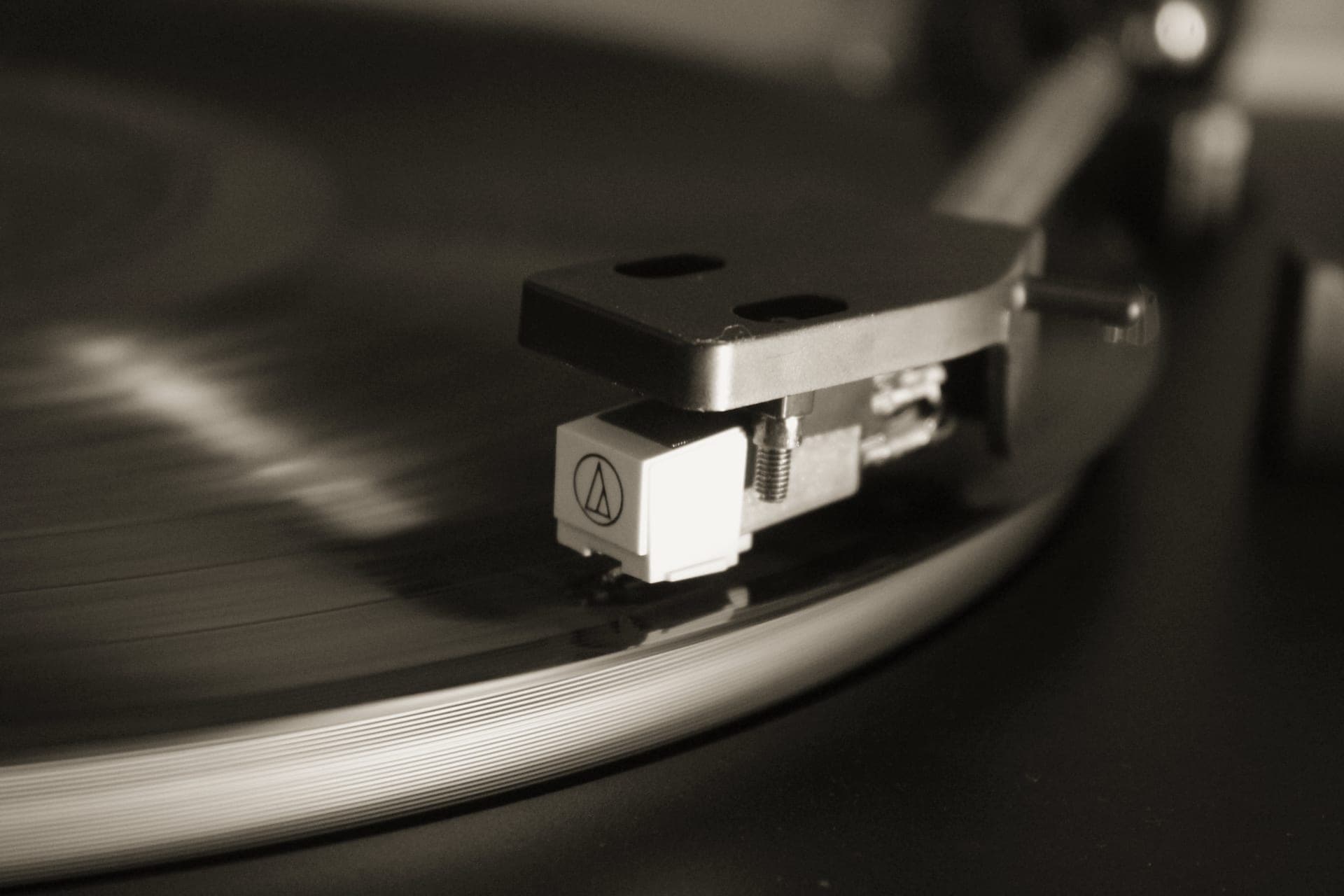
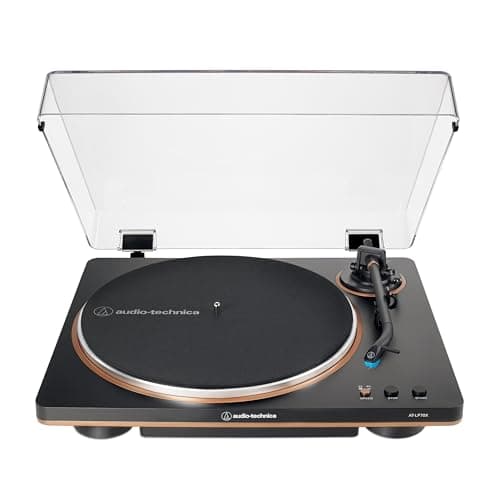
Top pick: Audio-Technica AT-LP70X
Best for beginners. #ad Affiliate link — we earn a commission at no extra cost to you.
The short answer
The best Crosley alternative is the Audio-Technica AT-LP70X — because it keeps the one thing that makes an all-in-one worth owning, a fully automatic transport you start and forget, and adds published figures: wow and flutter under 0.25% weighted, a signal-to-noise ratio above 55 dB, a switchable phono stage with 36 dB of nominal gain, and a named AT-VM95C cartridge whose stylus upgrades across Audio-Technica’s entire VM95 range. It is also the budget pick: the cheapest deck on this page, which is unusual for a top pick and the reason it is both.
Be clear about what changes, though, because it is the whole trade. Crosley’s Cruiser Plus has speakers built into the case. Not one deck on this page does. Every alternative here needs something to play through — powered speakers, an amplifier, or a Bluetooth speaker you already own — and that cost is real and has to go in the column. If a single box with no other equipment is the requirement, the honest answer is that Crosley still owns that category and this page is not for you.
Disclosure: we earn a commission if you buy through the links on this page, at no extra cost to you. It does not influence what we pick — our criteria are published and reproducible, so you can check our work. How we pick · Full disclosure
These picks are spec-and-price analyses, not listening tests. We have not heard this gear and we do not pretend to have: every figure below is sourced to the manufacturer and linked, and every price is live or not shown at all. Here are the rules we followed.
Quick picks
Ranked on the published criteria in How We Pick. Prices are live as of November 12, 2026. Tap any row for the full write-up.
- 8.0
- 7.8
- 6.4
- 8.6$349.00View on Amazon
$449.0022% off
- 6.6
| # | Product | Best for | Score | Price |
|---|---|---|---|---|
| 1 | Audio-Technica AT-LP70X Fully automatic, so the arm lifts and returns on its own — the single feature that most reduces the chance of a new owner damaging a stylus or a record. | Best for beginners | 8.0 | |
| 2 | 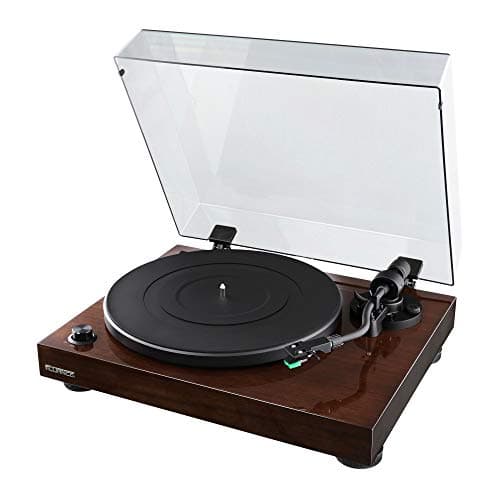 Fluance RT81 The RT82's cheaper sibling: an AT-95E-class cartridge and a built-in phono preamp, which makes it the lower total cost of the two once you count what you still have to buy. | Best value with a phono stage built in | 7.8 | |
| 3 | 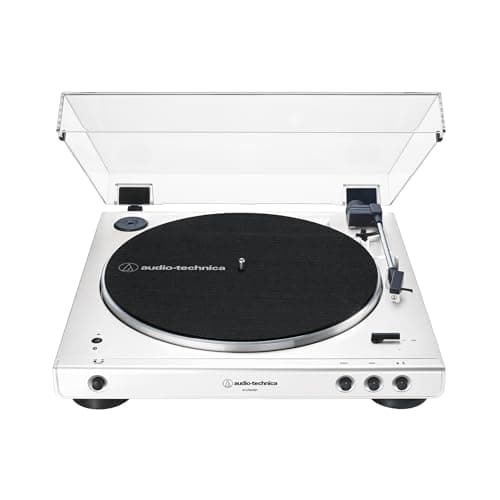 Audio-Technica AT-LP60XBT Fully automatic with Bluetooth out, which trades away the upgrade path entirely in exchange for working with a wireless speaker and nothing else. | Simplest possible start | 6.4 | |
| 4 | 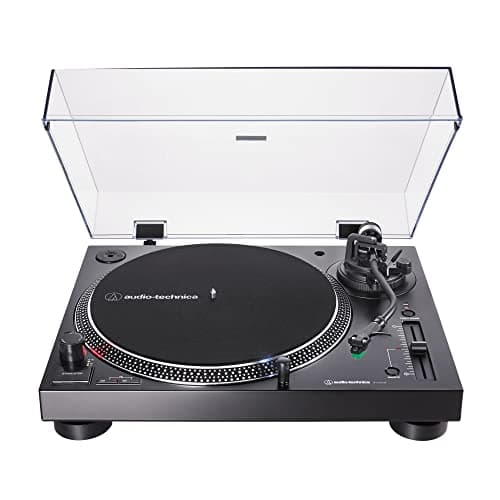 Audio-Technica AT-LP120XUSB A direct-drive deck with a switchable phono stage and USB out, which means it works with any amplifier you already own and needs nothing else on day one. | Best overall under $500 | 8.6 | $349.00View on Amazon $449.0022% off |
| 5 | 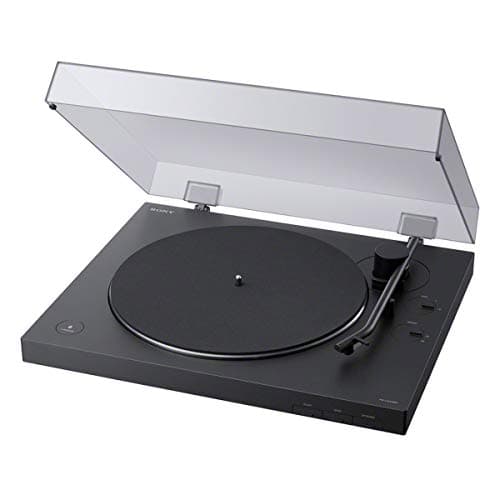 Sony PS-LX310BT Fully automatic, Bluetooth, a built-in phono stage and USB out — the most connection options in the bracket, on the lightest build in it. | Fully automatic with Bluetooth | 6.6 |
Crosley is the most widely sold name in record players, and the reason is a good one: the Cruiser Plus does something nothing else on this page does. Crosley publishes a three-speed belt-drive transport at 33⅓, 45 and 78 rpm, dynamic full-range stereo speakers in the case with an aux input, Bluetooth in andout — so it can play your phone through its speakers or send a record out to a wireless one — an RCA output for a stereo system, a headphone jack, adjustable pitch, a cueing lever, auto-stop, a carry handle, and a one-year limited warranty. It costs less than anything we rank. That is a coherent product and it is not a trick.
What Crosley does not publish is the other half of the picture, and it is the reason this page exists. On its own Cruiser Plus page the Specifications section contains the dimensions and nothing else. There is no wow-and-flutter figure, no signal-to-noise ratio, no tracking force, and no cartridge model — the page links to replacement needles rather than naming the one fitted. The same is true at the top of the range: the C100bt gets an aluminum S-shaped tonearm, a pre-mounted moving-magnet Audio-Technica cartridge Crosley calls the ATN95E on a standard half-inch mount, a removable headshell, an adjustable counterweight and anti-skate, a switchable preamp, an aluminum platter with a strobe, and resonance-dampening feet — and still no wow and flutter, no signal-to-noise ratio and no tracking-force value.
That is a fact about Crosley’s documentation, not a measurement of its turntables. We cannot tell you how a Cruiser Plus performs, because nobody who makes it has said. What we can do is rank the decks that do say, and tell you what each one gives up to get there.
The picks compared, spec by spec
Four columns, and the first two are the ones Crosley does not fill in for either of its decks. The bottom row is empty across all four columns on purpose — see the section on the Sony below for why we publish nothing for it rather than borrowing figures from a retailer. Every row carries its own live price and buy link.
Every figure below is the manufacturer’s own published value and links to the document we read it from. “Not published” means the manufacturer does not publish that figure; an em dash means we have no published figure for that model. Prices are live as of November 12, 2026.
Best for beginners
- Wow and flutter
- < 0.25% (WTD)
- Signal-to-noise
- > 55 dB
- Cartridge fitted
- AT-VM95C — body not removable
- Built-in phono stage
- Yes — PHONO/LINE, 36 dB
Best value with a phono stage built in
- Wow and flutter
- 0.2%
- Signal-to-noise
- ≥ 67 dB A-wtd · ≥ 60 dB unwtd
- Cartridge fitted
- Audio-Technica AT95E
- Built-in phono stage
- Yes — with a true bypass
Simplest possible start
- Wow and flutter
- < 0.25% (WTD) at 3 kHz
- Signal-to-noise
- > 50 dB (DIN-B)
- Cartridge fitted
- AT3600L (VM type)
- Built-in phono stage
- Yes — PHONO/LINE, 36 dB
Best overall under $500
- Wow and flutter
- < 0.2% WRMS at 3 kHz
- Signal-to-noise
- > 50 dB
- Cartridge fitted
- AT-VM95E on an AT-HS6 headshell
- Built-in phono stage
- Yes — PHONO/LINE, 36 dB, RIAA
Fully automatic with Bluetooth
- Wow and flutter
- —
- Signal-to-noise
- —
- Cartridge fitted
- —
- Built-in phono stage
- —
| Pick | Wow and flutter | Signal-to-noise | Cartridge fitted | Built-in phono stage | Price |
|---|---|---|---|---|---|
| 1.Audio-Technica AT-LP70XBest for beginners | < 0.25% (WTD) | > 55 dB | AT-VM95C — body not removable | Yes — PHONO/LINE, 36 dB | |
| 2.Fluance RT81Best value with a phono stage built in | 0.2% | ≥ 67 dB A-wtd · ≥ 60 dB unwtd | Audio-Technica AT95E | Yes — with a true bypass | |
| 3.Audio-Technica AT-LP60XBTSimplest possible start | < 0.25% (WTD) at 3 kHz | > 50 dB (DIN-B) | AT3600L (VM type) | Yes — PHONO/LINE, 36 dB | |
| 4.Audio-Technica AT-LP120XUSBBest overall under $500 | < 0.2% WRMS at 3 kHz | > 50 dB | AT-VM95E on an AT-HS6 headshell | Yes — PHONO/LINE, 36 dB, RIAA | |
| 5.Sony PS-LX310BTFully automatic with Bluetooth | — | — | — | — |
Prices as of November 12, 2026; every “Check Price” link goes to Amazon and earns us a commission at no extra cost to you. #ad
What a Crosley actually gives you, in three parts
Shopping for an alternative goes badly when all three of these get treated as one purchase, so take them apart.
Part one: it plays with nothing else in the room.This is the big one and no deck on this page replaces it. The nearest equivalents in our registry are a pair of powered speakers — which means two boxes instead of one, and a real step up in both cost and sound. Our powered-speaker bracket is the page for that, and our wiring guide covers the three ways the connection can go. If the budget cannot stretch to speakers as well as a deck, buying a cheaper deck and better speakers beats the reverse almost every time.
Part two: Bluetooth, in both directions. Crosley publishes Bluetooth in and out on the Cruiser Plus. Two decks here send audio out over Bluetooth — the AT-LP60XBT and the Sony PS-LX310BT — so a record can play through a wireless speaker exactly as it would from a Crosley. Neither receives Bluetooth, so neither will play your phone through anything. If that matters, it is a point for Crosley, and we are not going to pretend otherwise.
Part three: 78 rpm.Crosley publishes three speeds on the Cruiser Plus, including 78. Exactly one deck on this page does: the AT-LP120XUSB, at 33⅓, 45 and 78. The AT-LP70X publishes 33⅓ and 45 only. If there are shellac records in the house, that single row narrows the page to one answer — and a proper 78 also wants a different stylus profile, which is a separate purchase on any deck.
The AT-LP70X is the closest thing to a straight swap
It is first because it keeps the behavior rather than the form factor. Fully automatic, driven by a DC motor through a belt — and belt drive, not direct, which an early draft of this site got wrong and which matters because it is the same transport principle Crosley uses on both of the models above. You put the record on and press a button; the arm goes out, plays, returns and stops.
The difference is everything written down. Audio-Technica publishes wow and flutter under 0.25% weighted, a signal-to-noise ratio above 55 dB, a switchable phono stage at 36 dB nominal gain so it connects to a powered speaker’s line input or a proper phono stage either way, and a named cartridge: the AT-VM95C dual moving-magnet.
Two honest limits. The cartridge body is NOT removable — the stylus upgrades across the whole VM95 range, which is a genuinely useful path, but the body itself does not come off, so you can never fit a different maker’s cartridge. Audio-Technica also publishes no tonearm effective mass and no tracking-force range for this deck, which means the resonance arithmetic cannot be done on it. That is the same kind of gap we criticize Crosley for and it is only fair to say so.
The Fluance RT81 publishes the best numbers here
Second, and it would be first on a page about measured performance. Fluance publishes 0.2% wow and flutter and a signal-to-noise ratio of 67 dB or higher A-weighted — 60 dB or higher unweighted, and publishing both is itself unusual. That A-weighted figure is the best on this page by a clear margin, and the honest comparison needs the weighting stated because an A-weighted number always reads better than an unweighted one from the same machine.
Δ = SNR(best) − SNR(worst), comparing like-for-like weightings where published
Inputs
- Fluance RT81, unweighted: ≥ 60 dB (Fluance spec page)
- Audio-Technica AT-LP60XBT: > 50 dB (DIN-B) (Audio-Technica manual (PDF))
Result
The RT81 also carries the Audio-Technica AT95E, which is interesting on this particular page: it is the same cartridge family Crosley fits to its own C100bt, the one Crosley’s page calls the ATN95E on a standard half-inch mount. So anyone choosing between an RT81 and a C100bt is comparing two belt-drive decks with closely related cartridges, where one publishes its wow and flutter and its noise floor and the other publishes neither.
Its phono stage is the best-specified switch here too: PHONO and LINE with a true bypass that takes the electronics out of circuit when you use an external stage, rather than merely routing around them. The trade is operation — the RT81 is manual, so the arm does not return on its own. For someone moving off an automatic Crosley that is the single biggest adjustment on this page. One caution on Fluance’s own sheet: the tonearm effective mass is published as 0.99 oz (28.2 g), which is high enough for an effective-mass figure that it may actually be total arm mass. We publish Fluance’s number and the doubt together.
The AT-LP60XBT if Bluetooth out is the feature you would miss
Third. Fully automatic with a DC servo-controlled motor, and it transmits over Bluetooth — which is the specific Crosley behavior people are usually reluctant to give up, because it means the deck works with a wireless speaker already in the house and needs nothing else bought.
It is ranked below the AT-LP70X because of what Audio-Technica publishes rather than what it does: a signal-to-noise ratio above 50 dB (DIN-B) against the LP70X’s above 55 dB, the same wow-and-flutter figure of under 0.25%, and an AT3600L cartridge rather than a VM95-series one — so the stylus replaces with an ATN3600L but there is no upgrade ladder behind it. There is no USB output either. As the simplest possible start it is still an easy recommendation, and our beginner roundup ranks it against the rest of the entry field on exactly that basis.
The AT-LP120XUSB if you have 78s, or want records on a computer
Fourth, and it is the one deck on this page that matches Crosley’s three speeds: 33⅓, 45 and 78 rpm. Direct drive from a DC servo motor, wow and flutter under 0.2% WRMS at 3 kHz, signal-to-noise above 50 dB, and an AT-VM95E on a removable AT-HS6 headshell — so unlike the LP70X, the whole cartridge can be changed for anything with a standard mount.
It is also the only deck here that publishes a tracking-force specification, which is the figure most people are really asking about when they go looking for a Crosley alternative. The arm adjusts from 0 to 4 g and the supplied AT-VM95E tracks between 1.8 and 2.2 g, with 2.0 g standard. That is a number you can set a counterweight to and verify with a scale. Crosley publishes no tracking-force value for either the Cruiser Plus or the C100bt — the C100bt page says its counterweight “ensures proper needle pressure” without giving a figure — so on a Crosley there is nothing published to set it against.
The USB output is 16-bit at 44.1 or 48 kHz over USB 1.1, which is a modest specification and perfectly adequate for the job most people want it for. Our digitizing guide goes through the workflow, and the USB phono preamp roundup is the better route if the deck is already chosen. Audio-Technica publishes no tonearm effective mass for this model either.
Why the Sony PS-LX310BT is last, and what that says
It is fifth because we publish no specifications for it, and we publish none because we could not read them from Sony.
On 17 July 2026 every Sony-controlled source for this deck — sony.com, electronics.sony.com, the UK, Australian and Middle East regional sites, and the official operating-instructions PDF — returned HTTP 403 to both an automated fetch and a browser user-agent. Retailer listings carry figures for it. We do not use retailer spec fields as a source, because they are frequently wrong and nobody stands behind them. So the deck stays in the registry, with no numbers, ranked last.
It is on the page at all because its feature set is the right shape for this comparison: fully automatic, with Bluetooth. If you want those two things and the AT-LP60XBT is unavailable, it is a reasonable deck from a serious maker. We just cannot tell you anything about it that we can source, and on a page whose entire argument is about published figures, that has to cost it the ranking.
If you are weighing a Crosley C100bt specifically
Worth separating out, because the C100bt is a different proposition from the suitcase and it deserves to be judged as one. Crosley publishes a two-speed belt-drive transport at 33⅓ and 45, an aluminum S-shaped tonearm with a cueing lever, a removable headshell, an adjustable counterweight and anti-skate, a pre-mounted moving-magnet Audio-Technica cartridge on a standard half-inch mount, a switchable preamp, RCA outputs, Bluetooth transmission, an aluminum platter with a strobe, adjustable pitch and resonance-dampening feet. No speakers are included.
That is a real separates deck with the adjustments that matter, and on features it lines up closely with the Fluance RT81 and the AT-LP120XUSB. Three things decide it. It has no 78 rpm speed where the Audio-Technica does. It publishes no wow and flutter and no signal-to-noise ratio where both of the others do. And it has an adjustable counterweight but no published tracking-force value to set it to, where the AT-LP120XUSB publishes both an arm range and a cartridge range.
If those three omissions do not bother you, the C100bt is a sensible deck and nothing on this page is a reason to avoid it. If they do — and for a buyer who reads spec sheets they usually will — the RT81 and the LP120XUSB are the two to compare, and our under-$500 bracket ranks them against everything else at that money.
What to do with the rest of the budget
The honest summary of this whole page is that moving off an all-in-one costs more than the deck, because you also have to buy the part that was in the lid. Three routes, cheapest first.
A Bluetooth speaker you already own: free, and it is why the AT-LP60XBT or the Sony is the pragmatic pick for a lot of people. Bluetooth is a compromise and we explain where it loses, but a working system beats a better one you did not buy.
Powered speakers:two boxes, a line input, done. Any deck here with a switchable phono stage — which is four of the five — connects straight in. The powered bracket has the options.
An amplifier and passive speakers:the most boxes and the most headroom. If you go this way, high-sensitivity speakers make a small amplifier go a long way — the Klipsch range is the clearest example of that on this site, and our bookshelf-for-vinyl roundup ranks the field for a turntable source specifically.
Whichever route you take, the question “do I need a phono preamp” is already answered on four of these five decks: they have one built in, switchable, so the signal comes out at line level if you want it to. That is one fewer box than most upgrade advice assumes, and it is the part of leaving an all-in-one behind that turns out to be easier than it looks.
Every pick in detail
Every specification below links to the manufacturer document we read it from. Where a manufacturer does not publish a figure, we say so rather than estimating it.
Audio-Technica AT-LP70X
Best for beginnersPrice as of November 12, 2026. #ad
Fully automatic, so the arm lifts and returns on its own — the single feature that most reduces the chance of a new owner damaging a stylus or a record.
- specs
- 7/10
- upgrade path
- 7/10
- value for money
- 9/10
- ease of setup
- 10/10
- connectivity
- 7/10
| Specification | Published value | Source |
|---|---|---|
| Drive type | Belt drive (DC motor), fully automatic | Audio-Technica manual (PDF) |
| Wow and flutter | < 0.25% (WTD) | Audio-Technica manual (PDF) |
| Signal-to-noise | > 55 dB | Audio-Technica manual (PDF) |
| Speeds | 33⅓, 45 rpm | Audio-Technica manual (PDF) |
| Cartridge included | AT-VM95C dual moving magnet — NON-REMOVABLE. The stylus upgrades across the VM95 range; the cartridge body does not come off. | Audio-Technica manual (PDF) |
| Tonearm effective mass | Not published | — |
| Built-in phono stage | Yes — switchable PHONO/LINE, 36 dB nominal gain | Audio-Technica manual (PDF) |
| USB output | No | Audio-Technica manual (PDF) |
| Tracking force range | Not published | — |
Pros
- Fully automatic start and return — no manual cueing to get wrong
- Built-in switchable phono stage, so it works with any line input
- The stylus upgrades across the AT-VM95 range without touching the cartridge
- Published wow and flutter under 0.25%, and Audio-Technica states the figure
Cons
- The cartridge body is non-removable — only the stylus swaps, so the upgrade path ends at the VM95 range
- Belt drive, not direct drive: the belt is a consumable
- No USB output
Skip it if you want to digitize your collection — this one has no USB out.
Fluance RT81
Best value with a phono stage built inPrice as of November 12, 2026. #ad
The RT82's cheaper sibling: an AT-95E-class cartridge and a built-in phono preamp, which makes it the lower total cost of the two once you count what you still have to buy.
- specs
- 7/10
- upgrade path
- 8/10
- value for money
- 9/10
- ease of setup
- 7/10
- connectivity
- 8/10
| Specification | Published value | Source |
|---|---|---|
| Drive type | Belt drive | Fluance spec page |
| Wow and flutter | 0.2% | Fluance spec page |
| Signal-to-noise | 67 dB or higher (A-weighted, 20 kHz LPF); 60 dB or higher unweighted | Fluance spec page |
| Cartridge included | Audio-Technica AT95E | Fluance spec page |
| Tonearm effective mass | 0.99 oz (28.2 g) as published — same caution as the RT82: this is high for an effective-mass figure and may be total arm mass. | Fluance spec page |
| Built-in phono stage | Yes — PHONO/LINE switchable, with a true bypass that takes the electronics out of circuit when you use an external stage | Fluance spec page |
Pros
- Built-in phono preamp — no extra box required
- Wood plinth and a metal platter at a lower price than the RT82
- Auto-stop at the end of a side
Cons
- Cartridge is a step below the RT82's Ortofon OM10
- Manual cueing
- Built-in preamp is fixed-quality; you pay for it whether you use it or not
Skip it if you already own a phono stage — the RT82 puts that money into a better cartridge instead.
Audio-Technica AT-LP60XBT
Simplest possible startPrice as of November 12, 2026. #ad
Fully automatic with Bluetooth out, which trades away the upgrade path entirely in exchange for working with a wireless speaker and nothing else.
- specs
- 5/10
- upgrade path
- 3/10
- value for money
- 7/10
- ease of setup
- 10/10
- connectivity
- 8/10
| Specification | Published value | Source |
|---|---|---|
| Drive type | Belt drive, fully automatic (DC servo-controlled motor) | Audio-Technica manual (PDF) |
| Wow and flutter | < 0.25% (WTD) at 3 kHz | Audio-Technica manual (PDF) |
| Signal-to-noise | > 50 dB (DIN-B) | Audio-Technica manual (PDF) |
| Cartridge included | AT3600L (VM type); replacement stylus ATN3600L | Audio-Technica manual (PDF) |
| Tonearm effective mass | Not published | — |
| Built-in phono stage | Yes — switchable PHONO/LINE, 36 dB nominal gain | Audio-Technica manual (PDF) |
| USB output | No | Audio-Technica manual (PDF) |
Pros
- Fully automatic and genuinely hard to misuse
- Bluetooth output pairs with a wireless speaker with no amplifier at all
- The cheapest route into a real, tracking-force-controlled turntable
Cons
- Integrated headshell — the cartridge is not user-replaceable the way a standard mount is
- Bluetooth is lossy; the analog output is the better path if you have one
- Lightest plinth here, so it is the most sensitive to a resonant surface
Skip it if you expect to upgrade the cartridge later. The integrated headshell is the ceiling, and it arrives early.
Audio-Technica AT-LP120XUSB
Best overall under $500A direct-drive deck with a switchable phono stage and USB out, which means it works with any amplifier you already own and needs nothing else on day one.
- specs
- 8/10
- upgrade path
- 9/10
- value for money
- 9/10
- ease of setup
- 7/10
- connectivity
- 10/10
| Specification | Published value | Source |
|---|---|---|
| Drive type | Direct drive (DC servo motor) | Audio-Technica manual (PDF) |
| Wow and flutter | < 0.2% WRMS (33 rpm) at 3 kHz | Audio-Technica manual (PDF) |
| Signal-to-noise | > 50 dB | Audio-Technica manual (PDF) |
| Speeds | 33⅓, 45, 78 rpm | Audio-Technica manual (PDF) |
| Cartridge included | AT-VM95E (VM type) on an AT-HS6 headshell | Audio-Technica manual (PDF) |
| Tonearm effective mass | Not published | — |
| Built-in phono stage | Yes — switchable PHONO/LINE, 36 dB nominal gain, RIAA equalized | Audio-Technica manual (PDF) |
| USB output | Yes — 16-bit, 44.1 or 48 kHz selectable, USB 1.1 | Audio-Technica manual (PDF) |
| Tracking force | Arm adjusts 0–4 g; the included AT-VM95E tracks 1.8–2.2 g (2.0 g standard) | Audio-Technica manual (PDF) |
Pros
- Switchable built-in phono stage — works with an amp that has no phono input
- Direct drive, so speed is locked without a belt to stretch or replace
- USB output for digitizing records without a separate interface
- Adjustable tracking force, anti-skate and a removable headshell
Cons
- Heavier and larger than the belt-drive decks in this bracket
- The bundled AT-VM95E is a competent cartridge, not an endgame one
- Removable headshell adds a mechanical joint some purists avoid
Skip it if you want the smallest possible footprint, or you already own a good phono stage and would rather put the money into the cartridge.
Sony PS-LX310BT
Fully automatic with BluetoothPrice as of November 12, 2026. #ad
Fully automatic, Bluetooth, a built-in phono stage and USB out — the most connection options in the bracket, on the lightest build in it.
- specs
- 6/10
- upgrade path
- 3/10
- value for money
- 5/10
- ease of setup
- 10/10
- connectivity
- 10/10
| Specification | Published value | Source |
|---|---|---|
| Published specifications | Unavailable. Every Sony-hosted source for this deck — sony.com, its regional sites, and the official operating-instructions PDF — returned HTTP 403 when we tried to read them on 17 July 2026. Retailer listings carry figures, but retailer spec fields are unreliable and we do not use them as a source for specifications. We would rather show you nothing than show you something we could not verify. | Sony product page (returned 403) |
Pros
- Automatic operation plus Bluetooth plus USB plus a built-in phono stage
- Genuinely one-box: works with a wireless speaker or an amp with no phono input
- Low, compact footprint
Cons
- Cartridge is not a standard user-replaceable mount
- Plastic-heavy construction relative to the Fluance decks
- Live price has been sitting well above its typical street price — check it before buying
Skip it if you want to upgrade anything later. This is a finished appliance, not a platform.
Frequently asked questions
What is the closest alternative to a Crosley record player?
Do any of these play 78 rpm records like a Crosley does?
Does a Crosley damage your records?
Will I need speakers as well?
Is the Crosley C100bt a real turntable?
Why don't you list specifications for the Sony PS-LX310BT?
Read next
The Best Turntables for Beginners
Beginner decks ranked on the two things that matter at the start — automatic operation and a phono stage in the box.
The Best Turntables With a Built-In Preamp
Six decks with a phono stage inside, ranked on the stage: bypassable or not, published gain and noise, and whether the cartridge it feeds can ever be upgraded.
Record Player vs Turntable
The words mean the same thing. What separates a real deck from a novelty is the list of specifications the maker refuses to publish.
How to Connect a Turntable to Speakers
Four working routes from turntable to speakers, the two that do not work, and how to fix the hum.
The Best Turntables Under $500
Five decks under $500, ranked on published specs and total cost — including the phono stage two of them make you buy separately.
Do I Need a Phono Preamp?
Yes, unless you already have one — and it might be hiding in your turntable, amplifier or speakers. Check in 30 seconds.
Sources
Every specification on this page was read from one of these documents. If one of them has changed, or we have made an error, tell us — corrections are logged and dated per our editorial policy.