The Best Turntables With a Built-In Preamp
Every deck here plugs straight into powered speakers or a line input. They are ranked on the part of the deck that makes that possible: what the maker publishes about the stage, and whether you can switch it off later.
Disclosure: we earn a commission if you buy through the links on this page, at no extra cost to you. It does not influence what we pick — our criteria are published and reproducible, so you can check our work. How we pick · Full disclosure
These picks are spec-and-price analyses, not listening tests. We have not heard this gear and we do not pretend to have: every figure below is sourced to the manufacturer and linked, and every price is live or not shown at all. Here are the rules we followed.
Quick picks
Ranked on the published criteria in How We Pick. Prices are live as of September 17, 2026. Tap any row for the full write-up.
- 8.6$349.00View on Amazon
$399.0013% off
- 7.8
- 7.4
- 8.0
- 6.6
- 6.4
| # | Product | Best for | Score | Price |
|---|---|---|---|---|
| 1 | 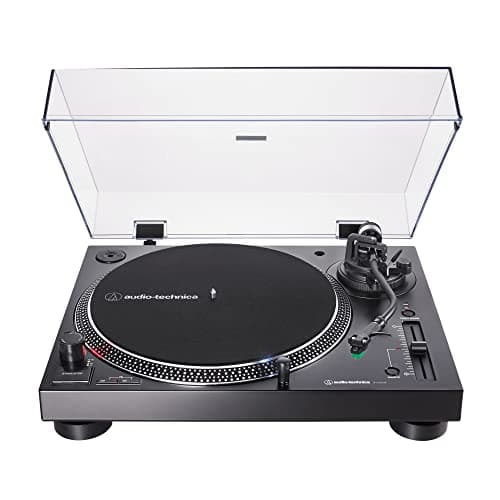 Audio-Technica AT-LP120XUSB A direct-drive deck with a switchable phono stage and USB out, which means it works with any amplifier you already own and needs nothing else on day one. | Best overall under $500 | 8.6 | $349.00View on Amazon $399.0013% off |
| 2 | 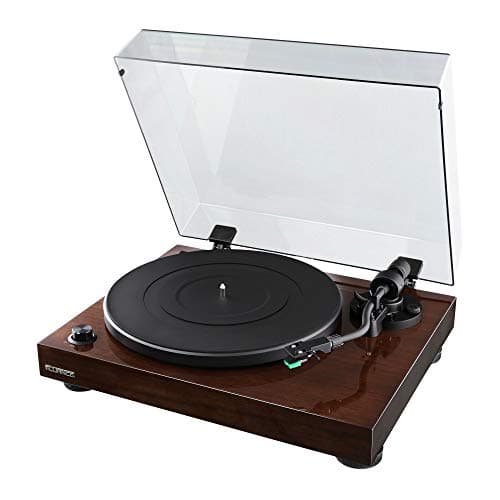 Fluance RT81 The RT82's cheaper sibling: an AT-95E-class cartridge and a built-in phono preamp, which makes it the lower total cost of the two once you count what you still have to buy. | Best value with a phono stage built in | 7.8 | |
| 3 | 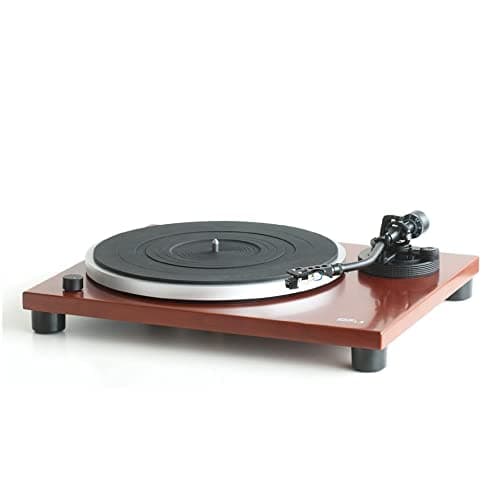 Music Hall mmf-1.5 A belt-drive deck whose built-in phono stage can be switched out of circuit entirely, which is the version of that feature worth paying for. | Best built-in phono stage under $1,000 | 7.4 | |
| 4 | 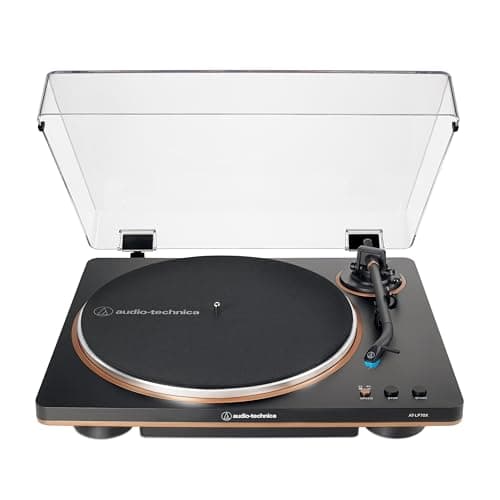 Audio-Technica AT-LP70X Fully automatic, so the arm lifts and returns on its own — the single feature that most reduces the chance of a new owner damaging a stylus or a record. | Best for beginners | 8.0 | |
| 5 | 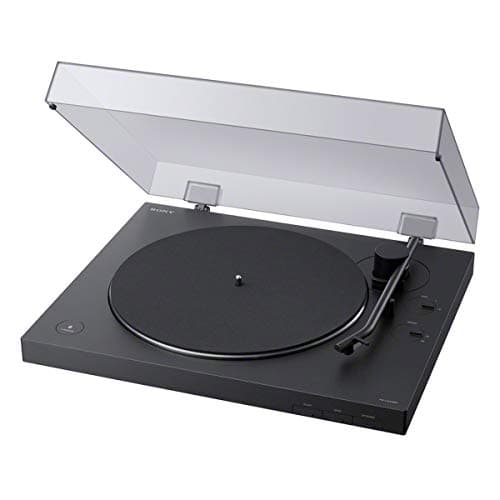 Sony PS-LX310BT Fully automatic, Bluetooth, a built-in phono stage and USB out — the most connection options in the bracket, on the lightest build in it. | Fully automatic with Bluetooth | 6.6 | |
| 6 | No catalog image Audio-Technica AT-LP60XBT Fully automatic with Bluetooth out, which trades away the upgrade path entirely in exchange for working with a wireless speaker and nothing else. | Simplest possible start | 6.4 |
A built-in phono preamp is the feature that lets a turntable connect to anything with a line input — powered speakers, a streaming amplifier, a receiver with no PHONO socket. Nine turntables are in our registry; six have a stage built in and are on this page, and the three that do not are listed at the end. Our phono preamp explainer covers why the stage exists; this page ranks the decks that include one, on the stage rather than on the deck.
What to look for in a built-in stage
Can it be switched off, and does the maker say how? Every deck here has a PHONO/LINE switch. What differs is what the maker claims for the PHONO position. Fluance states the RT81’s switch is a “true bypass” that takes the electronics out of circuit; Music Hall states the mmf-1.5’s stage is “bypassable”; Audio-Technica publishes “switchable PHONO/LINE” and no more. Those are three different levels of commitment, and the difference matters the day you buy an external stage from our phono preamp roundup and want the built-in one out of the signal path.
What is published about it?Audio-Technica publishes a nominal gain, 36 dB, for all three of its decks here. Fluance publishes the RT81’s signal-to-noise as 67 dB or higher A-weighted and 60 dB unweighted — the only deck here that gives you both. Music Hall publishes 65 dB DIN-B. Sony publishes nothing we can read; every Sony-hosted page and the manual returned HTTP 403. A stage with a number attached is a stage you can check.
Can the cartridge it feeds be changed?A phono stage is only as good as what it amplifies. The AT-LP120XUSB and mmf-1.5 have removable headshells; the RT81 takes a standard half-inch cartridge; the AT-LP70X’s cartridge body is non-removable by Audio-Technica’s own manual, though its stylus upgrades; the AT-LP60XBT’s AT3600L is a stylus-swap-only design. Our interchangeability guide names the two decks that cannot take a different cartridge, and both are on this page.
How the ranking works
Bypass claim first, published stage figures second, cartridge path third, then the rest of the deck. That order puts a deck with a documented true bypass above one with a bare switch, and a deck whose maker publishes nothing at the bottom regardless of how well it works. Automation, Bluetooth and USB do not move the ranking here; they decide the beginners page, which shares five decks with this one and orders them differently because it is asking a different question.
V_out = V_cartridge × 10^(gain ÷ 20)
Inputs
- AT-VM95E output (the LP120XUSB's supplied cartridge): 4.0 mV (1 kHz, 5 cm/sec) (Audio-Technica spec page)
- AT-LP120XUSB built-in stage gain: 36 dB nominal (Audio-Technica user manual (PDF))
- Denon AVR-X1800H analog line input sensitivity: 200 mV (Denon owner's manual)
Result
The stage with a published gain, feeding a cartridge you can replace
The Audio-Technica AT-LP120XUSB publishes a switchable PHONO/LINE stage with 36 dB nominal gain and RIAA equalization, a USB output that runs through the same stage, and an AT-VM95E cartridge on a removable AT-HS6 headshell. It ranks first because it is the only deck here where every part of the phono chain is both documented and replaceable: the gain is a number, the cartridge is a half-inch mount, and the whole VM95 stylus range drops into the same body. Its cons are a 50 dB signal-to-noise for the deck itself, lower than the Fluance and Music Hall belt drives, and a manual that says “switchable” without describing a bypass. Our full review covers the direct drive and the USB path.
The stage the maker calls a true bypass
The Fluance RT81 publishes a PHONO/LINE switch with, in Fluance’s words, a true bypass that takes the electronics out of circuit when an external stage is used, and it publishes the deck’s signal-to-noise two ways: 67 dB or higher A-weighted and 60 dB unweighted. It ships an Audio-Technica AT95E on a standard mount. It ranks second on the strength of that bypass claim — the strongest statement any maker here makes about what the switch does — and behind the LP120XUSB only because Fluance publishes no gain figure for the stage itself. Its tonearm effective mass is published as 28.2 g, which is implausibly high for an effective-mass figure and may be total arm mass; we flag it rather than use it.
Bypassable, on a deck with a removable headshell and 78 rpm
The Music Hall mmf-1.5 publishes a bypassable phono stage, a static-balanced S-shaped arm with a removable headshell, three speeds including 78, a 305 mm die-cast platter, wow and flutter below 0.1% and signal-to-noise above 65 dB DIN-B. It is the best-specified deck on this page as a turntable. It ranks third rather than higher because “bypassable” is a weaker statement than Fluance’s and because Music Hall publishes no figure for the stage, no gain and no noise; the supplied Melody cartridge is also a Music Hall part with fewer published specifications than the Audio-Technica alternatives. Its price is not always live in our price layer; the tile says “check price” when it is not.
A published 36 dB stage on a cartridge that cannot come off
The Audio-Technica AT-LP70X publishes the same switchable 36 dB stage as the LP120XUSB on a fully automatic belt drive with a 55 dB signal-to-noise figure — better than its bigger sibling. It ranks fourth because of the manual’s own statement that the AT-VM95C cartridge body is non-removable. The stylus upgrades across the VM95 range, which is a real path, but the stage will feed that cartridge body for the life of the deck. Audio-Technica publishes no tonearm effective mass or tracking force range for it.
The stage we cannot read anything about
The Sony PS-LX310BT has a built-in phono stage with a PHONO/LINE switch, Bluetooth transmission and full automation. It ranks fifth because Sony publishes nothing we can cite: sony.com, its regional sites and the operating-instructions PDF all returned HTTP 403 when we tried to read them, so there is no gain figure, no noise figure, no cartridge specification and no bypass description we can quote. A deck we cannot document ranks below decks we can, whatever it is like to own.
The simplest deck, and the one with the least to say for its stage
The Audio-Technica AT-LP60XBT publishes the same switchable 36 dB stage, a 50 dB signal-to-noise figure (DIN-B), a fully automatic belt drive and Bluetooth. Its cartridge is the AT3600L, a design where only the stylus is replaceable. It ranks last because it combines the least-documented bypass with the least upgrade path: the stage is fine, but nothing behind it can change. It is often without a live price in our price layer.
The decks that do not have one, and why that can be right
The Fluance RT82 and RT85 both state “Separate Phono Preamp Required”, and the Pro-Ject Debut Carbon EVO has no stage either. That is a deliberate choice by those makers: the money goes into the deck, and the phono stage is yours to choose, which means the gain can match the cartridge and the stage can be upgraded on its own. If your amplifier already has a PHONO input — every integrated on our turntable amplifier page does — a built-in stage is a feature you would switch off on day one, and the under-$500 roundup ranks both kinds together on the deck alone.
Every pick in detail
Every specification below links to the manufacturer document we read it from. Where a manufacturer does not publish a figure, we say so rather than estimating it.
Audio-Technica AT-LP120XUSB
Best overall under $500A direct-drive deck with a switchable phono stage and USB out, which means it works with any amplifier you already own and needs nothing else on day one.
- specs
- 8/10
- upgrade path
- 9/10
- value for money
- 9/10
- ease of setup
- 7/10
- connectivity
- 10/10
| Specification | Published value | Source |
|---|---|---|
| Drive type | Direct drive (DC servo motor) | Audio-Technica manual (PDF) |
| Wow and flutter | < 0.2% WRMS (33 rpm) at 3 kHz | Audio-Technica manual (PDF) |
| Signal-to-noise | > 50 dB | Audio-Technica manual (PDF) |
| Speeds | 33⅓, 45, 78 rpm | Audio-Technica manual (PDF) |
| Cartridge included | AT-VM95E (VM type) on an AT-HS6 headshell | Audio-Technica manual (PDF) |
| Tonearm effective mass | Not published | — |
| Built-in phono stage | Yes — switchable PHONO/LINE, 36 dB nominal gain, RIAA equalized | Audio-Technica manual (PDF) |
| USB output | Yes — 16-bit, 44.1 or 48 kHz selectable, USB 1.1 | Audio-Technica manual (PDF) |
| Tracking force | Arm adjusts 0–4 g; the included AT-VM95E tracks 1.8–2.2 g (2.0 g standard) | Audio-Technica manual (PDF) |
Pros
- Switchable built-in phono stage — works with an amp that has no phono input
- Direct drive, so speed is locked without a belt to stretch or replace
- USB output for digitizing records without a separate interface
- Adjustable tracking force, anti-skate and a removable headshell
Cons
- Heavier and larger than the belt-drive decks in this bracket
- The bundled AT-VM95E is a competent cartridge, not an endgame one
- Removable headshell adds a mechanical joint some purists avoid
Skip it if you want the smallest possible footprint, or you already own a good phono stage and would rather put the money into the cartridge.
Fluance RT81
Best value with a phono stage built inPrice as of September 17, 2026. #ad
The RT82's cheaper sibling: an AT-95E-class cartridge and a built-in phono preamp, which makes it the lower total cost of the two once you count what you still have to buy.
- specs
- 7/10
- upgrade path
- 8/10
- value for money
- 9/10
- ease of setup
- 7/10
- connectivity
- 8/10
| Specification | Published value | Source |
|---|---|---|
| Drive type | Belt drive | Fluance spec page |
| Wow and flutter | 0.2% | Fluance spec page |
| Signal-to-noise | 67 dB or higher (A-weighted, 20 kHz LPF); 60 dB or higher unweighted | Fluance spec page |
| Cartridge included | Audio-Technica AT95E | Fluance spec page |
| Tonearm effective mass | 0.99 oz (28.2 g) as published — same caution as the RT82: this is high for an effective-mass figure and may be total arm mass. | Fluance spec page |
| Built-in phono stage | Yes — PHONO/LINE switchable, with a true bypass that takes the electronics out of circuit when you use an external stage | Fluance spec page |
Pros
- Built-in phono preamp — no extra box required
- Wood plinth and a metal platter at a lower price than the RT82
- Auto-stop at the end of a side
Cons
- Cartridge is a step below the RT82's Ortofon OM10
- Manual cueing
- Built-in preamp is fixed-quality; you pay for it whether you use it or not
Skip it if you already own a phono stage — the RT82 puts that money into a better cartridge instead.
Music Hall mmf-1.5
Best built-in phono stage under $1,000Price as of September 17, 2026. #ad
A belt-drive deck whose built-in phono stage can be switched out of circuit entirely, which is the version of that feature worth paying for.
- specs
- 7/10
- upgrade path
- 8/10
- value for money
- 8/10
- ease of setup
- 6/10
- connectivity
- 8/10
| Specification | Published value | Source |
|---|---|---|
| Drive type | Belt drive, DC motor | Music Hall spec page |
| Speeds | 33 1/3, 45 and 78 rpm, full manual | Music Hall spec page |
| Wow and flutter | Less than 0.1% WTD at 3 kHz RMS | Music Hall spec page |
| Signal-to-noise | More than 65 dB (DIN-B) | Music Hall spec page |
| Platter | 305 mm die-cast aluminum | Music Hall spec page |
| Tonearm | Static-balanced S-shaped, 230 mm effective length, removable headshell | Music Hall spec page |
| Cartridge included | Music Hall Melody moving magnet with a diamond stylus | Music Hall spec page |
| Tonearm effective mass | Not published | — |
| Built-in phono stage | Yes — bypassable | Music Hall spec page |
| Dimensions / weight | 17.1 × 14.5 × 5 in; 12 lb | Music Hall spec page |
Pros
- The built-in phono stage is bypassable, so an external stage later takes the internal electronics out of circuit rather than stacking on top of them
- Real cherry wood veneer plinth
- Music Hall Melody moving-magnet cartridge fitted to a removable headshell
- Plays 78s as well as 33 and 45
Cons
- Fully manual — nothing lifts or returns the arm for you
- Music Hall publishes one wow-and-flutter figure and one signal-to-noise figure for this deck, not the typical-and-limit pair it prints for the dearer Classic
- No tonearm effective mass published, so cartridge compliance matching is guesswork
Skip it if you already own a phono stage and would rather put the money into the cartridge — the stage here is bypassable, but you still paid for it.
Audio-Technica AT-LP70X
Best for beginnersPrice as of September 17, 2026. #ad
Fully automatic, so the arm lifts and returns on its own — the single feature that most reduces the chance of a new owner damaging a stylus or a record.
- specs
- 7/10
- upgrade path
- 7/10
- value for money
- 9/10
- ease of setup
- 10/10
- connectivity
- 7/10
| Specification | Published value | Source |
|---|---|---|
| Drive type | Belt drive (DC motor), fully automatic | Audio-Technica manual (PDF) |
| Wow and flutter | < 0.25% (WTD) | Audio-Technica manual (PDF) |
| Signal-to-noise | > 55 dB | Audio-Technica manual (PDF) |
| Speeds | 33⅓, 45 rpm | Audio-Technica manual (PDF) |
| Cartridge included | AT-VM95C dual moving magnet — NON-REMOVABLE. The stylus upgrades across the VM95 range; the cartridge body does not come off. | Audio-Technica manual (PDF) |
| Tonearm effective mass | Not published | — |
| Built-in phono stage | Yes — switchable PHONO/LINE, 36 dB nominal gain | Audio-Technica manual (PDF) |
| USB output | No | Audio-Technica manual (PDF) |
| Tracking force range | Not published | — |
Pros
- Fully automatic start and return — no manual cueing to get wrong
- Built-in switchable phono stage, so it works with any line input
- The stylus upgrades across the AT-VM95 range without touching the cartridge
- Published wow and flutter under 0.25%, and Audio-Technica states the figure
Cons
- The cartridge body is non-removable — only the stylus swaps, so the upgrade path ends at the VM95 range
- Belt drive, not direct drive: the belt is a consumable
- No USB output
Skip it if you want to digitize your collection — this one has no USB out.
Sony PS-LX310BT
Fully automatic with BluetoothPrice as of September 17, 2026. #ad
Fully automatic, Bluetooth, a built-in phono stage and USB out — the most connection options in the bracket, on the lightest build in it.
- specs
- 6/10
- upgrade path
- 3/10
- value for money
- 5/10
- ease of setup
- 10/10
- connectivity
- 10/10
| Specification | Published value | Source |
|---|---|---|
| Published specifications | Unavailable. Every Sony-hosted source for this deck — sony.com, its regional sites, and the official operating-instructions PDF — returned HTTP 403 when we tried to read them on 17 July 2026. Retailer listings carry figures, but retailer spec fields are unreliable and we do not use them as a source for specifications. We would rather show you nothing than show you something we could not verify. | Sony product page (returned 403) |
Pros
- Automatic operation plus Bluetooth plus USB plus a built-in phono stage
- Genuinely one-box: works with a wireless speaker or an amp with no phono input
- Low, compact footprint
Cons
- Cartridge is not a standard user-replaceable mount
- Plastic-heavy construction relative to the Fluance decks
- Live price has been sitting well above its typical street price — check it before buying
Skip it if you want to upgrade anything later. This is a finished appliance, not a platform.
Audio-Technica AT-LP60XBT
Simplest possible startNo live price right now. #ad
Fully automatic with Bluetooth out, which trades away the upgrade path entirely in exchange for working with a wireless speaker and nothing else.
- specs
- 5/10
- upgrade path
- 3/10
- value for money
- 7/10
- ease of setup
- 10/10
- connectivity
- 8/10
| Specification | Published value | Source |
|---|---|---|
| Drive type | Belt drive, fully automatic (DC servo-controlled motor) | Audio-Technica manual (PDF) |
| Wow and flutter | < 0.25% (WTD) at 3 kHz | Audio-Technica manual (PDF) |
| Signal-to-noise | > 50 dB (DIN-B) | Audio-Technica manual (PDF) |
| Cartridge included | AT3600L (VM type); replacement stylus ATN3600L | Audio-Technica manual (PDF) |
| Tonearm effective mass | Not published | — |
| Built-in phono stage | Yes — switchable PHONO/LINE, 36 dB nominal gain | Audio-Technica manual (PDF) |
| USB output | No | Audio-Technica manual (PDF) |
Pros
- Fully automatic and genuinely hard to misuse
- Bluetooth output pairs with a wireless speaker with no amplifier at all
- The cheapest route into a real, tracking-force-controlled turntable
Cons
- Integrated headshell — the cartridge is not user-replaceable the way a standard mount is
- Bluetooth is lossy; the analog output is the better path if you have one
- Lightest plinth here, so it is the most sensitive to a resonant surface
Skip it if you expect to upgrade the cartridge later. The integrated headshell is the ceiling, and it arrives early.
Frequently asked questions
What does a built-in preamp on a turntable do?
Can I bypass a turntable's built-in preamp?
Is a built-in phono preamp as good as a separate one?
Which turntable with a built-in preamp lets me upgrade the cartridge?
Do I need a turntable with a built-in preamp if my amplifier has a phono input?
Why is the Sony PS-LX310BT ranked so low?
Have you listened to these turntables?
Read next
Do I Need a Phono Preamp?
Yes, unless you already have one — and it might be hiding in your turntable, amplifier or speakers. Check in 30 seconds.
The Best Turntables for Beginners
Beginner decks ranked on the two things that matter at the start — automatic operation and a phono stage in the box.
The Best Phono Preamps Under $200
Phono stages under $200 ranked on published gain, loading flexibility and noise — including one we would actively skip.
The Best Speakers for a Turntable
Which speakers need an amplifier, which need a phono stage, and the one that needs neither.
How to Connect a Turntable to Speakers
Four working routes from turntable to speakers, the two that do not work, and how to fix the hum.
Are Turntable Cartridges Interchangeable?
Three compatibility checks — mount, mass and loading — and the decks where the answer is simply no.
Sources
Every specification on this page was read from one of these documents. If one of them has changed, or we have made an error, tell us — corrections are logged and dated per our editorial policy.
- Audio-Technica AT-LP120XUSB — user manual (PDF)
- Audio-Technica AT-VM95E — specifications
- Fluance RT81 — specifications
- Music Hall mmf-1.5 — specifications
- Audio-Technica AT-LP70X — user manual (PDF)
- Audio-Technica AT-LP60XBT — user manual (PDF)
- Sony PS-LX310BT — product page (returned HTTP 403; no specifications readable)
- Denon AVR-X1800H — owner's manual (line input sensitivity)