The Best Powered Speakers Under $500
An amplifier in the cabinet means one box fewer and one thing fewer to match. The catch: almost nobody publishes wattage under the same conditions, and one maker here cites a federal rule.
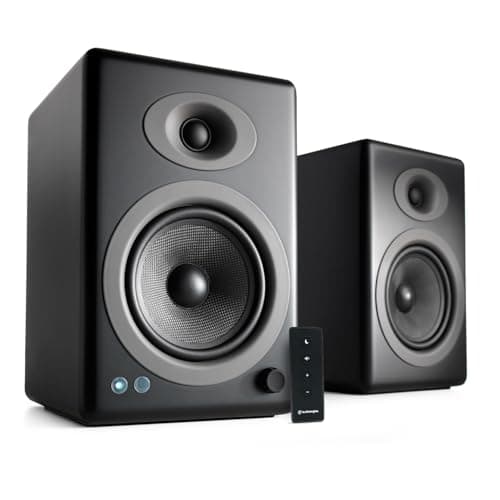
Top pick: Audioengine A5+
Best powered pair for a real room. #ad Affiliate link — we earn a commission at no extra cost to you.
The short answer
The best powered speakers under $500 are the Audioengine A5+ — because Audioengine is the only maker in this band that publishes its power rating against a stated legal method: 50 W RMS per channel measured per 16 C.F.R. § 432.3, with a separate 75 W peak AES figure, plus a ± 1.5 dB frequency response of 50 Hz–22 kHz. Every other pair here publishes a watt figure with no measurement condition attached, or no watt figure at all. It is the pick for a real room rather than a desk, and for someone who would rather have one checkable number than four unchecked ones. The budget pick is the Edifier R1280T— the cheapest active pair we rank, with a published 21 W + 21 W RMS and dual RCA inputs, and nothing else. No Bluetooth, no optical, no USB, no phono stage. For a second room or a first system it is a complete pair of speakers at the lowest price on this site.
Two caveats before you spend. None of these five has a phono stage inside, and Audioengine states the position bluntly for its own speakers: “all turntables require a phono preamp stage before connecting to Audioengine speakers.” If a record player is the source, add a phono stageto the budget. And if your source is a television rather than a computer or a phone, none of these is the right answer — the HDMI ARC pairs are on their own page and they start above this band.
Disclosure: we earn a commission if you buy through the links on this page, at no extra cost to you. It does not influence what we pick — our criteria are published and reproducible, so you can check our work. How we pick · Full disclosure
These picks are spec-and-price analyses, not listening tests. We have not heard this gear and we do not pretend to have: every figure below is sourced to the manufacturer and linked, and every price is live or not shown at all. Here are the rules we followed.
Quick picks
Ranked on the published criteria in How We Pick. Prices are live as of November 12, 2026. Tap any row for the full write-up.
- 7.0
- 7.4
- 6.4
- 7.2
- 6.8
| # | Product | Best for | Score | Price |
|---|---|---|---|---|
| 1 | Audioengine A5+ A larger powered pair with enough output to fill a living room rather than a desk, which is the line most powered speakers fail to cross. | Best powered pair for a real room | 7.0 | |
| 2 | 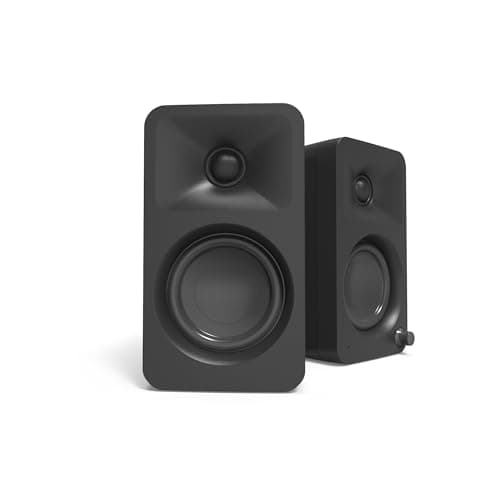 Kanto ORA Small powered reference speakers built for near-field listening, where the distance is short and the cabinet does not need to move much air. | Best for a desk | 7.4 | |
| 3 | 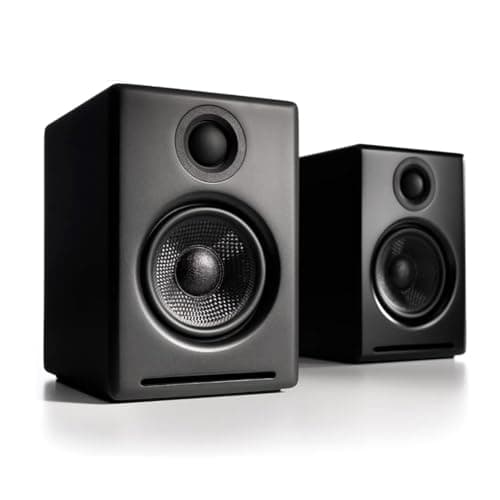 Audioengine A2+ Desktop-scale powered speakers with a built-in DAC, sized for an arm's length and honest about it. | Smallest powered option | 6.4 | |
| 4 | 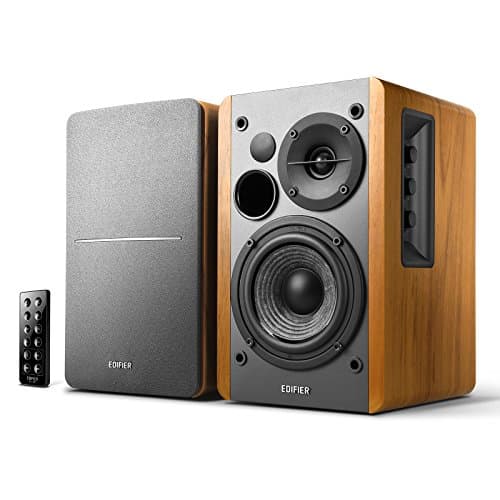 Edifier R1280DB The R1280T plus Bluetooth and optical/coaxial inputs — still no phono stage, but a far more useful set of sockets. | Best budget powered pair with digital inputs | 7.2 | |
| 5 | 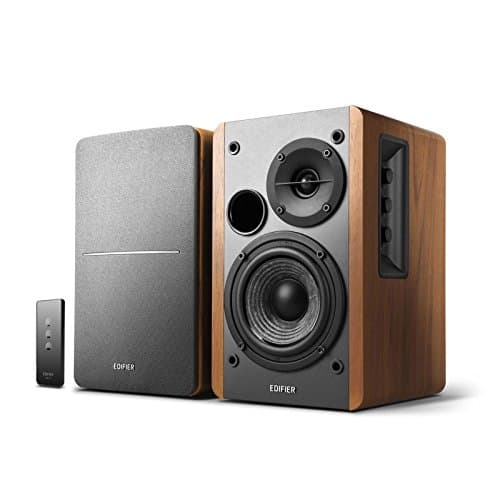 Edifier R1280T The cheapest credible way to get a turntable making sound in a small room, provided the turntable brings its own phono stage. | Best budget powered pair | 6.8 |
A powered speaker puts the amplifier inside the cabinet, which removes the single hardest decision in hi-fi: matching an amplifier to a speaker. The manufacturer has already done it, with the actual driver impedance in front of it. In exchange you give up the ability to change either half, and you accept whatever the maker chooses to publish about the amplifier — which, on this page, varies from a federal measurement citation to nothing at all.
If you are still deciding between this and a separate amplifier, our passive versus powered comparison lays out the trade properly. The short version: powered wins on box count and on guaranteed matching; passive wins on upgrade path and on the sheer number of cabinets available at any given price.
The picks compared, spec by spec
Four columns, and the first two are the ones that get quoted wrongly everywhere. A watt figure without a measurement condition is not comparable to one with it, and a frequency range without a tolerance is not comparable to one with it. Where a cell says “no tolerance”, that is the manufacturer’s own omission. Every row carries its own live price and buy link.
Every figure below is the manufacturer’s own published value and links to the document we read it from. “Not published” means the manufacturer does not publish that figure; an em dash means we have no published figure for that model. Prices are live as of November 12, 2026.
Best powered pair for a real room
- Published amplifier power
- 50 W RMS/ch (16 CFR 432.3)
- Published response
- 50 Hz–22 kHz ± 1.5 dB
- Inputs
- —
- Phono stage inside
- No — maker states it explicitly
Best for a desk
- Published amplifier power
- 50 W total RMS, 100 W peak
- Published response
- 70 Hz–22 kHz, no tolerance
- Phono stage inside
- Not stated; line level only
Smallest powered option
- Published amplifier power
- 20 W RMS/ch at 4 Ω
- Published response
- 65 Hz–22 kHz ± 2.0 dB
- Phono stage inside
- —
Best budget powered pair with digital inputs
- Published amplifier power
- 21 W + 21 W RMS
- Published response
- 55 Hz–20 kHz (US table)
- Phono stage inside
- Not stated either way
Best budget powered pair
- Published amplifier power
- 21 W + 21 W RMS
- Published response
- 52 Hz–20 kHz, no tolerance
- Inputs
- Dual RCA
- Phono stage inside
- Not stated either way
| Pick | Published amplifier power | Published response | Inputs | Phono stage inside | Price |
|---|---|---|---|---|---|
| 1.Audioengine A5+Best powered pair for a real room | 50 W RMS/ch (16 CFR 432.3) | 50 Hz–22 kHz ± 1.5 dB | — | No — maker states it explicitly | |
| 2.Kanto ORABest for a desk | 50 W total RMS, 100 W peak | 70 Hz–22 kHz, no tolerance | RCA · USB-C 24/96 · BT 5.0 | Not stated; line level only | |
| 3.Audioengine A2+Smallest powered option | 20 W RMS/ch at 4 Ω | 65 Hz–22 kHz ± 2.0 dB | 3.5 mm · RCA · USB · Bluetooth | — | |
| 4.Edifier R1280DBBest budget powered pair with digital inputs | 21 W + 21 W RMS | 55 Hz–20 kHz (US table) | Optical · coaxial · BT · 2× RCA | Not stated either way | |
| 5.Edifier R1280TBest budget powered pair | 21 W + 21 W RMS | 52 Hz–20 kHz, no tolerance | Dual RCA | Not stated either way |
Prices as of November 12, 2026; every “Check Price” link goes to Amazon and earns us a commission at no extra cost to you. #ad
The only wattage on this page you can take at face value
Audioengine publishes the A5+ at 50 W RMS per channel and says, in its own specification table, that the figure is measured per 16 C.F.R. § 432.3. That citation is the Federal Trade Commission’s amplifier power rule, and the reason it matters is that it constrains how the number was produced rather than leaving it to marketing.
Compare that with the rest of the page. Kanto publishes 50 W total RMS for the ORA and breaks it down — 9 W RMS per tweeter, 16 W RMS per woofer — which is honest and informative, but “50 W total” across four drivers is not the same claim as “50 W per channel”, and a shopper comparing headline numbers would read them as equal. Edifier publishes 21 W + 21 W RMS for both R1280 models with no distortion condition and no load condition. Audioengine’s own smaller A2+ publishes 20 W RMS per channel into 4 Ω, with the impedance stated.
dB = 10 × log10(P1 ÷ P2)
Inputs
- Audioengine A5+ per channel: 50 W RMS (16 C.F.R. § 432.3) (Audioengine tech specs)
- Edifier R1280T per channel: 21 W RMS (Edifier spec page)
Result
Cone area decides the bass, and the spread here is large
The published woofers on this page run from 2.75 in on the A2+ through 3 in on the ORA, 4 in on both Edifiers, to 5 in on the A5+. That ordering matches the published low corners almost exactly: 70 Hz for the ORA with no tolerance, 65 Hz ± 2.0 dB for the A2+, 52–55 Hz for the Edifiers, and 50 Hz ± 1.5 dB for the A5+.
Two things follow. First, the A5+ is both the largest and the only pair here publishing a tolerance as tight as ± 1.5 dB, which is why it is ranked first on more than its wattage. Second, the ORA’s 70 Hz is not a defect — it is a 3 in driver in a small cabinet doing what physics allows, on a product Kanto designed for a desk, where a wall and a desktop are both close enough to add boundary gain. Kanto also publishes something nobody else here does: a USB-C input at 24-bit/96 kHz, so the speakers are a DAC as well.
If you want more bass than any of this at the same money, the honest answer is a passive pair and a small amplifier — the under-$200 passive bracket includes the Micca RB42, whose 4 in cone in a sealed box publishes a 50 Hz in-room figure, and our amplifier roundup for bookshelf speakers covers what to put in front of it.
Connectivity is where the ranking nearly inverted
On inputs alone this page would run almost backwards. The Edifier R1280DB publishes optical, coaxial, Bluetooth and two pairs of RCA. The Kanto ORA publishes RCA, USB-C and Bluetooth 5.0. The Audioengine A2+ publishes 3.5 mm, RCA, USB and Bluetooth. The A5+ at the top of the page publishes neither USB nor optical, and the R1280T at the bottom publishes two RCA sockets and nothing else.
We rank on what the speakers do with a signal rather than on how many ways you can give them one, because a $20 adapter solves an input problem and nothing solves a 3 in woofer. But if your source is a TV’s optical output or a computer’s USB port and you do not want a separate converter in the chain, the R1280DB and the ORA are the two pairs here that need nothing added. That is a real consideration and it is why they sit second and fourth rather than lower.
What none of them does
None of these five has a phono input. Audioengine states it in writing for its own speakers; Kanto lists line-level inputs only; Edifier does not state it either way for either R1280, which in practice means assume not. So a turntable needs a phono stage first, and the cheapest credible ones are in the sub-$100 bracket.
The alternative is a powered pair with a stage already inside, and in our registry that means stepping outside this band: the Klipsch The Fives II publishes a dedicated analog input with a built-in phono stage, HDMI eARC, Bluetooth 5.4 and a subwoofer output, and it costs several times the top of this page. Our speakers-for-a-turntable roundup compares the two routes — pay once for an all-in-one, or buy a cheaper pair and a separate stage — with the live prices for both.
Every pick in detail
Every specification below links to the manufacturer document we read it from. Where a manufacturer does not publish a figure, we say so rather than estimating it.
Audioengine A5+
Best powered pair for a real roomPrice as of November 12, 2026. #ad
A larger powered pair with enough output to fill a living room rather than a desk, which is the line most powered speakers fail to cross.
- integration
- 7/10
- upgrade path
- 4/10
- value for money
- 6/10
- ease of setup
- 9/10
- connectivity
- 6/10
| Specification | Published value | Source |
|---|---|---|
| Type | Powered (amplifier built in) | Audioengine tech specs |
| Amplifier output | 50 W RMS per channel (measured per 16 C.F.R. § 432.3); 75 W peak per channel (AES) | Audioengine tech specs |
| Frequency response | 50 Hz – 22 kHz ± 1.5 dB | Audioengine tech specs |
| Built-in phono stage | No — Audioengine states “All turntables require a phono preamp stage before connecting to Audioengine speakers.” | Audioengine tech specs |
| Woofer | 5 in aramid fiber | Audioengine tech specs |
| Weight | Left (active) 15.4 lb / 7 kg; right (passive) 9.6 lb / 4.4 kg | Audioengine tech specs |
Pros
- Enough power for a real room, not just a desktop
- Wood cabinets
- Sub output
Cons
- No phono stage
- No digital inputs on the base model
- Expensive for the driver complement
Skip it if you need a phono stage included — the Kanto YU6 does that and this does not.
Kanto ORA
Best for a deskPrice as of November 12, 2026. #ad
Small powered reference speakers built for near-field listening, where the distance is short and the cabinet does not need to move much air.
- integration
- 8/10
- upgrade path
- 4/10
- value for money
- 7/10
- ease of setup
- 9/10
- connectivity
- 9/10
| Specification | Published value | Source |
|---|---|---|
| Type | Powered (amplifier built in) | Kanto spec page |
| Amplifier output | 50 W total RMS (100 W peak); 9 W RMS per tweeter, 16 W RMS per woofer | Kanto spec page |
| Frequency response | 70 Hz – 22 kHz (no tolerance published) | Kanto spec page |
| Inputs | RCA line-level, USB-C (24-bit/96 kHz), Bluetooth 5.0 | Kanto spec page |
| Built-in phono stage | Not stated — inputs are line-level only, so assume none | Kanto spec page |
| Woofer | 3 in paper cone | Kanto spec page |
Pros
- Genuinely desk-sized
- USB-C input as well as analog
- Sub output for when the low end runs out
Cons
- Small drivers mean limited low end without a subwoofer
- No built-in phono stage
- Near-field by design
Skip it if this is a living-room system — these are built for a meter away, not four.
Audioengine A2+
Smallest powered optionPrice as of November 12, 2026. #ad
Desktop-scale powered speakers with a built-in DAC, sized for an arm's length and honest about it.
- integration
- 6/10
- upgrade path
- 3/10
- value for money
- 6/10
- ease of setup
- 9/10
- connectivity
- 7/10
| Specification | Published value | Source |
|---|---|---|
| Type | Powered (amplifier built in) | Audioengine tech specs (Gen 3) |
| Amplifier output | 20 W RMS per channel at 4 Ω; 30 W peak per channel (AES) | Audioengine tech specs (Gen 3) |
| Frequency response | 65 Hz – 22 kHz ± 2.0 dB | Audioengine tech specs (Gen 3) |
| Inputs | 3.5 mm, RCA L/R, USB, Bluetooth | Audioengine tech specs (Gen 3) |
| Woofer | 2.75 in aramid fiber | Audioengine tech specs (Gen 3) |
Pros
- Very compact
- Built-in USB DAC
- Wood cabinets at a small size
Cons
- Little low-end extension without a sub
- No phono stage
- Near-field only
Skip it if this is for a room rather than a desk.
Edifier R1280DB
Best budget powered pair with digital inputsPrice as of November 12, 2026. #ad
The R1280T plus Bluetooth and optical/coaxial inputs — still no phono stage, but a far more useful set of sockets.
- integration
- 7/10
- upgrade path
- 3/10
- value for money
- 9/10
- ease of setup
- 9/10
- connectivity
- 8/10
| Specification | Published value | Source |
|---|---|---|
| Type | Powered (amplifier built in) | Edifier spec page |
| Amplifier output | 21 W + 21 W RMS | Edifier spec page |
| Frequency response | 55 Hz – 20 kHz per the US spec table (Edifier's global site markets 51 Hz in body copy — the two disagree) | Edifier US spec page |
| Inputs | Optical, coaxial, Bluetooth, dual RCA | Edifier spec page |
| Built-in phono stage | Not stated either way by Edifier — assume none | Edifier spec page |
| Woofer | 4 in | Edifier spec page |
Pros
- Optical and coaxial digital inputs as well as analog
- Bluetooth
- Still inexpensive
Cons
- NO built-in phono stage
- Same modest drivers as the R1280T
- Bluetooth codec support is basic
Skip it if your turntable has no phono stage of its own.
Edifier R1280T
Best budget powered pairPrice as of November 12, 2026. #ad
The cheapest credible way to get a turntable making sound in a small room, provided the turntable brings its own phono stage.
- integration
- 6/10
- upgrade path
- 3/10
- value for money
- 10/10
- ease of setup
- 9/10
- connectivity
- 6/10
| Specification | Published value | Source |
|---|---|---|
| Type | Powered (amplifier built in) | Edifier spec page |
| Amplifier output | 21 W + 21 W RMS | Edifier spec page |
| Frequency response | 52 Hz – 20 kHz (no tolerance published) | Edifier spec page |
| Inputs | Dual RCA | Edifier spec page |
| Built-in phono stage | Not stated either way by Edifier — assume none and check before buying | Edifier spec page |
| Woofer | 4 in | Edifier spec page |
| Tweeter | 0.5 in | Edifier spec page |
Pros
- Very cheap for a powered pair
- Two RCA inputs
- Tone controls on the cabinet
Cons
- NO built-in phono stage — the turntable must have one or you need a separate box
- Modest power output
- Small drivers, limited extension
Skip it if your turntable has no built-in phono stage — this pair will not make a sound without one.
Frequently asked questions
Can I plug a turntable straight into these?
Is 50 watts enough for a living room?
Which of these is best for a desk?
Do powered speakers need a subwoofer output?
Read next
Passive vs Powered Speakers
Total cost, upgrade path, and why powered speakers correctly refuse to publish a sensitivity figure.
The Best Speakers for a Turntable
Which speakers need an amplifier, which need a phono stage, and the one that needs neither.
The Best Powered Speakers for a TV
Four ways to put stereo speakers on a television, ranked by connection: HDMI eARC with CEC, two optical inputs, one optical input, or HDMI ARC into an amplifier for passive speakers.
The Best Bookshelf Speakers Under $200
Four bookshelf pairs at the $200 mark, and a seven-decibel sensitivity gap that is worth five times the amplifier power.
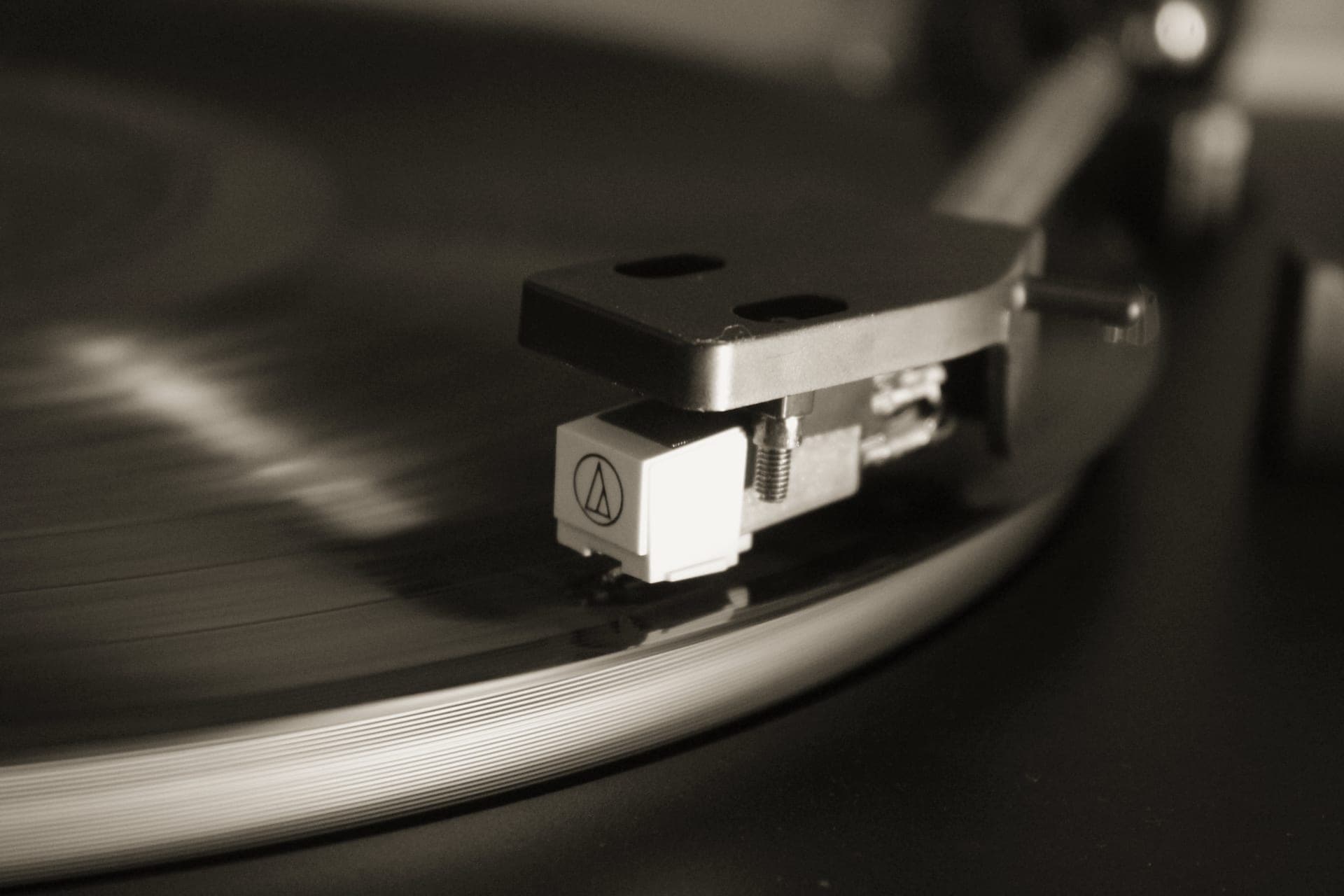
The Best Phono Preamps Under $100
Eight phono stages under $100, ranked on what their makers actually publish — gain, loading, noise — rather than on the box they come in.
Hi-Fi Speakers vs Studio Monitors
Four genuine differences, three imagined ones, and the question that actually decides which category you want.
Sources
Every specification on this page was read from one of these documents. If one of them has changed, or we have made an error, tell us — corrections are logged and dated per our editorial policy.