Bluetooth vs Wi-Fi Audio
One of these has a published bandwidth ceiling below the bitrate of a CD. The other has roughly seventy times the headroom. That is the entire comparison, and it is arithmetic.
Disclosure: we earn a commission if you buy through the links on this page, at no extra cost to you. It does not influence what we pick — our criteria are published and reproducible, so you can check our work. How we pick · Full disclosure
These picks are spec-and-price analyses, not listening tests. We have not heard this gear and we do not pretend to have: every figure below is sourced to the manufacturer and linked, and every price is live or not shown at all. Here are the rules we followed.
Quick picks
Ranked on the published criteria in How We Pick. Prices are live as of October 14, 2026. Tap any row for the full write-up.
- 8.8
- 7.6
- 8.4
- 7.8
| # | Product | Best for | Score | Price |
|---|---|---|---|---|
| 1 | 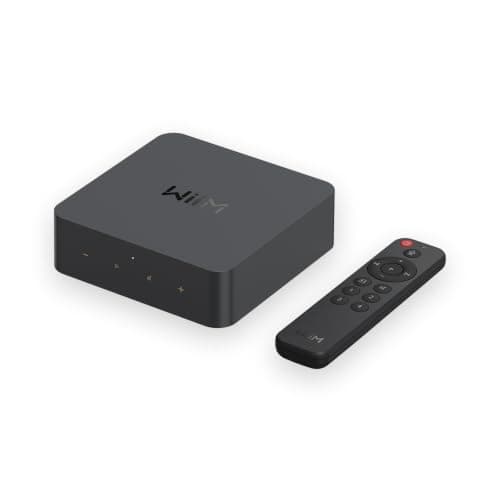 WiiM Pro Plus A streamer and DAC that publishes its line-out performance twice — once as the chip figure and once as the finished product — and is honest enough to print both. | Best streamer for an existing system | 8.8 | |
| 2 | 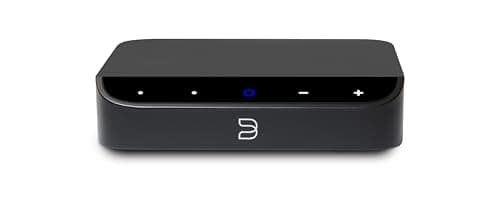 Bluesound Node Nano The most established platform here in the smallest box, with an ESS ES9039Q2M and a spec sheet that is thinner than WiiM's in every respect except pedigree. | Best for a Roon or MQA library | 7.6 | |
| 3 | 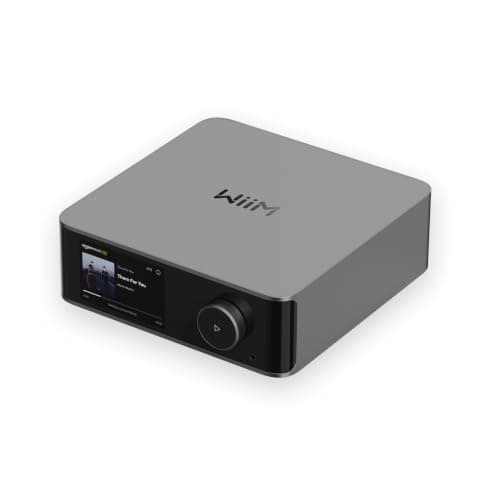 WiiM Ultra The only streamer here with a phono input and a touchscreen — and the only one whose maker publishes nothing at all about how that phono stage performs. | Best for a turntable and a streamer in one box | 8.4 | |
| 4 | 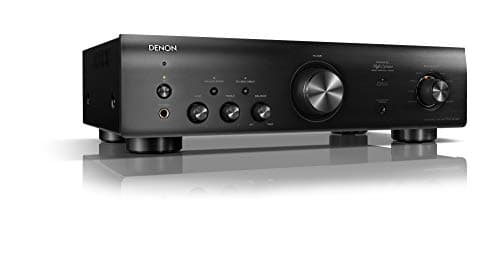 Denon PMA-600NE An integrated with a phono stage, a DAC and Bluetooth in one chassis — the fewest boxes for a mixed vinyl-and-streaming system. | Best with Bluetooth | 7.8 |
Bluetooth re-encodes your music to fit a radio link. Wi-Fi hands the file across a network and lets the receiving device decode it. That is a structural difference, not a quality-tier difference, and it has a published number attached.
Uncompressed stereo bitrate = sample rate × bit depth × 2 channels
Inputs
- Base PCM format (SMSL SU-1 published input range floor): 44.1 kHz, 16-bit (SMSL manual (PDF))
- Sony's published maximum LDAC bitrate: 990 kbps (Sony LDAC page)
- Sony's published figure for standard Bluetooth (SBC): 328 kbps, 44.1 kHz (Sony LDAC page)
- WiiM Pro Plus published network interfaces: Wi-Fi 5 (802.11ac) · 10/100 Mbps Ethernet · Bluetooth 5.0 (WiiM spec comparison)
Result
44,100 × 16 × 2 = 1,411,200 bps = 1,411 kbps for a CD-rate stream
96,000 × 24 × 2 = 4,608 kbps for a 24/96 stream
LDAC at 990 kbps carries 70% of a CD-rate stream — and 21% of a 24/96 one
SBC at 328 kbps carries 23% of a CD-rate stream
A 10/100 Ethernet link at 100,000 kbps carries 71× a CD-rate stream
Even Bluetooth’s highest published codec bitrate is below the bitrate of a CD. The wired or wireless network path is not close to being the limit — it has roughly seventy times the headroom on the slowest interface WiiM publishes, and the Bluesound Node Nano’s Gigabit Ethernet has around seven hundred times.
990 kbps is LDAC’s maximum; Sony’s implementation drops to lower rates when the radio link degrades, and neither Sony nor any device maker here publishes what bitrate you are actually getting at any moment. The comparison to a 1,411 kbps stream is therefore a best-case comparison for Bluetooth.
The codec has to match at both ends, and often does not
A Bluetooth codec is a negotiation. Your phone offers what it supports, the receiver offers what it supports, and they settle on the best both have. If either side lacks it, it does not happen — and this is where published specifications matter enormously.
| Device | Published Bluetooth support |
|---|---|
| Denon PMA-600NE | Bluetooth 5.1 — SBC and AAC only |
| Bluesound Node Nano | Bluetooth 5.2 with aptX Adaptive, two-way |
| WiiM Ultra | Bluetooth 5.3 (codecs not published) |
| WiiM Pro Plus | Bluetooth 5.0 (codecs not published) |
| WiiM Amp | Bluetooth 5.1 (codecs not published) |
| Yamaha RX-V6A | Bluetooth — SBC and AAC |
| Kanto ORA | Bluetooth 5.0 (codecs not published) |
Denon publishes SBC and AAC for the PMA-600NE, and nothing else. A phone with LDAC connected to that amplifier is using SBC or AAC, because those are the only two the amplifier has. The 990 kbps figure never enters the picture. Yamaha publishes the same pair for the RX-V6A.
And note how many rows say “codecs not published”. Four of the seven devices here publish a Bluetooth version number and no codec list at all. A version number tells you about the radio, not about the audio — so on those four you cannot determine in advance what quality tier a Bluetooth connection will actually negotiate.
What the Wi-Fi path does differently
It does not re-encode. The service streams the file to the device, and the device’s own DAC converts it. Everything Bluetooth does to squeeze audio through a radio link simply does not happen.
That is why the protocol list on a streamer matters more than its Bluetooth version. WiiM publishes AirPlay 2, Google Cast Audio, Spotify Connect, TIDAL Connect, Amazon Music Casting, DLNA, Qplay 2.0 and Roon Ready for the Pro Plus. Bluesound publishes AirPlay 2, Spotify Connect, Tidal Connect, Qobuz Connect, Roon Ready and MQA playback for the Node Nano.
Each of those is a way for a service to hand the stream to the device directly, with your phone acting only as a remote control. Walk out of the room with the phone and the music keeps playing — which is not a small convenience difference, it is a consequence of the architecture.
Wired network, where it is offered
Both streamers we cover publish an Ethernet port, and they are not the same port.
- Bluesound Node Nano: Gigabit Ethernet — about 700 times the bandwidth of a CD-rate stream.
- WiiM Pro Plus: 10/100 Mbps Ethernet— about 71 times. Also more than sufficient, but Bluesound’s is the better port and it is one of the few places the more expensive box measurably wins.
Neither is close to a bandwidth limit for stereo audio. What Ethernet actually buys you is reliability: no interference, no congestion from the rest of the household, no dropouts. That is the real argument for the cable, and it is a robustness argument rather than a fidelity one.
Latency, and the figure nobody publishes
Bluetooth introduces delay. The audio has to be buffered, encoded, transmitted, received, decoded and buffered again, and every one of those steps costs time. For music alone it does not matter. For anything with a picture it does, because lips and voices stop lining up.
Not one of the devices we cover publishes a latency figure. WiiM publishes Bluetooth versions for the Pro Plus, Ultra and Amp; Bluesound publishes 5.2 with aptX Adaptive; Denon publishes 5.1 with SBC and AAC. None of them states how many milliseconds any of it adds, and neither does any codec licensor we could find a source for.
So we will not tell you a number. What we will tell you is the structural answer: if the source is a television, use HDMI ARC or eARC, because that path carries lip-sync correction as part of the specification and Bluetooth does not. The WiiM Ultra publishes an HDMI ARC input for exactly this reason; the WiiM Amp publishes one too, though limited to stereo PCM.
Multiroom is a network feature and cannot be a Bluetooth one
A Bluetooth connection is point-to-point: one source, one sink. Playing the same music in two rooms over Bluetooth is not a thing the protocol is built to do.
The network protocols are built for it, and the manufacturers publish which ones they support. WiiM publishes AirPlay 2, Google Cast Audio and DLNA for the Pro Plus; Bluesound publishes AirPlay 2 and its own BluOS platform for the Node Nano; Yamaha publishes MusicCast and AirPlay 2 for the RX-V6A; Denon publishes HEOS built-in with AirPlay 2 for the AVR-X1800H.
Each of those is a synchronization system as much as a streaming one — several devices playing the same stream in step, which requires a shared clock the devices agree on over the network. If more than one room is in your plan, this is the specification that decides it, and it does not appear in any Bluetooth row.
The three things Bluetooth is genuinely better at
- It needs no network. A guest with a phone can play something in ten seconds without credentials, an app, or being on your Wi-Fi. Nothing on the network side is close to that.
- It plays anything on the phone. Wi-Fi protocols work per service — Spotify Connect needs Spotify, TIDAL Connect needs TIDAL. A podcast player, a browser, a video, a voice memo: those all go over Bluetooth and mostly do not go over the others.
- It works when your router does not.
Which is why the sensible configuration is both. Every streamer we cover publishes both radios; the useful distinction is knowing which one you are using and why.
What to buy
If your amplifier already has Bluetooth — the Denon PMA-600NE publishes 5.1 with SBC and AAC, the Yamaha RX-V6A publishes SBC and AAC — you already have the convenience case covered, and adding a streamer is about the quality case.
If you want the network path, buy the streamer for its protocol list and its outputs rather than its wireless specification. That is the argument our streamer roundup makes in full, and it is where the actual differences between these devices live.
Do not buy a streamer if your amplifier streams. Paying twice for the same function is the most common mistake in this category, and it is the reason the WiiM Amp exists as a separate product from the WiiM Pro Plus.
Every pick in detail
Every specification below links to the manufacturer document we read it from. Where a manufacturer does not publish a figure, we say so rather than estimating it.
WiiM Pro Plus
Best streamer for an existing systemPrice as of October 14, 2026. #ad
A streamer and DAC that publishes its line-out performance twice — once as the chip figure and once as the finished product — and is honest enough to print both.
- measured performance
- 9/10
- connectivity
- 8/10
- features
- 9/10
- value for money
- 10/10
- published data
- 8/10
| Specification | Published value | Source |
|---|---|---|
| DAC | AKM AK4493SEQ (ADC: TI Burr-Brown PCM1861) | WiiM spec comparison |
| Analog out SNR | 121 dB (WiiM's comparison table, the AKM chip figure) · 120 dB A-weighted (WiiM's own “line-out performance” figure for the finished unit) | WiiM spec comparison |
| Analog out THD+N | −113 dB / 0.00023% (comparison table) · 0.00032% / −110 dB at 1 kHz, 44.1k–192k (line-out performance panel) | WiiM spec comparison |
| Line-out frequency response | ± 0.05 dB | WiiM spec comparison |
| Outputs | 1 × RCA line-out · 1 × optical S/PDIF (192 kHz/24-bit) · 1 × coaxial (192 kHz/24-bit) | WiiM spec comparison |
| Inputs | Line-in (2 Vrms, digitized by the ADC at 192 kHz/24-bit) · optical S/PDIF in up to 192 kHz/24-bit, stereo PCM only (no Dolby Digital or DTS) | WiiM spec comparison |
| Network | Wi-Fi 5 (802.11 b/g/n/ac, 2.4 and 5 GHz) · 10/100 Mbps Ethernet · Bluetooth 5.0 | WiiM spec comparison |
| Protocols | AirPlay 2, Google Cast Audio, Spotify Connect, TIDAL Connect, Amazon Music Casting, DLNA, Qplay 2.0, Roon Ready | WiiM spec comparison |
| EQ / room correction | 10-band parametric EQ, 10-band graphic EQ, 24 presets, per-source EQ, room correction | WiiM FAQ |
| Output impedance | Not published | — |
Pros
- AKM AK4493SEQ DAC with a published line-out SNR of 120 dB A-weighted and ±0.05 dB response for the finished unit, not just the chip
- Coaxial AND optical outputs, so it feeds an existing external DAC bit-perfectly if you already own one
- Roon Ready, AirPlay 2, Chromecast, Spotify Connect and TIDAL Connect all supported at once
- 10-band parametric EQ and room correction included, which is a genuinely rare feature at this price
Cons
- No display of any kind — everything happens in the phone app
- The optical input accepts stereo PCM only; Dolby Digital and DTS are explicitly unsupported
- No phono input, so a turntable still needs a separate stage
- WiiM publishes no output impedance, which matters if you feed a low-input-impedance amplifier
Skip it if your amplifier already streams. Paying twice for the same function is the most common mistake in this category.
Bluesound Node Nano
Best for a Roon or MQA libraryPrice as of October 14, 2026. #ad
The most established platform here in the smallest box, with an ESS ES9039Q2M and a spec sheet that is thinner than WiiM's in every respect except pedigree.
- measured performance
- 9/10
- connectivity
- 6/10
- features
- 8/10
- value for money
- 6/10
- published data
- 7/10
| Specification | Published value | Source |
|---|---|---|
| DAC | ESS ES9039Q2M (Hyperstream IV) | Bluesound spec page |
| Sampling | Native rates up to 192 kHz, 16–24 bit | Bluesound spec page |
| Signal-to-noise | −118 dB as published by Bluesound (the sign is theirs; SNR is conventionally quoted positive, so read this as 118 dB) | Bluesound spec page |
| THD+N | 0.0007% | Bluesound spec page |
| Outputs | Stereo RCA (fixed-level option) · optical TOSLINK · USB Audio 2.0 Type A · Bluetooth headphone out · wireless subwoofer to PULSE SUB+ | Bluesound spec page |
| Coaxial digital output | None — optical only | Bluesound spec page |
| Inputs | USB Type A for storage · learning IR sensor. No analog line input and no phono input. | Bluesound spec page |
| Network | Wi-Fi 5 (802.11ac dual band) · Gigabit Ethernet · Bluetooth 5.2 with aptX Adaptive, two-way | Bluesound spec page |
| Protocols | AirPlay 2, Spotify Connect, Tidal Connect, Qobuz Connect, Roon Ready, plus MQA playback | Bluesound spec page |
| Dimensions / weight | 143 × 36 × 143 mm; 0.57 kg (1.26 lb) | Bluesound spec page |
| Power | USB-C (5 V, 2 A) | Bluesound spec page |
Pros
- ESS ES9039Q2M with Hyperstream IV — the newest DAC silicon on this page
- Gigabit Ethernet, where both WiiM streamers here are limited to 10/100
- Bluetooth 5.2 with aptX Adaptive, two-way, so it can also feed Bluetooth headphones
- BluOS is a mature multiroom platform with a longer track record than WiiM's app
Cons
- No coaxial digital output — optical only, which caps some external-DAC pairings
- No analog input at all, so it cannot digitize a legacy source the way a WiiM Pro Plus can
- Bluesound prints its signal-to-noise ratio as “−118 dB”, a sign convention error on their own sheet
- The most expensive streamer here, with fewer inputs than the WiiM Ultra
Skip it if you need to connect anything analog. It has no line input, no phono input, and no way around that.
WiiM Ultra
Best for a turntable and a streamer in one boxPrice as of October 14, 2026. #ad
The only streamer here with a phono input and a touchscreen — and the only one whose maker publishes nothing at all about how that phono stage performs.
- measured performance
- 9/10
- connectivity
- 10/10
- features
- 10/10
- value for money
- 7/10
- published data
- 6/10
| Specification | Published value | Source |
|---|---|---|
| DAC | ESS ES9038 Q2M | WiiM spec page |
| Analog out SNR | 121 dB (A-weighted) | WiiM spec page |
| Analog out THD+N | −116 dB (0.00015%) | WiiM spec page |
| Line-out level | 2.1 Vrms maximum | WiiM spec page |
| Headphone amplifier | TI TPA6120A2 — SNR 119 dB, THD+N −99 dB into 300 Ω falling to −92 dB into 32 Ω | WiiM spec page |
| Phono input | Yes — a dedicated input for turntables without a built-in preamp | WiiM spec page |
| Other inputs | HDMI ARC (PCM and Dolby Digital 5.1) · optical TOSLINK to 192 kHz/24-bit · RCA line-in · USB storage | WiiM spec page |
| Outputs | RCA line-out · subwoofer out · coaxial and optical S/PDIF (192 kHz/24-bit) · USB audio out (UAC 2.0, 192 kHz/24-bit) · 3.5 mm headphone | WiiM spec page |
| Network | Wi-Fi 6 (WiiM states a future Wi-Fi 6E software update) · Bluetooth 5.3 · Ethernet | WiiM spec page |
| Protocols | Spotify Connect, TIDAL Connect, Google Cast Audio, Alexa built-in, DLNA, Squeezelite, Roon Ready | WiiM spec page |
| Display | 3.5 in glass-covered color touchscreen | WiiM spec page |
| Dimensions / weight | 211 × 200 × 72 mm; 1.42 kg (3.13 lb) | WiiM spec page |
| Phono stage gain, RIAA accuracy, input capacitance or MC support | Not published | — |
Pros
- A dedicated phono input, which no other streamer on this page has
- ESS ES9038 Q2M with a published 121 dB SNR and −116 dB THD+N, the best analog figures here
- 3.5 in touchscreen, so it is usable without reaching for a phone
- HDMI ARC, subwoofer out, headphone amp and USB audio out — it can be the hub of a whole system
Cons
- WiiM publishes NO gain, RIAA accuracy, input capacitance or MC capability for the phono stage — the single feature that justifies the price step
- Meaningfully larger and heavier than the Pro Plus for the same core streaming function
- The headphone amp's THD+N degrades from −99 dB into 300 Ω to −92 dB into 32 Ω, so low-impedance headphones get the worse figure
- Wi-Fi 6E is promised via a future software update rather than shipping today
Skip it if you already own a phono stage you like. Without that feature this is a Pro Plus with a screen, at a considerable premium.
Denon PMA-600NE
Best with BluetoothPrice as of October 14, 2026. #ad
An integrated with a phono stage, a DAC and Bluetooth in one chassis — the fewest boxes for a mixed vinyl-and-streaming system.
- power
- 7/10
- phono stage
- 8/10
- value for money
- 8/10
- build quality
- 7/10
- connectivity
- 9/10
| Specification | Published value | Source |
|---|---|---|
| Power output (8 Ω) | 45 W + 45 W (8 Ω, 20 Hz – 20 kHz, 0.07% THD) | Denon owner's manual |
| Power output (4 Ω) | 70 W + 70 W (4 Ω, 1 kHz, 0.7% THD) — note the softer condition: 1 kHz at 0.7% THD is a much easier test than the 8 Ω figure's 20 Hz – 20 kHz at 0.07% | Denon owner's manual |
| Phono input | Yes — MM only, 2.5 mV / 47 kΩ | Denon owner's manual |
| Signal-to-noise | 105 dB (line, input shorted); phono MM 84 dB | Denon owner's manual |
| Bluetooth | Yes — version 5.1; SBC and AAC codecs | Denon owner's manual |
| Digital inputs | Coaxial and optical, linear PCM | Denon owner's manual |
| Subwoofer out | Yes — pre-out, 1 V / 100 Hz | Denon owner's manual |
| Damping factor | Not published | — |
Pros
- Phono stage, DAC and Bluetooth all included
- Optical and coaxial inputs
- Analog Mode shuts down digital circuits
Cons
- Less power than the Yamaha A-S501
- Bluetooth is receive-only, SBC-class
- Plainer build than its price implies
Skip it if you need maximum power for hard-to-drive speakers.
Frequently asked questions
Is Wi-Fi audio better quality than Bluetooth?
It has far more bandwidth available. Sony publishes LDAC’s maximum at 990 kbps and standard SBC at 328 kbps; an uncompressed 44.1 kHz/16-bit stereo stream is 1,411 kbps, and a 24/96 stream is 4,608 kbps. Even the slowest network interface we cite — WiiM’s 10/100 Ethernet — has about seventy times the headroom of a CD-rate stream.
Does LDAC or aptX make Bluetooth sound as good as wired?
Sony’s published maximum for LDAC is 990 kbps, which is 70% of the 1,411 kbps an uncompressed CD-rate stereo stream requires and 21% of a 24/96 one. It is a substantial improvement over SBC’s 328 kbps. It is not a wired connection, and the actual bitrate in use is not published by any device we cover.
Why is my phone not using its best Bluetooth codec?
Because the receiving device probably does not support it. Denon publishes SBC and AAC only for the PMA-600NE, and Yamaha publishes the same pair for the RX-V6A — so an LDAC phone connected to either is using SBC or AAC. Note also that four of the seven devices in our table publish a Bluetooth version number and no codec list at all.
Should I connect my music streamer with Ethernet or Wi-Fi?
Either has ample bandwidth; Ethernet buys reliability rather than fidelity. Bluesound publishes Gigabit Ethernet on the Node Nano and WiiM publishes 10/100 on the Pro Plus — roughly 700 times and 71 times a CD-rate stream respectively. Use the cable if dropouts are a problem, not because you expect it to sound different.
Read next
The Best Music Streamers With a Built-In DAC
Four streamers with built-in DACs, ranked on published output performance, inputs and protocol support.
Hi-Res Audio Explained
24-bit implies 146 dB of dynamic range; the best published DAC figure here is 126 dB, or about 20.6 bits. The arithmetic, and what it means.
Optical vs Coaxial vs USB
Per-input sample rate limits for every DAC we cover, the ground-loop problem only optical solves, and the surround-format trap on TV optical outputs.
What Is a DAC in Audio?
A DAC turns digital audio into analog voltage. You already own several — here is when another one helps.
The Best DACs Under $500
Seven DACs under $500. They all measure superbly — so the decision is inputs, outputs and whether you want a headphone amp.
Passive vs Powered Speakers
Total cost, upgrade path, and why powered speakers correctly refuse to publish a sensitivity figure.
Sources
Every specification on this page was read from one of these documents. If one of them has changed, or we have made an error, tell us — corrections are logged and dated per our editorial policy.
- Sony — LDAC maximum bitrate (990 kbps) and SBC comparison (328 kbps)
- WiiM Pro Plus — network interfaces and protocols
- WiiM Ultra — network and Bluetooth
- WiiM Amp — network and Bluetooth
- Bluesound Node Nano — Gigabit Ethernet, aptX Adaptive, protocols
- Denon PMA-600NE — Bluetooth 5.1, SBC and AAC (owner's manual)
- Yamaha RX-V6A — streaming and Bluetooth codecs
- Kanto ORA — inputs and Bluetooth
- SMSL SU-1 — supported PCM input range (manual, PDF)