The Best Speakers Under $500
At this budget the real choice is not which speaker. It is whether you are buying one box, two boxes, or two boxes plus the amplifier you do not own yet.
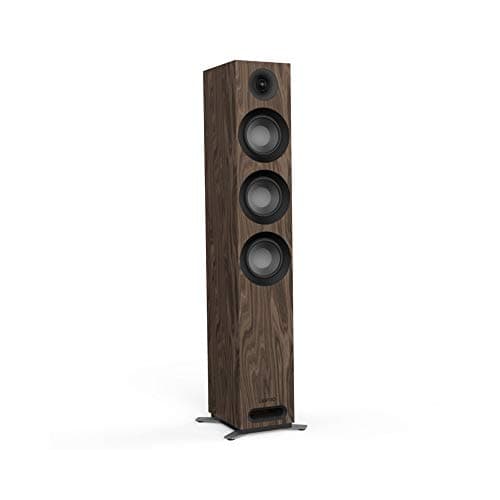
Top pick: Jamo Studio S 809
Best near a wall. #ad Affiliate link — we earn a commission at no extra cost to you.
The short answer
The best speakers under $500 for most people are the Jamo Studio S 809 — because they are a genuine full-range floorstanding pairfor one purchase inside the band, and because Jamo publishes the two figures the rest of this field hedges on: 37 Hz to 26 kHz at ± 3 dB, and an 8 Ω impedance stated flatly with no “compatible” qualifier attached. Three 5-inch polyfiber woofers per cabinet and a front-firing slot port make them the one speaker here you can put near a wall without strangling the bass. They are for someone who has or will buy a modest amplifier and wants two towers rather than two boxes on stands. The budget pick is the Edifier R1280T— the cheapest thing in our registry that makes stereo sound with nothing else attached at all: 21 W + 21 W RMS, dual RCA inputs, no amplifier, no stands, no cables beyond the ones in the box. The trade is stated below — a 4-inch woofer, a 52 Hz figure with no tolerance published, and no phono stage, so a turntable still needs one.
Everything on this page carries a live price read from the price layer with the date it was read, shown under each table. The band was checked against those prices before the page was written: six registry products sat under $500 with a live offer.
Disclosure: we earn a commission if you buy through the links on this page, at no extra cost to you. It does not influence what we pick — our criteria are published and reproducible, so you can check our work. How we pick · Full disclosure
These picks are spec-and-price analyses, not listening tests. We have not heard this gear and we do not pretend to have: every figure below is sourced to the manufacturer and linked, and every price is live or not shown at all. Here are the rules we followed.
Quick picks
Ranked on the published criteria in How We Pick. Prices are live as of November 23, 2026. Tap any row for the full write-up.
- 8.0
- 8.5
- 7.0
- 8.6
- 8.6
- 6.8$109.99View on Amazon
$149.9927% off
| # | Product | Best for | Score | Price |
|---|---|---|---|---|
| 1 | Jamo Studio S 809 The only front-ported tower here, sold as a pair, with a ± 3 dB tolerance on its 37 Hz claim — the answer when the speakers cannot come out into the room. | Best near a wall | 8.0 | |
| 2 | 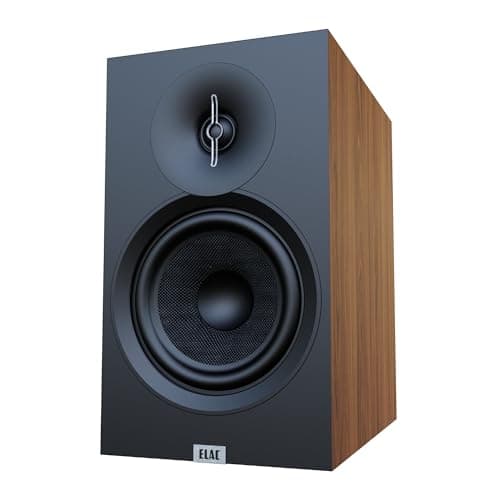 ELAC Debut 3.0 DB63 The Debut 3.0 generation of the same 6.5-inch design, and the first ELAC bookshelf we cover that publishes both a response tolerance and a recommended amplifier range — so the match can be finished rather than estimated. | Best overall under $500 | 8.5 | |
| 3 | 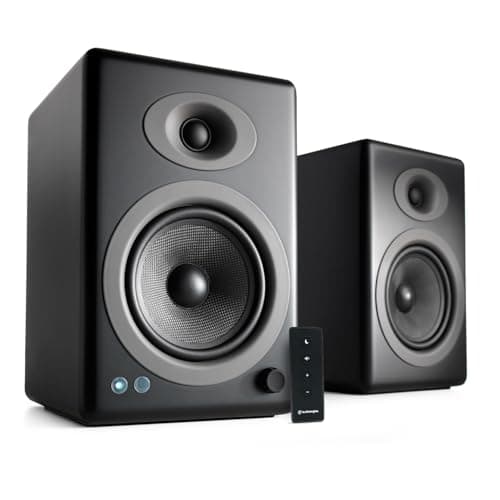 Audioengine A5+ A larger powered pair with enough output to fill a living room rather than a desk, which is the line most powered speakers fail to cross. | Best powered pair for a real room | 7.0 | |
| 4 | 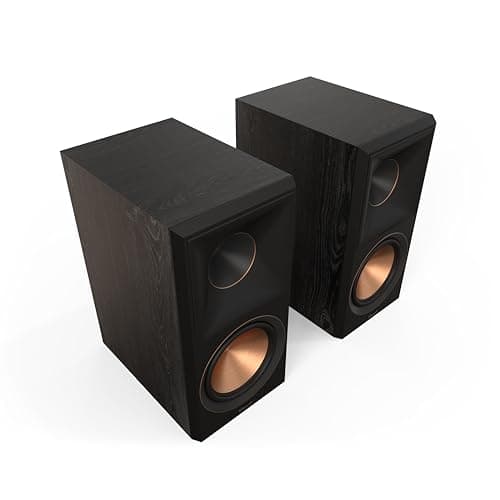 Klipsch RP-600M II Higher sensitivity and a bigger cabinet than the R-51M, which buys headroom rather than a different kind of speaker. | Best step up | 8.6 | |
| 5 | 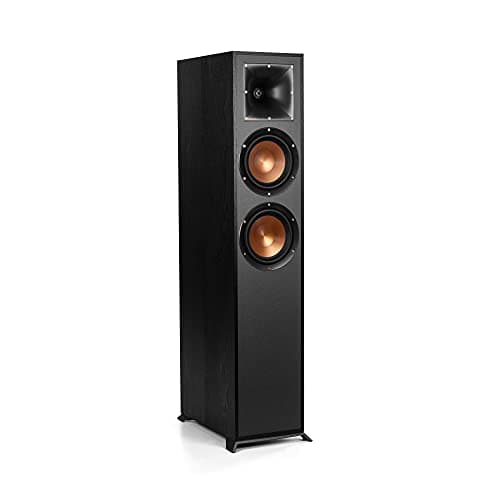 Klipsch R-620F 96 dB at 2.83 V/1 m and 38 Hz with a ±3 dB tolerance attached — the only speaker here that pairs the highest published sensitivity with a bass figure you can actually hold Klipsch to. | Best overall | 8.6 | |
| 6 | 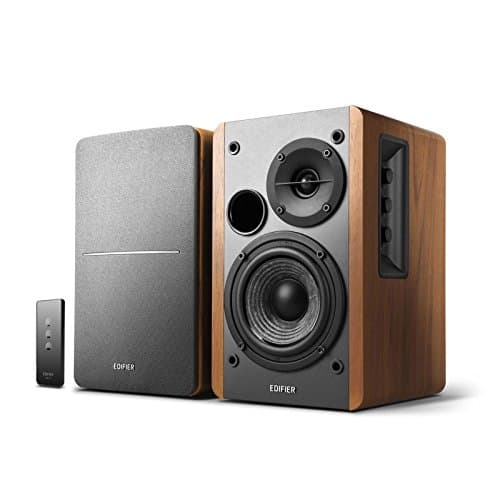 Edifier R1280T The cheapest credible way to get a turntable making sound in a small room, provided the turntable brings its own phono stage. | Best budget powered pair | 6.8 | $109.99View on Amazon $149.9927% off |
Five hundred dollars is the most interesting budget in hi-fi, because it is the first one where all three ways of building a stereo system are genuinely available. You can buy a pair of floorstanding speakers. You can buy a pair of bookshelf speakers that will outclass the towers on cabinet quality and lose to them on bass. Or you can buy a powered pair with the amplifier already inside, and spend nothing else.
Most roundups at this price pick one of those three and pretend the other two do not exist. This page ranks across all three, on four published criteria: bass extension with its tolerance window, the sensitivity or amplifier-output figure with its measurement condition, what else you have to buy to hear anything, and — the one that catches people — how many speakers the listing actually ships.
The picks compared, spec by spec
Two things jump out of the first column. The Audioengine A5+ publishes the tightest tolerance window on the page by a wide margin — ± 1.5 dB where everyone else quotes ± 3 dB or nothing — which is a real disclosure even though it reaches no deeper than the ELAC. And the Edifier is the only pick here that publishes a bass figure with no tolerance at all, which is exactly what you would expect at the bottom of the band and worth knowing rather than glossing. The second column deliberately mixes two different kinds of number: for the three passive picks it is sensitivity, for the two powered ones it is amplifier output, because those are the figures that answer the same practical question in each case.
Every figure below is the manufacturer’s own published value and links to the document we read it from. “Not published” means the manufacturer does not publish that figure; an em dash means we have no published figure for that model. Prices are live as of November 23, 2026.
Best near a wall
- Bass, with its tolerance
- 37 Hz ± 3 dB
- Sensitivity or amp output
- 90 dB · 2.83 V / 1 m
- Impedance
- 8 Ω — stated flatly, no hedge
- Driver complement
- 3 × 5 in polyfiber
Best overall under $500
- Bass, with its tolerance
- 50 Hz at −3 dB (manual)
- Sensitivity or amp output
- 87 dB · 2.83 V / 1 m
- Impedance
- 6 Ω (page and manual agree)
- Driver complement
- 6.5 in aramid fiber
Best powered pair for a real room
- Bass, with its tolerance
- 50 Hz ± 1.5 dB — tightest window here
- Sensitivity or amp output
- 50 W RMS/ch per 16 C.F.R. § 432.3
- Impedance
- Powered — no amplifier needed
- Driver complement
- 5 in aramid fiber
Best step up
- Bass, with its tolerance
- 44 Hz ± 3 dB
- Sensitivity or amp output
- 94.5 dB · 2.83 V / 1 m · half-space
- Impedance
- 8 Ω “compatible”
- Driver complement
- 6.5 in Cerametallic
Best overall
- Bass, with its tolerance
- 38 Hz ± 3 dB
- Sensitivity or amp output
- 96 dB · 2.83 V / 1 m
- Impedance
- 8 Ω “compatible”
- Driver complement
- 2 × 6.5 in spun copper
Best budget powered pair
- Bass, with its tolerance
- 52 Hz, no tolerance
- Sensitivity or amp output
- 21 W + 21 W RMS
- Impedance
- Powered — no amplifier needed
- Driver complement
- 4 in
| Pick | Bass, with its tolerance | Sensitivity or amp output | Impedance | Driver complement | Price |
|---|---|---|---|---|---|
| 1.Jamo Studio S 809Best near a wall | 37 Hz ± 3 dB | 90 dB · 2.83 V / 1 m | 8 Ω — stated flatly, no hedge | 3 × 5 in polyfiber | |
| 2.ELAC Debut 3.0 DB63Best overall under $500 | 50 Hz at −3 dB (manual) | 87 dB · 2.83 V / 1 m | 6 Ω (page and manual agree) | 6.5 in aramid fiber | |
| 3.Audioengine A5+Best powered pair for a real room | 50 Hz ± 1.5 dB — tightest window here | 50 W RMS/ch per 16 C.F.R. § 432.3 | Powered — no amplifier needed | 5 in aramid fiber | |
| 4.Klipsch RP-600M IIBest step up | 44 Hz ± 3 dB | 94.5 dB · 2.83 V / 1 m · half-space | 8 Ω “compatible” | 6.5 in Cerametallic | |
| 5.Klipsch R-620FBest overall | 38 Hz ± 3 dB | 96 dB · 2.83 V / 1 m | 8 Ω “compatible” | 2 × 6.5 in spun copper | |
| 6.Edifier R1280TBest budget powered pair | 52 Hz, no tolerance | 21 W + 21 W RMS | Powered — no amplifier needed | 4 in |
Prices as of November 23, 2026; every “Check Price” link goes to Amazon and earns us a commission at no extra cost to you. #ad
The trap at this price: the listing, not the speaker
Two of the six picks here are floorstanding speakers, and they are sold completely differently. Jamo prices the Studio S 809 per pair on its own store and the Amazon listing is a pair. Klipsch’s listing for the R-620F is a single cabinet — Klipsch says so on the product page — so a stereo pair is two purchases, and two purchases of the R-620F leave the band entirely.
Pair cost = listing price × (sold singly ? 2 : 1)
Inputs
- Jamo Studio S 809 — how it is sold: A pair; Jamo prices it per pair and the listing is a pair (Jamo product page)
- Klipsch R-620F — how it is sold: One speaker; a stereo pair is two purchases (Klipsch product page)
Result
Why the Jamo Studio S 809 wins
It is not the most sensitive, the best-documented, or the one with the nicest cabinet materials. It wins because it is the only pick in the band that delivers a complete full-range stereo pair for one purchase while publishing a bass figure with a real tolerance attached to it.
Jamo publishes 37 Hz to 26 kHz at ± 3 dB, 90 dB sensitivity at 2.83 V / 1 m, an 8 Ω impedance with no “compatible” hedging, 120 W / 240 W power handling, a 25 mm soft-dome tweeter with an anti-diffraction waveguide, three 5-inch polyfiber woofers, a single binding post, and 30 lb per cabinet. The port is the detail that earns the top spot in a real room: it is a front-firing slot, the only front-ported speaker in this field, which means the cabinet does not need the eight inches of clear wall behind it that every rear-ported design on this page does.
What it gives up: a single binding post rather than dual, so no bi-wiring; no published crossover frequency and no published minimum impedance; and a soft-dome tweeter where the two Klipsch models use a horn, which is a presentation preference rather than a deficiency. Three 5-inch woofers also total less cone area than two 6.5-inch ones, so the 37 Hz figure is doing more work than the driver count suggests — it is a ± 3 dB figure, which is why we trust it.
The other five, and who each is for
ELAC Debut 3.0 DB63— for someone who already owns an amplifier and wants the best-specified speaker in the band. It is the only pick here whose impedance figure appears identically on the product page and in the owner’s manual (6 Ω), it publishes a 20 to 140 W recommended range, a 2 kHz crossover, a 6.5-inch aramid-fiber woofer, a dual flared frontport, and CARB2-rated 16 mm MDF with five-way binding posts. It also publishes its bass twice and honestly: 42 Hz at −6 dB on the product page, 50 Hz at −3 dB in the manual. Note its one documentation conflict, which we publish rather than resolve: the product page says 120 W peak power handling and the manual says 60 W nominal / 80 W peak. Plan to the lower pair. It sits at the very top of this band, so watch the live price.
Audioengine A5+— for a desk, a small room, or anyone who wants to be finished after one purchase. It is the only speaker on this site that publishes its amplifier output under the FTC’s own measurement rule, 16 C.F.R. § 432.3: 50 W RMS per channel, with a 75 W AES peak figure stated separately rather than conflated. Its ± 1.5 dB tolerance window is the tightest published figure in this roundup. Audioengine is also unusually direct about the thing most powered-speaker pages fudge — its own specification page states that all turntables need a phono preamp stage before connecting, so a phono stage is an extra purchase if vinyl is the source.
Klipsch RP-600M II— for a low-power amplifier. 94.5 dB sensitivity, with Klipsch’s published footnote attached (“2.83 V / 1 m, half-space anechoic”), a 44 Hz ± 3 dB bass figure, a 6.5-inch Cerametallic woofer with Faraday rings and a 1.5 kHz crossover. If your amplifier is a 10 or 20 W valve or Class-D box, this is the pick, because sensitivity is worth more than watts in that situation. Read the half-space footnote before you compare its number with the Jamo’s: it is not the same test condition.
Klipsch R-620F— for a 5.1 build. The highest published sensitivity on the site, 38 Hz ± 3 dB, dual 6.5-inch spun-copper woofers, a 2 kHz crossover and a 90° × 90° square Tractrix horn. Sold one cabinet at a time, which is the whole reason it is ranked fifth on a page about a budget rather than first on a page about value.
Edifier R1280T— the budget pick. 21 W + 21 W RMS, a 4-inch woofer and a 0.5-inch tweeter, dual RCA inputs, and a 52 Hz figure published with no tolerance. Edifier does not state whether there is a phono stage inside, which we read as there not being one; assume none and check before buying if a turntable is the only source. For what it is — the cheapest complete stereo system in our registry — the honest summary is that it removes every excuse not to start.
What $500 does not buy in any of the three architectures
Not one of the six speakers on this page publishes a harmonic distortion figure. Not one publishes a minimum impedance. Three of the six publish an impedance figure that is a compatibility statement rather than a measured value, or no nominal figure at all. And the one genuinely deep bass figure here — the Jamo’s 37 Hz — is still thirteen hertz above what a $249 subwoofer publishes, which is why the subwoofer question comes up on every page in this hub. If the budget is hard at $500, buy the pair you can live with and add the subwoofer later; if it is soft, the next bracket up is where published minimum impedances start appearing.
One rung up from this one: our best speakers under $1,000 roundupcovers the band where makers start publishing the harder version of each figure — a distortion number with its measurement condition on one pick, and a “sold as” row that tells you whether the listing is one cabinet or two.
Every pick in detail
Every specification below links to the manufacturer document we read it from. Where a manufacturer does not publish a figure, we say so rather than estimating it.
Jamo Studio S 809
Best near a wallPrice as of November 23, 2026. #ad
The only front-ported tower here, sold as a pair, with a ± 3 dB tolerance on its 37 Hz claim — the answer when the speakers cannot come out into the room.
- sensitivity
- 8/10
- published data
- 6/10
- bass extension
- 8/10
- amp friendliness
- 8/10
- value for money
- 10/10
| Specification | Published value | Source |
|---|---|---|
| Sensitivity | 90 dB (2.83 V @ 1 m) | Jamo spec table |
| Impedance | 8 Ω — stated flatly, with no “compatible” hedge | Jamo spec table |
| Minimum impedance | Not published | — |
| Frequency response | 37 Hz – 26 kHz ± 3 dB | Jamo spec table |
| Power handling | 120 W / 240 W | Jamo spec table |
| Tweeter | 1 × 25 mm (1 in) soft dome with Anti-Diffraction Waveguide | Jamo spec table |
| Woofers | 3 × 127 mm (5 in) polyfiber | Jamo spec table |
| Crossover frequency | Not published | — |
| Enclosure | Bass reflex via a front-firing slot port — the only front-ported speaker on this page | Jamo spec table |
| Input terminals | Single binding post | Jamo spec table |
| Dimensions (H × W × D) | 41.02 × 7.52 × 9.92 in (1,042 × 191 × 252 mm) | Jamo spec table |
| Weight (each) | 30 lb / 13.6 kg | Jamo spec table |
| Sold as | A pair. Jamo prices the S 809 per pair on its own store, and the Amazon listing is a pair. | Jamo product page |
Pros
- Front-firing slot port — the only speaker on this page that is designed to work close to a back wall
- 37 Hz – 26 kHz ± 3 dB: a tolerance window on the deepest-but-one bass claim here
- 8 Ω stated flatly, with none of the “compatible” hedging Klipsch, Polk and Fluance all use
- Sold as a matched pair, so the listing price is the pair price
Cons
- Jamo publishes NO crossover frequency, so how three 5 in woofers are filtered is undisclosed
- Three 5 in drivers is less cone area than the dual 6.5 in designs it is priced against
- Single binding post — no bi-wiring or bi-amping, which the Polks' 5-way posts allow
- It is the oldest design here, and Jamo's current catalog has moved to other series
Skip it if you want to know how the speaker is filtered. There is no crossover row on Jamo's spec table and no manual figure we can link.
ELAC Debut 3.0 DB63
Best overall under $500Price as of November 23, 2026. #ad
The Debut 3.0 generation of the same 6.5-inch design, and the first ELAC bookshelf we cover that publishes both a response tolerance and a recommended amplifier range — so the match can be finished rather than estimated.
- published data
- 9/10
- sensitivity
- 6/10
- bass extension
- 8/10
- amp friendliness
- 6/10
- value for money
- 8/10
| Specification | Published value | Source |
|---|---|---|
| Design | 2-way, bass reflex, dual flared front port | ELAC spec page |
| Sensitivity | 87 dB (2.83 V / 1 m) | ELAC spec page |
| Impedance | 6 Ω (product page and owner's manual agree, which they do not for the DF-series towers) | ELAC owner's manual (PDF) |
| Minimum impedance | Not published | — |
| Frequency response (−3 dB) | 50 Hz – 34 kHz — published in the owner's manual only, 8 Hz above the headline figure | ELAC owner's manual (PDF) |
| Frequency response (−6 dB) | 42 Hz – 38 kHz (the figure ELAC's product page leads with) | ELAC spec page |
| Recommended amplifier power | 20 – 140 W | ELAC spec page |
| Power handling | Product page: 120 W peak. Owner's manual: 60 W nominal / 80 W peak. Two ELAC documents, two answers — plan to the lower pair. | ELAC owner's manual (PDF) |
| Woofer | 6.5 in aramid-fiber cone | ELAC spec page |
| Tweeter | 1 in aluminum dome (the B6.2's was cloth) | ELAC spec page |
| Crossover | 2,000 Hz | ELAC spec page |
| Enclosure | CARB2-rated 16 mm MDF, 5-way metal binding posts | ELAC spec page |
| Dimensions (H × W × D) | 13.3 × 7.7 × 11.7 in (339 × 195 × 298 mm) | ELAC spec page |
| Weight (each) | 17.3 lb / 7.85 kg | ELAC spec page |
Pros
- ELAC publishes a tolerance for this generation: 50 Hz – 34 kHz at −3 dB in the owner's manual, beside the 42 Hz – 38 kHz the product page leads with at −6 dB
- A published recommended amplifier range, 20 – 140 W — the Debut 2.0 generation published only a handling limit, which is a different spec
- Same 87 dB at 2.83 V / 1 m and same 6 Ω as the B6.2, and both ELAC documents agree on the impedance, so every power calculation on this site carries over unchanged
- Front-firing dual flared port, so it tolerates being near a wall better than a rear-ported box
Cons
- The 42 Hz headline is a −6 dB figure. At −3 dB ELAC's own manual says 50 Hz, and only the manual says it
- Still no minimum impedance published, so you cannot see where the load actually dips
- ELAC's two documents disagree on power handling: 120 W peak on the product page, 60 W nominal / 80 W peak in the manual
- Bigger and heavier than the B6.2 it follows — 17.3 lb and 13.3 in tall, which is a lot of 'bookshelf'
Skip it if your amplifier is a low-power desktop unit. At 87 dB into 6 Ω this asks for the same real current the B6.2 did — run the power arithmetic on our amp-matching guide first.
Audioengine A5+
Best powered pair for a real roomPrice as of November 23, 2026. #ad
A larger powered pair with enough output to fill a living room rather than a desk, which is the line most powered speakers fail to cross.
- integration
- 7/10
- upgrade path
- 4/10
- value for money
- 6/10
- ease of setup
- 9/10
- connectivity
- 6/10
| Specification | Published value | Source |
|---|---|---|
| Type | Powered (amplifier built in) | Audioengine tech specs |
| Amplifier output | 50 W RMS per channel (measured per 16 C.F.R. § 432.3); 75 W peak per channel (AES) | Audioengine tech specs |
| Frequency response | 50 Hz – 22 kHz ± 1.5 dB | Audioengine tech specs |
| Built-in phono stage | No — Audioengine states “All turntables require a phono preamp stage before connecting to Audioengine speakers.” | Audioengine tech specs |
| Woofer | 5 in aramid fiber | Audioengine tech specs |
| Weight | Left (active) 15.4 lb / 7 kg; right (passive) 9.6 lb / 4.4 kg | Audioengine tech specs |
Pros
- Enough power for a real room, not just a desktop
- Wood cabinets
- Sub output
Cons
- No phono stage
- No digital inputs on the base model
- Expensive for the driver complement
Skip it if you need a phono stage included — the Kanto YU6 does that and this does not.
Klipsch RP-600M II
Best step upPrice as of November 23, 2026. #ad
Higher sensitivity and a bigger cabinet than the R-51M, which buys headroom rather than a different kind of speaker.
- sensitivity
- 10/10
- bass extension
- 8/10
- amp friendliness
- 10/10
- value for money
- 7/10
- build quality
- 9/10
| Specification | Published value | Source |
|---|---|---|
| Sensitivity | 94.5 dB (2.83 V / 1 m, half-space anechoic — Klipsch's published footnote) | Klipsch spec sheet (PDF) |
| Impedance | 8 Ω “compatible” (Klipsch's wording) | Klipsch spec sheet (PDF) |
| Minimum impedance | Not published | — |
| Frequency response | 44 Hz – 25 kHz ± 3 dB | Klipsch spec sheet (PDF) |
| Power handling | 100 W continuous / 400 W peak | Klipsch spec sheet (PDF) |
| Woofer | 6.5 in Cerametallic with Faraday rings | Klipsch spec sheet (PDF) |
| Crossover | 1,500 Hz | Klipsch spec sheet (PDF) |
| Weight (each) | 18.1 lb / 8.2 kg | Klipsch spec sheet (PDF) |
Pros
- Very high sensitivity
- Larger cabinet and more extension than the R-51M
- Real wood-veneer finishes
Cons
- Well above the $500 bracket
- Large
- Rear port placement constraints remain
Skip it if you are shopping under $500 — this is a bracket up.
Klipsch R-620F
Best overallNo live price right now. #ad
96 dB at 2.83 V/1 m and 38 Hz with a ±3 dB tolerance attached — the only speaker here that pairs the highest published sensitivity with a bass figure you can actually hold Klipsch to.
- sensitivity
- 10/10
- published data
- 7/10
- bass extension
- 8/10
- amp friendliness
- 10/10
- value for money
- 9/10
| Specification | Published value | Source |
|---|---|---|
| Sensitivity | 96 dB (2.83 V / 1 m) — the highest published figure on this site | Klipsch spec sheet (PDF) |
| Impedance | 8 Ω “compatible” (Klipsch's wording — not a measured nominal figure) | Klipsch spec sheet (PDF) |
| Minimum impedance | Not published | — |
| Frequency response | 38 Hz – 21 kHz ± 3 dB | Klipsch spec sheet (PDF) |
| Power handling | 100 W continuous / 400 W peak (a handling limit, not a recommended amplifier range) | Klipsch spec sheet (PDF) |
| Woofers | Dual 6.5 in spun-copper IMG | Klipsch spec sheet (PDF) |
| Tweeter | 1 in aluminum LTS on a 90° × 90° square Tractrix horn | Klipsch spec sheet (PDF) |
| Crossover | 2,000 Hz | Klipsch spec sheet (PDF) |
| Enclosure | MDF, bass reflex via rear-firing Tractrix ports | Klipsch product page |
| Input terminals | Not published | — |
| Dimensions (H × W × D) | 40 × 9.4 × 15.2 in (1,017 × 240 × 386 mm) | Klipsch spec sheet (PDF) |
| Weight (each) | Not published | — |
| Sold as | One speaker. Klipsch's Amazon listing is a single cabinet; a stereo pair is two purchases. | Klipsch product page |
Pros
- 96 dB at 2.83 V / 1 m — the highest published sensitivity of any speaker on this site
- 38 Hz – 21 kHz is quoted ± 3 dB, so both endpoints mean something
- 100 W continuous / 400 W peak handling, published as handling rather than as a recommendation
- Dual 6.5 in woofers in a 40 in cabinet that is still under 9.5 in wide
Cons
- Klipsch's own spec sheet leaves the weight and the input-terminal fields BLANK — the R-610F sheet fills both in, so this is an omission, not an oversight on our part
- Rear-firing Tractrix ports need clearance behind them, which rules out a tight alcove
- The horn presentation is divisive and we cannot tell you how it sounds — we have not heard them
- The Amazon listing is one speaker, so the real cost of a stereo pair is double the number shown
- Previous generation — Klipsch's own page for it now points buyers to the newer Reference R-600F
Skip it if the speakers have to sit within a few inches of a back wall. Rear ports and a wall are a poor combination, and the front-ported Jamo exists for exactly that room.
Edifier R1280T
Best budget powered pairThe cheapest credible way to get a turntable making sound in a small room, provided the turntable brings its own phono stage.
- integration
- 6/10
- upgrade path
- 3/10
- value for money
- 10/10
- ease of setup
- 9/10
- connectivity
- 6/10
| Specification | Published value | Source |
|---|---|---|
| Type | Powered (amplifier built in) | Edifier spec page |
| Amplifier output | 21 W + 21 W RMS | Edifier spec page |
| Frequency response | 52 Hz – 20 kHz (no tolerance published) | Edifier spec page |
| Inputs | Dual RCA | Edifier spec page |
| Built-in phono stage | Not stated either way by Edifier — assume none and check before buying | Edifier spec page |
| Woofer | 4 in | Edifier spec page |
| Tweeter | 0.5 in | Edifier spec page |
Pros
- Very cheap for a powered pair
- Two RCA inputs
- Tone controls on the cabinet
Cons
- NO built-in phono stage — the turntable must have one or you need a separate box
- Modest power output
- Small drivers, limited extension
Skip it if your turntable has no built-in phono stage — this pair will not make a sound without one.
Frequently asked questions
What are the best speakers under $500?
Should I buy bookshelf speakers, floorstanding speakers or powered speakers for $500?
Are floorstanding speakers sold in pairs under $500?
Do speakers under $500 need a subwoofer?
What is the cheapest way to get real stereo sound?
Read next
The Best Speakers Under $200
The entry band, ranked across all four shapes it covers: a bookshelf pair with a real amplifier recommendation, a single 94 dB tower, a powered pair with optical and Bluetooth, and the cheapest complete stereo system we stock.
The Best Bookshelf Speakers Under $500
Six pairs under $500 — and only one publishes a minimum impedance and a recommended amp range.
The Best Floorstanding Speakers Under $1,000
Six towers that make a stereo pair under $1,000, ranked on sensitivity with its stated condition, bass figures with a tolerance, and where the port fires.
The Best Powered Speakers Under $500
Five active pairs under $500, ranked on published amplifier power and its measurement condition — including the only maker here citing 16 CFR 432.3.
The Best Floorstanding Speakers
The head of our floorstanding cluster: six towers from the narrowest $200-class cabinet to a three-way at $1,000, ranked on published bass tolerance, cone area, amplifier spec and how many speakers the listing actually ships.
Passive vs Powered Speakers
Total cost, upgrade path, and why powered speakers correctly refuse to publish a sensitivity figure.
The Best Speakers Under $1,000
Six speakers inside a $1,000 ceiling, ranked on published data rather than adjectives — including the only one here that states its harmonic distortion, and the three that state whether you are buying a pair or a single cabinet.
Sources
Every specification on this page was read from one of these documents. If one of them has changed, or we have made an error, tell us — corrections are logged and dated per our editorial policy.