Passive vs Powered Speakers
The real question is not which sounds better. It is how many boxes you want to own, and whether you are prepared to replace an amplifier you did not choose when the speakers wear out their welcome.
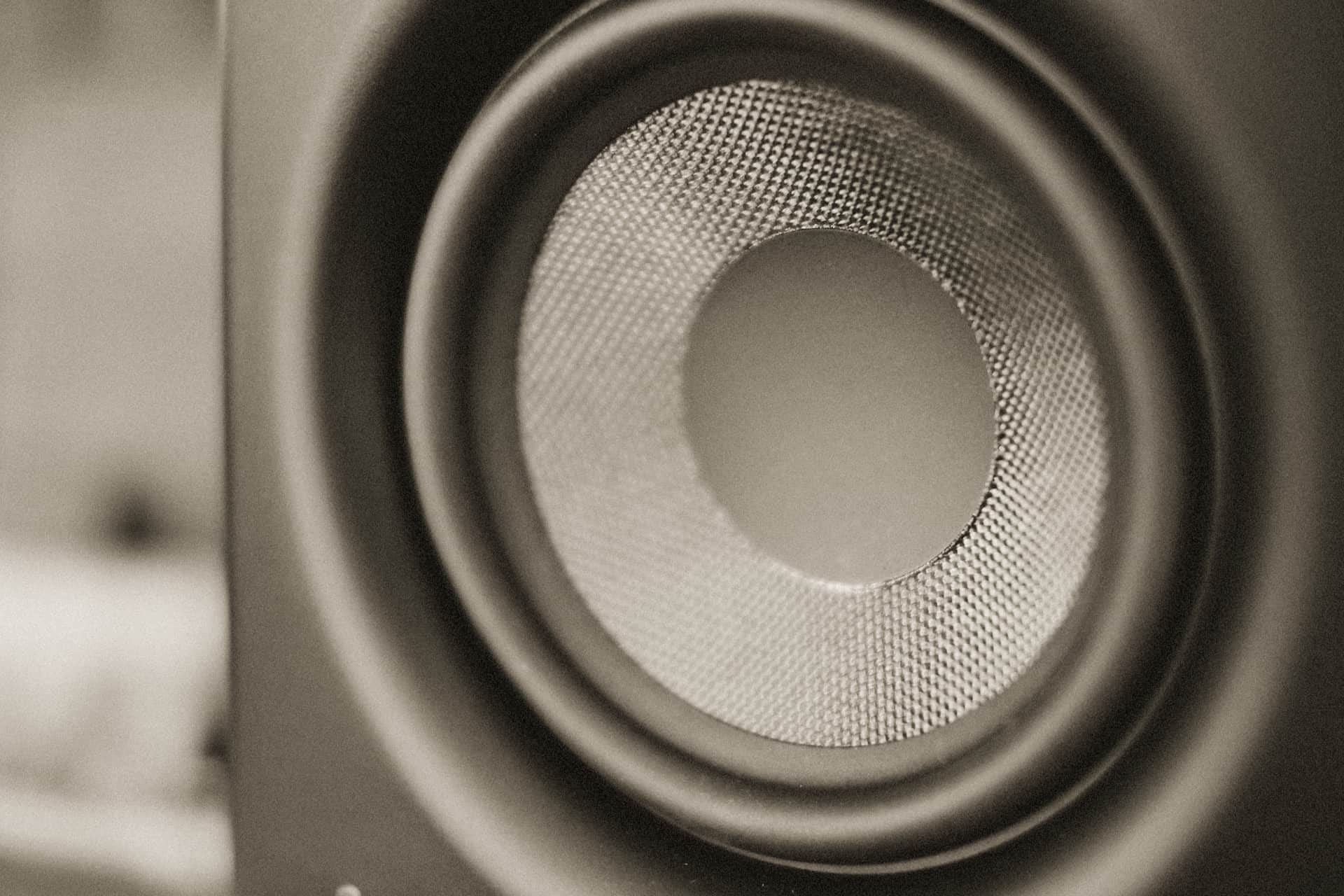
A passive speaker is a cabinet, some drivers and a crossover. It needs watts from somewhere. A powered speaker is the same thing with an amplifier bolted inside, usually one amplifier per pair with the second cabinet fed by a cable.
That is the entire technical difference, and almost every argument about which is “better” is actually an argument about money, boxes and time.
The specs powered speakers do not publish, and why that is correct
Look at a powered speaker’s spec sheet and you will notice two figures missing that every passive speaker publishes: sensitivity and impedance.
Kanto, Audioengine and Edifier all omit both. That is not an oversight and it is not hiding anything. Sensitivity and impedance are amplifier-matching specifications. They exist to answer the question “will my amplifier drive this?”. On a powered speaker the amplifier is already inside and already matched by the designer, so those numbers have no buyer-facing meaning at all.
One caution, because it catches people: Edifier doespublish an “input sensitivity” in millivolts. That is a line-level input specification and has nothing whatever to do with loudspeaker sensitivity in decibels. Do not compare it to the 87 dB on an ELAC sheet; they are unrelated quantities that happen to share a word.
What you should look for on a powered speaker instead is the amplifier output, and whether the manufacturer publishes one at all. Kanto publishes 100 W total RMS for the YU6 and 50 W total for the ORA. Audioengine publishes 50 W RMS per channel for the A5+, and notes it was measured per 16 C.F.R. § 432.3. Edifier publishes 21 W + 21 W for the R1280 pairs. Klipsch publishes no wattage at allfor The Fives II — they substitute “Max Output: 103 dB (1 m, stereo pair)” where the power figure would be, on the most expensive powered speaker we cover.
The total system cost, done properly
The honest comparison is not speaker against speaker. It is system against system.
A passive system is speakers plus an amplifier plus, for a turntable, a phono stage — unless the amplifier has one, which most of the integrated amplifiers we cover do. A powered system is speakers plus, if neither the deck nor the speakers has a phono stage, a phono stage.
Run those totals and powered usually wins on price at the entry end. It stops winning somewhere around the point where the passive system’s amplifier becomes something you would keep for a decade. An amplifier is the longest-lived box in a hi-fi system; drivers, cabinets and taste all change faster.
The upgrade path is the real argument
This is where the two approaches genuinely diverge, and it is worth being clear-eyed.
Passive: every component can be replaced independently. Better speakers on the same amplifier. A better amplifier under the same speakers. A separate phono stage when the built-in one starts to bother you. Each step is a single purchase and the rest of the system carries on.
Powered: the amplifier is fixed. You cannot upgrade it, you cannot replace it if it fails outside warranty, and when you outgrow the speakers you replace the amplifier too, whether it deserved replacing or not. If the amplifier board dies in year six, you have a pair of cabinets.
That is not a reason to avoid powered speakers. It is a reason to buy them knowing they are a finished product rather than a platform.
If you already own an amplifier, this is decided
Buy passive. Powered speakers would mean purchasing a second amplifier and leaving the first one switched off, which is not a saving by any definition.
The exception is a genuine second system — a desk, a kitchen, a bedroom — where a compact powered pair like the Kanto ORA or Audioengine A2+ does a job no passive setup does as neatly.
The turntable wrinkle
A turntable needs a phono stage somewhere, and this is where powered speakers can genuinely collapse three boxes into one.
The Kanto YU6 publishes an “RCA with phono switch” input and a built-in phono preamp; Klipsch The Fives II has one too. Plug a turntable straight in and you are done — no amplifier, no phono box. Audioengine is explicit that its speakers do not: “All turntables require a phono preamp stage before connecting to Audioengine speakers.”
And remember that if your deck has its own built-in stage, you must not run both. Two phono stages in series apply the RIAA curve twice, which sounds broken and is only a switch setting. Our turntable speaker roundup marks which models have a stage inside.
Which we would choose
Powered if you are starting from nothing, want it finished tonight, have a desk or a small room, and are comfortable owning a product rather than a system.
Passive if you already own an amplifier, if you expect to change things over the years, if you want more than about 50 watts, or if you care that any one box can be replaced without replacing the others.
Neither is the audiophile answer and neither is the beginner answer. They are answers to different questions about what you already own and how long you plan to keep it.
A powered pair is also where the studio-monitor question arrives, because most monitors are active. Our hi-fi-versus-studio-monitor comparison sets out what each category publishes and why we rank no monitors.
Frequently asked questions
Are powered or passive speakers better?
Neither in the abstract. Powered means fewer boxes and a lower entry price; passive means every part can be upgraded or replaced independently and the amplifier — the longest-lived box in a system — is your choice. The deciding question is usually whether you already own an amplifier. If you do, powered speakers mean buying a second one and never using the first.
Why do powered speakers not publish a sensitivity figure?
Because it would tell you nothing. Sensitivity and impedance exist to help you match a speaker to an external amplifier; when the amplifier is built in and matched at the factory, those numbers have no buyer-facing meaning. Kanto, Audioengine and Edifier all correctly omit them. Look at the published amplifier output instead — and note that Klipsch publishes no wattage at all for The Fives II.
Do powered speakers need an amplifier?
No — the amplifier is inside the cabinet, which is what "powered" means. They do still need a source, and for a turntable that means a phono stage somewhere: either inside the deck, inside the speaker (the Kanto YU6 and Klipsch The Fives II have one), or as a separate box.
What happens if the amplifier in a powered speaker fails?
Outside warranty, you generally have a pair of cabinets. That is the structural risk of the format: the amplifier is not user-replaceable, so its lifespan sets the system's lifespan. In a passive system a failed amplifier is one box to replace and the speakers carry on.
Read next
The Best Speakers for a Turntable
Which speakers need an amplifier, which need a phono stage, and the one that needs neither.
The Best Bookshelf Speakers Under $300
Five passive pairs at the $300 mark, and a ten-decibel sensitivity spread that decides which amplifier each one needs.
The Best Integrated Amplifiers Under $1,000
Six amps under $1,000, and the dynamic-power trap that overstates the popular pick by roughly 2x.
Speaker Impedance Explained
Nominal versus minimum impedance, why 2.83 V is not 1 watt, and how to check your amplifier can cope.
Bookshelf vs Floorstanding Speakers
Cabinet volume buys extension; a subwoofer buys extension you can place independently. The trade, with each maker's own numbers.
Hi-Fi Speakers vs Studio Monitors
Four genuine differences, three imagined ones, and the question that actually decides which category you want.
Sources
Every specification on this page was read from one of these documents. If one of them has changed, or we have made an error, tell us — corrections are logged and dated per our editorial policy.