The Best Hi-Fi Gifts Under $250
This is the budget where a gift stops being a part and starts being a whole thing that works on its own. Which, for a present, is worth more than any specification on this page.
Disclosure: we earn a commission if you buy through the links on this page, at no extra cost to you. It does not influence what we pick — our criteria are published and reproducible, so you can check our work. How we pick · Full disclosure
These picks are spec-and-price analyses, not listening tests. We have not heard this gear and we do not pretend to have: every figure below is sourced to the manufacturer and linked, and every price is live or not shown at all. Here are the rules we followed.
Quick picks
Ranked on the published criteria in How We Pick. Prices are live as of September 15, 2026. Tap any row for the full write-up.
- 7.2$159.99View on Amazon
$189.9916% off
- 7.4$249.99View on Amazon
$349.9929% off
- 8.0
- 8.8
- 7.8
- 8.8
| # | Product | Best for | Score | Price |
|---|---|---|---|---|
| 1 | 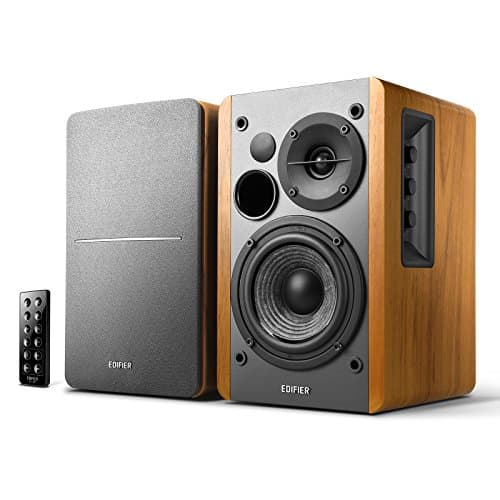 Edifier R1280DB The R1280T plus Bluetooth and optical/coaxial inputs — still no phono stage, but a far more useful set of sockets. | Best budget powered pair with digital inputs | 7.2 | $159.99View on Amazon $189.9916% off |
| 2 | 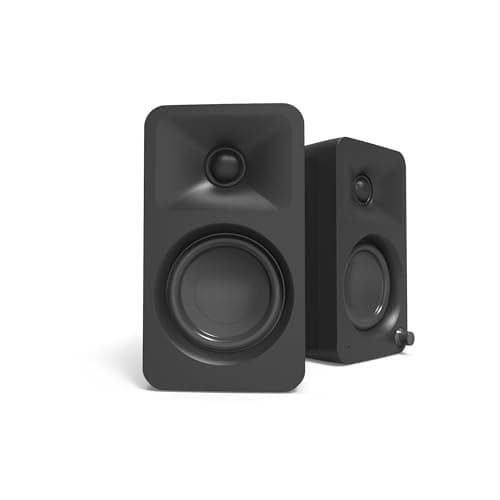 Kanto ORA Small powered reference speakers built for near-field listening, where the distance is short and the cabinet does not need to move much air. | Best for a desk | 7.4 | $249.99View on Amazon $349.9929% off |
| 3 | 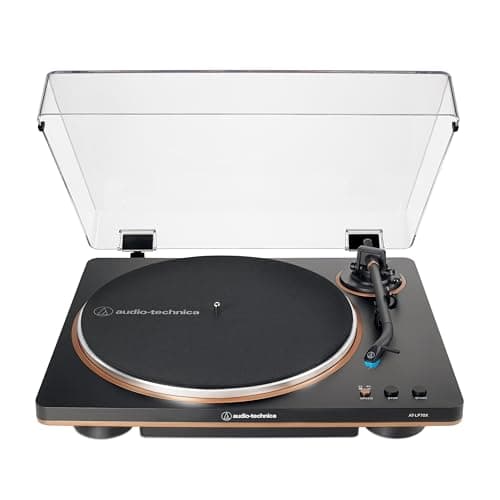 Audio-Technica AT-LP70X Fully automatic, so the arm lifts and returns on its own — the single feature that most reduces the chance of a new owner damaging a stylus or a record. | Best for beginners | 8.0 | |
| 4 | 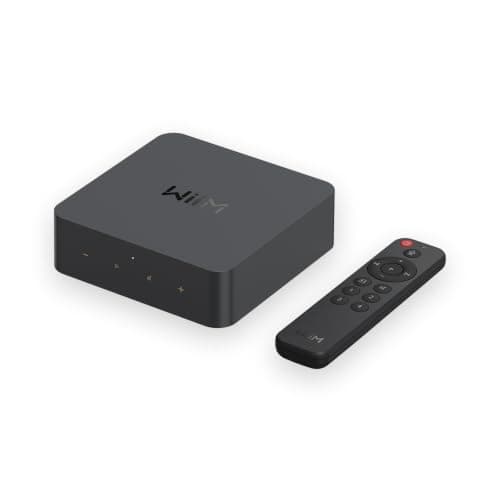 WiiM Pro Plus A streamer and DAC that publishes its line-out performance twice — once as the chip figure and once as the finished product — and is honest enough to print both. | Best streamer for an existing system | 8.8 | |
| 5 | 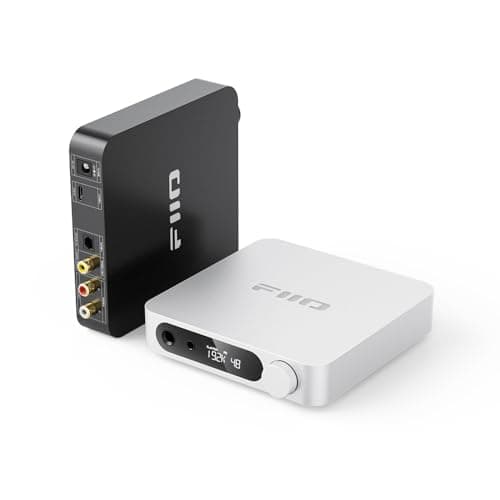 FiiO K11 The K7's cheaper relative — less headphone power, the same basic idea, at a price that undercuts most DAC-only boxes. | Best budget DAC and amp | 7.8 | |
| 6 | 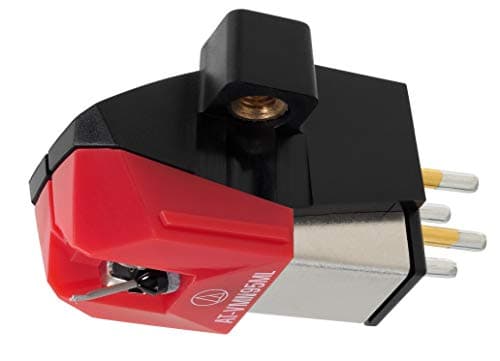 Audio-Technica AT-VM95ML A MicroLinear diamond on the same body as the $65 VM95E, with the highest published compliance and the tightest channel balance of any cartridge here. | Best stylus profile under $200 | 8.8 |
Under $100, every hi-fi gift is a component that improves something the recipient already has. Somewhere around $150 that changes: you can buy a thing that plugs in, turns on and makes sound with no other purchase required. For a present that difference is worth more than any measurement, because nobody wants to unwrap a homework assignment.
So the picks here are ranked by how complete they are, not purely by how well they measure. The top two are entire systems. The bottom two are excellent components that assume the recipient already has the rest.
The complete gifts
The Edifier R1280DB is our lead pick because of what is in the box: a powered stereo pair with the amplifier built in, optical and coaxial digital inputs, Bluetooth, two analog inputs and tone controls on the cabinet. That set of sockets means it works with a computer, a phone, a television and a turntable, which is an unusually wide landing zone for a gift.
The one hard check: it has no built-in phono stage. If the plan is a turntable, that turntable must have its own phono stage or you need to add a small one. We have said this on every page where these speakers appear because it is the single most common way this specific purchase goes wrong.
The Kanto ORA is the pick if the destination is a desk rather than a room. Genuinely desk-sized, USB-C as well as analog in, and a subwoofer output for when the small drivers run out of low end. It is designed for a listener about a metre away and it is honest about that — in a lounge, at four metres, it is the wrong speaker.
The Audio-Technica AT-LP70X is the complete gift for someone who does not own a turntable at all and has been talking about starting. It is fully automatic, so the arm lifts and returns on its own, which is the single feature that most reduces the chance of a new owner damaging a stylus or a record — and that matters much more for a beginner than any specification. Our beginner roundup covers why we rank automation so highly.
Two limits, both from Audio-Technica’s own manual. The cartridge body is non-removable, so only the stylus swaps and the upgrade path ends at the VM95 range. And there is no USB output, so it will not digitize a collection. If that is the plan, a different deck is the right gift. Note also that a turntable needs speakers: pair it with the Edifier above and check the phono-stage question in both directions.
The excellent components
The WiiM Pro Plus is a streamer for a system that already exists, and it is the pick for someone who has a good amplifier and is still playing music off a phone over Bluetooth. It publishes its line-out performance twice — the chip figure and the finished-product figure — which is unusual honesty, and it supports Roon, AirPlay 2, Chromecast, Spotify Connect and TIDAL Connect simultaneously, so it is very unlikely to miss whatever service they use.
The check: does their amplifier already stream? Paying twice for the same function is the most common mistake in this category, and plenty of modern amplifiers and AV receivers have this built in.
The FiiO K11 is the headphone pick: a DAC and headphone amplifier in one box for less than many DAC-only units, with a balanced output at a price where balanced is usually absent. If the person you are buying for has good headphones and a laptop, this is the gap in their setup. If their headphones are genuinely demanding high-impedance models, it is not enough amplifier and you want the K7 instead.
The Audio-Technica AT-VM95ML is the pick for the record listener who has already done the obvious upgrade. It is a MicroLinear stylus — a line-contact profile that sits deeper in the groove than any elliptical — on the same body as the $65 VM95E, with the highest published compliance and the tightest channel balance of the Audio-Technica cartridges we cover.
Two caveats worth reading before you buy it as a present. If they already own any VM95 body, this is a stylus swap with no alignment at all, which makes it a superb gift. But high compliance narrows the range of tonearms it suits — high compliance on a heavy arm is the classic mismatch — and most manufacturers do not publish the arm figure you would need to check. The arithmetic, and the gaps in the published data, are here.
How to choose between them
A short decision tree, because that is genuinely all this needs:
- They have no system at all. Powered speakers. Nothing else on this page works on its own.
- They listen at a desk. Desk-sized powered speakers if it is speakers, a DAC and headphone amp if it is headphones.
- They have an amplifier and speakers but stream over Bluetooth. A streamer — provided the amplifier does not already do it.
- They have a turntable and good ears. A stylus upgrade, which is the cheapest large change available to them.
- They have talked about getting into records. A fully automatic deck, plus something to play it through.
Every pick in detail
Every specification below links to the manufacturer document we read it from. Where a manufacturer does not publish a figure, we say so rather than estimating it.
Edifier R1280DB
Best budget powered pair with digital inputsThe R1280T plus Bluetooth and optical/coaxial inputs — still no phono stage, but a far more useful set of sockets.
- integration
- 7/10
- upgrade path
- 3/10
- value for money
- 9/10
- ease of setup
- 9/10
- connectivity
- 8/10
| Specification | Published value | Source |
|---|---|---|
| Type | Powered (amplifier built in) | Edifier spec page |
| Amplifier output | 21 W + 21 W RMS | Edifier spec page |
| Frequency response | 55 Hz – 20 kHz per the US spec table (Edifier's global site markets 51 Hz in body copy — the two disagree) | Edifier US spec page |
| Inputs | Optical, coaxial, Bluetooth, dual RCA | Edifier spec page |
| Built-in phono stage | Not stated either way by Edifier — assume none | Edifier spec page |
| Woofer | 4 in | Edifier spec page |
Pros
- Optical and coaxial digital inputs as well as analog
- Bluetooth
- Still inexpensive
Cons
- NO built-in phono stage
- Same modest drivers as the R1280T
- Bluetooth codec support is basic
Skip it if your turntable has no phono stage of its own.
Kanto ORA
Best for a deskSmall powered reference speakers built for near-field listening, where the distance is short and the cabinet does not need to move much air.
- integration
- 8/10
- upgrade path
- 4/10
- value for money
- 7/10
- ease of setup
- 9/10
- connectivity
- 9/10
| Specification | Published value | Source |
|---|---|---|
| Type | Powered (amplifier built in) | Kanto spec page |
| Amplifier output | 50 W total RMS (100 W peak); 9 W RMS per tweeter, 16 W RMS per woofer | Kanto spec page |
| Frequency response | 70 Hz – 22 kHz (no tolerance published) | Kanto spec page |
| Inputs | RCA line-level, USB-C (24-bit/96 kHz), Bluetooth 5.0 | Kanto spec page |
| Built-in phono stage | Not stated — inputs are line-level only, so assume none | Kanto spec page |
| Woofer | 3 in paper cone | Kanto spec page |
Pros
- Genuinely desk-sized
- USB-C input as well as analog
- Sub output for when the low end runs out
Cons
- Small drivers mean limited low end without a subwoofer
- No built-in phono stage
- Near-field by design
Skip it if this is a living-room system — these are built for a meter away, not four.
Audio-Technica AT-LP70X
Best for beginnersPrice as of September 15, 2026. #ad
Fully automatic, so the arm lifts and returns on its own — the single feature that most reduces the chance of a new owner damaging a stylus or a record.
- specs
- 7/10
- upgrade path
- 7/10
- value for money
- 9/10
- ease of setup
- 10/10
- connectivity
- 7/10
| Specification | Published value | Source |
|---|---|---|
| Drive type | Belt drive (DC motor), fully automatic | Audio-Technica manual (PDF) |
| Wow and flutter | < 0.25% (WTD) | Audio-Technica manual (PDF) |
| Signal-to-noise | > 55 dB | Audio-Technica manual (PDF) |
| Speeds | 33⅓, 45 rpm | Audio-Technica manual (PDF) |
| Cartridge included | AT-VM95C dual moving magnet — NON-REMOVABLE. The stylus upgrades across the VM95 range; the cartridge body does not come off. | Audio-Technica manual (PDF) |
| Tonearm effective mass | Not published | — |
| Built-in phono stage | Yes — switchable PHONO/LINE, 36 dB nominal gain | Audio-Technica manual (PDF) |
| USB output | No | Audio-Technica manual (PDF) |
| Tracking force range | Not published | — |
Pros
- Fully automatic start and return — no manual cueing to get wrong
- Built-in switchable phono stage, so it works with any line input
- The stylus upgrades across the AT-VM95 range without touching the cartridge
- Published wow and flutter under 0.25%, and Audio-Technica states the figure
Cons
- The cartridge body is non-removable — only the stylus swaps, so the upgrade path ends at the VM95 range
- Belt drive, not direct drive: the belt is a consumable
- No USB output
Skip it if you want to digitize your collection — this one has no USB out.
WiiM Pro Plus
Best streamer for an existing systemPrice as of September 15, 2026. #ad
A streamer and DAC that publishes its line-out performance twice — once as the chip figure and once as the finished product — and is honest enough to print both.
- measured performance
- 9/10
- connectivity
- 8/10
- features
- 9/10
- value for money
- 10/10
- published data
- 8/10
| Specification | Published value | Source |
|---|---|---|
| DAC | AKM AK4493SEQ (ADC: TI Burr-Brown PCM1861) | WiiM spec comparison |
| Analog out SNR | 121 dB (WiiM's comparison table, the AKM chip figure) · 120 dB A-weighted (WiiM's own “line-out performance” figure for the finished unit) | WiiM spec comparison |
| Analog out THD+N | −113 dB / 0.00023% (comparison table) · 0.00032% / −110 dB at 1 kHz, 44.1k–192k (line-out performance panel) | WiiM spec comparison |
| Line-out frequency response | ± 0.05 dB | WiiM spec comparison |
| Outputs | 1 × RCA line-out · 1 × optical S/PDIF (192 kHz/24-bit) · 1 × coaxial (192 kHz/24-bit) | WiiM spec comparison |
| Inputs | Line-in (2 Vrms, digitized by the ADC at 192 kHz/24-bit) · optical S/PDIF in up to 192 kHz/24-bit, stereo PCM only (no Dolby Digital or DTS) | WiiM spec comparison |
| Network | Wi-Fi 5 (802.11 b/g/n/ac, 2.4 and 5 GHz) · 10/100 Mbps Ethernet · Bluetooth 5.0 | WiiM spec comparison |
| Protocols | AirPlay 2, Google Cast Audio, Spotify Connect, TIDAL Connect, Amazon Music Casting, DLNA, Qplay 2.0, Roon Ready | WiiM spec comparison |
| EQ / room correction | 10-band parametric EQ, 10-band graphic EQ, 24 presets, per-source EQ, room correction | WiiM FAQ |
| Output impedance | Not published | — |
Pros
- AKM AK4493SEQ DAC with a published line-out SNR of 120 dB A-weighted and ±0.05 dB response for the finished unit, not just the chip
- Coaxial AND optical outputs, so it feeds an existing external DAC bit-perfectly if you already own one
- Roon Ready, AirPlay 2, Chromecast, Spotify Connect and TIDAL Connect all supported at once
- 10-band parametric EQ and room correction included, which is a genuinely rare feature at this price
Cons
- No display of any kind — everything happens in the phone app
- The optical input accepts stereo PCM only; Dolby Digital and DTS are explicitly unsupported
- No phono input, so a turntable still needs a separate stage
- WiiM publishes no output impedance, which matters if you feed a low-input-impedance amplifier
Skip it if your amplifier already streams. Paying twice for the same function is the most common mistake in this category.
FiiO K11
Best budget DAC and ampPrice as of September 15, 2026. #ad
The K7's cheaper relative — less headphone power, the same basic idea, at a price that undercuts most DAC-only boxes.
- measured specs
- 8/10
- inputs
- 7/10
- value for money
- 10/10
- build quality
- 6/10
- features
- 8/10
| Specification | Published value | Source |
|---|---|---|
| Chipset | DAC: CS43198; USB: SA9312L; amp: 2 × SGM8262-2 | FiiO parameters page |
| Max sample rate | USB: 384 kHz/32-bit, DSD256 native; coaxial: 192 kHz/24-bit; optical: 96 kHz/24-bit | FiiO parameters page |
| Headphone power | 6.35 mm: ≥ 520 mW + 520 mW (32 Ω), ≥ 60 mW + 60 mW (300 Ω). 4.4 mm balanced: ≥ 1,400 mW + 1,400 mW (32 Ω), ≥ 250 mW + 250 mW (300 Ω). All at THD+N < 1% | FiiO parameters page |
| Signal-to-noise | Line out ≥ 126 dB (A-weighted) | FiiO parameters page |
| Output level | 1.95 V RMS (line out) | FiiO parameters page |
| Preamp mode | Yes — LO/PO switching, each remembering its own volume | FiiO product page |
Pros
- DAC and headphone amp for less than most DAC-only boxes
- Balanced output at the price
- Compact
Cons
- Less headphone power than the K7
- Plastic-heavy build
- Fewer inputs
Skip it if you drive demanding high-impedance headphones — step up to the K7.
Audio-Technica AT-VM95ML
Best stylus profile under $200Price as of September 15, 2026. #ad
A MicroLinear diamond on the same body as the $65 VM95E, with the highest published compliance and the tightest channel balance of any cartridge here.
- specs
- 9/10
- upgrade path
- 10/10
- value for money
- 7/10
- tracking ability
- 9/10
- published data
- 9/10
| Specification | Published value | Source |
|---|---|---|
| Type | VM stereo dual magnet (moving magnet) | Audio-Technica spec page |
| Frequency response | 20–25,000 Hz (no tolerance published) | Audio-Technica spec page |
| Channel separation | 23 dB (1 kHz) | Audio-Technica spec page |
| Output voltage | 3.5 mV (1 kHz, 5 cm/sec) | Audio-Technica spec page |
| Output channel balance | 1.5 dB (1 kHz) — the tightest of any VM95 | Audio-Technica spec page |
| Stylus | 2.2 × 0.12 mil MicroLinear, nude square shank | Audio-Technica spec page |
| Cantilever | Aluminum pipe | Audio-Technica spec page |
| Dynamic compliance | 10 × 10⁻⁶ cm/dyne (100 Hz) | Audio-Technica spec page |
| Static compliance | 20 × 10⁻⁶ cm/dyne | Audio-Technica spec page |
| Tracking force | 1.8–2.2 g (2.0 g standard) | Audio-Technica spec page |
| Recommended load | 47,000 Ω, 100–200 pF | Audio-Technica spec page |
| Mount / weight | Half-inch mount, 6.1 g | Audio-Technica spec page |
| Replacement stylus | AT-VMN95ML | Audio-Technica spec page |
Pros
- 2.2 × 0.12 mil MicroLinear — a line-contact profile that sits deeper in the groove than any elliptical here
- 10 × 10⁻⁶ cm/dyne dynamic compliance, the highest published figure in this group
- 1.5 dB channel balance and 23 dB separation, both the best Audio-Technica figures here
- It is a stylus, not a cartridge — if you own any VM95 body it drops in with no alignment at all
Cons
- The most expensive cartridge here, and it shares its body with a $65 one
- A line-contact tip is less forgiving of alignment error than an elliptical
- 3.5 mV output, lower than the VM95E's 4.0 mV
- Higher compliance narrows the range of arms it suits — high compliance plus a heavy arm is the classic mismatch
Skip it if your tonearm's effective mass is unpublished and heavy-looking. High compliance on a heavy arm drops the resonance below the safe window, and most makers will not tell you the arm figure.
Frequently asked questions
What is the best hi-fi gift under $250?
Can I buy someone a turntable for under $250?
Is a music streamer a good gift?
What is better as a present: powered speakers or a DAC?
Is a stylus upgrade worth it as a gift?
Read next
The Best Hi-Fi Gifts Under $100
Six sub-$100 gifts, each matched to a specific problem in the recipient's existing system rather than picked for being cheap.
The Best Splurge Hi-Fi Gifts
Six serious gifts where budget is not the limit, each with a plain account of what it demands from the system it joins.
The Best Gifts for Vinyl Lovers
Five gifts for someone who already owns a turntable, each with the compatibility check to run before you buy it.
Passive vs Powered Speakers
Total cost, upgrade path, and why powered speakers correctly refuse to publish a sensitivity figure.
The Best Turntables for Beginners
Beginner decks ranked on the two things that matter at the start — automatic operation and a phono stage in the box.
The Best Music Streamers With a Built-In DAC
Four streamers with built-in DACs, ranked on published output performance, inputs and protocol support.
Sources
Every specification on this page was read from one of these documents. If one of them has changed, or we have made an error, tell us — corrections are logged and dated per our editorial policy.
- Edifier R1280DB — inputs and specifications
- Kanto ORA — inputs, subwoofer output and dimensions
- Audio-Technica AT-LP70X — user manual, automatic operation and specifications (PDF)
- WiiM Pro Plus — published line-out measurements and supported services
- Audio-Technica AT-VM95ML — stylus profile and compliance