The Best Gifts for Home Theater Fans
Home theater is the one category where a thoughtful gift can arrive and be physically unusable — no subwoofer output, no room under the television, the wrong brand of centre channel. Here is what to check before each of these.

Disclosure: we earn a commission if you buy through the links on this page, at no extra cost to you. It does not influence what we pick — our criteria are published and reproducible, so you can check our work. How we pick · Full disclosure
These picks are spec-and-price analyses, not listening tests. We have not heard this gear and we do not pretend to have: every figure below is sourced to the manufacturer and linked, and every price is live or not shown at all. Here are the rules we followed.
Quick picks
Ranked on the published criteria in How We Pick. Prices are live as of September 15, 2026. Tap any row for the full write-up.
- 8.2$329.00View on Amazon
$599.0045% off
- 7.4$159.99View on Amazon
$179.0011% off
- 7.6
- 7.6
- 8.4
| # | Product | Best for | Score | Price |
|---|---|---|---|---|
| 1 | 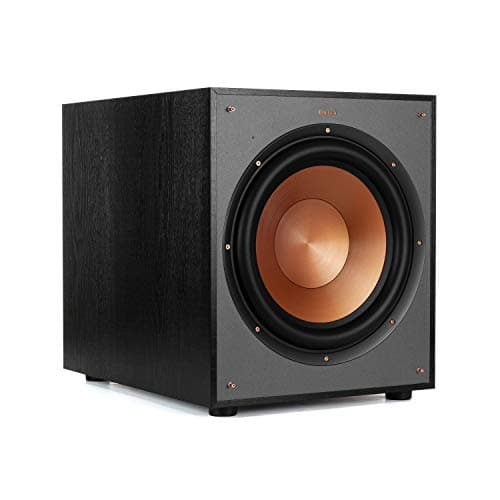 Klipsch R-120SW A 12-inch ported sub whose spec sheet publishes 200 W continuous next to the 400 W peak figure the listings quote — and whose only inputs are RCA, which is the spec that decides whether it works with your amplifier. | Best value 12-inch | 8.2 | $329.00View on Amazon $599.0045% off |
| 2 | 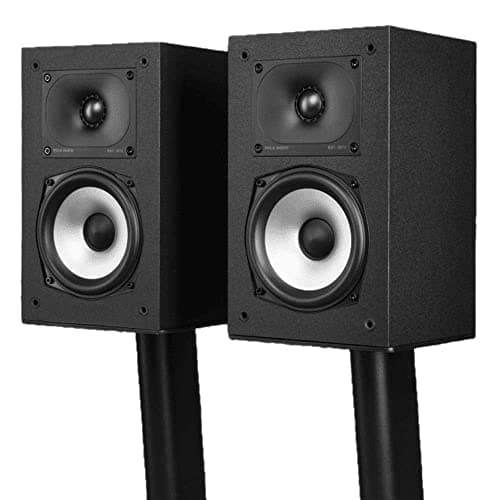 Polk Monitor XT15 48 Hz of published extension and a stated 30–150 W amplifier range, from a maker who tells you what to drive it with but not how they measured its sensitivity. | Best all-rounder under $200 | 7.4 | $159.99View on Amazon $179.0011% off |
| 3 | 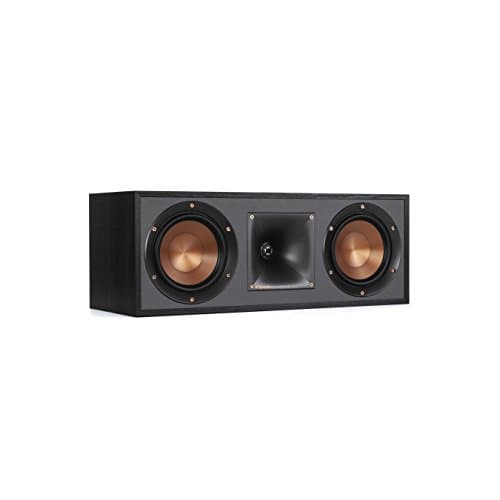 Klipsch R-52C A sealed dual-woofer center with a published 95 dB sensitivity, timbre-matched to the R-41M and R-51M so dialogue does not change character as it pans across the front. | Best center channel | 7.6 | |
| 4 | 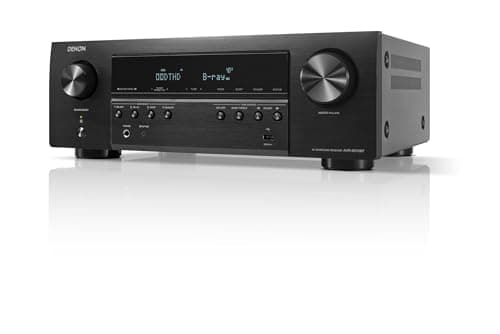 Denon AVR-S570BT The only receiver in this bracket whose maker publishes a full-band, both-channels-driven power rating — and it pays for that honesty by giving up Atmos, room correction and a phono input. | Best rated power under $500 | 7.6 | |
| 5 | 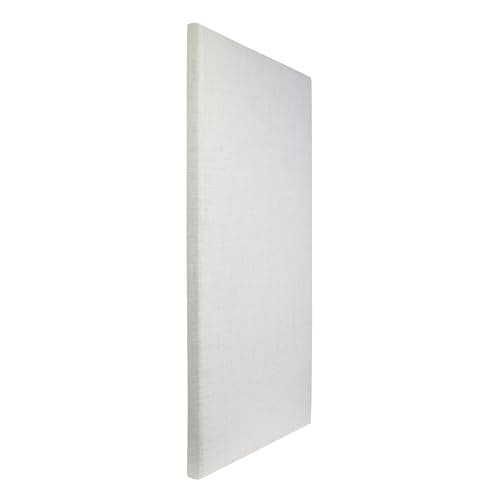 ATS Acoustics Sound Absorbing Panel (24x48) A mineral wool panel with the full absorption curve published — including the 125 Hz figure of 0.12 that its own NRC of 1.00 completely hides. | Best overall panel | 8.4 |
A home theater is a system where every component has to agree with every other one about sockets, levels and, in one specific case, tone of voice. That is why this page is arranged around what to verify rather than what is best — the best subwoofer in the world is a doorstop if their amplifier has no subwoofer output.
If you can get a photograph of the back of their receiver, you can answer nearly every question on this page in thirty seconds. If you cannot, there is a safe pick at the end.
A subwoofer is the biggest single change you can give them
Of everything here, adding a subwoofer changes the most. Film soundtracks put an entire dedicated channel below the range most speakers can reproduce; without a sub, that channel is simply not being played. Our setup guide covers where it goes and why.
The Klipsch R-120SW is our value pick and it is a good one for an honest reason: Klipsch publishes 200 W continuous next to the 400 W peak figure that appears in every retail listing, and publishes 29–120 Hz with a ±3 dB tolerance rather than a bare number. Most subwoofers at this price publish neither.
Check this before you buy it. The R-120SW has line/LFE RCA inputs only — no speaker-level inputs. If their amplifier is an older integrated or a stereo receiver with no subwoofer output, this subwoofer cannot be connected without a converter. That is a hard stop, not an inconvenience. Almost every AV receiver made this century has a sub output; a two-channel amplifier often does not. If theirs does not, we have a page on the ways around it — and the SVS SB-1000 Pro in our no-budget guide does have speaker-level inputs, which makes it the safer choice when you are not sure.
Also check it will physically fit: this is a 19-inch-deep, 31 lb box.
Surrounds or height speakers: the low-risk pick
Most people with a 5.1 system have thought about going to 7.1 or adding Atmos height channels and have not got round to buying the speakers. That makes a pair of small bookshelves one of the more reliably welcome gifts here, because it is an upgrade they have already decided they want.
The Polk Monitor XT15 is our all-rounder under $200 and Polk does something unusual that helps a gift-buyer: it publishes a recommended amplifier range of 30–150 W, and it explicitly rates the speaker for Dolby Atmos height duty as well as ordinary stereo. So it can serve as surrounds now and height channels later.
Two honest gaps. Polk publishes 86 dB sensitivity with no measurement condition attached, which means it cannot fairly be compared with the Klipsch figures quoted at 2.83 V. And the 30 W lower bound rules out the smallest amplifiers we recommend — worth a glance at their receiver’s rating. Why sensitivity figures are so often incomparable is its own page.
A centre channel — the one gift with a brand rule
The centre channel carries most of the dialogue in a film, and it is the one speaker where matching the brand and range of the existing front pair genuinely matters. It is called timbre matching and it is not audiophile folklore: if the centre uses a different tweeter from the left and right speakers, a voice changes character as it moves across the screen.
The Klipsch R-52C is our pick because it is timbre-matched to the R-41M and R-51M bookshelves — same 1-inch LTS tweeter, same Tractrix horn — and because it publishes 95 dB sensitivity, the highest of any centre channel on this site. Which is also the condition on this gift: buy it if their front speakers are Klipsch R-series. If they are ELAC or Polk, buy the matching centre from that maker instead.
Two more checks. It is 18.75 inches wide, which does not fit under every television or in every media cabinet — measure. And it is useless in a stereo system: a centre channel has no role in two-channel listening.
If they are still running television speakers
Then the gift is the receiver, and the Denon AVR-S570BT is the one we would give, with a clear-eyed view of what it does not do. Denon publishes 70 W per channel rated across the full 20 Hz–20 kHz band at 0.08% THD — the honest measurement condition, and the reason it is our rated-power pick under $500 when most rivals quote a 1 kHz figure and hope you do not notice.
What it gives up for that honesty is significant and you should know it: no Dolby Atmos, no DTS:X, no room correction of any kind, no phono input and no network streaming. If the person you are buying for has talked about Atmos or about ceiling speakers, this is the wrong model and you want the bracket above.
The safe pick when you cannot check anything
If you cannot see the back of their receiver, cannot measure their cabinet and do not know what brand their speakers are, buy acoustic panels. The room is almost always the largest measurable problem in a listening setup, treatment is the cheapest real improvement on this site, and a panel has no sockets to be incompatible with.
The ATS Acoustics 24×48 panel publishes its full per-frequency absorption curve rather than a single NRC number, which is what lets you see what it actually does. Its own data makes the honest point for us: the NRC is 1.00, and at 125 Hz it absorbs 0.12. NRC averages 250 Hz to 2 kHz only, so it structurally cannot show bass performance. Two-inch panels do not fix bass — nothing at this thickness does.
Two things to flag: ATS states plainly that these are not fire rated, which may matter for some installations, and they are around 12 lb each. Where to put them is a ten-minute job with a mirror, which is a nice thing to be able to do with a present on the day.
Every pick in detail
Every specification below links to the manufacturer document we read it from. Where a manufacturer does not publish a figure, we say so rather than estimating it.
Klipsch R-120SW
Best value 12-inchA 12-inch ported sub whose spec sheet publishes 200 W continuous next to the 400 W peak figure the listings quote — and whose only inputs are RCA, which is the spec that decides whether it works with your amplifier.
- extension
- 8/10
- published data
- 8/10
- room control
- 4/10
- value for money
- 9/10
- build quality
- 7/10
| Specification | Published value | Source |
|---|---|---|
| Frequency response | 29 Hz – 120 Hz ± 3 dB | Klipsch spec sheet (PDF) |
| Amplifier power (cont/peak) | 200 W / 400 W, all-digital. The 400 W is the peak figure and it is the one the listings quote. | Klipsch spec sheet (PDF) |
| Maximum acoustic output | 116 dB | Klipsch spec sheet (PDF) |
| Driver | 12 in high-excursion spun-copper IMG woofer, front-firing | Klipsch spec sheet (PDF) |
| Enclosure type | Bass-reflex via rear-firing port, MDF | Klipsch spec sheet (PDF) |
| Inputs | Line level / LFE RCA jacks only — NO speaker-level inputs | Klipsch spec sheet (PDF) |
| Controls | Volume, low-pass, 0/180 phase, auto power on | Klipsch spec sheet (PDF) |
| Dimensions | 16.5 in H × 14 in W × 19.2 in D (419 × 356 × 488 mm) | Klipsch spec sheet (PDF) |
| Weight | 31 lb (14.1 kg) | Klipsch spec sheet (PDF) |
| Low-pass crossover range | Not published | — |
Pros
- 200 W continuous IS published, alongside the 400 W peak — Klipsch prints both
- 29 Hz – 120 Hz ± 3 dB, a real tolerance rather than a bare number
- Maximum acoustic output published at 116 dB
- Front-firing driver with a rear port, so it is less fussy about how far it sits from a wall than a down-firing design
Cons
- Line/LFE RCA inputs ONLY — no speaker-level inputs, so an integrated amp with no subwoofer output cannot drive it without a converter
- The 400 W in every listing headline is the peak figure, not the rating
- A large box: 19.2 inches deep, 31 lb
- Klipsch does not publish the low-pass crossover range, only that a low-pass control exists
Skip it if your amplifier has no subwoofer output. This one has no speaker-level input, and that is a hard stop rather than an inconvenience.
Polk Monitor XT15
Best all-rounder under $20048 Hz of published extension and a stated 30–150 W amplifier range, from a maker who tells you what to drive it with but not how they measured its sensitivity.
- specs
- 7/10
- sensitivity
- 6/10
- published data
- 6/10
- value for money
- 9/10
- bass extension
- 8/10
| Specification | Published value | Source |
|---|---|---|
| Sensitivity | 86 dB — Polk publishes NO measurement condition (no 2.83 V/1 m or 1 W/1 m qualifier) | Polk info sheet (PDF) |
| Impedance | “Compatible with 4- and 8-ohm outputs” — Polk publishes no nominal impedance value | Polk info sheet (PDF) |
| Minimum impedance | Not published | — |
| Frequency response | 48 Hz – 40 kHz (no tolerance published) | Polk info sheet (PDF) |
| Recommended amplification | 30–150 W per channel | Polk info sheet (PDF) |
| Woofer | 5.25 in bi-laminate paper | Polk info sheet (PDF) |
| Tweeter | 1 in Terylene dome | Polk info sheet (PDF) |
| Crossover | 2,200 Hz | Polk info sheet (PDF) |
| Weight (each) | 9 lb / 4.08 kg | Polk info sheet (PDF) |
Pros
- 48 Hz – 40 kHz published extension, the deepest bass figure in this bracket
- Polk publishes a recommended amplification range (30–150 W), which Klipsch and ELAC do not
- 1 in Terylene dome tweeter, the same driver family as the more expensive Signature Elite ES15
- Explicitly rated for Dolby Atmos height duty as well as stereo, so it does double service
Cons
- The 86 dB sensitivity is published with NO measurement condition, so it cannot honestly be compared to Klipsch's 2.83 V figures
- “Compatible with 4- and 8-ohm outputs” is not a nominal impedance, and no minimum is published
- 48 Hz – 40 kHz is quoted with no tolerance, which makes the endpoints unverifiable
- The 30 W lower bound rules out several of the smallest amplifiers we recommend
Skip it if your amplifier delivers under 30 W. Polk's own recommendation excludes it, and that is Polk's number, not ours.
Klipsch R-52C
Best center channelPrice as of September 15, 2026. #ad
A sealed dual-woofer center with a published 95 dB sensitivity, timbre-matched to the R-41M and R-51M so dialogue does not change character as it pans across the front.
- specs
- 7/10
- sensitivity
- 10/10
- published data
- 6/10
- value for money
- 9/10
- bass extension
- 2/10
| Specification | Published value | Source |
|---|---|---|
| Sensitivity | 95 dB (2.83 V / 1 m) — the highest figure of any center channel on this site | Klipsch spec sheet (PDF) |
| Impedance | 8 Ω “compatible” (Klipsch's wording) | Klipsch spec sheet (PDF) |
| Minimum impedance | Not published | — |
| Frequency response | 89 Hz – 21 kHz ± 3 dB | Klipsch spec sheet (PDF) |
| Power handling | 100 W continuous / 400 W peak | Klipsch spec sheet (PDF) |
| Woofers | Dual 5.25 in spun-copper IMG | Klipsch spec sheet (PDF) |
| Tweeter | 1 in aluminum LTS on a 90° × 90° Tractrix horn | Klipsch spec sheet (PDF) |
| Crossover | 1,630 Hz | Klipsch spec sheet (PDF) |
| Enclosure | MDF, SEALED (the R-41M and R-51M are both ported) | Klipsch spec sheet (PDF) |
| Weight | 13.5 lb / 6.12 kg | Klipsch spec sheet (PDF) |
Pros
- 95 dB at 2.83 V/1 m — the highest published sensitivity of any center channel on this site
- Sealed enclosure, unlike the ported R-41M and R-51M, so it can sit inside a cabinet without port chuffing
- Same 1 in LTS tweeter and Tractrix horn as the R-series bookshelves, which is what timbre matching actually means
- 100 W continuous handling gives a receiver plenty of headroom for dialogue peaks
Cons
- 89 Hz low-end limit — a center channel this shallow depends entirely on the receiver's bass management
- 18.75 in wide, which will not fit under every television
- “8 ohms compatible” again, with no minimum impedance published
- Only useful in a multichannel system; it does nothing for a stereo setup
Skip it if you are building a stereo system. A center channel has no role in two-channel listening and adding one is not an upgrade.
Denon AVR-S570BT
Best rated power under $500Price as of September 15, 2026. #ad
The only receiver in this bracket whose maker publishes a full-band, both-channels-driven power rating — and it pays for that honesty by giving up Atmos, room correction and a phono input.
- published data
- 9/10
- power
- 8/10
- features
- 5/10
- connectivity
- 7/10
- value for money
- 8/10
| Specification | Published value | Source |
|---|---|---|
| Channels | 5.2 — Denon's own product title is “AVR-S570BT - 5.2 Ch. 70W 8K AV Receiver” | Denon product page |
| Power output | Front 70 W + 70 W, center 70 W, surround 70 W + 70 W (8 Ω, 20 Hz – 20 kHz, 0.08% THD) | Denon specifications (owner's manual) |
| Signal-to-noise | 98 dB (IHF-A weighted, Direct mode) | Denon specifications (owner's manual) |
| Frequency response | 10 Hz – 100 kHz, +1 / −3 dB (Direct mode) | Denon specifications (owner's manual) |
| Analog input sensitivity | 200 mV / 47 kΩ | Denon specifications (owner's manual) |
| Phono input | None — no phono input appears in Denon's specification table for this model. Its dearer siblings, the AVR-S670H and AVR-X1800H, both have one. | Denon specifications (owner's manual) |
| Dolby Atmos / DTS:X | Neither is named anywhere on Denon's product page for this model. The formats Denon does name are Dolby Digital, Dolby TrueHD and DTS-HD. If height channels are why you are buying, this is not the receiver. | Denon product page |
| Room correction | None. Denon publishes “Audyssey Dynamic EQ: No” and “Audyssey Dynamic Volume: No” for this model — it sits a step below the AVR-S670H's Audyssey MultEQ. | Denon product page |
| HDMI in / out | 4 in / 1 out (eARC) | Denon product page |
| Video passthrough | 8K/60 Hz and 4K/120 Hz; Dolby Vision, HDR10+, HLG and Dynamic HDR | Denon product page |
| Pre-outs | 0.2 — two subwoofer outputs and nothing else. No main-channel pre-outs. | Denon product page |
| Network streaming | None published — Bluetooth only. This model sits outside Denon's HEOS range. | Denon product page |
Pros
- 70 W per channel rated 20 Hz – 20 kHz at 0.08% THD — the honest condition, published by Denon
- 8K/60 and 4K/120 passthrough with Dolby Vision, HDR10+ and HLG on four HDMI inputs
- HDMI eARC output, so a modern television can send it a lossless stream
- Two subwoofer outputs, which is unusual at this price
Cons
- No Dolby Atmos and no DTS:X named anywhere by Denon for this model
- No room correction at all — Audyssey Dynamic EQ and Dynamic Volume are both published as “No”
- No phono input, so a turntable needs its own phono stage
- No network streaming; Bluetooth is the only wireless input
Skip it if you want height channels or automatic room correction. Both start one model up, at the AVR-S670H.
ATS Acoustics Sound Absorbing Panel (24x48)
Best overall panelPrice as of September 15, 2026. #ad
A mineral wool panel with the full absorption curve published — including the 125 Hz figure of 0.12 that its own NRC of 1.00 completely hides.
- low frequency absorption
- 8/10
- published data
- 10/10
- build quality
- 9/10
- value for money
- 7/10
- appearance
- 8/10
| Specification | Published value | Source |
|---|---|---|
| NRC | 1.00 | ATS Acoustics product page |
| Absorption coefficients | 125 Hz: 0.12 · 250 Hz: 0.67 · 500 Hz: 1.17 · 1 kHz: 1.12 · 2 kHz: 1.08 · 4 kHz: 1.08 | ATS Acoustics product page |
| Material | ROCKWOOL AFB mineral wool core, solid wood frame, 1/4 in wood back panel | ATS Acoustics product page |
| Thickness | 2 in | ATS Acoustics product page |
| Dimensions / weight | 24 × 48 × 2 in; ~12 lb per panel | ATS Acoustics product page |
| Fire rating | None — ATS states “This item is not fire rated.” | ATS Acoustics product page |
| ASTM test mounting | Not published | — |
| Density | Not published | — |
Pros
- Publishes the full per-frequency curve, not just an NRC — so you can see what it actually does
- Mineral wool core absorbs 0.67 at 250 Hz, where 1.9 in foam manages 0.13
- Fabric-wrapped and presentable in a living room
Cons
- NRC 1.00 is a real figure and still misleading: at 125 Hz this panel absorbs 0.12. NRC averages 250 Hz–2 kHz only, so it structurally cannot show you the bass performance.
- Not fire rated — ATS states this plainly, and it may matter for your install
- Heavy at ~12 lb, and far more expensive than foam per panel
Skip it if your problem is bass. No 2-inch panel solves that — including this one — and you want corner traps instead.
Frequently asked questions
What is the best gift for someone with a home theater?
Can I buy a centre channel speaker as a gift?
What is a safe home theater gift if I cannot check their equipment?
Are extra surround speakers a good present?
Should I buy an AV receiver as a gift?
Read next
The Best Splurge Hi-Fi Gifts
Six serious gifts where budget is not the limit, each with a plain account of what it demands from the system it joins.
Black Friday & Cyber Monday Hi-Fi and Home Theater Deals 2026
A deal board that fills itself from our live price file, plus honest buy-now-or-wait guidance for every class of gear we cover.
The Best Subwoofers for a Home Theater
Six subwoofers ranked on continuous power and published response, including two that publish neither.
Home Theater Setup: The Complete Guide
The complete setup, built on Dolby's published layout angles rather than on vibes — plus what to do when your room disagrees.
Dolby Atmos Speaker Placement
Dolby's published height angles, ceiling versus up-firing, and what each needs from your room.
Find Your First Reflection Points
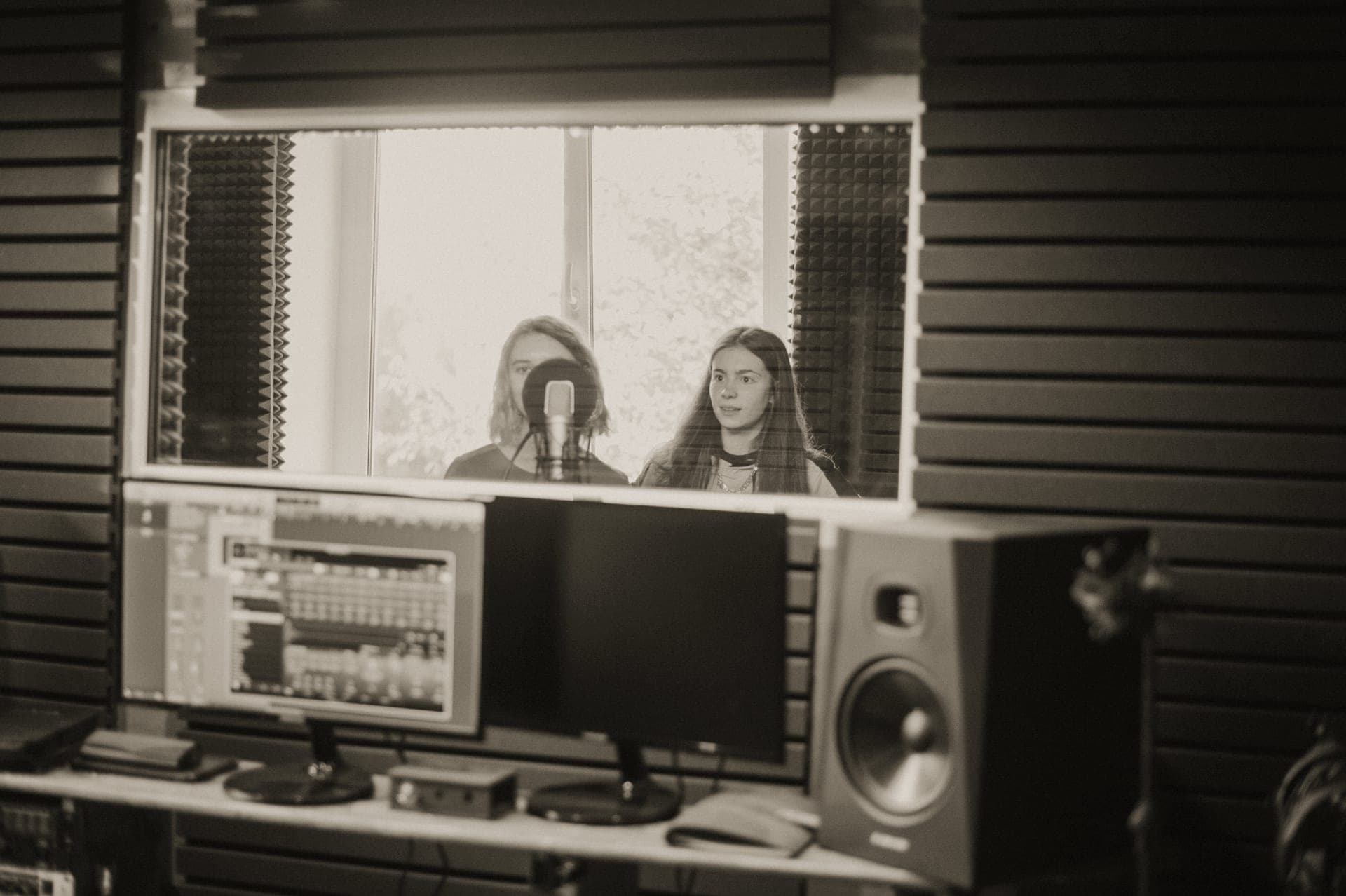
The mirror trick, in five minutes and for free — plus why those two points matter more than six panels elsewhere.
Sources
Every specification on this page was read from one of these documents. If one of them has changed, or we have made an error, tell us — corrections are logged and dated per our editorial policy.
- Klipsch R-120SW spec sheet — 200 W continuous, inputs, dimensions
- Klipsch R-52C spec sheet — 95 dB sensitivity and driver complement
- Polk Monitor XT15 info sheet — amplifier range and Atmos rating
- Denon AVR-S570BT — rated power and feature set
- ATS Acoustics 24x48 panel — full absorption curve and fire-rating statement