The Best Hi-Fi Gifts Under $100
There is no universal hi-fi gift under $100, because every one of these solves a specific problem in a specific system. That is the whole method of this page: match the gift to what they already own.
Disclosure: we earn a commission if you buy through the links on this page, at no extra cost to you. It does not influence what we pick — our criteria are published and reproducible, so you can check our work. How we pick · Full disclosure
These picks are spec-and-price analyses, not listening tests. We have not heard this gear and we do not pretend to have: every figure below is sourced to the manufacturer and linked, and every price is live or not shown at all. Here are the rules we followed.
Quick picks
Ranked on the published criteria in How We Pick. Prices are live as of September 15, 2026. Tap any row for the full write-up.
- 7.2
- 8.4
- 8.4$64.85View on Amazon
$74.0012% off
- 8.2$102.99View on Amazon
$109.996% off
- 6.6$51.44View on Amazon
$69.9927% off
- 5.4
| # | Product | Best for | Score | Price |
|---|---|---|---|---|
| 1 | 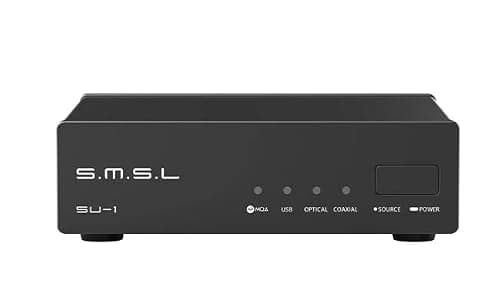 SMSL SU-1 The cheapest box here that still measures well, which makes it the sensible first upgrade from a motherboard's headphone jack. | Best cheap DAC | 7.2 | |
| 2 | 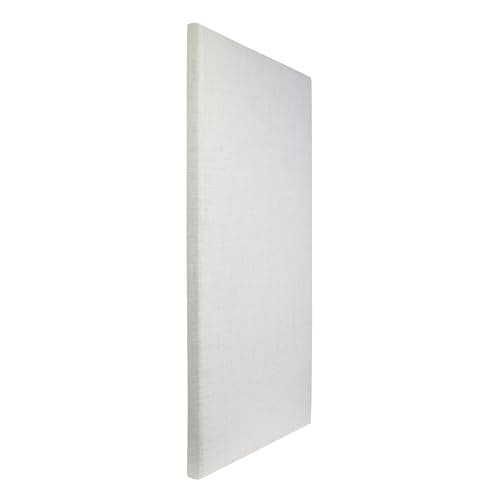 ATS Acoustics Sound Absorbing Panel (24x48) A mineral wool panel with the full absorption curve published — including the 125 Hz figure of 0.12 that its own NRC of 1.00 completely hides. | Best overall panel | 8.4 | |
| 3 | 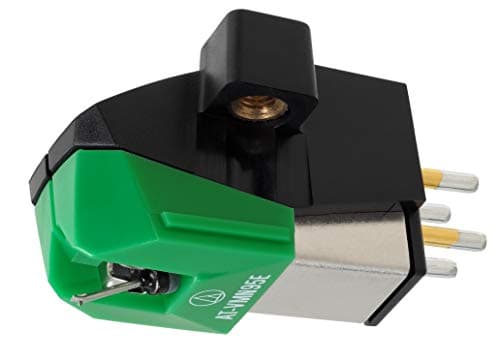 Audio-Technica AT-VM95E The cheapest way into a cartridge body that accepts seven different styli, so every later upgrade costs a stylus rather than a cartridge. | Best first upgrade | 8.4 | $64.85View on Amazon $74.0012% off |
| 4 | 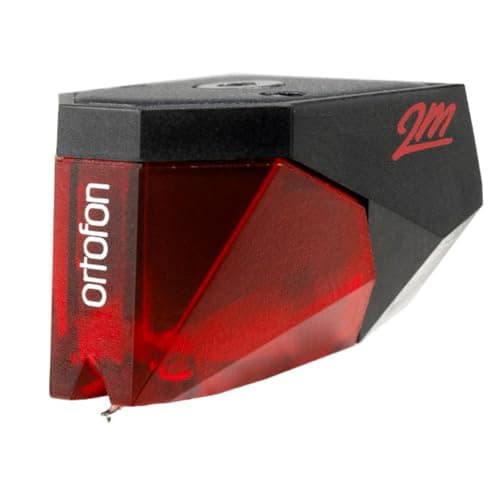 Ortofon 2M Red The only cartridge here whose maker publishes a frequency response with a tolerance and a tracking-ability figure, which makes it the one you can actually verify a claim against. | Best published data | 8.2 | $102.99View on Amazon $109.996% off |
| 5 | 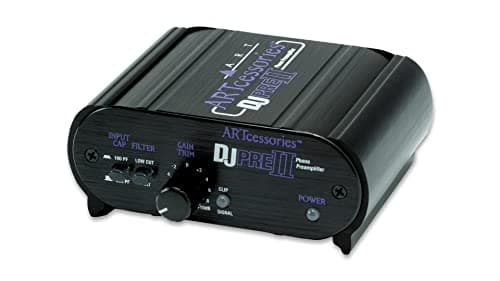 ART DJPRE II A cheap MM stage with a rumble filter and a gain trim, which is more adjustment than anything else at the price offers. | Best budget pick | 6.6 | $51.44View on Amazon $69.9927% off |
| 6 | 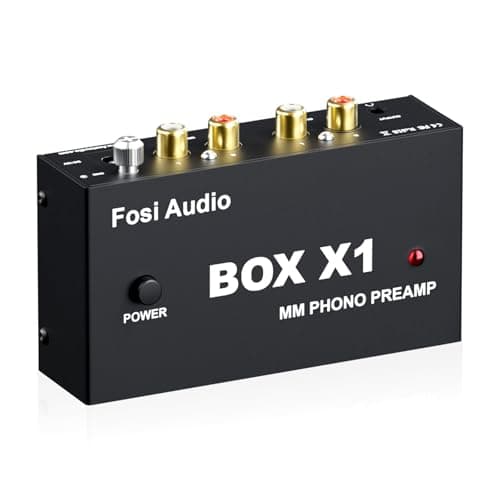 Fosi Audio Box X1 A palm-sized moving-magnet stage with a headphone output, and the only box under $50 here whose maker publishes a distortion and noise figure at all. | Best under $50 | 5.4 |
Start with the honest version of the problem. Under $100 in hi-fi does not buy a thing that improves any system — it buys a part that fixes one particular shortcoming. Give the right one to the right person and it is a genuinely excellent present. Give a phono preamp to someone whose turntable already has one and it is a box that goes in a cupboard.
So this page is organised by the problem each pick solves, and every entry says who it is wrong for as well as who it is right for.
One practical note before the picks: the prices next to each item are fetched live and stamped with the date, so they are the truth at the moment you are reading. A couple of these sit close enough to $100 that a movement of a few dollars would carry them across the line. If that has happened, you will see it in the number rather than in our prose, which is how we would rather be wrong.
Problem: their computer is the source and it sounds like a computer
The SMSL SU-1 is the cheapest box we cover that still measures well, and it is the sensible first step up from a motherboard’s headphone output. USB, optical and coaxial inputs at this price is a good set.
Wrong for: anyone who wants to plug headphones into it. The SU-1 has no headphone output and no volume control — it is a converter that feeds something else, usually powered speakers. If headphones are the point, look at the desk guide and spend a little more.
Problem: the room, which is nearly always the real problem
This is the pick we would choose if we knew nothing about the recipient’s equipment, because a panel has no sockets, no impedance and no brand-matching requirement. There is nothing for it to be incompatible with.
The ATS Acoustics 24×48 panel publishes its full per-frequency absorption curve instead of hiding behind a single NRC figure, and the curve is the reason we recommend it: mineral wool absorbs 0.67 at 250 Hz where two-inch foam manages 0.13. It is also fabric-wrapped and presentable in a living room, which matters for something that has to go on a wall.
Wrong for:a bass problem. The panel’s own published data makes the point — an NRC of 1.00 and an absorption of 0.12 at 125 Hz, because NRC averages 250 Hz to 2 kHz and structurally cannot show the bass end. If their complaint is boom rather than echo, they want corner traps. That is a different page. Also worth knowing: ATS states plainly that these panels are not fire rated.
Problem: they still have the cartridge their turntable came with
The Audio-Technica AT-VM95E is the standard first cartridge upgrade, and the argument for it is the upgrade path rather than the part: the VM95 body accepts the entire VM95 stylus range, so every later improvement costs a stylus instead of a whole cartridge. Its 4.0 mV output is also the highest of the Audio-Technica cartridges we cover, which suits a low-gain phono stage.
Wrong for: a deck that already has one. Several turntables ship with a VM95E fitted, including the AT-LP120XUSB — buying a second changes nothing. Check first, or buy a better stylus for the body they already own.
The Ortofon 2M Red is the alternative for a recipient who likes verifiable numbers: it is the only cartridge we cover whose maker publishes a frequency response with a real tolerance and a tracking-ability figure. It is the heaviest cartridge in that group at 7.2 g, which matters on a light arm, and if they are likely to want the 2M Blue within a year they should start there instead — the Blue is the same body with a better stylus, so buying Red first costs more in total.
Problem: the turntable is plugged into something with no phono input
Two picks, and the choice between them is about adjustment versus simplicity.
The ART DJPRE II is our budget pick because it offers more control than anything else near the price: a gain trim and a low-cut rumble filter, in a metal chassis, from a product with a long track record. The gain trim is the genuinely useful part — it is the adjustment that lets you match a quiet cartridge to a quiet amplifier.
The Fosi Audio Box X1 is the pick if the gift needs to be self-contained: it is the only stage we cover with a 3.5 mm headphone output as well as RCA, so a turntable plus this box alone makes a working system. Fosi also publishes a distortion figure with its measurement condition, which the cheaper boxes do not. What Fosi does not publish is a gain figure, and on a page where gain decides everything that is the omission that matters.
Wrong for: both, if they run a moving-coil cartridge — these are moving-magnet stages — and both, if their turntable, amplifier or powered speakers already contain a phono stage. The check takes thirty seconds and is worth doing before you buy.
What we would not buy under $100
Speaker cable upgrades, “audiophile” interconnects, and isolation feet. We have no published measurement that would let us recommend any of them honestly, which by our own rules means we do not recommend them. What gauge of speaker wire you actually need is a short, dull, useful page, and the answer is cheaper than most gifts.
Every pick in detail
Every specification below links to the manufacturer document we read it from. Where a manufacturer does not publish a figure, we say so rather than estimating it.
SMSL SU-1
Best cheap DACPrice as of September 15, 2026. #ad
The cheapest box here that still measures well, which makes it the sensible first upgrade from a motherboard's headphone jack.
- measured specs
- 9/10
- inputs
- 8/10
- value for money
- 10/10
- build quality
- 5/10
- features
- 4/10
| Specification | Published value | Source |
|---|---|---|
| DAC chip | AK4493S; XMOS XU-316 | SMSL product page |
| Max sample rate | USB: PCM 44.1–768 kHz, up to 32-bit; DSD to 22.5792 MHz. Optical/coaxial: 44.1–192 kHz, 16–24 bit | SMSL manual (PDF) |
| Inputs | USB, optical, coaxial | SMSL manual (PDF) |
| Outputs | RCA | SMSL manual (PDF) |
| THD+N | 0.00013% (−117 dB) | SMSL manual (PDF) |
| Signal-to-noise | 121 dB | SMSL manual (PDF) |
| Output level | 2.0 V RMS | SMSL manual (PDF) |
| Headphone amp | No — RCA output only | SMSL manual (PDF) |
Pros
- Very cheap for the measured performance
- Tiny footprint
- USB, optical and coaxial in
Cons
- No headphone output
- No preamp mode
- Minimal build
Skip it if you need a headphone output or volume control.
ATS Acoustics Sound Absorbing Panel (24x48)
Best overall panelPrice as of September 15, 2026. #ad
A mineral wool panel with the full absorption curve published — including the 125 Hz figure of 0.12 that its own NRC of 1.00 completely hides.
- low frequency absorption
- 8/10
- published data
- 10/10
- build quality
- 9/10
- value for money
- 7/10
- appearance
- 8/10
| Specification | Published value | Source |
|---|---|---|
| NRC | 1.00 | ATS Acoustics product page |
| Absorption coefficients | 125 Hz: 0.12 · 250 Hz: 0.67 · 500 Hz: 1.17 · 1 kHz: 1.12 · 2 kHz: 1.08 · 4 kHz: 1.08 | ATS Acoustics product page |
| Material | ROCKWOOL AFB mineral wool core, solid wood frame, 1/4 in wood back panel | ATS Acoustics product page |
| Thickness | 2 in | ATS Acoustics product page |
| Dimensions / weight | 24 × 48 × 2 in; ~12 lb per panel | ATS Acoustics product page |
| Fire rating | None — ATS states “This item is not fire rated.” | ATS Acoustics product page |
| ASTM test mounting | Not published | — |
| Density | Not published | — |
Pros
- Publishes the full per-frequency curve, not just an NRC — so you can see what it actually does
- Mineral wool core absorbs 0.67 at 250 Hz, where 1.9 in foam manages 0.13
- Fabric-wrapped and presentable in a living room
Cons
- NRC 1.00 is a real figure and still misleading: at 125 Hz this panel absorbs 0.12. NRC averages 250 Hz–2 kHz only, so it structurally cannot show you the bass performance.
- Not fire rated — ATS states this plainly, and it may matter for your install
- Heavy at ~12 lb, and far more expensive than foam per panel
Skip it if your problem is bass. No 2-inch panel solves that — including this one — and you want corner traps instead.
Audio-Technica AT-VM95E
Best first upgradeThe cheapest way into a cartridge body that accepts seven different styli, so every later upgrade costs a stylus rather than a cartridge.
- specs
- 7/10
- upgrade path
- 10/10
- value for money
- 10/10
- tracking ability
- 6/10
- published data
- 9/10
| Specification | Published value | Source |
|---|---|---|
| Type | VM stereo dual magnet (moving magnet) | Audio-Technica spec page |
| Frequency response | 20–22,000 Hz (no tolerance published) | Audio-Technica spec page |
| Channel separation | 20 dB (1 kHz) | Audio-Technica spec page |
| Output voltage | 4.0 mV (1 kHz, 5 cm/sec) | Audio-Technica spec page |
| Output channel balance | 2.0 dB (1 kHz) | Audio-Technica spec page |
| Stylus | 0.3 × 0.7 mil elliptical, bonded round shank | Audio-Technica spec page |
| Cantilever | Aluminum pipe | Audio-Technica spec page |
| Dynamic compliance | 7 × 10⁻⁶ cm/dyne (100 Hz) | Audio-Technica spec page |
| Static compliance | 17 × 10⁻⁶ cm/dyne | Audio-Technica spec page |
| Tracking force | 1.8–2.2 g (2.0 g standard) | Audio-Technica spec page |
| Recommended load | 47,000 Ω, 100–200 pF | Audio-Technica spec page |
| Mount / weight | Half-inch mount, 6.1 g | Audio-Technica spec page |
| Replacement stylus | AT-VMN95E — the whole VM95 stylus range drops into this same body | Audio-Technica spec page |
Pros
- The VM95 body takes the entire VM95 stylus range — conical through Shibata — so the upgrade path costs a stylus, not a cartridge
- 4.0 mV output is the highest of any Audio-Technica cartridge here, so it suits low-gain phono stages
- Audio-Technica publishes both static and dynamic compliance, which is what arm matching needs
- Already fitted to several decks we recommend, so you may own one without knowing
Cons
- A bonded round-shank stylus — the diamond is glued to a metal carrier rather than being solid, which adds tip mass
- 20 dB channel separation is the lowest figure in this group
- 2.0 dB channel balance is the loosest here; the ML is 1.5 dB
- Audio-Technica publishes no tolerance on the 20–22,000 Hz response
Skip it if your deck already ships with a VM95E — several do, and buying a second one changes nothing. Buy a better stylus for the body you own instead.
Ortofon 2M Red
Best published dataThe only cartridge here whose maker publishes a frequency response with a tolerance and a tracking-ability figure, which makes it the one you can actually verify a claim against.
- specs
- 8/10
- upgrade path
- 8/10
- value for money
- 8/10
- tracking ability
- 7/10
- published data
- 10/10
| Specification | Published value | Source |
|---|---|---|
| Type | Moving magnet, quad-coils with split pole pins and OFC coil wire | Ortofon spec page |
| Frequency response | 20 Hz – 20 kHz, +3 / −1 dB | Ortofon spec page |
| Channel separation | 22 dB (1 kHz) | Ortofon spec page |
| Channel balance | 1.5 dB (1 kHz) | Ortofon spec page |
| Output voltage | 5.5 mV (1 kHz, 5 cm/sec) | Ortofon spec page |
| Tracking ability at 315 Hz | 70 µm | Ortofon spec page |
| Stylus | Elliptical, tip radius r/R 8/18 µm, aluminum cantilever | Ortofon spec page |
| Compliance (dynamic, lateral) | 20 µm/mN | Ortofon spec page |
| Tracking force | 1.6–2.0 g (16–20 mN); 1.8 g recommended | Ortofon spec page |
| Tracking angle | 20° | Ortofon spec page |
| Internal impedance / inductance | 1.3 kΩ DC resistance, 700 mH | Ortofon spec page |
| Recommended load | 47 kΩ, 150–300 pF | Ortofon spec page |
| Weight | 7.2 g | Ortofon spec page |
Pros
- 20 Hz – 20 kHz at +3/−1 dB — a real tolerance, which neither Audio-Technica nor Nagaoka publish
- 70 µm tracking ability at 315 Hz published, a spec almost nobody else quotes
- 5.5 mV output, the highest here, so quiet phono stages have an easier job
- The 2M Blue stylus drops straight into this body, so the upgrade is a stylus swap
Cons
- 22 dB separation is mid-pack, and the Blue's 25 dB shows what the same body can do
- A bonded elliptical stylus at this price, where the Blue's is nude
- 7.2 g is the heaviest cartridge in this group — it matters on a light arm
- Ortofon quotes compliance at the 10 Hz convention while Audio-Technica quotes 100 Hz; the two numbers are not directly comparable
Skip it if you plan to buy the 2M Blue within a year. The Blue is the same body with a better stylus, so buying Red first and upgrading costs more in total than starting at Blue.
ART DJPRE II
Best budget pickA cheap MM stage with a rumble filter and a gain trim, which is more adjustment than anything else at the price offers.
- flexibility
- 5/10
- noise
- 7/10
- value for money
- 9/10
- build quality
- 6/10
- connectivity
- 6/10
| Specification | Published value | Source |
|---|---|---|
| Gain | Maximum 45 dB at 1 kHz; front-panel trim boosts or cuts up to 10 dB | ART manual (PDF) |
| Cartridge support | Not stated — the manual refers only to “magnetic cartridges” and “selectable cartridge loading”, and never says MM or MC | ART manual (PDF) |
| Loading | 47 kΩ in parallel with a switchable 100 or 200 pF | ART manual (PDF) |
| Hum and noise | > 90 dB below clipping (ART publishes this rather than a signal-to-noise figure) | ART manual (PDF) |
| THD | 0.01% typical at 1 kHz | ART manual (PDF) |
| Subsonic filter | Yes — switchable low-cut, −3 dB at 22 Hz | ART manual (PDF) |
| Power | External 7–12 V DC or 9–12 V AC at 150 mA | ART manual (PDF) |
Pros
- Gain trim and a low-cut rumble filter at a budget price
- Metal chassis
- Long track record
Cons
- MM only
- External wall wart
- Utilitarian looks
Skip it if you want moving-coil support — this is a moving-magnet box.
Fosi Audio Box X1
Best under $50Price as of September 15, 2026. #ad
A palm-sized moving-magnet stage with a headphone output, and the only box under $50 here whose maker publishes a distortion and noise figure at all.
- flexibility
- 3/10
- noise
- 5/10
- value for money
- 7/10
- build quality
- 5/10
- connectivity
- 7/10
| Specification | Published value | Source |
|---|---|---|
| Gain | Not published | — |
| Cartridge type | Moving magnet (MM turntable input, with a grounding post) | Fosi Audio spec table |
| Signal-to-noise | 70 dB | Fosi Audio spec table |
| THD | ≤ 0.08% at 1 kHz and 3 mV | Fosi Audio spec table |
| Frequency response | “Standard RIAA” — Fosi publishes no deviation figure, so this is a statement of intent rather than a measured tolerance | Fosi Audio spec table |
| Outputs | RCA line out plus a 3.5 mm headphone output | Fosi Audio spec table |
| Output level | 2 V max (P-P) into 10 kΩ | Fosi Audio spec table |
| Input loading (impedance and capacitance) | Not published | — |
| Subsonic filter | Not published | — |
| Power | External 12 V / 1.5 A supply (100–240 V AC input) | Fosi Audio spec table |
| Dimensions / weight | 3.94 × 0.98 × 2.17 in; 0.35 lb (161 g) | Fosi Audio spec table |
Pros
- The only stage on this page with a 3.5 mm headphone output as well as RCA — a turntable and this box alone make a working system
- Fosi publishes a THD figure with its measurement condition (≤ 0.08% at 1 kHz and 3 mV), which the Pyle beneath it does not qualify at all
- Genuinely tiny at 3.94 × 0.98 × 2.17 in and 0.35 lb, with a proper grounding post
Cons
- Fosi publishes no gain figure — on a page where gain is the number that decides everything, that is the one omission that matters
- 70 dB signal-to-noise and 0.08% THD are the same modest figures the $22 Pyle publishes, at roughly twice the money
- Moving magnet only, with no loading options and no subsonic filter published
Skip it if you will ever fit a moving-coil cartridge, or you need to know the gain before you buy. Neither question is answered here.
Frequently asked questions
What is the best hi-fi gift under $100?
Is a cartridge a good gift under $100?
Are acoustic panels a good present?
How do I know if they need a phono preamp?
Are cheap audiophile cables worth buying as a gift?
Read next
The Best Hi-Fi Gifts Under $250
Six gifts under $250, led by the ones that arrive as a complete working system rather than one component of one.
The Best Gifts for Vinyl Lovers
Five gifts for someone who already owns a turntable, each with the compatibility check to run before you buy it.
The Best Gifts for Desk and Headphone Listeners
Five desk-audio gifts, from a powered pair to a DAC and headphone amp, with the desk-space and headphone checks that matter.
The Best Phono Preamps Under $200
Phono stages under $200 ranked on published gain, loading flexibility and noise — including one we would actively skip.
The Best Acoustic Panels for Walls
Six wall panels ranked on published absorption per band, then on the thing nobody specs: how they attach, and whether they come off again.
The Best DACs Under $200
Five DACs under $200, all measuring beyond audibility — so the ranking is about inputs, outputs and output level.
Sources
Every specification on this page was read from one of these documents. If one of them has changed, or we have made an error, tell us — corrections are logged and dated per our editorial policy.