The Best Splurge Hi-Fi Gifts
At this level the constraint stops being money and starts being compatibility. Every pick here asks something of the system it joins, and this page is mostly about what each one asks.
Disclosure: we earn a commission if you buy through the links on this page, at no extra cost to you. It does not influence what we pick — our criteria are published and reproducible, so you can check our work. How we pick · Full disclosure
These picks are spec-and-price analyses, not listening tests. We have not heard this gear and we do not pretend to have: every figure below is sourced to the manufacturer and linked, and every price is live or not shown at all. Here are the rules we followed.
Quick picks
Ranked on the published criteria in How We Pick. Prices are live as of September 15, 2026. Tap any row for the full write-up.
- 7.8
- 8.0
- 9.0
- 8.0
- 7.6
- 9.0
| # | Product | Best for | Score | Price |
|---|---|---|---|---|
| 1 | 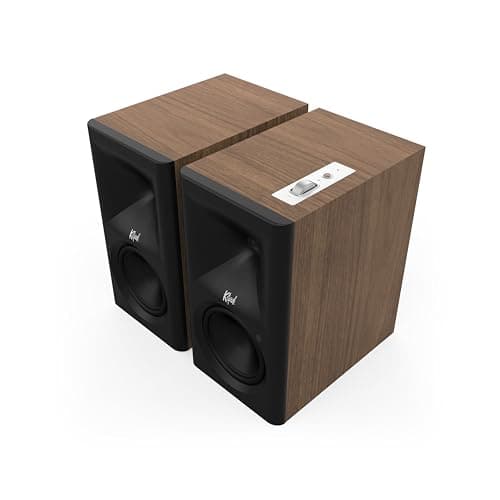 Klipsch The Fives II Powered speakers with HDMI-ARC and a phono input, built to replace both a soundbar and a stereo system in one box pair. | Most connected powered pair | 7.8 | |
| 2 | 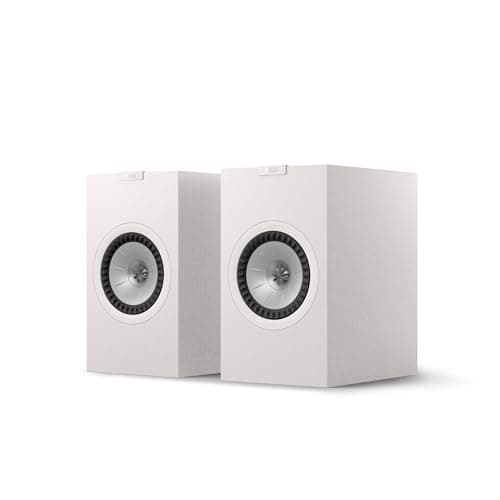 KEF Q3 Meta KEF's coaxial Uni-Q driver puts the tweeter at the woofer's acoustic center, and the Meta generation adds a metamaterial absorber behind it — both are engineering changes rather than finish upgrades. | Best imaging design | 8.0 | |
| 3 | 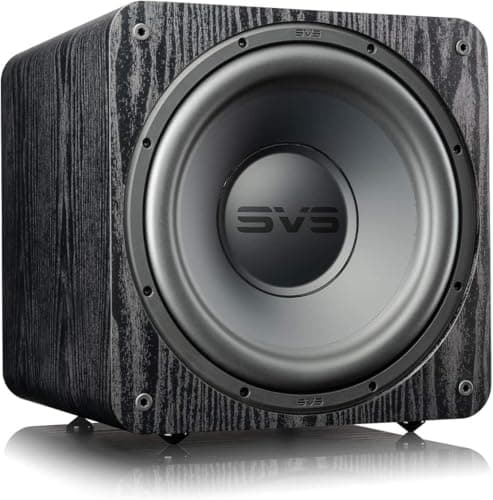 SVS SB-1000 Pro The only subwoofer here whose manufacturer publishes both a continuous power rating and the measurement condition behind its frequency response — 20–270 Hz ± 3 dB at 2 m ground plane — which is what makes its numbers comparable to anything. | Best overall | 9.0 | |
| 4 | 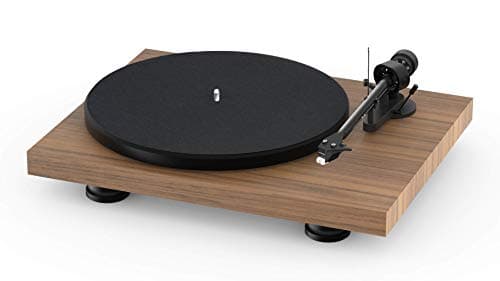 Pro-Ject Debut Carbon EVO A one-piece carbon-fiber tonearm and electronic speed change, on a deck whose whole design argument is the arm rather than the platter. | Best tonearm under $1,000 | 8.0 | |
| 5 | 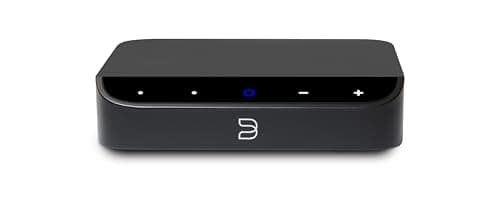 Bluesound Node Nano The most established platform here in the smallest box, with an ESS ES9039Q2M and a spec sheet that is thinner than WiiM's in every respect except pedigree. | Best for a Roon or MQA library | 7.6 | |
| 6 | 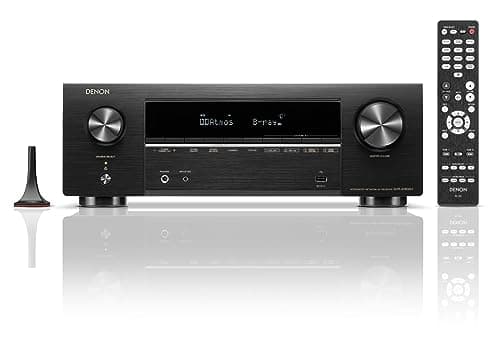 Denon AVR-X1800H Seven channels, 8K passthrough and Audyssey MultEQ XT — the room correction being the feature that actually changes what you hear in a real room. | Best overall under $1,000 | 9.0 |
A large hi-fi gift is a harder problem than a small one, and not for the reason people expect. The difficulty is not choosing something good — everything on this page is good. The difficulty is that at this level the gift starts making demands: a particular amplifier rating, a particular socket, a particular amount of floor.
So the ranking here is by how few demands each one makes. The pick at the top needs nothing except a power socket. The pick at the bottom needs a system built around it.
The one that needs nothing else
The Klipsch The Fives II are powered speakers with HDMI-ARC and a built-in phono stage, which means one pair of boxes replaces a soundbar, a stereo amplifier and a phono stage. Plug the television into one end and a turntable into the other and the system is finished. As a gift that is close to unbeatable, because nothing is left for the recipient to buy or decide.
We will be straight about the cost of that convenience. Klipsch publishes no amplifier wattage for these at all — only a maximum output figure of 103 dB. You cannot compare their power to anything else we cover, because there is no number to compare. And the amplification is fixed, so the electronics are the ceiling: the upgrade path here is replacing them. If the television is not part of the system, most of what you are paying for is the HDMI board, and you should buy passive speakers and an amplifier instead.
The one that needs the right amplifier
The KEF Q3 Meta is the most interesting piece of engineering on this page. The Uni-Q coaxial driver puts the tweeter at the acoustic centre of the woofer, and the Meta generation adds a metamaterial absorber behind it — both are genuine design differences rather than trim levels. KEF also publishes a nominal impedance, a minimum impedance and a harmonic-distortion figure with its measurement condition, which almost nobody in this category does.
The demand, and it is a real one:4 Ω nominal, dipping to 3.2 Ω. That is the hardest load of any speaker we cover. If the recipient’s amplifier does not state a 4-ohm rating, this is the wrong gift for their system — and a great many amplifiers, including some expensive ones, publish no continuous 4-ohm figure at all. Our amp-matching page is the check to run, and it takes two numbers and a minute. They are also 18.1 lb and 12 inches deep each, which is a stand rather than a shelf.
The one that works with almost any system
The SVS SB-1000 Pro is our overall subwoofer pick, and for a gift it has one decisive advantage over the cheaper alternatives: it has speaker-level inputs as well as RCA, so it can be connected to an integrated amplifier with no subwoofer output. That is the compatibility trap that catches most subwoofer gifts, and this one steps around it.
It is also the only subwoofer we cover whose maker publishes both a continuous power rating and the measurement condition behind its frequency response — 20–270 Hz ±3 dB at 2 m ground plane — which is what makes its numbers comparable to anything at all. The sealed 13-inch cabinet fits where a ported 12 will not.
The honest trade: a sealed alignment gives up raw output near tuning for a gentler roll-off, so a ported box of the same size will play louder at 30 Hz. In a large open-plan room where sheer output matters more than measured accuracy, a ported 12 costs less and moves more air.
The one for a specific kind of record listener
The Pro-Ject Debut Carbon EVO is a deck whose whole argument is the tonearm: one-piece carbon fibre, stiffer than the alloy arms at the price, with electronic speed change and a heavier steel platter. If the person you are buying for talks about tonearms, this is the gift.
Two things to know first. It has no built-in phono stage, so it needs one somewhere in their system — which is a second purchase if they do not have one. And the carbon arm has no removable headshell, so cartridge swaps become a bench job rather than a two-minute one. For someone who enjoys changing cartridges, that is a genuine downside; the decks we compare against it in this bracket make different trades.
The two for a system that already exists
The Bluesound Node Nano is the streamer for someone with a Roon or MQA library and an amplifier waiting for a source. It has the newest DAC silicon on our streaming page, gigabit Ethernet where the cheaper streamers are limited to 10/100, and BluOS, which is a more mature multiroom platform than its rivals.
It is also the most restrictive box here for a gift, so check before you buy: it has no analog input of any kind — no line in, no phono in, no way around it — and optical output only, with no coaxial, which caps some external-DAC pairings.
The Denon AVR-X1800H is the home-theater equivalent: seven channels, 8K passthrough and Audyssey MultEQ XT room correction, which is the feature that actually changes what a real room sounds like. It also has an MM phono input, so a turntable connects without a separate stage — a genuinely useful thing in a living room that has to do both jobs.
The limitation Denon publishes and almost nobody reads: only 2.2 pre-outs, front left/right plus subwoofers. External amplification cannot be added to the surround channels later. It does not bite on day one. It bites in three years, which is exactly when a gift should still be working.
Before you spend this much on someone else
Two suggestions, offered without cynicism. First, if the recipient has strong opinions about their system, the most respectful large gift is often the one they have already chosen — ask, or ask someone who knows. A component they did not pick is a component that has to earn its place against one they would have.
Second, check the return window before you buy, not after. Compatibility problems in this category are discovered on the day the box is opened, and at these prices that matters.
Every pick in detail
Every specification below links to the manufacturer document we read it from. Where a manufacturer does not publish a figure, we say so rather than estimating it.
Klipsch The Fives II
Most connected powered pairPrice as of September 15, 2026. #ad
Powered speakers with HDMI-ARC and a phono input, built to replace both a soundbar and a stereo system in one box pair.
- integration
- 10/10
- upgrade path
- 4/10
- value for money
- 6/10
- ease of setup
- 9/10
- connectivity
- 10/10
| Specification | Published value | Source |
|---|---|---|
| Type | Powered monitor (pair) | Klipsch spec sheet (PDF) |
| Amplifier output | Not published — Klipsch publishes “Max Output: 103 dB (1 m, stereo pair)” instead of any wattage figure | Klipsch spec sheet (PDF) |
| Built-in phono stage | Yes — a dedicated analog input with a built-in phono stage | Klipsch product page |
| Frequency response | 50 Hz – 25 kHz ± 3 dB | Klipsch spec sheet (PDF) |
| Woofer | 5.25 in Jet Cerametallic | Klipsch spec sheet (PDF) |
Pros
- HDMI-ARC — works as a TV system as well as a stereo
- Built-in phono stage, so a turntable plugs straight in
- Genuinely large drivers for a powered pair
Cons
- By far the most expensive option here
- Klipsch publishes NO amplifier wattage for these — only a “max output 103 dB” figure. You cannot compare their power to anything else here, because there is no number to compare.
- Fixed amplification, so the electronics are the ceiling
Skip it if the TV is not part of this system — most of what you are paying for is the HDMI board.
KEF Q3 Meta
Best imaging designPrice as of September 15, 2026. #ad
KEF's coaxial Uni-Q driver puts the tweeter at the woofer's acoustic center, and the Meta generation adds a metamaterial absorber behind it — both are engineering changes rather than finish upgrades.
- sensitivity
- 7/10
- bass extension
- 9/10
- amp friendliness
- 5/10
- value for money
- 7/10
- build quality
- 9/10
| Specification | Published value | Source |
|---|---|---|
| Sensitivity | 87 dB (2.83 V / 1 m) | KEF spec page |
| Impedance (nominal) | 4 Ω | KEF spec page |
| Minimum impedance | 3.2 Ω | KEF spec page |
| Frequency response | 49 Hz – 20 kHz (± 3 dB); 42 Hz – 20 kHz at −6 dB | KEF spec page |
| Amplifier requirements | 15–150 W | KEF spec page |
| Driver | Uni-Q array: 165 mm (6.5 in) aluminum cone with a 25 mm (1 in) vented aluminum dome and MAT at its acoustic center | KEF spec page |
| Crossover | 2.0 kHz | KEF spec page |
| Harmonic distortion | < 2% at 110 Hz and above; < 1% from 135 Hz – 20 kHz (measured at 90 dB, 1 m) | KEF spec page |
| Maximum output | 109 dB | KEF spec page |
| Dimensions (H × W × D) | 357 × 210 × 305 mm (14.1 × 8.3 × 12.0 in) | KEF spec page |
| Weight (each) | 8.2 kg / 18.1 lb | KEF spec page |
Pros
- Uni-Q coaxial driver — a real design difference, not a trim level
- Publishes both a nominal (4 Ω) and a minimum (3.2 Ω) impedance, plus a harmonic-distortion figure with its measurement condition — almost nobody publishes the last one
- 165 mm driver and a 42 Hz −6 dB figure, the deepest published extension of any bookshelf pair here
Cons
- Well above the $500 bracket at its current price
- 4 Ω nominal dipping to 3.2 Ω — this is a genuinely demanding load, not a nominal-8 Ω speaker that occasionally dips
- 18.1 lb and 12 in deep per speaker, which is a stand rather than a shelf
Skip it if your amplifier does not state a 4 Ω rating. The Q3 Meta is nominally 4 Ω before it dips, which is the hardest load in this registry.
SVS SB-1000 Pro
Best overallPrice as of September 15, 2026. #ad
The only subwoofer here whose manufacturer publishes both a continuous power rating and the measurement condition behind its frequency response — 20–270 Hz ± 3 dB at 2 m ground plane — which is what makes its numbers comparable to anything.
- extension
- 9/10
- published data
- 10/10
- room control
- 10/10
- value for money
- 6/10
- build quality
- 9/10
| Specification | Published value | Source |
|---|---|---|
| Frequency response | 20–270 Hz ± 3 dB, measured 2 m ground plane away from reflective structures (quasi-anechoic). SVS is the only manufacturer in this group that publishes the measurement condition. | SVS product page |
| Amplifier power | 325 W RMS continuous (820+ W peak dynamic), Sledge STA-325D class D | SVS product page |
| Driver | 12 in long-throw, 13.3 mm Xmax / 26.9 mm Xmech, 1.5 in voice coil | SVS product page |
| Enclosure type | Sealed, extra-thick MDF front baffle with internal bracing | SVS product page |
| Inputs | Unbalanced stereo RCA in/out (16 kΩ) plus speaker-level stereo input (1 kΩ); 3–12 V AC/DC trigger | SVS product page |
| DSP / app | 50 MHz Analog Devices DSP; Bluetooth app for iOS/Android with 3 nameable presets, 3 parametric EQ bands per preset, adjustable low pass, phase, polarity and room-gain compensation | SVS product page |
| Dimensions (with grille) | 13.5 in H × 13 in W × 14.76 in D (342 × 330 × 375 mm) | SVS product page |
| Weight | 26 lb (11.9 kg) unboxed with grille | SVS product page |
Pros
- 325 W RMS continuous is a continuous rating, not a peak figure dressed as one
- 20–270 Hz ± 3 dB published WITH its measurement condition — nobody else here does that
- App DSP with three parametric EQ bands per preset and room-gain compensation, which is real control over the one band room correction handles worst
- Speaker-level inputs as well as RCA, so an integrated amp with no sub output can still drive it
- Sealed 13-inch cabinet — it fits where a ported 12 will not
Cons
- The most expensive pick here
- Sealed alignment trades raw output near tuning for a gentler roll-off — a ported box of the same size will play louder at 30 Hz
- The app is the interface for the good features; the front panel alone is not
- One of these in a large open-plan room will run out before a bigger ported sub does
Skip it if your room is large and open-plan and output matters more to you than measured accuracy. A ported 12 costs less and moves more air down low.
Pro-Ject Debut Carbon EVO
Best tonearm under $1,000Price as of September 15, 2026. #ad
A one-piece carbon-fiber tonearm and electronic speed change, on a deck whose whole design argument is the arm rather than the platter.
- specs
- 9/10
- upgrade path
- 8/10
- value for money
- 7/10
- ease of setup
- 6/10
- connectivity
- 5/10
| Specification | Published value | Source |
|---|---|---|
| Drive type | Belt drive with electronic speed control | Pro-Ject datasheet (PDF) |
| Wow and flutter | 33 rpm: ±0.17%; 45 rpm: ±0.15% | Pro-Ject datasheet (PDF) |
| Signal-to-noise | 68 dB | Pro-Ject datasheet (PDF) |
| Speeds | 33, 45 electronically; 78 via the included round belt | Pro-Ject datasheet (PDF) |
| Cartridge included | Ortofon 2M Red, pre-adjusted | Pro-Ject datasheet (PDF) |
| Tonearm effective mass | 6.0 g (published as “Effective arm length/mass: 218.5 mm / 6.0 g”) | Pro-Ject datasheet (PDF) |
| Built-in phono stage | No — Pro-Ject's datasheet says “it is always better to opt for a separate phono stage” | Pro-Ject datasheet (PDF) |
Pros
- One-piece carbon tonearm — stiffer than the alloy arms at this price
- Electronic speed change; no belt to move by hand between 33 and 45
- Height-adjustable feet and a heavier steel platter
Cons
- No built-in phono stage
- Carbon arm has no removable headshell, so cartridge swaps are fiddlier
- Costs more than the RT85 while including a lesser cartridge
Skip it if you swap cartridges often — the fixed headshell makes that a bench job rather than a two-minute one.
Bluesound Node Nano
Best for a Roon or MQA libraryPrice as of September 15, 2026. #ad
The most established platform here in the smallest box, with an ESS ES9039Q2M and a spec sheet that is thinner than WiiM's in every respect except pedigree.
- measured performance
- 9/10
- connectivity
- 6/10
- features
- 8/10
- value for money
- 6/10
- published data
- 7/10
| Specification | Published value | Source |
|---|---|---|
| DAC | ESS ES9039Q2M (Hyperstream IV) | Bluesound spec page |
| Sampling | Native rates up to 192 kHz, 16–24 bit | Bluesound spec page |
| Signal-to-noise | −118 dB as published by Bluesound (the sign is theirs; SNR is conventionally quoted positive, so read this as 118 dB) | Bluesound spec page |
| THD+N | 0.0007% | Bluesound spec page |
| Outputs | Stereo RCA (fixed-level option) · optical TOSLINK · USB Audio 2.0 Type A · Bluetooth headphone out · wireless subwoofer to PULSE SUB+ | Bluesound spec page |
| Coaxial digital output | None — optical only | Bluesound spec page |
| Inputs | USB Type A for storage · learning IR sensor. No analog line input and no phono input. | Bluesound spec page |
| Network | Wi-Fi 5 (802.11ac dual band) · Gigabit Ethernet · Bluetooth 5.2 with aptX Adaptive, two-way | Bluesound spec page |
| Protocols | AirPlay 2, Spotify Connect, Tidal Connect, Qobuz Connect, Roon Ready, plus MQA playback | Bluesound spec page |
| Dimensions / weight | 143 × 36 × 143 mm; 0.57 kg (1.26 lb) | Bluesound spec page |
| Power | USB-C (5 V, 2 A) | Bluesound spec page |
Pros
- ESS ES9039Q2M with Hyperstream IV — the newest DAC silicon on this page
- Gigabit Ethernet, where both WiiM streamers here are limited to 10/100
- Bluetooth 5.2 with aptX Adaptive, two-way, so it can also feed Bluetooth headphones
- BluOS is a mature multiroom platform with a longer track record than WiiM's app
Cons
- No coaxial digital output — optical only, which caps some external-DAC pairings
- No analog input at all, so it cannot digitize a legacy source the way a WiiM Pro Plus can
- Bluesound prints its signal-to-noise ratio as “−118 dB”, a sign convention error on their own sheet
- The most expensive streamer here, with fewer inputs than the WiiM Ultra
Skip it if you need to connect anything analog. It has no line input, no phono input, and no way around that.
Denon AVR-X1800H
Best overall under $1,000Price as of September 15, 2026. #ad
Seven channels, 8K passthrough and Audyssey MultEQ XT — the room correction being the feature that actually changes what you hear in a real room.
- channels
- 9/10
- room correction
- 9/10
- connectivity
- 9/10
- value for money
- 9/10
- future proofing
- 9/10
| Specification | Published value | Source |
|---|---|---|
| Channels | 7.2 (7 power amplifiers — 7.2 or 5.2.2) | Denon info sheet (PDF) |
| Power output | 80 W + 80 W (8 Ω, 20 Hz – 20 kHz, 0.08% THD, 2 ch driven) | Denon info sheet (PDF) |
| Room correction | Audyssey MultEQ XT, with Dynamic EQ and Dynamic Volume | Denon info sheet (PDF) |
| Dolby Atmos / DTS:X | Yes / Yes | Denon info sheet (PDF) |
| Phono input | Yes — MM, 2.5 mV input sensitivity; RIAA deviation ±1 dB (20 Hz – 20 kHz); S/N 74 dB (IHF-A); distortion 0.03% (1 kHz, 3 V) | Denon owner's manual, audio section |
| Analog input sensitivity | 200 mV; frequency response 10 Hz – 100 kHz (+1, −3 dB, Direct mode); S/N 98 dB (IHF-A, Direct mode) | Denon owner's manual, audio section |
| Power consumption | 430 W. Standby 0.1 W — but only with Network Control set to “Off In Standby” and HDMI Pass Through off; CEC standby is 0.5 W. Denon publishes no idle (powered-on, not playing) figure at all. | Denon owner's manual, general section |
| HDMI in / out | 6 in (3 are 8K) / 1 out (eARC) | Denon info sheet (PDF) |
| Video passthrough | 8K/60 Hz, 4K/120 Hz; VRR, QFT, ALLM | Denon product page |
| Pre-outs | 2.2 only (front L/R + 2 subwoofer) — NOT a full 7.2 pre-out | Denon info sheet (PDF) |
| Streaming | HEOS built-in; AirPlay 2, Spotify Connect, Amazon Music HD, TIDAL | Denon info sheet (PDF) |
Pros
- Audyssey MultEQ XT room correction — a step above the plain MultEQ on the cheaper models
- 7.2 channels — enough for a 5.2.2 Atmos layout
- MM phono input, so a turntable connects without a separate stage
- 8K/60 and 4K/120 passthrough with VRR and ALLM
Cons
- Only 2.2 pre-outs (front L/R plus subwoofers) — you cannot add external amplification to the surround channels later
- Menus are dense
- Runs warm in a closed cabinet
Skip it if you only need 5 channels — the AVR-S670H shares the same core for less.
Frequently asked questions
What is the best expensive hi-fi gift?
Can I give someone speakers without knowing their amplifier?
Is a subwoofer a safe gift?
Should I buy a turntable for someone who already has one?
What should I check before buying an expensive audio gift?
Read next
The Best Hi-Fi Gifts Under $250
Six gifts under $250, led by the ones that arrive as a complete working system rather than one component of one.

The Best Gifts for Home Theater Fans
Five gifts for a home cinema setup, each one paired with the socket or size check that decides whether it fits.
Black Friday & Cyber Monday Hi-Fi and Home Theater Deals 2026
A deal board that fills itself from our live price file, plus honest buy-now-or-wait guidance for every class of gear we cover.
Will This Amplifier Drive My Speakers?
Two published numbers, one formula, and the answer is almost always less power than you expected.
The Best AV Receivers Under $1,000
Five receivers under $1,000, compared on FTC-rated power and the pre-out spec almost nobody mentions.
The Best Bookshelf Speakers Under $500
Five pairs under $500 — and only one publishes a minimum impedance and a recommended amp range.
Sources
Every specification on this page was read from one of these documents. If one of them has changed, or we have made an error, tell us — corrections are logged and dated per our editorial policy.
- Klipsch The Fives II spec sheet — published output figure and connectivity
- KEF Q3 Meta — nominal and minimum impedance, distortion measurement condition
- SVS SB-1000 Pro — continuous rating and frequency response measurement condition
- Pro-Ject Debut Carbon EVO — tonearm and specifications (PDF)
- Bluesound Node Nano — inputs, outputs and platform
- Denon AVR-X1800H — pre-out complement and room correction