Audio-Technica AT-LP120XUSB vs Fluance RT82
The two decks most often set against each other in this price bracket. One is direct drive with a phono stage and a USB output; the other is belt drive with better-looking numbers and a bill for a phono stage you have to pay separately.
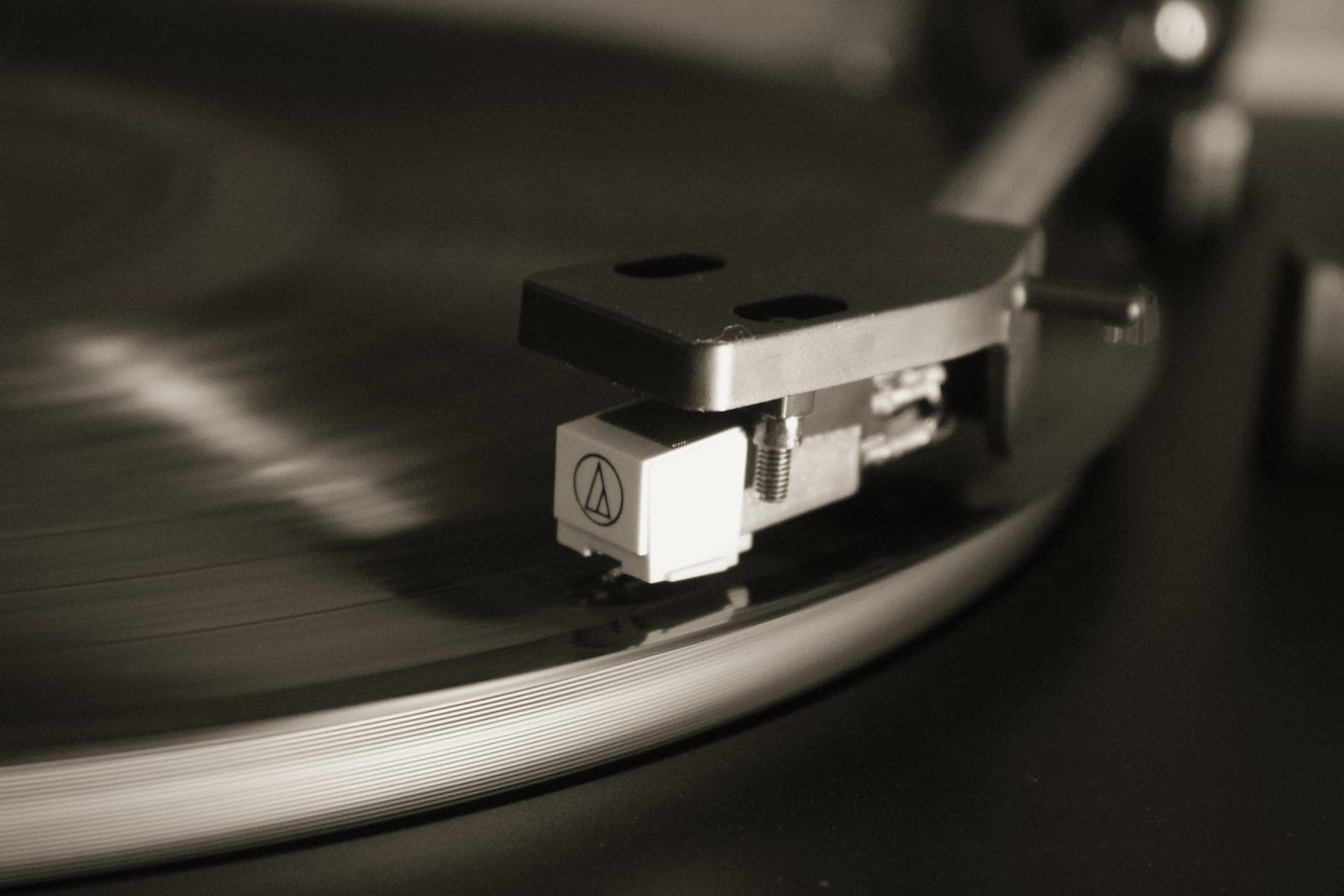
The short answer
Buy the Audio-Technica AT-LP120XUSB if this is your only turntable and you do not already own a phono stage. It includes one, it has a USB output for digitising, it plays 78s, and its removable headshell makes every cartridge upgrade on this site available to it. Buy the Fluance RT82 if you already have a phono stage and you want the better-specified drive — 0.07% wow and flutter against Audio-Technica’s < 0.2%, and 68.5 dB signal-to-noise against > 50 dB. The catch is that the Fluance’s figures carry less measurement detail than Audio-Technica’s, and the total below shows what the phono stage adds.
Disclosure: we earn a commission if you buy through the links on this page, at no extra cost to you. It does not influence what we pick — our criteria are published and reproducible, so you can check our work. How we pick · Full disclosure
These picks are spec-and-price analyses, not listening tests. We have not heard this gear and we do not pretend to have: every figure below is sourced to the manufacturer and linked, and every price is live or not shown at all. Here are the rules we followed.
Quick picks
Ranked on the published criteria in How We Pick. Prices are live as of October 10, 2026. Tap any row for the full write-up.
- 8.6$349.00View on Amazon
$449.0022% off
- 7.6
- 8.4
| # | Product | Best for | Score | Price |
|---|---|---|---|---|
| 1 | 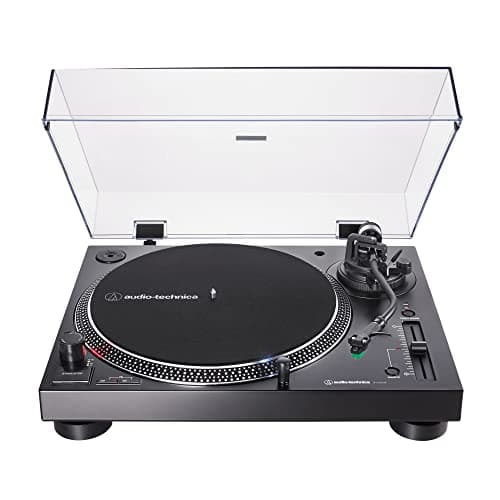 Audio-Technica AT-LP120XUSB A direct-drive deck with a switchable phono stage and USB out, which means it works with any amplifier you already own and needs nothing else on day one. | Best overall under $500 | 8.6 | $349.00View on Amazon $449.0022% off |
| 2 | 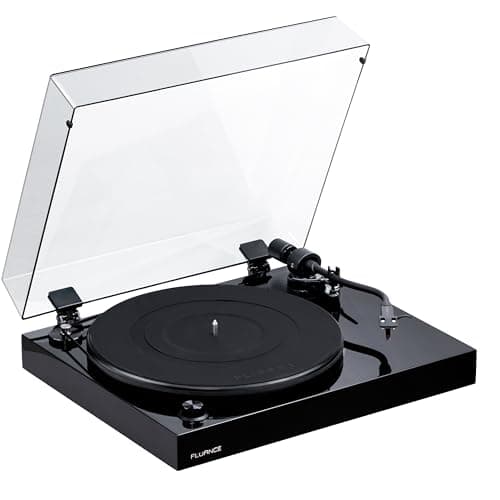 Fluance RT82 A belt-drive deck with an Ortofon OM10 and no built-in phono stage — a deliberate omission that assumes you will bring your own, and prices accordingly. | Best belt-drive under $500 | 7.6 | |
| 3 | 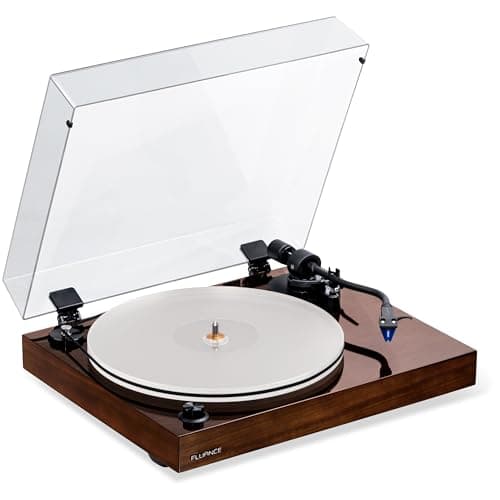 Fluance RT85 An acrylic platter and an Ortofon 2M Blue — the cartridge alone accounts for a large share of the price, which is the right place for the money to go. | Best overall under $1,000 | 8.4 |
These two sit in the same bracket, get recommended by the same people, and are built on opposite decisions. Direct drive against belt drive; a phono stage included against one you buy; a maker who publishes measurement conditions against one who publishes better numbers without them. Our under-$500 roundup has to place both among six decks. This page only has to separate two, which means it can go all the way into the four figures where they actually differ.
The two decks, on the published figures
Every figure below is the manufacturer’s own published value and links to the document we read it from. “Not published” means the manufacturer does not publish that figure; an em dash means we have no published figure for that model. Prices are live as of October 10, 2026.
Best overall under $500
- Drive
- Direct (DC servo)
- Wow & flutter
- < 0.2% WRMS @ 3 kHz
- Signal-to-noise
- > 50 dB (unweighted?)
- Phono stage
- Yes — 36 dB, switchable
Best belt-drive under $500
- Drive
- Belt
- Wow & flutter
- 0.07% (no condition)
- Signal-to-noise
- 68.5 dB (weighted)
- Phono stage
- No — required separately
| Pick | Drive | Wow & flutter | Signal-to-noise | Phono stage | Price |
|---|---|---|---|---|---|
| 1.Audio-Technica AT-LP120XUSBBest overall under $500 | Direct (DC servo) | < 0.2% WRMS @ 3 kHz | > 50 dB (unweighted?) | Yes — 36 dB, switchable | |
| 2.Fluance RT82Best belt-drive under $500 | Belt | 0.07% (no condition) | 68.5 dB (weighted) | No — required separately |
Prices as of October 10, 2026; every “Check Price” link goes to Amazon and earns us a commission at no extra cost to you. #ad
1. The wow-and-flutter gap, and the condition attached to one of them
Audio-Technica publishes < 0.2% WRMS at 33 rpm, measured at 3 kHz. Fluance publishes 0.07%and nothing else — no weighting, no test tone, no speed. Taken at face value the Fluance is nearly three times better. Taken properly, one of those is a specification and the other is a number.
WRMS is a weighted measurement that de-emphasises very slow drift and emphasises the flutter rates the ear notices; an unweighted or differently-weighted figure on the same turntable reads lower. Audio-Technica’s figure also carries a “less than”, which makes it a guaranteed maximum rather than a typical value. So the comparison is directionally in Fluance’s favour and its size is unknown. What can be said without hedging: a belt-drive platter is isolated from the motor by a compliant belt, a direct-drive platter is coupled to it, and our drive comparison works through why each arrangement trades different things.
2. The signal-to-noise figures are 18.5 dB apart and not comparable
Audio-Technica: > 50 dB, with no weighting stated. Fluance: 68.5 dB weighted. An A-weighted noise figure on the same device typically reads several decibels better than an unweighted one, because the weighting discounts exactly the low-frequency rumble a turntable produces most of. So part of the 18.5 dB is the weighting rather than the turntable.
There is a second reason to be careful here. The AT-LP120XUSB’s signal-to-noise spec is a figure for the whole deck including its built-in phono stage, which is a gain stage with its own noise floor; the RT82 has no phono stage at all, so its figure is for a passive deck feeding a device not yet chosen. Those are not the same measurement of the same thing, and the honest reading is that neither number tells you what you will hear once both are connected to a real system.
3. The cost nobody includes in the comparison
Fluance is explicit about this and deserves credit for it: the RT82 specification page states “Separate Phono Preamp Required”. The AT-LP120XUSB has one built in — switchable PHONO/LINE, 36 dB nominal gain, RIAA equalized. So the real comparison is one box against two.
- Fluance RT82$349.99
- Fluance PA10$99.99
Total: $449.98
Two qualifications, because the arithmetic above is not the whole argument. First, a separate phono stage is a better phono stage: the PA10 publishes 0.004% THD and > 90 dB signal-to-noise, where Audio-Technica publishes no distortion or noise figure for its built-in stage at all. Second, the AT’s stage is switchable to LINE, so it can be bypassed later — buying the Audio-Technica is not a commitment to its preamp forever. The deck that forces you to buy a stage is also the deck that guarantees you a specified one.
4. What each one does that the other cannot
The Audio-Technica, three things. It plays 78 rpm— Fluance publishes 33⅓ and 45 only, no 78. It has a USB output (16-bit, 44.1 or 48 kHz selectable, USB 1.1), which is the whole route in our digitising guide. And it ships with the AT-VM95E on an AT-HS6 removable headshell, which means every cartridge on our cartridge roundup fits it with no soldering and no alignment jig beyond what the headshell already allows.
The Fluance, one thing, and it is a real one. It publishes a tonearm effective massfigure — 0.77 oz (21.78 g) — where Audio-Technica publishes none for any deck we cover. Treat it with the caution our registry already records: a genuine effective-mass figure normally falls between about 8 and 14 g, so 21.78 g may be total arm mass rather than effective mass, and we have not computed a resonance figure from it. Our matching guide explains why that distinction decides which cartridges suit an arm. A figure you have to interpret is still better than a blank, and the blank is what Audio-Technica offers.
The RT82 also ships with the Ortofon OM 10 rather than the AT-VM95E, which matters for upgrade path more than for sound: the OM range and the VM95 range are both stylus-swappable, so either deck can be improved without replacing the cartridge body.
5. Why the third pick is here
Because if the Fluance’s drive is what attracts you, the RT85 is the version of that argument that is actually worth the money. Same 0.07% wow and flutter, 69 dB signal-to-noise against the RT82’s 68.5 dB — a 0.5 dB difference, which is nothing — and an Ortofon 2M Blue pre-installedrather than an OM 10. The 2M Blue publishes 25 dB channel separation, a nude elliptical stylus, 80 µm tracking ability at 315 Hz and a +2 / −1 dB frequency response tolerance. Bought separately that cartridge is a substantial fraction of the RT82’s own price, so the step from RT82 to RT85 is largely a cartridge purchase with a deck attached. It still needs a separate phono stage. Our RT85 review has the full treatment.
So which one
First turntable, no phono stage, want to rip some records, own a few 78s: the AT-LP120XUSB, and it is not close. Already own a phono stage, want the better-specified drive and a published effective-mass figure to work with: the RT82. Prepared to spend more and want the cartridge sorted from day one: the RT85. All three need setting up properly— tracking force, anti-skate and a level plinth will make more difference than the gap between any two of them.
Every pick in detail
Every specification below links to the manufacturer document we read it from. Where a manufacturer does not publish a figure, we say so rather than estimating it.
Audio-Technica AT-LP120XUSB
Best overall under $500A direct-drive deck with a switchable phono stage and USB out, which means it works with any amplifier you already own and needs nothing else on day one.
- specs
- 8/10
- upgrade path
- 9/10
- value for money
- 9/10
- ease of setup
- 7/10
- connectivity
- 10/10
| Specification | Published value | Source |
|---|---|---|
| Drive type | Direct drive (DC servo motor) | Audio-Technica manual (PDF) |
| Wow and flutter | < 0.2% WRMS (33 rpm) at 3 kHz | Audio-Technica manual (PDF) |
| Signal-to-noise | > 50 dB | Audio-Technica manual (PDF) |
| Speeds | 33⅓, 45, 78 rpm | Audio-Technica manual (PDF) |
| Cartridge included | AT-VM95E (VM type) on an AT-HS6 headshell | Audio-Technica manual (PDF) |
| Tonearm effective mass | Not published | — |
| Built-in phono stage | Yes — switchable PHONO/LINE, 36 dB nominal gain, RIAA equalized | Audio-Technica manual (PDF) |
| USB output | Yes — 16-bit, 44.1 or 48 kHz selectable, USB 1.1 | Audio-Technica manual (PDF) |
| Tracking force | Arm adjusts 0–4 g; the included AT-VM95E tracks 1.8–2.2 g (2.0 g standard) | Audio-Technica manual (PDF) |
Pros
- Switchable built-in phono stage — works with an amp that has no phono input
- Direct drive, so speed is locked without a belt to stretch or replace
- USB output for digitizing records without a separate interface
- Adjustable tracking force, anti-skate and a removable headshell
Cons
- Heavier and larger than the belt-drive decks in this bracket
- The bundled AT-VM95E is a competent cartridge, not an endgame one
- Removable headshell adds a mechanical joint some purists avoid
Skip it if you want the smallest possible footprint, or you already own a good phono stage and would rather put the money into the cartridge.
Fluance RT82
Best belt-drive under $500Price as of October 10, 2026. #ad
A belt-drive deck with an Ortofon OM10 and no built-in phono stage — a deliberate omission that assumes you will bring your own, and prices accordingly.
- specs
- 8/10
- upgrade path
- 8/10
- value for money
- 8/10
- ease of setup
- 6/10
- connectivity
- 5/10
| Specification | Published value | Source |
|---|---|---|
| Drive type | Belt drive | Fluance spec page |
| Wow and flutter | 0.07% | Fluance spec page |
| Signal-to-noise | 68.5 dB (weighted) | Fluance spec page |
| Speeds | 33⅓, 45 rpm (no 78) | Fluance spec page |
| Cartridge included | Ortofon OM 10 | Fluance spec page |
| Tonearm effective mass | 0.77 oz (21.78 g) as published by Fluance under that heading. Treat with caution: a genuine effective-mass figure normally falls between about 8 and 14 g, so this may be total arm mass. We have not computed a resonance figure from it — see our cartridge and tonearm matching guide for why that distinction matters. | Fluance spec page |
| Built-in phono stage | No — Fluance states “Separate Phono Preamp Required” | Fluance spec page |
Pros
- Ortofon OM10 cartridge included — a genuine step up from a bundled generic
- Belt drive isolates motor vibration from the platter
- Solid wood plinth rather than molded plastic
Cons
- NO built-in phono stage — budget for one if your amp lacks a phono input
- Manual operation; you cue and return the arm yourself
- Belt is a consumable and will need replacing
Skip it if your amplifier has no phono input and you have not budgeted for a separate phono stage. That is a real extra cost, not a footnote.
Fluance RT85
Best overall under $1,000Price as of October 10, 2026. #ad
An acrylic platter and an Ortofon 2M Blue — the cartridge alone accounts for a large share of the price, which is the right place for the money to go.
- specs
- 9/10
- upgrade path
- 9/10
- value for money
- 8/10
- ease of setup
- 6/10
- connectivity
- 5/10
| Specification | Published value | Source |
|---|---|---|
| Drive type | Belt drive | Fluance spec page |
| Wow and flutter | 0.07% | Fluance spec page |
| Signal-to-noise | 69 dB (weighted) | Fluance spec page |
| Cartridge included | Ortofon 2M Blue, pre-installed | Fluance spec page |
| Tonearm effective mass | 0.97 oz (27.5 g) as published — same caution as the RT82 and RT81. | Fluance spec page |
| Built-in phono stage | No — Fluance states “Separate Phono Preamp Required” | Fluance spec page |
Pros
- Ortofon 2M Blue included — a genuinely good cartridge, not a starter one
- Acrylic platter needs no separate mat and damps better than steel
- Isolated motor and a machined aluminum tonearm
Cons
- No built-in phono stage — a separate one is mandatory
- No USB
- The 2M Blue's stylus is the expensive consumable here
Skip it if you need a phono stage and speakers too. At this price the total system cost is what bites, not the deck.
Frequently asked questions
AT-LP120XUSB or Fluance RT82 — which is better?
Is the Fluance RT82 really three times better on wow and flutter?
Does the Fluance RT82 need a phono preamp?
Can the AT-LP120XUSB play 78s?
Which has the better signal-to-noise ratio?
Should I get the Fluance RT85 instead?
Have you used both of these turntables?
Read next
The Best Turntables Under $500
Five decks under $500, ranked on published specs and total cost — including the phono stage two of them make you buy separately.
Audio-Technica AT-LP120XUSB Review
Direct drive, a switchable 36 dB phono stage, USB and 78 rpm — reviewed against Audio-Technica's own manual.
Belt Drive vs Direct Drive Turntables
Seven decks, two drive types, and published wow-and-flutter figures that refuse to line up the way the internet says they should.
The Best Turntables for Beginners
Beginner decks ranked on the two things that matter at the start — automatic operation and a phono stage in the box.
Do I Need a Phono Preamp?
Yes, unless you already have one — and it might be hiding in your turntable, amplifier or speakers. Check in 30 seconds.
The Best Phono Preamps Under $200
Phono stages under $200 ranked on published gain, loading flexibility and noise — including one we would actively skip.
Sources
Every specification on this page was read from one of these documents. If one of them has changed, or we have made an error, tell us — corrections are logged and dated per our editorial policy.