The Best Home Theater Speakers
The single biggest mistake in a first surround system is buying five good speakers from five different makers. Here is what the published specifications say about why that fails.

Disclosure: we earn a commission if you buy through the links on this page, at no extra cost to you. It does not influence what we pick — our criteria are published and reproducible, so you can check our work. How we pick · Full disclosure
These picks are spec-and-price analyses, not listening tests. We have not heard this gear and we do not pretend to have: every figure below is sourced to the manufacturer and linked, and every price is live or not shown at all. Here are the rules we followed.
Quick picks
Ranked on the published criteria in How We Pick. Prices are live as of October 14, 2026. Tap any row for the full write-up.
- 8.4
- 7.6
- 7.0
- 8.2$329.00View on Amazon
$599.0045% off
- 7.4$149.00View on Amazon
$179.0017% off
- 7.0
| # | Product | Best for | Score | Price |
|---|---|---|---|---|
| 1 | 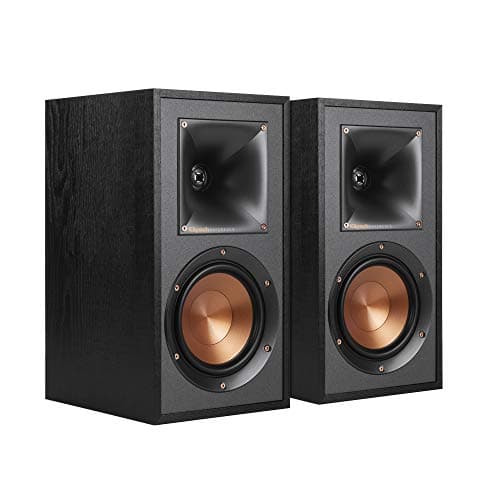 Klipsch R-51M High sensitivity means a modest amplifier drives these to a real volume — the practical answer when the amp is fixed and small. | Best for low-power amplifiers | 8.4 | |
| 2 | 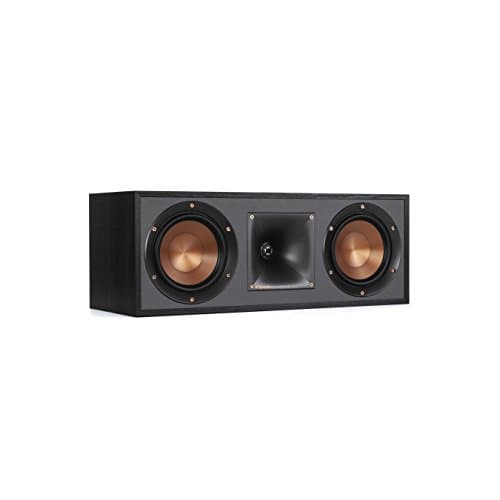 Klipsch R-52C A sealed dual-woofer center with a published 95 dB sensitivity, timbre-matched to the R-41M and R-51M so dialogue does not change character as it pans across the front. | Best center channel | 7.6 | |
| 3 | 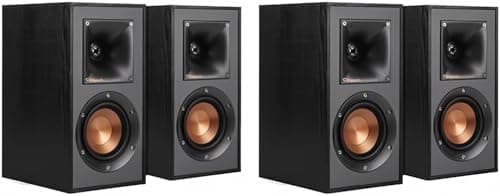 Klipsch R-41M A 4-inch two-way with a published 90 dB sensitivity, which means it goes loud on an amplifier that would embarrass most of its competition. | Best for a very small amplifier | 7.0 | |
| 4 | 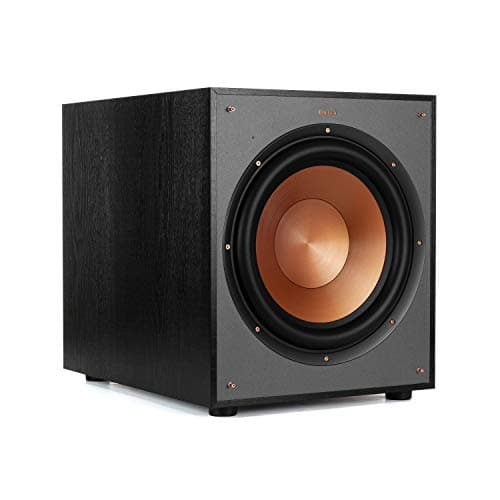 Klipsch R-120SW A 12-inch ported sub whose spec sheet publishes 200 W continuous next to the 400 W peak figure the listings quote — and whose only inputs are RCA, which is the spec that decides whether it works with your amplifier. | Best value 12-inch | 8.2 | $329.00View on Amazon $599.0045% off |
| 5 | 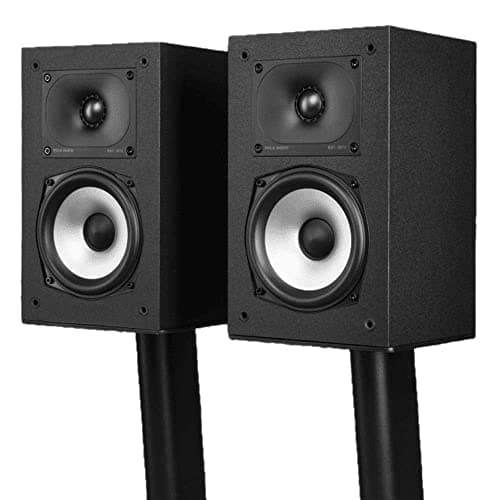 Polk Monitor XT15 48 Hz of published extension and a stated 30–150 W amplifier range, from a maker who tells you what to drive it with but not how they measured its sensitivity. | Best all-rounder under $200 | 7.4 | $149.00View on Amazon $179.0017% off |
| 6 | 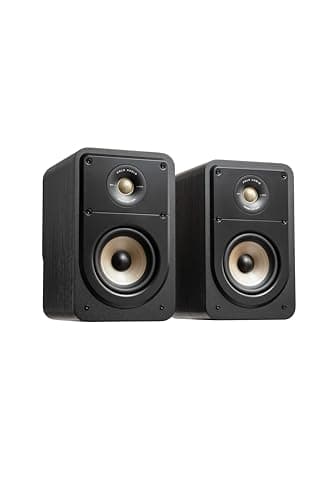 Polk Signature Elite ES15 Voiced and certified to sit in a surround system as easily as a stereo pair, which matters if this room has to do both jobs. | Best for double duty with home theater | 7.0 |
A surround system is not five speakers. It is one speaker system with five voices, and the job of the design is to make a sound that pans from left to center to right not change character on the way.
That is what “timbre matching” means, and it is not marketing. It means the same tweeter, the same crossover philosophy and the same cone material across the front three channels, so a voice moving across the screen stays the same voice. Buy a well-reviewed bookshelf from one brand, a well-reviewed center from another, and you will hear the seam on every pan — which is the most common and least discussed failure in a first home theater.
What a matched family actually looks like in specs
Take the Klipsch Reference line, which is why it dominates this page. Here is what the spec sheets show:
| Spec | R-51M | R-52C | R-41M |
|---|---|---|---|
| Role | Front L/R | Center | Surrounds |
| Tweeter | 1 in aluminum LTS on a 90° × 90° Tractrix horn — identical across all three | ||
| Woofer | 5.25 in IMG | Dual 5.25 in IMG | 4 in IMG |
| Crossover | 1,660 Hz | 1,630 Hz | 1,730 Hz |
| Sensitivity | 93 dB | 95 dB | 90 dB |
| Extension | 62 Hz ± 3 dB | 89 Hz ± 3 dB | 68 Hz ± 3 dB |
| Enclosure | Rear-ported | Sealed | Rear-ported |
Same tweeter, same horn geometry, crossovers within 100 Hz of each other, and all three spun-copper IMG woofers. That is what matching looks like when you can read it rather than take it on trust. All three also publish a real ±3 dB tolerance on the frequency response, which several of their competitors do not.
If you would rather the fronts were towers, the matching argument does not change — it just points at a different model in the same family. Klipsch’s R-610F and R-620F use the identical 1 in aluminum LTS tweeter on the identical 90° × 90° Tractrix horn as the R-51M and R-52C, so they timbre-match this build by construction and reach 45 Hz and 38 Hz respectively instead of the R-51M’s 62 Hz. Both are ranked, with the rest of the bracket, in the best floorstanding speakers under $1,000.
The center channel is the most important speaker
Between 50% and 70% of a film’s content — all the dialogue, most of the score’s anchor — comes out of the center channel. If you are economizing anywhere, do not economize here.
The R-52C publishes 95 dB at 2.83 V/1 m, the highest sensitivity of any center channel on this site, and 100 W continuous handling. Both matter for the same reason: dialogue peaks are the moments where a receiver runs out of headroom, and a sensitive, high-handling center gives you margin.
It also has a spec worth understanding. The R-52C is a SEALED cabinet, where the R-41M and R-51M are both rear-ported. That is deliberate — a center channel usually lives inside a cabinet or on a shelf under a television, and a rear port pressed against a wooden panel does unpredictable things. Sealed sidesteps the problem entirely, and it is the reason the R-52C only reaches 89 Hz.
89 Hz sounds alarming for a dialogue speaker until you remember that the receiver’s bass management sends everything below the crossover to the subwoofer. Set the center to “small” with a 100 Hz crossover — slightly above its 89 Hz limit — and the sub takes over exactly where the center gives up.
Surrounds: smaller is genuinely fine
Surround channels carry ambience, effects and the occasional discrete event. They do not need to reach 40 Hz, because bass is non-directional below roughly 80 Hz and the subwoofer is handling it anyway.
The R-41M’s 68 Hz limit, which we treat as a serious limitation in a stereo system, is close to irrelevant in a surround role. What matters is that it uses the same tweeter as the fronts and publishes 90 dB sensitivity, and that it is small enough and light enough — 7 lb, 11.3 inches — to sit on a stand or a wall bracket without a construction project.
This is the one place in a home theater where the cheap option is also the correct option.
The Polk alternative, and its Atmos advantage
Polk’s Monitor XT line is the other coherent family here, and it has one specific advantage over the Klipsch: the Monitor XT15 is explicitly rated for height-channel duty. Polk states it can be wall mounted “for use as a height module in an immersive surround sound setup”, and the range includes a dedicated XT90 upward-firing height speaker.
If Dolby Atmos is in your plan, and the layout geometry is stricter than most people expect, buying into a family that publishes a height solution is worth more than a decibel of sensitivity.
The Polk trade-off is the same one we find everywhere with this brand: 86 dB published with no measurement condition, no nominal impedance, and 48 Hz – 40 kHz with no tolerance. They do publish a 30–150 W amplifier recommendation, which Klipsch does not for any model.
The subwoofer connection trap
The Klipsch R-120SW publishes 29 Hz – 120 Hz ± 3 dB, a 200 W continuous amplifier and 116 dB maximum output. It is the right size of subwoofer for a system built from these speakers.
It also publishes one line that catches people out: line level / LFE RCA inputs only — no speaker-level inputs. Every AV receiver has a subwoofer pre-out, so in a home theater this is a non-issue. But if you later want to use it with an integrated amplifier that has no subwoofer output, you cannot — there is no speaker-level route in. Our subwoofer roundup covers the models that do have one.
What to buy, in order
If the budget arrives in stages — and it usually does — this is the order that gives the most at each step:
- Front left and right (R-51M). They carry music and most of the film mix. In stereo they are the whole system.
- The subwoofer(R-120SW). More audible improvement per dollar than any other single purchase, and it lets you set the small speakers to “small” and stop asking them to do bass.
- The center (R-52C). Dialogue intelligibility, immediately.
- Surrounds (R-41M). The last and cheapest step, and the one that turns a good stereo system with a sub into a surround system.
One thing worth doing before any of it: treat the first reflection points. It costs less than the surrounds and, in most rooms, changes more.
If you are not yet convinced the center channel earns its place in the order above, our center-channel guide answers that from the seating geometry, and records the fact that makes it awkward: the R-52C is 3 dB down at 89 Hz where the R-51M beside it reaches 62 Hz, so the dialogue speaker needs its own crossover setting.
Every pick in detail
Every specification below links to the manufacturer document we read it from. Where a manufacturer does not publish a figure, we say so rather than estimating it.
Klipsch R-51M
Best for low-power amplifiersPrice as of October 14, 2026. #ad
High sensitivity means a modest amplifier drives these to a real volume — the practical answer when the amp is fixed and small.
- sensitivity
- 10/10
- bass extension
- 6/10
- amp friendliness
- 10/10
- value for money
- 9/10
- build quality
- 7/10
| Specification | Published value | Source |
|---|---|---|
| Sensitivity | 93 dB (2.83 V / 1 m) | Klipsch spec sheet (PDF) |
| Impedance | 8 Ω “compatible” (Klipsch's wording — not a measured nominal figure) | Klipsch spec sheet (PDF) |
| Minimum impedance | Not published | — |
| Frequency response | 62 Hz – 21 kHz ± 3 dB | Klipsch spec sheet (PDF) |
| Power handling | 85 W continuous / 340 W peak (a handling limit, not a recommended amplifier range) | Klipsch spec sheet (PDF) |
| Woofer | 5.25 in spun-copper IMG | Klipsch spec sheet (PDF) |
| Tweeter | 1 in aluminum LTS on a 90° × 90° Tractrix horn | Klipsch spec sheet (PDF) |
| Crossover | 1,660 Hz | Klipsch spec sheet (PDF) |
| Weight (each) | 11 lb / 5 kg | Klipsch spec sheet (PDF) |
Pros
- High sensitivity — plays loud on very little power
- The right answer for a low-wattage or tube amplifier
- Horn tweeter gives strong dispersion control
Cons
- Horn presentation is divisive and we cannot tell you how it sounds — we have not heard them
- Rear port needs breathing room from the wall
- Less low-end than the ELAC B6.2
- Previous generation — Klipsch's own page for it now points buyers to the newer Reference R-50M
Skip it if your amp already has power to spare — you are paying for sensitivity you do not need.
Klipsch R-52C
Best center channelPrice as of October 14, 2026. #ad
A sealed dual-woofer center with a published 95 dB sensitivity, timbre-matched to the R-41M and R-51M so dialogue does not change character as it pans across the front.
- specs
- 7/10
- sensitivity
- 10/10
- published data
- 6/10
- value for money
- 9/10
- bass extension
- 2/10
| Specification | Published value | Source |
|---|---|---|
| Sensitivity | 95 dB (2.83 V / 1 m) — the highest figure of any center channel on this site | Klipsch spec sheet (PDF) |
| Impedance | 8 Ω “compatible” (Klipsch's wording) | Klipsch spec sheet (PDF) |
| Minimum impedance | Not published | — |
| Frequency response | 89 Hz – 21 kHz ± 3 dB | Klipsch spec sheet (PDF) |
| Power handling | 100 W continuous / 400 W peak | Klipsch spec sheet (PDF) |
| Woofers | Dual 5.25 in spun-copper IMG | Klipsch spec sheet (PDF) |
| Tweeter | 1 in aluminum LTS on a 90° × 90° Tractrix horn | Klipsch spec sheet (PDF) |
| Crossover | 1,630 Hz | Klipsch spec sheet (PDF) |
| Enclosure | MDF, SEALED (the R-41M and R-51M are both ported) | Klipsch spec sheet (PDF) |
| Weight | 13.5 lb / 6.12 kg | Klipsch spec sheet (PDF) |
Pros
- 95 dB at 2.83 V/1 m — the highest published sensitivity of any center channel on this site
- Sealed enclosure, unlike the ported R-41M and R-51M, so it can sit inside a cabinet without port chuffing
- Same 1 in LTS tweeter and Tractrix horn as the R-series bookshelves, which is what timbre matching actually means
- 100 W continuous handling gives a receiver plenty of headroom for dialogue peaks
Cons
- 89 Hz low-end limit — a center channel this shallow depends entirely on the receiver's bass management
- 18.75 in wide, which will not fit under every television
- “8 ohms compatible” again, with no minimum impedance published
- Only useful in a multichannel system; it does nothing for a stereo setup
- Previous generation — Klipsch's own page for it now points buyers to the newer Reference R-50C
Skip it if you are building a stereo system. A center channel has no role in two-channel listening and adding one is not an upgrade.
Klipsch R-41M
Best for a very small amplifierPrice as of October 14, 2026. #ad
A 4-inch two-way with a published 90 dB sensitivity, which means it goes loud on an amplifier that would embarrass most of its competition.
- specs
- 6/10
- sensitivity
- 9/10
- published data
- 6/10
- value for money
- 9/10
- bass extension
- 3/10
| Specification | Published value | Source |
|---|---|---|
| Sensitivity | 90 dB (2.83 V / 1 m) | Klipsch spec sheet (PDF) |
| Impedance | 8 Ω “compatible” (Klipsch's wording — not a measured nominal figure) | Klipsch spec sheet (PDF) |
| Minimum impedance | Not published | — |
| Frequency response | 68 Hz – 21 kHz ± 3 dB | Klipsch spec sheet (PDF) |
| Power handling | 50 W continuous / 200 W peak (a handling limit, not a recommended amplifier range) | Klipsch spec sheet (PDF) |
| Woofer | Single 4 in spun-copper IMG | Klipsch spec sheet (PDF) |
| Tweeter | 1 in aluminum LTS on a 90° × 90° Tractrix horn | Klipsch spec sheet (PDF) |
| Crossover | 1,730 Hz | Klipsch spec sheet (PDF) |
| Enclosure | MDF, bass-reflex via rear-firing ports | Klipsch spec sheet (PDF) |
| Weight (each) | 7 lb / 3.2 kg | Klipsch spec sheet (PDF) |
Pros
- 90 dB at 2.83 V/1 m — seven decibels more sensitive than the Micca RB42, which is about five times less amplifier for the same volume
- Klipsch publishes a real ±3 dB tolerance on the frequency response
- 7 lb each and 11.3 in tall: the smallest cabinet here by a clear margin
- Timbre-matched to the R-51M and R-52C if you later build a surround system around it
Cons
- 68 Hz is the shallowest bass extension of any speaker on this site
- “8 ohms compatible” is not a measured nominal impedance, and no minimum impedance is published
- Rear-ported, so it needs clearance behind it — an actual bookshelf will change its bass
- Klipsch publishes power handling, not a recommended amplifier range; those are different specs
- Amazon no longer lists a single pair: the live listing is a two-pair, four-speaker pack, so the price shown here buys four speakers
- Previous generation — Klipsch's own page for it now points buyers to the newer Reference R-40M
Skip it if you listen to anything with real low end and have no subwoofer. 68 Hz means the bottom octave and a half simply is not there.
Klipsch R-120SW
Best value 12-inchA 12-inch ported sub whose spec sheet publishes 200 W continuous next to the 400 W peak figure the listings quote — and whose only inputs are RCA, which is the spec that decides whether it works with your amplifier.
- extension
- 8/10
- published data
- 8/10
- room control
- 4/10
- value for money
- 9/10
- build quality
- 7/10
| Specification | Published value | Source |
|---|---|---|
| Frequency response | 29 Hz – 120 Hz ± 3 dB | Klipsch spec sheet (PDF) |
| Amplifier power (cont/peak) | 200 W / 400 W, all-digital. The 400 W is the peak figure and it is the one the listings quote. | Klipsch spec sheet (PDF) |
| Maximum acoustic output | 116 dB | Klipsch spec sheet (PDF) |
| Driver | 12 in high-excursion spun-copper IMG woofer, front-firing | Klipsch spec sheet (PDF) |
| Enclosure type | Bass-reflex via rear-firing port, MDF | Klipsch spec sheet (PDF) |
| Inputs | Line level / LFE RCA jacks only — NO speaker-level inputs | Klipsch spec sheet (PDF) |
| Controls | Volume, low-pass, 0/180 phase, auto power on | Klipsch spec sheet (PDF) |
| Dimensions | 16.5 in H × 14 in W × 19.2 in D (419 × 356 × 488 mm) | Klipsch spec sheet (PDF) |
| Weight | 31 lb (14.1 kg) | Klipsch spec sheet (PDF) |
| Low-pass crossover range | Not published | — |
Pros
- 200 W continuous IS published, alongside the 400 W peak — Klipsch prints both
- 29 Hz – 120 Hz ± 3 dB, a real tolerance rather than a bare number
- Maximum acoustic output published at 116 dB
- Front-firing driver with a rear port, so it is less fussy about how far it sits from a wall than a down-firing design
Cons
- Line/LFE RCA inputs ONLY — no speaker-level inputs, so an integrated amp with no subwoofer output cannot drive it without a converter
- The 400 W in every listing headline is the peak figure, not the rating
- A large box: 19.2 inches deep, 31 lb
- Klipsch does not publish the low-pass crossover range, only that a low-pass control exists
- Previous generation — Klipsch's own page for it now points buyers to the newer Reference R-121SW
Skip it if your amplifier has no subwoofer output. This one has no speaker-level input, and that is a hard stop rather than an inconvenience.
Polk Monitor XT15
Best all-rounder under $20048 Hz of published extension and a stated 30–150 W amplifier range, from a maker who tells you what to drive it with but not how they measured its sensitivity.
- specs
- 7/10
- sensitivity
- 6/10
- published data
- 6/10
- value for money
- 9/10
- bass extension
- 8/10
| Specification | Published value | Source |
|---|---|---|
| Sensitivity | 86 dB — Polk publishes NO measurement condition (no 2.83 V/1 m or 1 W/1 m qualifier) | Polk info sheet (PDF) |
| Impedance | “Compatible with 4- and 8-ohm outputs” — Polk publishes no nominal impedance value | Polk info sheet (PDF) |
| Minimum impedance | Not published | — |
| Frequency response | 48 Hz – 40 kHz (no tolerance published) | Polk info sheet (PDF) |
| Recommended amplification | 30–150 W per channel | Polk info sheet (PDF) |
| Woofer | 5.25 in bi-laminate paper | Polk info sheet (PDF) |
| Tweeter | 1 in Terylene dome | Polk info sheet (PDF) |
| Crossover | 2,200 Hz | Polk info sheet (PDF) |
| Weight (each) | 9 lb / 4.08 kg | Polk info sheet (PDF) |
Pros
- 48 Hz – 40 kHz published extension, the deepest bass figure in this bracket
- Polk publishes a recommended amplification range (30–150 W), which Klipsch and ELAC do not
- 1 in Terylene dome tweeter, the same driver family as the more expensive Signature Elite ES15
- Explicitly rated for Dolby Atmos height duty as well as stereo, so it does double service
Cons
- The 86 dB sensitivity is published with NO measurement condition, so it cannot honestly be compared to Klipsch's 2.83 V figures
- “Compatible with 4- and 8-ohm outputs” is not a nominal impedance, and no minimum is published
- 48 Hz – 40 kHz is quoted with no tolerance, which makes the endpoints unverifiable
- The 30 W lower bound rules out several of the smallest amplifiers we recommend
Skip it if your amplifier delivers under 30 W. Polk's own recommendation excludes it, and that is Polk's number, not ours.
Polk Signature Elite ES15
Best for double duty with home theaterPrice as of October 14, 2026. #ad
Voiced and certified to sit in a surround system as easily as a stereo pair, which matters if this room has to do both jobs.
- sensitivity
- 7/10
- bass extension
- 7/10
- amp friendliness
- 7/10
- value for money
- 7/10
- build quality
- 7/10
| Specification | Published value | Source |
|---|---|---|
| Sensitivity | 88 dB — Polk publishes NO measurement condition (no 2.83 V/1 m or 1 W/1 m qualifier), so this figure is not directly comparable to the others in this table | Polk info sheet (PDF) |
| Impedance | “Compatible with 4- and 8-ohm outputs” — Polk publishes no nominal impedance value | Polk info sheet (PDF) |
| Minimum impedance | Not published | — |
| Frequency response | 48 Hz – 40 kHz (no tolerance published) | Polk info sheet (PDF) |
| Recommended amplification | 20–100 W per channel | Polk info sheet (PDF) |
| Woofer | 5.25 in mica-fortified polypropylene | Polk info sheet (PDF) |
| Tweeter | 1 in Terylene dome | Polk info sheet (PDF) |
| Crossover | 2.5 kHz | Polk info sheet (PDF) |
| Weight (each) | 13 lb / 5.9 kg | Polk info sheet (PDF) |
Pros
- Designed to integrate with a matching surround range
- Hi-Res certified
- Keyhole mount for wall use
Cons
- Less distinctive than the ELAC or Klipsch at the price
- Rear port
- Not the best pure-stereo value here
Skip it if this is a stereo-only system — the ELAC B6.2 gives more for the money.
Frequently asked questions
What are the best home theater speakers?
On our published criteria, the Klipsch Reference family: the R-51M for the front left and right, the R-52C center and the R-41M for surrounds. All three publish the same 1-inch aluminum LTS tweeter on a 90°×90° Tractrix horn, crossovers within 100 Hz of each other, and real ±3 dB frequency response tolerances. Matching across the front three channels matters more than any individual model.
Do home theater speakers need to be the same brand?
The front three should be from the same family, not just the same brand. Timbre matching means the same tweeter, crossover philosophy and cone material, so a sound panning from left to center to right does not change character. Surrounds and the subwoofer are far more forgiving, because ambience and bass carry much less identifiable tonal information.
Is the center channel the most important speaker?
For film, yes — the majority of a soundtrack's content, including all dialogue, comes through it. The Klipsch R-52C publishes 95 dB sensitivity and 100 W continuous handling, both of which give a receiver headroom on dialogue peaks. Note it is a sealed cabinet reaching only 89 Hz; that is deliberate, so it can sit in a cabinet without a rear port misbehaving, and the receiver's bass management covers the rest.
Can I use small speakers for surrounds?
Yes, and this is the one place in a home theater where the cheap option is also the right one. Surrounds carry ambience and effects, and bass below roughly 80 Hz is non-directional and handled by the subwoofer anyway. The Klipsch R-41M's 68 Hz limit is a real problem in a stereo system and close to irrelevant in a surround role.
What crossover should I set for these speakers?
Set every speaker to "small" and choose a crossover slightly above each speaker's published low-frequency limit. For the Klipsch R-52C center (89 Hz ±3 dB), 100 Hz is a sensible setting; for the R-51M (62 Hz) and R-41M (68 Hz), 80 Hz is the usual starting point. The receiver's room correction will suggest values — treat them as a starting point, not gospel. Which correction system you get is itself a spec: our under-$1,000 receiver roundup compares Audyssey MultEQ XT, YPAO and AccuEQ side by side, and that difference changes what you hear more than any power figure in the bracket.
Read next
Home Theater Setup: The Complete Guide
The complete setup, built on Dolby's published layout angles rather than on vibes — plus what to do when your room disagrees.
The Best Subwoofers for a Home Theater
Six subwoofers ranked on continuous power and published response, including two that publish neither.
Dolby Atmos Speaker Placement
Dolby's published height angles, ceiling versus up-firing, and what each needs from your room.
The Best AV Receivers Under $1,000
Five receivers under $1,000, compared on FTC-rated power and the pre-out spec almost nobody mentions.
The Best Floorstanding Speakers Under $1,000
Six towers that make a stereo pair under $1,000, ranked on sensitivity with its stated condition, bass figures with a tolerance, and where the port fires.
Speaker Sensitivity Explained
2.83 V/1 m versus 1 W/1 m, what the conversion is worth in decibels, and the twelve-decibel spread that means sixteen times the power.
Sources
Every specification on this page was read from one of these documents. If one of them has changed, or we have made an error, tell us — corrections are logged and dated per our editorial policy.