Home Theater Setup: The Complete Guide
Speaker placement is not a matter of taste. Dolby publishes the angles. Here is what they are, why they are what they are, and what to do when your room disagrees.
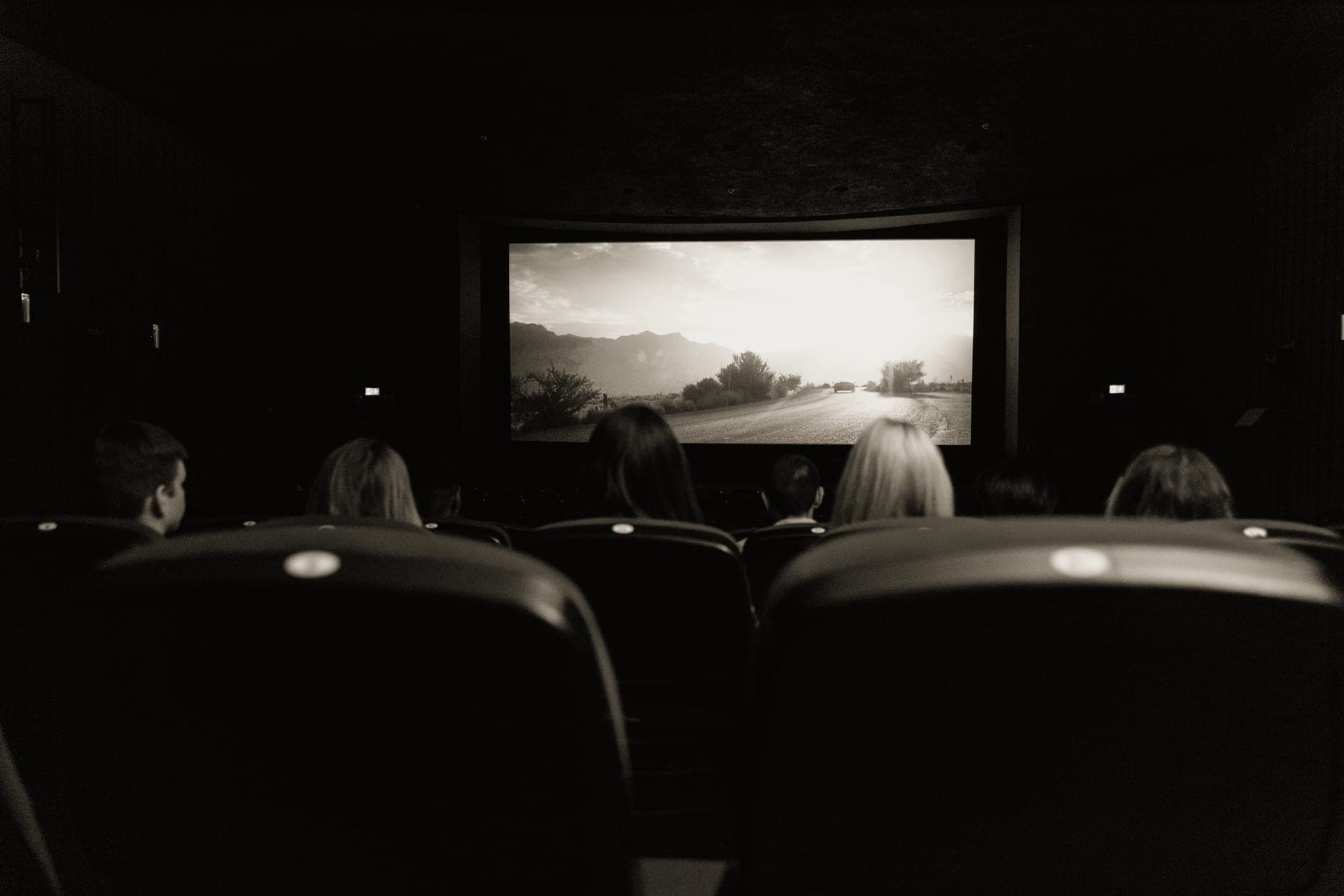
A home theater is a receiver, five to seven speakers, a subwoofer, and a set of angles that Dolby publishes and most people ignore. Get the layout right and modest equipment sounds coherent. Get it wrong and expensive equipment does not.
Start here: what you actually need
A 5.1 system is the baseline: front left, center, front right, two surrounds, and a subwoofer. That is what almost all film soundtracks are mixed for, and it is a complete, finished system — not a stepping stone.
The numbers describe the layout. In “5.1.2”, the first number is the ear-level speakers, the second is subwoofers, and the third is height speakers for Dolby Atmos. So 5.1.2 is a 5.1 system plus two height channels.
Buy channels before you buy quality. A complete 5.1 of modest speakers beats an incomplete 2.0 of expensive ones for film, because the center channel carries most of the dialogue and without it your dialogue is a phantom image that collapses the moment you sit off-axis.
The angles, from Dolby's published specification
These are not our recommendations. They are the layout Dolby publishes, and the reason your receiver’s setup menu asks the questions it does.
| Speaker | Angle from center | Height |
|---|---|---|
| Front left / right | 22–30° | Tweeter at seated ear height |
| Center | 0° | Directly above or below the screen, aimed at ear height |
| Surround (5.1) | 90–110° | Slightly above ear height |
| Surround back (7.1) | 135–150° | Slightly above ear height |
| Height / Atmos | Overhead — see below | Ceiling, or up-firing modules |
The reference for all of this is Dolby’s own published speaker setup guidance, linked in the sources below. If a page tells you a different number without citing a source, ask where it came from. The height-channel angles are covered in detail here.
Why the center channel is the one that matters
In a typical film mix, the large majority of dialogue is in the center channel. That is what it is for.
Without one, your receiver creates a phantom center by sending the signal to both front speakers. It works — if you sit exactly in the middle. Move one seat over and the dialogue moves with you, because the nearer speaker arrives first. On a sofa with three seats, two of them are wrong.
This is why a 5.1 of cheap speakers beats a 2.0 of good ones for film, and it is the single highest-value thing on this page.
Subwoofer placement: the crawl
Bass below about 80 Hz is very hard to localize, which is why one subwoofer works. But where you put it changes the response enormously, because room modes create positions where bass piles up and positions where it cancels.
You cannot calculate your way out of this — it depends on your room’s exact dimensions and construction. So do the subwoofer crawl instead:
- Put the subwoofer on your listening seat.
- Play something with continuous, repetitive bass.
- Crawl around the floor at the positions where the subwoofer could go.
- Where it sounds most even — not loudest — is where it goes.
It looks ridiculous and it works, because it exploits acoustic reciprocity: a path from the sub to your ear behaves the same as the reverse. It costs nothing, and it will do more for your bass than any upgrade at this budget — including the choice of subwoofer, which we work through in the subwoofer roundup.
Set the crossover at 80 Hz and stop thinking about it
The crossover decides where bass stops going to your speakers and starts going to the subwoofer. 80 Hz is the standard, and it is standard for a good reason: it is low enough to be below localization for most people, and high enough to relieve small speakers of the work they are worst at.
Set your speakers to “Small” in the receiver menu even if they are large. That setting does not describe the cabinet — it tells the receiver to send bass to the subwoofer, which is what you want. An ELAC Debut B6.2 reaches 44 Hz on its own; a subwoofer does that better and frees the ELAC’s woofer to do everything else.
Run the room correction. Then check it
Every receiver we recommend has room correction: Audyssey MultEQ XT on the Denon AVR-X1800H, plain Audyssey MultEQ on the AVR-S670H and Marantz Cinema 70s, YPAO on the Yamahas, AccuEQ on the Onkyo.
Run it. It measures with a microphone and corrects for the room, and it is the single most effective feature on the box — more than any power figure.
Then check what it did. These systems set speaker distances and levels as well as EQ, and if it has decided a speaker is 30 feet away when it is 10, something was wrong with the measurement. Room correction is very good at frequency response and only adequate at bass below about 80 Hz, where the problem is physical rather than electrical — which is what room treatment is actually for.
What the receiver spec sheet will and will not tell you
Two things worth knowing before you buy, both from our receiver roundup:
Power figures are rated with two channels driven. Denon publishes 80 W + 80 W for the AVR-X1800H at 8 Ω, 20 Hz–20 kHz, 0.08% THD — with 2 channels driven. A 7-channel action scene drives seven. Nobody publishes an all-channels-driven figure at this price, so the honest position is that the real number is lower and unknown.
Pre-outs decide whether you can ever upgrade. The Denon AVR-X1800H has 2.2 pre-outs; the AVR-S670H has subwoofer outputs only; the Marantz Cinema 70s has a full 7.2. If you ever want to add an external power amplifier, that spec is the ceiling, and almost nobody mentions it.
The order to spend money in
- A complete channel count — 5.1 before anything else.
- A subwoofer, placed by crawl — free performance.
- Room correction, run properly — already in the box.
- Room treatment — cheaper than any electronics upgrade and it fixes problems electronics cannot.
- Better speakers — last, not first.
That order is close to the reverse of how most people spend, which is why most home theaters underperform their price.
Frequently asked questions
How do I set up a home theater system?
Place a complete 5.1 to Dolby’s published angles — fronts at 22–30°, center at 0°, surrounds at 90–110° — put the subwoofer where the crawl says, set the crossover to 80 Hz with all speakers set to “Small”, and run the receiver’s room correction. Those five steps matter more than any component upgrade.
Do I really need a center channel speaker?
For film, yes — it carries most of the dialogue. Without one, your receiver creates a phantom center from the front pair, which only works if you sit exactly in the middle. One seat over and the dialogue follows you. A complete 5.1 of modest speakers beats an expensive 2.0 for this reason alone.
Where should I put my subwoofer?
Where the subwoofer crawl says. Put the sub on your seat, play repetitive bass, crawl the floor at candidate positions and listen for the most even response, not the loudest. Room modes make this impossible to calculate from dimensions alone, and the crawl costs nothing.
What crossover frequency should I use?
80 Hz, and set your speakers to “Small” even if they are physically large. That setting routes bass to the subwoofer, which handles it better and frees your speakers’ woofers for everything else. 80 Hz is standard because it is below localization for most people.
Is 5.1 or 7.1 better?
5.1 done properly beats 7.1 done badly. Most films are mixed in 5.1, and the surround back pair in a 7.1 adds little in a small room where those speakers end up close to your head. If you have the space and a 7-channel receiver, 7.1 is worth having — but 5.1.2 with height channels is usually the better use of the same seven amplifiers.
Does an AV receiver's wattage matter?
Less than the spec sheet implies. Those figures are rated with two channels driven — Denon publishes 80 W + 80 W for the AVR-X1800H under exactly that condition — while a 7-channel scene drives seven. Nobody at this price publishes an all-channels-driven figure, so the real number is lower and undisclosed. Speaker sensitivity affects your actual volume far more; see the amp matching arithmetic.
Read next
The Best AV Receivers Under $1,000
Five receivers under $1,000, compared on FTC-rated power and the pre-out spec almost nobody mentions.
Dolby Atmos Speaker Placement
Dolby's published height angles, ceiling versus up-firing, and what each needs from your room.
The Best Acoustic Panels for a Home Theater
Panels ranked on published per-frequency absorption — and why an NRC of 1.00 can still absorb 12% at 125 Hz.
The Best Bookshelf Speakers Under $500
Six pairs under $500 — and only one publishes a minimum impedance and a recommended amp range.
The Best Home Theater Speakers
A timbre-matched 5.1 built from published specs — fronts, center, surrounds and a subwoofer that actually connects.
Soundbar vs Speakers
What a soundbar can and cannot physically do, and the honest case for each format.
AV Receiver Room Correction, Honestly
What Audyssey, YPAO and AccuEQ tiers actually publish, the one difference that is documented, and the physics room correction cannot beat.
Sources
Every specification on this page was read from one of these documents. If one of them has changed, or we have made an error, tell us — corrections are logged and dated per our editorial policy.