Find Your First Reflection Points
The highest-value acoustic improvement in most rooms costs two panels and five minutes with a mirror. Here is the method and the reason it works.
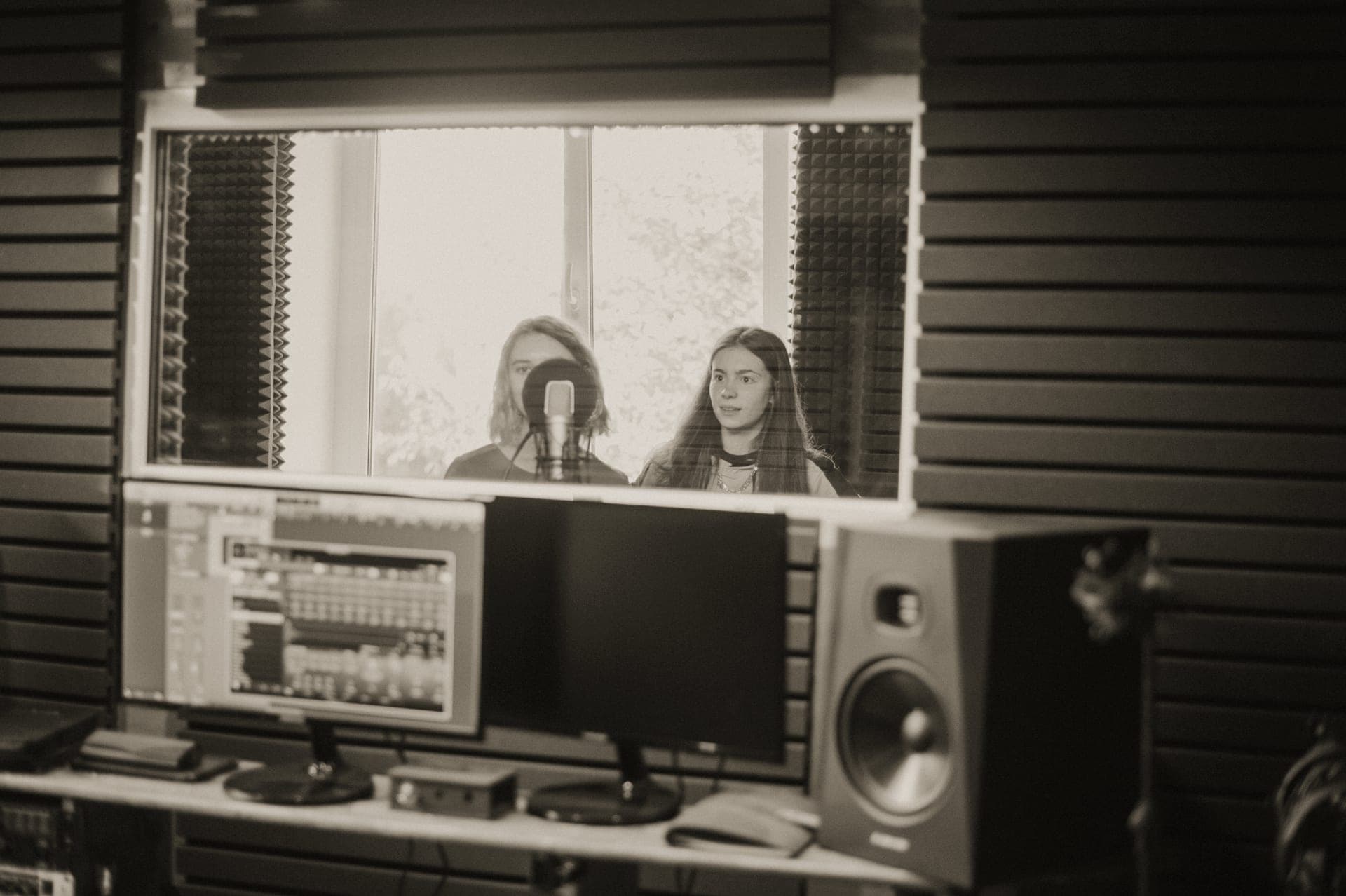
Sit in your listening seat. Have someone slide a mirror along the side wall. Wherever you can see a speaker’s driver in the mirror, that spot is a first reflection point. Two panels there will do more than six panels anywhere else, and finding them is free.
Why those points and not others
Sound leaves your speaker in every direction, not just at you. Some of it hits a side wall and bounces to your ear a few milliseconds after the direct sound.
Your ear receives both. They are the same signal, arriving at slightly different times from slightly different directions. That is what smears a stereo image — the brain is trying to localize a sound that is arriving twice from two places.
The first reflection is the loudest and earliest of these, because it has traveled the shortest extra distance and bounced only once. Kill it and you get most of the available improvement. Later reflections have bounced more, lost more energy, and arrive spread out enough that the brain treats them as room ambience rather than confusion.
The mirror method, step by step
- Sit in your normal listening position. Not standing — sitting, at ear height.
- Have someone hold a mirror flat against the side wall nearest one speaker, and slide it slowly along.
- When you can see that speaker’s tweeter reflected in the mirror, mark that spot. That is a first reflection point.
- Repeat for the other speaker on the opposite wall.
- Repeat on the ceiling, and on the floor if it is hard — though a rug handles the floor perfectly well.
It works because of the law of reflection: the angle of incidence equals the angle of reflection, for light and for sound alike. If light from the speaker reaches your eye via that point, sound from the speaker reaches your ear via the same point. The mirror is not an analogy — it is the same geometry.
What to put there
A porous absorber, ideally two inches or more. The ATS 24×48×2 panel publishes 1.17 at 500 Hz and 1.12 at 1 kHz — the range that matters most for imaging.
This is the one job where even foam is genuinely defensible. Auralex publishes 0.75 at 1 kHz and 0.90 at 2 kHz for its 2-inch DST-114 — well short of mineral wool but real absorption in exactly the band a first reflection carries. If your only problem is a bright, smeared image and your budget is small, foam at the reflection points is not a bad answer. It is only a bad answer when sold as a bass fix.
Two things this will not fix
It will not fix your bass. A 2-inch panel absorbs about 12% at 125 Hz, per ATS’s own data. Boominess is a room-mode problem and it needs corner traps, not wall panels.
It will not fix bad speaker placement. If your speakers are jammed into corners or at wildly different distances from the walls, treat that first. It costs nothing and it is a bigger effect. See the setup guide.
The Atmos exception
If you run up-firing Atmos speakers, treat the side walls but leave the ceiling alone. Up-firing modules work by reflecting off the ceiling — a panel at the ceiling reflection point absorbs precisely the bounce they depend on.
This is a real conflict between two things that are individually correct, and it is worth knowing before you mount anything overhead.
How much is enough
Two panels at the side-wall points, plus a rug and a couple of corner traps, is most of the available win in a normal domestic room. Beyond that you are into diminishing returns, and an over-damped room sounds dead and unpleasant in a way that is harder to diagnose than a bright one.
You cannot absorb your way to a good room. You can absorb your way past the first reflection, and that is the part worth doing.
Frequently asked questions
How do I find first reflection points?
Sit in your listening seat and have someone slide a mirror along the side wall. Wherever you can see a speaker’s tweeter in the mirror, that is a first reflection point. It works because sound reflects at the same angles light does — the mirror is the same geometry, not an analogy.
Should I treat the ceiling reflection point?
Usually yes — unless you run up-firing Dolby Atmos speakers, which depend on that exact ceiling reflection to place sound above you. Absorbing it defeats them. If you have in-ceiling Atmos speakers instead, or no Atmos at all, treat the ceiling point normally.
Do I need to treat the floor reflection?
A rug between you and the speakers handles it. A hard floor produces a strong early reflection in exactly the same way a bare wall does; carpet or a decent rug absorbs enough of it that a dedicated panel is rarely worth the trouble.
How thick should acoustic panels be for first reflections?
Two inches is enough for this specific job. First reflections carry mostly midrange and treble, and 2-inch panels absorb strongly there — ATS publishes 1.17 at 500 Hz and 1.12 at 1 kHz. Thicker panels buy you low-frequency absorption, which is a different problem solved in a different place: the corners.
Read next
The Best Acoustic Panels for a Home Theater
Panels ranked on published per-frequency absorption — and why an NRC of 1.00 can still absorb 12% at 125 Hz.
Bass Traps vs Acoustic Panels
Same material, different thickness and placement — and that decides whether your room gets fixed or just quieter in the treble.
Home Theater Setup: The Complete Guide
The complete setup, built on Dolby's published layout angles rather than on vibes — plus what to do when your room disagrees.
The Best Bookshelf Speakers Under $500
Six pairs under $500 — and only one publishes a minimum impedance and a recommended amp range.
How Much Room Treatment Do I Need?
The Sabine equation, applied to a real room with real published coefficients — and what the answer costs.
The Best Bass Traps
Ranked on published 125 Hz absorption rather than NRC — and only one maker publishes it for a corner trap.
Stereo Speaker Placement
Dolby's 22-30 degree window turned into a listening-distance rule, plus height, toe-in, boundaries and the port clearance most people miss.
Sources
Every specification on this page was read from one of these documents. If one of them has changed, or we have made an error, tell us — corrections are logged and dated per our editorial policy.