The Best Phono Cartridges Under $500
This is the band where moving coil becomes affordable, and the question stops being which cartridge and starts being whether your phono stage can amplify it.
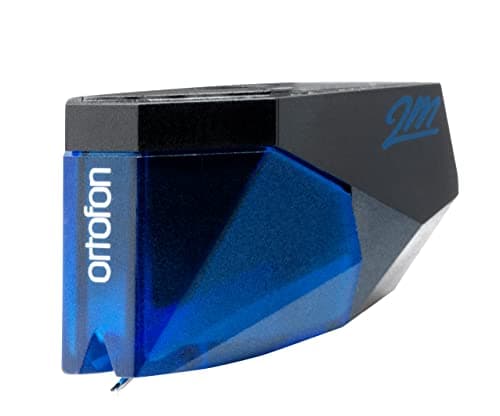
Top pick: Ortofon 2M Blue
Best for a basic MM phono input. #ad Affiliate link — we earn a commission at no extra cost to you.
The short answer
The best phono cartridge under $500 for most people is the Ortofon 2M Blue — because it is the only cartridge in the band that publishes a frequency response with a tolerance attached (20–20,000 Hz at +2 / −1 dB), it publishes a recommended load as both an impedance and a capacitance (47 kΩ, 150–300 pF), and its 5.5 mV output is the highest here — which means it works with any moving-magnet phono input you already own. A nude elliptical stylus with an 8/18 µm tip radius, 25 dB channel separation and 80 µm tracking ability at 315 Hz. It is for the listener upgrading a deck whose phono stage is a basic 47 kΩ MM input. The budget pick is the Audio-Technica AT-VM95E — the cheapest cartridge in our registry and the one whose body accepts the whole VM95 stylus range, so the first upgrade later is a stylus rather than a cartridge. Its limitation is published: 20 dB of channel separation, the lowest here, and a bonded elliptical diamond rather than a nude one.
Before you choose, check the band itself. Published output voltage here runs from 0.3 mV to 5.5 mV — a factor of eighteen, which is about 25 dB of phono gain. Two of these six are moving coils that will be inaudibly quiet through a moving-magnet input, and one of those two is the most famous cartridge on the page.
Disclosure: we earn a commission if you buy through the links on this page, at no extra cost to you. It does not influence what we pick — our criteria are published and reproducible, so you can check our work. How we pick · Full disclosure
These picks are spec-and-price analyses, not listening tests. We have not heard this gear and we do not pretend to have: every figure below is sourced to the manufacturer and linked, and every price is live or not shown at all. Here are the rules we followed.
Quick picks
Ranked on the published criteria in How We Pick. Prices are live as of November 23, 2026. Tap any row for the full write-up.
- 8.6
- 7.6
- 6.8
- 7.8
- 6.4
- 8.4$62.85View on Amazon
$74.0015% off
| # | Product | Best for | Score | Price |
|---|---|---|---|---|
| 1 | Ortofon 2M Blue The highest published output in this bracket, into the 47 kΩ input every moving-magnet phono stage already has — with a published response tolerance to go with it. | Best for a basic MM phono input | 8.6 | |
| 2 | 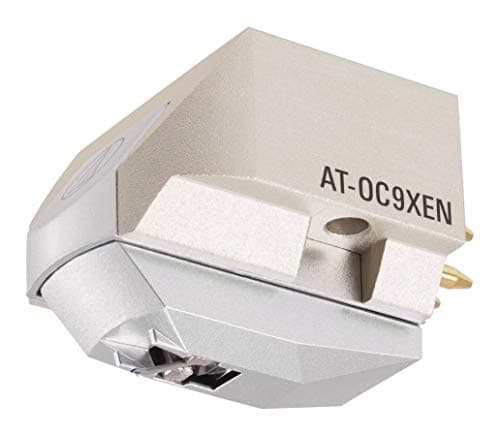 Audio-Technica AT-OC9XEN The least expensive route into a moving coil whose maker publishes a full specification — and the lowest output on this site, which makes the phono stage the real purchase. | Cheapest documented moving coil | 7.6 | |
| 3 | 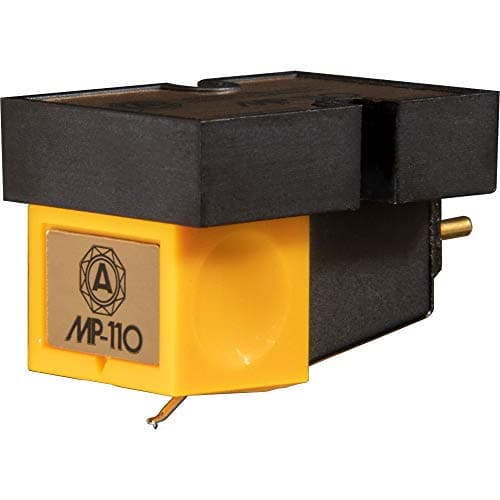 Nagaoka MP-110 A moving-permalloy cartridge with a published 5 mV output and a tracking force range that starts lower than anything else here — and no published compliance at all. | Best for a heavy tonearm | 6.8 | |
| 4 | 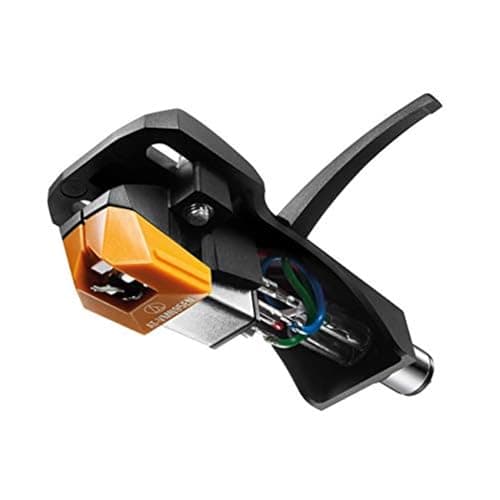 Audio-Technica AT-VM95EN/H The nude-stylus VM95 supplied already mounted and aligned on an AT-HS6 headshell, which removes the single most error-prone step in fitting a cartridge. | Best for a removable headshell | 7.8 | |
| 5 | 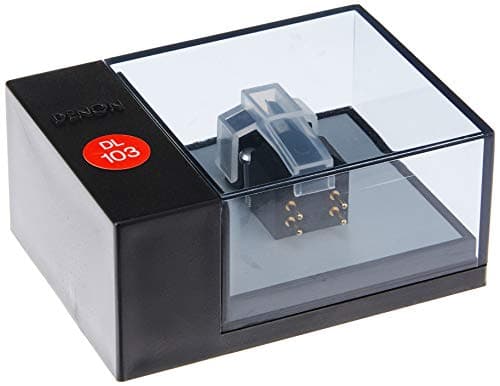 Denon DL-103 In continuous production since the 1960s and the most-recommended moving coil in this bracket — and Denon publishes five figures about it, none of which is the tracking force. | The famous one, and the least documented | 6.4 | |
| 6 | 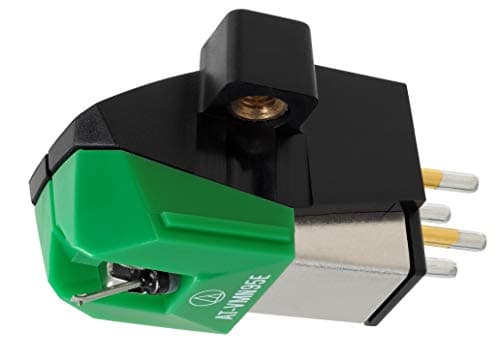 Audio-Technica AT-VM95E The cheapest way into a cartridge body that accepts seven different styli, so every later upgrade costs a stylus rather than a cartridge. | Best first upgrade | 8.4 | $62.85View on Amazon $74.0015% off |
Under $500 is the first cartridge band where moving coil is genuinely affordable, and that is exactly what makes it the easiest band to buy wrongly. A moving-coil cartridge at this price can out-specify a moving magnet on separation and stylus geometry and still be the wrong purchase, because it needs between four and five times the gain and a load impedance two and a half orders of magnitude lower than the input most people own.
So this page ranks on four published criteria. First, output voltage, because it decides whether your phono stage can amplify the cartridge at all. Second, recommended load — impedance andcapacitance — because that is the match. Third, channel separation, which is the one performance figure almost every maker in this band publishes at the same 1 kHz condition and which is therefore the one you can actually compare. Fourth, stylus profile, including whether the diamond is nude or bonded.
The picks compared, spec by spec
Four of the five cells in the Denon DL-103 row read “Not published,” and that is Denon’s position rather than a gap in our research. The DL-103 is probably the most written-about cartridge ever made, and Denon publishes exactly four figures for it: type, output voltage, output impedance and weight. No channel separation, no stylus profile, no cantilever material, no compliance, no tracking force, no recommended load.
Every figure below is the manufacturer’s own published value and links to the document we read it from. “Not published” means the manufacturer does not publish that figure; an em dash means we have no published figure for that model. Prices are live as of November 23, 2026.
Best for a basic MM phono input
- Output voltage
- 5.5 mV — highest here
- Recommended load
- 47 kΩ, 150–300 pF
- Channel separation
- 25 dB (1 kHz)
Cheapest documented moving coil
- Output voltage
- 0.35 mV
- Recommended load
- Min. 100 Ω — not a 47 kΩ MM input
- Channel separation
- 25 dB (1 kHz)
Best for a heavy tonearm
- Output voltage
- 5.0 mV
- Recommended load
- 47 kΩ, 100 pF
- Channel separation
- 23 dB (1 kHz)
Best for a removable headshell
- Output voltage
- 3.5 mV
- Recommended load
- 47 kΩ, 100–200 pF
- Channel separation
- 22 dB (1 kHz)
The famous one, and the least documented
- Output voltage
- 0.3 mV — lowest here
- Recommended load
- Not published
- Channel separation
- Not published
- Stylus
- Not published
Best first upgrade
- Output voltage
- 4.0 mV
- Recommended load
- 47 kΩ, 100–200 pF
- Channel separation
- 20 dB (1 kHz)
| Pick | Output voltage | Recommended load | Channel separation | Stylus | Price |
|---|---|---|---|---|---|
| 1.Ortofon 2M BlueBest for a basic MM phono input | 5.5 mV — highest here | 47 kΩ, 150–300 pF | 25 dB (1 kHz) | Nude elliptical, r/R 8/18 µm | |
| 2.Audio-Technica AT-OC9XENCheapest documented moving coil | 0.35 mV | Min. 100 Ω — not a 47 kΩ MM input | 25 dB (1 kHz) | Nude elliptical, 0.3 × 0.7 mil | |
| 3.Nagaoka MP-110Best for a heavy tonearm | 5.0 mV | 47 kΩ, 100 pF | 23 dB (1 kHz) | Bonded elliptical, 0.4 × 0.7 mil | |
| 4.Audio-Technica AT-VM95EN/HBest for a removable headshell | 3.5 mV | 47 kΩ, 100–200 pF | 22 dB (1 kHz) | Nude elliptical, 0.3 × 0.7 mil | |
| 5.Denon DL-103The famous one, and the least documented | 0.3 mV — lowest here | Not published | Not published | Not published | |
| 6.Audio-Technica AT-VM95EBest first upgrade | 4.0 mV | 47 kΩ, 100–200 pF | 20 dB (1 kHz) | Bonded elliptical, 0.3 × 0.7 mil |
Prices as of November 23, 2026; every “Check Price” link goes to Amazon and earns us a commission at no extra cost to you. #ad
The gain arithmetic that decides this whole band
Output voltage is not a quality figure — it is a compatibility figure. Here is what the spread actually demands of a phono stage.
Gain (dB) = 20 × log10(target output ÷ cartridge output)
Inputs
- Ortofon 2M Blue output: 5.5 mV (1 kHz, 5 cm/sec) (Ortofon spec page)
- Denon DL-103 output: 0.3 mV (Denon spec page)
- Target line level: 300 mV nominal output — Cambridge Audio's published figure for the Alva Duo (Cambridge Audio product page)
Result
Why the Ortofon 2M Blue wins
Because it is the only cartridge in the band whose published specification you can check every part of against the equipment you already own.
Ortofon publishes a moving-magnet design with quad coils, split pole pins and OFC coil wire; 20–20,000 Hz at +2 / −1 dB, which is the only frequency response on this page with a tolerance attached in either direction; 25 dB of channel separation and 1.5 dB of channel balance, both at 1 kHz; 5.5 mV output at 5 cm/sec; 80 µm tracking ability at 315 Hz; a nude elliptical diamond with an r/R tip radius of 8/18 µm on an aluminum cantilever; 20 µm/mN dynamic lateral compliance; a 1.6–2.0 g tracking force with 1.8 g recommended; 1.3 kΩ DC resistance and 700 mH inductance; and a recommended load of 47 kΩ with 150–300 pF.
That capacitance window is the detail that makes it the right top pick for this site. It is the widest published capacitance tolerance in the band, which means it is the least fussy about whichever phono stage you own — including the several in our registry that publish 100 pF and nothing else.
Who should skip it: anyone whose tonearm is heavy. Its 20 µm/mN compliance is high, which suits a light-to-medium arm; our cartridge and tonearm matching guide works through the resonance arithmetic, and the Nagaoka below is the pick for the heavy arm case.
The other five, and who each is for
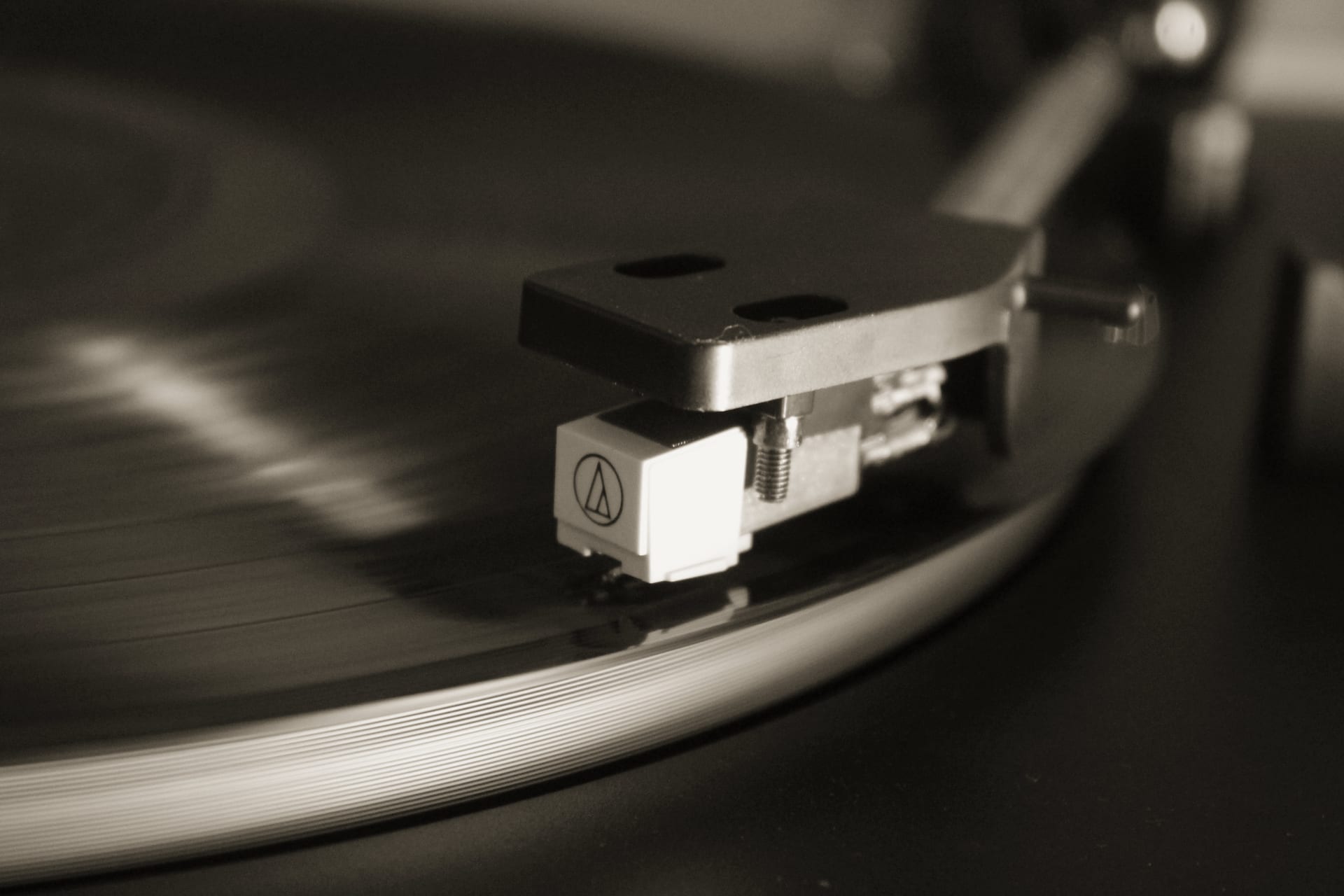
Audio-Technica AT-OC9XEN— for someone who already owns a moving-coil phono stage. It is the cheapest documented moving coil in our registry and it is documented properly: dual moving coil with PCOCC coil wire, 25 dB separation at 1 kHz, 1.5 dB channel balance, 0.35 mV output, a nude elliptical diamond at 0.3 × 0.7 mil, 9 × 10⁻⁶ cm/dyne dynamic compliance stated at 100 Hz, a 12 Ω coil impedance and 25 mH inductance, a 20° vertical tracking angle, and a pre-threaded half-inch body at 7.6 g. Two things to know before buying: its recommended load is Audio-Technica’s own “minimum 100 Ω when head amplifier is connected,” which is not a 47 kΩ moving-magnet input, and the stylus is not field-replaceable — Audio-Technica offers a fee-based exchange programme instead.
Nagaoka MP-110— for a heavy tonearm or a vintage deck. A moving-permalloy design at 5 mV output with 23 dB separation, a 0.4 × 0.7 mil bonded elliptical diamond on an aluminum-alloy cantilever, a 1.5–2.0 g tracking force, 47 kΩ / 100 pF recommended load, and 6.5 g bare — 16.5 g on Nagaoka’s own headshell, which is the figure that matters for arm matching. Nagaoka publishes no dynamic compliance figure at all, which is the gap that keeps it at third rather than second.
Audio-Technica AT-VM95EN/H— for a removable headshell and no setup anxiety. It arrives pre-mounted on an AT-HS6 headshell with a nude round-shank elliptical diamond — the VM95E’s equivalent is bonded — 3.5 mV output, 22 dB separation, 7 × 10⁻⁶ cm/dyne dynamic compliance at 100 Hz, and 47 kΩ / 100–200 pF recommended load. Audio-Technica does not publish the combined cartridge-plus-headshell mass, which is precisely the number you would want for arm matching, so weigh it or ask.
Denon DL-103— for the reader who already knows they want it. It has been in production since 1962 and it is ranked fifth here for one reason only: Denon publishes four specifications for it. 0.3 mV output, a 40 Ω output impedance, a 20 Hz–45 kHz frequency range with no tolerance and no measurement condition, and 8.5 g. No separation figure, no stylus profile, no compliance, no tracking force, no recommended load. We rank on published data, so a cartridge with almost no published data ranks low — and we are not going to borrow figures from forum folklore to fill the gaps. If you want it, buy it knowing that its 0.3 mV output is the lowest here and that it needs a moving-coil stage with around 60 dB of gain.
Audio-Technica AT-VM95E— the budget pick, and the smartest first cartridge in the band for a different reason than its price. Every stylus in the VM95 range drops into this same body, so the upgrade from here is a replacement stylus rather than a replacement cartridge. 4.0 mV output, 20 dB separation, 2.0 dB channel balance, a bonded 0.3 × 0.7 mil elliptical diamond, 7 × 10⁻⁶ cm/dyne compliance, 47 kΩ / 100–200 pF load and 6.1 g. The under-$200 bracket ranks it against the rest of the entry field properly.
What this band does not buy
Not one of the six publishes a distortion figure. Only one publishes a frequency response with a tolerance. Only three publish a dynamic compliance figure, which is the number arm matching actually depends on. And the two most expensive cartridges here are the two moving coils — which means that in this band, spending more buys a cartridge that needs a better phono stage before it sounds like anything at all. If your phono stage is a basic moving-magnet input, the honest advice is to spend less on the cartridge than the band allows and keep the difference for a phono stage that publishes its gain.
Every pick in detail
Every specification below links to the manufacturer document we read it from. Where a manufacturer does not publish a figure, we say so rather than estimating it.
Ortofon 2M Blue
Best for a basic MM phono inputPrice as of November 23, 2026. #ad
The highest published output in this bracket, into the 47 kΩ input every moving-magnet phono stage already has — with a published response tolerance to go with it.
- specs
- 8/10
- upgrade path
- 9/10
- value for money
- 9/10
- tracking ability
- 8/10
- published data
- 10/10
| Specification | Published value | Source |
|---|---|---|
| Type | Moving magnet, quad-coils with split pole pins and OFC coil wire | Ortofon spec page |
| Frequency response | 20–20,000 Hz, +2 / −1 dB | Ortofon spec page |
| Channel separation | 25 dB (1 kHz) | Ortofon spec page |
| Channel balance | 1.5 dB (1 kHz) | Ortofon spec page |
| Output voltage | 5.5 mV (1 kHz, 5 cm/sec) | Ortofon spec page |
| Tracking ability at 315 Hz | 80 µm | Ortofon spec page |
| Stylus | NUDE elliptical, tip radius r/R 8/18 µm, aluminum cantilever | Ortofon spec page |
| Compliance (dynamic, lateral) | 20 µm/mN | Ortofon spec page |
| Tracking force | 1.6–2.0 g (16–20 mN); 1.8 g recommended | Ortofon spec page |
| Internal impedance / inductance | 1.3 kΩ DC resistance, 700 mH | Ortofon spec page |
| Recommended load | 47 kΩ, 150–300 pF | Ortofon spec page |
| Weight | 7.2 g | Ortofon spec page |
Pros
- 5.5 mV is the highest published output on this page, so even a low-gain built-in phono stage has an easy job
- 20–20,000 Hz at +2 / −1 dB — a real tolerance, which neither Audio-Technica nor Denon publishes at any price here
- 80 µm tracking ability at 315 Hz published
- Shares the 2M body, so the Bronze and Black styli drop straight in later — the upgrade is a stylus, not a cartridge
Cons
- 25 dB separation and 1.5 dB channel balance are the loosest Ortofon figures in this bracket; the Bronze publishes 26 dB and 1 dB
- A nude elliptical at r/R 8/18 µm, the coarsest tip radius of the three Ortofons here
- Its +2 / −1 dB tolerance is wider than the Bronze's +2 / −0 dB
- 7.2 g on a light arm still needs checking, and Ortofon publishes no measurement frequency for its compliance figure
Skip it if you already own a 2M Red. The Blue is the same body with a better stylus, so buy the Blue stylus and keep the body you have.
Audio-Technica AT-OC9XEN
Cheapest documented moving coilPrice as of November 23, 2026. #ad
The least expensive route into a moving coil whose maker publishes a full specification — and the lowest output on this site, which makes the phono stage the real purchase.
- specs
- 7/10
- upgrade path
- 4/10
- value for money
- 7/10
- tracking ability
- 6/10
- published data
- 8/10
| Specification | Published value | Source |
|---|---|---|
| Type | Dual Moving Coil, PCOCC coil wire | Audio-Technica spec page |
| Frequency response | 20–30,000 Hz — Audio-Technica publishes no tolerance | Audio-Technica spec page |
| Channel separation | 25 dB (1 kHz) | Audio-Technica spec page |
| Channel balance | 1.5 dB (1 kHz) | Audio-Technica spec page |
| Output voltage | 0.35 mV (1 kHz, 5 cm/sec) — the lowest output of any cartridge on this site | Audio-Technica spec page |
| Stylus | Elliptical nude, curvature radius 0.3 × 0.7 mil | Audio-Technica spec page |
| Cantilever | Aluminum pipe | Audio-Technica spec page |
| Compliance | Static 20 × 10⁻⁶ cm/dyne; dynamic 9 × 10⁻⁶ cm/dyne stated AT 100 Hz | Audio-Technica spec page |
| Tracking force | 1.8–2.2 g (2.0 g standard) | Audio-Technica spec page |
| Vertical tracking angle | 20° | Audio-Technica spec page |
| Coil impedance / inductance / DC resistance | 12 Ω at 1 kHz · 25 mH at 1 kHz · 12 Ω | Audio-Technica spec page |
| Recommended load | Min. 100 Ω “when head amplifier is connected” — Audio-Technica's own wording. This is NOT a 47 kΩ moving-magnet input. | Audio-Technica spec page |
| Recommended load capacitance | Not published | — |
| Mount / weight | Half-inch, pre-threaded body (two screws, no nuts), 7.6 g | Audio-Technica spec page |
| Stylus replacement | NOT field-replaceable. Audio-Technica states it offers a fee-based Moving Coil Exchange Program instead. | Audio-Technica spec page |
Pros
- The cheapest cartridge here whose maker publishes compliance, coil impedance, inductance, DC resistance and a recommended load
- Nude elliptical at 0.3 × 0.7 mil on an aluminum pipe cantilever
- A pre-threaded aluminum body mounts with two screws and no nuts, which removes the fiddliest part of fitting a cartridge
- 7.6 g is the lightest cartridge on this page
Cons
- 0.35 mV is the lowest published output on this site — close to 24 dB below a 5.5 mV moving magnet
- 9 × 10⁻⁶ cm/dyne is the lowest published compliance here, and quoted at 100 Hz; taken at face value the resonance arithmetic lands above the 8–12 Hz window on a typical arm
- 1.5 dB channel balance and 25 dB separation are both the loosest figures of the four Audio-Technicas on this page
- Stylus not field-replaceable, and no load capacitance published
Skip it if you do not already own a phono stage with an MC input and a 100 Ω setting. Buying one to go with this cartridge roughly doubles the real cost of the upgrade.
Nagaoka MP-110
Best for a heavy tonearmPrice as of November 23, 2026. #ad
A moving-permalloy cartridge with a published 5 mV output and a tracking force range that starts lower than anything else here — and no published compliance at all.
- specs
- 7/10
- upgrade path
- 6/10
- value for money
- 7/10
- tracking ability
- 7/10
- published data
- 4/10
| Specification | Published value | Source |
|---|---|---|
| Type | MP (moving permalloy) stereo cartridge | Nagaoka spec page |
| Frequency response | 20 Hz – 20,000 Hz (no tolerance published) | Nagaoka spec page |
| Channel separation | 23 dB (1 kHz) | Nagaoka spec page |
| Channel balance | 1.5 dB or less | Nagaoka spec page |
| Output voltage | 5 mV (5 cm/sec) | Nagaoka spec page |
| Stylus | 0.4 × 0.7 mil bonded elliptical diamond, aluminum-alloy cantilever | Nagaoka spec page |
| Dynamic compliance | Not published | — |
| Tracking force | 1.5–2.0 g | Nagaoka spec page |
| Recommended load | 47 kΩ, 100 pF | Nagaoka spec page |
| Weight | 6.5 g (16.5 g mounted on Nagaoka's headshell) | Nagaoka spec page |
Pros
- 1.5 g minimum tracking force is the lightest published figure in this group
- 5 mV output, effectively tied with the Ortofons for the easiest load on a phono stage
- 23 dB separation beats both Audio-Technica ellipticals here
- The MP-110 body accepts the MP-100 and MP-110 stylus assemblies
Cons
- Nagaoka publishes NO compliance figure — so you cannot compute the arm/cartridge resonance, which is the whole point of the spec
- 0.4 × 0.7 mil bonded elliptical is a coarser tip than the AT-VM95ML's MicroLinear
- No tolerance published on the 20–20,000 Hz response
- Nagaoka's own documentation is Japanese-language only
Skip it if you are trying to do the resonance arithmetic properly. Without a compliance figure the calculation cannot be completed, and no amount of searching fixes that.
Audio-Technica AT-VM95EN/H
Best for a removable headshellPrice as of November 23, 2026. #ad
The nude-stylus VM95 supplied already mounted and aligned on an AT-HS6 headshell, which removes the single most error-prone step in fitting a cartridge.
- specs
- 8/10
- upgrade path
- 9/10
- value for money
- 7/10
- tracking ability
- 7/10
- published data
- 8/10
| Specification | Published value | Source |
|---|---|---|
| Type | VM stereo dual magnet (moving magnet), supplied pre-mounted on an AT-HS6 headshell | Audio-Technica spec page |
| Frequency response | 20–23,000 Hz (no tolerance published) | Audio-Technica spec page |
| Channel separation | 22 dB (1 kHz) | Audio-Technica spec page |
| Output voltage | 3.5 mV (1 kHz, 5 cm/sec) | Audio-Technica spec page |
| Stylus | 0.3 × 0.7 mil elliptical, NUDE round shank (the VM95E's is bonded) | Audio-Technica spec page |
| Cantilever | Aluminum pipe | Audio-Technica spec page |
| Dynamic compliance | 7 × 10⁻⁶ cm/dyne (100 Hz) | Audio-Technica spec page |
| Static compliance | 20 × 10⁻⁶ cm/dyne | Audio-Technica spec page |
| Tracking force | 1.8–2.2 g (2.0 g standard) | Audio-Technica spec page |
| Recommended load | 47,000 Ω, 100–200 pF | Audio-Technica spec page |
| Mount / cartridge weight | Half-inch mount, 6.1 g (cartridge alone) | Audio-Technica spec page |
| Combined cartridge + AT-HS6 headshell mass | Not published | — |
| Replacement stylus | AT-VMN95EN | Audio-Technica spec page |
Pros
- Arrives mounted and aligned on an AT-HS6 headshell — no protractor, no overhang setting, no shaky hands
- A NUDE round-shank diamond, where the VM95E's is bonded: less tip mass for the groove to move
- 22 dB separation and 20 × 10⁻⁶ cm/dyne static compliance, both better than the VM95E
- Drops straight onto any deck with a standard removable headshell, including the AT-LP120XUSB
Cons
- Useless on a fixed-headshell deck — you are paying for a part you cannot fit
- Audio-Technica does not publish the combined cartridge-plus-headshell mass, which is exactly the number arm-resonance arithmetic needs
- 3.5 mV output rather than the VM95E's 4.0 mV
- You pay for a headshell you may already own
Skip it if your turntable has an integrated headshell. On an AT-LP70X or AT-LP60XBT this cannot be fitted at all.
Denon DL-103
The famous one, and the least documentedPrice as of November 23, 2026. #ad
In continuous production since the 1960s and the most-recommended moving coil in this bracket — and Denon publishes five figures about it, none of which is the tracking force.
- specs
- 5/10
- upgrade path
- 5/10
- value for money
- 7/10
- tracking ability
- 4/10
- published data
- 2/10
| Specification | Published value | Source |
|---|---|---|
| Type | MC — moving coil | Denon spec page |
| Output voltage | 0.3 mV | Denon spec page |
| Frequency range | 20 Hz – 45 kHz — Denon publishes no tolerance and no measurement condition | Denon spec page |
| Output impedance | 40 ohms | Denon spec page |
| Weight | 8.5 g | Denon spec page |
| Channel separation | Not published | — |
| Channel balance | Not published | — |
| Stylus profile | Not published | — |
| Cantilever material | Not published | — |
| Dynamic compliance | Not published | — |
| Tracking force | Not published | — |
| Recommended load impedance | Not published | — |
Pros
- Denon publishes a 20 Hz – 45 kHz range and a 0.3 mV output, and has kept the model in production for decades
- 40 Ω output impedance is published, which is the figure a step-up transformer is chosen against
- What is published is published plainly — five rows, no marketing qualifiers and none of the peak-versus-continuous games we see elsewhere on this site
- The only pick here from neither Ortofon nor Audio-Technica, and a genuinely different design generation
Cons
- Denon publishes NO tracking force. Every other cartridge on this page states one, and most state a range as well
- No compliance figure at all, so the arm-resonance arithmetic cannot be completed — the calculation simply stops
- No channel separation, no channel balance, no stylus profile and no recommended load impedance published
- Its instruction-manual PDF defeated our tooling on 2026-10-03, so we could not recover the missing rows from Denon's own document either
Skip it if you need to verify the arm match before you commit. With no published compliance and no published tracking force, nothing about the fit can be checked against Denon's own documentation, and on a light arm that is a real risk rather than a theoretical one.
Audio-Technica AT-VM95E
Best first upgradeThe cheapest way into a cartridge body that accepts seven different styli, so every later upgrade costs a stylus rather than a cartridge.
- specs
- 7/10
- upgrade path
- 10/10
- value for money
- 10/10
- tracking ability
- 6/10
- published data
- 9/10
| Specification | Published value | Source |
|---|---|---|
| Type | VM stereo dual magnet (moving magnet) | Audio-Technica spec page |
| Frequency response | 20–22,000 Hz (no tolerance published) | Audio-Technica spec page |
| Channel separation | 20 dB (1 kHz) | Audio-Technica spec page |
| Output voltage | 4.0 mV (1 kHz, 5 cm/sec) | Audio-Technica spec page |
| Output channel balance | 2.0 dB (1 kHz) | Audio-Technica spec page |
| Stylus | 0.3 × 0.7 mil elliptical, bonded round shank | Audio-Technica spec page |
| Cantilever | Aluminum pipe | Audio-Technica spec page |
| Dynamic compliance | 7 × 10⁻⁶ cm/dyne (100 Hz) | Audio-Technica spec page |
| Static compliance | 17 × 10⁻⁶ cm/dyne | Audio-Technica spec page |
| Tracking force | 1.8–2.2 g (2.0 g standard) | Audio-Technica spec page |
| Recommended load | 47,000 Ω, 100–200 pF | Audio-Technica spec page |
| Mount / weight | Half-inch mount, 6.1 g | Audio-Technica spec page |
| Replacement stylus | AT-VMN95E — the whole VM95 stylus range drops into this same body | Audio-Technica spec page |
Pros
- The VM95 body takes the entire VM95 stylus range — conical through Shibata — so the upgrade path costs a stylus, not a cartridge
- 4.0 mV output is the highest of any Audio-Technica cartridge here, so it suits low-gain phono stages
- Audio-Technica publishes both static and dynamic compliance, which is what arm matching needs
- Already fitted to several decks we recommend, so you may own one without knowing
Cons
- A bonded round-shank stylus — the diamond is glued to a metal carrier rather than being solid, which adds tip mass
- 20 dB channel separation is the lowest figure in this group
- 2.0 dB channel balance is the loosest here; the ML is 1.5 dB
- Audio-Technica publishes no tolerance on the 20–22,000 Hz response
Skip it if your deck already ships with a VM95E — several do, and buying a second one changes nothing. Buy a better stylus for the body you own instead.
Frequently asked questions
What is the best phono cartridge under $500?
Can I use a moving-coil cartridge with a normal phono input?
Is a nude stylus better than a bonded one?
Why is the Denon DL-103 ranked low here?
Should I buy a cartridge under $500 or spend more?
Read next
The Best Turntable Cartridges Under $200
Six cartridges under $200, ranked on stylus profile, published compliance and output — with the unit-conversion trap explained.
The Best Turntable Cartridges Under $1,000
Eight cartridges from $200 to $1,000, gated on output voltage and load, then ranked on whether the price step buys a difference the maker publishes. Two of them do not.
The Best Moving Magnet Cartridges
Moving-magnet cartridges from entry to endgame, ranked on published separation and stylus geometry — including the two Ortofons with identical specs.
Moving Magnet vs Moving Coil Cartridges
The whole MM/MC argument reduces to output voltage — and Schiit's own published noise figures show exactly what the extra gain costs.
Cartridge and Tonearm Matching: Do the Arithmetic
One equation, two published numbers, and the compliance caveat that changes the answer. Worked through with real specs.
The Best Phono Preamps
The head of our phono-stage cluster: seven preamps from $40 to $400 ranked on published gain, loading and the RIAA band each maker measured across — including the one whose tighter-looking tolerance excludes the octave where the error lives.
Sources
Every specification on this page was read from one of these documents. If one of them has changed, or we have made an error, tell us — corrections are logged and dated per our editorial policy.