DAC vs Preamp
Modern DACs have a volume knob, which makes the preamp look redundant. It is not redundant — but for a lot of systems it genuinely is unnecessary, and the difference is worth understanding.
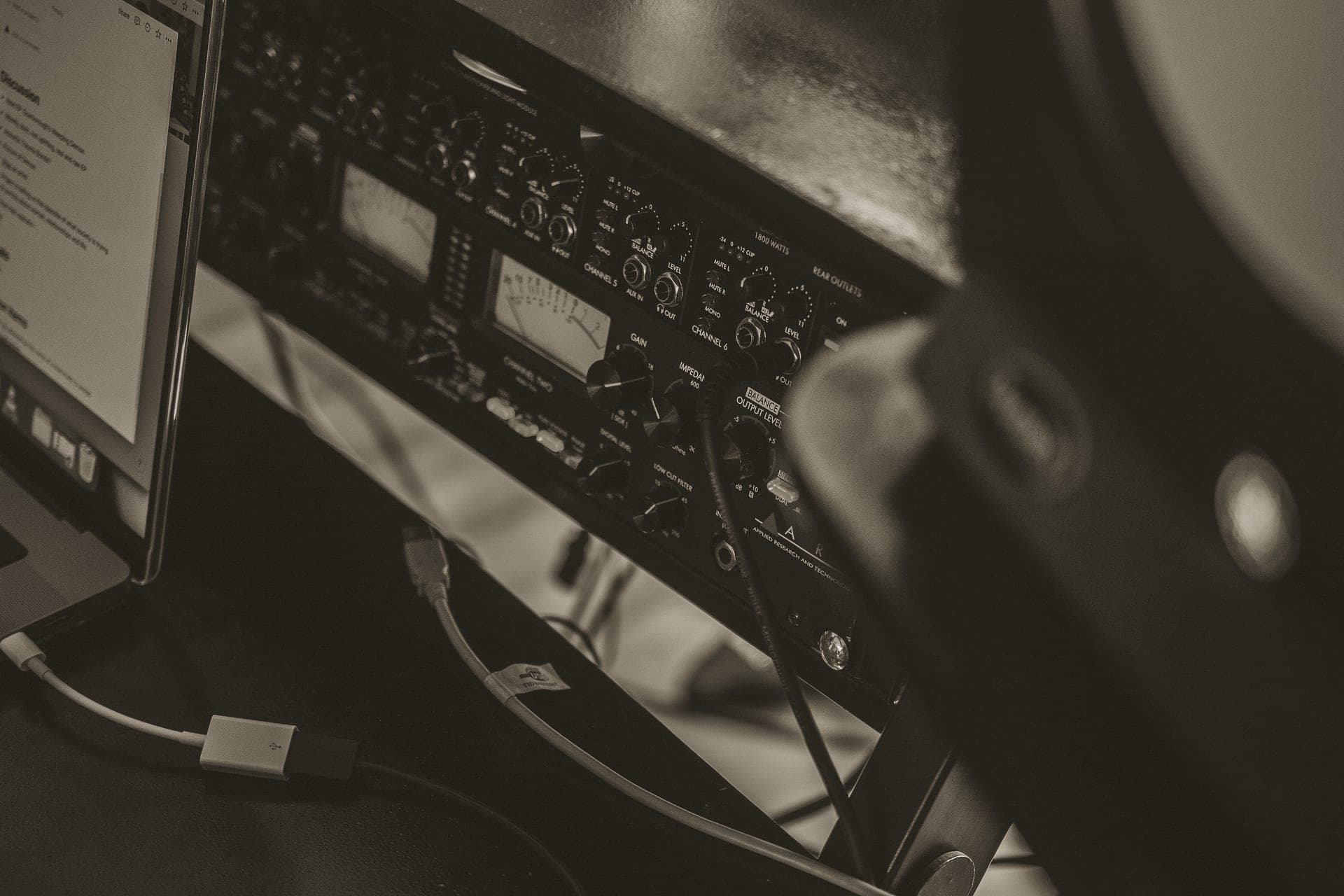
These are not competing products. A DAC converts digital to analog. A preamplifier selects between sources, controls level, and provides enough voltage and enough current-driving ability to feed a power amplifier down a real cable.
The confusion exists because many modern DACs now include a volume control and call themselves preamps — the Topping E30 II, FiiO K11 and iFi ZEN DAC 3 all publish a preamp mode, and the FiiO K7 switches between headphone, speaker and pure-DAC output. So the honest question is not “which do I need” but “is the volume control inside my DAC enough?”
What a preamp does that a bare DAC does not
- Source switching. Multiple analog inputs. A DAC switches between digital inputs; it has nothing to say about a turntable, a tape deck or a tuner. This is the one a lot of people discover late.
- A low-impedance output.A preamp is built to drive a long interconnect into whatever input impedance a power amplifier presents. Topping publishes 20 Ω output impedance for the E30 II, which is genuinely low; many DACs publish no output impedance at all — WiiM does not for the Pro Plus.
- Gain, where it is needed.Most DACs output about 2 V, which is enough for almost any power amplifier. But if you have an unusually insensitive amplifier, only a preamp with actual gain will fix it. A DAC’s volume control can only attenuate.
- A phono stage, sometimes. Many integrated amplifiers and some preamps include one. No standalone DAC does.
The real cost of DAC-direct: how volume control is implemented
This is the part that matters, and it is more subtle than “digital volume is bad”.
If a DAC implements volume in the digitaldomain by scaling numbers before conversion, then at low volume settings you are using fewer bits of the converter’s range. On an 8-bit converter that would be catastrophic. On a modern 32-bit part with a published 120+ dB signal-to-noise ratio, you can attenuate a very long way before the noise floor rises to anywhere near audibility — which is why this concern, real in 1995, is largely theoretical today.
What is nottheoretical: your amplifier’s own noise floor does not go down when you attenuate the signal. Run a 2 V DAC into a sensitive power amplifier at a low volume setting and the amplifier’s hiss stays exactly where it was while the music gets quieter. That is an audible problem in a quiet room with sensitive speakers, and no amount of converter resolution fixes it.
The other cost is more mundane: many DACs have a single set of RCA outputs. Go direct and you can connect exactly one power amplifier and nothing else.
If you have decided the answer is one box doing both, our all-in-one DAC, preamp and headphone amp roundup ranks six of them on exactly the criteria above: how many sources can plug in, whether the line output is stated to be variable, and how many volts it makes.
When DAC-direct is the right answer
If every source you own is digital, if you have one power amplifier or a pair of powered speakers, and if your DAC publishes a low output impedance and a high signal-to-noise ratio — then a preamp adds a box, a pair of cables and another gain stage to a signal path that did not need them. Skip it.
A great many desk systems and a growing number of main systems are exactly this. The Topping E30 II at 2.1 V and 20 Ω output impedance driving a pair of powered speakers is a complete, coherent system with nothing missing.
When you need a preamp — or an integrated amplifier
If you own a turntable, you need at minimum a phono stage, and at that point an integrated amplifier with a PHONO input usually makes more sense than a DAC plus a phono box plus a power amp. The Yamaha A-S501, Marantz PM6007 and Denon PMA-600NE all publish MM phono input sensitivities, and the Marantz and Denon include digital inputs as well — which means the DAC is inside the integrated amplifier and the box count drops to one.
If you have several analog sources, you need switching, and a DAC cannot provide it.
And if you hear hiss at your normal listening level with the DAC turned down, you have the gain-structure problem described above. A preamp with a real attenuator ahead of the power amplifier is the fix.
What about the DAC inside my amplifier?
Several integrated amplifiers include one. The Yamaha A-S501 publishes optical and coaxial inputs but does not publish the DAC part number or any conversion measurements. The Marantz PM6007 and Denon PMA-600NE both publish digital inputs too.
That is the practical argument for an external converter at this level: not that the internal one is bad — we have no measurements either way — but that an external DAC publishes its figures and the built-in one does not. Buying on published data means preferring the box that publishes.
The short version
All-digital sources, one amplifier, a DAC with a good published output impedance: go direct and enjoy the simpler signal path. Any analog source, several sources, or audible amplifier hiss at low settings: you need a preamp or an integrated amplifier, and the DAC should run fixed-output into it.
If that last sentence raised the obvious follow-up — preamp orintegrated amplifier, and which stages should live in which box — our DAC versus preamp versus integrated amplifier explainer takes all three at once, with the input-sensitivity arithmetic that decides whether a given combination will actually work.
A related question that comes up once the DAC is doing preamp duty is whether its output should be balanced. Our balanced-output roundup separates the DACs with an XLR or 4.4 mm balanced line output from the ones where “balanced” means the headphone socket, and puts numbers on what the doubled output voltage does at a typical amplifier input.
Frequently asked questions
Do I need a preamp if I have a DAC?
Not if all your sources are digital, you have a single power amplifier or powered speakers, and your DAC has a volume control with a low published output impedance. You do need one if you have any analog source — a turntable, a tape deck, a tuner — because a DAC only switches between digital inputs, or if you hear amplifier hiss at your normal listening level.
Is digital volume control bad?
Far less than its reputation suggests on modern hardware. Digital attenuation reduces the number of bits in use, but on a converter publishing 120 dB or more of signal-to-noise you can attenuate a long way before the noise floor becomes audible. The real problem is elsewhere: your power amplifier's own noise floor does not drop when you attenuate, so a sensitive amplifier will hiss at the same level while the music gets quieter.
What is the difference between a DAC and a preamp?
A DAC converts digital audio to an analog voltage. A preamp selects between analog sources, controls level, and provides an output able to drive a power amplifier down a real cable. Many DACs now include a volume control and market themselves as preamps — the Topping E30 II, FiiO K11 and iFi ZEN DAC 3 all publish a preamp mode — but none of them can switch analog inputs.
Can I connect a DAC straight to a power amplifier?
Yes, provided the DAC has a variable output. Most output around 2 V, which is enough for almost any power amplifier. Check two things: the DAC's published output impedance — Topping publishes 20 Ω for the E30 II, while WiiM publishes none for the Pro Plus — and whether you hear amplifier hiss at your usual listening position with the volume turned down.
Read next
DAC vs Preamp vs Integrated Amp
The whole signal chain in one page: which of the three boxes does which job, and the gain arithmetic that decides which combination works.
The Best All-in-One DAC, Preamp and Headphone Amps
Six boxes that do all three jobs, ranked on inputs, variable output and published output voltage rather than on DAC chip names.
DAC vs Amp: Which Do You Need?
Not alternatives — consecutive steps. If your system is silent, you need the amp.
What Is a DAC in Audio?
A DAC turns digital audio into analog voltage. You already own several — here is when another one helps.
The Best Integrated Amplifiers Under $1,000
Six amps under $1,000, and the dynamic-power trap that overstates the popular pick by roughly 2x.
The Best DACs Under $200
Five DACs under $200, all measuring beyond audibility — so the ranking is about inputs, outputs and output level.
Preamp vs Power Amp
Voltage versus current, what damping factor tells you in ohms, and the pre-out spec that decides whether you can ever split them later.
The Best DACs With Balanced Output
Ranked on which balanced connector carries a line-level signal. Two XLR line outputs, one 4.4 mm balanced line out, and two where balanced means the headphone jack.
Sources
Every specification on this page was read from one of these documents. If one of them has changed, or we have made an error, tell us — corrections are logged and dated per our editorial policy.