The Best DACs With Balanced Output
On a product listing, 'balanced' can mean an XLR line output to your amplifier or a 4.4 mm socket for headphones. They are different features, and only one of them is what a search for an XLR DAC is looking for.
Disclosure: we earn a commission if you buy through the links on this page, at no extra cost to you. It does not influence what we pick — our criteria are published and reproducible, so you can check our work. How we pick · Full disclosure
These picks are spec-and-price analyses, not listening tests. We have not heard this gear and we do not pretend to have: every figure below is sourced to the manufacturer and linked, and every price is live or not shown at all. Here are the rules we followed.
Quick picks
Ranked on the published criteria in How We Pick. Prices are live as of September 17, 2026. Tap any row for the full write-up.
- 8.9
- 8.0
- 7.0
- 7.4
- 8.8
| # | Product | Best for | Score | Price |
|---|---|---|---|---|
| 1 | 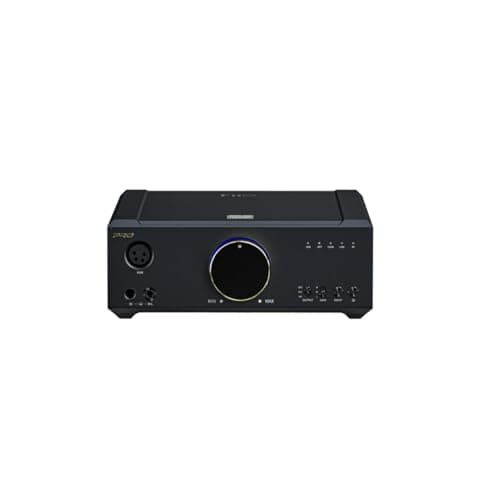 FiiO K9 Pro ESS The only box here that takes an analog source, publishes 5 volts from a balanced pre-out and still has a headphone amplifier rated at three separate impedances. | Best all-in-one overall | 8.9 | |
| 2 | 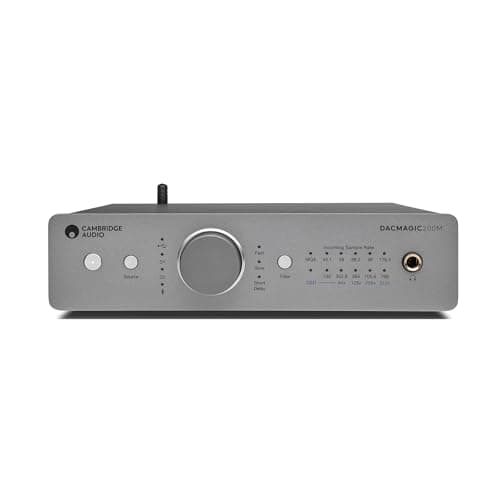 Cambridge Audio DacMagic 200M The one built like a hi-fi component rather than a desk accessory, and the one whose specification says in plain words that both output pairs are user-selectable fixed or variable. | Best for a hi-fi rack | 8.0 | |
| 3 | 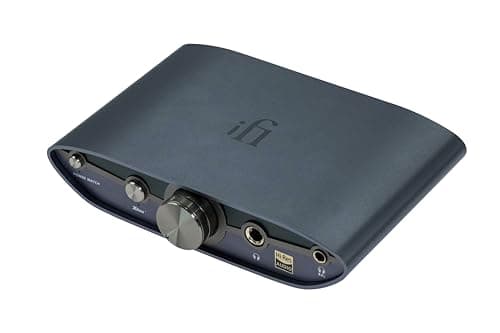 iFi ZEN DAC 3 A USB-powered DAC and headphone amp with balanced output, aimed at a desk where one cable is the whole install. | Best USB-powered option | 7.0 | |
| 4 | 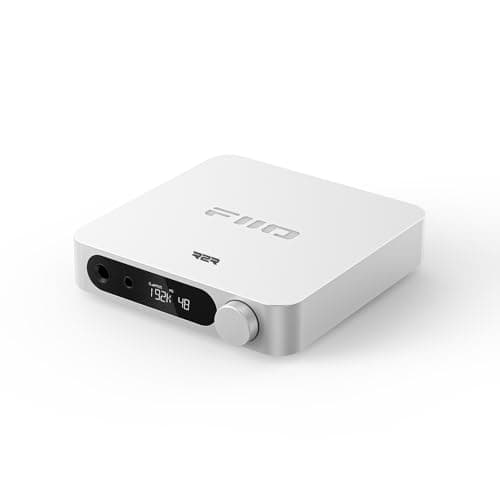 FiiO K11 R2R A discrete ladder DAC with a genuine PRE mode at the bottom of the price range — and published distortion roughly fifty times higher than the delta-sigma boxes beside it. | Cheapest with a real preamp mode | 7.4 | |
| 5 | 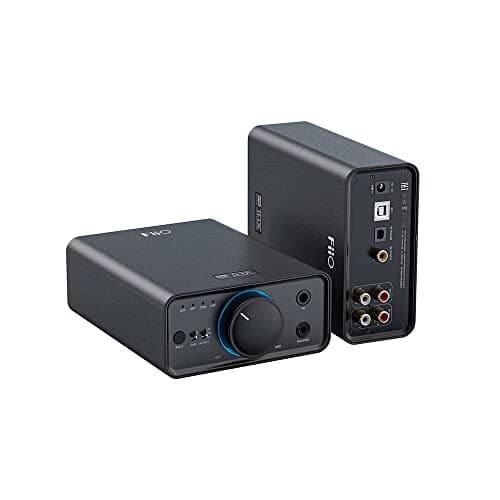 FiiO K7 A DAC with a genuinely powerful balanced headphone amplifier attached, which is the reason to choose it over a DAC-only box. | Best DAC and headphone amp combo | 8.8 |
A balanced output carries the signal on two conductors of opposite polarity, so that noise picked up along the cable, which lands on both equally, cancels at the far end. That is the whole engineering case for it, and it explains both when it matters (long cables, electrically noisy rooms, a rack full of switching supplies) and when it does not (a one-meter run to an amplifier on the same shelf). It also explains why every maker here doubles the output voltage on the balanced socket: two conductors, each swinging the full signal, add up to twice the level.
The distinction this page is built on
“Balanced output” on a DAC listing means one of two things. A balanced line output— XLR, or a 4.4 mm socket wired for line level — feeds an amplifier with balanced inputs. A balanced headphone output— usually 4.4 mm, sometimes a four-pin XLR — drives headphones with a balanced cable and has nothing to do with the rest of the system. Most desktop DAC-amps under a few hundred dollars have the second and not the first, and their listings say “balanced” without qualification. A search for an XLR DAC, a DAC with balanced output, or a dual-output DAC is nearly always looking for the first.
So we ranked on that. Balanced line output first, ordered by how much the maker publishes about it; balanced headphone-only last, listed so that the distinction is visible in the product cards rather than hidden. The two entries that rank last are not worse DACs. They are the answer to a different question, and they rank higher on the headphone-power page.
XLR line output, with everything published
The FiiO K9 Pro ESS publishes, on the line side, RCA and XLR3 balanced outputs at 2.5 V rms and 5 V rms respectively (1 kHz into 10 kΩ), and on the headphone side 6.35 mm, 4.4 mm balanced and XLR4 balanced sockets. It also takes a balanced 4.4 mm line inputalongside RCA, which no other box here does. FiiO publishes the balanced line output’s distortion (below 0.00025%) and signal-to-noise (128 dB or better, A-weighted) separately from the headphone figures, and it publishes a switch that routes the volume knob to the rear pre-outs. That is every number a buyer of a balanced DAC could want, and it is why the K9 Pro ranks first here as well as on the preamp page. Its cons are size, a 12 V external supply, and a price that buys a great deal of headphone amplifier a line-out-only user will not use.
XLR line output, fixed or variable, no headphone amplifier to pay for
The Cambridge Audio DacMagic 200M publishes balanced XLR and unbalanced RCA outputs at 4.2 V rms and 2.1 V rms, each “fixed or variable – user selectable”, with output impedances below 100 and 50 ohms respectively. It has a 6.3 mm headphone jack but no balanced headphone output, which for this page is the right way round: the balanced connector is the one going to the amplifier. Cambridge publishes a frequency response with a tolerance (10 Hz to 50 kHz, ± 1 dB), crosstalk, and a signal-to-noise figure above 115 dB. It ranks second rather than first because the published figures are less complete than FiiO’s — no separate distortion figure for the balanced output — and because it has no analog input at all, which rules it out as a preamp for anything but digital sources.
A 4.4 mm balanced line output, at a fraction of the price
The iFi ZEN DAC 3 publishes two balanced outputs: a 4.4 mm balanced headphone socket on the front, and a 4.4 mm balanced lineoutput on the back alongside RCA, with a fixed/variable switch. That rear socket is a genuine balanced line output — it needs a 4.4 mm-to-XLR cable rather than an XLR cable, and iFi sells the system that way. It ranks third because, at the prices live when this was written, it is the cheapest true balanced line output in the registry, and it ranks no higher because iFi does not publish the output voltage for either the balanced or the unbalanced line out, which on a page about output specifications is the one number that is missing. It is USB-C only for input and bus-powered, which the compact-desk page treats as a feature.
level difference (dB) = 20 × log10(V_balanced ÷ V_unbalanced); headroom over sensitivity = 20 × log10(V_out ÷ V_sensitivity)
Inputs
- FiiO K9 Pro ESS line outputs: RCA 2.5 V rms; XLR 5 V rms (1 kHz / 10 kΩ) (FiiO parameters page)
- Cambridge DacMagic 200M line outputs: RCA 2.1 V rms; XLR 4.2 V rms (Cambridge Audio spec page)
- Denon AVR-X1800H analog input sensitivity: 200 mV (Denon owner's manual)
Result
Balanced headphone output only: two listings that say balanced and mean the jack
The FiiO K11 R2R publishes a 4.4 mm balanced headphone output with 1,300 mW into 32 ohms, and its line output is RCA only. The FiiO K7 publishes a 4.4 mm balanced headphone output with 2,000 mW into 32 ohms, and its line output is RCA only. Both are honestly labeled on FiiO’s parameters pages, and both are good products on the pages that rank headphone power. Neither has a balanced line output, and a buyer who searched for an XLR DAC and bought either would have a headphone amplifier with an extra socket and an unbalanced connection to the rest of the system. They are on this page so that the product cards, which list the outputs verbatim, make that plain. The FiiO K11 is in the same position as the K7 — 4.4 mm balanced headphone jack, RCA line out — and is left off only to keep the list at five. The Topping E30 II, Schiit Modi 5, SMSL SU-1 and Topping D10s publish RCA line outputs only and are not listed.
Does the amplifier have a balanced input?
This is the question to answer before buying any of the top three. None of the integrated amplifiers or AV receivers we cover publishes a balanced input; every one is RCA. The balanced output on a DAC earns its cost when the other end is a professional or higher-end amplifier with XLR inputs, a pair of active studio monitors with XLR or TRS inputs, or a long run to a power amplifier across a room. For a DAC feeding a receiver on the same shelf, the RCA output of any DAC on the under-$500 page is the same signal with a shorter list of things to go wrong. Our signal-chain explainer walks through which box the volume control should live in, which is the question a variable balanced output raises next.
A note on the word “dual output”
A search for a dual-output DAC usually means one that can drive two destinations at once — an amplifier over XLR and a second over RCA, or a headphone amplifier and a power amplifier. All three of the balanced-line-out picks publish both XLR (or 4.4 mm) and RCA line outputs. Whether both are live simultaneously, and whether the variable/fixed setting applies to both, is not stated on every spec page; FiiO publishes that the K9 Pro’s OUTPUT switch selects headphones or pre-out rather than both. Check the manual for that behavior before relying on it.
Every pick in detail
Every specification below links to the manufacturer document we read it from. Where a manufacturer does not publish a figure, we say so rather than estimating it.
FiiO K9 Pro ESS
Best all-in-one overallPrice as of September 17, 2026. #ad
The only box here that takes an analog source, publishes 5 volts from a balanced pre-out and still has a headphone amplifier rated at three separate impedances.
- measured specs
- 10/10
- inputs
- 10/10
- value for money
- 7/10
- build quality
- 9/10
- features
- 9/10
| Specification | Published value | Source |
|---|---|---|
| Chipset | DAC: 2 × ES9038PRO; USB: XMOS XUF208; Bluetooth: QCC5124; amp: 2 × THX AAA 788+; low-pass: 2 × OPA1612; volume: 2 × NJU72315 | FiiO parameters page |
| Inputs | USB Type-B and Type-C, coaxial, optical, Bluetooth, and analog line in on RCA and 4.4 mm balanced | FiiO product page |
| Outputs | Headphone: 6.35 mm, 4.4 mm balanced, XLR4 balanced. Line/pre: RCA and XLR3 balanced | FiiO product page |
| Max sample rate | USB: 384 kHz/32-bit, DSD256; coaxial: 192 kHz/24-bit; optical: 96 kHz/24-bit | FiiO parameters page |
| Headphone power | 6.35 mm: ≥ 1.1 W (16 Ω), ≥ 2.1 W (32 Ω), ≥ 281 mW (300 Ω). Balanced 4.4 mm / XLR4: ≥ 1.1 W (16 Ω), ≥ 2.1 W (32 Ω), ≥ 1.1 W (300 Ω). All at THD+N < 1% | FiiO parameters page |
| Line/pre output level | RCA 2.5 Vrms; XLR 5 Vrms (1 kHz / 10 kΩ) | FiiO parameters page |
| Output mode switch | OUTPUT selects HP (front-panel headphones) or PRE (rear-panel line/pre out); FiiO states the volume knob adjusts level in both positions | FiiO support article |
| Gain switch | Three positions H/M/L, corresponding to −3 dB / 6 dB / 16 dB | FiiO support article |
| THD+N | Balanced line out < 0.00025% (1 kHz/10 kΩ, A-weighted); 6.35 mm headphone out < 0.00033% (1 kHz/32 Ω, A-weighted) | FiiO parameters page |
| Signal-to-noise | ≥ 128 dB balanced line out; ≥ 129 dB on the 6.35 mm output (A-weighted) | FiiO parameters page |
| Bluetooth | 5.0 — SBC, AAC, aptX, aptX LL, aptX HD, aptX Adaptive, LDAC | FiiO parameters page |
Pros
- Analog line in on RCA and 4.4 mm balanced, so a phono stage or CD player can join the digital sources
- RCA and XLR3 line/pre outputs, published at 2.5 Vrms and 5 Vrms
- An OUTPUT switch that hands the volume knob to the rear panel — the thing that makes it a preamp rather than a DAC with a socket
- Headphone power published at 16, 32 and 300 Ω with a THD+N condition on every figure
Cons
- Physically large and heavy for a desk — this is a rack-sized component
- Optical input caps at 96 kHz/24-bit while USB reaches 384 kHz, so the TV input is the weakest one
- Bluetooth is 5.0, a generation behind the current chipsets
- The most expensive route to a job the K11 R2R does for a third of the money
Skip it if your only source is a computer. Half of what you are paying for is inputs you would never connect.
Cambridge Audio DacMagic 200M
Best for a hi-fi rackPrice as of September 17, 2026. #ad
The one built like a hi-fi component rather than a desk accessory, and the one whose specification says in plain words that both output pairs are user-selectable fixed or variable.
- measured specs
- 8/10
- inputs
- 6/10
- value for money
- 7/10
- build quality
- 9/10
- features
- 8/10
| Specification | Published value | Source |
|---|---|---|
| DAC chips | Dual ESS ES9028Q2M | Cambridge Audio spec page |
| Inputs | USB, coaxial, optical, Bluetooth aptX. No analog input | Cambridge Audio spec page |
| Outputs | Balanced XLR and unbalanced RCA, plus a 6.3 mm headphone jack | Cambridge Audio spec page |
| Max output level | 2.1 V rms unbalanced and 4.2 V rms balanced, each “fixed or variable – user selectable” | Cambridge Audio spec page |
| Output impedance | < 50 Ω unbalanced, < 100 Ω balanced | Cambridge Audio spec page |
| Sample rates | USB 44.1–768 kHz PCM, native DSD 64×–512×, DoP 64×–256×; coaxial 44.1–192 kHz PCM, DoP64; optical 44.1–96 kHz PCM, DoP64 | Cambridge Audio spec page |
| Word widths | 16-bit over Bluetooth; 16–24-bit over optical, coaxial and USB | Cambridge Audio spec page |
| THD+N | < 0.0005% at 1 kHz 0 dBFS (A-weighted) | Cambridge Audio spec page |
| Signal-to-noise | > 115 dB (A-weighted) | Cambridge Audio spec page |
| Crosstalk | < −110 dB at 10 kHz | Cambridge Audio spec page |
| Frequency response | 10 Hz – 50 kHz (±1 dB) | Cambridge Audio spec page |
| Headphone output | > 300 mW into 32 Ω, > 65 mW into 150 Ω; THD+N < 0.001% at 100 mW into 32 Ω; recommended headphone impedance 10 Ω – 600 Ω | Cambridge Audio spec page |
| MQA | Full decoding (Core + Renderer) | Cambridge Audio spec page |
| Bluetooth | v4.2, A2DP profile, SBC and aptX codecs | Cambridge Audio spec page |
| Headphone output power into 300 Ω or 600 Ω | Not published | — |
Pros
- Cambridge publishes “fixed or variable – user selectable” for the RCA and the XLR outputs, not just one of them
- 4.2 V rms balanced is the highest published output voltage here after the K9 Pro ESS
- Three selectable digital filters, published by name
- Full MQA decoding (Core plus Renderer), which nothing else on this page has
Cons
- No analog input at all — a turntable or a CD player cannot connect
- Headphone power is published at 32 Ω and 150 Ω only, despite Cambridge recommending headphones up to 600 Ω
- Bluetooth is v4.2 and capped at 16-bit, so the wireless input is the lowest-resolution one on the box
- Optical caps at 96 kHz where USB reaches 768 kHz
Skip it if you need a headphone amplifier first and a preamp second. 300 mW into 32 Ω is a seventh of what the K9 Pro ESS publishes.
iFi ZEN DAC 3
Best USB-powered optionPrice as of September 17, 2026. #ad
A USB-powered DAC and headphone amp with balanced output, aimed at a desk where one cable is the whole install.
- measured specs
- 8/10
- inputs
- 4/10
- value for money
- 7/10
- build quality
- 8/10
- features
- 8/10
| Specification | Published value | Source |
|---|---|---|
| DAC chip | Burr Brown (iFi does not publish the part number) | iFi spec page |
| Max sample rate | PCM 32-bit/768 kHz, DSD512 | iFi spec page |
| Inputs | USB-C only | iFi spec page |
| Outputs | Headphone: 4.4 mm balanced, 6.35 mm SE. Line: 4.4 mm balanced, RCA | iFi spec page |
| Headphone power | Balanced 4.4 mm: > 390 mW at 64 Ω; SE 6.35 mm: > 210 mW at 32 Ω, > 18 mW at 600 Ω | iFi spec page |
| Dynamic range | Line ≥ 113 dB(A); headphone ≥ 109 dB(A) | iFi spec page |
| Output voltage | Not published | — |
| Preamp mode | Yes — variable/fixed output switch | iFi spec page |
Pros
- Runs from USB power alone
- Balanced 4.4mm output
- Fixed or variable output for use as a preamp
Cons
- USB input only — no optical or coaxial
- Curved case does not stack
- Above the price of better-measuring rivals
Skip it if you need optical or coaxial in — this is USB only.
FiiO K11 R2R
Cheapest with a real preamp modePrice as of September 17, 2026. #ad
A discrete ladder DAC with a genuine PRE mode at the bottom of the price range — and published distortion roughly fifty times higher than the delta-sigma boxes beside it.
- measured specs
- 6/10
- inputs
- 6/10
- value for money
- 9/10
- build quality
- 7/10
- features
- 8/10
| Specification | Published value | Source |
|---|---|---|
| Chipset | FiiO-developed discrete R2R ladder DAC; SoC: GD32F303RE; USB: SA9312L; amp: 2 × SGM8262-2 | FiiO parameters page |
| R2R array | Four-channel fully differential 24-bit ladder — two 48-resistor thin-film arrays per channel, 192 resistors at 0.1% tolerance and 30 ppm temperature drift | FiiO product page |
| Inputs | USB Type-C, optical, coaxial | FiiO parameters page |
| Outputs | Headphone 6.35 mm and 4.4 mm balanced; RCA line out; coaxial out (USB mode only) | FiiO parameters page |
| Max sample rate | 384 kHz/32-bit, DSD256 over USB | FiiO parameters page |
| Headphone power | 6.35 mm (OS mode): ≥ 660 mW (16 Ω), ≥ 460 mW (32 Ω), ≥ 50 mW (300 Ω). 4.4 mm balanced (OS): ≥ 520 mW (16 Ω), ≥ 1,300 mW (32 Ω), ≥ 220 mW (300 Ω). All at THD+N < 1% | FiiO parameters page |
| Line output level | 2.7 Vrms | FiiO parameters page |
| Output modes | PO / PRE (LO SE) / LO, switched by double-pressing the knob; each mode remembers its own volume setting | FiiO product page |
| THD+N | “About 0.025% (1kHz/0dB@10KΩ)” on the RCA line out in OS mode — FiiO's own wording, including the word “About” | FiiO parameters page |
| Signal-to-noise | ≥ 115 dB (A-weighted), RCA line out in OS mode | FiiO parameters page |
| Gain | Three gain levels with three independent volume curves | FiiO product page |
Pros
- PO / PRE / LO switching by double-pressing the knob, each mode remembering its own volume
- 2.7 Vrms line output — more voltage than the DacMagic 200M's unbalanced 2.1 V
- Headphone power published at 16, 32 and 300 Ω on both outputs, with a THD+N condition
- A discrete 192-resistor R2R ladder at a price where discrete anything is unusual
Cons
- FiiO publishes THD+N of “About 0.025%” — around fifty times the figure of the delta-sigma DACs on this page, and the word “About” is theirs
- No analog input, so it cannot take a phono stage or a CD player
- No balanced line output — the 4.4 mm socket is a headphone output, not a pre-out
- Line-out SNR of ≥ 115 dB is the lowest published figure here
Skip it if you want the lowest distortion your money can buy. On published numbers a delta-sigma converter wins by a wide margin, and this one costs you that on purpose.
FiiO K7
Best DAC and headphone amp comboPrice as of September 17, 2026. #ad
A DAC with a genuinely powerful balanced headphone amplifier attached, which is the reason to choose it over a DAC-only box.
- measured specs
- 9/10
- inputs
- 8/10
- value for money
- 9/10
- build quality
- 9/10
- features
- 9/10
| Specification | Published value | Source |
|---|---|---|
| Chipset | DAC: 2 × AK4493S; USB: XMOS XUF208; amp: 2 × THX AAA 788+ | FiiO parameters page |
| Max sample rate | USB: PCM 384 kHz/32-bit, DSD256; coaxial: 192 kHz/24-bit; optical: 96 kHz/24-bit | FiiO parameters page |
| Inputs | USB-B, line in (RCA), optical, coaxial | FiiO parameters page |
| Outputs | Line out (RCA), 4.4 mm balanced headphone, 6.35 mm single-ended headphone | FiiO parameters page |
| Headphone power | 6.35 mm: ≥ 1,220 mW + 1,220 mW (32 Ω); ≥ 140 mW + 140 mW (300 Ω). 4.4 mm balanced: ≥ 2,000 mW + 2,000 mW (32 Ω). All at THD+N < 1% | FiiO parameters page |
| THD+N | Line out: < 0.0005% (1 kHz/10 kΩ) | FiiO parameters page |
| Signal-to-noise | Line out ≥ 116 dB (A-weighted) | FiiO parameters page |
| Output modes | Switchable between headphone, speaker (preamp) and pure DAC | FiiO product page |
Pros
- Powerful balanced headphone output, not a token one
- Gain switching for sensitive and demanding headphones
- Line out for a separate amplifier
Cons
- Larger than a DAC-only box
- You pay for the headphone amp whether you use it or not
- External power brick
Skip it if you never use headphones — the Modi 5 or E30 II is cheaper and smaller.
Frequently asked questions
What does a balanced output on a DAC actually do?
Is a 4.4 mm balanced output the same as XLR?
Which of these DACs has XLR outputs?
Do I need balanced outputs if my amplifier only has RCA inputs?
Does a balanced output sound better?
Why is the FiiO K7 ranked last when it ranks near the top elsewhere?
Have you measured these outputs?
Read next
The Best All-in-One DAC, Preamp and Headphone Amps
Six boxes that do all three jobs, ranked on inputs, variable output and published output voltage rather than on DAC chip names.
DAC vs Preamp
What a preamp adds beyond a volume control, and the two real costs of going DAC-direct.
DAC vs Preamp vs Integrated Amp
The whole signal chain in one page: which of the three boxes does which job, and the gain arithmetic that decides which combination works.
The Best DACs Under $500
Seven DACs under $500. They all measure superbly — so the decision is inputs, outputs and whether you want a headphone amp.
Headphone Impedance and How Much Power You Need
Why published headphone power collapses at high impedance, what output impedance does to the sound, and how to check a pairing before you buy.
Optical vs Coaxial vs USB
Per-input sample rate limits for every DAC we cover, the ground-loop problem only optical solves, and the surround-format trap on TV optical outputs.
Sources
Every specification on this page was read from one of these documents. If one of them has changed, or we have made an error, tell us — corrections are logged and dated per our editorial policy.