What Is a DAC in Audio?
A DAC turns digital audio into the analog voltage a speaker needs. You already own several. The real question is whether another one will change anything.
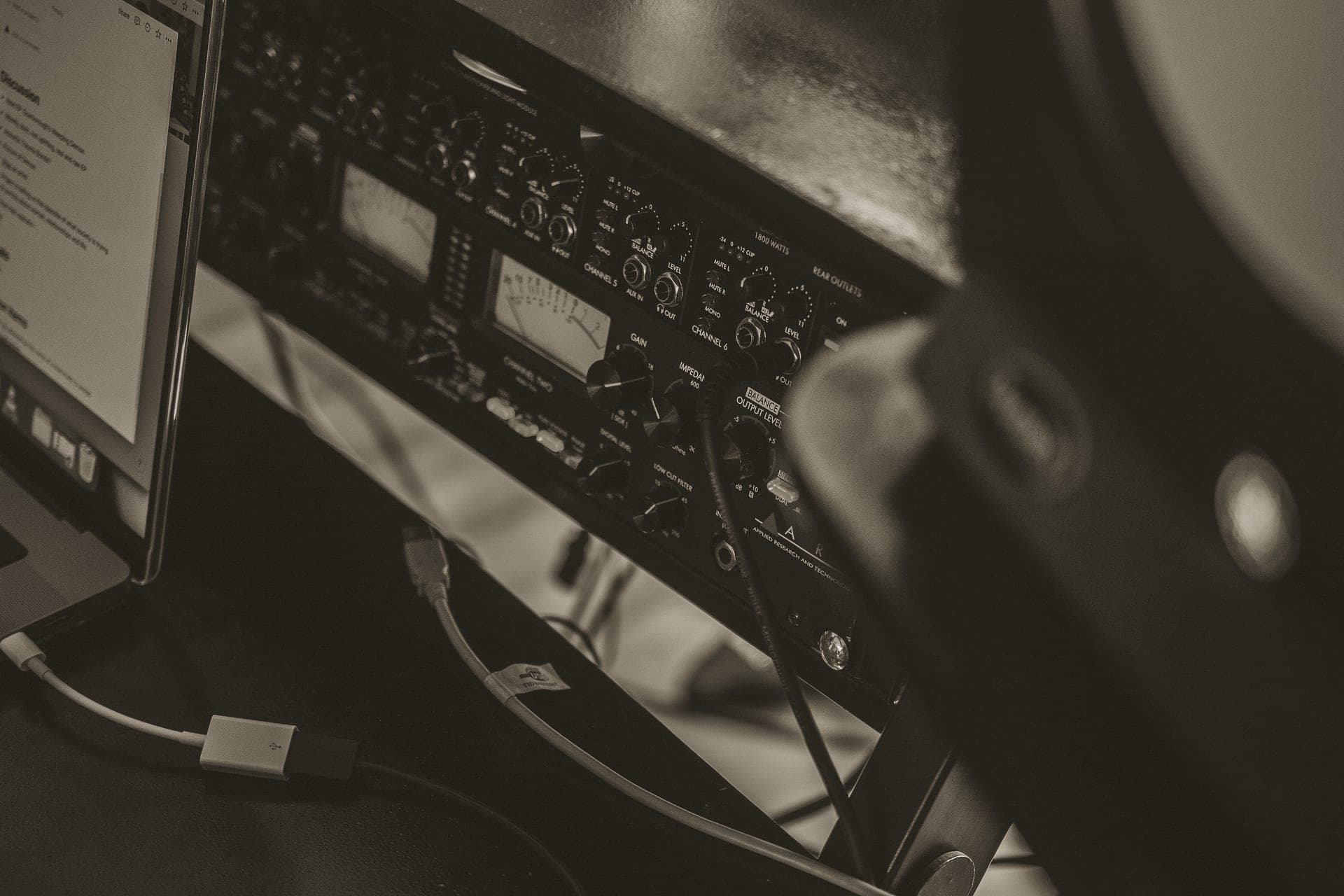
A DAC — digital-to-analog converter — turns the numbers in a digital audio file into the continuously varying voltage a loudspeaker actually needs. Every phone, laptop, TV and CD player already contains one. Buying a separate DAC replaces the one you have rather than adding a capability.
What it does, concretely
A digital audio file is a list of numbers. A CD stores 44,100 of them per second per channel, each 16 bits, describing the position a speaker cone should be in at that instant.
A speaker cannot read numbers. It responds to voltage. The DAC’s job is to convert that list into a smoothly varying voltage — 44,100 times a second, accurately enough that the errors stay below the noise floor of the recording.
That is the whole function. Everything else a DAC box does — volume control, headphone amplification, input switching — is an extra bolted onto that one conversion.
You already have several
There is a DAC in your phone, your laptop, your TV, your CD player, and — if it has optical or coaxial inputs — your amplifier. The Onkyo TX-8470, Denon PMA-600NE and Marantz PM6007 all publish digital inputs, which means they all contain a DAC.
So “do I need a DAC?” is really “is the one I already have the weakest part of my system?” — and that is a much less exciting question, which is why the category’s marketing avoids asking it.
The honest answer on whether a better one helps
Here are the published figures for the DACs we recommend:
- Topping E30 II: THD+N below 0.00015%, signal-to-noise 123 dB
- SMSL SU-1: THD+N 0.00013%, signal-to-noise 121 dB
- Schiit Modi 5: THD+N 0.0003%, signal-to-noise 118 dB
- FiiO K7: line-out THD+N below 0.0005%, signal-to-noise ≥ 116 dB
A 16-bit CD has a theoretical dynamic range of about 96 dB. A quiet domestic room has a noise floor around 30 dB SPL. These DACs are, by their own published measurements, transparent — the errors they add are far below anything in the signal or the room.
So the honest answer is: if you already have a working DAC, a better one will probably not change what you hear. We cannot state that as a certainty, because we have not run listening tests and we do not publish sonic verdicts we have not earned. But the measurements do not support the expectation, and we would rather tell you that before you spend $200 than after.
When a separate DAC genuinely is the right buy
Four cases, all of them about capability rather than quality:
- You have no DAC in the chain at all— a laptop straight into a power amplifier, say. Then you are using the laptop’s, which was designed to a price and shares a chassis with a lot of electrical noise.
- You need an input you do not have. Your amplifier has optical but your source is USB, or vice versa. This is a plumbing problem and a DAC is a plumbing fix.
- You want a headphone amplifier too.The FiiO K7 publishes ≥ 2,000 mW into 32 Ω balanced. Your laptop’s headphone jack does not publish anything, and does not deliver that.
- You need to feed a power amp directly. A DAC with a variable output mode — the E30 II, K7, K11 and ZEN DAC 3 all have one — can act as a preamp, removing a box.
Notice that none of those four is “it will sound better”. That is not an accident.
A note on the search results you will find
Searching for “what is a DAC” returns a great deal about dachshunds and about US immigration policy. Add “audio”. This is not a joke at your expense — it is the reason this page is titled the way it is.
Where to go next
If one of the four cases above applies to you, here are the ones we would buy. If you are trying to work out whether you need a DAC or an amplifier — different components solving different problems — that comparison is here.
Frequently asked questions
What does a DAC do in audio?
It converts digital audio — a list of numbers, 44,100 per second per channel on a CD — into the continuously varying voltage a loudspeaker needs. Every phone, laptop, TV and CD player already has one built in. A separate DAC replaces that one rather than adding a new capability.
Do I really need a DAC?
Only if you have none in the chain, need an input you lack, want a headphone amp, or want to feed a power amplifier directly. If your amplifier has optical or coaxial inputs it already contains a DAC. The published measurements do not support buying one purely hoping for better sound.
Will a DAC make my music sound better?
If you have no proper DAC, yes — you are currently using whatever was cheapest to put in your laptop. If you already have a competent one, the measurements suggest not: the DACs we recommend publish signal-to-noise between 116 and 123 dB against a CD’s 96 dB of dynamic range. We have not run listening tests, so we cannot tell you what you will hear. We can tell you the numbers do not predict a difference.
Is a DAC the same as an amplifier?
No. A DAC converts digital to analog at line level. An amplifier takes a line-level signal and gives it the power to move a speaker cone. They are consecutive steps, not alternatives — see DAC vs amp. Some boxes contain both: the FiiO K7 is a DAC with a headphone amplifier, and the Denon PMA-600NE is an amplifier with a DAC.
Does a turntable need a DAC?
No — vinyl is already analog, so there is nothing to convert. It needs a phono stage instead, which is a different component doing a different job. The exception is a turntable with a USB output like the AT-LP120XUSB, which digitizes the signal for recording — and that deck contains its own converter for the purpose.
Read next
The Best DACs Under $500
Seven DACs under $500. They all measure superbly — so the decision is inputs, outputs and whether you want a headphone amp.
DAC vs Amp: Which Do You Need?
Not alternatives — consecutive steps. If your system is silent, you need the amp.
The Best Integrated Amplifiers Under $1,000
Six amps under $1,000, and the dynamic-power trap that overstates the popular pick by roughly 2x.
The Best Speakers for a Turntable
Which speakers need an amplifier, which need a phono stage, and the one that needs neither.
The Best DACs Under $200
Five DACs under $200, all measuring beyond audibility — so the ranking is about inputs, outputs and output level.
DAC vs Preamp
What a preamp adds beyond a volume control, and the two real costs of going DAC-direct.
Hi-Res Audio Explained
24-bit implies 146 dB of dynamic range; the best published DAC figure here is 126 dB, or about 20.6 bits. The arithmetic, and what it means.
Sources
Every specification on this page was read from one of these documents. If one of them has changed, or we have made an error, tell us — corrections are logged and dated per our editorial policy.