The Best DAC and Amp Combos
One box, two jobs. The specification that decides it is milliwatts into the impedance your headphones actually are — and the difference across this page is a factor of twenty.
Disclosure: we earn a commission if you buy through the links on this page, at no extra cost to you. It does not influence what we pick — our criteria are published and reproducible, so you can check our work. How we pick · Full disclosure
These picks are spec-and-price analyses, not listening tests. We have not heard this gear and we do not pretend to have: every figure below is sourced to the manufacturer and linked, and every price is live or not shown at all. Here are the rules we followed.
Quick picks
Ranked on the published criteria in How We Pick. Prices are live as of October 15, 2026. Tap any row for the full write-up.
- 8.8
- 7.8
- 7.0
- 8.4
| # | Product | Best for | Score | Price |
|---|---|---|---|---|
| 1 | 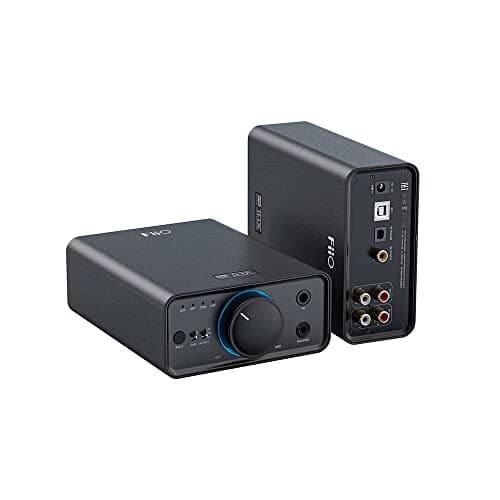 FiiO K7 A DAC with a genuinely powerful balanced headphone amplifier attached, which is the reason to choose it over a DAC-only box. | Best DAC and headphone amp combo | 8.8 | |
| 2 | 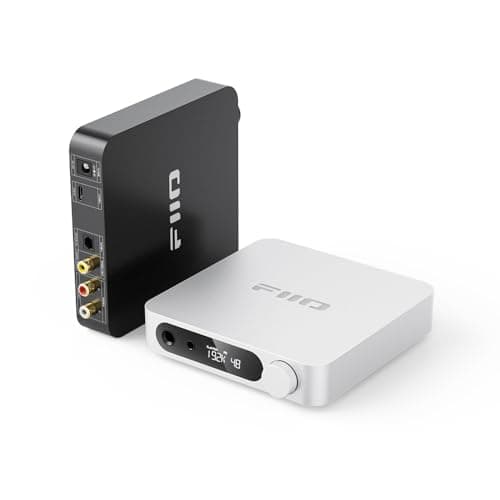 FiiO K11 The K7's cheaper relative — less headphone power, the same basic idea, at a price that undercuts most DAC-only boxes. | Best budget DAC and amp | 7.8 | |
| 3 | 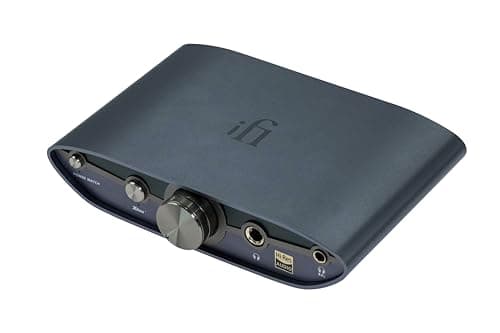 iFi ZEN DAC 3 A USB-powered DAC and headphone amp with balanced output, aimed at a desk where one cable is the whole install. | Best USB-powered option | 7.0 | |
| 4 | 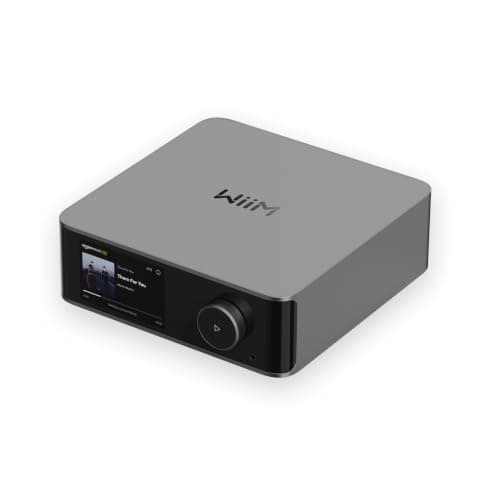 WiiM Ultra The only streamer here with a phono input and a touchscreen — and the only one whose maker publishes nothing at all about how that phono stage performs. | Best for a turntable and a streamer in one box | 8.4 |
A DAC turns a digital signal into a small analog voltage. A headphone amplifier turns that small voltage into enough current to move a driver strapped to your head. Combining them into one chassis saves a box and a cable, and it is the format most desktop listening actually uses.
The interesting part is that the DAC half of these products has essentially been solved. Every unit here converts far beyond audibility. What separates them is the amplifier half, and that difference is enormous.
Milliwatts into the impedance you actually own
Headphone amplifier power is published in milliwatts at a stated impedance, and the number changes dramatically depending on which impedance is quoted. Here is what these manufacturers publish:
| Unit | Single-ended into 32 Ω | Into 300 Ω | Balanced into 32 Ω |
|---|---|---|---|
| FiiO K7 | ≥ 1,220 mW | ≥ 140 mW | ≥ 2,000 mW |
| FiiO K11 | ≥ 520 mW | ≥ 60 mW | ≥ 1,400 mW |
| iFi ZEN DAC 3 | > 210 mW | > 18 mW at 600 Ω | > 390 mW at 64 Ω |
| WiiM Ultra | Not published in mW | Not published in mW | No balanced output |
FiiO states all of its figures at THD+N < 1%, which is the honest way to publish headphone power — an output power number with no distortion condition attached could be measured anywhere.
The spread from the K7’s 2,000 mW balanced into 32 Ω to the ZEN DAC 3’s 18 mW into 600 Ω is not a fair comparison — different impedances, different outputs — and that is exactly the point. You cannot compare headphone amplifiers without first knowing what your headphones are. A 32-ohm pair of closed-backs and a 300-ohm pair of open-backs are completely different electrical loads, and an amplifier that is generous with one can be marginal with the other.
Note the impedances each maker chose to publish
This is subtle and worth a paragraph. FiiO publishes 32 and 300 ohms, the two conventional reference points. iFi publishes 32, 64 and 600 ohms — and its balanced figure is quoted at 64 ohms rather than 32.
A balanced output figure at 64 Ω cannot be compared directly to a balanced figure at 32 Ω. Neither maker is doing anything improper; they simply chose different reference points, and a table that lines them up side by side without saying so would be misleading. We have said so.
The WiiM Ultra is a different animal
It is on this page because it genuinely combines a DAC and a headphone amplifier, and because it does something none of the others do: it streams.
WiiM publishes the headphone amplifier chip (a TI TPA6120A2), an SNR of 119 dB, and THD+N of −99 dB into 300 Ω degrading to −92 dB into 32 Ω. That degradation pattern is normal and honest to publish — a low-impedance load is harder work. What WiiM does not publish is an output power figure in milliwatts at any impedance, which is the single number a headphone buyer needs.
So: if you want a streamer that can also drive headphones, the Ultra is an excellent streamer. If you want a headphone amplifier that can also stream, you are buying without the specification that matters.
The pure-DAC mode question
Every unit here can also feed an amplifier, which is what makes them worth considering beyond headphones. But they do it differently:
- FiiO K7 switches between headphone, speaker (preamp) and pure DAC modes. Pure DAC is the important one — it takes the volume control out of the signal path and outputs a fixed line level, which is what an integrated amplifier expects.
- FiiO K11 has LO/PO switching, and each mode remembers its own volume setting. That sounds like a small thing until you have deafened yourself once by switching from headphones to speakers.
- iFi ZEN DAC 3 has a variable/fixed output switch and offers both RCA and 4.4 mm balanced line outputs.
If you are feeding a conventional integrated amplifier, you want fixed output. If you are feeding a power amplifier directly, you want variable — and our DAC-versus-preamp page explains why that distinction is not a free lunch.
If the preamp job is the main reason you are buying — one box selecting several sources and setting the level for a power amplifier — then this page is ranking on the wrong axis for you. Our all-in-one DAC, preamp and headphone amp roundup ranks the same category on inputs, variable output and published output voltage instead of on milliwatts, and includes boxes with balanced pre-outs and analog inputs that do not appear here.
And if the constraint is the desk rather than the headphones, our compact desktop DAC and amp roundup ranks this category on published dimensions — desk area, height and whether there is a power brick — which is the axis that actually decides the purchase when there is a monitor stand and a keyboard already on the surface.
Too much power is a real problem too
Headphone amplifier buying advice almost always runs one direction: more power is safer. At these output levels that stops being true, and it is worth understanding why before buying the biggest number on the table.
A sensitive in-ear monitor might produce over 110 dB from a single milliwatt. Feed it from an output rated at 1,220 mW into 32 Ω and you are using a thousandth of the amplifier’s range — which means the volume control lives in its first few degrees of travel, channel balance at that position is at its worst, and any noise the amplifier makes is sitting at full level against a signal you have attenuated almost to nothing.
That is the audible hiss people report with high-power desktop amplifiers and efficient headphones, and it is a gain-structure problem rather than a quality problem. The fix is switchable gain, and every unit here publishes one: FiiO lists “two levels of hardware gain” for the K7 and “3 gain levels, 3 volume curves” for the K11, and iFi states that PowerMatch “provides switchable gain for demanding headphones” on the ZEN DAC 3.
So the useful question is not “how many milliwatts” but “how many milliwatts do my headphones need, and can this amplifier be turned down far enough to be quiet with them?” A 300 Ω open-back and a 16 Ω in-ear pull in opposite directions, and only one of those is solved by more power.
The one input limitation worth checking
The iFi ZEN DAC 3 has USB-C only. No optical, no coaxial. If your source is a computer, that is fine and the compact chassis is a benefit. If you wanted to connect a television or a CD transport, it cannot.
The FiiO K7 is the opposite: USB-B, RCA line in, optical and coaxial. It is the one here that can sit at the center of a desk with several sources attached, and its line input means it can amplify an analog source too.
How we would choose
For most desktop systems the FiiO K7: the most published power at both reference impedances, THX AAA amplifier modules, four inputs, and a pure DAC mode that lets it grow into a larger system later.
If your headphones are efficient and your budget is tighter, the K11 does the same job with less power and the same switching intelligence. If you want the smallest possible box on a USB-only desk, the ZEN DAC 3. And if the real requirement is streaming with headphones as a bonus, the WiiM Ultra — with the caveat that its headphone output power is unpublished.
Every pick in detail
Every specification below links to the manufacturer document we read it from. Where a manufacturer does not publish a figure, we say so rather than estimating it.
FiiO K7
Best DAC and headphone amp comboPrice as of October 15, 2026. #ad
A DAC with a genuinely powerful balanced headphone amplifier attached, which is the reason to choose it over a DAC-only box.
- measured specs
- 9/10
- inputs
- 8/10
- value for money
- 9/10
- build quality
- 9/10
- features
- 9/10
| Specification | Published value | Source |
|---|---|---|
| Chipset | DAC: 2 × AK4493S; USB: XMOS XUF208; amp: 2 × THX AAA 788+ | FiiO parameters page |
| Max sample rate | USB: PCM 384 kHz/32-bit, DSD256; coaxial: 192 kHz/24-bit; optical: 96 kHz/24-bit | FiiO parameters page |
| Inputs | USB-B, line in (RCA), optical, coaxial | FiiO parameters page |
| Outputs | Line out (RCA), 4.4 mm balanced headphone, 6.35 mm single-ended headphone | FiiO parameters page |
| Headphone power | 6.35 mm: ≥ 1,220 mW + 1,220 mW (32 Ω); ≥ 140 mW + 140 mW (300 Ω). 4.4 mm balanced: ≥ 2,000 mW + 2,000 mW (32 Ω). All at THD+N < 1% | FiiO parameters page |
| THD+N | Line out: < 0.0005% (1 kHz/10 kΩ) | FiiO parameters page |
| Signal-to-noise | Line out ≥ 116 dB (A-weighted) | FiiO parameters page |
| Output modes | Switchable between headphone, speaker (preamp) and pure DAC | FiiO product page |
Pros
- Powerful balanced headphone output, not a token one
- Gain switching for sensitive and demanding headphones
- Line out for a separate amplifier
Cons
- Larger than a DAC-only box
- You pay for the headphone amp whether you use it or not
- External power brick
Skip it if you never use headphones — the Modi 5 or E30 II is cheaper and smaller.
FiiO K11
Best budget DAC and ampPrice as of October 15, 2026. #ad
The K7's cheaper relative — less headphone power, the same basic idea, at a price that undercuts most DAC-only boxes.
- measured specs
- 8/10
- inputs
- 7/10
- value for money
- 10/10
- build quality
- 6/10
- features
- 8/10
| Specification | Published value | Source |
|---|---|---|
| Chipset | DAC: CS43198; USB: SA9312L; amp: 2 × SGM8262-2 | FiiO parameters page |
| Max sample rate | USB: 384 kHz/32-bit, DSD256 native; coaxial: 192 kHz/24-bit; optical: 96 kHz/24-bit | FiiO parameters page |
| Headphone power | 6.35 mm: ≥ 520 mW + 520 mW (32 Ω), ≥ 60 mW + 60 mW (300 Ω). 4.4 mm balanced: ≥ 1,400 mW + 1,400 mW (32 Ω), ≥ 250 mW + 250 mW (300 Ω). All at THD+N < 1% | FiiO parameters page |
| Signal-to-noise | Line out ≥ 126 dB (A-weighted) | FiiO parameters page |
| Output level | 1.95 V RMS (line out) | FiiO parameters page |
| Preamp mode | Yes — LO/PO switching, each remembering its own volume | FiiO product page |
Pros
- DAC and headphone amp for less than most DAC-only boxes
- Balanced output at the price
- Compact
Cons
- Less headphone power than the K7
- Plastic-heavy build
- Fewer inputs
Skip it if you drive demanding high-impedance headphones — step up to the K7.
iFi ZEN DAC 3
Best USB-powered optionPrice as of October 15, 2026. #ad
A USB-powered DAC and headphone amp with balanced output, aimed at a desk where one cable is the whole install.
- measured specs
- 8/10
- inputs
- 4/10
- value for money
- 7/10
- build quality
- 8/10
- features
- 8/10
| Specification | Published value | Source |
|---|---|---|
| DAC chip | Burr Brown (iFi does not publish the part number) | iFi spec page |
| Max sample rate | PCM 32-bit/768 kHz, DSD512 | iFi spec page |
| Inputs | USB-C only | iFi spec page |
| Outputs | Headphone: 4.4 mm balanced, 6.35 mm SE. Line: 4.4 mm balanced, RCA | iFi spec page |
| Headphone power | Balanced 4.4 mm: > 390 mW at 64 Ω; SE 6.35 mm: > 210 mW at 32 Ω, > 18 mW at 600 Ω | iFi spec page |
| Dynamic range | Line ≥ 113 dB(A); headphone ≥ 109 dB(A) | iFi spec page |
| Output voltage | Not published | — |
| Preamp mode | Yes — variable/fixed output switch | iFi spec page |
Pros
- Runs from USB power alone
- Balanced 4.4mm output
- Fixed or variable output for use as a preamp
Cons
- USB input only — no optical or coaxial
- Curved case does not stack
- Above the price of better-measuring rivals
Skip it if you need optical or coaxial in — this is USB only.
WiiM Ultra
Best for a turntable and a streamer in one boxPrice as of October 15, 2026. #ad
The only streamer here with a phono input and a touchscreen — and the only one whose maker publishes nothing at all about how that phono stage performs.
- measured performance
- 9/10
- connectivity
- 10/10
- features
- 10/10
- value for money
- 7/10
- published data
- 6/10
| Specification | Published value | Source |
|---|---|---|
| DAC | ESS ES9038 Q2M | WiiM spec page |
| Analog out SNR | 121 dB (A-weighted) | WiiM spec page |
| Analog out THD+N | −116 dB (0.00015%) | WiiM spec page |
| Line-out level | 2.1 Vrms maximum | WiiM spec page |
| Headphone amplifier | TI TPA6120A2 — SNR 119 dB, THD+N −99 dB into 300 Ω falling to −92 dB into 32 Ω | WiiM spec page |
| Phono input | Yes — a dedicated input for turntables without a built-in preamp | WiiM spec page |
| Other inputs | HDMI ARC (PCM and Dolby Digital 5.1) · optical TOSLINK to 192 kHz/24-bit · RCA line-in · USB storage | WiiM spec page |
| Outputs | RCA line-out · subwoofer out · coaxial and optical S/PDIF (192 kHz/24-bit) · USB audio out (UAC 2.0, 192 kHz/24-bit) · 3.5 mm headphone | WiiM spec page |
| Network | Wi-Fi 6 (WiiM states a future Wi-Fi 6E software update) · Bluetooth 5.3 · Ethernet | WiiM spec page |
| Protocols | Spotify Connect, TIDAL Connect, Google Cast Audio, Alexa built-in, DLNA, Squeezelite, Roon Ready | WiiM spec page |
| Display | 3.5 in glass-covered color touchscreen | WiiM spec page |
| Dimensions / weight | 211 × 200 × 72 mm; 1.42 kg (3.13 lb) | WiiM spec page |
| Phono stage gain, RIAA accuracy, input capacitance or MC support | Not published | — |
Pros
- A dedicated phono input, which no other streamer on this page has
- ESS ES9038 Q2M with a published 121 dB SNR and −116 dB THD+N, the best analog figures here
- 3.5 in touchscreen, so it is usable without reaching for a phone
- HDMI ARC, subwoofer out, headphone amp and USB audio out — it can be the hub of a whole system
Cons
- WiiM publishes NO gain, RIAA accuracy, input capacitance or MC capability for the phono stage — the single feature that justifies the price step
- Meaningfully larger and heavier than the Pro Plus for the same core streaming function
- The headphone amp's THD+N degrades from −99 dB into 300 Ω to −92 dB into 32 Ω, so low-impedance headphones get the worse figure
- Wi-Fi 6E is promised via a future software update rather than shipping today
Skip it if you already own a phono stage you like. Without that feature this is a Pro Plus with a screen, at a considerable premium.
Frequently asked questions
What is the best DAC amp combo?
On published specifications, the FiiO K7: ≥ 1,220 mW into 32 Ω single-ended, ≥ 140 mW into 300 Ω, ≥ 2,000 mW balanced into 32 Ω, all quoted at THD+N < 1%, plus USB, coaxial, optical and RCA line inputs and a pure-DAC output mode. It publishes the most complete set of figures of anything here.
How many milliwatts do my headphones need?
It depends entirely on their impedance and sensitivity, and both are printed on the headphone's own spec sheet. The important thing is to compare like with like: an amplifier's power into 32 Ω tells you nothing useful about how it will drive a 300 Ω pair. Note also that iFi quotes its balanced figure at 64 Ω while FiiO quotes at 32 Ω, so those two numbers are not directly comparable.
Is a combined DAC and amp worse than separates?
Not on any published measurement in this price range. The practical trade-offs are upgrade path — you replace both halves at once — and, in a shared chassis, the engineering discipline needed to keep the amplifier's power draw out of the converter's ground. Every unit here publishes distortion figures well beyond audibility, so that discipline appears to be a solved problem at this level.
Can I use a DAC amp combo with speakers?
Yes, through its line or preamp output into an amplifier. Look for a fixed-output or "pure DAC" mode if you are feeding an integrated amplifier that has its own volume control — the FiiO K7 has exactly that, and the K11 and ZEN DAC 3 both offer fixed/variable switching. Running two volume controls in series is workable but adds noise and makes level-setting awkward.
Read next
The Best All-in-One DAC, Preamp and Headphone Amps
Six boxes that do all three jobs, ranked on inputs, variable output and published output voltage rather than on DAC chip names.
The Best Compact Desktop DAC and Amp Combos
Five desktop DAC and headphone amp combos ranked on published dimensions, power source and the specs the smallest boxes leave blank.
DAC vs Preamp vs Integrated Amp
The whole signal chain in one page: which of the three boxes does which job, and the gain arithmetic that decides which combination works.
DAC vs Amp: Which Do You Need?
Not alternatives — consecutive steps. If your system is silent, you need the amp.
The Best DACs Under $200
Five DACs under $200, all measuring beyond audibility — so the ranking is about inputs, outputs and output level.
The Best DACs Under $500
Seven DACs under $500. They all measure superbly — so the decision is inputs, outputs and whether you want a headphone amp.
The Best Music Streamers With a Built-In DAC
Four streamers with built-in DACs, ranked on published output performance, inputs and protocol support.
Hi-Res Audio Explained
24-bit implies 146 dB of dynamic range; the best published DAC figure here is 126 dB, or about 20.6 bits. The arithmetic, and what it means.
Sources
Every specification on this page was read from one of these documents. If one of them has changed, or we have made an error, tell us — corrections are logged and dated per our editorial policy.