Hi-Res Audio Explained
Two numbers define the format, and one of them describes a performance no converter on this site can deliver. That gap is the most useful thing on this page.
Disclosure: we earn a commission if you buy through the links on this page, at no extra cost to you. It does not influence what we pick — our criteria are published and reproducible, so you can check our work. How we pick · Full disclosure
These picks are spec-and-price analyses, not listening tests. We have not heard this gear and we do not pretend to have: every figure below is sourced to the manufacturer and linked, and every price is live or not shown at all. Here are the rules we followed.
Quick picks
Ranked on the published criteria in How We Pick. Prices are live as of October 15, 2026. Tap any row for the full write-up.
- 7.8
- 8.4
- 8.2
- 8.8
| # | Product | Best for | Score | Price |
|---|---|---|---|---|
| 1 | 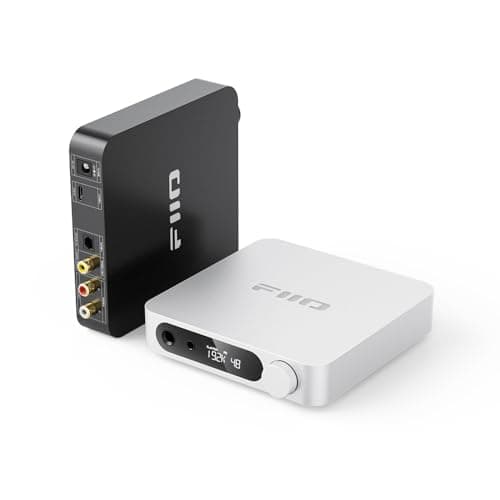 FiiO K11 The K7's cheaper relative — less headphone power, the same basic idea, at a price that undercuts most DAC-only boxes. | Best budget DAC and amp | 7.8 | |
| 2 | 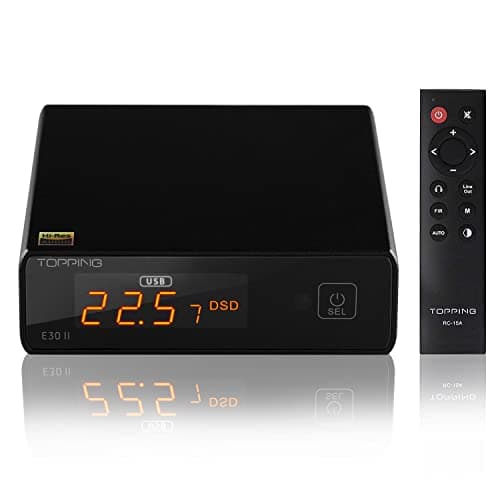 Topping E30 II Dual AK4493S converters and a preamp mode with a remote, at a price where a remote alone is usually the differentiator. | Best measured performance for the money | 8.4 | |
| 3 | 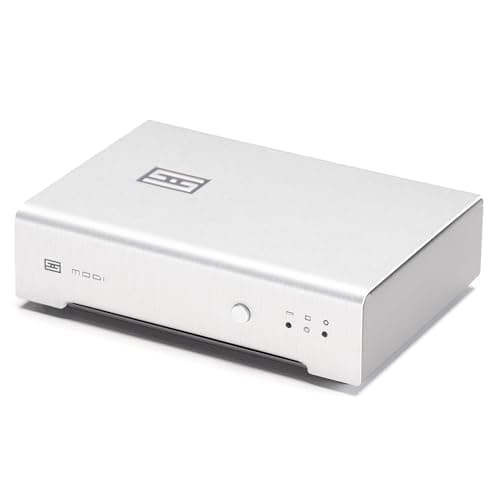 Schiit Modi 5 A no-nonsense DAC with three inputs and unity gain, doing the one job a DAC has without bundling a headphone amp you may not want. | Best overall under $500 | 8.2 | |
| 4 | 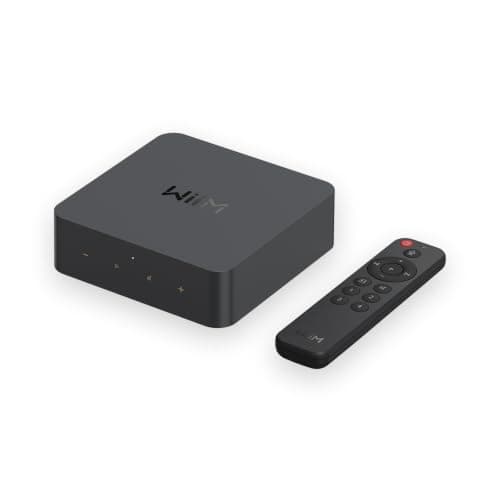 WiiM Pro Plus A streamer and DAC that publishes its line-out performance twice — once as the chip figure and once as the finished product — and is honest enough to print both. | Best streamer for an existing system | 8.8 |
“Hi-res” describes two numbers: how many bits describe each sample, and how many samples per second there are. Both have a precise technical meaning. Neither is owned by a standards body that manufacturers must answer to, which is why what actually gets published is a maximum supported rate and nothing more.
So rather than argue about definitions, this page does what the rest of the site does: takes the numbers the manufacturers publish and works out what they imply.
Bit depth is dynamic range, and it is calculable
Each bit of depth adds about 6 dB of range between the loudest signal a system can encode and the noise floor beneath it. The relationship is exact for an ideal converter, and the arithmetic below runs it against the actual published signal-to-noise figures of every DAC we cover.
Dynamic range (dB) = 6.02 × N + 1.76 · rearranged: N = (dB − 1.76) ÷ 6.02
Inputs
- FiiO K11 published line-out signal-to-noise: ≥ 126 dB (A-weighted) (FiiO parameters page)
- Topping E30 II published signal-to-noise: 123 dB (A-weighted, 1 kHz) (Topping spec page)
- Schiit Modi 5 published signal-to-noise: 118 dB referenced to full output (Schiit spec page)
- iFi ZEN DAC 3 published line dynamic range: ≥ 113 dB(A) (iFi spec page)
Result
16-bit theoretical: 6.02 × 16 + 1.76 = 98.1 dB
24-bit theoretical: 6.02 × 24 + 1.76 = 146.2 dB
FiiO K11 at 126 dB → (126 − 1.76) ÷ 6.02 = 20.6 bits
Topping E30 II at 123 dB → 20.1 bits
Schiit Modi 5 at 118 dB → 19.3 bits
iFi ZEN DAC 3 at 113 dB → 18.5 bits
Every one of these DACs accepts 24-bit and at least one accepts 32-bit. Not one of them resolves 24 bits. The best figure we can cite anywhere on this site lands at about twenty and a half — roughly 20 dB shortof what the format describes, and that is the manufacturers’ own numbers under their own most flattering conditions.
6.02N + 1.76 is the theoretical figure for an ideal converter. The published DAC figures are A-weighted in most cases, which is the flattering convention. Both facts push the same direction: the real gap between 24-bit and what silicon delivers is at least this wide, not narrower.
This is not a criticism of any of these DACs. It is a statement about where the limit lives. A 16-bit file already provides 98 dB of dynamic range; the converters that play it resolve around 118 to 126 dB. The format is not the bottleneck in either direction, and the extra eight bits of a 24-bit file describe a noise floor no converter reaches.
Sample rate is bandwidth, and it is also calculable
A sampled system reproduces frequencies up to half its sample rate. So:
| Sample rate | Highest frequency it can carry | Which of our DACs reach it |
|---|---|---|
| 44.1 kHz | 22.05 kHz | All |
| 96 kHz | 48 kHz | All, on every input |
| 192 kHz | 96 kHz | All over USB; all over coaxial; not all over optical |
| 384 kHz | 192 kHz | USB only — FiiO K7, FiiO K11, Topping D10s, Schiit Modi 5 |
| 768 kHz | 384 kHz | USB only — Topping E30 II, SMSL SU-1, iFi ZEN DAC 3 |
Now put that beside the rest of the chain. Ortofon publishes 20 Hz – 20 kHz (+3/−1 dB) for the 2M Red. Audio-Technica publishes 20–22,000 Hz for the AT-VM95E. Klipsch publishes 62 Hz – 21 kHz ± 3 dB for the R-51M; ELAC publishes 44 Hz – 35 kHz for the Debut B6.2 with no tolerance at all.
The rest of the equipment is designed and specified to roughly 20 kHz. A 768 kHz-capable DAC is carrying a band 384 kHz wide into speakers whose makers publish a ± 3 dB figure that stops at 21 kHz. The specification is real; the part of it above about 20 kHz has nothing downstream that claims to reproduce it.
So does hi-res do anything?
Three honest answers, in descending order of confidence.
1. The master is usually the real variable, and nobody publishes it
A hi-res release and a CD release of the same album are frequently different masters — different equalization, different dynamic range compression, sometimes a different mix. If the hi-res version sounds better, that can be why, and the format is along for the ride.
We cannot tell you which release you are getting, because no streaming service or label we are aware of publishes mastering provenance in a form a buyer can check before pressing play. That is a genuine information gap and we are not going to fill it with a guess.
2. Higher sample rates give the converter’s filter more room
At 44.1 kHz a converter must remove everything above 22.05 kHz while leaving everything below 20 kHz alone — a steep filter in a narrow gap. At 96 kHz that same filter has from 20 kHz to 48 kHz to do its work, so it can be gentler. This is a real engineering argument and it is about the converter, not about the extra content.
3. Extra bit depth matters when you are producing, not when you are listening
Recording at 24-bit means you can set levels conservatively and still have far more range than you need — which is exactly the argument we make on digitizing records. Once the file is mixed and mastered, that headroom has already done its job.
DSD, briefly
A different encoding entirely — one bit at a very high rate rather than many bits at a low one. Three DACs we cover support it: Topping publishes DSD64–DSD512 native on the E30 II, iFi publishes DSD512 on the ZEN DAC 3, and SMSL publishes DSD up to 22.5792 MHz on the SU-1. Schiit publishes nothing about DSD for the Modi 5 at all, which our spec table records as a gap rather than as a “no”.
If you have a DSD library, check the box supports it. If you do not, this specification costs you nothing and changes nothing.
Oversampling and upsampling are not hi-res
Almost every DAC sold today oversamples internally, and it is unrelated to the resolution of your file. The converter runs its modulator at a far higher rate than the incoming data so that its reconstruction filter has an easier job — the same argument made above for higher sample rates, applied inside the chip rather than to the recording.
Manufacturers describe this in different amounts of detail. Schiit publishes “Schiit Mesh — their digital filter plus a delta-sigma modulator, in this case an ES9018” for the Modi 5, which is unusually specific. Topping publishes the converter parts directly: two AK4493S in the E30 II, an ES9038Q2M in the D10s. Bluesound publishes an ES9039Q2M with Hyperstream IV. iFi publishes only “Burr Brown” for the ZEN DAC 3 and does not give the part number at all.
None of that turns a 16-bit file into a 24-bit one. Software upsampling does not either — it interpolates between the samples you already have, which cannot add information that was not captured. Both are legitimate engineering; neither is a resolution increase, and a product page that implies otherwise is describing a filter as though it were a source.
MQA, and the one device here that plays it
MQA is a container format that packs a higher-rate recording into a stream a standard player can decode partially, with full decoding requiring hardware or software that knows about it.
Of every device we cover, exactly one publishes support: Bluesound lists MQA playback for the Node Nano, alongside AirPlay 2, Spotify Connect, Tidal Connect, Qobuz Connect and Roon Ready. WiiM publishes no MQA support for the Pro Plus, Ultra or Amp. None of the standalone DACs — the Topping, Schiit, SMSL, FiiO or iFi units — publish it either.
So this is a compatibility question with a one-line answer: if your library or your streaming tier is MQA and full decoding matters to you, the Node Nano is the only box on this site that says it can. If it is not, this specification costs you nothing. We are not going to arbitrate the long-running argument about whether MQA is worth having, because that argument turns on listening comparisons we have not made.
The thing that actually limits your system
Look back at the numbers on this page. Every DAC we cover publishes distortion at or below 0.0007% and signal-to-noise at or above 113 dB. Those figures are close enough to each other that the choice between them is not a fidelity choice.
Meanwhile: the speakers we cover publish frequency responses spanning 44 Hz to 68 Hz at the bottom end — a 24 Hz spread in where the bass stops. Sensitivity spans 83 dB to 95 dB. Room treatment changes what arrives at your ear by more than any of it.
Buy the DAC for its inputs, its outputs and whether it will fit your system. That is the argument our DAC roundup makes at length, and the hi-res specification is not the reason to pick one over another.
One practical trap worth knowing
Your input choice can cap your sample rate before the DAC does. FiiO publishes 384 kHz over USB and only 96 kHz over optical for both the K7 and the K11 — a fourfold difference decided by which cable you plug in.
If a hi-res file is playing at a lower rate than you expect, the connection is the first thing to check. That is the subject of optical vs coaxial vs USB.
The same arithmetic, applied to the whole system rather than the file, is on our hi-fi-worth-it page: it puts the DAC’s published distortion beside the amplifier’s and the speaker’s, and shows which link in the chain a dollar can still improve.
Every pick in detail
Every specification below links to the manufacturer document we read it from. Where a manufacturer does not publish a figure, we say so rather than estimating it.
FiiO K11
Best budget DAC and ampPrice as of October 15, 2026. #ad
The K7's cheaper relative — less headphone power, the same basic idea, at a price that undercuts most DAC-only boxes.
- measured specs
- 8/10
- inputs
- 7/10
- value for money
- 10/10
- build quality
- 6/10
- features
- 8/10
| Specification | Published value | Source |
|---|---|---|
| Chipset | DAC: CS43198; USB: SA9312L; amp: 2 × SGM8262-2 | FiiO parameters page |
| Max sample rate | USB: 384 kHz/32-bit, DSD256 native; coaxial: 192 kHz/24-bit; optical: 96 kHz/24-bit | FiiO parameters page |
| Headphone power | 6.35 mm: ≥ 520 mW + 520 mW (32 Ω), ≥ 60 mW + 60 mW (300 Ω). 4.4 mm balanced: ≥ 1,400 mW + 1,400 mW (32 Ω), ≥ 250 mW + 250 mW (300 Ω). All at THD+N < 1% | FiiO parameters page |
| Signal-to-noise | Line out ≥ 126 dB (A-weighted) | FiiO parameters page |
| Output level | 1.95 V RMS (line out) | FiiO parameters page |
| Preamp mode | Yes — LO/PO switching, each remembering its own volume | FiiO product page |
Pros
- DAC and headphone amp for less than most DAC-only boxes
- Balanced output at the price
- Compact
Cons
- Less headphone power than the K7
- Plastic-heavy build
- Fewer inputs
Skip it if you drive demanding high-impedance headphones — step up to the K7.
Topping E30 II
Best measured performance for the moneyPrice as of October 15, 2026. #ad
Dual AK4493S converters and a preamp mode with a remote, at a price where a remote alone is usually the differentiator.
- measured specs
- 10/10
- inputs
- 8/10
- value for money
- 9/10
- build quality
- 7/10
- features
- 8/10
| Specification | Published value | Source |
|---|---|---|
| DAC chip | 2 × AK4493S; XMOS XU208 USB interface | Topping spec page |
| Max sample rate | USB: PCM 44.1–768 kHz/16–32 bit, DSD64–DSD512 native; coaxial/optical: PCM up to 192 kHz/24 bit | Topping spec page |
| THD+N | < 0.00015% at 1 kHz (A-weighted, line out, USB 96 kHz) | Topping spec page |
| Signal-to-noise | 123 dB (A-weighted, 1 kHz) | Topping spec page |
| Output level | 2.1 V RMS at 0 dBFS (20 Ω output impedance) | Topping spec page |
| Preamp mode | Yes | Topping spec page |
| Headphone amp | No | Topping spec page |
Pros
- Dual DAC chips and strong published measurements
- Preamp mode with variable output
- Remote control included
Cons
- Small display is hard to read across a room
- No headphone output
- Menu system is fiddly
Skip it if you need a headphone amp built in.
Schiit Modi 5
Best overall under $500Price as of October 15, 2026. #ad
A no-nonsense DAC with three inputs and unity gain, doing the one job a DAC has without bundling a headphone amp you may not want.
- measured specs
- 9/10
- inputs
- 8/10
- value for money
- 9/10
- build quality
- 8/10
- features
- 6/10
| Specification | Published value | Source |
|---|---|---|
| D/A conversion | Schiit Mesh — their digital filter plus a delta-sigma modulator, in this case an ES9018 | Schiit spec page |
| Max sample rate | USB: up to 32-bit/384 kHz (UAC2); optical and coaxial: up to 24/192 | Schiit spec page |
| DSD support | Not published | — |
| Inputs | USB, optical S/PDIF, coaxial S/PDIF | Schiit spec page |
| Outputs | RCA single-ended | Schiit spec page |
| THD+N | 0.0003% | Schiit spec page |
| Signal-to-noise | 118 dB referenced to full output | Schiit spec page |
| Output level | 1.5 V RMS on USB power; 2.0 V RMS with the external supply | Schiit spec page |
| Headphone amp | No — RCA output only | Schiit spec page |
Pros
- Three inputs — USB, optical and coaxial
- Small footprint and a published spec sheet
- Made in the USA
Cons
- No headphone amplifier
- External power
- No remote or display
Skip it if you want a headphone output in the same box — the FiiO K7 does both.
WiiM Pro Plus
Best streamer for an existing systemPrice as of October 15, 2026. #ad
A streamer and DAC that publishes its line-out performance twice — once as the chip figure and once as the finished product — and is honest enough to print both.
- measured performance
- 9/10
- connectivity
- 8/10
- features
- 9/10
- value for money
- 10/10
- published data
- 8/10
| Specification | Published value | Source |
|---|---|---|
| DAC | AKM AK4493SEQ (ADC: TI Burr-Brown PCM1861) | WiiM spec comparison |
| Analog out SNR | 121 dB (WiiM's comparison table, the AKM chip figure) · 120 dB A-weighted (WiiM's own “line-out performance” figure for the finished unit) | WiiM spec comparison |
| Analog out THD+N | −113 dB / 0.00023% (comparison table) · 0.00032% / −110 dB at 1 kHz, 44.1k–192k (line-out performance panel) | WiiM spec comparison |
| Line-out frequency response | ± 0.05 dB | WiiM spec comparison |
| Outputs | 1 × RCA line-out · 1 × optical S/PDIF (192 kHz/24-bit) · 1 × coaxial (192 kHz/24-bit) | WiiM spec comparison |
| Inputs | Line-in (2 Vrms, digitized by the ADC at 192 kHz/24-bit) · optical S/PDIF in up to 192 kHz/24-bit, stereo PCM only (no Dolby Digital or DTS) | WiiM spec comparison |
| Network | Wi-Fi 5 (802.11 b/g/n/ac, 2.4 and 5 GHz) · 10/100 Mbps Ethernet · Bluetooth 5.0 | WiiM spec comparison |
| Protocols | AirPlay 2, Google Cast Audio, Spotify Connect, TIDAL Connect, Amazon Music Casting, DLNA, Qplay 2.0, Roon Ready | WiiM spec comparison |
| EQ / room correction | 10-band parametric EQ, 10-band graphic EQ, 24 presets, per-source EQ, room correction | WiiM FAQ |
| Output impedance | Not published | — |
Pros
- AKM AK4493SEQ DAC with a published line-out SNR of 120 dB A-weighted and ±0.05 dB response for the finished unit, not just the chip
- Coaxial AND optical outputs, so it feeds an existing external DAC bit-perfectly if you already own one
- Roon Ready, AirPlay 2, Chromecast, Spotify Connect and TIDAL Connect all supported at once
- 10-band parametric EQ and room correction included, which is a genuinely rare feature at this price
Cons
- No display of any kind — everything happens in the phone app
- The optical input accepts stereo PCM only; Dolby Digital and DTS are explicitly unsupported
- No phono input, so a turntable still needs a separate stage
- WiiM publishes no output impedance, which matters if you feed a low-input-impedance amplifier
Skip it if your amplifier already streams. Paying twice for the same function is the most common mistake in this category.
Frequently asked questions
Is 24-bit audio actually better than 16-bit?
Not in a way any converter we cover can deliver. 24-bit implies about 146 dB of dynamic range; the best published signal-to-noise figure on this site is FiiO’s ≥126 dB for the K11 line output, which works out to roughly 20.6 bits. 16-bit already provides about 98 dB. The extra bits describe a noise floor the hardware does not reach.
Can you hear the difference with hi-res audio?
We have not tested it and we do not make listening claims. What we can tell you is that hi-res and standard releases of the same album are frequently different masters, which is a real and audible difference that has nothing to do with bit depth or sample rate — and that nobody publishes which master you are getting.
What sample rate should I use for listening?
Whatever the file is; there is no benefit to upsampling it yourself. A higher sample rate does give the converter’s reconstruction filter more room to work, which is a real engineering argument — but the rest of the chain is specified to about 20 kHz. Ortofon publishes 20 Hz–20 kHz for the 2M Red and Klipsch publishes 62 Hz–21 kHz ±3 dB for the R-51M.
Why is my hi-res file only playing at 96 kHz?
Almost certainly the connection rather than the DAC. FiiO publishes 384 kHz over USB and 96 kHz over optical for both the K7 and K11. Optical is the input most often capped lower — swap to USB or coaxial and check again.
Read next
What Is a DAC in Audio?
A DAC turns digital audio into analog voltage. You already own several — here is when another one helps.
The Best DACs Under $500
Seven DACs under $500. They all measure superbly — so the decision is inputs, outputs and whether you want a headphone amp.
Optical vs Coaxial vs USB
Per-input sample rate limits for every DAC we cover, the ground-loop problem only optical solves, and the surround-format trap on TV optical outputs.
Bluetooth vs Wi-Fi Audio
LDAC's published 990 kbps against a 1,411 kbps CD stream — and the codec-matching trap that means your phone's best codec may never be used.
The Best Music Streamers With a Built-In DAC
Four streamers with built-in DACs, ranked on published output performance, inputs and protocol support.
How to Digitize Vinyl Records
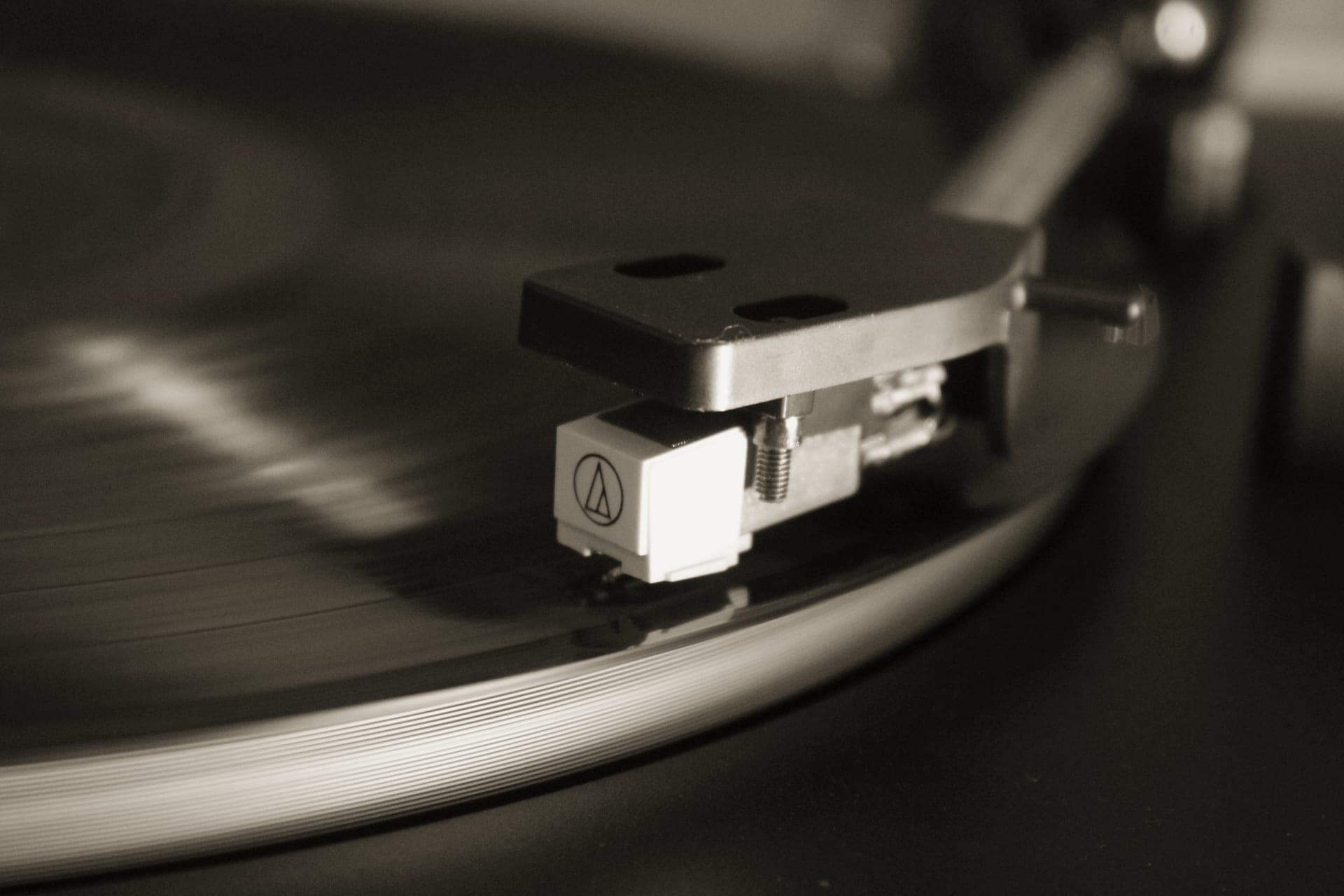
USB deck, external ADC, or streamer — and why the USB route tops out at 16-bit/44.1 kHz per Audio-Technica's own manual.
Is Hi-Fi Audio Worth It?
What hi-fi means, which of its claims can be measured, where the money moves a published number, and a starter system chosen on those numbers rather than on adjectives.
Sources
Every specification on this page was read from one of these documents. If one of them has changed, or we have made an error, tell us — corrections are logged and dated per our editorial policy.
- FiiO K11 — parameters (line-out SNR, sample rates)
- FiiO K7 — parameters (per-input sample rate limits)
- Topping E30 II — specifications
- Schiit Modi 5 — specifications
- iFi ZEN DAC 3 — specifications
- SMSL SU-1 — manual (PDF)
- Ortofon 2M Red — frequency response with tolerance
- Audio-Technica AT-VM95E — frequency response
- Klipsch R-51M — frequency response (spec sheet, PDF)