Is Hi-Fi Audio Worth It?
Hi-fi means high fidelity: a system that reproduces the recording without adding or removing anything measurable. Whether that is worth paying for depends on which numbers your money actually moves, and most of them are published.
Disclosure: we earn a commission if you buy through the links on this page, at no extra cost to you. It does not influence what we pick — our criteria are published and reproducible, so you can check our work. How we pick · Full disclosure
These picks are spec-and-price analyses, not listening tests. We have not heard this gear and we do not pretend to have: every figure below is sourced to the manufacturer and linked, and every price is live or not shown at all. Here are the rules we followed.
Quick picks
Ranked on the published criteria in How We Pick. Prices are live as of September 17, 2026. Tap any row for the full write-up.
- 7.2
- 8.2$329.00View on Amazon
$479.0031% off
- 8.4
- 7.6
| # | Product | Best for | Score | Price |
|---|---|---|---|---|
| 1 | 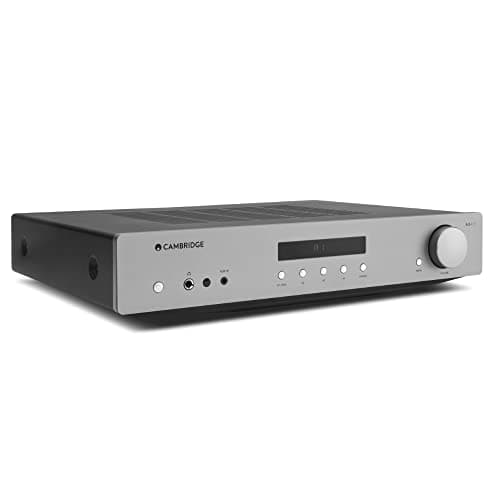 Cambridge Audio AXA35 A deliberately plain integrated with a phono stage and a headphone output, aimed at a turntable and nothing more complicated. | Best simple amplifier for a turntable | 7.2 | |
| 2 | 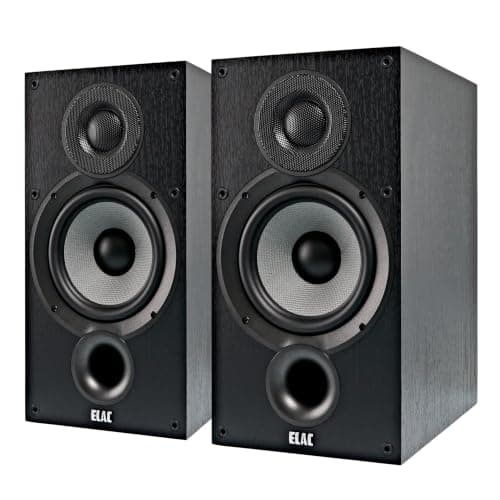 ELAC Debut 2.0 B6.2 A 6.5-inch woofer in a ported cabinet that reaches lower than anything else near the price, at the cost of needing an amplifier with real current behind it. | Best overall under $500 | 8.2 | $329.00View on Amazon $479.0031% off |
| 3 | 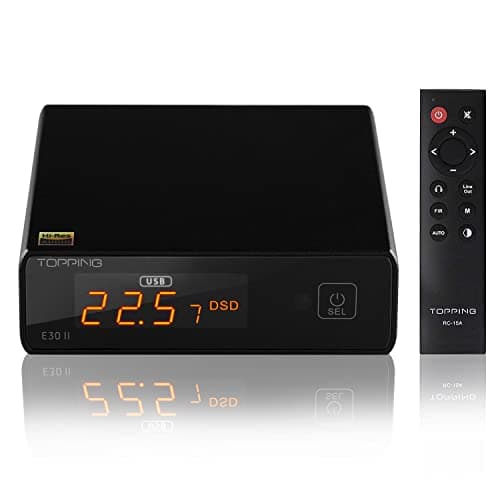 Topping E30 II Dual AK4493S converters and a preamp mode with a remote, at a price where a remote alone is usually the differentiator. | Best measured performance for the money | 8.4 | |
| 4 | 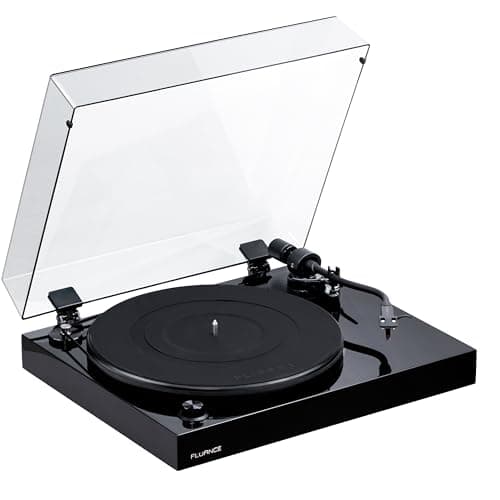 Fluance RT82 A belt-drive deck with an Ortofon OM10 and no built-in phono stage — a deliberate omission that assumes you will bring your own, and prices accordingly. | Best belt-drive under $500 | 7.6 |
The honest answer is that some of hi-fi is measurable and worth paying for, some of it is measurable and already solved at low prices, and some of it is not measurable at all — and the industry sells all three at the same price. This page separates them, using only figures manufacturers publish, and ends with a system built on that separation.
What hi-fi audio means
High fidelity: faithful to the source. A hi-fi system’s job is to turn a recording into sound in a room while changing as little as possible. That definition is useful because most of what it implies has a number. Frequency response with a tolerance says how evenly the system reproduces every pitch. Total harmonic distortion says how much it adds that was not in the recording. Signal-to-noise says how far the music sits above the hiss and hum the equipment contributes. Those three figures, published honestly with their measurement conditions, are what separates a hi-fi component from an appliance with a speaker in it.
What the definition does not include is any claim about what the system sounds like. That is deliberate, and it is how this site works: we have not heard any product we cover, we say so on every page, and nothing here describes a sound. Fidelity is a measurement; taste is not.
The part that is measurable and already solved
Electronics. A digital-to-analog converter at the price of a restaurant meal now publishes distortion and noise figures that a decade ago belonged to equipment costing twenty times as much. The Topping E30 II publishes THD+N below 0.00015% and a signal-to-noise ratio of 123 dB. The SMSL SU-1, cheaper still, publishes 0.00013% and 121 dB. Amplifiers are close behind: the Yamaha A-S501 publishes 0.019% THD across the whole band and 99 dB signal-to-noise. Our hi-res explainer puts those numbers next to the limits of the recording itself, and the comparison is the point.
distortion (dB) = 20 × log10(THD as a fraction)
Inputs
- Topping E30 II, THD+N: < 0.00015% (1 kHz, A-weighted, line out) (Topping product page)
- Yamaha A-S501, THD: 0.019% (50 W into 8 Ω, 20 Hz – 20 kHz) (Yamaha spec page)
- Cambridge Audio AXA35, THD: < 0.01% at 1 kHz (80% of rated power); < 0.15% 20 Hz – 20 kHz (Cambridge Audio spec page)
Result
The part that is measurable and still expensive
Loudspeakers, and the room they are in. A speaker is a mechanical device moving air, and its published figures are coarser and further from perfect than anything electronic: the ELAC Debut 2.0 B6.2 publishes 44 Hz to 35 kHz with no tolerance at all; the Klipsch R-51M publishes 62 Hz to 21 kHz at ± 3 dB. Three decibels is a doubling of power. No amplifier or DAC we cover deviates by a tenth of that. This is where money changes a number: bass extension, tolerance, sensitivity and cabinet construction all cost real material, and our under-$500 speaker page shows what each bracket buys.
The room is the other half. Every reflection point and every corner changes the frequency response at the listening seat by more than the difference between two amplifiers, and the fix — absorption with published coefficients — costs less than a component upgrade. Our listening-room treatment guide is where a second few hundred dollars goes further than anywhere else.
The part that is not measurable, and what we do about it
Cables above a sensible gauge, power conditioners for domestic supplies, isolation feet under electronics, and every adjective in every review you have ever read. None of these has a published figure that changes, and a claim without a figure is a claim we do not make. Our speaker-wire pageis the one place we cover cable, because gauge has a resistance table behind it and the rest does not. If a product’s case rests on how it sounds rather than on what it measures, it may be wonderful; we cannot tell you, and neither can anyone else without a listening test you were not present for.
So: is it worth it?
It is worth it when the money moves a published number you can hear the consequence of. Going from a television’s speakers to a stereo pair with a published response is the largest such move anyone makes. Going from no room treatment to first-reflection panels is the second. Going from a good amplifier to a more expensive good amplifier is usually the smallest, and going from a good DAC to any other DAC is, on the figures, below the floor of what a recording contains. Spend in that order and hi-fi is worth it at almost any budget. Spend in the reverse order and it is not, at any budget.
A starter system chosen on the numbers
The four products above are what that order looks like in practice, from our registry, with the reasons. The Cambridge Audio AXA35 because it publishes a phono stage, a distortion figure across the whole band and a damping factor, which is the full set of figures this page asks for — 35 W into 8 ohms is modest, and with an 87 dB speaker it is enough for a normal room. The ELAC Debut 2.0 B6.2 because it reaches 44 Hz from a bookshelf cabinet, is sold as a pair, and is the speaker two of our roundupsrank first; its con is that ELAC publishes that 44 Hz with no tolerance, and that the Debut 3.0 generation now sits above it. The Topping E30 II because it is the point at which, per the arithmetic above, the source stops being the limit. And the Fluance RT82 because a turntable is the one source where fidelity is still a mechanical problem — it publishes 0.07% wow and flutter and 68.5 dB signal-to-noise — and because it has no built-in phono stage, which the AXA35 supplies. Nothing on that list is chosen for how it sounds.
When it is not worth it
When the room is shared with a television and the question is really about film, in which case our home-theater-versus-hi-fi page is the honest starting point. When the listening is on headphones, where a DAC and amplifier from the headphone page is the entire system and the speakers above are money not spent. And when the budget cannot reach a speaker pair with a published tolerance, because a system whose weakest link has no specification is not yet a hi-fi system, whatever the electronics in front of it measure.
Every pick in detail
Every specification below links to the manufacturer document we read it from. Where a manufacturer does not publish a figure, we say so rather than estimating it.
Cambridge Audio AXA35
Best simple amplifier for a turntablePrice as of September 17, 2026. #ad
A deliberately plain integrated with a phono stage and a headphone output, aimed at a turntable and nothing more complicated.
- power
- 6/10
- phono stage
- 8/10
- value for money
- 8/10
- build quality
- 7/10
- connectivity
- 6/10
| Specification | Published value | Source |
|---|---|---|
| Power output (8 Ω) | 35 W into 8 Ω | Cambridge Audio spec page |
| Power output (4 Ω) | Not published | — |
| Phono input | Yes — built-in moving magnet phono stage | Cambridge Audio spec page |
| THD | < 0.01% at 1 kHz (80% of rated power); < 0.15% 20 Hz – 20 kHz | Cambridge Audio spec page |
| Signal-to-noise | > 82 dB (unweighted, ref 1 W) | Cambridge Audio spec page |
| Damping factor | > 50 | Cambridge Audio spec page |
| Inputs | 4 × RCA, 1 × phono, 1 × 3.5 mm front aux | Cambridge Audio spec page |
| Digital inputs / DAC | None published | Cambridge Audio spec page |
Pros
- Built-in phono stage
- Headphone output
- Simple, uncluttered front panel
Cons
- Modest power output
- No digital inputs
- No remote on the base model
Skip it if your speakers are power-hungry — check the arithmetic first.
ELAC Debut 2.0 B6.2
Best overall under $500A 6.5-inch woofer in a ported cabinet that reaches lower than anything else near the price, at the cost of needing an amplifier with real current behind it.
- sensitivity
- 6/10
- bass extension
- 9/10
- amp friendliness
- 6/10
- value for money
- 10/10
- build quality
- 8/10
| Specification | Published value | Source |
|---|---|---|
| Sensitivity | 87 dB (2.83 V / 1 m) | ELAC spec page |
| Impedance | 6 Ω | ELAC spec page |
| Minimum impedance | Not published | — |
| Frequency response | 44 Hz – 35 kHz (no tolerance published) | ELAC spec page |
| Maximum power input | 120 W (a handling limit — ELAC publishes no recommended amplifier range) | ELAC spec page |
| Woofer | 6.5 in woven aramid-fiber cone | ELAC spec page |
| Tweeter | 1 in cloth dome | ELAC spec page |
| Crossover | 2,200 Hz | ELAC spec page |
| Weight (each) | 16.3 lb / 7.4 kg | ELAC spec page |
Pros
- 6.5in woofer reaches genuinely low for a bookshelf
- Front port, so it tolerates being near a wall better than a rear-ported box
- Well-braced cabinet for the price
Cons
- Wants more amplifier than its size suggests — check the arithmetic before pairing
- Large for a 'bookshelf' speaker
- Finish is functional rather than furniture
- The outgoing generation — ELAC's Debut 3.0 DB63 now builds on it, though ELAC publishes the same 87 dB and 6 Ω for both, so our sensitivity arithmetic holds for either
Skip it if your amplifier is a low-power desktop unit. Run the power arithmetic on our amp-matching guide first.
Topping E30 II
Best measured performance for the moneyPrice as of September 17, 2026. #ad
Dual AK4493S converters and a preamp mode with a remote, at a price where a remote alone is usually the differentiator.
- measured specs
- 10/10
- inputs
- 8/10
- value for money
- 9/10
- build quality
- 7/10
- features
- 8/10
| Specification | Published value | Source |
|---|---|---|
| DAC chip | 2 × AK4493S; XMOS XU208 USB interface | Topping spec page |
| Max sample rate | USB: PCM 44.1–768 kHz/16–32 bit, DSD64–DSD512 native; coaxial/optical: PCM up to 192 kHz/24 bit | Topping spec page |
| THD+N | < 0.00015% at 1 kHz (A-weighted, line out, USB 96 kHz) | Topping spec page |
| Signal-to-noise | 123 dB (A-weighted, 1 kHz) | Topping spec page |
| Output level | 2.1 V RMS at 0 dBFS (20 Ω output impedance) | Topping spec page |
| Preamp mode | Yes | Topping spec page |
| Headphone amp | No | Topping spec page |
Pros
- Dual DAC chips and strong published measurements
- Preamp mode with variable output
- Remote control included
Cons
- Small display is hard to read across a room
- No headphone output
- Menu system is fiddly
Skip it if you need a headphone amp built in.
Fluance RT82
Best belt-drive under $500Price as of September 17, 2026. #ad
A belt-drive deck with an Ortofon OM10 and no built-in phono stage — a deliberate omission that assumes you will bring your own, and prices accordingly.
- specs
- 8/10
- upgrade path
- 8/10
- value for money
- 8/10
- ease of setup
- 6/10
- connectivity
- 5/10
| Specification | Published value | Source |
|---|---|---|
| Drive type | Belt drive | Fluance spec page |
| Wow and flutter | 0.07% | Fluance spec page |
| Signal-to-noise | 68.5 dB (weighted) | Fluance spec page |
| Speeds | 33⅓, 45 rpm (no 78) | Fluance spec page |
| Cartridge included | Ortofon OM 10 | Fluance spec page |
| Tonearm effective mass | 0.77 oz (21.78 g) as published by Fluance under that heading. Treat with caution: a genuine effective-mass figure normally falls between about 8 and 14 g, so this may be total arm mass. We have not computed a resonance figure from it — see our cartridge and tonearm matching guide for why that distinction matters. | Fluance spec page |
| Built-in phono stage | No — Fluance states “Separate Phono Preamp Required” | Fluance spec page |
Pros
- Ortofon OM10 cartridge included — a genuine step up from a bundled generic
- Belt drive isolates motor vibration from the platter
- Solid wood plinth rather than molded plastic
Cons
- NO built-in phono stage — budget for one if your amp lacks a phono input
- Manual operation; you cue and return the arm yourself
- Belt is a consumable and will need replacing
Skip it if your amplifier has no phono input and you have not budgeted for a separate phono stage. That is a real extra cost, not a footnote.
Frequently asked questions
What does hi-fi audio mean?
Is hi-fi audio worth the money?
Does an expensive DAC make a difference?
What is the difference between hi-fi and hi-res audio?
What is a good starter hi-fi system?
Have you listened to any of this equipment?
Read next
How to Read an Amplifier Power Rating
Impedance, bandwidth, distortion, channels driven — the four conditions that turn a watts number into a spec, and which manufacturers publish all four.
Hi-Res Audio Explained
24-bit implies 146 dB of dynamic range; the best published DAC figure here is 126 dB, or about 20.6 bits. The arithmetic, and what it means.
The Best Bookshelf Speakers Under $500
Five pairs under $500 — and only one publishes a minimum impedance and a recommended amp range.
The Best Integrated Amplifiers Under $500
Four amplifiers under $500, ranked on the power figure each maker actually publishes — and on which of them will drive a 4-ohm speaker.

Home Theater vs Hi-Fi
Where the two designs actually conflict, where they do not, and the single configuration that lets one room serve both without compromise.
Room Treatment for a Hi-Fi Listening Room
What changes when a room has one seat instead of a console: the four surfaces that matter, in the order that returns the most per panel.
Sources
Every specification on this page was read from one of these documents. If one of them has changed, or we have made an error, tell us — corrections are logged and dated per our editorial policy.