Room Treatment for a Hi-Fi Listening Room
Studio treatment aims for a neutral room a mix engineer can work in all day. A listening room has one chair and a different goal, and about half the standard advice does not transfer.
Disclosure: we earn a commission if you buy through the links on this page, at no extra cost to you. It does not influence what we pick — our criteria are published and reproducible, so you can check our work. How we pick · Full disclosure
These picks are spec-and-price analyses, not listening tests. We have not heard this gear and we do not pretend to have: every figure below is sourced to the manufacturer and linked, and every price is live or not shown at all. Here are the rules we followed.
Quick picks
Ranked on the published criteria in How We Pick. Prices are live as of October 15, 2026. Tap any row for the full write-up.
- 8.4
- 7.4
- 7.2
| # | Product | Best for | Score | Price |
|---|---|---|---|---|
| 1 | 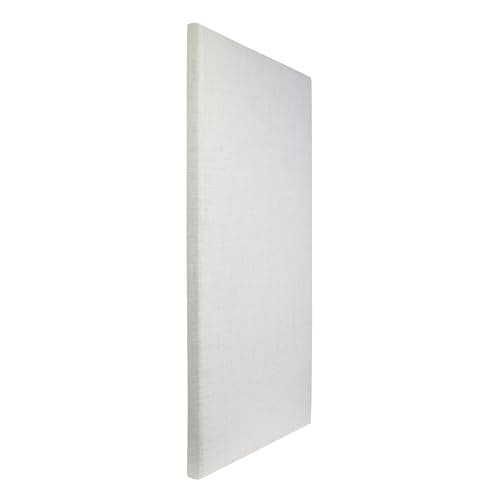 ATS Acoustics Sound Absorbing Panel (24x48) A mineral wool panel with the full absorption curve published — including the 125 Hz figure of 0.12 that its own NRC of 1.00 completely hides. | Best overall panel | 8.4 | |
| 2 | 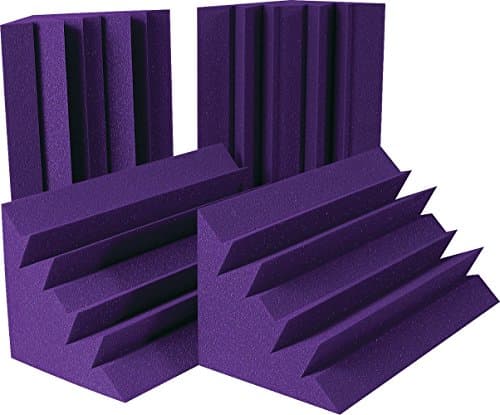 Auralex LENRD Bass Trap The one corner trap on this site whose maker publishes an absorption coefficient at 125 Hz — 1.30, against 0.11 for the same company's 2-inch flat foam. | The only trap here with a published 125 Hz figure | 7.4 | |
| 3 |  ATS Acoustics Tri-Corner Bass Trap A rigid fiberglass corner section at 6 lb per cubic foot, chosen on material and geometry because ATS publishes no per-frequency data for it at all. | Best bass trap | 7.2 |
Almost every acoustic treatment guide you will find was written for a recording studio, and a listening room is a different problem. A studio wants a room that stays honest from several positions for eight hours. A hi-fi room has one chair, and everything can be optimized for it.
That single difference changes the priority order, changes how much treatment is enough, and makes two pieces of standard studio advice actively wrong for a domestic room.
What transfers, and what does not
| Standard studio advice | In a listening room |
|---|---|
| Treat the first reflection points | Transfers completely, and matters more — there is only one seat to optimize for |
| Trap every corner | Transfers, but the front two corners return most of the benefit |
| Keep the room symmetrical left to right | Transfers, and is usually the hardest thing to achieve at home |
| Aim for a short, even decay everywhere | Does NOT transfer. A domestic room treated to studio deadness is unpleasant to sit in |
| Treat the rear wall heavily | Partly. Behind a mixing position it is critical; behind a sofa against the wall it is often already handled by the sofa |
The row that matters most is the fourth. A control room is a workplace and is treated to be analytically dry. A living room treated that way sounds oppressive within minutes, and the people who share it will notice before you do.
The order that returns the most per panel
Everything below is in descending order of change-per-dollar. Doing them out of order is the usual reason a room full of panels sounds no better than a room with two.
1. Move the speakers before you buy anything
Speaker position changes the low-frequency response of a room more than any quantity of absorption a domestic budget can buy, and it costs nothing. The geometry, including the distance-from-wall rule is the first move, always.
2. Two panels at the first reflection points
The earliest, loudest reflection arrives from the side wall between you and each speaker, within a few milliseconds of the direct sound. Absorbing it is the single largest change most systems can make, and it takes two panels and a mirror and five minutes to locate.
The ATS panel publishes 1.17 at 500 Hz and 1.12 at 1 kHz — the range that carries most of the imaging information in a stereo recording. That is the band you are buying.
3. The front two corners
Low frequencies pile up where surfaces meet, which is why corners are where trapping works. The front corners — behind and beside the speakers — are where a stereo pair excites the room hardest.
The Auralex LENRD is the only trap we cover whose maker publishes a 125 Hz figure, and it is 1.30. The ATS wall panel is 0.12 in the same band. That is not a refinement between similar products; it is a factor of ten, from the same test standard.
4. The ceiling reflection, if the ceiling is low
A low ceiling produces the same early reflection the side walls do, from a surface most rooms cannot avoid. A ceiling cloud is the fix and it is genuinely awkward to mount, which is why it comes fourth rather than second.
How much is enough for one chair
A listening room needs less treatment than a studio because it only has to be right in one place. That is a real saving, and it is worth quantifying rather than guessing.
absorption added (sabins) = area × α · α from the manufacturer's published curve
Inputs
- ATS 24×48×2 published absorption at 500 Hz: 1.17 (ATS Acoustics product page)
- ATS 24×48×2 published absorption at 125 Hz: 0.12 (ATS Acoustics product page)
- Panel area, each: 24 × 48 in = 8 sq ft (ATS Acoustics product page)
Result
Two panels at 500 Hz: 16 × 1.17 = 18.7 sabins
Two panels at 125 Hz: 16 × 0.12 = 1.9 sabins
The same two panels do ten times as much work at 500 Hz as at 125 Hz. That is the whole reason the order above puts wall panels before bass traps for imaging, and bass traps in a separate step for the low end — they are not competing products doing the same job at different prices.
Sabins add up across a room; they do not translate directly into a decibel figure without knowing the room’s total existing absorption, which nobody publishes for a furnished domestic room. Note also that several published coefficients exceed 1.00, which is an artifact of the ASTM chamber method — useful for comparison between products tested the same way, not a literal “117 percent absorbed”.
The two mistakes specific to hi-fi rooms
Treating the front wall behind the speakers first. It looks like the obvious surface and it is not the first reflection. The side walls and the ceiling produce earlier, louder reflections; the front wall matters mainly if the speakers sit close to it, in which case moving them is the better fix.
Buying foam because it is cheap and visible. Auralex publishes 0.16 at 125 Hz and 0.57 at 500 Hz for its 2 in foam, against the ATS panel’s 1.17 at 500 Hz. Foam is not a cheaper version of a mineral wool panel; it is a less absorbent product, and Auralex’s own numbers say so.
What treatment cannot do for a hi-fi system
It will not stop the neighbors hearing it — absorption is not isolation and the coefficients say so at about half a decibel. It will not fix a speaker that measures badly. And it will not rescue a seating position pushed against a rear wall, which loads the seat with boundary gain no panel budget can undo.
What it will do is remove the earliest reflections and shorten the decay in the band that carries stereo imaging, and that is a larger, more reliable change than most component upgrades at the same price.
Everything above assumes one seat and two speakers. For a room with a row of seats, surround speakers, a screen wall and a subwoofer, our home-theater treatment guide works through each extra surface in the order that matters.
Every pick in detail
Every specification below links to the manufacturer document we read it from. Where a manufacturer does not publish a figure, we say so rather than estimating it.
ATS Acoustics Sound Absorbing Panel (24x48)
Best overall panelPrice as of October 15, 2026. #ad
A mineral wool panel with the full absorption curve published — including the 125 Hz figure of 0.12 that its own NRC of 1.00 completely hides.
- low frequency absorption
- 8/10
- published data
- 10/10
- build quality
- 9/10
- value for money
- 7/10
- appearance
- 8/10
| Specification | Published value | Source |
|---|---|---|
| NRC | 1.00 | ATS Acoustics product page |
| Absorption coefficients | 125 Hz: 0.12 · 250 Hz: 0.67 · 500 Hz: 1.17 · 1 kHz: 1.12 · 2 kHz: 1.08 · 4 kHz: 1.08 | ATS Acoustics product page |
| Material | ROCKWOOL AFB mineral wool core, solid wood frame, 1/4 in wood back panel | ATS Acoustics product page |
| Thickness | 2 in | ATS Acoustics product page |
| Dimensions / weight | 24 × 48 × 2 in; ~12 lb per panel | ATS Acoustics product page |
| Fire rating | None — ATS states “This item is not fire rated.” | ATS Acoustics product page |
| ASTM test mounting | Not published | — |
| Density | Not published | — |
Pros
- Publishes the full per-frequency curve, not just an NRC — so you can see what it actually does
- Mineral wool core absorbs 0.67 at 250 Hz, where 1.9 in foam manages 0.13
- Fabric-wrapped and presentable in a living room
Cons
- NRC 1.00 is a real figure and still misleading: at 125 Hz this panel absorbs 0.12. NRC averages 250 Hz–2 kHz only, so it structurally cannot show you the bass performance.
- Not fire rated — ATS states this plainly, and it may matter for your install
- Heavy at ~12 lb, and far more expensive than foam per panel
Skip it if your problem is bass. No 2-inch panel solves that — including this one — and you want corner traps instead.
Auralex LENRD Bass Trap
The only trap here with a published 125 Hz figurePrice as of October 15, 2026. #ad
The one corner trap on this site whose maker publishes an absorption coefficient at 125 Hz — 1.30, against 0.11 for the same company's 2-inch flat foam.
- low frequency absorption
- 8/10
- published data
- 9/10
- build quality
- 6/10
- value for money
- 6/10
- appearance
- 5/10
| Specification | Published value | Source |
|---|---|---|
| NRC | 1.50 | Auralex product page |
| Absorption coefficients (ASTM C-423) | 125 Hz: 1.30 · 250 Hz: 1.55 · 500 Hz: 1.53 · 1 kHz: 1.48 · 2 kHz: 1.48 · 4 kHz: 1.51 | Auralex performance data |
| Dimensions | 1 ft × 1 ft × 2 ft (triangular corner section) | Auralex product page |
| Material | Auralex Studiofoam | Auralex product page |
| Fire rating | UL 94 HF-1 | Auralex product page |
| Density | Not published | — |
| Test mounting for the published coefficients | Not published | — |
Pros
- Auralex publishes the full ASTM C-423 curve including the 125 Hz band, which almost nobody in this category does
- 1.30 at 125 Hz against 0.11 for Auralex's own 2 in Studiofoam Wedges — the shape of the trap is doing the work, not the material
- A one-foot triangular section that fits a wall-wall or wall-ceiling corner without brackets
- UL 94 HF-1 fire rating published
Cons
- It is still foam, not mineral wool — the published curve is excellent for foam, and foam is the cheaper material
- Auralex does not publish the test mounting for these coefficients, and mounting changes low-frequency results substantially
- Coefficients above 1.00 are an artifact of the reverberation-room method, not literal 130% absorption
- Sold in packs, so the real cost is a multiple of the single-unit price
Skip it if your corners are already occupied, or you have not yet treated your first reflection points — those come first and cost less.
ATS Acoustics Tri-Corner Bass Trap
Best bass trapPrice as of October 15, 2026. #ad
A rigid fiberglass corner section at 6 lb per cubic foot, chosen on material and geometry because ATS publishes no per-frequency data for it at all.
- low frequency absorption
- 10/10
- published data
- 4/10
- build quality
- 9/10
- value for money
- 6/10
- appearance
- 7/10
| Specification | Published value | Source |
|---|---|---|
| NRC | 0.95 (published for the 2 in fiberglass core) | ATS Acoustics product page |
| Absorption coefficients | Not published. ATS gives only a single NRC figure, and NRC by definition excludes 125 Hz — the band a bass trap exists to address. | ATS Acoustics product page |
| Material | Rigid fiberglass core, frameless | ATS Acoustics product page |
| Density | 6 lb per cubic foot | ATS Acoustics product page |
| Thickness | 2 in, with 35° mitered edges for corner mounting | ATS Acoustics product page |
| Sizes | 12, 18 and 24 in sections — the price here is the 24 in | ATS Acoustics product page |
| Fire rating | ASTM E84 Class A | ATS Acoustics product page |
Pros
- Corner placement targets pressure maxima where bass builds up
- 6 lb/ft³ rigid fiberglass rather than foam, and ATS publishes the density
- ASTM E84 Class A fire rating, published — which the ATS flat panel does not have
Cons
- Expensive per unit
- ATS publishes only an NRC, and NRC by definition excludes 125 Hz — the band a bass trap exists for
- Takes up real corner volume
- You need several to make a measurable difference
Skip it if your room has no accessible corners — the placement is the product.
Frequently asked questions
Is room treatment different for hi-fi than for a studio?
The physics is the same; the target is not. A studio is treated to stay neutral across several working positions for hours, which usually means a drier room than is pleasant to live in. A hi-fi room has one listening seat, so everything can be optimized for that one position — which means less treatment, placed more precisely.
What should I treat first in a listening room?
Speaker position, which is free and moves the low-frequency response more than any affordable amount of absorption. Then two panels at the side-wall first reflection points. Then the front corners for bass. Then the ceiling if it is low. Doing these out of order is the usual reason a heavily treated room sounds no better than a lightly treated one.
How much acoustic treatment does a hi-fi room need?
Less than a studio, because only one seat has to be right. Two panels at the reflection points and two corner traps is a complete, defensible first stage for most domestic rooms. A pair of ATS panels adds about 18.7 sabins at 500 Hz and about 1.9 at 125 Hz, which is why bass trapping is counted separately rather than as more of the same.
Is acoustic foam good enough for a listening room?
It is worse than mineral wool by the manufacturers’ own numbers. Auralex publishes 0.57 at 500 Hz for its 2 in Studiofoam; ATS publishes 1.17 at 500 Hz for its 2 in mineral wool panel. Foam has one advantage that sometimes decides it: it is light enough for adhesive mounting, which matters in a rented room.
Read next
Find Your First Reflection Points
The mirror trick, in five minutes and for free — plus why those two points matter more than six panels elsewhere.
How Much Room Treatment Do I Need?
The Sabine equation, applied to a real room with real published coefficients — and what the answer costs.
The Best Acoustic Panels for Walls
Six wall panels ranked on published absorption per band, then on the thing nobody specs: how they attach, and whether they come off again.
Bass Traps for Small Rooms
The room-mode arithmetic that explains why small rooms sound boomy, and the corner trapping that partially fixes it.
Stereo Speaker Placement
Dolby's 22-30 degree window turned into a listening-distance rule, plus height, toe-in, boundaries and the port clearance most people miss.
Bass Traps vs Acoustic Panels
Same material, different thickness and placement — and that decides whether your room gets fixed or just quieter in the treble.
Room Treatment for Home Theater
The whole-room version for a theater: side walls for every seat, the wall behind the seats, the screen wall, the corners for the subwoofer, and the ceiling last.
Sources
Every specification on this page was read from one of these documents. If one of them has changed, or we have made an error, tell us — corrections are logged and dated per our editorial policy.