Bose Alternatives
Bose publishes a different kind of specification from the rest of this site — room size and speaker count instead of sensitivity and impedance. Neither list is wrong. If you want the second list, these five are where to get it.
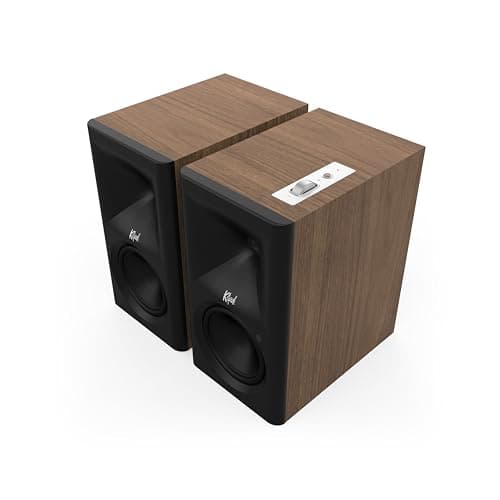
Top pick: Klipsch The Fives II
$1,399.9936% off
Most connected powered pair. #ad Affiliate link — we earn a commission at no extra cost to you.
The short answer
The best all-round alternative to a Bose system is the Klipsch The Fives II — because it is the only product here that replaces the whole job a Bose Smart Soundbar does and then does something the soundbar cannot. It takes HDMI-ARC/eARC with CEC, so the television remote still controls the volume; it has a built-in phono stage, so a turntable plugs straight in; and unlike the Bose it publishes a frequency response with a tolerance window attached, 50 Hz to 25 kHz at ± 3 dB. Its cost is stated plainly below, and it is an unusual one: Klipsch publishes no amplifier wattage for this model either, substituting a maximum SPL figure, which is exactly the kind of omission people leave Bose over. The budget pick is the Edifier R1280DB— 21 W plus 21 W RMS, optical and coaxial in, and the cheapest honest way to put a stereo pair where a single Bose box used to sit.
If what you are replacing is a pair of small Bose desktop speakers, it is the Kanto ORA. If it is the streaming half of a Bose smart speaker and you already own an amplifier, it is the WiiM Pro Plus. And if you want a passive pair for an amplifier you already have, it is the Polk Monitor XT15. The right answer depends entirely on which Bose job you are replacing, which is why this page is organized by job rather than by price.
Disclosure: we earn a commission if you buy through the links on this page, at no extra cost to you. It does not influence what we pick — our criteria are published and reproducible, so you can check our work. How we pick · Full disclosure
These picks are spec-and-price analyses, not listening tests. We have not heard this gear and we do not pretend to have: every figure below is sourced to the manufacturer and linked, and every price is live or not shown at all. Here are the rules we followed.
Quick picks
Ranked on the published criteria in How We Pick. Prices are live as of November 23, 2026. Tap any row for the full write-up.
- 7.8$899.99View on Amazon
$1,399.9936% off
- 7.4
- 8.8$199.20View on Amazon
$249.0020% off
- 7.4$149.00View on Amazon
$179.0017% off
- 7.2$139.99View on Amazon
$189.9926% off
| # | Product | Best for | Score | Price |
|---|---|---|---|---|
| 1 | Klipsch The Fives II Powered speakers with HDMI-ARC and a phono input, built to replace both a soundbar and a stereo system in one box pair. | Most connected powered pair | 7.8 | $899.99View on Amazon $1,399.9936% off |
| 2 | 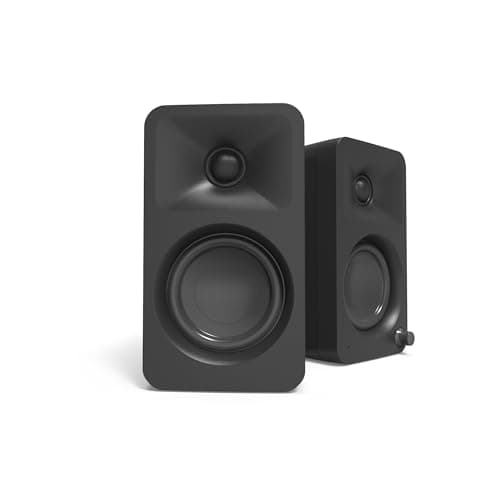 Kanto ORA Small powered reference speakers built for near-field listening, where the distance is short and the cabinet does not need to move much air. | Best for a desk | 7.4 | |
| 3 | 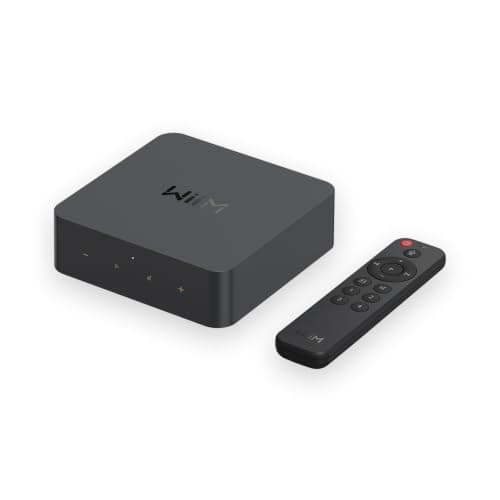 WiiM Pro Plus A streamer and DAC that publishes its line-out performance twice — once as the chip figure and once as the finished product — and is honest enough to print both. | Best streamer for an existing system | 8.8 | $199.20View on Amazon $249.0020% off |
| 4 | 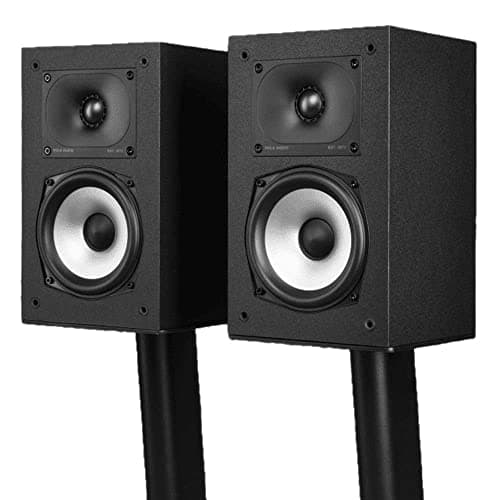 Polk Monitor XT15 48 Hz of published extension and a stated 30–150 W amplifier range, from a maker who tells you what to drive it with but not how they measured its sensitivity. | Best all-rounder under $200 | 7.4 | $149.00View on Amazon $179.0017% off |
| 5 | 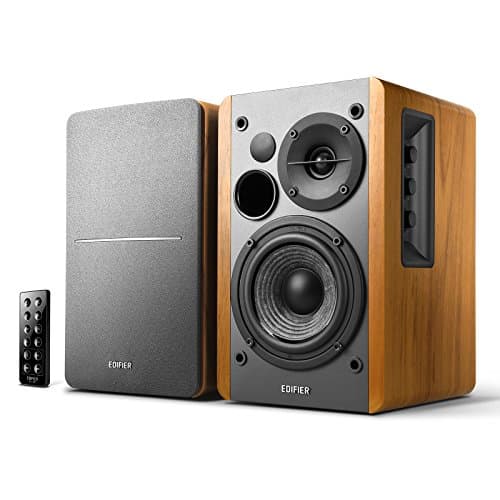 Edifier R1280DB The R1280T plus Bluetooth and optical/coaxial inputs — still no phono stage, but a far more useful set of sockets. | Best budget powered pair with digital inputs | 7.2 | $139.99View on Amazon $189.9926% off |
Bose is the most recognized name in consumer audio, and it got there by solving a problem this site mostly ignores: making a small box fill a room with no setup. That is a real engineering achievement and Bose’s own pages describe it plainly — speakers “engineered to deliver balanced, room-filling sound with easy wireless control,” a soundbar built around “exclusive Bose TrueSpace technology, and upward-firing transducers,” and an A.I. Dialogue Mode that “produces the clearest conversations.” Nothing on this page disputes any of that.
What this page does is answer the question people are actually typing. The reason “bose alternative” is a search at all is that Bose and the hi-fi world publish different specifications, so a reader who has started reading spec sheets runs out of things to compare. We read Bose’s own pages, wrote down exactly which rows they publish, and then picked five products by the job each one replaces.
What Bose publishes, exactly
We read four Bose pages on 2026-11-22: the Smart Soundbar product page, the soundbar comparison table, the speakers category and the SoundLink Home product page. Here is what the specification sections contain, as labels.
On the Smart Soundbar’s Technical Specifications section: Microphones (“2 Microphones for Voice”), Sound Options, Entire Product System (dimensions and weight), Product Material (“Metal, Plastic”), Wireless Connectivity, Bluetooth Version (5.0), Bluetooth Range (30 ft) and Bose App. On the soundbar comparison table: Audio Technology, Dolby Atmos, Bose TrueSpace, ADAPTiQ, A.I. Dialogue Mode, Multi-room Grouping, Connectivity, Built-in Voice Control, Suggested Room Size, Speakers, Dimensions, Weight and Materials. On the SoundLink Home: Stereo Pairing, Party Mode, Controls, water and dust resistance, Weight and Dimensions.
Two of those rows are genuinely interesting and nobody in hi-fi publishes them. Suggested Room Size— the Smart Soundbar is listed for a 10 ft × 12 ft room — is more directly actionable than most sensitivity figures, and we do arithmetic with it below. Speakers, as a count, tells you something real about the cabinet: 5 total speakers and a center tweeter on the Smart Soundbar, 9 on the Smart Ultra and the Lifestyle Ultra, 3 on the TV Speaker.
And here is what is absent from all four pages. No sensitivity in decibels. No nominal impedance. No frequency response, with or without a tolerance. No harmonic distortion. No amplifier power in watts. No crossover frequency. No driver sizes. Seven rows, none of them present on any Bose page we read.
That is not carelessness — it follows from how Bose sells. An integrated system whose DSP, amplifier, cabinet and calibration are designed together does not ask the buyer to match an amplifier to a speaker, and those seven specifications exist mainly to let you do that matching. Remove the matching problem and the rows stop earning their place. The trade is that you also lose the ability to compare the product against anything outside the brand, and that is what sends people to a search box.
Four of the five, on rows Bose does not publish at all
The WiiM Pro Plus is left out of this table on purpose — it is not a speaker, and putting a streamer in a woofer column would be dishonest table-building. Read the second column carefully, because it contains the one place where a product on this page does the same thing Bose does: Klipsch publishes no wattage for The Fives II and substitutes a maximum output figure of 103 dB at one meter from the stereo pair. We are not going to note an omission at Bose and then hide it in our own top pick.
Every figure below is the manufacturer’s own published value and links to the document we read it from. “Not published” means the manufacturer does not publish that figure; an em dash means we have no published figure for that model. Prices are live as of November 23, 2026.
Most connected powered pair
- Low-end limit, with its tolerance
- 50 Hz ± 3 dB
- Amplifier power
- Not published — max SPL given instead
- Driver
- 5.25 in Jet Cerametallic
Best for a desk
- Low-end limit, with its tolerance
- 70 Hz — no tolerance
- Amplifier power
- 50 W total RMS
- Driver
- 3 in paper
Best all-rounder under $200
- Low-end limit, with its tolerance
- 48 Hz — no tolerance
- Amplifier power
- 30–150 W needed (passive)
- Inputs
- —
Best budget powered pair with digital inputs
- Low-end limit, with its tolerance
- 55 Hz (US table; global site says 51 Hz)
- Amplifier power
- 21 W + 21 W RMS
- Driver
- 4 in
| Pick | Low-end limit, with its tolerance | Amplifier power | Driver | Inputs | Price |
|---|---|---|---|---|---|
| 1.Klipsch The Fives IIMost connected powered pair | 50 Hz ± 3 dB | Not published — max SPL given instead | 5.25 in Jet Cerametallic | HDMI-ARC/eARC + CEC, phono, USB-C, optical, BT | |
| 2.Kanto ORABest for a desk | 70 Hz — no tolerance | 50 W total RMS | 3 in paper | RCA, USB-C, Bluetooth 5.0 | |
| 4.Polk Monitor XT15Best all-rounder under $200 | 48 Hz — no tolerance | 30–150 W needed (passive) | 5.25 in bi-laminate paper | — | |
| 5.Edifier R1280DBBest budget powered pair with digital inputs | 55 Hz (US table; global site says 51 Hz) | 21 W + 21 W RMS | 4 in | Optical, coaxial, dual RCA, Bluetooth |
Prices as of November 23, 2026; every “Check Price” link goes to Amazon and earns us a commission at no extra cost to you. #ad
Bose’s own room-size figure, turned into a frequency
The most useful number on a Bose page is the one hi-fi makers never print, so it is worth taking seriously rather than treating as marketing. A 10 ft × 12 ft room has resonances set by its dimensions, and you can work out where the lowest ones sit.
f = c ÷ (2 × L) · c = speed of sound ≈ 343 m/s (1,125 ft/s) in air at 20 °C
Inputs
- Bose Smart Soundbar suggested room size: 10 ft × 12 ft (Bose soundbar comparison table, read 2026-11-22)
- Klipsch The Fives II low-end limit: 50 Hz at ± 3 dB (Klipsch spec sheet (PDF))
Result
Length: 1,125 ÷ (2 × 12) = 47 Hz(and 94, 141 Hz…)
Width: 1,125 ÷ (2 × 10) = 56 Hz(and 113, 169 Hz…)
In the room Bose itself nominates for this product, the two lowest axial resonances land at roughly 47 Hz and 56 Hz— and the published low-end limit of every compact speaker on this page sits in or just above that window: 48 Hz for the Polk, 50 Hz for the Klipsch, 55 Hz for the Edifier, 70 Hz for the Kanto. The practical consequence is that in a room this size, the bottom octave you actually hear is being shaped more by the walls than by which of these five you buy.
The five, by the Bose job each one replaces
1. Klipsch The Fives II — replacing a Bose soundbar or TV Speaker. A powered stereo pair rather than a bar, with HDMI-ARC/eARC and CEC so the TV remote controls the volume, an HDMI 2.1 pass-through output, optical, USB-C audio, Bluetooth 5.4, a dedicated analog input with a built-in phono stage, a subwoofer output, a 5.25-inch Jet Cerametallic woofer and a published 50 Hz to 25 kHz at ± 3 dB. It tops this page because it does the soundbar’s job and a stereo system’s job from one set of boxes. Against it: it is two cabinets rather than one, so it needs two places to sit and a cable between them; Klipsch publishes no wattage at all, offering 103 dB maximum output at one meter instead, which is a real documentation gap in our own top pick; there is no Atmos and no upward-firing driver, so if height effects are why you bought a Bose bar this is a downgrade on that axis; and it is the most expensive product here by a clear margin.
2. Kanto ORA — replacing a pair of small Bose desktop speakers. A genuinely desk-sized powered pair: 50 W total RMS published as a real breakdown (9 W RMS per tweeter, 16 W RMS per woofer, which is more detail than almost anyone gives at this size), a 3-inch paper woofer, RCA in, USB-C at 24-bit/96 kHz and Bluetooth 5.0. For a computer or a small desk it is the closest match in shape and intent to what Bose sells into that space. Against it: a 3-inch woofer and a published 70 Hz limit make it the least capable speaker here below about 100 Hz, which is the honest cost of the size; Kanto publishes that 70 Hz with no tolerance window, so it is not strictly comparable with the Klipsch’s ± 3 dB figure; and the inputs are line-level only, with no phono stage stated, so a turntable needs a separate box.
3. WiiM Pro Plus — replacing the streaming half of a Bose smart speaker. If what you valued was the app, the multi-room grouping and the convenience, and you already own an amplifier and speakers, this replaces that layer and nothing else. An AKM AK4493SEQ DAC, AirPlay 2, Google Cast, Spotify Connect, TIDAL Connect, DLNA and Roon Ready, Wi-Fi 5, Ethernet, a ten-band parametric EQ with room correction, and a line-out whose response WiiM publishes at ± 0.05 dB. Against it: it makes no sound on its own, which is the whole point and also the whole objection; WiiM publishes two different pairs of noise and distortion figures on the same page — 121 dB and −113 dB in its comparison table, which match the DAC chip’s own published numbers, and 120 dB A-weighted with 0.00032% in its line-out performance panel for the finished unit — and we print both rather than quoting the flattering one; and its optical input is stereo PCM only, so it is not a soundbar replacement. Our Sonos alternatives pagecovers this product’s other main use case.
4. Polk Monitor XT15 — replacing a passive Bose bookshelf pair. For the reader who already owns a receiver or an integrated amplifier and wants the speakers to be the only purchase. A 5.25-inch bi-laminate paper woofer, a 1-inch Terylene dome, a 2,200 Hz crossover, 48 Hz to 40 kHz and a published recommended amplification range of 30 to 150 W per channel — which is advice, and a row several competitors replace with a handling limit. It is also the lightest passive cabinet we cover at 9 lb each. Against it: Polk publishes its 86 dB sensitivity with no measurement condition at all, publishes no nominal impedance (only “compatible with 4- and 8-ohm outputs”), publishes no minimum impedance, and attaches no tolerance window to the 48 Hz figure. On the documentation axis this page is built around, Polk is the weakest of the five — which is worth saying out loud on a page about specification gaps.
5. Edifier R1280DB — the budget pick, replacing a single Bose box. 21 W plus 21 W RMS, a 4-inch woofer, optical and coaxial digital inputs plus dual RCA and Bluetooth, and a remote. It is the cheapest way to turn one Bose enclosure into an actual stereo pair, and stereo separation is the one thing a single box physically cannot do at any price. Against it: Edifier’s own regional sites disagree about the low-end figure, with the US specification table saying 55 Hz where the global site markets 51 Hz in body copy — we publish the US table figure and say so; no tolerance window is attached to either; no phono stage is stated; and 21 W per channel is the least power on this page, so it suits a desk or a bedroom rather than a living room.
Where a Bose product is still the right answer
Three cases, because an alternatives page that cannot name them is an advertisement.
If you want Dolby Atmos with height effects from one cabinet, nothing on this page does it. Bose publishes Dolby Atmos and upward-firing transducers on the Smart Soundbar and we rank no soundbar at all. The honest alternative is not on this page — it is a receiver and real speakers, which is a bigger project and a different budget. Our soundbar versus speakers comparison sets out that trade without a product pitch, and the Atmos placement guide shows what the full version involves.
If you want automated room calibration, Bose publishes ADAPTiQ on its upper soundbars and none of the five products here has an equivalent. The WiiM Pro Plus has room correction in software, but it corrects the signal going into an amplifier you own, which is not the same product experience.
And if you want one object, in one place, set up in five minutes, by someone who does not want to think about speaker placement — buy the Bose. Every pick on this page is at minimum two cabinets, two positions and a cable, and four of the five ask you to care where they sit. That is the actual trade, and it is not a small one.
Where this page sits in our speaker coverage
If the television is the whole reason you are shopping, go to our powered speakers for TV roundup instead — it ranks on HDMI and remote control rather than on brand substitution. If the budget is the constraint rather than the brand, powered speakers under $500 and the under-$1,000 bracket rank by price. And if it is the multi-room app you are replacing rather than the sound, our Sonos alternatives page is the closer match.
Every pick in detail
Every specification below links to the manufacturer document we read it from. Where a manufacturer does not publish a figure, we say so rather than estimating it.
Klipsch The Fives II
Most connected powered pairPowered speakers with HDMI-ARC and a phono input, built to replace both a soundbar and a stereo system in one box pair.
- integration
- 10/10
- upgrade path
- 4/10
- value for money
- 6/10
- ease of setup
- 9/10
- connectivity
- 10/10
| Specification | Published value | Source |
|---|---|---|
| Type | Powered monitor (pair) | Klipsch spec sheet (PDF) |
| Amplifier output | Not published — Klipsch publishes “Max Output: 103 dB (1 m, stereo pair)” instead of any wattage figure | Klipsch spec sheet (PDF) |
| Built-in phono stage | Yes — a dedicated analog input with a built-in phono stage | Klipsch product page |
| Frequency response | 50 Hz – 25 kHz ± 3 dB | Klipsch spec sheet (PDF) |
| Woofer | 5.25 in Jet Cerametallic | Klipsch spec sheet (PDF) |
| Inputs | HDMI-ARC/eARC with CEC, Bluetooth, RCA phono, RCA analog, USB-C audio, USB-A, optical digital | Klipsch spec sheet (PDF) |
| Outputs | Single RCA line-level output for a subwoofer; HDMI output (HDMI 2.1 pass-through, eARC) | Klipsch spec sheet (PDF) |
| Bluetooth | 5.4 — A2DP, SBC and AAC codecs | Klipsch spec sheet (PDF) |
| Dimensions / weight | 12.9 × 7.2 × 10.7 in (327 × 181 × 273 mm) each; primary 18.2 lb, secondary 15.5 lb | Klipsch spec sheet (PDF) |
Pros
- HDMI-ARC — works as a TV system as well as a stereo
- Built-in phono stage, so a turntable plugs straight in
- Genuinely large drivers for a powered pair
Cons
- By far the most expensive option here
- Klipsch publishes NO amplifier wattage for these — only a “max output 103 dB” figure. You cannot compare their power to anything else here, because there is no number to compare.
- Fixed amplification, so the electronics are the ceiling
Skip it if the TV is not part of this system — most of what you are paying for is the HDMI board.
Kanto ORA
Best for a deskPrice as of November 23, 2026. #ad
Small powered reference speakers built for near-field listening, where the distance is short and the cabinet does not need to move much air.
- integration
- 8/10
- upgrade path
- 4/10
- value for money
- 7/10
- ease of setup
- 9/10
- connectivity
- 9/10
| Specification | Published value | Source |
|---|---|---|
| Type | Powered (amplifier built in) | Kanto spec page |
| Amplifier output | 50 W total RMS (100 W peak); 9 W RMS per tweeter, 16 W RMS per woofer | Kanto spec page |
| Frequency response | 70 Hz – 22 kHz (no tolerance published) | Kanto spec page |
| Inputs | RCA line-level, USB-C (24-bit/96 kHz), Bluetooth 5.0 | Kanto spec page |
| Built-in phono stage | Not stated — inputs are line-level only, so assume none | Kanto spec page |
| Woofer | 3 in paper cone | Kanto spec page |
Pros
- Genuinely desk-sized
- USB-C input as well as analog
- Sub output for when the low end runs out
Cons
- Small drivers mean limited low end without a subwoofer
- No built-in phono stage
- Near-field by design
Skip it if this is a living-room system — these are built for a meter away, not four.
WiiM Pro Plus
Best streamer for an existing systemA streamer and DAC that publishes its line-out performance twice — once as the chip figure and once as the finished product — and is honest enough to print both.
- measured performance
- 9/10
- connectivity
- 8/10
- features
- 9/10
- value for money
- 10/10
- published data
- 8/10
| Specification | Published value | Source |
|---|---|---|
| DAC | AKM AK4493SEQ (ADC: TI Burr-Brown PCM1861) | WiiM spec comparison |
| Analog out SNR | 121 dB (WiiM's comparison table, the AKM chip figure) · 120 dB A-weighted (WiiM's own “line-out performance” figure for the finished unit) | WiiM spec comparison |
| Analog out THD+N | −113 dB / 0.00023% (comparison table) · 0.00032% / −110 dB at 1 kHz, 44.1k–192k (line-out performance panel) | WiiM spec comparison |
| Line-out frequency response | ± 0.05 dB | WiiM spec comparison |
| Outputs | 1 × RCA line-out · 1 × optical S/PDIF (192 kHz/24-bit) · 1 × coaxial (192 kHz/24-bit) | WiiM spec comparison |
| Inputs | Line-in (2 Vrms, digitized by the ADC at 192 kHz/24-bit) · optical S/PDIF in up to 192 kHz/24-bit, stereo PCM only (no Dolby Digital or DTS) | WiiM spec comparison |
| Network | Wi-Fi 5 (802.11 b/g/n/ac, 2.4 and 5 GHz) · 10/100 Mbps Ethernet · Bluetooth 5.0 | WiiM spec comparison |
| Protocols | AirPlay 2, Google Cast Audio, Spotify Connect, TIDAL Connect, Amazon Music Casting, DLNA, Qplay 2.0, Roon Ready | WiiM spec comparison |
| EQ / room correction | 10-band parametric EQ, 10-band graphic EQ, 24 presets, per-source EQ, room correction | WiiM FAQ |
| Output impedance | Not published | — |
Pros
- AKM AK4493SEQ DAC with a published line-out SNR of 120 dB A-weighted and ±0.05 dB response for the finished unit, not just the chip
- Coaxial AND optical outputs, so it feeds an existing external DAC bit-perfectly if you already own one
- Roon Ready, AirPlay 2, Chromecast, Spotify Connect and TIDAL Connect all supported at once
- 10-band parametric EQ and room correction included, which is a genuinely rare feature at this price
Cons
- No display of any kind — everything happens in the phone app
- The optical input accepts stereo PCM only; Dolby Digital and DTS are explicitly unsupported
- No phono input, so a turntable still needs a separate stage
- WiiM publishes no output impedance, which matters if you feed a low-input-impedance amplifier
Skip it if your amplifier already streams. Paying twice for the same function is the most common mistake in this category.
Polk Monitor XT15
Best all-rounder under $20048 Hz of published extension and a stated 30–150 W amplifier range, from a maker who tells you what to drive it with but not how they measured its sensitivity.
- specs
- 7/10
- sensitivity
- 6/10
- published data
- 6/10
- value for money
- 9/10
- bass extension
- 8/10
| Specification | Published value | Source |
|---|---|---|
| Sensitivity | 86 dB — Polk publishes NO measurement condition (no 2.83 V/1 m or 1 W/1 m qualifier) | Polk info sheet (PDF) |
| Impedance | “Compatible with 4- and 8-ohm outputs” — Polk publishes no nominal impedance value | Polk info sheet (PDF) |
| Minimum impedance | Not published | — |
| Frequency response | 48 Hz – 40 kHz (no tolerance published) | Polk info sheet (PDF) |
| Recommended amplification | 30–150 W per channel | Polk info sheet (PDF) |
| Woofer | 5.25 in bi-laminate paper | Polk info sheet (PDF) |
| Tweeter | 1 in Terylene dome | Polk info sheet (PDF) |
| Crossover | 2,200 Hz | Polk info sheet (PDF) |
| Weight (each) | 9 lb / 4.08 kg | Polk info sheet (PDF) |
Pros
- 48 Hz – 40 kHz published extension, the deepest bass figure in this bracket
- Polk publishes a recommended amplification range (30–150 W), which Klipsch and ELAC do not
- 1 in Terylene dome tweeter, the same driver family as the more expensive Signature Elite ES15
- Explicitly rated for Dolby Atmos height duty as well as stereo, so it does double service
Cons
- The 86 dB sensitivity is published with NO measurement condition, so it cannot honestly be compared to Klipsch's 2.83 V figures
- “Compatible with 4- and 8-ohm outputs” is not a nominal impedance, and no minimum is published
- 48 Hz – 40 kHz is quoted with no tolerance, which makes the endpoints unverifiable
- The 30 W lower bound rules out several of the smallest amplifiers we recommend
Skip it if your amplifier delivers under 30 W. Polk's own recommendation excludes it, and that is Polk's number, not ours.
Edifier R1280DB
Best budget powered pair with digital inputsThe R1280T plus Bluetooth and optical/coaxial inputs — still no phono stage, but a far more useful set of sockets.
- integration
- 7/10
- upgrade path
- 3/10
- value for money
- 9/10
- ease of setup
- 9/10
- connectivity
- 8/10
| Specification | Published value | Source |
|---|---|---|
| Type | Powered (amplifier built in) | Edifier spec page |
| Amplifier output | 21 W + 21 W RMS | Edifier spec page |
| Frequency response | 55 Hz – 20 kHz per the US spec table (Edifier's global site markets 51 Hz in body copy — the two disagree) | Edifier US spec page |
| Inputs | Optical, coaxial, Bluetooth, dual RCA | Edifier spec page |
| Built-in phono stage | Not stated either way by Edifier — assume none | Edifier spec page |
| Woofer | 4 in | Edifier spec page |
Pros
- Optical and coaxial digital inputs as well as analog
- Bluetooth
- Still inexpensive
Cons
- NO built-in phono stage
- Same modest drivers as the R1280T
- Bluetooth codec support is basic
Skip it if your turntable has no phono stage of its own.
Frequently asked questions
What is the best alternative to Bose speakers?
Why is it hard to compare Bose speakers with hi-fi speakers?
Does Bose publish any specification the hi-fi brands do not?
Is a stereo pair really better than one Bose box?
Have you tested these against a Bose system?
Read next
The Best Powered Speakers for a TV
Four ways to put stereo speakers on a television, ranked by connection: HDMI eARC with CEC, two optical inputs, one optical input, or HDMI ARC into an amplifier for passive speakers.
The Best Powered Speakers Under $500
Five active pairs under $500, ranked on published amplifier power and its measurement condition — including the only maker here citing 16 CFR 432.3.
Sonos Alternatives
Five alternatives to Sonos for multiroom streaming — matched on the Port's published feature set, and on the audio figures Sonos does not publish for it.
The Best Speakers Under $1,000
Six speakers inside a $1,000 ceiling, ranked on published data rather than adjectives — including the only one here that states its harmonic distortion, and the three that state whether you are buying a pair or a single cabinet.

Soundbar vs Speakers
What a soundbar can and cannot physically do, and the honest case for each format.
The Best Speakers Under $200
The entry band, ranked across all four shapes it covers: a bookshelf pair with a real amplifier recommendation, a single 94 dB tower, a powered pair with optical and Bluetooth, and the cheapest complete stereo system we stock.
Sources
Every specification on this page was read from one of these documents. If one of them has changed, or we have made an error, tell us — corrections are logged and dated per our editorial policy.
- Bose Smart Soundbar — Technical Specifications (read 2026-11-22)
- Bose soundbar comparison table — suggested room size, speaker count
- Bose speakers category listing
- Bose SoundLink Home — published rows
- Klipsch The Fives II spec sheet (PDF)
- Kanto ORA specifications
- WiiM Pro Plus specifications
- Polk Monitor XT15 / XT20 / XT90 info sheet (PDF)
- Edifier R1280DB US specifications