The Best Home Theater System Under $1,000
Four boxes, one total, recomputed every time this page loads. The budget ceiling is real, and so is what it costs you: at today's prices $1,000 buys a 3.1 system with Dolby Atmos decoding and nothing to decode it onto.

The short answer
Buy the Yamaha RX300A, a pair of Polk Monitor XT15s, the Klipsch R-52C center and the Polk PSW10 subwoofer. That is a 3.1 system with Dolby Atmos decoding, and at the live prices in the table below it lands under $1,000 with change. It is for someone furnishing a living room from nothing who wants the dialogue anchored and the bottom octave present. The thing the ceiling takes away is the pair of surround speakers — not the subwoofer, and not the center. If you can only have four boxes, these are the four.
Disclosure: we earn a commission if you buy through the links on this page, at no extra cost to you. It does not influence what we pick — our criteria are published and reproducible, so you can check our work. How we pick · Full disclosure
These picks are spec-and-price analyses, not listening tests. We have not heard this gear and we do not pretend to have: every figure below is sourced to the manufacturer and linked, and every price is live or not shown at all. Here are the rules we followed.
Quick picks
Ranked on the published criteria in How We Pick. Prices are live as of October 10, 2026. Tap any row for the full write-up.
- 7.6$379.99View on Amazon
$399.955% off
- 7.4$149.00View on Amazon
$179.0017% off
- 7.6$139.99View on Amazon
$149.997% off
- 6.0
- 7.0
| # | Product | Best for | Score | Price |
|---|---|---|---|---|
| 1 | 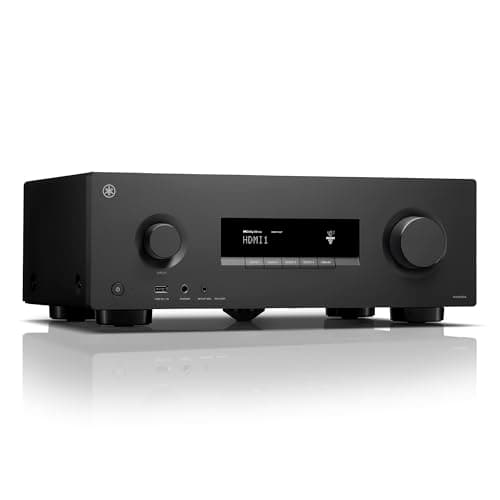 Yamaha RX300A The first receiver in this bracket to put Dolby Atmos and a full-band, two-channels-driven power rating on the same specification table — and it still prints a 145-watt burst figure one line away from the real one. | Cheapest Atmos with a full-band power rating | 7.6 | $379.99View on Amazon $399.955% off |
| 2 | 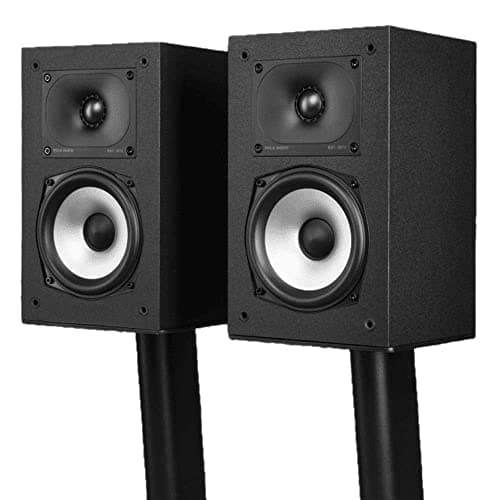 Polk Monitor XT15 48 Hz of published extension and a stated 30–150 W amplifier range, from a maker who tells you what to drive it with but not how they measured its sensitivity. | Best all-rounder under $200 | 7.4 | $149.00View on Amazon $179.0017% off |
| 3 | 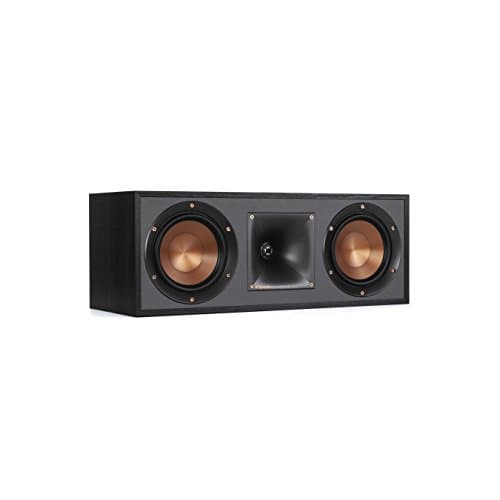 Klipsch R-52C A sealed dual-woofer center with a published 95 dB sensitivity, timbre-matched to the R-41M and R-51M so dialogue does not change character as it pans across the front. | Best center channel | 7.6 | $139.99View on Amazon $149.997% off |
| 4 | 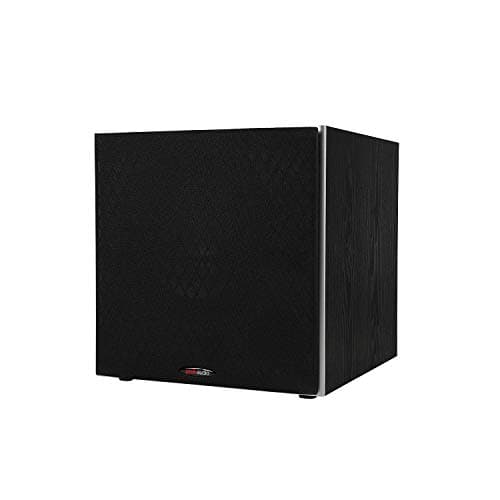 Polk Audio PSW10 The cheapest way into a real .1 channel, and the one where Polk's own page argues with itself — the marketing says 35 Hz, the specification table says the −3 dB point is 40 Hz. | Best for a small room | 6.0 | |
| 5 | 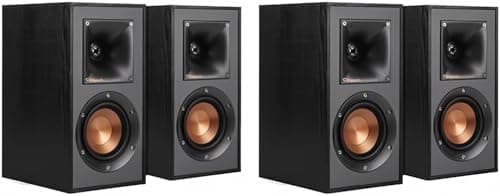 Klipsch R-41M A 4-inch two-way with a published 90 dB sensitivity, which means it goes loud on an amplifier that would embarrass most of its competition. | Best for a very small amplifier | 7.0 |
Every other page on this site answers one category at a time. This one answers the question those pages leave on the table: if the whole budget is $1,000 and the room has nothing in it, what comes home? The answer has to be a total, and a total is the one number we are not allowed to type. So it is computed below from the same live price layer every buy button on this site reads, every time the page is requested.
The build, and the one thing it gives up
Four boxes: a receiver, a front pair, a center channel and a subwoofer. That is a 3.1 system. The receiver has five amplifier channels — Yamaha publishes the RX300A as 5.2 — so two of them sit unused until the budget stretches. That is the honest shape of this bracket, and it is worth being blunt about why: the surround pair is the cheapest-sounding place to save money and the first place a reader is tempted to spend it, because “5.1” is on every box in the shop. A 3.1 system with a real center and a real subwoofer beats a 5.1 system assembled from six speakers that each cost a sixth as much.
- Yamaha RX300A$379.99
- Polk Monitor XT15$149.00
- Klipsch R-52C$139.99
- Polk Audio PSW10$249.00
Total: $917.98
That is $82.02 under the $1,000 ceiling.
The receiver: 70 watts, and the number printed next to it
Yamaha publishes two power figures for the RX300A on the same specification line. 70 Winto 8 Ω, 20 Hz – 20 kHz, 0.09% THD, two channels driven — a full-bandwidth rating with its conditions attached. And 145 Winto 6 Ω at 1 kHz, 10% THD, one channel driven. The second number is more than twice the first and it is the one that travels. Ten percent distortion at a single frequency with one channel working is a burst measurement, not a listening rating. We publish the 70 W.
The RX300A is here rather than the Denon AVR-S570BT for one reason: it decodes Dolby Atmos and the Denon does not. Denon names Dolby Digital, Dolby TrueHD and DTS-HD for that model and names Atmos nowhere on the product page. If height channels are ever going to matter in this room, starting with a receiver that cannot decode them is a dead end. What the Yamaha gives up in exchange: DTS:X (Yamaha lists it only in the RX500A column), any network streaming at all (Bluetooth 5.3 is the only wireless input), AM radio, and a named room-correction system — Yamaha lists “Room Correction” with a microphone in the box but does not call it YPAO for this model, where it names YPAO on the cheaper RX-V385. Our under-$500 receiver roundup ranks all three of these against each other on power conditions alone.
There is also no phono input. Neither the RX300A nor the Denon publishes one, which matters on a site called Valve & Vinyl: if a turntable is going into this room, it needs a separate phono stage, and that is money this budget does not have. Plan it as a second purchase, not a free one.
The three speakers, on the four figures that matter here
Every figure below is the manufacturer’s own published value and links to the document we read it from. “Not published” means the manufacturer does not publish that figure; an em dash means we have no published figure for that model. Prices are live as of October 10, 2026.
Best all-rounder under $200
- Sensitivity
- 86 dB (no condition)
- Low-end limit
- 48 Hz (no tolerance)
- Crossover
- 2,200 Hz
- Driver
- 5.25 in paper
Best center channel
- Sensitivity
- 95 dB (2.83 V / 1 m)
- Low-end limit
- 89 Hz ± 3 dB
- Crossover
- 1,630 Hz
- Driver
- Dual 5.25 in
Best for a very small amplifier
- Sensitivity
- 90 dB (2.83 V / 1 m)
- Low-end limit
- 68 Hz ± 3 dB
- Crossover
- 1,730 Hz
- Driver
- Single 4 in
| Pick | Sensitivity | Low-end limit | Crossover | Driver | Price |
|---|---|---|---|---|---|
| 1.Polk Monitor XT15Best all-rounder under $200 | 86 dB (no condition) | 48 Hz (no tolerance) | 2,200 Hz | 5.25 in paper | |
| 2.Klipsch R-52CBest center channel | 95 dB (2.83 V / 1 m) | 89 Hz ± 3 dB | 1,630 Hz | Dual 5.25 in | |
| 3.Klipsch R-41MBest for a very small amplifier | 90 dB (2.83 V / 1 m) | 68 Hz ± 3 dB | 1,730 Hz | Single 4 in |
Prices as of October 10, 2026; every “Check Price” link goes to Amazon and earns us a commission at no extra cost to you. #ad
Why the center is a Klipsch and the fronts are a Polk
Because the R-52C is the only dedicated center channel this site covers, and a 3.1 system is a center channel with two speakers either side of it. That leaves a real cost, and here it is in numbers rather than adjectives. The Klipsch center crosses over at 1,630 Hzinto a 1 in aluminum tweeter on a 90° × 90° Tractrix horn. The Polk XT15 crosses at 2,200 Hz into a 1 in Terylene dome. That is a 570 Hz difference in where the handover happens, using two different tweeter technologies, in the band where voices live. A pan from the left speaker to the center crosses that seam.
The timbre-matched alternative is a Klipsch front pair — the R-51M crosses at 1,660 Hz, 30 Hz from the center, with the same tweeter on the same horn. It costs more than the Polk pair, and adding its price plus a matched Klipsch subwoofer to the receiver puts the build over the ceiling, which is why it is not the recommendation on a page with $1,000 in the title. If the ceiling is soft, buy the Klipsch pair and read our matched-family roundup instead of this page.
The crossover setting nobody tells you to change
This is the single most useful thing on this page, and it falls straight out of the published figures. The center channel in this build is the least extended speaker in it: Klipsch publishes 89 Hz – 21 kHz ± 3 dB for the R-52C, against 48 Hz for the Polk fronts. Most people set one crossover for everything, at 80 Hz, because 80 Hz is what the forums say.
unsupported band = center's published −3 dB point − crossover setting
Inputs
- Klipsch R-52C frequency response: 89 Hz – 21 kHz ± 3 dB (Klipsch spec sheet (PDF))
- Polk Monitor XT15 frequency response: 48 Hz – 40 kHz (no tolerance published) (Polk info sheet (PDF))
- Klipsch R-52C enclosure: MDF, SEALED (the R-41M and R-51M are both ported) (Klipsch spec sheet (PDF))
Result
The subwoofer, and why it is not the thing to cut
The Polk PSW10 is a 10 in front-ported cabinet. Polk’s specification table says 40 Hz – 160 Hz at −3 dB, while the marketing copy on the same page says “down to 35 Hz” — we publish the table. Its amplifier is rated 100 W peak with no continuous figure published at all, which is the weakest piece of documentation in this build. It is here because it is the cheapest subwoofer we cover that takes speaker-level inputs as well as line level, which keeps it usable later if this receiver is ever replaced by a stereo amplifier with no subwoofer output.
Cutting the subwoofer to afford surround speakers is the trade most people make and it is the wrong one. The front pair is −3 dB somewhere around 48 Hz on Polk’s own figure and the center is 3 dB down at 89 Hz; without a subwoofer, a 3.1 system has nothing at all under about 50 Hz, which is most of what a film’s low-frequency effects channel contains. Two small surround speakers do not replace that. Our sizing guide explains why the cone diameter on the front of the box tells you less about this than the cabinet volume does.
What to add first, and in what order
The fifth pick above is the Klipsch R-41M, and it is ranked fifth because it is the upgrade, not part of the build. It is a 4 in two-way, 90 dB sensitive, 68 Hz ± 3 dB, rear-ported, 7 lb each — small enough to sit on a shelf behind the seats, which is all a surround speaker has to do. When the budget allows, that pair takes this system from 3.1 to 5.1 and the receiver already has the channels for it.
After that, in order: a phono stage if there is a turntable; then treatment for the side walls, which costs less than any speaker here and does more than replacing any one of them; then height channels, which need a receiver with more than five amplifier channels, so that is a receiver swap rather than a speaker purchase. Our cost guide walks the same ladder from the other end.
What we did not do
We did not listen to this system. Nobody here assembled these four boxes in a room and formed an opinion about how they sound together, and we are not going to pretend otherwise. What this page is: four products from our registry, their manufacturers’ own published figures, two pieces of arithmetic you can check against those figures, and a live total. The judgments — that Atmos decoding is worth more than DTS:X at this price, that a center beats a surround pair, that the subwoofer is not the place to save — are editorial, they are ours, and they are stated as such.
Every pick in detail
Every specification below links to the manufacturer document we read it from. Where a manufacturer does not publish a figure, we say so rather than estimating it.
Yamaha RX300A
Cheapest Atmos with a full-band power ratingThe first receiver in this bracket to put Dolby Atmos and a full-band, two-channels-driven power rating on the same specification table — and it still prints a 145-watt burst figure one line away from the real one.
- published data
- 8/10
- power
- 7/10
- features
- 8/10
- connectivity
- 7/10
- value for money
- 8/10
| Specification | Published value | Source |
|---|---|---|
| Channels | 5.2 — five amplifier channels, 5.1 decodable | Yamaha spec page |
| Rated output power | 70 W (8 Ω, 20 Hz – 20 kHz, 0.09% THD, 2 ch driven) | Yamaha spec page |
| Second published power figure | 145 W (6 Ω, 1 kHz, 10% THD, 1 ch driven) — printed on the same line as the 70 W. Ten percent distortion, one channel, one frequency: it is a burst figure, not a listening rating. | Yamaha spec page |
| Dolby Atmos / DTS:X | Atmos yes / DTS:X no. Yamaha's decoder list for this model is Dolby Atmos, Dolby TrueHD, Dolby Digital Plus, Dolby Digital and DTS — DTS:X appears only in the RX500A column. The overview page separately claims “DTS Virtual:X”, which is not in the specification table. | Yamaha spec page |
| Room correction | Listed only as “Room Correction”, with a setup microphone and stand in the box. Yamaha does not name YPAO for this model anywhere on its product or specification page — the RX-V385 one bracket down is named YPAO. | Yamaha spec page |
| HDMI in / out | 4 in / 1 out — HDMI 2.1, eARC/ARC, VRR, ALLM, QMS, HDCP 2.3 | Yamaha spec page |
| Video passthrough | 8K/60 and 4K/120; Dolby Vision, HDR10+ and Hybrid Log-Gamma | Yamaha spec page |
| Pre-outs | Two subwoofer pre-outs. No main-channel pre-outs. | Yamaha spec page |
| Phono input | None — Yamaha's connection list is two analog RCA inputs, one optical, one coaxial and one USB, with no phono row | Yamaha spec page |
| Network streaming | None — Yamaha publishes a dash against Wi-Fi, Ethernet and every streaming service for this model. Bluetooth 5.3 with Multipoint is the only wireless input. | Yamaha spec page |
| Tuner | FM yes, AM no | Yamaha spec page |
| Dimensions / weight | 434 × 157 × 319 mm (17-1/8 × 6-1/8 × 12-1/2 in); 7.6 kg / 16.8 lb | Yamaha spec page |
| Power consumption | 260 W in use, ≤ 0.3 W standby | Yamaha spec page |
Pros
- 70 W rated 20 Hz – 20 kHz at 0.09% THD with two channels driven — the comparable condition, published
- Dolby Atmos with in-ceiling, up-firing or virtual height layouts, which nothing else under $500 here offers
- HDMI 2.1 throughout: 8K/60, 4K/120, VRR, ALLM and eARC on four inputs
- Two subwoofer pre-outs and bi-amp capability at the bottom of Yamaha's range
Cons
- No DTS:X — Yamaha's decoder list for this model stops at DTS, and DTS:X is the RX500A's
- Yamaha's overview page claims DTS Virtual:X, which does not appear in its own specification table
- The calibration system is listed only as “Room Correction”; Yamaha does not name YPAO for this model
- No Wi-Fi, no Ethernet and no streaming services — Bluetooth is the only wireless input
- No phono input, so a turntable needs its own phono stage
Skip it if you want DTS:X, network streaming, or seven channels. All three start at the RX500A, one model up.
Polk Monitor XT15
Best all-rounder under $20048 Hz of published extension and a stated 30–150 W amplifier range, from a maker who tells you what to drive it with but not how they measured its sensitivity.
- specs
- 7/10
- sensitivity
- 6/10
- published data
- 6/10
- value for money
- 9/10
- bass extension
- 8/10
| Specification | Published value | Source |
|---|---|---|
| Sensitivity | 86 dB — Polk publishes NO measurement condition (no 2.83 V/1 m or 1 W/1 m qualifier) | Polk info sheet (PDF) |
| Impedance | “Compatible with 4- and 8-ohm outputs” — Polk publishes no nominal impedance value | Polk info sheet (PDF) |
| Minimum impedance | Not published | — |
| Frequency response | 48 Hz – 40 kHz (no tolerance published) | Polk info sheet (PDF) |
| Recommended amplification | 30–150 W per channel | Polk info sheet (PDF) |
| Woofer | 5.25 in bi-laminate paper | Polk info sheet (PDF) |
| Tweeter | 1 in Terylene dome | Polk info sheet (PDF) |
| Crossover | 2,200 Hz | Polk info sheet (PDF) |
| Weight (each) | 9 lb / 4.08 kg | Polk info sheet (PDF) |
Pros
- 48 Hz – 40 kHz published extension, the deepest bass figure in this bracket
- Polk publishes a recommended amplification range (30–150 W), which Klipsch and ELAC do not
- 1 in Terylene dome tweeter, the same driver family as the more expensive Signature Elite ES15
- Explicitly rated for Dolby Atmos height duty as well as stereo, so it does double service
Cons
- The 86 dB sensitivity is published with NO measurement condition, so it cannot honestly be compared to Klipsch's 2.83 V figures
- “Compatible with 4- and 8-ohm outputs” is not a nominal impedance, and no minimum is published
- 48 Hz – 40 kHz is quoted with no tolerance, which makes the endpoints unverifiable
- The 30 W lower bound rules out several of the smallest amplifiers we recommend
Skip it if your amplifier delivers under 30 W. Polk's own recommendation excludes it, and that is Polk's number, not ours.
Klipsch R-52C
Best center channelA sealed dual-woofer center with a published 95 dB sensitivity, timbre-matched to the R-41M and R-51M so dialogue does not change character as it pans across the front.
- specs
- 7/10
- sensitivity
- 10/10
- published data
- 6/10
- value for money
- 9/10
- bass extension
- 2/10
| Specification | Published value | Source |
|---|---|---|
| Sensitivity | 95 dB (2.83 V / 1 m) — the highest figure of any center channel on this site | Klipsch spec sheet (PDF) |
| Impedance | 8 Ω “compatible” (Klipsch's wording) | Klipsch spec sheet (PDF) |
| Minimum impedance | Not published | — |
| Frequency response | 89 Hz – 21 kHz ± 3 dB | Klipsch spec sheet (PDF) |
| Power handling | 100 W continuous / 400 W peak | Klipsch spec sheet (PDF) |
| Woofers | Dual 5.25 in spun-copper IMG | Klipsch spec sheet (PDF) |
| Tweeter | 1 in aluminum LTS on a 90° × 90° Tractrix horn | Klipsch spec sheet (PDF) |
| Crossover | 1,630 Hz | Klipsch spec sheet (PDF) |
| Enclosure | MDF, SEALED (the R-41M and R-51M are both ported) | Klipsch spec sheet (PDF) |
| Weight | 13.5 lb / 6.12 kg | Klipsch spec sheet (PDF) |
Pros
- 95 dB at 2.83 V/1 m — the highest published sensitivity of any center channel on this site
- Sealed enclosure, unlike the ported R-41M and R-51M, so it can sit inside a cabinet without port chuffing
- Same 1 in LTS tweeter and Tractrix horn as the R-series bookshelves, which is what timbre matching actually means
- 100 W continuous handling gives a receiver plenty of headroom for dialogue peaks
Cons
- 89 Hz low-end limit — a center channel this shallow depends entirely on the receiver's bass management
- 18.75 in wide, which will not fit under every television
- “8 ohms compatible” again, with no minimum impedance published
- Only useful in a multichannel system; it does nothing for a stereo setup
- Previous generation — Klipsch's own page for it now points buyers to the newer Reference R-50C
Skip it if you are building a stereo system. A center channel has no role in two-channel listening and adding one is not an upgrade.
Polk Audio PSW10
Best for a small roomPrice as of October 10, 2026. #ad
The cheapest way into a real .1 channel, and the one where Polk's own page argues with itself — the marketing says 35 Hz, the specification table says the −3 dB point is 40 Hz.
- extension
- 3/10
- published data
- 7/10
- room control
- 3/10
- value for money
- 8/10
- build quality
- 5/10
| Specification | Published value | Source |
|---|---|---|
| Frequency response (−3 dB) | 40 Hz → 160 Hz. Polk's own marketing copy on the same page says “down to 35 Hz”; the specification table says 40 Hz. We publish the table. | Polk product page |
| Amplifier power | 100 W peak, class D. Polk publishes no continuous rating for this model — the 100 W is a peak figure. | Polk product page |
| Amplifier bandwidth / distortion | 40 Hz – 200 Hz, < 1% distortion | Polk product page |
| Driver | 10 in Dynamic Balance polymer composite cone | Polk product page |
| Enclosure type | Vented via front-panel flared port | Polk product page |
| Inputs | Stereo line level (2 × RCA) plus speaker level (2 pairs of gold-plated spring terminals) | Polk product page |
| Dimensions | 14.375 in H × 14 in W × 16.125 in D (36.5 × 35.6 × 41 cm) | Polk product page |
| Weight | 26 lb (11.8 kg) | Polk product page |
Pros
- Polk publishes proper −3 dB limits (40 Hz → 160 Hz), which most sub makers at this price do not
- Line level AND speaker level inputs, so it works with almost anything
- 26 lb and the smallest 10-inch box here — it disappears in an apartment
- Amplifier bandwidth and distortion (< 1%) are published
Cons
- 40 Hz is a genuinely limited bottom end for film — the LFE track goes an octave below that
- Polk's own marketing on the same page claims 35 Hz against its own spec table's 40 Hz
- 100 W is a PEAK figure; Polk publishes no continuous rating for this model
- No DSP, no app, no room correction
Skip it if your room is bigger than a bedroom or you watch action films at volume. This is the entry point, and it is honest about being one.
Klipsch R-41M
Best for a very small amplifierPrice as of October 10, 2026. #ad
A 4-inch two-way with a published 90 dB sensitivity, which means it goes loud on an amplifier that would embarrass most of its competition.
- specs
- 6/10
- sensitivity
- 9/10
- published data
- 6/10
- value for money
- 9/10
- bass extension
- 3/10
| Specification | Published value | Source |
|---|---|---|
| Sensitivity | 90 dB (2.83 V / 1 m) | Klipsch spec sheet (PDF) |
| Impedance | 8 Ω “compatible” (Klipsch's wording — not a measured nominal figure) | Klipsch spec sheet (PDF) |
| Minimum impedance | Not published | — |
| Frequency response | 68 Hz – 21 kHz ± 3 dB | Klipsch spec sheet (PDF) |
| Power handling | 50 W continuous / 200 W peak (a handling limit, not a recommended amplifier range) | Klipsch spec sheet (PDF) |
| Woofer | Single 4 in spun-copper IMG | Klipsch spec sheet (PDF) |
| Tweeter | 1 in aluminum LTS on a 90° × 90° Tractrix horn | Klipsch spec sheet (PDF) |
| Crossover | 1,730 Hz | Klipsch spec sheet (PDF) |
| Enclosure | MDF, bass-reflex via rear-firing ports | Klipsch spec sheet (PDF) |
| Weight (each) | 7 lb / 3.2 kg | Klipsch spec sheet (PDF) |
Pros
- 90 dB at 2.83 V/1 m — seven decibels more sensitive than the Micca RB42, which is about five times less amplifier for the same volume
- Klipsch publishes a real ±3 dB tolerance on the frequency response
- 7 lb each and 11.3 in tall: the smallest cabinet here by a clear margin
- Timbre-matched to the R-51M and R-52C if you later build a surround system around it
Cons
- 68 Hz is the shallowest bass extension of any speaker on this site
- “8 ohms compatible” is not a measured nominal impedance, and no minimum impedance is published
- Rear-ported, so it needs clearance behind it — an actual bookshelf will change its bass
- Klipsch publishes power handling, not a recommended amplifier range; those are different specs
- Amazon no longer lists a single pair: the live listing is a two-pair, four-speaker pack, so the price shown here buys four speakers
- Previous generation — Klipsch's own page for it now points buyers to the newer Reference R-40M
Skip it if you listen to anything with real low end and have no subwoofer. 68 Hz means the bottom octave and a half simply is not there.
Frequently asked questions
Can you really build a home theater for under $1,000?
Should I buy a 5.1 speaker package instead of 3.1 separates?
Why is the center channel a different brand from the front speakers?
What crossover should I set for this system?
Does this system do Dolby Atmos?
Can I plug a turntable into this?
Have you tested this system?
Read next
The Best AV Receivers Under $500
Three receivers under $500, compared on the condition attached to each power figure — and all three come out at the same seventy watts.
Do I Need a Center Channel Speaker?
Seating width decides it. Plus the finding nobody mentions: the center channel is the least extended speaker in the family it belongs to, so its crossover needs setting by hand.
What Size Subwoofer Do You Need for a Home Theater?
Cone diameter is the wrong number. Cabinet volume and the stated measurement condition decide how low a subwoofer actually goes — with the cubic-foot arithmetic to prove it.
The Best Home Theater Speakers
A timbre-matched 5.1 built from published specs — fronts, center, surrounds and a subwoofer that actually connects.
How Much Does a Home Theater Cost?
Every line item in a 5.1 build, in the order you have to buy them — and the three costs that are always left out of the estimate.
How to Set Speaker Levels in a Home Theater
The order of operations for channel levels and distances, what the automatic run decides for you, and the three settings to verify afterwards.
Sources
Every specification on this page was read from one of these documents. If one of them has changed, or we have made an error, tell us — corrections are logged and dated per our editorial policy.
- Yamaha RX300A — specifications (power ratings, decoder list, connections)
- Denon AVR-S570BT — product page (decoder list, room correction)
- Polk Monitor XT15 / XT20 / XT90 — info sheet (PDF)
- Klipsch R-52C — spec sheet (PDF)
- Klipsch R-41M — spec sheet (PDF)
- Polk Audio PSW10 — product page (response table, amplifier rating, inputs)