Headphone Impedance and How Much Power You Need
Manufacturers publish headphone power into 32 ohms because it is the flattering figure. The number that decides whether your headphones work is the one into 300 or 600.
Disclosure: we earn a commission if you buy through the links on this page, at no extra cost to you. It does not influence what we pick — our criteria are published and reproducible, so you can check our work. How we pick · Full disclosure
These picks are spec-and-price analyses, not listening tests. We have not heard this gear and we do not pretend to have: every figure below is sourced to the manufacturer and linked, and every price is live or not shown at all. Here are the rules we followed.
Quick picks
Ranked on the published criteria in How We Pick. Prices are live as of October 15, 2026. Tap any row for the full write-up.
- 8.8
- 7.8
- 7.0
- 8.4
| # | Product | Best for | Score | Price |
|---|---|---|---|---|
| 1 | 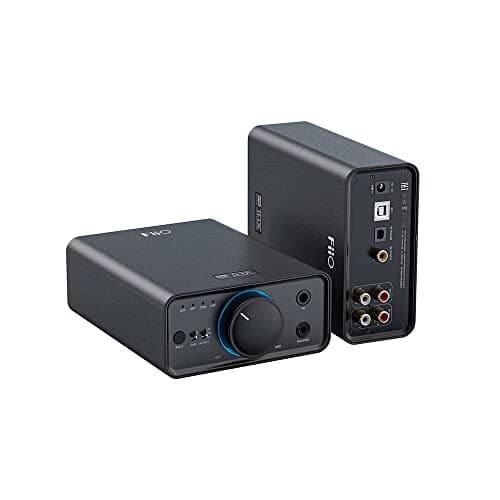 FiiO K7 A DAC with a genuinely powerful balanced headphone amplifier attached, which is the reason to choose it over a DAC-only box. | Best DAC and headphone amp combo | 8.8 | |
| 2 | 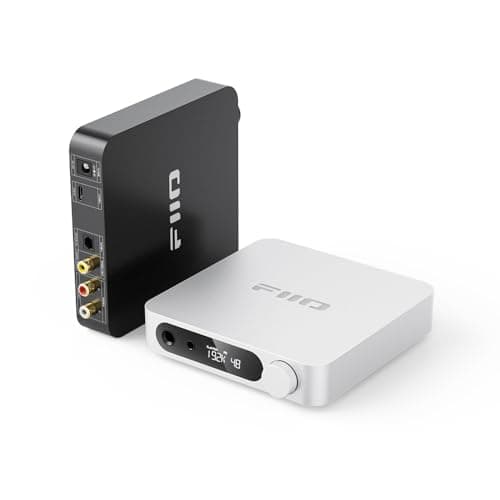 FiiO K11 The K7's cheaper relative — less headphone power, the same basic idea, at a price that undercuts most DAC-only boxes. | Best budget DAC and amp | 7.8 | |
| 3 | 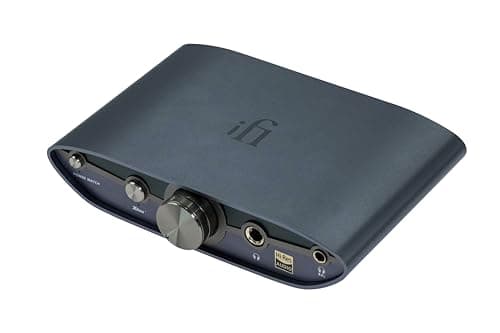 iFi ZEN DAC 3 A USB-powered DAC and headphone amp with balanced output, aimed at a desk where one cable is the whole install. | Best USB-powered option | 7.0 | |
| 4 | 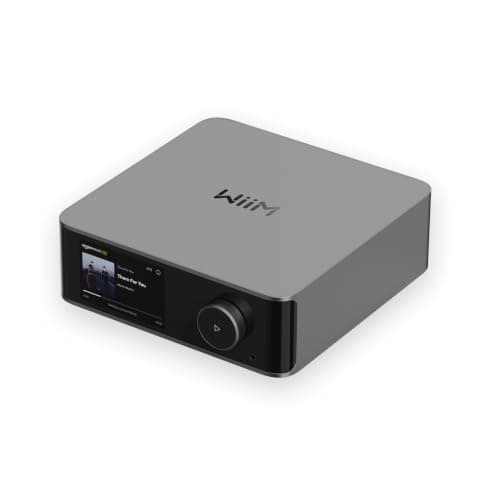 WiiM Ultra The only streamer here with a phono input and a touchscreen — and the only one whose maker publishes nothing at all about how that phono stage performs. | Best for a turntable and a streamer in one box | 8.4 |
Every headphone amplifier publishes its power into 32 ohms, because that is where the number looks biggest. Plug in a 300-ohm or 600-ohm headphone and the published figure falls by an order of magnitude — and the manufacturers who publish that second figure are telling you something the ones who do not are hiding.
The published figures, side by side
| Amplifier | Into 32 Ω | Into 300 Ω | Into 600 Ω |
|---|---|---|---|
| FiiO K7, 6.35 mm single-ended | ≥ 1,220 mW | ≥ 140 mW | Not published |
| FiiO K7, 4.4 mm balanced | ≥ 2,000 mW | Not published | Not published |
| FiiO K11, 6.35 mm | ≥ 520 mW | ≥ 60 mW | Not published |
| FiiO K11, 4.4 mm balanced | ≥ 1,400 mW | ≥ 250 mW | Not published |
| iFi ZEN DAC 3, 6.35 mm | > 210 mW | Not published | > 18 mW |
| iFi ZEN DAC 3, 4.4 mm balanced | > 390 mW at 64 Ω | Not published | Not published |
All FiiO figures are published at THD+N below 1%, which is the condition — and a maximum-output condition rather than a listening one. iFi is the only maker here that publishes a 600-ohm figure at all, and it is the one that answers the “will this drive my old studio headphones” question.
Why the number collapses
An amplifier delivers power into a load, and how much depends on whether it runs out of voltage or out of current first. Into a low impedance it needs current; into a high one it needs voltage. Desktop amplifiers run from modest supply rails, so voltage is what they run out of.
V = √(P × R) · I = √(P ÷ R)
Inputs
- FiiO K7 published output, 32 Ω single-ended: ≥ 1,220 mW (THD+N < 1%) (FiiO parameters page)
- FiiO K7 published output, 300 Ω single-ended: ≥ 140 mW (THD+N < 1%) (FiiO parameters page)
- iFi ZEN DAC 3 published output, 600 Ω single-ended: > 18 mW (iFi spec page)
Result
K7 at 32 Ω: V = √(1.22 × 32) = 6.2 V, I = 195 mA
K7 at 300 Ω: V = √(0.14 × 300) = 6.5 V, I = 22 mA
ZEN DAC 3 at 600 Ω: V = √(0.018 × 600) = 3.3 V, I = 5.5 mA
Look at the K7’s two rows: the power falls almost ninefold and the voltage barely moves. The amplifier is voltage-limited at about 6.2–6.5 V, and once you know that, both published power figures follow from one limit. This is why a high-impedance headphone gets less power — not because the amplifier is weak, but because power into a high resistance needs voltage the supply rails do not have.
These are maximum-output figures at up to 1% distortion, which is not a listening condition. Real listening happens far below maximum. The arithmetic is useful for comparing amplifiers and for spotting a pairing that will clip, not for predicting a volume setting. Headphone impedance also varies with frequency, so the nominal figure is a summary of a curve.
The other impedance number: the amplifier’s own
Output impedance is the amplifier’s internal resistance in series with your headphone, and it does something power figures do not describe.
A headphone’s impedance is not flat — it peaks around the driver’s resonance, often substantially. Put a significant output impedance in series with that and the divider between the two changes with frequency, so the response changes with frequency. The audible result is usually a lift where the headphone’s impedance peaks.
The convention is to keep the amplifier’s output impedance below about one eighth of the headphone’s. Almost nobody on this page publishes a headphone output impedance — Topping publishes 20 Ω for the E30 II’s line output, which is a different thing, and WiiM publishes none for the Pro Plus at all. That is a genuine gap in the category, and it is worth knowing that it is a gap rather than assuming a low figure.
Matching, practically
- Low impedance, high sensitivity (most consumer and IEM headphones). Everything here has far more power than you need, and the risk is hiss rather than insufficient volume. A high-output amplifier on a sensitive IEM can be audibly noisy at low volume.
- 250–300 Ω (classic studio headphones). This is where the second column matters. The FiiO K7 publishes 140 mW into 300 Ω single-ended; the K11 publishes 60 mW single-ended and 250 mW balanced. The balanced output is doing real work here.
- 600 Ω.Only iFi publishes a figure, and it is 18 mW. Whether that is enough depends entirely on the headphone’s sensitivity, which the headphone manufacturer publishes and we do not cover.
What balanced actually buys
Both FiiO units publish substantially more power on the 4.4 mm balanced output than the 6.35 mm single-ended one: 2,000 mW against 1,220 mW on the K7, and 1,400 mW against 520 mW on the K11.
The mechanism is voltage. A balanced output drives both sides of the headphone with opposite polarity, doubling the voltage swing across it, and power scales with the square of voltage. That is why the gain is roughly fourfold on the K11 rather than twofold — and it is the most useful thing balanced connection does at this price. Noise-rejection arguments are real in a studio with long cable runs and largely irrelevant on a desk.
It also requires a headphone cable terminated in 4.4 mm, which is an extra purchase and sometimes not available for a given headphone at all.
Which one to buy
FiiO K7 if you own or might own high-impedance headphones. It publishes the most power at both impedances, publishes the 300-ohm figure, and has three output modes including a pure DAC mode so it can also feed a speaker system.
FiiO K11for the same job at less money, provided you use the balanced output for high-impedance headphones — 250 mW balanced against 60 mW single-ended into 300 Ω is the difference between adequate and marginal.
iFi ZEN DAC 3 if 600-ohm headphones are the question, because it is the only unit here whose maker answers it. Note that iFi publishes no output voltage figure at all, and does not name its Burr Brown DAC part number.
WiiM Ultraif the headphone output is a convenience rather than the point. It publishes a TI TPA6120A2 with THD+N of −99 dB into 300 Ω falling to −92 dB into 32 Ω — note the direction: it does better into the higher impedance, which is unusual and worth knowing.
For the roundup version of this comparison, including which of these doubles as a preamplifier, see the DAC and amp combos page. If the headphone output is the secondary job and the box also has to be your preamp, the all-in-one DAC, preamp and headphone amp roundup ranks a wider field on inputs and published output voltage, including two units that publish power at three impedances rather than two.
Every pick in detail
Every specification below links to the manufacturer document we read it from. Where a manufacturer does not publish a figure, we say so rather than estimating it.
FiiO K7
Best DAC and headphone amp comboPrice as of October 15, 2026. #ad
A DAC with a genuinely powerful balanced headphone amplifier attached, which is the reason to choose it over a DAC-only box.
- measured specs
- 9/10
- inputs
- 8/10
- value for money
- 9/10
- build quality
- 9/10
- features
- 9/10
| Specification | Published value | Source |
|---|---|---|
| Chipset | DAC: 2 × AK4493S; USB: XMOS XUF208; amp: 2 × THX AAA 788+ | FiiO parameters page |
| Max sample rate | USB: PCM 384 kHz/32-bit, DSD256; coaxial: 192 kHz/24-bit; optical: 96 kHz/24-bit | FiiO parameters page |
| Inputs | USB-B, line in (RCA), optical, coaxial | FiiO parameters page |
| Outputs | Line out (RCA), 4.4 mm balanced headphone, 6.35 mm single-ended headphone | FiiO parameters page |
| Headphone power | 6.35 mm: ≥ 1,220 mW + 1,220 mW (32 Ω); ≥ 140 mW + 140 mW (300 Ω). 4.4 mm balanced: ≥ 2,000 mW + 2,000 mW (32 Ω). All at THD+N < 1% | FiiO parameters page |
| THD+N | Line out: < 0.0005% (1 kHz/10 kΩ) | FiiO parameters page |
| Signal-to-noise | Line out ≥ 116 dB (A-weighted) | FiiO parameters page |
| Output modes | Switchable between headphone, speaker (preamp) and pure DAC | FiiO product page |
Pros
- Powerful balanced headphone output, not a token one
- Gain switching for sensitive and demanding headphones
- Line out for a separate amplifier
Cons
- Larger than a DAC-only box
- You pay for the headphone amp whether you use it or not
- External power brick
Skip it if you never use headphones — the Modi 5 or E30 II is cheaper and smaller.
FiiO K11
Best budget DAC and ampPrice as of October 15, 2026. #ad
The K7's cheaper relative — less headphone power, the same basic idea, at a price that undercuts most DAC-only boxes.
- measured specs
- 8/10
- inputs
- 7/10
- value for money
- 10/10
- build quality
- 6/10
- features
- 8/10
| Specification | Published value | Source |
|---|---|---|
| Chipset | DAC: CS43198; USB: SA9312L; amp: 2 × SGM8262-2 | FiiO parameters page |
| Max sample rate | USB: 384 kHz/32-bit, DSD256 native; coaxial: 192 kHz/24-bit; optical: 96 kHz/24-bit | FiiO parameters page |
| Headphone power | 6.35 mm: ≥ 520 mW + 520 mW (32 Ω), ≥ 60 mW + 60 mW (300 Ω). 4.4 mm balanced: ≥ 1,400 mW + 1,400 mW (32 Ω), ≥ 250 mW + 250 mW (300 Ω). All at THD+N < 1% | FiiO parameters page |
| Signal-to-noise | Line out ≥ 126 dB (A-weighted) | FiiO parameters page |
| Output level | 1.95 V RMS (line out) | FiiO parameters page |
| Preamp mode | Yes — LO/PO switching, each remembering its own volume | FiiO product page |
Pros
- DAC and headphone amp for less than most DAC-only boxes
- Balanced output at the price
- Compact
Cons
- Less headphone power than the K7
- Plastic-heavy build
- Fewer inputs
Skip it if you drive demanding high-impedance headphones — step up to the K7.
iFi ZEN DAC 3
Best USB-powered optionPrice as of October 15, 2026. #ad
A USB-powered DAC and headphone amp with balanced output, aimed at a desk where one cable is the whole install.
- measured specs
- 8/10
- inputs
- 4/10
- value for money
- 7/10
- build quality
- 8/10
- features
- 8/10
| Specification | Published value | Source |
|---|---|---|
| DAC chip | Burr Brown (iFi does not publish the part number) | iFi spec page |
| Max sample rate | PCM 32-bit/768 kHz, DSD512 | iFi spec page |
| Inputs | USB-C only | iFi spec page |
| Outputs | Headphone: 4.4 mm balanced, 6.35 mm SE. Line: 4.4 mm balanced, RCA | iFi spec page |
| Headphone power | Balanced 4.4 mm: > 390 mW at 64 Ω; SE 6.35 mm: > 210 mW at 32 Ω, > 18 mW at 600 Ω | iFi spec page |
| Dynamic range | Line ≥ 113 dB(A); headphone ≥ 109 dB(A) | iFi spec page |
| Output voltage | Not published | — |
| Preamp mode | Yes — variable/fixed output switch | iFi spec page |
Pros
- Runs from USB power alone
- Balanced 4.4mm output
- Fixed or variable output for use as a preamp
Cons
- USB input only — no optical or coaxial
- Curved case does not stack
- Above the price of better-measuring rivals
Skip it if you need optical or coaxial in — this is USB only.
WiiM Ultra
Best for a turntable and a streamer in one boxPrice as of October 15, 2026. #ad
The only streamer here with a phono input and a touchscreen — and the only one whose maker publishes nothing at all about how that phono stage performs.
- measured performance
- 9/10
- connectivity
- 10/10
- features
- 10/10
- value for money
- 7/10
- published data
- 6/10
| Specification | Published value | Source |
|---|---|---|
| DAC | ESS ES9038 Q2M | WiiM spec page |
| Analog out SNR | 121 dB (A-weighted) | WiiM spec page |
| Analog out THD+N | −116 dB (0.00015%) | WiiM spec page |
| Line-out level | 2.1 Vrms maximum | WiiM spec page |
| Headphone amplifier | TI TPA6120A2 — SNR 119 dB, THD+N −99 dB into 300 Ω falling to −92 dB into 32 Ω | WiiM spec page |
| Phono input | Yes — a dedicated input for turntables without a built-in preamp | WiiM spec page |
| Other inputs | HDMI ARC (PCM and Dolby Digital 5.1) · optical TOSLINK to 192 kHz/24-bit · RCA line-in · USB storage | WiiM spec page |
| Outputs | RCA line-out · subwoofer out · coaxial and optical S/PDIF (192 kHz/24-bit) · USB audio out (UAC 2.0, 192 kHz/24-bit) · 3.5 mm headphone | WiiM spec page |
| Network | Wi-Fi 6 (WiiM states a future Wi-Fi 6E software update) · Bluetooth 5.3 · Ethernet | WiiM spec page |
| Protocols | Spotify Connect, TIDAL Connect, Google Cast Audio, Alexa built-in, DLNA, Squeezelite, Roon Ready | WiiM spec page |
| Display | 3.5 in glass-covered color touchscreen | WiiM spec page |
| Dimensions / weight | 211 × 200 × 72 mm; 1.42 kg (3.13 lb) | WiiM spec page |
| Phono stage gain, RIAA accuracy, input capacitance or MC support | Not published | — |
Pros
- A dedicated phono input, which no other streamer on this page has
- ESS ES9038 Q2M with a published 121 dB SNR and −116 dB THD+N, the best analog figures here
- 3.5 in touchscreen, so it is usable without reaching for a phone
- HDMI ARC, subwoofer out, headphone amp and USB audio out — it can be the hub of a whole system
Cons
- WiiM publishes NO gain, RIAA accuracy, input capacitance or MC capability for the phono stage — the single feature that justifies the price step
- Meaningfully larger and heavier than the Pro Plus for the same core streaming function
- The headphone amp's THD+N degrades from −99 dB into 300 Ω to −92 dB into 32 Ω, so low-impedance headphones get the worse figure
- Wi-Fi 6E is promised via a future software update rather than shipping today
Skip it if you already own a phono stage you like. Without that feature this is a Pro Plus with a screen, at a considerable premium.
Frequently asked questions
How much power do 300 ohm headphones need?
More voltage than power, which is why published figures collapse at high impedance. The FiiO K7 publishes 1,220 mW into 32 ohms but only 140 mW into 300 ohms — and the arithmetic shows why: both figures correspond to about 6.2–6.5 V, so the amplifier is voltage-limited. The K11 publishes 60 mW single-ended and 250 mW balanced into 300 ohms.
Can a desktop DAC drive 600 ohm headphones?
Only iFi publishes a figure for it among the units we cover: the ZEN DAC 3 publishes more than 18 mW into 600 ohms single-ended, which works out to about 3.3 V. Whether that is enough depends on the headphone’s own sensitivity. FiiO publishes no 600-ohm figure for either the K7 or the K11.
Does a balanced headphone output sound better?
It delivers more power, which is the concrete part. FiiO publishes 2,000 mW balanced against 1,220 mW single-ended into 32 ohms on the K7, and 1,400 against 520 on the K11 — because a balanced output doubles the voltage swing and power scales with voltage squared. The noise-rejection argument matters with long studio cable runs, not on a desk.
What is amplifier output impedance and why does it matter for headphones?
It is the amplifier’s internal resistance in series with your headphone. Since headphone impedance varies with frequency and peaks near resonance, a significant output impedance makes the response vary with frequency too. The usual convention is to keep it below about an eighth of the headphone’s impedance — but almost none of the makers we cover publish a headphone output impedance at all.
Read next
The Best DAC and Amp Combos
Four DAC and headphone amp combos, ranked on published power into 32 Ω and 300 Ω rather than on chip names.
The Best All-in-One DAC, Preamp and Headphone Amps
Six boxes that do all three jobs, ranked on inputs, variable output and published output voltage rather than on DAC chip names.
The Best USB DACs for a PC
Six USB DACs ranked for desktop use, on USB interface, power arrangement and the published output level each one actually delivers.
DAC vs Amp: Which Do You Need?
Not alternatives — consecutive steps. If your system is silent, you need the amp.
The Best DACs Under $500
Seven DACs under $500. They all measure superbly — so the decision is inputs, outputs and whether you want a headphone amp.
Speaker Impedance Explained
Nominal versus minimum impedance, why 2.83 V is not 1 watt, and how to check your amplifier can cope.
What Is a DAC in Audio?
A DAC turns digital audio into analog voltage. You already own several — here is when another one helps.
Sources
Every specification on this page was read from one of these documents. If one of them has changed, or we have made an error, tell us — corrections are logged and dated per our editorial policy.
- FiiO K7 — parameters page (1,220 mW / 32 Ω, 140 mW / 300 Ω, 2,000 mW balanced)
- FiiO K11 — parameters page (520 / 60 mW single-ended, 1,400 / 250 mW balanced)
- iFi ZEN DAC 3 — spec page (210 mW / 32 Ω, 18 mW / 600 Ω, 390 mW / 64 Ω balanced)
- WiiM Ultra — spec page (TPA6120A2 headphone amp, THD+N into 300 Ω and 32 Ω)
- Topping E30 II — spec page (20 Ω line output impedance)