Do Bass Traps Actually Work?
Yes, and there is published evidence for it at exactly one frequency — 125 Hz, where a corner trap absorbs about eleven times what a flat panel does. Below that, every manufacturer on this site goes quiet, and the reason is a number you can work out from the speed of sound.
The short answer
Yes at 125 Hz, where there is published lab data, and unproven below it, where there is none. The Auralex LENRD publishes an ASTM C-423 absorption coefficient of 1.30 at 125 Hz; the 2 in flat panel most people buy instead publishes 0.12at the same frequency. That is the evidence, it is about a factor of eleven, and it is the reason a corner trap is the right product for a bass problem. What no manufacturer on this site publishes is any figure below 125 Hz — and most domestic room modes sit between 30 and 80 Hz. So the honest answer is: they demonstrably work in the lowest band anyone measures, and in the band your room actually misbehaves in, nobody has shown you anything.
Disclosure: we earn a commission if you buy through the links on this page, at no extra cost to you. It does not influence what we pick — our criteria are published and reproducible, so you can check our work. How we pick · Full disclosure
These picks are spec-and-price analyses, not listening tests. We have not heard this gear and we do not pretend to have: every figure below is sourced to the manufacturer and linked, and every price is live or not shown at all. Here are the rules we followed.
Quick picks
Ranked on the published criteria in How We Pick. Prices are live as of October 10, 2026. Tap any row for the full write-up.
- 7.4
- 7.2
- 8.4
| # | Product | Best for | Score | Price |
|---|---|---|---|---|
| 1 | 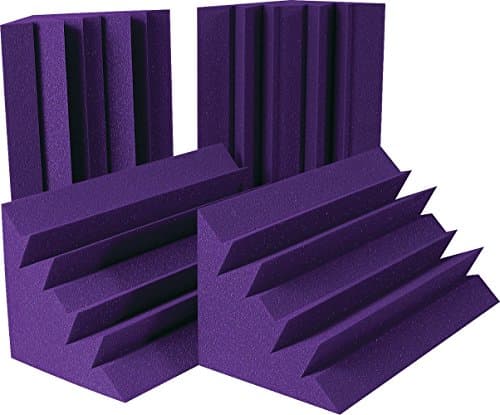 Auralex LENRD Bass Trap The one corner trap on this site whose maker publishes an absorption coefficient at 125 Hz — 1.30, against 0.11 for the same company's 2-inch flat foam. | The only trap here with a published 125 Hz figure | 7.4 | |
| 2 | 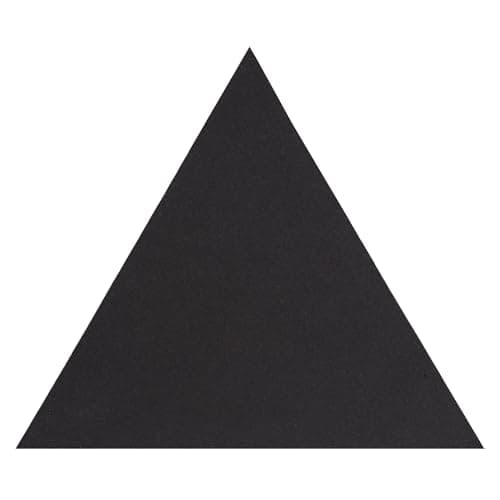 ATS Acoustics Tri-Corner Bass Trap A rigid fiberglass corner section at 6 lb per cubic foot, chosen on material and geometry because ATS publishes no per-frequency data for it at all. | Best bass trap | 7.2 | |
| 3 | 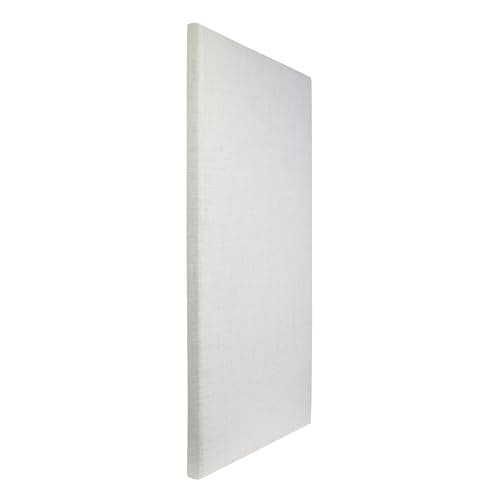 ATS Acoustics Sound Absorbing Panel (24x48) A mineral wool panel with the full absorption curve published — including the 125 Hz figure of 0.12 that its own NRC of 1.00 completely hides. | Best overall panel | 8.4 |
“Do bass traps work” is usually answered with a testimonial. It can be answered with a lab measurement, because absorption is a measurable quantity with an ASTM standard behind it, and some manufacturers publish the results. The problem is that most of them do not, and that the ones who do stop measuring above the frequencies where the problem lives. Both halves of that are the answer to the question, so this page gives you both.
The evidence, such as it is
An absorption coefficient is the fraction of incident sound energy a material absorbs at a given frequency, measured in a reverberation chamber under ASTM C-423. Here is every 125 Hz figure the manufacturers we cover publish — 125 Hz because it is the lowest band in a standard octave-band measurement, and therefore the lowest frequency anyone publishes at all:
| Product | Form | 125 Hz coefficient | NRC |
|---|---|---|---|
| Auralex LENRD | 1 ft × 1 ft × 2 ft corner section, Studiofoam | 1.30 (ASTM C-423) | 1.50 |
| ATS Tri-Corner trap | 2 in rigid fiberglass, 35° mitered, 6 lb/ft³ | Not published | 0.95 |
| ATS 24 × 48 × 2 in panel | Flat wall panel, ROCKWOOL AFB core | 0.12 | 1.00 |
Read the third row against the first. The flat panel absorbs 12% of the energy reaching it at 125 Hz. The corner trap absorbs 130%, which is not a typographical error — coefficients above 1.00 arise routinely in chamber measurements because the sample’s edges absorb sound arriving from outside its measured face area, and our bass-trap roundup explains the mechanism in full. The ratio is the point:
ratio = α(trap) ÷ α(panel) · wavelength λ = 343 m/s ÷ f · quarter-wave = λ ÷ 4
Inputs
- Auralex LENRD absorption coefficients (ASTM C-423): 125 Hz: 1.30 · 250 Hz: 1.55 · 500 Hz: 1.53 · 1 kHz: 1.48 · 2 kHz: 1.48 · 4 kHz: 1.51 (Auralex performance data)
- ATS 24 × 48 × 2 in panel absorption coefficients: 125 Hz: 0.12 · 250 Hz: 0.67 · 500 Hz: 1.17 · 1 kHz: 1.12 · 2 kHz: 1.08 · 4 kHz: 1.08 (ATS Acoustics product page)
- Auralex LENRD dimensions: 1 ft × 1 ft × 2 ft triangular corner section (Auralex product page)
Result
Why corners, and not walls
A room mode is a standing wave between two parallel surfaces. Standing waves have pressure maxima at the boundaries and velocity maxima a quarter wavelength away, and in a corner three boundaries meet, so every axial mode in the room has a pressure maximum there simultaneously. Porous absorbers work on air velocity rather than pressure, which is why a corner is a slightly awkward place for one in theory — and in practice it is still the best place available, because it is where every mode can be reached at once and where a trap with any depth at all can intercept the particle motion a few inches off the wall.
That is also why a flat 2 in panel on a wall does almost nothing down low: at 125 Hz it is sitting right at the pressure maximum where velocity is near zero, it is 2 in thick against a 108 in wavelength, and its published coefficient of 0.12 reflects both facts. A panel is the correct product for the 500 Hz – 4 kHz band, where it publishes 1.08 to 1.17 and does excellent work. Our traps-versus-panels comparison is the full version of that split.
What “NRC 0.95” does not tell you
The ATS Tri-Corner trap publishes a single NRC figure of 0.95 and no per-band coefficients. NRC is the arithmetic average of the coefficients at 250, 500, 1000 and 2000 Hz, rounded to the nearest 0.05 — and 125 Hz is not in it. So an NRC rating on a bass trap is, by the definition of the rating, silent about the only band the product exists to address. A trap with an excellent NRC and no 125 Hz figure has told you it is good at absorbing the frequencies a bass trap is not for.
This is not an accusation of bad faith; NRC is the figure the industry publishes and ATS publishes it. It is a reason to rank on the 125 Hz coefficient instead, which is what our roundup does, and it is why the LENRD is the first pick here despite the ATS trap having the better fire rating (ASTM E84 Class A against the LENRD’s UL 94 HF-1 — two different standards, not comparable to each other) and a published 6 lb/ft³ density where Auralex publishes none.
So what should you expect them to do
Three honest expectations, in descending order of confidence.
Confident:a measurable reduction in decay time in the 125–250 Hz region, which is where “boxy” and “thick” live, and which is also where a lot of male voice and the low end of most instruments sit. Both products above publish coefficients at 250 Hz — 1.55 for the LENRD, 0.67 for the flat panel — and that band is well within reach of a 12 in corner section.
Plausible but undocumented:some effect on a 60–80 Hz mode. The physics does not stop at 125 Hz, the pressure in the corner is real, and depth is the variable you control — two LENRDs stacked, or a trap run floor to ceiling, present more depth than one. Nobody we cover publishes a measurement to show how much, so we are not going to quantify it.
Not going to happen:flattening a 40 Hz room mode with foam. A quarter wavelength at 40 Hz is 84 in, and the deepest corner product on this site presents about 12 in — a seventh of it. The tools for that band are placement, a second subwoofer in a different position, and electronic correction — all three of which are free or cheaper than enough foam to matter. Our small-room guide has the modal arithmetic for working out where your own room’s problems sit, and our subwoofer sizing guide covers why two smaller subwoofers beat one large one for exactly this reason.
Do foam traps work as well as fiberglass or mineral wool ones?
On the published data in front of us, the foam one wins, which is the opposite of the received wisdom. The LENRD is Auralex Studiofoam and publishes 1.30 at 125 Hz; the ATS Tri-Corner is rigid fiberglass at 6 lb/ft³ and publishes no 125 Hz figure at all. That is not evidence that foam is better than fiberglass — it is evidence that one company measured and published and the other did not. What we can say is that thickness, density and depth across the corner matter more than the material family, and that the generic “foam is useless for bass” claim does not survive contact with the one published coefficient available. The claim that thin foam is useless for bass does survive it, and that is a different claim.
The egg-crate foam sold as acoustic treatment is a separate matter: the cheapest foam product we cover publishes no coefficients at all, and we rank it last on our panel roundup for that reason. Our DIY comparison covers what you can build for the same money, which for corners specifically is often the better answer.
Where to start, and how many
The two front corners, floor to ceiling if the budget and the decor allow, before anything else. They are nearest the speakers, they load every axial mode, and they are the corners whose treatment changes what you hear at the listening seat most. Then the rear corners. Then, and only then, flat panels at the first reflection points, which is a different job with a different product. Our coverage guide has the area arithmetic.
And before buying anything: move the listening seat and move the speakers. Both are free, both change the modal response at your ears more than a reasonable quantity of treatment will, and neither needs a coefficient published by anyone.
Every pick in detail
Every specification below links to the manufacturer document we read it from. Where a manufacturer does not publish a figure, we say so rather than estimating it.
Auralex LENRD Bass Trap
The only trap here with a published 125 Hz figurePrice as of October 10, 2026. #ad
The one corner trap on this site whose maker publishes an absorption coefficient at 125 Hz — 1.30, against 0.11 for the same company's 2-inch flat foam.
- low frequency absorption
- 8/10
- published data
- 9/10
- build quality
- 6/10
- value for money
- 6/10
- appearance
- 5/10
| Specification | Published value | Source |
|---|---|---|
| NRC | 1.50 | Auralex product page |
| Absorption coefficients (ASTM C-423) | 125 Hz: 1.30 · 250 Hz: 1.55 · 500 Hz: 1.53 · 1 kHz: 1.48 · 2 kHz: 1.48 · 4 kHz: 1.51 | Auralex performance data |
| Dimensions | 1 ft × 1 ft × 2 ft (triangular corner section) | Auralex product page |
| Material | Auralex Studiofoam | Auralex product page |
| Fire rating | UL 94 HF-1 | Auralex product page |
| Density | Not published | — |
| Test mounting for the published coefficients | Not published | — |
Pros
- Auralex publishes the full ASTM C-423 curve including the 125 Hz band, which almost nobody in this category does
- 1.30 at 125 Hz against 0.11 for Auralex's own 2 in Studiofoam Wedges — the shape of the trap is doing the work, not the material
- A one-foot triangular section that fits a wall-wall or wall-ceiling corner without brackets
- UL 94 HF-1 fire rating published
Cons
- It is still foam, not mineral wool — the published curve is excellent for foam, and foam is the cheaper material
- Auralex does not publish the test mounting for these coefficients, and mounting changes low-frequency results substantially
- Coefficients above 1.00 are an artifact of the reverberation-room method, not literal 130% absorption
- Sold in packs, so the real cost is a multiple of the single-unit price
Skip it if your corners are already occupied, or you have not yet treated your first reflection points — those come first and cost less.
ATS Acoustics Tri-Corner Bass Trap
Best bass trapPrice as of October 10, 2026. #ad
A rigid fiberglass corner section at 6 lb per cubic foot, chosen on material and geometry because ATS publishes no per-frequency data for it at all.
- low frequency absorption
- 10/10
- published data
- 4/10
- build quality
- 9/10
- value for money
- 6/10
- appearance
- 7/10
| Specification | Published value | Source |
|---|---|---|
| NRC | 0.95 (published for the 2 in fiberglass core) | ATS Acoustics product page |
| Absorption coefficients | Not published. ATS gives only a single NRC figure, and NRC by definition excludes 125 Hz — the band a bass trap exists to address. | ATS Acoustics product page |
| Material | Rigid fiberglass core, frameless | ATS Acoustics product page |
| Density | 6 lb per cubic foot | ATS Acoustics product page |
| Thickness | 2 in, with 35° mitered edges for corner mounting | ATS Acoustics product page |
| Sizes | 12, 18 and 24 in sections — the price here is the 24 in | ATS Acoustics product page |
| Fire rating | ASTM E84 Class A | ATS Acoustics product page |
Pros
- Corner placement targets pressure maxima where bass builds up
- 6 lb/ft³ rigid fiberglass rather than foam, and ATS publishes the density
- ASTM E84 Class A fire rating, published — which the ATS flat panel does not have
Cons
- Expensive per unit
- ATS publishes only an NRC, and NRC by definition excludes 125 Hz — the band a bass trap exists for
- Takes up real corner volume
- You need several to make a measurable difference
Skip it if your room has no accessible corners — the placement is the product.
ATS Acoustics Sound Absorbing Panel (24x48)
Best overall panelPrice as of October 10, 2026. #ad
A mineral wool panel with the full absorption curve published — including the 125 Hz figure of 0.12 that its own NRC of 1.00 completely hides.
- low frequency absorption
- 8/10
- published data
- 10/10
- build quality
- 9/10
- value for money
- 7/10
- appearance
- 8/10
| Specification | Published value | Source |
|---|---|---|
| NRC | 1.00 | ATS Acoustics product page |
| Absorption coefficients | 125 Hz: 0.12 · 250 Hz: 0.67 · 500 Hz: 1.17 · 1 kHz: 1.12 · 2 kHz: 1.08 · 4 kHz: 1.08 | ATS Acoustics product page |
| Material | ROCKWOOL AFB mineral wool core, solid wood frame, 1/4 in wood back panel | ATS Acoustics product page |
| Thickness | 2 in | ATS Acoustics product page |
| Dimensions / weight | 24 × 48 × 2 in; ~12 lb per panel | ATS Acoustics product page |
| Fire rating | None — ATS states “This item is not fire rated.” | ATS Acoustics product page |
| ASTM test mounting | Not published | — |
| Density | Not published | — |
Pros
- Publishes the full per-frequency curve, not just an NRC — so you can see what it actually does
- Mineral wool core absorbs 0.67 at 250 Hz, where 1.9 in foam manages 0.13
- Fabric-wrapped and presentable in a living room
Cons
- NRC 1.00 is a real figure and still misleading: at 125 Hz this panel absorbs 0.12. NRC averages 250 Hz–2 kHz only, so it structurally cannot show you the bass performance.
- Not fire rated — ATS states this plainly, and it may matter for your install
- Heavy at ~12 lb, and far more expensive than foam per panel
Skip it if your problem is bass. No 2-inch panel solves that — including this one — and you want corner traps instead.
Frequently asked questions
Do bass traps actually work?
Why does published absorption data stop at 125 Hz?
Why do bass traps go in corners?
Does an NRC rating tell me if a bass trap is good?
Do foam bass traps work, or do I need fiberglass?
Will bass traps fix a 40 Hz room mode?
How many bass traps do I need and where do they go?
Have you measured any of this yourself?
Read next
The Best Bass Traps
Ranked on published 125 Hz absorption rather than NRC — and only one maker publishes it for a corner trap.
Bass Traps for Small Rooms
The room-mode arithmetic that explains why small rooms sound boomy, and the corner trapping that partially fixes it.
Bass Traps vs Acoustic Panels
Same material, different thickness and placement — and that decides whether your room gets fixed or just quieter in the treble.
How Much Room Treatment Do I Need?
The Sabine equation, applied to a real room with real published coefficients — and what the answer costs.
Room Treatment for Home Theater
The whole-room version for a theater: side walls for every seat, the wall behind the seats, the screen wall, the corners for the subwoofer, and the ceiling last.
Do You Need a Subwoofer With Bookshelf Speakers?
Decided by your speakers' own published figure, not by taste. Includes the overlap arithmetic and the connection trap that stops two of the six subwoofers we cover working with a stereo amplifier.
Sources
Every specification on this page was read from one of these documents. If one of them has changed, or we have made an error, tell us — corrections are logged and dated per our editorial policy.