DIY vs Store-Bought Acoustic Panels
You can buy the same mineral wool the manufacturers use. What you cannot build at home is a lab test and a fire rating — and one of those our top-ranked panel does not have either.
Disclosure: we earn a commission if you buy through the links on this page, at no extra cost to you. It does not influence what we pick — our criteria are published and reproducible, so you can check our work. How we pick · Full disclosure
These picks are spec-and-price analyses, not listening tests. We have not heard this gear and we do not pretend to have: every figure below is sourced to the manufacturer and linked, and every price is live or not shown at all. Here are the rules we followed.
Quick picks
Ranked on the published criteria in How We Pick. Prices are live as of October 13, 2026. Tap any row for the full write-up.
- 8.4
- 8.0
- 7.2
| # | Product | Best for | Score | Price |
|---|---|---|---|---|
| 1 | 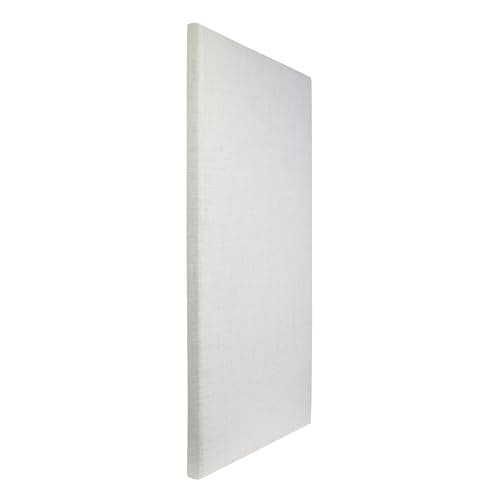 ATS Acoustics Sound Absorbing Panel (24x48) A mineral wool panel with the full absorption curve published — including the 125 Hz figure of 0.12 that its own NRC of 1.00 completely hides. | Best overall panel | 8.4 | |
| 2 | 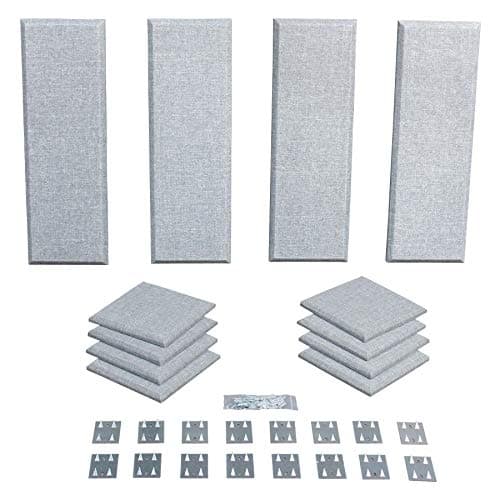 Primacoustic London 8 A planned kit of panels and corner traps with a mounting system included, which removes the hardest part of treating a room: deciding what goes where. | Best complete kit | 8.0 | |
| 3 | 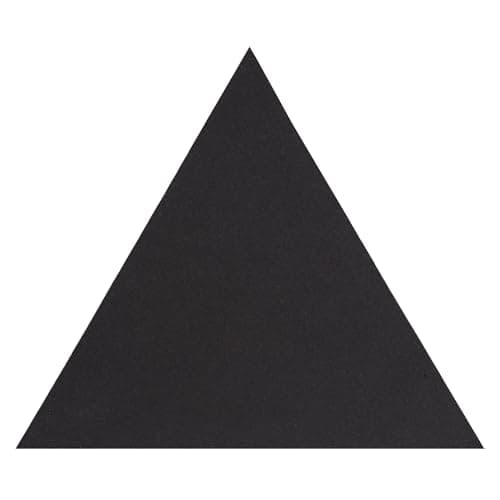 ATS Acoustics Tri-Corner Bass Trap A rigid fiberglass corner section at 6 lb per cubic foot, chosen on material and geometry because ATS publishes no per-frequency data for it at all. | Best bass trap | 7.2 |
The acoustic performance of a panel is decided almost entirely by what is inside it and how thick it is. There is no proprietary compound. ATS publishes that its 24 × 48 × 2 in panel is built around a ROCKWOOL AFB mineral wool core; Primacoustic publishes high-density 6 lb/ft³ glass wool for the London 8.
Both of those materials are sold to builders in packs. Which is why the DIY question is a real question rather than a false economy — and why the answer turns on the two things that are not the material.
The three things you are buying
1. The right material at the right density — you can buy this
Mineral wool and rigid fiberglass at building-insulation densities are the standard absorber. The published density figures across the products we cover give you the target: ATS publishes 6 lb per cubic foot for its corner trap, and Primacoustic publishes 6 lb/ft³ glass wool for the London 8.
Notably, ATS does not publish a density figure at all for the flagship 24 × 48 × 2 panel — our spec table records that as a gap. So even the product that heads our acoustic panel roundup leaves you unable to match its core exactly.
Thickness is the other half, and it is not negotiable. A 2-inch panel absorbs strongly in the midrange and treble and barely touches the bass — ATS publishes 0.12 at 125 Hz against 1.17 at 500 Hz for exactly that reason. Building a thinner panel to save material buys you a worse panel, and building a thicker one is the single most effective change you can make. Nobody sells 4-inch panels at the prices 2-inch panels sell for, and that is the strongest argument for building your own.
2. A lab measurement — you cannot buy this, and neither can some manufacturers
When you build a panel, you have no absorption curve for it. You have a reasonable expectation based on the material and the thickness, and no measurement.
The interesting part is how qualified that advantage is even when you buy. Primacoustic publishes a full curve for the London 8 and marks the two rows differently:
- 1 in Scatter Blocks — lab measured. Tested by Riverbank Acoustical Laboratories to ASTM C423-02a and E795-05. 125 Hz: 0.17 · 500 Hz: 0.81 · 1 kHz: 1.00.
- 1.5 in Control Columns — calculated, not measured. Primacoustic marks this row “typical performance based on quarter wavelength calculations”. 125 Hz: 0.31 · 500 Hz: 1.01.
The Control Columns are the kit’s main panels. So the kit’s headline low-frequency figures are theoretical rather than lab data, and Primacoustic says so in a footnote — which is more honesty than most of this category offers, and it also means the “you get a lab test when you buy” argument is weaker than it sounds.
At the other end, Arrowzoom publishes no material composition, no density and no fire rating, and its absorption table starts at 250 Hz. BXI publishes nothing at all that we could locate. Buying does not automatically get you data.
3. A fire rating — and this is the one that matters most
This is where the DIY argument gets genuinely uncomfortable, in both directions.
| Product | Published fire rating |
|---|---|
| Primacoustic London 8 | ASTM E84-09 Class A/1 (fabric wrap) |
| ATS corner bass trap | ASTM E84 Class A |
| Auralex Roominator / LENRD | UL 94 HF-1 |
| ATS 24 × 48 × 2 panel | None — ATS states “This item is not fire rated.” |
| Arrowzoom foam panels | Not published |
| BXI Sound Absorber | Not published — no manufacturer source exists |
The panel that heads our own roundup is not fire rated, and ATS says so on its own product page. That is uncomfortable to publish about our top pick, and it is exactly the kind of thing a buyer needs to know before covering a wall in them.
For a DIY build the same question applies to two components you choose separately. Mineral wool itself is generally a non-combustible mineral product. The fabric you wrap it in is not automatically anything — and a panel is a fabric surface with an air gap behind it, mounted on a wall. Buy fabric with a published flame-spread rating, or you have built the one part of the assembly nobody tested.
The coverage arithmetic, which decides it for most people
panels needed = required coverage ÷ area per panel
Inputs
- Primacoustic London 8 published coverage: 20 sq ft (1.85 m²), rated for rooms up to 100 sq ft (9.3 m²) (Primacoustic engineering data sheet (PDF))
- ATS 24×48×2 panel dimensions: 24 × 48 in = 8 sq ft per panel (ATS Acoustics product page)
- Auralex Roominator D36 kit contents: 18 × DST-114 plus 18 × DST-112 (Auralex product page)
Result
London 8: 20 sq ft of coverage for a room up to 100 sq ft = 20% of the floor area
Matching that with ATS panels: 20 ÷ 8 = 2.5 panels
Our own Sabine calculation for a real room: far more than either
A commercial kit sized “for rooms up to 100 sq ft” provides coverage equal to a fifth of that floor area. Our Sabine equation walk-through works out what a real room actually takes, and the answer is between roughly five and ten times what a starter kit contains. That gap is the entire economic case for building your own.
Coverage area is not the same as absorption. Two 4-inch panels absorb more low frequency energy than four 2-inch panels of the same total area, because thickness governs the bass end. Treat square footage as a rough planning figure, and the Sabine arithmetic as the real answer.
Where DIY clearly wins
- Thickness. A 4-inch panel absorbs meaningfully more at 125 Hz than a 2-inch one, and nobody sells 4-inch panels at 2-inch prices. This is the biggest single advantage and it is an acoustic one, not a financial one.
- Quantity. The Sabine arithmetic says most rooms need far more absorption than a kit provides. Cost per square foot is what decides whether you actually install enough.
- Corners. A thick floor-to-ceiling corner absorber is straightforward to build and expensive to buy, and corners are where bass energy accumulates.
- Appearance. Your own fabric, in your own room.
Where buying clearly wins
- You want two panels, not twenty. For the first reflection points alone, a pair of finished panels is the sensible purchase and building a jig for two panels is not.
- You need a documented fire rating. Rented accommodation, shared buildings, or anywhere a landlord or insurer might ask. Primacoustic publishes ASTM E84 Class A/1; ATS publishes Class A for the corner trap.
- You want the measurement.With a caveat: check whether the figure is lab-measured or calculated, because Primacoustic’s own sheet shows both on one product.
- You do not want to handle mineral wool. A legitimate reason on its own.
If you build them, the three things to get right
- Thickness over quantity. Four inches where you can. The 125 Hz row is where every 2-inch product on this site collapses, and thickness is the only lever that moves it.
- An air gap behind the panel. Mounting a panel a few inches off the wall improves low-frequency absorption without adding material, because the absorber sits further into the region where air is actually moving. This is the same quarter-wavelength reasoning Primacoustic cites for its own calculated figures.
- Fabric with a published flame-spread rating, and acoustically transparent. Primacoustic specifies acoustically transparent polyester; if air cannot pass through the cloth, the absorber behind it cannot do its job.
The honest summary
Buy for the first two panels and for anywhere a fire rating is required. Build when you need thickness, quantity, or corner treatment — which, by the Sabine arithmetic, is most rooms that are being treated properly rather than decoratively.
And whichever you do, check the fire rating. The best-performing panel we rank does not have one, and its manufacturer is the one who told us.
Every pick in detail
Every specification below links to the manufacturer document we read it from. Where a manufacturer does not publish a figure, we say so rather than estimating it.
ATS Acoustics Sound Absorbing Panel (24x48)
Best overall panelPrice as of October 13, 2026. #ad
A mineral wool panel with the full absorption curve published — including the 125 Hz figure of 0.12 that its own NRC of 1.00 completely hides.
- low frequency absorption
- 8/10
- published data
- 10/10
- build quality
- 9/10
- value for money
- 7/10
- appearance
- 8/10
| Specification | Published value | Source |
|---|---|---|
| NRC | 1.00 | ATS Acoustics product page |
| Absorption coefficients | 125 Hz: 0.12 · 250 Hz: 0.67 · 500 Hz: 1.17 · 1 kHz: 1.12 · 2 kHz: 1.08 · 4 kHz: 1.08 | ATS Acoustics product page |
| Material | ROCKWOOL AFB mineral wool core, solid wood frame, 1/4 in wood back panel | ATS Acoustics product page |
| Thickness | 2 in | ATS Acoustics product page |
| Dimensions / weight | 24 × 48 × 2 in; ~12 lb per panel | ATS Acoustics product page |
| Fire rating | None — ATS states “This item is not fire rated.” | ATS Acoustics product page |
| ASTM test mounting | Not published | — |
| Density | Not published | — |
Pros
- Publishes the full per-frequency curve, not just an NRC — so you can see what it actually does
- Mineral wool core absorbs 0.67 at 250 Hz, where 1.9 in foam manages 0.13
- Fabric-wrapped and presentable in a living room
Cons
- NRC 1.00 is a real figure and still misleading: at 125 Hz this panel absorbs 0.12. NRC averages 250 Hz–2 kHz only, so it structurally cannot show you the bass performance.
- Not fire rated — ATS states this plainly, and it may matter for your install
- Heavy at ~12 lb, and far more expensive than foam per panel
Skip it if your problem is bass. No 2-inch panel solves that — including this one — and you want corner traps instead.
Primacoustic London 8
Best complete kitPrice as of October 13, 2026. #ad
A planned kit of panels and corner traps with a mounting system included, which removes the hardest part of treating a room: deciding what goes where.
- low frequency absorption
- 8/10
- published data
- 8/10
- build quality
- 9/10
- value for money
- 7/10
- appearance
- 8/10
| Specification | Published value | Source |
|---|---|---|
| Absorption — 1 in Scatter Blocks (LAB MEASURED) | 125 Hz: 0.17 · 250 Hz: 0.28 · 500 Hz: 0.81 · 1 kHz: 1.00 · 2 kHz: 1.02 · 4 kHz: 0.95 — tested by Riverbank Acoustical Laboratories (ASTM C423-02a, E795-05) | Primacoustic engineering data sheet (PDF) |
| Absorption — 1.5 in Control Columns (CALCULATED, NOT MEASURED) | 125 Hz: 0.31 · 250 Hz: 0.56 · 500 Hz: 1.01 · 1 kHz: 1.00 · 2 kHz: 1.01 · 4 kHz: 1.00 — Primacoustic marks this row “typical performance based on quarter wavelength calculations”. These are the kit's main panels, so the kit's headline low-frequency numbers are theoretical, not lab data. | Primacoustic engineering data sheet (PDF) |
| NRC | Not published | — |
| Material | High-density 6 lb/ft³ glass wool, acoustically transparent polyester fabric | Primacoustic engineering data sheet (PDF) |
| Kit contents | 12 panels — 4 × Control Columns (12 × 36 × 1.5 in), 8 × Scatter Blocks (12 × 12 × 1 in); 16 Surface Impalers | Primacoustic engineering data sheet (PDF) |
| Coverage | 20 sq ft (1.85 m²) — rated for rooms up to 100 sq ft (9.3 m²) | Primacoustic engineering data sheet (PDF) |
| Fire rating | ASTM E84-09 Class A/1 (fabric wrap) | Primacoustic engineering data sheet (PDF) |
Pros
- A planned set rather than a pile of panels
- Includes corner traps, not just flat absorbers
- Impaling clip mounting system included
Cons
- Expensive as a single purchase
- Sized for a specific room area — check yours first
- Limited finishes
Skip it if your room is much larger or smaller than the kit assumes — buy panels individually instead.
ATS Acoustics Tri-Corner Bass Trap
Best bass trapPrice as of October 13, 2026. #ad
A rigid fiberglass corner section at 6 lb per cubic foot, chosen on material and geometry because ATS publishes no per-frequency data for it at all.
- low frequency absorption
- 10/10
- published data
- 4/10
- build quality
- 9/10
- value for money
- 6/10
- appearance
- 7/10
| Specification | Published value | Source |
|---|---|---|
| NRC | 0.95 (published for the 2 in fiberglass core) | ATS Acoustics product page |
| Absorption coefficients | Not published. ATS gives only a single NRC figure, and NRC by definition excludes 125 Hz — the band a bass trap exists to address. | ATS Acoustics product page |
| Material | Rigid fiberglass core, frameless | ATS Acoustics product page |
| Density | 6 lb per cubic foot | ATS Acoustics product page |
| Thickness | 2 in, with 35° mitered edges for corner mounting | ATS Acoustics product page |
| Sizes | 12, 18 and 24 in sections — the price here is the 24 in | ATS Acoustics product page |
| Fire rating | ASTM E84 Class A | ATS Acoustics product page |
Pros
- Corner placement targets pressure maxima where bass builds up
- 6 lb/ft³ rigid fiberglass rather than foam, and ATS publishes the density
- ASTM E84 Class A fire rating, published — which the ATS flat panel does not have
Cons
- Expensive per unit
- ATS publishes only an NRC, and NRC by definition excludes 125 Hz — the band a bass trap exists for
- Takes up real corner volume
- You need several to make a measurable difference
Skip it if your room has no accessible corners — the placement is the product.
Frequently asked questions
Are DIY acoustic panels as good as store-bought ones?
Acoustically, a panel built from the same material at the same thickness performs about the same — ATS publishes a ROCKWOOL AFB mineral wool core and Primacoustic publishes 6 lb/ft³ glass wool, and both are available to buy. What you cannot reproduce is a lab measurement and a documented fire rating. Note that Primacoustic’s own headline low-frequency figures for the London 8 are calculated rather than lab-measured.
What material should I use for DIY acoustic panels?
Mineral wool or rigid fiberglass at building-insulation density, not foam. The published densities across products we cover give the target: ATS publishes 6 lb per cubic foot for its corner trap and Primacoustic 6 lb/ft³ glass wool for the London 8. Thickness matters as much as material — ATS publishes 0.12 at 125 Hz for a 2-inch panel against 1.17 at 500 Hz.
Are acoustic panels a fire hazard?
It depends entirely on the product, and you have to check. Primacoustic publishes ASTM E84-09 Class A/1 for the London 8 and ATS publishes ASTM E84 Class A for its corner trap — but ATS states plainly that its 24 × 48 × 2 panel “is not fire rated”, and Arrowzoom and BXI publish nothing. For a DIY build, the mineral wool is generally non-combustible; the fabric you wrap it in is the part to check.
How thick should DIY acoustic panels be?
Four inches if you can, and mount them with an air gap behind. Every 2-inch product we cover collapses in the bass — ATS publishes 0.12 at 125 Hz, Auralex 0.16 for its 2-inch foam — because a 2-inch panel sits almost entirely in the region where air is barely moving at that frequency. Thickness and an air gap are the only levers that change it.
Read next
The Best Acoustic Panels for a Home Theater
Panels ranked on published per-frequency absorption — and why an NRC of 1.00 can still absorb 12% at 125 Hz.
How Much Room Treatment Do I Need?
The Sabine equation, applied to a real room with real published coefficients — and what the answer costs.
Find Your First Reflection Points
The mirror trick, in five minutes and for free — plus why those two points matter more than six panels elsewhere.
The Best Bass Traps
Ranked on published 125 Hz absorption rather than NRC — and only one maker publishes it for a corner trap.
Soundproofing vs Acoustic Treatment
Absorption is not isolation. ATS's own 125 Hz coefficient works out to about 0.6 dB of reduction — and that is not what soundproofing means.
Bass Traps vs Acoustic Panels
Same material, different thickness and placement — and that decides whether your room gets fixed or just quieter in the treble.
Sources
Every specification on this page was read from one of these documents. If one of them has changed, or we have made an error, tell us — corrections are logged and dated per our editorial policy.
- ATS Acoustics 24×48×2 — material, coefficients, dimensions, fire rating statement
- ATS Acoustics corner bass trap — density and ASTM E84 Class A
- Primacoustic London 8 — engineering data sheet, measured vs calculated rows (PDF)
- Auralex D36 Roominator kit — contents and fire rating
- Auralex — published performance data
- Arrowzoom — technical data page