The Best DAC and Amp Combos Under $200
Under $200 the conversion is already solved. What varies by a factor of seven is the headphone stage — and one box here publishes a better noise figure than anything twice its price.
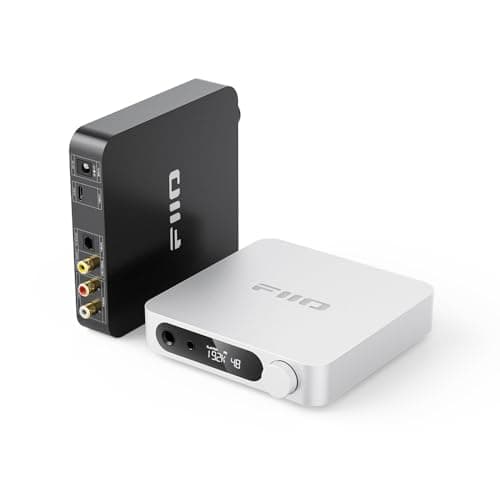
Top pick: FiiO K11
Best budget DAC and amp. #ad Affiliate link — we earn a commission at no extra cost to you.
The short answer
The best DAC and amp combo under $200 is the FiiO K11 — because it publishes the most headphone power in the band at both reference impedances, 520 mW into 32 Ω single-ended and 1,400 mW balanced, with 60 mW and 250 mW at 300 Ω, all stated at THD+N below 1%. It also publishes a line-out signal-to-noise of 126 dB(A), which is the best noise figure in our entire DAC registry — better than boxes at twice and three times the price. It is the pick for someone with one pair of headphones and a computer who wants the whole job done in one small box with a real volume knob. The budget pick is the SMSL SU-1— the cheapest converter we rank, publishing 0.00013% THD+N and 121 dB signal-to-noise from an AK4493S. The catch is stated plainly in SMSL’s own specification: no headphone amplifier at all, RCA output only, so it needs an amplifier or powered speakers after it.
Two of the five products here have no headphone stage, and they are on the page on purpose — the Topping D10s and the SMSL SU-1 are what you buy if the amplifier you need is already in the room. The three that do have one separate by a factor of about seven in published balanced power. If your headphones are 250 Ω or more, none of this band has comfortable headroom and the bracket above is the honest place to look.
Disclosure: we earn a commission if you buy through the links on this page, at no extra cost to you. It does not influence what we pick — our criteria are published and reproducible, so you can check our work. How we pick · Full disclosure
These picks are spec-and-price analyses, not listening tests. We have not heard this gear and we do not pretend to have: every figure below is sourced to the manufacturer and linked, and every price is live or not shown at all. Here are the rules we followed.
Quick picks
Ranked on the published criteria in How We Pick. Prices are live as of November 12, 2026. Tap any row for the full write-up.
- 7.8
- 7.4
- 7.0
- 7.0
- 7.2$72.24View on Amazon
$84.9915% off
| # | Product | Best for | Score | Price |
|---|---|---|---|---|
| 1 | FiiO K11 The K7's cheaper relative — less headphone power, the same basic idea, at a price that undercuts most DAC-only boxes. | Best budget DAC and amp | 7.8 | |
| 2 | 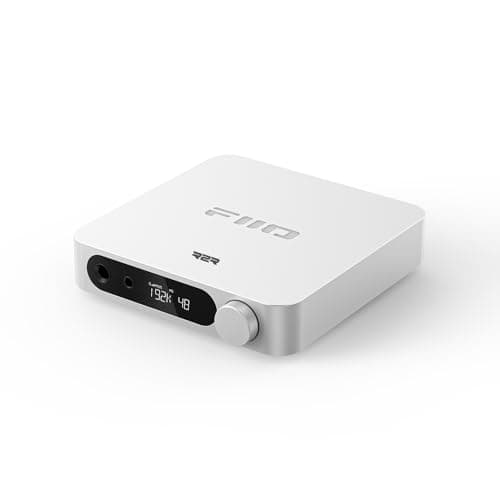 FiiO K11 R2R A discrete ladder DAC with a genuine PRE mode at the bottom of the price range — and published distortion roughly fifty times higher than the delta-sigma boxes beside it. | Cheapest with a real preamp mode | 7.4 | |
| 3 | 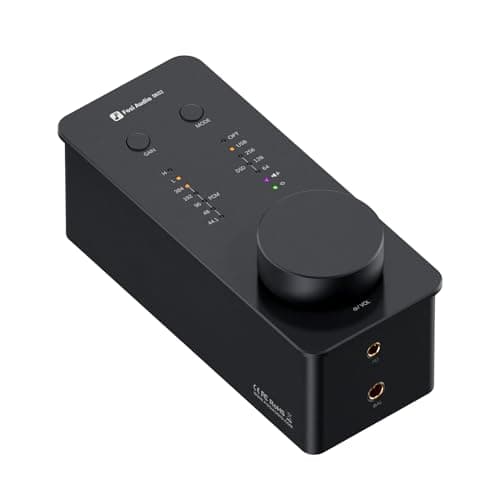 Fosi Audio SK02 A third of the desk area of any other DAC and headphone amp here, running entirely from the USB cable that carries its audio — with a specification sheet that leaves two important boxes empty. | Smallest desk footprint | 7.0 | |
| 4 | 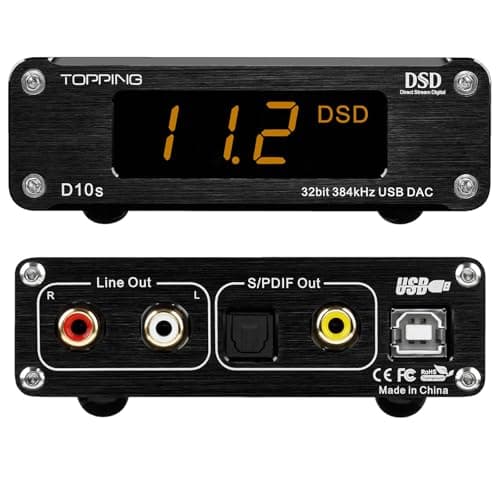 Topping D10s A USB DAC that also works as a USB-to-coaxial bridge, which is the specific thing that rescues an older receiver with no USB input. | Best DAC with a coaxial output | 7.0 | |
| 5 | 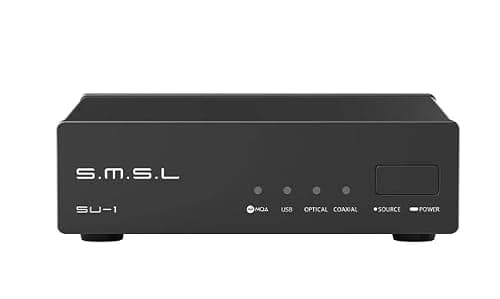 SMSL SU-1 The cheapest box here that still measures well, which makes it the sensible first upgrade from a motherboard's headphone jack. | Best cheap DAC | 7.2 | $72.24View on Amazon $84.9915% off |
Digital-to-analog conversion is a solved problem at this price. Every product on this page publishes distortion figures an order of magnitude or more beyond what a room and a pair of ears can resolve. So the chip name is a specification rather than a decision, and what actually separates these five is the amplifier half — or, for two of them, its total absence.
Before anything else, find out what your headphones are. A 32 Ω closed-back and a 300 Ω open-back are completely different electrical loads, and an amplifier that is generous with one can be marginal with the other. Our guide to headphone power and impedance works through the arithmetic; this page assumes you have done it.
The picks compared, spec by spec
Four columns. The first is the one that decides the page, and the third is the one that explains the ranking’s biggest surprise — the R2R ladder box is second despite publishing about a hundred times the distortion of the cheapest converter here, and FiiO publishes that number including the word “About”. Every row carries its own live price and buy link.
Every figure below is the manufacturer’s own published value and links to the document we read it from. “Not published” means the manufacturer does not publish that figure; an em dash means we have no published figure for that model. Prices are live as of November 12, 2026.
Best budget DAC and amp
- Headphone power
- 520 mW (32 Ω) SE · 1,400 mW bal.
- Published noise
- ≥ 126 dB(A) line out
- Published distortion
- —
- Inputs
- —
Cheapest with a real preamp mode
- Headphone power
- 460 mW (32 Ω) SE · 1,300 mW bal.
- Published noise
- Published per mode
- Published distortion
- “About 0.025%” — FiiO's wording
Smallest desk footprint
- Headphone power
- 190 mW (32 Ω) · 755 mW bal.
- Published noise
- 116–120 dB (3.5 mm, by gain)
- Published distortion
- ≤ 0.001% at 1 kHz
- Inputs
- USB-C · optical
Best DAC with a coaxial output
- Headphone power
- —
- Published noise
- 120 dB(A) at 1 kHz
- Published distortion
- < 0.0002% at 1 kHz (A-wtd)
- Inputs
- USB only
Best cheap DAC
- Headphone power
- None — RCA output only
- Published noise
- 121 dB
- Published distortion
- 0.00013% (−117 dB)
- Inputs
- USB · optical · coaxial
| Pick | Headphone power | Published noise | Published distortion | Inputs | Price |
|---|---|---|---|---|---|
| 1.FiiO K11Best budget DAC and amp | 520 mW (32 Ω) SE · 1,400 mW bal. | ≥ 126 dB(A) line out | — | — | |
| 2.FiiO K11 R2RCheapest with a real preamp mode | 460 mW (32 Ω) SE · 1,300 mW bal. | Published per mode | “About 0.025%” — FiiO's wording | USB-C · optical · coaxial | |
| 3.Fosi Audio SK02Smallest desk footprint | 190 mW (32 Ω) · 755 mW bal. | 116–120 dB (3.5 mm, by gain) | ≤ 0.001% at 1 kHz | USB-C · optical | |
| 4.Topping D10sBest DAC with a coaxial output | — | 120 dB(A) at 1 kHz | < 0.0002% at 1 kHz (A-wtd) | USB only | |
| 5.SMSL SU-1Best cheap DAC | None — RCA output only | 121 dB | 0.00013% (−117 dB) | USB · optical · coaxial |
Prices as of November 12, 2026; every “Check Price” link goes to Amazon and earns us a commission at no extra cost to you. #ad
The headphone stage is the whole decision
Three boxes here publish a headphone power figure, and the spread between the top and the bottom is large. FiiO publishes 520 mW into 32 Ω single-ended and 1,400 mW balanced for the K11, all at THD+N below 1%. The K11 R2R publishes 460 mW and 1,300 mW on the same basis. Fosi publishes 190 mW at 32 Ω on the 3.5 mm output and 755 mW on the 4.4 mm balanced output — and states no distortion condition for either figure, which is the single most important caveat on this page.
dB = 10 × log10(P1 ÷ P2)
Inputs
- FiiO K11 balanced into 32 Ω: ≥ 1,400 mW (THD+N < 1%) (FiiO parameters page)
- Fosi SK02 balanced into 32 Ω: 755 mW (no distortion condition published) (Fosi Audio spec table)
Result
At 300 Ω the band thins out badly. FiiO publishes 60 mW single-ended and 250 mW balanced for the K11 and 50 mW and 220 mW for the K11 R2R. Fosi publishes a supported impedance range of 16–300 Ω but no power figure at 300 Ω at all. For a 250–300 Ω open-back headphone, 250 mW balanced is workable and 50 mW single-ended is not — and the step up to the FiiO K7’s published 560 mW balanced at 300 Ω is the clearest reason to spend past this band. We put the K7 and the K11 head to head on exactly that.
The K11’s noise figure is the real find
FiiO publishes a line-output signal-to-noise of at least 126 dB(A) for the K11. That is the best figure in our DAC registry: the SMSL SU-1 publishes 121 dB, the Topping D10s 120 dB(A), the WiiM Pro Plus 121 dB(A), and the FiiO K7 — which costs considerably more and wins our DAC and amp combo page outright — publishes at least 116 dB(A).
It is worth being careful about what that means. A 10 dB difference in noise floor at these levels is inaudible in any domestic room; the reason to care is that it tells you something about how the box was designed and what its maker is willing to put in writing. A product that publishes a class-leading number at the bottom of a price band is a product whose maker went looking for that number. It does not make the K11 better than the K7, which publishes nearly four times the balanced power at 300 Ω — it makes it a remarkable amount of engineering for the money.
The K11 also publishes a 1.95 V RMS line output and an explicit preamp mode — LO and PO switching, each remembering its own volume. That makes it usable as the volume control for a pair of powered speakers, which is a job the two headphone-less DACs here cannot do under your control. Our all-in-one DAC, preamp and headphone amp page ranks the preamp job properly and the K11 sits at the bottom of it — cheapest box there with a switchable output, lowest published line level.
The R2R exception, and the number FiiO prints next to it
The FiiO K11 R2R is second and it is the most interesting product in the band. Instead of a delta-sigma converter chip it uses a FiiO-developed discrete resistor ladder: a four-channel fully differential 24-bit array, two 48-resistor thin-film arrays per channel, 192 resistors at 0.1% tolerance and 30 ppm temperature drift. All of that is published.
So is the cost. FiiO publishes the RCA line-out distortion in OS mode as “About 0.025% (1kHz/0dB@10KΩ)” — and the word “About” is FiiO’s, not ours. Against the SMSL SU-1’s 0.00013% that is roughly two hundred times the distortion, from a box costing roughly twice as much. We quote it exactly rather than burying it, because it is the honest price of a ladder DAC and the reader deserves to decide whether they want it.
What the R2R buys in return, on published figures: a 2.7 V RMS line output, the highest in this band, and three output modes (PO, PRE and LO) switched by double-pressing the knob, each remembering its own volume setting. A 2.7 V variable output is a genuinely useful thing to put in front of a power amplifier.
The two boxes here with no headphone amplifier
The Topping D10s and the SMSL SU-1 are ranked fourth and fifth, and both are on this page because the question “best DAC amp under $200” is often asked by someone who already owns the amplifier.
The SU-1 is the better pure converter of the two and arguably of the whole page: an AK4493S behind an XMOS XU-316, 0.00013% THD+N, 121 dB signal-to-noise, 2.0 V RMS output, and USB, optical and coaxial inputs. Topping’s D10s is narrower on the input side — USB only — but it does something nothing else here does: it has optical and coaxial S/PDIF outputs, so it doubles as a USB-to-S/PDIF bridge. That is the fix for an older receiver or integrated amplifier with digital inputs and no USB port, and it is the reason the D10s outranks the better-measuring SMSL.
Neither publishes a volume control or a variable output, so both need something downstream that has one. Our DAC-only bracket at the same price ranks these two against the rest of the field on conversion figures, which is the right page if a headphone jack is not part of your requirement at all.
What $200 does not buy in this category
Three things, concretely. Comfortable 300 Ω headroom: the best single-ended figure here is 60 mW, where the bracket above publishes 140 mW and the box above that 281 mW. An analog input: every product on this page is digital-in only, so a turntable or a CD player with analog outputs has nowhere to go — the cheapest box in our registry with an analog pass-through is the FiiO K7. And a balanced line output, which first appears on the iFi ZEN DAC 3 and the K9 Pro ESS.
None of that makes this band a compromise for its intended use. A 32 Ω headphone fed 1,400 mW from a box publishing 126 dB(A) is not short of anything. Our compact desktop roundup covers the same three boxes from the footprint angle, if desk space rather than price is your constraint.
Every pick in detail
Every specification below links to the manufacturer document we read it from. Where a manufacturer does not publish a figure, we say so rather than estimating it.
FiiO K11
Best budget DAC and ampPrice as of November 12, 2026. #ad
The K7's cheaper relative — less headphone power, the same basic idea, at a price that undercuts most DAC-only boxes.
- measured specs
- 8/10
- inputs
- 7/10
- value for money
- 10/10
- build quality
- 6/10
- features
- 8/10
| Specification | Published value | Source |
|---|---|---|
| Chipset | DAC: CS43198; USB: SA9312L; amp: 2 × SGM8262-2 | FiiO parameters page |
| Max sample rate | USB: 384 kHz/32-bit, DSD256 native; coaxial: 192 kHz/24-bit; optical: 96 kHz/24-bit | FiiO parameters page |
| Headphone power | 6.35 mm: ≥ 520 mW + 520 mW (32 Ω), ≥ 60 mW + 60 mW (300 Ω). 4.4 mm balanced: ≥ 1,400 mW + 1,400 mW (32 Ω), ≥ 250 mW + 250 mW (300 Ω). All at THD+N < 1% | FiiO parameters page |
| Signal-to-noise | Line out ≥ 126 dB (A-weighted) | FiiO parameters page |
| Output level | 1.95 V RMS (line out) | FiiO parameters page |
| Preamp mode | Yes — LO/PO switching, each remembering its own volume | FiiO product page |
Pros
- DAC and headphone amp for less than most DAC-only boxes
- Balanced output at the price
- Compact
Cons
- Less headphone power than the K7
- Plastic-heavy build
- Fewer inputs
Skip it if you drive demanding high-impedance headphones — step up to the K7.
FiiO K11 R2R
Cheapest with a real preamp modePrice as of November 12, 2026. #ad
A discrete ladder DAC with a genuine PRE mode at the bottom of the price range — and published distortion roughly fifty times higher than the delta-sigma boxes beside it.
- measured specs
- 6/10
- inputs
- 6/10
- value for money
- 9/10
- build quality
- 7/10
- features
- 8/10
| Specification | Published value | Source |
|---|---|---|
| Chipset | FiiO-developed discrete R2R ladder DAC; SoC: GD32F303RE; USB: SA9312L; amp: 2 × SGM8262-2 | FiiO parameters page |
| R2R array | Four-channel fully differential 24-bit ladder — two 48-resistor thin-film arrays per channel, 192 resistors at 0.1% tolerance and 30 ppm temperature drift | FiiO product page |
| Inputs | USB Type-C, optical, coaxial | FiiO parameters page |
| Outputs | Headphone 6.35 mm and 4.4 mm balanced; RCA line out; coaxial out (USB mode only) | FiiO parameters page |
| Max sample rate | 384 kHz/32-bit, DSD256 over USB | FiiO parameters page |
| Headphone power | 6.35 mm (OS mode): ≥ 660 mW (16 Ω), ≥ 460 mW (32 Ω), ≥ 50 mW (300 Ω). 4.4 mm balanced (OS): ≥ 520 mW (16 Ω), ≥ 1,300 mW (32 Ω), ≥ 220 mW (300 Ω). All at THD+N < 1% | FiiO parameters page |
| Line output level | 2.7 Vrms | FiiO parameters page |
| Output modes | PO / PRE (LO SE) / LO, switched by double-pressing the knob; each mode remembers its own volume setting | FiiO product page |
| THD+N | “About 0.025% (1kHz/0dB@10KΩ)” on the RCA line out in OS mode — FiiO's own wording, including the word “About” | FiiO parameters page |
| Signal-to-noise | ≥ 115 dB (A-weighted), RCA line out in OS mode | FiiO parameters page |
| Gain | Three gain levels with three independent volume curves | FiiO product page |
Pros
- PO / PRE / LO switching by double-pressing the knob, each mode remembering its own volume
- 2.7 Vrms line output — more voltage than the DacMagic 200M's unbalanced 2.1 V
- Headphone power published at 16, 32 and 300 Ω on both outputs, with a THD+N condition
- A discrete 192-resistor R2R ladder at a price where discrete anything is unusual
Cons
- FiiO publishes THD+N of “About 0.025%” — around fifty times the figure of the delta-sigma DACs on this page, and the word “About” is theirs
- No analog input, so it cannot take a phono stage or a CD player
- No balanced line output — the 4.4 mm socket is a headphone output, not a pre-out
- Line-out SNR of ≥ 115 dB is the lowest published figure here
Skip it if you want the lowest distortion your money can buy. On published numbers a delta-sigma converter wins by a wide margin, and this one costs you that on purpose.
Fosi Audio SK02
Smallest desk footprintPrice as of November 12, 2026. #ad
A third of the desk area of any other DAC and headphone amp here, running entirely from the USB cable that carries its audio — with a specification sheet that leaves two important boxes empty.
- measured specs
- 6/10
- inputs
- 5/10
- value for money
- 9/10
- build quality
- 6/10
- features
- 7/10
| Specification | Published value | Source |
|---|---|---|
| DAC chip | ES9038Q2M | Fosi Audio spec table |
| Max sample rate | USB: 32-bit/384 kHz, DSD256; optical: 24-bit/192 kHz | Fosi Audio spec table |
| Inputs | USB-C, optical | Fosi Audio spec table |
| Outputs | 3.5 mm headphone, 4.4 mm balanced headphone, and one 3.5 mm socket shared between line out and optical out | Fosi Audio spec table |
| Headphone power | 3.5 mm: 190 mW at 32 Ω. 4.4 mm: 755 mW at 32 Ω. Fosi states no distortion condition for either figure | Fosi Audio spec table |
| Headphone impedance match | 16–300 Ω | Fosi Audio spec table |
| THD | ≤ 0.001% at 1 kHz (Fosi does not state the output level it was measured at) | Fosi Audio spec table |
| Signal-to-noise | 3.5 mm: 116 dB low gain, 120 dB high gain. 4.4 mm: 110 dB low gain, 115 dB high gain | Fosi Audio spec table |
| Frequency range | 20 Hz–20 kHz (±0.02 dB) | Fosi Audio spec table |
| Dimensions | 121 × 51 × 43 mm (4.76 × 2 × 1.69 in) | Fosi Audio spec table |
| Weight | 380 g (0.84 lb) | Fosi Audio spec table |
| Power supply | 5 V over USB Type-C — no separate supply, and no current figure published | Fosi Audio spec table |
| Line output level | Not published | — |
| Line output fixed or variable | Not published | — |
Pros
- 121 × 51 mm on the desk — under a third of the footprint of a FiiO K11 or an iFi ZEN DAC 3
- Runs from USB-C bus power alone, so the installation is one cable and there is no brick under the desk
- A 4.4 mm balanced headphone output at a price where balanced is usually absent
- Published SNR at both gain settings on both outputs, which is more than most makers bother with
Cons
- Fosi publishes no distortion condition with either power figure, so 755 mW at 32 Ω cannot be compared like-for-like with FiiO's figures at THD+N < 1%
- The product listing calls it a preamp, but Fosi's specification publishes no line output level and does not state whether that output is fixed or variable
- Line out and optical out share one 3.5 mm socket, so a fixed feed to an amplifier and a digital feed onward are mutually exclusive
- USB and optical only — no coaxial, and no analog input of any kind
Skip it if you need to know exactly what the line output does. On published data, this is a headphone box that has a line socket, not a preamp.
Topping D10s
Best DAC with a coaxial outputPrice as of November 12, 2026. #ad
A USB DAC that also works as a USB-to-coaxial bridge, which is the specific thing that rescues an older receiver with no USB input.
- measured specs
- 9/10
- inputs
- 5/10
- value for money
- 8/10
- build quality
- 6/10
- features
- 6/10
| Specification | Published value | Source |
|---|---|---|
| DAC chip | ES9038Q2M; XMOS XU208 | Topping spec page |
| Max sample rate | USB: 44.1–384 kHz/16–32 bit, DSD64–DSD256 native | Topping spec page |
| Inputs | USB | Topping spec page |
| Outputs | RCA line out, plus optical and coaxial S/PDIF OUT — it doubles as a USB-to-S/PDIF bridge, which is what rescues an older receiver with no USB input | Topping spec page |
| THD+N | < 0.0002% at 1 kHz (A-weighted) | Topping spec page |
| Signal-to-noise | 120 dB (A-weighted, 1 kHz) | Topping spec page |
| Output level | 2 V RMS at 0 dBFS | Topping spec page |
Pros
- Doubles as a USB-to-SPDIF bridge for older gear
- Strong published measurements
- USB powered
Cons
- USB input only
- No headphone output
- No volume control
Skip it if you do not need the SPDIF output — the SU-1 costs less.
SMSL SU-1
Best cheap DACThe cheapest box here that still measures well, which makes it the sensible first upgrade from a motherboard's headphone jack.
- measured specs
- 9/10
- inputs
- 8/10
- value for money
- 10/10
- build quality
- 5/10
- features
- 4/10
| Specification | Published value | Source |
|---|---|---|
| DAC chip | AK4493S; XMOS XU-316 | SMSL product page |
| Max sample rate | USB: PCM 44.1–768 kHz, up to 32-bit; DSD to 22.5792 MHz. Optical/coaxial: 44.1–192 kHz, 16–24 bit | SMSL manual (PDF) |
| Inputs | USB, optical, coaxial | SMSL manual (PDF) |
| Outputs | RCA | SMSL manual (PDF) |
| THD+N | 0.00013% (−117 dB) | SMSL manual (PDF) |
| Signal-to-noise | 121 dB | SMSL manual (PDF) |
| Output level | 2.0 V RMS | SMSL manual (PDF) |
| Headphone amp | No — RCA output only | SMSL manual (PDF) |
Pros
- Very cheap for the measured performance
- Tiny footprint
- USB, optical and coaxial in
Cons
- No headphone output
- No preamp mode
- Minimal build
Skip it if you need a headphone output or volume control.
Frequently asked questions
Is 520 mW enough for my headphones?
Does an R2R DAC sound better?
Why are two DACs with no headphone amp on this page?
Can I use one of these as a preamp for powered speakers?
Read next
The Best DAC and Amp Combos
Four DAC and headphone amp combos, ranked on published power into 32 Ω and 300 Ω rather than on chip names.
The Best DACs Under $200
Five DACs under $200, all measuring beyond audibility — so the ranking is about inputs, outputs and output level.
The Best Compact Desktop DAC and Amp Combos
Five desktop DAC and headphone amp combos ranked on published dimensions, power source and the specs the smallest boxes leave blank.
Headphone Impedance and How Much Power You Need
Why published headphone power collapses at high impedance, what output impedance does to the sound, and how to check a pairing before you buy.
FiiO K7 vs K11
The K7 publishes 2.3x the headphone power at both 32 and 300 ohms. The K11 publishes a 126 dB line-out S/N against the K7's 116 dB — and a 300 ohm balanced figure the K7 leaves blank.
The Best All-in-One DAC, Preamp and Headphone Amps
Six boxes that do all three jobs, ranked on inputs, variable output and published output voltage rather than on DAC chip names.
Sources
Every specification on this page was read from one of these documents. If one of them has changed, or we have made an error, tell us — corrections are logged and dated per our editorial policy.