FiiO K7 vs K11
Two desktop DAC and headphone amplifiers from the same company, a price bracket apart. The power gap runs one way and is large; the published line-output measurements run the other way and are not small either. Here is every row where the two sheets disagree.
The short answer
Buy the K7 if headphones are the point, and the K11 if the line output is the point. The K7 publishes 1,220 mW into 32 Ω against the K11’s 520 mW, and 140 mW into 300 Ω against 60 mW — a consistent 2.3× from the same socket, from a box running THX AAA 788+ modules rather than op-amps. But the K11 publishes a line-out signal-to-noise of ≥ 126 dB against the K7’s ≥ 116 dB, and it publishes a 300 Ω balanced power figure that the K7 simply omits. The K7 also has one thing the K11 has not got at any price: an analog RCA line input, which turns it into a desk preamp for a source that is already analog.
Disclosure: we earn a commission if you buy through the links on this page, at no extra cost to you. It does not influence what we pick — our criteria are published and reproducible, so you can check our work. How we pick · Full disclosure
These picks are spec-and-price analyses, not listening tests. We have not heard this gear and we do not pretend to have: every figure below is sourced to the manufacturer and linked, and every price is live or not shown at all. Here are the rules we followed.
Quick picks
Ranked on the published criteria in How We Pick. Prices are live as of October 16, 2026. Tap any row for the full write-up.
- 8.8
- 7.8
- 7.4
| # | Product | Best for | Score | Price |
|---|---|---|---|---|
| 1 | 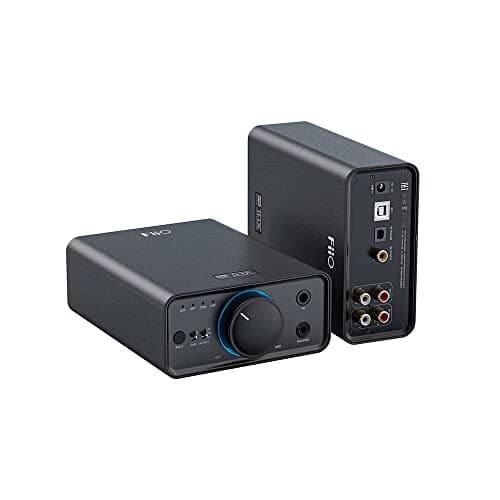 FiiO K7 A DAC with a genuinely powerful balanced headphone amplifier attached, which is the reason to choose it over a DAC-only box. | Best DAC and headphone amp combo | 8.8 | |
| 2 | 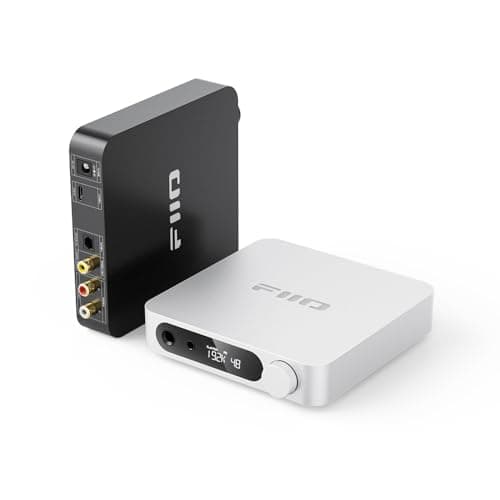 FiiO K11 The K7's cheaper relative — less headphone power, the same basic idea, at a price that undercuts most DAC-only boxes. | Best budget DAC and amp | 7.8 | |
| 3 | 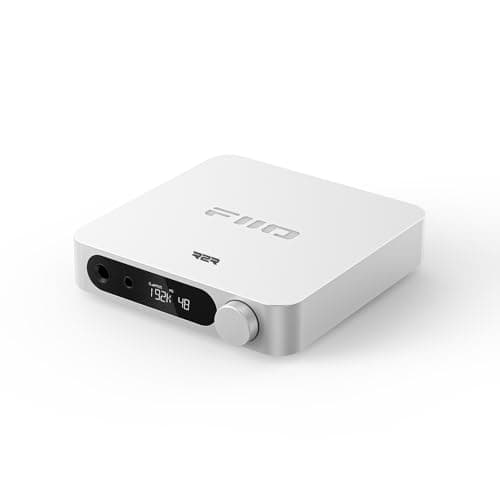 FiiO K11 R2R A discrete ladder DAC with a genuine PRE mode at the bottom of the price range — and published distortion roughly fifty times higher than the delta-sigma boxes beside it. | Cheapest with a real preamp mode | 7.4 |
These two get compared constantly, and usually on the chip — two AK4493S in the K7 against a single CS43198 in the K11 — which is the least informative row on either sheet. What actually separates them is the amplifier stage, the headphone power that follows from it, and one measurement where the cheaper product wins by a margin large enough that it needs explaining rather than ignoring.
Every row where the two sheets disagree
| Published specification | FiiO K7 | FiiO K11 |
|---|---|---|
| DAC | 2 × AK4493S | CS43198 (single) |
| Amplifier stage | 2 × THX AAA 788+ | 2 × SGM8262-2 |
| USB receiver | XMOS XUF208 | SA9312L |
| Headphone power, 6.35 mm at 32 Ω | ≥ 1,220 mW | ≥ 520 mW |
| Headphone power, 6.35 mm at 300 Ω | ≥ 140 mW | ≥ 60 mW |
| Headphone power, 4.4 mm at 32 Ω | ≥ 2,000 mW | ≥ 1,400 mW |
| Headphone power, 4.4 mm at 300 Ω | Not published | ≥ 250 mW |
| Line-out signal-to-noise (A-weighted) | ≥ 116 dB | ≥ 126 dB |
| Line-out THD+N | < 0.0005%(1 kHz / 10 kΩ) | Not published |
| Line output level | Not published | 1.95 V RMS |
| Analog input | Yes — line in on RCA | No |
| Digital inputs | USB-B, optical, coaxial | USB, optical, coaxial |
| Max rate over USB | PCM 384 kHz / 32-bit, DSD256 | PCM 384 kHz / 32-bit, DSD256 native |
| Output modes | Headphone / speaker (preamp) / pure DAC | LO / PO switching, each remembering its own volume |
The power gap is real and it is consistent
2.35× at 32 Ω, 2.33× at 300 Ω. That consistency is itself informative: it says the K7’s advantage is a bigger voltage swing rather than a different behaviour into a hard load, and it means you can trust the ratio across the impedance range rather than having to check each point. In volts into 300 Ω it is 6.5 V against 4.2 V from the single-ended socket.
Whether 2.3× is worth the price difference depends entirely on whether the K11’s figure was already enough. 520 mW into 32 Ω is a great deal of power for a 32 Ω headphone; the gap only becomes a reason to spend more as impedance or insensitivity climbs, which is exactly the case our high-impedance page is about.
The row that runs the other way
FiiO publishes a line-out signal-to-noise of ≥ 126 dB for the K11 and ≥ 116 dB for the K7. Ten decibels, in favour of the cheaper box, on the output you would use if you were feeding an integrated amplifier or a pair of powered speakers rather than headphones. Both figures are A-weighted and both come from FiiO’s own parameters pages, so this is as close to an apples-to-apples comparison as published specifications get.
We are not going to invent a mechanism for it. The plausible readings are that the CS43198 and its surrounding analog stage simply measure better on noise than the dual AK4493S implementation does, or that the two numbers were taken under conditions FiiO has not fully described. What we can say is which figure is missing on each side: the K7 publishes a line-out THD+N of < 0.0005% and no output level; the K11 publishes an output level of 1.95 V RMS and no THD+N. So neither sheet is complete, and the one row where both are populated favours the K11.
ratio = P(K7) ÷ P(K11) at the same impedance · V = √(P × R)
Inputs
- FiiO K7 headphone power: 6.35 mm: ≥ 1,220 mW + 1,220 mW (32 Ω); ≥ 140 mW + 140 mW (300 Ω). 4.4 mm balanced: ≥ 2,000 mW + 2,000 mW (32 Ω). All at THD+N < 1% (FiiO parameters page)
- FiiO K11 headphone power: 6.35 mm: ≥ 520 mW + 520 mW (32 Ω), ≥ 60 mW + 60 mW (300 Ω). 4.4 mm balanced: ≥ 1,400 mW + 1,400 mW (32 Ω), ≥ 250 mW + 250 mW (300 Ω). All at THD+N < 1% (FiiO parameters page)
- FiiO K7 line-out measurements: THD+N < 0.0005% (1 kHz/10 kΩ); S/N ≥ 116 dB (A-weighted) (FiiO parameters page)
- FiiO K11 line-out measurements: S/N ≥ 126 dB (A-weighted); output level 1.95 V RMS (FiiO parameters page)
Result
At 32 Ω single-ended: 1,220 ÷ 520 = 2.35×
At 300 Ω single-ended: 140 ÷ 60 = 2.33×
At 32 Ω balanced: 2,000 ÷ 1,400 = 1.43×
In volts at 300 Ω single-ended: 6.5 V vs 4.2 V
Line-out S/N: 116 dB vs 126 dB — a 10 dB K11 win
Note the third row. The K7’s advantage shrinks from 2.35× to 1.43× when you move to the balanced sockets, because the K11 gains more from going balanced than the K7 does. A doubling of power is 3 dB of SPL, so 2.35× is about 3.7 dB and 1.43× is about 1.6 dB — useful context for how large these gaps sound rather than how large they look.
The analog input nobody mentions
The K7 has an RCA line input. The K11 does not, and neither does the K11 R2R. That single row changes what the product is: with an analog input the K7 can sit on a desk as a two-input preamp and headphone amp, taking a phono stage or a CD player alongside your computer’s USB. Without one, the K11 is a DAC that can only be fed digitally, and anything analog needs to go somewhere else first.
If you own a turntable, this is probably the row that decides it, and it is worth reading alongside our DAC-versus-preamp explainer, because a line input is the thing that makes the difference between the two categories collapse.
Where the K11 R2R fits
The third pick is the same chassis and the same amplifier chips as the K11, with FiiO’s discrete resistor-ladder converter in place of the CS43198: 192 thin-film resistors per channel pair at 0.1% tolerance. Its headphone power sits just below the standard K11’s in OS mode — 460 mW at 32 Ω and 50 mW at 300 Ω single-ended, 220 mW at 300 Ω balanced — and it adds a coaxial output and three independent gain curves.
The number that defines it is the line-out THD+N FiiO publishes: “About 0.025%”, with FiiO’s own hedge included. Against the K7’s < 0.0005% that is roughly fifty times the distortion. We rank it third here and we would still recommend it to someone who specifically wants an R2R ladder DAC and has read that number first.
Which should you buy?
Headphones first, and especially high-impedance or insensitive headphones on a single-ended cable: the K7. An analog source on your desk: the K7, because nothing else here has the input. Feeding an amplifier or powered speakers, with headphones as a secondary use: the K11, on the strength of the 126 dB line-out figure and the money saved. A balanced cable and a 300 Ω headphone: the K11, because it published the number and the K7 did not.
Both of them appear on our DAC and amp combo roundup, where the K7 ranks first on the 32 Ω column, and the K11 also turns up in our compact-desk shortlist.
Every pick in detail
Every specification below links to the manufacturer document we read it from. Where a manufacturer does not publish a figure, we say so rather than estimating it.
FiiO K7
Best DAC and headphone amp comboPrice as of October 16, 2026. #ad
A DAC with a genuinely powerful balanced headphone amplifier attached, which is the reason to choose it over a DAC-only box.
- measured specs
- 9/10
- inputs
- 8/10
- value for money
- 9/10
- build quality
- 9/10
- features
- 9/10
| Specification | Published value | Source |
|---|---|---|
| Chipset | DAC: 2 × AK4493S; USB: XMOS XUF208; amp: 2 × THX AAA 788+ | FiiO parameters page |
| Max sample rate | USB: PCM 384 kHz/32-bit, DSD256; coaxial: 192 kHz/24-bit; optical: 96 kHz/24-bit | FiiO parameters page |
| Inputs | USB-B, line in (RCA), optical, coaxial | FiiO parameters page |
| Outputs | Line out (RCA), 4.4 mm balanced headphone, 6.35 mm single-ended headphone | FiiO parameters page |
| Headphone power | 6.35 mm: ≥ 1,220 mW + 1,220 mW (32 Ω); ≥ 140 mW + 140 mW (300 Ω). 4.4 mm balanced: ≥ 2,000 mW + 2,000 mW (32 Ω). All at THD+N < 1% | FiiO parameters page |
| THD+N | Line out: < 0.0005% (1 kHz/10 kΩ) | FiiO parameters page |
| Signal-to-noise | Line out ≥ 116 dB (A-weighted) | FiiO parameters page |
| Output modes | Switchable between headphone, speaker (preamp) and pure DAC | FiiO product page |
Pros
- Powerful balanced headphone output, not a token one
- Gain switching for sensitive and demanding headphones
- Line out for a separate amplifier
Cons
- Larger than a DAC-only box
- You pay for the headphone amp whether you use it or not
- External power brick
Skip it if you never use headphones — the Modi 5 or E30 II is cheaper and smaller.
FiiO K11
Best budget DAC and ampPrice as of October 16, 2026. #ad
The K7's cheaper relative — less headphone power, the same basic idea, at a price that undercuts most DAC-only boxes.
- measured specs
- 8/10
- inputs
- 7/10
- value for money
- 10/10
- build quality
- 6/10
- features
- 8/10
| Specification | Published value | Source |
|---|---|---|
| Chipset | DAC: CS43198; USB: SA9312L; amp: 2 × SGM8262-2 | FiiO parameters page |
| Max sample rate | USB: 384 kHz/32-bit, DSD256 native; coaxial: 192 kHz/24-bit; optical: 96 kHz/24-bit | FiiO parameters page |
| Headphone power | 6.35 mm: ≥ 520 mW + 520 mW (32 Ω), ≥ 60 mW + 60 mW (300 Ω). 4.4 mm balanced: ≥ 1,400 mW + 1,400 mW (32 Ω), ≥ 250 mW + 250 mW (300 Ω). All at THD+N < 1% | FiiO parameters page |
| Signal-to-noise | Line out ≥ 126 dB (A-weighted) | FiiO parameters page |
| Output level | 1.95 V RMS (line out) | FiiO parameters page |
| Preamp mode | Yes — LO/PO switching, each remembering its own volume | FiiO product page |
Pros
- DAC and headphone amp for less than most DAC-only boxes
- Balanced output at the price
- Compact
Cons
- Less headphone power than the K7
- Plastic-heavy build
- Fewer inputs
Skip it if you drive demanding high-impedance headphones — step up to the K7.
FiiO K11 R2R
Cheapest with a real preamp modePrice as of October 16, 2026. #ad
A discrete ladder DAC with a genuine PRE mode at the bottom of the price range — and published distortion roughly fifty times higher than the delta-sigma boxes beside it.
- measured specs
- 6/10
- inputs
- 6/10
- value for money
- 9/10
- build quality
- 7/10
- features
- 8/10
| Specification | Published value | Source |
|---|---|---|
| Chipset | FiiO-developed discrete R2R ladder DAC; SoC: GD32F303RE; USB: SA9312L; amp: 2 × SGM8262-2 | FiiO parameters page |
| R2R array | Four-channel fully differential 24-bit ladder — two 48-resistor thin-film arrays per channel, 192 resistors at 0.1% tolerance and 30 ppm temperature drift | FiiO product page |
| Inputs | USB Type-C, optical, coaxial | FiiO parameters page |
| Outputs | Headphone 6.35 mm and 4.4 mm balanced; RCA line out; coaxial out (USB mode only) | FiiO parameters page |
| Max sample rate | 384 kHz/32-bit, DSD256 over USB | FiiO parameters page |
| Headphone power | 6.35 mm (OS mode): ≥ 660 mW (16 Ω), ≥ 460 mW (32 Ω), ≥ 50 mW (300 Ω). 4.4 mm balanced (OS): ≥ 520 mW (16 Ω), ≥ 1,300 mW (32 Ω), ≥ 220 mW (300 Ω). All at THD+N < 1% | FiiO parameters page |
| Line output level | 2.7 Vrms | FiiO parameters page |
| Output modes | PO / PRE (LO SE) / LO, switched by double-pressing the knob; each mode remembers its own volume setting | FiiO product page |
| THD+N | “About 0.025% (1kHz/0dB@10KΩ)” on the RCA line out in OS mode — FiiO's own wording, including the word “About” | FiiO parameters page |
| Signal-to-noise | ≥ 115 dB (A-weighted), RCA line out in OS mode | FiiO parameters page |
| Gain | Three gain levels with three independent volume curves | FiiO product page |
Pros
- PO / PRE / LO switching by double-pressing the knob, each mode remembering its own volume
- 2.7 Vrms line output — more voltage than the DacMagic 200M's unbalanced 2.1 V
- Headphone power published at 16, 32 and 300 Ω on both outputs, with a THD+N condition
- A discrete 192-resistor R2R ladder at a price where discrete anything is unusual
Cons
- FiiO publishes THD+N of “About 0.025%” — around fifty times the figure of the delta-sigma DACs on this page, and the word “About” is theirs
- No analog input, so it cannot take a phono stage or a CD player
- No balanced line output — the 4.4 mm socket is a headphone output, not a pre-out
- Line-out SNR of ≥ 115 dB is the lowest published figure here
Skip it if you want the lowest distortion your money can buy. On published numbers a delta-sigma converter wins by a wide margin, and this one costs you that on purpose.
Frequently asked questions
Is the FiiO K7 better than the K11?
Why does the cheaper K11 have a better signal-to-noise figure?
Does the FiiO K11 have an analog input?
Which one is better for 300-ohm headphones?
How much louder is 2.3 times the power?
What about the K11 R2R?
Have you tested either of these?
Read next
The Best DACs for High-Impedance Headphones
Ranked on published power at 300 Ω and 600 Ω instead of 32 Ω. The collapse is about 8-9x on every single-ended output here, and only one product publishes a 600 Ω figure at all.
The Best DAC and Amp Combos
Four DAC and headphone amp combos, ranked on published power into 32 Ω and 300 Ω rather than on chip names.
The Best All-in-One DAC, Preamp and Headphone Amps
Six boxes that do all three jobs, ranked on inputs, variable output and published output voltage rather than on DAC chip names.
The Best Compact Desktop DAC and Amp Combos
Five desktop DAC and headphone amp combos ranked on published dimensions, power source and the specs the smallest boxes leave blank.
The Best USB DACs for a PC
Six USB DACs ranked for desktop use, on USB interface, power arrangement and the published output level each one actually delivers.
DAC vs Amp: Which Do You Need?
Not alternatives — consecutive steps. If your system is silent, you need the amp.
Sources
Every specification on this page was read from one of these documents. If one of them has changed, or we have made an error, tell us — corrections are logged and dated per our editorial policy.