Class D vs Class AB Amplifiers
One runs its output devices as switches, the other as valves in a stream. The audible differences are smaller than the internet suggests — and the specification differences are much larger.
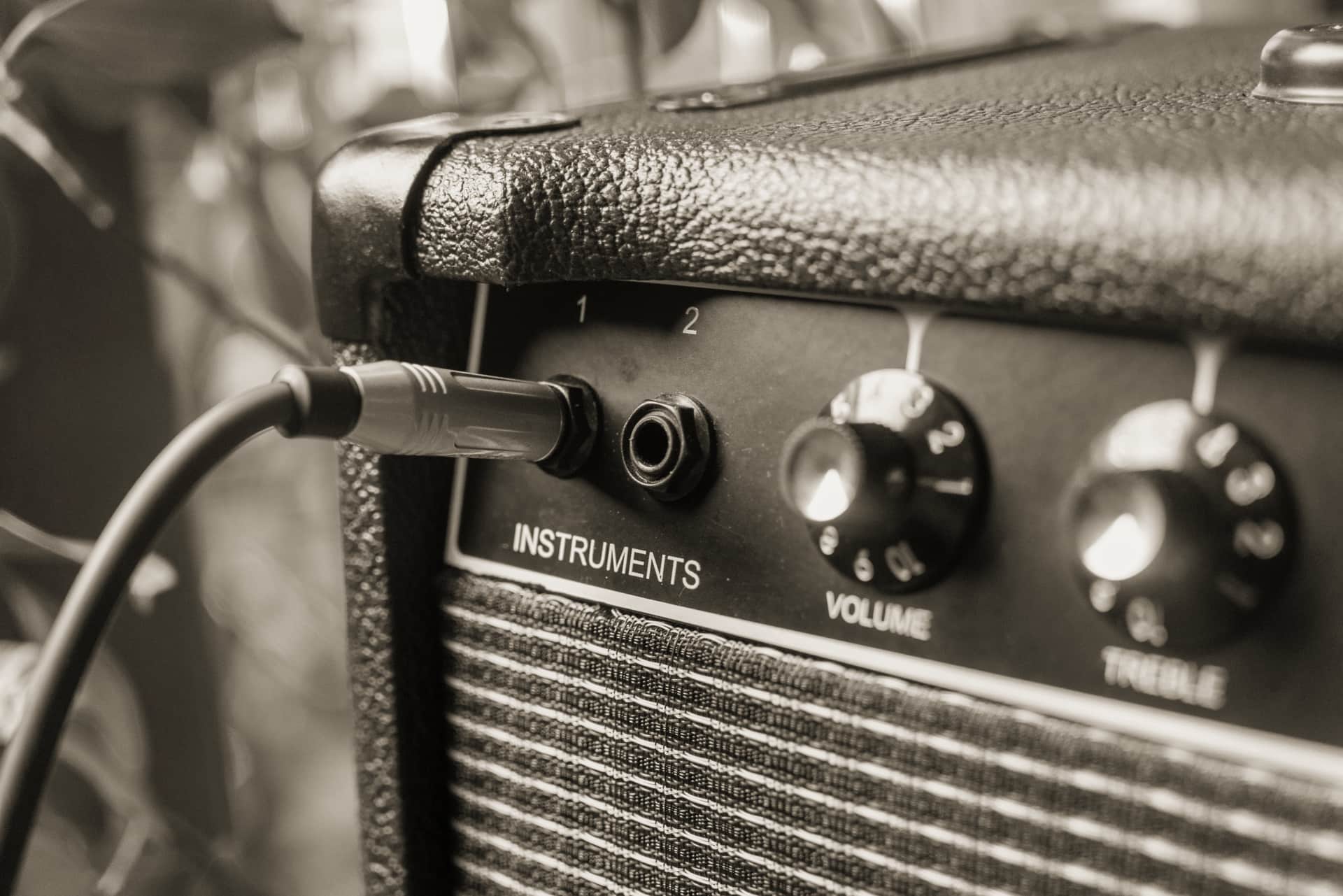
Amplifier classes describe how the output devices are biased — how much of the signal waveform each device conducts for. It is an engineering description, not a quality ranking, and the letter on the box tells you far less about the sound than the specification sheet does.
Class AB in one paragraph
Two sets of output devices, one handling the positive half of the waveform and one the negative, both biased so they conduct slightly past the crossing point. That overlap is the “AB”, and it exists to avoid the switching distortion a pure Class B design produces at the zero crossing.
The devices operate as variable resistors in the current path, so the difference between the supply voltage and the output voltage is dissipated as heat. Typical efficiency runs somewhere in the region of 50–60% at full output and considerably less at normal listening levels — which is why a 45-watt Class AB amplifier has substantial heatsinks and weighs what it weighs.
The Yamaha A-S501, Marantz PM6007, Denon PMA-600NE and Cambridge AXA35 are all Class AB.
Class D in one paragraph
The output devices are switches, flipped fully on or fully off at a high frequency — usually several hundred kilohertz — with the ratio of on-time to off-time tracking the audio waveform. A low-pass filter at the output removes the switching frequency and leaves the audio.
Because a switch that is fully on drops almost no voltage and a switch that is fully off passes almost no current, very little power turns into heat. Efficiency is typically well above 90%, which is why the Fosi Audio V3 can claim large wattage figures in a chassis you could hold in one hand, and why the WiiM Amp fits 60 W per channel into a 190 mm square box weighing 1.84 kg.
“D” does not stand for digital. It is simply the next letter after C. The signal path in most Class D amplifiers is entirely analog.
What the published specs actually show
This is where the comparison gets useful, because the two topologies get specified very differently — and Class D products in this price range are consistently less completely specified.
| Amplifier | 8 Ω rating | 4 Ω rating | THD condition |
|---|---|---|---|
| Marantz PM6007 (AB) | 45 W × 2, 20 Hz–20 kHz, both ch | 60 W × 2, 20 Hz–20 kHz, both ch | 0.08% |
| Yamaha A-S501 (AB) | 85 W × 2, 20 Hz–20 kHz | Not published (continuous) | 0.019% |
| Fosi Audio V3 (D, TPA3255) | Not published | 300 W × 2 | ≤ 0.003%, condition not published |
| WiiM Amp (D) | 60 W/ch | 120 W/ch | Not published with the power rating |
The power-supply fine print
Here is the single most important thing to understand about budget Class D wattage claims.
Fosi publishes 300 W × 2 into 4 Ω for the V3 — a “600 W total” headline. They also publish a power input range of DC 24–48 V, and list both 32 V/5 A and 48 V/5 A supplies.
Output power scales with the square of the supply voltage. A module fed 32 V cannot produce what the same module produces at 48 V, and the headline figure necessarily assumes the higher one. Which supply is in the box you buy determines what the amplifier actually does — and that is before noticing that a 5 A supply at 48 V can deliver 240 W total, which is less than the “600 W” headline on any continuous basis.
Fosi also publishes no 8-ohm rating at all, while stating a terminating impedance of 2–8 Ω. So an 8-ohm speaker will see meaningfully less than the headline number, and Fosi does not say how much less. None of this makes it a bad amplifier — its published SINAD of 88 dB or better is genuinely good — but the number on the box is not a number you can compare to a Yamaha’s.
Does Class D sound worse?
We have not heard any of these amplifiers and we do not make sonic claims. What we can tell you is what the published measurements support and what they do not.
On distortion, modern Class D is not behind. Fosi publishes THD at or below 0.003% and a SINAD of 88 dB or better; Yamaha publishes 0.019% THD for the A-S501 at 50 W. Those are both far below audibility, and the Class D figure is the lower one.
The historical criticisms — output filter interaction with the speaker’s impedance curve causing frequency response variation, and switching artifacts near the top of the audio band — were real in early designs and have been substantially addressed in modern modules. What we cannot verify is how well any particular implementation addresses them, because neither Fosi nor WiiM publishes a frequency response measured into a real load rather than a resistor.
That last point is the honest summary of this whole comparison. It is not that Class D measures worse. It is that at this price, Class D products publish less.
When each makes sense
Class D when size, heat or power consumption matter; when you need a lot of watts cheaply for insensitive speakers like the Micca RB42 at 83 dB; or when the amplifier is part of a streaming product where an efficient module is the only thing that fits.
Class AB when you want a fully specified amplifier: a published damping factor, a published 4-ohm rating with a stated condition, a phono stage with a published input sensitivity, and a THD figure quoted across the whole audio band rather than at one frequency.
And note that the class tells you nothing about the features that usually decide a purchase. Whether an amplifier has a phono input is a completely separate question from how its output stage is biased — the Fosi V3 has no phono input, and neither does the WiiM Amp.
Whichever topology you choose, the decision that actually determines whether the system goes loud enough is the power-versus-sensitivity arithmetic, and it does not care what class the amplifier is.
Frequently asked questions
Is Class D worse than Class AB?
Not on published distortion figures — Fosi publishes THD at or below 0.003% for the V3 against Yamaha's 0.019% for the A-S501, and both are far below audibility. The real difference at this price is disclosure: Class AB amplifiers here publish damping factor, full-band 4-ohm ratings and stated THD conditions, while the Class D products publish wattage figures with no distortion condition and, in Fosi's case, no 8-ohm rating at all.
Does the D in Class D stand for digital?
No. It is simply the next letter after Class C. The signal path in most Class D amplifiers is entirely analog — the output devices are switched at a high frequency and a low-pass filter reconstructs the audio, but nothing is converted to numbers.
Why do cheap Class D amplifiers claim such high wattage?
Because output power scales with the square of the supply voltage, and the headline figure assumes the highest supply the module accepts. Fosi publishes 300 W × 2 into 4 Ω for the V3 alongside a DC 24–48 V input range and both 32 V and 48 V supply options — so the wattage you get depends on which supply is in the box. Fosi also publishes no 8-ohm rating at all, despite stating a 2–8 Ω terminating impedance.
Which amplifier class is best for bookshelf speakers?
Either, and the class is not the deciding factor — the speaker's sensitivity and impedance are. A 93 dB Klipsch R-51M is happy on a small Class AB amplifier; an 83 dB Micca RB42 needs roughly ten times the power for the same level, and there Class D's cheap watts are genuinely useful. Run the amp-matching arithmetic first, then pick a topology.
Read next
Tube vs Solid State Amplifiers
What actually differs in measurable terms, what is preference, and where we have to stop.
The Best Integrated Amplifiers Under $1,000
Six amps under $1,000, and the dynamic-power trap that overstates the popular pick by roughly 2x.
Will This Amplifier Drive My Speakers?
Two published numbers, one formula, and the answer is almost always less power than you expected.
Speaker Impedance Explained
Nominal versus minimum impedance, why 2.83 V is not 1 watt, and how to check your amplifier can cope.
How to Read an Amplifier Power Rating
Impedance, bandwidth, distortion, channels driven — the four conditions that turn a watts number into a spec, and which manufacturers publish all four.
Sources
Every specification on this page was read from one of these documents. If one of them has changed, or we have made an error, tell us — corrections are logged and dated per our editorial policy.