Bi-Wiring Speakers: Is It Worth It?
Before the question of whether bi-wiring helps, there is a question nobody asks first: can your speakers do it at all? We checked the published terminal specification of every speaker on this site. One of eleven towers can, one has a second set of terminals for something else entirely, and five publish a phrase that is widely misread.
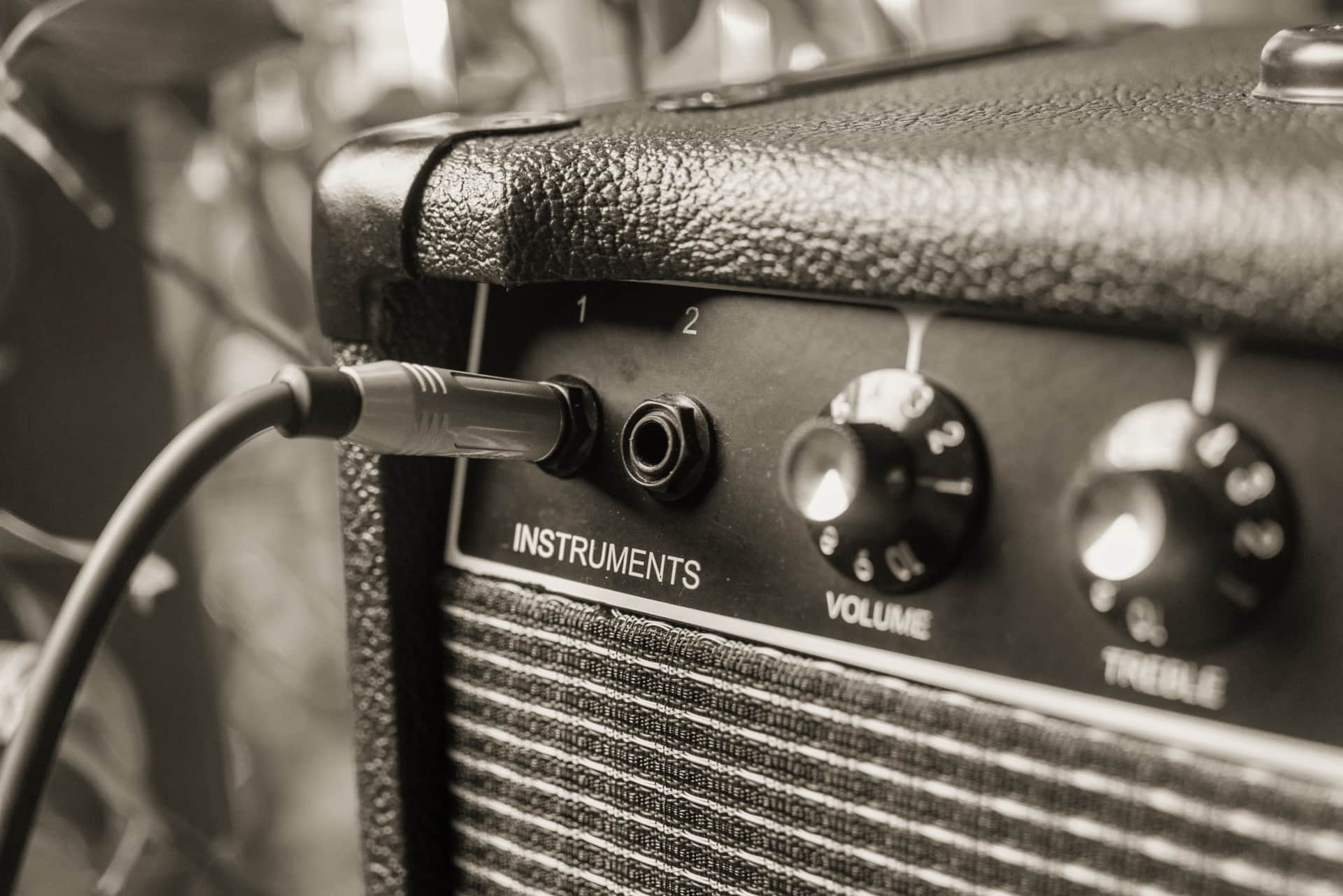
The short answer
For almost everyone the answer is no, and for most people the question is moot: only one of the eleven floorstanding speakers on this site publishes terminals that can be bi-wired at all. Bi-wiring requires two pairs of binding posts per speaker with the factory jumpers removed, and in our registry that is the Klipsch RP-6000F IIalone — whose spec sheet says “dual binding posts, bi-wire and bi-amp capable” in those words. Everything else publishes a single pair. If what you actually want is firmer bass control, the specification that governs it is damping factor, and the Yamaha A-S501 publishes 240 against the Marantz PM6007’s 100 — a real, published difference, unlike anything bi-wiring will give you.
Disclosure: we earn a commission if you buy through the links on this page, at no extra cost to you. It does not influence what we pick — our criteria are published and reproducible, so you can check our work. How we pick · Full disclosure
These picks are spec-and-price analyses, not listening tests. We have not heard this gear and we do not pretend to have: every figure below is sourced to the manufacturer and linked, and every price is live or not shown at all. Here are the rules we followed.
Quick picks
Ranked on the published criteria in How We Pick. Prices are live as of October 16, 2026. Tap any row for the full write-up.
- 8.4
- 8.6
- 7.8
| # | Product | Best for | Score | Price |
|---|---|---|---|---|
| 1 | 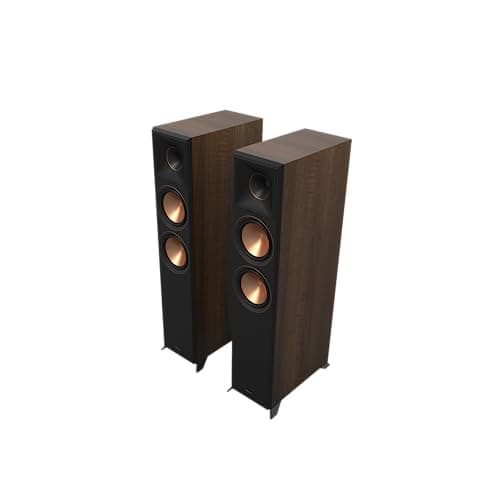 Klipsch RP-6000F II The only pair listing in the bracket and the easiest load in it — with a 96 dB sensitivity figure that carries Klipsch's own half-space asterisk, which is worth reading before you compare it to anything. | Best for a modest amplifier | 8.4 | |
| 2 | 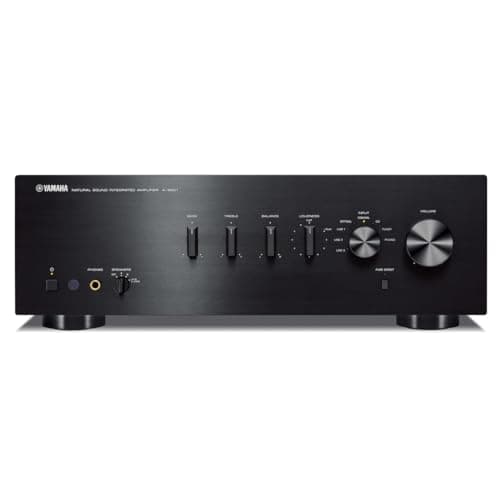 Yamaha A-S501 85 watts per channel into 8 ohms with a damping factor of 240 and an MM phono input fitted — the most amplifier here for the money, provided your speakers are an 8-ohm load. | Best overall under $1,000 | 8.6 | |
| 3 | 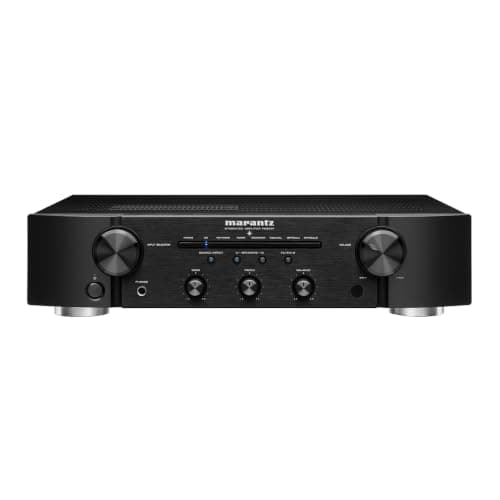 Marantz PM6007 A phono stage plus a proper DAC section in a well-made chassis, at the top of what this bracket will bear. | Best built-in DAC | 7.8 |
Bi-wiring means running two separate cable pairs from one amplifier’s single pair of output terminals to two separate pairs of input terminals on the speaker, with the metal jumpers that normally link them removed, so that the woofer section and the tweeter section each get their own run of cable. It is not bi-amping, which uses two amplifier channels. It is not the A/B speaker switch on the front of a receiver. And it is not possible on a speaker with one pair of terminals, which is almost all of them.
What the published terminal specifications actually say
| Speaker | Published input terminals | Bi-wireable? |
|---|---|---|
| Klipsch RP-6000F II | “Dual binding posts — bi-wire and bi-amp capable” | Yes |
| JBL Stage 2 280F | 5-way posts plus a dedicated second set for an Atmos height module | No — different purpose |
| Klipsch R-610F | Single gold-plated binding posts | No |
| Klipsch R-620F | Not published— the field is blank on Klipsch’s sheet | Unknown |
| Jamo Studio S 809 | Single binding post | No |
| Polk Monitor XT70 / XT60 | 5-way nickel-plated binding posts | No |
| ELAC Debut 3.0 DF63 / DF53 / DB63 | 5-way metal binding posts | No |
The phrase that misleads everybody: “5-way binding post”
Five of the speakers above publish “5-way binding posts”, and it reads like a count of terminals. It is not. “5-way” describes the connector — the five ways you can attach a cable to it: banana plug, spade, bare wire through the hole, bare wire wrapped round the post, and pin. It says nothing at all about how many pairs the speaker has. A 5-way binding post is one terminal. A speaker with “5-way binding posts” and no further qualification has one pair of them and cannot be bi-wired.
The JBL Stage 2 280F is the interesting near-miss, because it genuinely does have a second set of terminals — and they are not for bi-wiring. JBL publishes them as a dedicated set for an Atmos height module, compatible with its own JBL 240H. Connect a second cable pair there expecting bi-wiring and you are feeding a crossover input intended for a different speaker entirely.
And the Klipsch R-620F deserves naming for a different reason: the input-terminal field exists on Klipsch’s own spec template and is filled in on the R-610F sheet, while on the R-620F sheet it is blank. That is Klipsch’s omission, not an absence of terminals, and it means the one thing you would need to know before buying cable for it is the one thing the sheet does not say.
So does bi-wiring do anything?
The mechanism people hope for is that separating the woofer’s current from the tweeter’s stops the large, low-frequency current in the bass cable from modulating the small signal going to the tweeter through shared cable resistance. That effect is real in principle and the quantity involved is cable resistance, which is small and calculable from gauge and length.
The honest position is this: we have not measured it, we cannot find a manufacturer publishing a measured difference, and not one speaker or amplifier maker in our registry publishes any claim about what bi-wiring changes — including Klipsch, whose RP-6000F II is the only speaker here that supports it. Klipsch says the terminals are capable of it and stops. When the company selling the feature declines to claim a benefit for it, that is information.
What we can say with numbers is where cable resistance stops being negligible, and that is a question of gauge and run length rather than of how many runs you make. Our speaker wire gauge guide has the resistance arithmetic, and the short version is that for a normal domestic run the right answer is thicker cable, not twice as much of it.
Three things it is confused with
Bi-amping. Two amplifier channels, one per driver section, which is a genuinely different proposition because each section gets its own power supply headroom. It needs either two amplifiers or an amplifier with usable pre-outs, and the pre-out situation across this site is poor: the Denon AVR-X1800H offers 2.2, the Yamaha RX-V6A front left and right plus a Zone 2 line out, the Onkyo TX-NR6100 no main-channel pre-outs at all. Only the Marantz Cinema 70s publishes a full 7.2 set. Our preamp-versus-power-amp explainer covers how the signal has to be split.
The A/B speaker switch. That drives two different speakers from one amplifier, usually in parallel, which halves the impedance the amplifier sees if both are on. Our series-versus-parallel guide has the impedance arithmetic, and it is the opposite of harmless on a speaker whose minimum impedance is unpublished.
Doubling up on one terminal pair. Two cable runs to the same pair of posts is just thicker cable with extra steps. It is harmless and it is not bi-wiring.
The specification that does govern bass control
If the reason you are reading this is that your bass sounds loose, the published figure that bears on it is damping factor — the ratio describing how firmly the amplifier resists the woofer’s own back-EMF once the signal stops. Three amplifiers on this site publish one:
damping factor = load impedance ÷ amplifier output impedance · so Z_out = 8 Ω ÷ DF
Inputs
- Yamaha A-S501 damping factor: 240 (Yamaha spec page)
- Marantz PM6007 damping factor: 100 (8 Ω, 40 Hz – 20 kHz) (Marantz owner's manual)
- Cambridge Audio AXA35 damping factor: > 50 (Cambridge Audio spec page)
- Klipsch RP-6000F II input terminals: Dual binding posts — bi-wire and bi-amp capable (Klipsch spec sheet (PDF))
Result
Yamaha A-S501: 8 ÷ 240 = 0.033 Ω output impedance
Marantz PM6007: 8 ÷ 100 = 0.080 Ω
Cambridge AXA35: 8 ÷ 50 = 0.160 Ω or better
Difference between the best and worst here: about 0.127 Ω
Put that against cable: roughly 0.1 Ω is the round-trip resistance of a typical 16 AWG run of a few metres, which means the spread between these three amplifiers’ damping factors is about the same order as the resistance of your speaker cable. That is the useful perspective on this whole topic. It is also why the fix for loose bass is usually placement, then gauge, then the amplifier — and bi-wiring is not on the list.
What to do instead
In order, cheapest first. Move the speakers and move your seat; this changes low-frequency response at your ears more than any cable decision will. Check the gauge against the run length. Make sure the factory jumpers on a dual-post speaker are actually tight, because a loose jumper is a real fault with a real sound and it is the thing people often cure by accident when they rewire. Then, if you still want more woofer control, look at the amplifier’s published damping factor rather than its watts.
If you own an RP-6000F II and already have the cable, bi-wire it. It costs nothing, it cannot hurt, and you will have removed one variable. Just do not buy a second run of cable expecting the difference to be audible, and do not buy a speaker because it supports a feature its own maker makes no claim for.
Every pick in detail
Every specification below links to the manufacturer document we read it from. Where a manufacturer does not publish a figure, we say so rather than estimating it.
Klipsch RP-6000F II
Best for a modest amplifierPrice as of October 16, 2026. #ad
The only pair listing in the bracket and the easiest load in it — with a 96 dB sensitivity figure that carries Klipsch's own half-space asterisk, which is worth reading before you compare it to anything.
- published data
- 7/10
- sensitivity
- 9/10
- bass extension
- 8/10
- amp friendliness
- 10/10
- value for money
- 9/10
| Specification | Published value | Source |
|---|---|---|
| Design | Two-way bass reflex — no dedicated midrange driver | Klipsch spec sheet (PDF) |
| Sensitivity | 96 dB @ 2.83 V / 1 m, with Klipsch's own asterisk: “SPL at 1 M, half-space anechoic with 2.83V input” | Klipsch spec sheet (PDF) |
| Impedance | 8 Ω “compatible” (Klipsch's wording — not a measured nominal figure) | Klipsch spec sheet (PDF) |
| Minimum impedance | Not published | — |
| Frequency response | 38 Hz – 25 kHz ± 3 dB | Klipsch spec sheet (PDF) |
| Power handling | 125 W continuous / 500 W peak (a handling limit, not a recommended amplifier range) | Klipsch spec sheet (PDF) |
| Tweeter | 1 in titanium LTS vented tweeter on a hybrid cross-section expanded Tractrix horn | Klipsch spec sheet (PDF) |
| Woofers | Dual 6.5 in Cerametallic cone with Faraday rings | Klipsch spec sheet (PDF) |
| Crossover | 1,770 Hz | Klipsch spec sheet (PDF) |
| Enclosure | Internally braced MDF; bass reflex via dual-chamber rear-firing Tractrix ports | Klipsch spec sheet (PDF) |
| Input terminals | Dual binding posts — bi-wire and bi-amp capable | Klipsch spec sheet (PDF) |
| Dimensions (H × W × D) | 39.60 × 9.29 × 17.57 in (100.6 × 23.6 × 44.6 cm) | Klipsch spec sheet (PDF) |
| Weight (each) | 49.4 lb / 22.4 kg | Klipsch spec sheet (PDF) |
| Sold as | A pair — the Amazon listing is a two-speaker pack. The only pair listing in this bracket. | Klipsch product page |
Pros
- Sold as a pair, so the listed price is the price of a stereo front end
- 38 Hz – 25 kHz ± 3 dB — a real tolerance window on the deepest ± 3 dB figure in the bracket
- 8 Ω compatible and high sensitivity: the one speaker here a modest integrated amplifier will drive comfortably
- Dual binding posts for bi-wiring or bi-amping, which the ELACs and the KEF do not offer
- 125 W continuous handling and a divided, internally braced cabinet
Cons
- The 96 dB figure is footnoted “SPL at 1 M, half-space anechoic with 2.83V input” — a half-space measurement is conventionally about 3 dB optimistic against a free-space one, so it is NOT comparable to the KEF's or ELAC's numbers
- A two-way: the 6.5 in woofers cover midrange up to 1,770 Hz, where the ELACs and the KEF hand that band to a dedicated driver
- 17.57 in deep and 49.4 lb each — the deepest cabinet here before port clearance
- Rear-firing Tractrix ports need real space behind them
- Klipsch publishes no minimum impedance, and “8 ohms compatible” is not a measured nominal figure
Skip it if you are ranking on the headline sensitivity number. Read the asterisk first — it is the difference between a fair comparison and a wrong one.
Yamaha A-S501
Best overall under $1,000Price as of October 16, 2026. #ad
85 watts per channel into 8 ohms with a damping factor of 240 and an MM phono input fitted — the most amplifier here for the money, provided your speakers are an 8-ohm load.
- power
- 9/10
- phono stage
- 8/10
- value for money
- 9/10
- build quality
- 9/10
- connectivity
- 6/10
| Specification | Published value | Source |
|---|---|---|
| Power output (8 Ω) | 85 W + 85 W (8 Ω, 20 Hz – 20 kHz, 0.019% THD) — minimum RMS | Yamaha spec page |
| Power output (4 Ω) | Not published as a continuous rating. Yamaha publishes only “High Dynamic Power/Channel (8/6/4/2 Ω): 130 / 150 / 185 / 220 W” — a short-burst IHF measurement, NOT an RMS rating. The “185 W into 4 Ω” figure circulating for this amp is that dynamic number, and treating it as continuous overstates the amplifier by roughly two-fold. | Yamaha spec page |
| Phono input | Yes — MM, 3.0 mV / 47 kΩ | Yamaha owner's manual (PDF) |
| THD | 0.019% (50 W into 8 Ω, 20 Hz – 20 kHz) | Yamaha spec page |
| Signal-to-noise | 99 dB (CD, input shorted); phono MM 82 dB or more | Yamaha spec page |
| Damping factor | 240 | Yamaha spec page |
| Digital inputs | Yes — optical and coaxial (Yamaha does not publish the DAC part number) | Yamaha spec page |
| Bluetooth | Not published — no Bluetooth row appears in Yamaha's specification table | Yamaha spec page |
| Subwoofer out | Yes | Yamaha spec page |
Pros
- 85 W + 85 W into 8 Ω rated across the full 20 Hz – 20 kHz band at 0.019% THD — a real rating, not a 1 kHz-only one
- Damping factor 240, the highest published here
- MM phono input and optical/coaxial digital inputs included
Cons
- Yamaha publishes NO continuous 4 Ω rating — only a “High Dynamic Power” burst figure, so its behavior into a 4 Ω speaker is genuinely unknown from the spec sheet
- No Bluetooth or network streaming
- Large and heavy
Skip it if your speakers dip to 4 Ω and you want to know what you are getting. Marantz and Denon both publish real 4 Ω ratings; Yamaha does not.
Marantz PM6007
Best built-in DACPrice as of October 16, 2026. #ad
A phono stage plus a proper DAC section in a well-made chassis, at the top of what this bracket will bear.
- power
- 7/10
- phono stage
- 8/10
- value for money
- 7/10
- build quality
- 9/10
- connectivity
- 8/10
| Specification | Published value | Source |
|---|---|---|
| Power output (8 Ω) | 45 W × 2 (8 Ω, 20 Hz – 20 kHz, both channels driven, 0.08% THD) | Marantz owner's manual |
| Power output (4 Ω) | 60 W × 2 (4 Ω, 20 Hz – 20 kHz, both channels driven) — rated across the full band, unlike most rivals' 1 kHz-only 4 Ω figures | Marantz owner's manual |
| Phono input | Yes — MM only, 2.2 mV / 47 kΩ | Marantz owner's manual |
| Signal-to-noise | 102 dB (line); 83 dB (phono MM) | Marantz owner's manual |
| Damping factor | 100 (8 Ω, 40 Hz – 20 kHz) | Marantz owner's manual |
| Digital inputs | Coaxial and optical | Marantz owner's manual |
| Subwoofer out | Yes — 2.8 V (200 mV input, volume max) | Marantz owner's manual |
Pros
- Good DAC section with optical and coaxial in
- MM phono stage
- Solid build and finish
Cons
- Most expensive here
- No Bluetooth
- Power output is mid-pack for the money
Skip it if you already own a DAC — you are buying a second one.
Frequently asked questions
Is bi-wiring speakers worth it?
Does a 5-way binding post mean I can bi-wire?
Which speakers can be bi-wired?
What is the difference between bi-wiring and bi-amping?
Is the A/B speaker switch on my receiver bi-wiring?
What actually fixes loose or boomy bass?
Can I just run two cables to the same terminals?
Read next
Speaker Wire Gauge: What You Actually Need
Published copper resistance, your speaker's impedance and the length of the run — three numbers that settle the gauge question without opinion.
Wiring Two Speakers in Series vs Parallel
The impedance arithmetic for two speakers on one channel, what each wiring costs in level, and how to check your amplifier will tolerate it.
Preamp vs Power Amp
Voltage versus current, what damping factor tells you in ohms, and the pre-out spec that decides whether you can ever split them later.
The Best Amplifiers for Klipsch Speakers
Klipsch's 90-96 dB sensitivity settles the watts question at about 35 W, so this ranks on published signal-to-noise and damping factor instead. The Onkyo TX-8470's 106 dB is the highest on the site.
Passive vs Powered Speakers
Total cost, upgrade path, and why powered speakers correctly refuse to publish a sensitivity figure.
How to Read an Amplifier Power Rating
Impedance, bandwidth, distortion, channels driven — the four conditions that turn a watts number into a spec, and which manufacturers publish all four.
Sources
Every specification on this page was read from one of these documents. If one of them has changed, or we have made an error, tell us — corrections are logged and dated per our editorial policy.
- Klipsch RP-6000F II — spec sheet (dual binding posts, bi-wire and bi-amp capable)
- Klipsch R-610F — spec sheet (single gold-plated binding posts)
- JBL Stage 2 280F — spec sheet (second terminal set for an Atmos height module)
- Polk Monitor XT60 / XT70 — info sheet (5-way nickel-plated binding posts)
- Jamo Studio S 809 — spec table (single binding post)
- Yamaha A-S501 — specifications (damping factor 240)
- Marantz PM6007 — owner's manual (damping factor 100, with load and band stated)