KEF LS50 Meta Alternatives
The LS50 Meta publishes the lowest distortion of any speaker we rank and the shallowest anechoic bass corner of any KEF we rank. Those two facts point at two completely different alternatives.
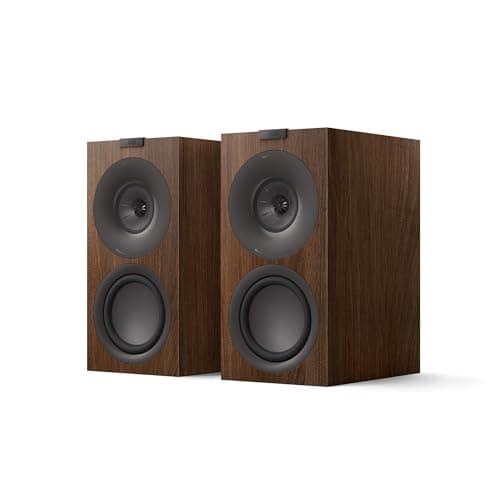
Top pick: KEF Q Concerto Meta
$1,399.9929% off
Best overall on published data. #ad Affiliate link — we earn a commission at no extra cost to you.
The short answer
The best KEF LS50 Meta alternative is the KEF Q Concerto Meta — because it keeps the one thing the LS50 Meta is bought for, the Uni-Q concentric array with Metamaterial Absorption Technology at the acoustic centre, adds a third way and a 165 mm bass cone, and publishes a ± 3 dB low corner of 48 Hz against the LS50 Meta’s 79 Hz. It also publishes 108 dB maximum output against the LS50 Meta’s 106 dB, and a 15 W amplifier minimum against 40 W. It is the pick for someone who wanted an LS50 Meta for a real room and does not have a 100 W amplifier waiting for it. The budget pick is the KEF Q3 Meta— the cheapest speaker here, and the cheapest Uni-Q-with-MAT cabinet in our registry. It publishes 49 Hz ± 3 dB, 109 dB maximum output and 87 dB sensitivity on a 15–150 W amplifier range, so on paper it goes lower and louder on less power than the speaker this page is about.
What you give up is the LS50 Meta’s distortion figure, and it is not a small thing: KEF publishes below 0.4% from 175 Hz–20 kHz and below 0.1% from 300 Hz–10 kHz at 90 dB and 1 m, which is the lowest published distortion of any loudspeaker in our registry by a wide margin. Nothing on this page comes near it — the two other KEFs publish below 1% over their narrower windows and the Dynaudio and Q Acoustics publish no distortion figure at all. If that number is why you want the LS50 Meta, the honest answer is that there is no substitute for it here, and we rank the LS50 Meta itself second on our high-end bookshelf page.
Disclosure: we earn a commission if you buy through the links on this page, at no extra cost to you. It does not influence what we pick — our criteria are published and reproducible, so you can check our work. How we pick · Full disclosure
These picks are spec-and-price analyses, not listening tests. We have not heard this gear and we do not pretend to have: every figure below is sourced to the manufacturer and linked, and every price is live or not shown at all. Here are the rules we followed.
Quick picks
Ranked on the published criteria in How We Pick. Prices are live as of November 12, 2026. Tap any row for the full write-up.
- 8.7$999.99View on Amazon
$1,399.9929% off
- 7.9
- 8.0
- 8.0
| # | Product | Best for | Score | Price |
|---|---|---|---|---|
| 1 | KEF Q Concerto Meta A three-way standmount that publishes a deeper bass corner and a higher maximum output than KEF's own LS50 Meta, for less money — and publishes its distortion with the measurement condition attached, which almost nobody at any price does. | Best overall on published data | 8.7 | $999.99View on Amazon $1,399.9929% off |
| 2 | 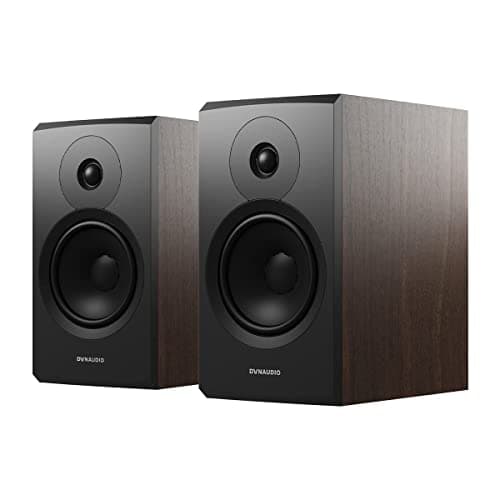 Dynaudio Emit 20 An 18 cm mid/woofer in a rear-ported cabinet, the only speaker here that publishes both a ± 3 dB and a -6 dB window for the same model — and the only one whose crossover sits at 3,800 Hz, which is a design choice with consequences. | Biggest mid/bass driver, and the cheapest way in | 7.9 | |
| 3 | 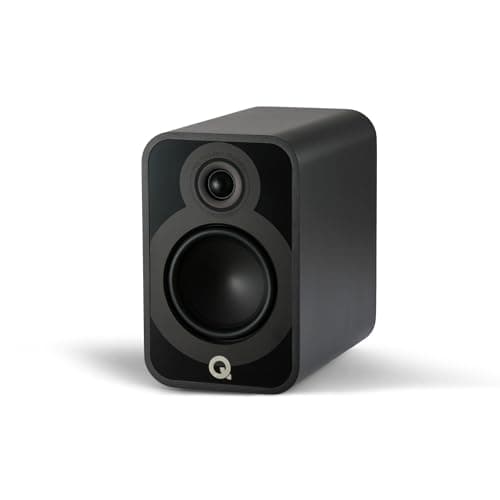 Q Acoustics 5020 The highest published sensitivity and the gentlest published impedance on the page, in the smallest enclosure volume anyone here discloses — and the only speaker of the five whose maker publishes no distortion figure at all while charging over $1,000. | Easiest amplifier load | 8.0 | |
| 4 | 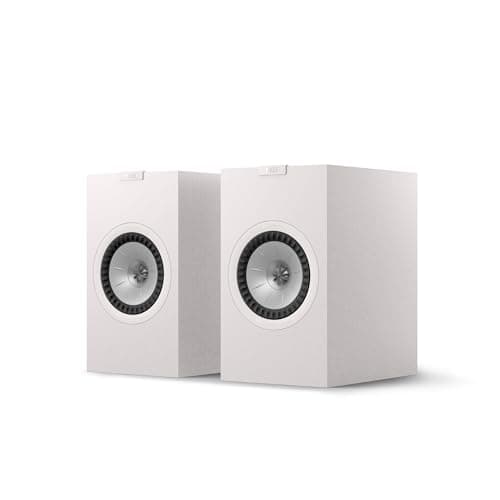 KEF Q3 Meta KEF's coaxial Uni-Q driver puts the tweeter at the woofer's acoustic center, and the Meta generation adds a metamaterial absorber behind it — both are engineering changes rather than finish upgrades. | Best imaging design | 8.0 |
The KEF LS50 Meta is a two-way bass-reflex standmount built around a single 130 mm Uni-Q array: an aluminium cone with a 25 mm vented aluminium dome at its acoustic centre, backed by Metamaterial Absorption Technology. KEF publishes 79 Hz–28 kHz at ± 3 dB, a 2.1 kHz crossover, 85 dB sensitivity, 8 Ω nominal with a 3.5 Ω minimum, 106 dB maximum output at 1 m, a 40–100 W amplifier requirement, and the distortion figures above. It weighs 7.8 kg and measures 302 × 200 × 280.5 mm.
Two of those numbers are why people look for an alternative, and they pull in opposite directions. The 79 Hz anechoic corner is the shallowest of any KEF we rank — the cheaper Q3 Meta publishes 49 Hz and the three-way Q Concerto Meta publishes 48 Hz. And the 40 W amplifier minimum is the highest minimum published by any speaker in our registry, which rules out a good deal of what people already own.
One clarification first, because the internet quotes the wrong figure constantly. KEF publishes two low-end numbers for the LS50 Meta: a ± 3 dB anechoic response starting at 79 Hz, and a “typical in-room bass response” of 26 Hz at −6 dB. Both are KEF’s. They are not the same measurement and they are not interchangeable, and the 26 Hz figure is the one that gets repeated. Compared like with like, against other anechoic ± 3 dB figures, 79 Hz is the number.
The picks compared, spec by spec
For reference, the speaker this page is about publishes 79 Hz–28 kHz ± 3 dB, 85 dB sensitivity, a 3.5 Ω minimum impedance and below 0.4% distortion from 175 Hz–20 kHz. An em dash in the distortion column means the manufacturer publishes no distortion figure at all — which is two of the four, and is itself the finding. Every row carries its own live price and buy link.
Every figure below is the manufacturer’s own published value and links to the document we read it from. “Not published” means the manufacturer does not publish that figure; an em dash means we have no published figure for that model. Prices are live as of November 12, 2026.
Best overall on published data
- Published response
- 48 Hz–20 kHz ± 3 dB
- Sensitivity
- 85 dB (2.83 V / 1 m)
- Minimum impedance
- 3.2 Ω (4 Ω nominal)
- Published distortion
- < 1% from 91 Hz–20 kHz
Biggest mid/bass driver, and the cheapest way in
- Published response
- 53 Hz–25 kHz ± 3 dB
- Sensitivity
- 86 dB (2.83 V / 1 m)
- Minimum impedance
- Not published
- Published distortion
- Not published
Easiest amplifier load
- Published response
- 53 Hz–30 kHz (−6 dB only)
- Sensitivity
- 87.9 dB (2.83 V @ 1 kHz)
- Minimum impedance
- 3.3 Ω (6 Ω nominal)
- Published distortion
- Not published
Best imaging design
- Published response
- 49 Hz–20 kHz ± 3 dB
- Sensitivity
- 87 dB (2.83 V / 1 m)
- Minimum impedance
- 3.2 Ω (4 Ω nominal)
- Published distortion
- < 1% from 135 Hz–20 kHz
| Pick | Published response | Sensitivity | Minimum impedance | Published distortion | Price |
|---|---|---|---|---|---|
| 1.KEF Q Concerto MetaBest overall on published data | 48 Hz–20 kHz ± 3 dB | 85 dB (2.83 V / 1 m) | 3.2 Ω (4 Ω nominal) | < 1% from 91 Hz–20 kHz | |
| 2.Dynaudio Emit 20Biggest mid/bass driver, and the cheapest way in | 53 Hz–25 kHz ± 3 dB | 86 dB (2.83 V / 1 m) | Not published | Not published | |
| 3.Q Acoustics 5020Easiest amplifier load | 53 Hz–30 kHz (−6 dB only) | 87.9 dB (2.83 V @ 1 kHz) | 3.3 Ω (6 Ω nominal) | Not published | |
| 4.KEF Q3 MetaBest imaging design | 49 Hz–20 kHz ± 3 dB | 87 dB (2.83 V / 1 m) | 3.2 Ω (4 Ω nominal) | < 1% from 135 Hz–20 kHz |
Prices as of November 12, 2026; every “Check Price” link goes to Amazon and earns us a commission at no extra cost to you. #ad
Matched on the Uni-Q and MAT: the two other KEFs
If the reason for the LS50 Meta is the concentric driver, there are exactly two substitutes in our registry and both are KEFs, because the Uni-Q array is KEF’s. The Q Concerto Meta uses a Uni-Q with a 19 mm vented aluminium dome and a 100 mm aluminium midrange, plus a separate 165 mm hybrid aluminium bass cone — a genuine three-way, crossed at 430 Hz and 2.9 kHz. The Q3 Meta uses a single 165 mm Uni-Q array with a 25 mm dome, crossed at 2.0 kHz.
Both publish a lower ± 3 dB corner than the LS50 Meta, both publish a higher maximum output (108 and 109 dB against 106 dB), and both publish an amplifier range starting at 15 W rather than 40 W. Both also publish higher distortion than the LS50 Meta, and the windows are different: KEF quotes below 1% from 91 Hz on the Concerto and from 135 Hz on the Q3, against below 0.1% from 300 Hz–10 kHz on the LS50 Meta. Those windows are not directly comparable and we are not going to pretend otherwise — but the LS50 Meta is plainly the quietest of the three on KEF’s own measurements.
SPL at 1 m = sensitivity + 10 × log10(watts)
Inputs
- KEF LS50 Meta sensitivity: 85 dB (2.83 V / 1 m) (KEF spec page)
- KEF LS50 Meta amplifier requirement: 40–100 W (KEF spec page)
- KEF Q3 Meta sensitivity: 87 dB (2.83 V / 1 m) (KEF spec page)
Result
Matched on bass without the concentric driver: the Dynaudio
The Dynaudio Emit 20 is the only speaker on this page that publishes both a ± 3 dB and a −6 dB window for the same model — 53 Hz–25 kHz and 42 Hz–35 kHz — which is the single cleanest demonstration in our registry of what the convention is worth: an 11 Hz difference at the bottom, from one measurement session.
It also has the largest mid/bass cone here, an 18 cm MSP driver, in a rear double-flared port cabinet, and it is the only maker on the page that publishes crossover topology: 2-way at 3,800 Hz, first-order tweeter and second-order woofer. That 3,800 Hz crossover is 900 Hz higher than anything else here, which asks a 7 in cone to cover the whole presence region — a real design decision with real consequences, published plainly, and the kind of thing you cannot evaluate if the maker does not state it. Dynaudio publishes no distortion figure and no maximum SPL, and its 160 W number is IEC long-term powerhandling, not a recommended amplifier range. The two are not interchangeable.
Matched on amplifier friendliness: the Q Acoustics
If the LS50 Meta’s 40 W minimum and 3.5 Ω dip are the problem — and with a modest integrated amplifier they are — the Q Acoustics 5020 publishes the highest sensitivity on this page at 87.9 dB and a 25–100 W recommended range on a 6 Ω nominal load. It is also the only loudspeaker in our entire registry that publishes its enclosure volume, 6.8 L, which is a strangely useful number when you are trying to work out why a cabinet measures the way it does.
The catch is its response figure: Q Acoustics publishes only a −6 dB window, 53 Hz–30 kHz, so it cannot be set beside anyone’s ± 3 dB number. It publishes no distortion and no maximum SPL. And its 3.3 Ω minimum impedance is actually lower than the LS50 Meta’s 3.5 Ω, so “easier load” here means higher sensitivity, not a gentler impedance curve. What a minimum impedance figure means for your amplifier is worth five minutes before you decide.
What we are not offering as a substitute
The KEF R3 Meta is in our registry and it is deliberately not on this page. It costs substantially more than the LS50 Meta, it publishes neither harmonic distortion nor maximum SPL — while both cheaper KEFs publish both — and its ± 3 dB low corner of 58 Hz is only 21 Hz deeper than the LS50 Meta’s for a large step in price. It is ranked on our high-end bookshelf roundup with that reasoning spelled out. “More expensive KEF” is not an answer to “alternative to the LS50 Meta”.
Nor is a floorstander, usually, although it is worth considering if the 79 Hz corner was your objection: bookshelf versus floorstanding works through what the extra cabinet actually buys. And whichever standmount you land on, it needs stands at tweeter height — our stand roundup does the seating-height arithmetic, and all four speakers here are heavy enough that the 30 lb capacity figure matters.
Every pick in detail
Every specification below links to the manufacturer document we read it from. Where a manufacturer does not publish a figure, we say so rather than estimating it.
KEF Q Concerto Meta
Best overall on published dataA three-way standmount that publishes a deeper bass corner and a higher maximum output than KEF's own LS50 Meta, for less money — and publishes its distortion with the measurement condition attached, which almost nobody at any price does.
- published data
- 10/10
- bass extension
- 9/10
- amp friendliness
- 5/10
- max output
- 9/10
- value for money
- 8/10
| Specification | Published value | Source |
|---|---|---|
| Design | Three-way bass reflex | KEF spec page |
| Driver | Uni-Q driver array with a 19 mm (0.75 in) vented aluminium dome and MAT plus a 100 mm (4 in) aluminium cone midrange, and a separate 165 mm (6.5 in) hybrid aluminium bass cone | KEF spec page |
| Frequency response | 48 Hz – 20 kHz (± 3 dB) | KEF spec page |
| Frequency range | 40 Hz – 20 kHz (−6 dB) | KEF spec page |
| Typical in-room bass response | 36 Hz (−6 dB) | KEF spec page |
| Crossover | 430 Hz, 2.9 kHz | KEF spec page |
| Maximum output | 108 dB (measured at 1 m) — the highest published figure here | KEF spec page |
| Amplifier requirements | 15–180 W | KEF spec page |
| Sensitivity | 85 dB (2.83 V / 1 m) | KEF spec page |
| Impedance (nominal) | 4 Ω | KEF spec page |
| Minimum impedance | 3.2 Ω | KEF spec page |
| Harmonic distortion | < 2% from 37 Hz and above; < 1% from 91 Hz – 20 kHz (measured at 90 dB, 1 m) | KEF spec page |
| Dimensions (H × W × D) | 415 × 210 × 315 mm (16.3 × 8.3 × 12.4 in), measured with terminal, per unit | KEF spec page |
| Weight (each) | 9.5 kg / 20.9 lb | KEF spec page |
Pros
- Three-way: a dedicated 100 mm midrange inside the Uni-Q plus a separate 165 mm bass cone, so the midrange driver is not also moving the bass
- 48 Hz at ± 3 dB — the deepest anechoic low corner published by any speaker on this page, and 31 Hz deeper than the LS50 Meta's
- 108 dB published maximum output, the highest here, with a 15-180 W amplifier window that most integrated amplifiers can satisfy
- Publishes harmonic distortion WITH its 90 dB / 1 m measurement condition, and a minimum impedance as well as a nominal one
Cons
- 4 Ω nominal dipping to 3.2 Ω — a genuinely demanding load that wants an amplifier with a published 4 Ω rating
- 85 dB sensitivity, tied for the lowest on this page, so it needs watts as well as current
- < 2% distortion at 37 Hz and above against the LS50 Meta's < 0.4% from 175 Hz — five times higher where the two windows overlap, on KEF's own figures
- 20.9 lb and 16.3 in tall per speaker: this is a floor stand or a very solid piece of furniture, not a shelf
- The 19 mm tweeter dome is smaller than the 25 mm used in both the LS50 Meta and the R3 Meta, and KEF does not explain the change
Skip it if your amplifier does not publish a 4 Ω rating, or the speakers have to sit on a bookshelf. At 16.3 in tall and 20.9 lb each this is a standmount in the literal sense.
Dynaudio Emit 20
Biggest mid/bass driver, and the cheapest way inNo live price right now. #ad
An 18 cm mid/woofer in a rear-ported cabinet, the only speaker here that publishes both a ± 3 dB and a -6 dB window for the same model — and the only one whose crossover sits at 3,800 Hz, which is a design choice with consequences.
- published data
- 7/10
- bass extension
- 7/10
- amp friendliness
- 8/10
- max output
- 5/10
- value for money
- 9/10
| Specification | Published value | Source |
|---|---|---|
| Design | Bass reflex, rear double-flared port | Dynaudio spec table |
| Driver | 28 mm Cerotar soft dome with Hexis, and an 18 cm MSP mid/woofer — the largest mid/bass cone on this page | Dynaudio spec table |
| Frequency response | 53 Hz – 25 kHz (± 3 dB); 42 Hz – 35 kHz (−6 dB). Dynaudio is the only maker here that publishes both windows for the same model | Dynaudio spec table |
| Sensitivity | 86 dB (2.83 V / 1 m) | Dynaudio spec table |
| Impedance (nominal) | 6 Ω — Dynaudio's label for it is “rated impedance” | Dynaudio spec table |
| Power handling | 160 W IEC long term. This is a power-HANDLING figure, not a recommended amplifier range, and the two are not interchangeable | Dynaudio spec table |
| Crossover | 2-way at 3,800 Hz; 1st-order tweeter / 2nd-order woofer. The highest crossover frequency on this page by 900 Hz, and the only crossover topology published by anyone here | Dynaudio spec table |
| Dimensions (H × W × D) | 370 × 205 × 312 mm (14.6 × 8.1 × 12.3 in) without grille or feet; 370 × 205 × 325 mm with them | Dynaudio spec table |
| Weight (each) | 10.3 kg / 22.7 lb | Dynaudio spec table |
| Minimum impedance | Not published | — |
| Recommended amplifier power range | Not published | — |
| Harmonic distortion | Not published | — |
| Maximum output | Not published | — |
Pros
- 18 cm MSP mid/woofer, the largest cone on this page, in a cabinet published at 14.6 in tall
- Publishes BOTH windows for the same model — 53 Hz - 25 kHz at ± 3 dB and 42 Hz - 35 kHz at -6 dB — so you can see the gap between the two conventions in one place
- 160 W IEC long-term power handling and a 6 Ω rated impedance: a realistic load for a mid-power integrated amplifier
- The only maker here that publishes its crossover TOPOLOGY (1st-order tweeter, 2nd-order woofer), not just the frequency
- Cheapest of the five, and the only one currently under $1,100 a pair
Cons
- 3,800 Hz crossover — 900 Hz higher than anything else here, which asks a 7 in cone to cover the whole presence region where its dispersion is narrowing
- No minimum impedance published, so the 6 Ω rating is the only load figure you get
- No distortion figure and no maximum output figure published
- Dynaudio publishes a power-HANDLING number (160 W IEC) and no recommended amplifier range, and the two are not the same specification — you cannot read 160 W as 'use a 160 W amplifier'
- 22.7 lb each, the second heaviest here, on the second largest footprint
Skip it if your listening position is close and off-axis, or your amplifier publishes no 6 Ω figure. A 3,800 Hz crossover on a 7 in cone is the one parameter on this page that is genuinely unusual.
Q Acoustics 5020
Easiest amplifier loadPrice as of November 12, 2026. #ad
The highest published sensitivity and the gentlest published impedance on the page, in the smallest enclosure volume anyone here discloses — and the only speaker of the five whose maker publishes no distortion figure at all while charging over $1,000.
- published data
- 6/10
- bass extension
- 6/10
- amp friendliness
- 9/10
- max output
- 5/10
- value for money
- 8/10
| Specification | Published value | Source |
|---|---|---|
| Bass unit | 1 × 125 mm (5.0 in) | Q Acoustics spec page |
| Treble unit | 1 × 25 mm (1.0 in) | Q Acoustics spec page |
| Frequency response | 53 Hz – 30 kHz (−6 dB). Q Acoustics publishes only a −6 dB window for this model, so it cannot be set beside a ± 3 dB figure | Q Acoustics spec page |
| Sensitivity | 87.9 dB/W/m (2.83 V @ 1 kHz) — the highest published sensitivity here | Q Acoustics spec page |
| Impedance (nominal) | 6 Ω | Q Acoustics spec page |
| Minimum impedance | 3.3 Ω | Q Acoustics spec page |
| Recommended amplifier power | 25–100 W | Q Acoustics spec page |
| Crossover | 2.5 kHz | Q Acoustics spec page |
| Effective volume | 6.8 L — the only enclosure volume published by any loudspeaker in this registry | Q Acoustics spec page |
| Dimensions (H × W × D) | 284 × 180 × 293 mm (11.2 × 7.1 × 11.5 in) per loudspeaker | Q Acoustics spec page |
| Weight (each) | 7.0 kg / 15.4 lb | Q Acoustics spec page |
| Warranty | Stated as ranging from 2–5 years, without saying which term applies to this model | Q Acoustics spec page |
| Harmonic distortion | Not published | — |
| Maximum output | Not published | — |
| Enclosure type | Not published | — |
Pros
- 87.9 dB/W/m published sensitivity, the highest here, and a 6 Ω nominal load with a published 3.3 Ω minimum
- 25-100 W recommended amplifier window: the widest low end of any speaker on this page, so a 25 W integrated is explicitly in scope
- Smallest and lightest here at 11.2 x 7.1 x 11.5 in and 15.4 lb, and the only maker to publish its enclosure volume (6.8 L)
- Publishes a minimum impedance, which two of the five speakers on this page do not
Cons
- Publishes only a -6 dB window (53 Hz - 30 kHz), so its bass cannot be compared directly with the ± 3 dB figures the KEFs and the Dynaudio publish
- No harmonic distortion figure and no maximum output figure published at all, at a four-figure asking price
- 125 mm bass unit — the smallest driver on this page by 40 mm
- The warranty is published as a range (2-5 years) without saying which term this model gets
- Q Acoustics does not state whether the cabinet is sealed or ported anywhere in the specification
Skip it if you are buying on published data. On that test this speaker is third of five: it discloses sensitivity and impedance properly and then stops where the interesting figures start.
KEF Q3 Meta
Best imaging designPrice as of November 12, 2026. #ad
KEF's coaxial Uni-Q driver puts the tweeter at the woofer's acoustic center, and the Meta generation adds a metamaterial absorber behind it — both are engineering changes rather than finish upgrades.
- sensitivity
- 7/10
- bass extension
- 9/10
- amp friendliness
- 5/10
- value for money
- 7/10
- build quality
- 9/10
| Specification | Published value | Source |
|---|---|---|
| Sensitivity | 87 dB (2.83 V / 1 m) | KEF spec page |
| Impedance (nominal) | 4 Ω | KEF spec page |
| Minimum impedance | 3.2 Ω | KEF spec page |
| Frequency response | 49 Hz – 20 kHz (± 3 dB); 42 Hz – 20 kHz at −6 dB | KEF spec page |
| Amplifier requirements | 15–150 W | KEF spec page |
| Driver | Uni-Q array: 165 mm (6.5 in) aluminum cone with a 25 mm (1 in) vented aluminum dome and MAT at its acoustic center | KEF spec page |
| Crossover | 2.0 kHz | KEF spec page |
| Harmonic distortion | < 2% at 110 Hz and above; < 1% from 135 Hz – 20 kHz (measured at 90 dB, 1 m) | KEF spec page |
| Maximum output | 109 dB | KEF spec page |
| Dimensions (H × W × D) | 357 × 210 × 305 mm (14.1 × 8.3 × 12.0 in) | KEF spec page |
| Weight (each) | 8.2 kg / 18.1 lb | KEF spec page |
Pros
- Uni-Q coaxial driver — a real design difference, not a trim level
- Publishes both a nominal (4 Ω) and a minimum (3.2 Ω) impedance, plus a harmonic-distortion figure with its measurement condition — almost nobody publishes the last one
- 165 mm driver and a 42 Hz −6 dB figure, the deepest published extension of any bookshelf pair here
Cons
- Well above the $500 bracket at its current price
- 4 Ω nominal dipping to 3.2 Ω — this is a genuinely demanding load, not a nominal-8 Ω speaker that occasionally dips
- 18.1 lb and 12 in deep per speaker, which is a stand rather than a shelf
Skip it if your amplifier does not state a 4 Ω rating. The Q3 Meta is nominally 4 Ω before it dips, which is the hardest load in this registry.
Frequently asked questions
What is the LS50 Meta actually known for?
Is the cheaper KEF Q3 Meta really better on paper?
Why isn't the 26 Hz figure the LS50 Meta's bass spec?
Will my amplifier drive these?
Read next
The Best High-End Bookshelf Speakers
Five standmounts over $1,000 a pair, ranked on published data: distortion with a measurement condition, a minimum impedance as well as a nominal one, and a bass corner you can actually compare. The cheaper KEF beats the famous one on three of them.
The Best Bookshelf Speakers Under $1,000
Five pairs under $1,000, and the measurement footnote that makes the headline sensitivity figures non-comparable.
Bookshelf vs Floorstanding Speakers
Cabinet volume buys extension; a subwoofer buys extension you can place independently. The trade, with each maker's own numbers.
Speaker Impedance Explained
Nominal versus minimum impedance, why 2.83 V is not 1 watt, and how to check your amplifier can cope.
Will This Amplifier Drive My Speakers?
Two published numbers, one formula, and the answer is almost always less power than you expected.
The Best Speaker Stands for Bookshelf Speakers
Ranked on published top plate depth against published cabinet depth, then on height. The heaviest bookshelf speaker we cover is 18.1 lb against a 30 lb rating — capacity is the spec that does not matter, and plate size is the one that does.
Sources
Every specification on this page was read from one of these documents. If one of them has changed, or we have made an error, tell us — corrections are logged and dated per our editorial policy.